9 Relational Databases Books That Will Sharpen Your Skills
Recommended by Anthony Derosa, Bill Karwin, and C. J. Date, these Relational Databases books offer trusted insights for developers and analysts.
Updated on June 23, 2025·We may earn commissions for purchases made via this page
We're launchingLaunching on Product Hunt today 🎉We just launchedJust launched on Product Hunt 🎉
Modelpeers, from the BookAuthority teamFrom the BookAuthority team: Modelpeers, a free way to follow AI models and agents like you follow people. We'd love your support.
What if the key to unlocking powerful data insights was hidden in plain sight within relational databases? As organizations grapple with ever-growing data volumes, mastering relational databases remains essential for turning raw information into actionable knowledge.
Anthony Derosa, U.S. News Editor at The Wall Street Journal, has relied on SQL's storytelling potential to illuminate economic and census data narratives. Alongside experts like Bill Karwin, who demystifies common SQL pitfalls, and C. J. Date, a pioneer in relational theory, these voices highlight books that blend practical skills with foundational concepts.
While these expert-curated books provide proven frameworks, readers seeking content tailored to their specific experience levels, programming languages, or project goals might consider creating a personalized Relational Databases book that builds on these insights.
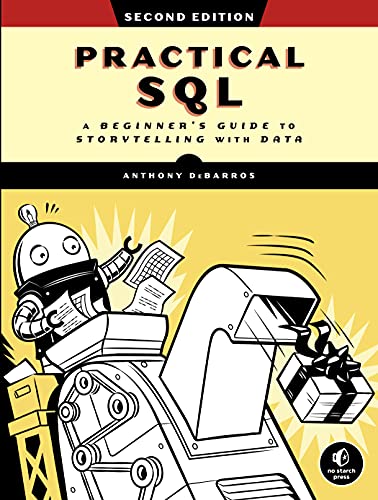
Anthony Derosa, U.S. News Editor at The Wall Street Journal specializing in data-driven journalism, highlights this book's value from his experience working with economic and census data. After encountering the challenge of extracting narratives from complex datasets, he found Anthony DeBarros’s approach invaluable. "Anthony is a fantastic teacher, I can attest to this! Go get his book:" This recommendation reflects how the book transformed his understanding of SQL’s practical applications in storytelling with data.
Anthony DeBarros is a longtime journalist who has combined his interests in data analysis, coding, software product development, and storytelling for much of his career. He is a data news editor for The Wall Street Journal, focusing on topics such as the economy, trade, the U.S. Census, and politics. He previously held positions with USA Today, the Poughkeepsie Journal, and the DocumentCloud project for Investigative Reporters and Editors. His work has received multiple honors, including a prestigious Silver Baton from the Alfred I. duPont-Columbia University Awards.
When Anthony DeBarros first discovered the power of SQL beyond simple queries, he realized it could unlock stories hidden in complex data. Drawing from his background as a journalist and data analyst, he crafts a guide that teaches you how to navigate relational databases using SQL with real datasets like US Census demographics and NYC taxi rides. You'll learn to create databases, clean data, perform advanced statistical operations, and even analyze spatial data with PostGIS. This book suits anyone from beginners to those wanting practical skills for telling data-driven stories, though those seeking deep theoretical database design might look elsewhere.
Silver Baton from Alfred I. duPont-Columbia University Awards
Bill Karwin has been a software engineer for over twenty years, contributing to projects like Zend Framework and the InterBase relational database. His extensive experience and thousands of answered questions about SQL problems inspired this book. Karwin’s unique perspective allows him to expose the most frequent and troublesome SQL antipatterns, offering practical corrections that help you build more robust and maintainable relational databases, regardless of your programming language or platform.
Bill Karwin has been a software engineer for over twenty years, developing and supporting applications, libraries, and servers such as Zend Framework for PHP 5, the InterBase relational database, and the Enhydra Java application server. Throughout his career, Bill has shared his knowledge to help other programmers achieve success and productivity. Bill has answered thousands of questions, giving him a unique perspective on SQL mistakes that most commonly cause problems.
When Bill Karwin first realized how often developers stumbled over common SQL mistakes, he set out to catalog them for the benefit of programmers at all levels. Drawing from over two decades of experience working with relational databases and open source projects like Zend Framework and InterBase, Karwin identifies specific antipatterns such as "Index Shotgun" and "Spaghetti Query" that frequently degrade database performance and maintainability. You’ll learn how to recognize these pitfalls across logical and physical database design, query writing, and application integration, with clear guidance on how to correct and avoid them. This book suits anyone from junior developers to experienced engineers seeking to write more reliable, efficient SQL code and build stronger databases.
This AI-created book on relational database design is crafted based on your experience level and specific goals. By sharing your background and the particular principles or techniques you want to focus on, you receive a personalized guide that covers exactly the foundational concepts you need. This tailored approach makes complex relational theories accessible and relevant, ensuring you gain practical skills suited to your projects and learning objectives.
TailoredRead AI creates personalized nonfiction books that adapt to your unique background, goals, and interests. Instead of reading generic content, you get a custom book written specifically for your profession, experience level, and learning objectives. Whether you're a beginner looking for fundamentals or an expert seeking advanced insights, TailoredRead crafts a book that speaks directly to you. Learn more.
2026·50-300 pages·Relational Databases, Database Design, Normalization, Schema Design, Data Integrity
This personalized book provides a tailored approach to foundational relational database design, focusing on core principles and practical techniques adapted to your background and goals. It offers a structured exploration of relational theory, normalization, schema design, and data integrity, cutting through generic advice to fit your specific context. The book emphasizes creating robust, scalable database architectures through a personalized framework that integrates essential concepts with your unique project requirements. By addressing both theoretical foundations and hands-on implementation strategies, it equips you with a solid blueprint for designing effective relational databases that align precisely with your technical environment and objectives.
Michael J. Hernandez brings over 25 years of technology and database consulting experience to this book. His background includes influential roles at Microsoft and extensive teaching for government and private sectors, lending the book a practical foundation. This edition reflects his commitment to clear, commonsense database design principles that help you build reliable and flexible relational databases suited for today’s applications.
Michael J. Hernandez is a man with many talents and has done quite a bit in his life, and he continues to do many things to keep him busy. You could say he's a modern-day Renaissance Man. For instance, he has been an independent database consultant with more than 25 years of experience in the technology industry, and has been a contributing author to a wide variety of magazine articles, white papers, books, and periodicals. Mike has also been a top-rated and noted technical instructor for two national training organizations, the government, the military, the private sector, and companies throughout the United States, and he has been a top-rated speaker and presenter at numerous national and international conferences. He also worked full-time at Microsoft for seven years as a program manager, product manager, and marketing manager in the Visual Studio Group. Mike is mainly pursuing his artistic side at this point in his life. He is currently a professional actor (with more than seven years of experience as of this writing), performing in commercials for the likes of U.S. Bank, Allstate Insurance, and Subaru; in TV for shows such as Veep, American Crime, and Unbelievable; and feature films such as Ernesto's Manifesto, The Honor List, and Almost Home.
Michael J. Hernandez's 25th Anniversary Edition of this book sprang from his extensive 25-year journey as a database consultant and educator. You’ll learn how to design relational databases that are not only robust and reliable but flexible enough for modern applications, from defining tables and keys to establishing business rules and data integrity. The book walks you through practical techniques like performing user interviews and analyzing existing databases, complete with updated review questions to solidify your grasp. If you're new to database design or looking to improve an existing system, this guide offers clear, jargon-free instruction tailored to help you build sound, trustworthy databases.
Miguel Grinberg has over 25 years of software engineering experience and authors a popular blog covering Python, web development, and more. His deep expertise led him to write this book, aiming to guide Python developers through real-world relational database programming with SQLAlchemy 2.0. His approachable style and practical project focus offer clear, incremental steps to mastering database integration in modern Python frameworks.
Miguel Grinberg has over 25 years of experience as a software engineer. He blogs at https://blog.miguelgrinberg.com about a variety of topics including web development, Python, JavaScript, robotics, photography and the occasional movie review. Miguel lives in Ireland. Follow @miguelgrinberg on Twitter.
When Miguel Grinberg first discovered the power of SQLAlchemy 2.0, he set out to create a practical guide that takes Python developers through building a relational database from the ground up. You’ll learn how to develop a complete project—a retro computer online store—including product catalogs, order systems, reviews with star ratings, and analytics without third-party tools. The book also dives into integrating databases with Flask and FastAPI, plus asynchronous programming with asyncio. If you want hands-on experience writing real queries and managing relational data in Python, this book walks you through it clearly and methodically.
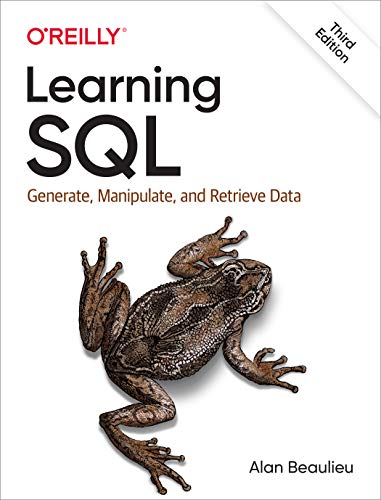
Alan Beaulieu has been designing, building, and implementing custom database applications for over 25 years, with expertise spanning Financial Services and Telecommunications. His extensive experience and authorship of multiple SQL books, including this one, led him to create a resource that helps you move quickly through both fundamental and advanced SQL concepts. His background in Operations Research from Cornell University and ongoing consulting work ensure the book’s practical relevance for developers and database professionals seeking to strengthen their SQL skills.
Alan Beaulieu has been designing, building, and implementing custom database applications for over 25 years. He is the author of Learning SQL and Mastering Oracle SQL (O’Reilly), and has written an online course on SQL for the University of California. He currently runs his own consulting company that specializes in database design and development in the fields of Financial Services and Telecommunications. Alan has a Bachelor of Science degree in Operations Research from the Cornell University School of Engineering. He lives in Massachusetts with his wife and two daughters.
Alan Beaulieu's approach in this book shifted previous assumptions about learning SQL by focusing on practical application rather than abstract theory. You get hands-on lessons covering everything from basic SQL data manipulation to advanced features like analytic functions and handling very large datasets, including new chapters on SQL in big data contexts. The book walks you through creating tables, indexes, and constraints, plus working with subqueries and built-in functions, so you can handle real database tasks confidently. If you're a developer or analyst aiming to deepen your command of relational databases, this book delivers clear, example-driven instruction without unnecessary complexity.
This custom AI book on SQL mastery is created after you share your current skill level, project goals, and the specific SQL topics you want to focus on. AI crafts a step-by-step 30-day learning plan tailored to your unique situation, making complex concepts approachable and relevant. This personalized guide helps you efficiently build practical SQL skills that align precisely with your projects, avoiding generic content and ensuring every lesson matters.
TailoredRead AI creates personalized nonfiction books that adapt to your unique background, goals, and interests. Instead of reading generic content, you get a custom book written specifically for your profession, experience level, and learning objectives. Whether you're a beginner looking for fundamentals or an expert seeking advanced insights, TailoredRead crafts a book that speaks directly to you. Learn more.
This personalized SQL learning plan offers a structured 30-day approach focusing on practical skills essential for project success. It provides a tailored framework that prioritizes key SQL concepts, query optimization, and database design aligned with your specific project needs and background. The book cuts through generic advice by delivering step-by-step lessons and real-world examples relevant to your industry and goals. Readers gain actionable strategies for mastering data retrieval, manipulation, and schema development with a focus on rapid skill acquisition. This tailored approach ensures efficient learning and direct application, fitting your unique context and accelerating your SQL proficiency effectively.
Allen G. Taylor brings 30 years of experience in computing and authorship to this guide. His extensive background in database development and teaching uniquely positions him to break down SQL complexities for newcomers. This book reflects his dedication to making database management approachable through clear instruction and updated content, helping you confidently develop and manage relational databases.
Allen G. Taylor is a 30-year veteran of the computer industry and the author of 30 books, including Cruise for Free, SQL For Dummies, 8th Edition, Crystal Reports 2008 For Dummies, Database Development For Dummies, Access Power Programming with VBA, and SQL All-In-One For Dummies, Second Edition. He lectures internationally on astronomy, databases, innovation, and entrepreneurship. He also teaches database development and Crystal Reports through a leading online education. For the latest news on Allen's activities, check out DatabaseCentral.Info or his blog at moontube.wordpress.com.
When Allen G. Taylor first discovered how many misconceptions surround SQL, he aimed to make it accessible without oversimplifying. This book walks you through creating, accessing, and managing relational databases with clear explanations of SQL's core language and latest features like temporal data handling. You'll learn practical techniques for structuring databases, securing your data, and avoiding common errors, all illustrated with examples from popular systems like Oracle and MySQL. If you're new to database development or want a friendly refresher, this book offers straightforward guidance without assuming prior expertise.
Larry Rockoff is an accomplished author known for simplifying complex SQL topics for beginners. His focus on practical applications across Microsoft SQL Server, MySQL, and Oracle makes this book particularly accessible. Rockoff’s experience shines through as he guides you logically through SQL concepts, helping you grasp essential skills without needing to code alongside the text.
Larry Rockoff is an accomplished author known for his expertise in SQL programming. He has written several books that simplify complex database concepts for beginners, making them accessible and understandable. His works focus on practical applications of SQL across various database systems, including Microsoft SQL Server, MySQL, and Oracle.
2016·240 pages·SQL, Relational Databases, Data Retrieval, Database Design, Stored Procedures
Drawing from his deep expertise in SQL programming, Larry Rockoff crafted this book to fill a gap he saw in beginner-friendly SQL resources. Instead of overwhelming you with syntax dumps, he breaks down SQL concepts clearly and builds your understanding step-by-step, covering Microsoft SQL Server, MySQL, and Oracle. You’ll learn how to retrieve and manipulate data, design intuitive relational databases, and handle advanced topics like joins, subqueries, and stored procedures—all without needing to run code as you read. If you're new to SQL or want a straightforward introduction that respects your learning pace, this book fits well, though experienced developers might find it foundational rather than advanced.
Ralf Adams is a recognized author and expert in SQL and database management. With extensive experience in teaching and practical applications, he has authored several books that simplify complex database concepts for beginners and advanced users alike. This book reflects his dedication to making SQL accessible, providing clear explanations and practical examples to help you build a strong foundation in relational databases.
Ralf Adams is a recognized author and expert in SQL and database management. With extensive experience in teaching and practical applications, he has authored several books that simplify complex database concepts for beginners and advanced users alike.
What changed my perspective reading this was how Ralf Adams moves beyond the usual jargon-heavy introductions to SQL and database design. Drawing from his extensive teaching experience, Adams lays out foundational concepts like ER models, keys, and normalization with clarity, then guides you through practical applications using MySQL, PostgreSQL, and T-SQL examples. You’ll find chapters that build your skills through exercises and real-world scripts, including database administration and distribution across servers. If you want a hands-on grasp of SQL that balances theory with tested practice, this book suits you well; it’s less for those seeking advanced database theory and more for learners wanting a solid, applicable base.
C. J. Date is an independent author, lecturer, researcher, and consultant who helped pioneer relational database technology and contributed to IBM's SQL/DS and DB2 products. Holding an honors degree in mathematics from Cambridge University, he has authored the widely used textbook An Introduction to Database Systems, which has sold nearly a million copies globally. His vast experience delivering lectures worldwide and clarifying complex technical issues sets the foundation for this book, offering you a clear path through the often opaque world of database design theory.
C. J. Date is an independent author, lecturer, researcher, and consultant, specializing in relational database technology, a field he helped pioneer. Prior to leaving IBM in 1983, he was involved in technical planning and externals design for the IBM products SQL/DS and DB2. His book An Introduction to Database Systems (8th edition) is the standard text on the subject and has sold 900,000 copies, not counting translations. It is used by several hundred colleges and universities worldwide. Mr. Date has delivered live lectures and seminars on database matters at locations throughout the world. He holds an honors degree in mathematics from Cambridge University and has made a number of original contributions to database theory. He enjoys a reputation that is second to none for his ability to explain complex technical issues in a clear and understandable fashion.
Unlike most database design books that skim theory, C. J. Date dives deep into the scientific foundations of relational database design, making complex concepts like advanced normal forms approachable for practitioners. You’ll gain clarity on crucial ideas such as essential tuple normal form and domain key normal form, with examples refined from decades of teaching experience. The book bridges the gap between abstract theory and practical design, helping you create database models that remain robust despite evolving business needs. If you’re involved in database design or administration, this text offers a rigorous framework to elevate your understanding beyond surface-level techniques.
The best Relational Databases books and more, in your inbox each week. No account needed.
Conclusion
Across these nine books, clear themes emerge: practical application alongside strong theoretical foundations, attention to common challenges like antipatterns, and adapting relational databases to modern programming environments.
If you're just starting, Database Design for Mere Mortals offers a solid foundation. For those wanting to avoid common SQL errors, SQL Antipatterns provides actionable guidance. Developers working in Python should combine SQLAlchemy 2 In Practice with Learning SQL for a focused skill set.
Once you’ve absorbed these expert insights, create a personalized Relational Databases book to bridge the gap between general principles and your specific situation. Tailored knowledge can accelerate your journey from understanding relational theory to building robust, efficient databases that serve your unique needs.
Frequently Asked Questions
I'm overwhelmed by choice – which book should I start with?
Start with "Database Design for Mere Mortals" for a clear, step-by-step introduction to database design. It lays a strong foundation before diving into SQL specifics.
Are these books too advanced for someone new to Relational Databases?
Not at all. Books like "SQL for Dummies" and "Language of SQL, The" cater specifically to beginners with approachable explanations and examples.
What's the best order to read these books?
Begin with design basics from Hernandez’s book, then progress to SQL fundamentals with Beaulieu or Taylor, and follow up with Karwin’s "SQL Antipatterns" to avoid common mistakes.
Do I really need to read all of these, or can I just pick one?
You can pick based on your goals. For practical querying, "Practical SQL, 2nd Edition" is excellent; for theory, Date’s book is unmatched. Combining a few offers broader insight.
Are any of these books outdated given how fast Relational Databases changes?
These books cover enduring principles and widely used SQL practices. While technology evolves, foundational theory and core SQL concepts remain relevant across platforms.
Can personalized books help me learn more efficiently?
Yes! While expert books offer broad insights, personalized Relational Databases books tailor content to your background, skills, and goals, making learning faster and more relevant.
📚 Love this book list?
Help fellow book lovers discover great books, share this curated list with others!