William Easterly
NYU Economics Professor. I am an expert on the other experts.
Book Recommendations:
Recommended by William Easterly
“Fascinating new book just released https://t.co/DF1IqrCq3X” (from X)

The thinkers discussed in this volume are a remarkably diverse group. They were born in the eighteenth, nineteenth, and twentieth centuries, and their work extends into the twenty-first. Some are economists primarily addressing other scholars, others popular writers aiming at the general public. Their educational backgrounds range from entirely informal schooling to PhDs from major universities. They include a former telegraph operator, a one-time Hollywood wardrobe department manager, and a graduate of secretarial school. Some were shaped by the frontier, others by the city. They are storytellers and data collectors, committed Christians and confirmed atheists, devoted to family life and resolutely single. Two are recognized here as the intellectual partners of their illustrious spouses. The work introduced in these essays exemplifies numerous strands of thought within the classical liberal tradition, from feminism and abolitionism to the Chicago School of economics. These thinkers include some of the most significant figures in the development of mid-twentieth-century American libertarianism, with its emphasis on the autonomous individual, alongside some of the most influential analysts of how social interaction brings forth order without top-down design. Some of these writers emphasize empiricism, others theory. Addressing why the West grew rich, one has written a three-volume history informed by literature, culture, and massive amounts of data. Another developed the metaphor of mechanical energy to argue for the freedom of creative individuals. One blamed the Great Depression on contractionary monetary policy, another on Americans “declining resilience” in the face of hardship.
Recommended by William Easterly
“Check out this talk by @nyuniversity PhD Sarah Kabay on her fascinating new book https://t.co/4VsGbyFiif https://t.co/1fmW5iSx3t” (from X)

Around the world, 250 million children cannot read, write, or perform basic mathematics. They represent almost 40% of all primary school-aged children. This situation has come to be called the "global learning crisis" and it is one of the most critical challenges facing the world today. Work to address this situation depends on how it is understood. Typically, the global learning crisis and efforts to improve primary education are defined in relation to two terms: access and quality. This book is focused on the connection between them. Through a mixed-methods case study, it provides detailed, contextualized analysis of Ugandan primary education. As one of the first countries in Sub-Saharan Africa to enact dramatic and far-reaching primary education policy, Uganda serves as a compelling case study. With both quantitative and qualitative data from over 400 Ugandan schools and communities, the book analyzes grade repetition, private primary schools, and school fees, viewing each issue as an illustration of the connection between access to education and education quality. This analysis finds evidence of a positive association, challenging a key assumption that there is a trade-off or disconnect between efforts to improve access to education and efforts to improve education quality. Embracing the complexity of education systems, and focusing on dynamics where improvements in access and quality can be mutually reinforcing, can be a new approach for improving basic education in different contexts around the world.
Recommended by William Easterly
“Fascinating new book on Randomista debate, featuring Deaton, Heckman, Morduch, Pritchett and others https://t.co/FtZ0AfJ97J” (from X)

This is an open access title available under the terms of a CC BY-NC-ND 4.0 International licence. It is free to read at Oxford Academic and offered as a free PDF download from OUP and selected open access locations. In October 2019, Abhijit Banerjee, Esther Duflo, and Michael Kremer jointly won the 51st Sveriges Riksbank Prize in Economic Sciences in Memory of Alfred Nobel "for their experimental approach to alleviating global poverty." But what is the exact scope of their experimental method, known as randomized control trials (RCTs)? Which sorts of questions are RCTs able to address and which do they fail to answer? The first of its kind, Randomized Control Trials in the Field of Development: A Critical Perspective provides answers to these questions, explaining how RCTs work, what they can achieve, why they sometimes fail, how they can be improved and why other methods are both useful and necessary. Bringing together leading specialists in the field from a range of backgrounds and disciplines (economics, econometrics, mathematics, statistics, political economy, socioeconomics, anthropology, philosophy, global health, epidemiology, and medicine), it presents a full and coherent picture of the main strengths and weaknesses of RCTs in the field of development. Looking beyond the epistemological, political, and ethical differences underlying many of the disagreements surrounding RCTs, it explores the implementation of RCTs on the ground, outside of their ideal theoretical conditions and reveals some unsuspected uses and effects, their disruptive potential, but also their political uses. The contributions uncover the implicit worldview that many RCTs draw on and disseminate, and probe the gap between the method's narrow scope and its success, while also proposing improvements and alternatives. Without disputing the contribution of RCTs to scientific knowledge, Randomized Control Trials in the Field of Development warns against the potential dangers of their excessive use, arguing that the best use for RCTs is not necessarily that which immediately springs to mind. Written in plain language, this book offers experts and laypeople alike a unique opportunity to come to an informed and reasoned judgement on RCTs and what they can bring to development.
Recommended by William Easterly
“@Meredith_McC @BitterSouth @walkyourcamera @ijeb24 Just posted your great article on Hillbilly Elegy and just purchased the book Appalachian Reckoning.” (from X)
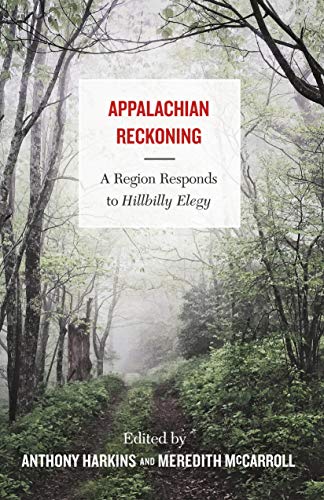
2020 American Book Award winner, Walter & Lillian Lowenfels Criticism Award Weatherford Award winner, nonfiction With hundreds of thousands of copies sold, a Ron Howard movie in the works, and the rise of its author as a media personality, J. D. Vance’s Hillbilly Elegy: A Memoir of a Family and Culture in Crisis has defined Appalachia for much of the nation. What about Hillbilly Elegy accounts for this explosion of interest during this period of political turmoil? Why have its ideas raised so much controversy? And how can debates about the book catalyze new, more inclusive political agendas for the region’s future? Appalachian Reckoning is a retort, at turns rigorous, critical, angry, and hopeful, to the long shadow Hillbilly Elegy has cast over the region and its imagining. But it also moves beyond Hillbilly Elegy to allow Appalachians from varied backgrounds to tell their own diverse and complex stories through an imaginative blend of scholarship, prose, poetry, and photography. The essays and creative work collected in Appalachian Reckoning provide a deeply personal portrait of a place that is at once culturally rich and economically distressed, unique and typically American. Complicating simplistic visions that associate the region almost exclusively with death and decay, Appalachian Reckoning makes clear Appalachia’s intellectual vitality, spiritual richness, and progressive possibilities.
Get a weekly reading digest
New expert-recommended books every week. No account needed.