8 Beginner Antennas Books to Build Your Foundation
These 8 Antennas Books, authored by leaders like Constantine A. Balanis and ARRL Inc., offer approachable learning paths for beginners eager to master antenna fundamentals and practical applications.
Updated on June 28, 2025·We may earn commissions for purchases made via this page
We're launchingLaunching on Product Hunt today 🎉We just launchedJust launched on Product Hunt 🎉
Modelpeers, from the BookAuthority teamFrom the BookAuthority team: Modelpeers, a free way to follow AI models and agents like you follow people. We'd love your support.
Every expert in antennas started exactly where you are now: curious but cautious, eager but unsure. The world of antennas may seem complex, but with the right guidance, it becomes an accessible and rewarding field. Now is a great time to begin, as these books open doors to understanding how antennas work in everything from everyday communications to advanced radio technologies.
The books featured here are authored by established authorities such as Constantine A. Balanis, a professor with decades of experience at NASA and Arizona State University, and ARRL Inc., the premier organization supporting amateur radio in the US for over 100 years. Their works blend foundational theory with practical insights, making them ideal for newcomers who want to build a solid understanding without feeling overwhelmed.
While these beginner-friendly books provide excellent foundations, readers seeking content tailored to their specific learning pace and goals might consider creating a personalized Antennas book that meets them exactly where they are. This approach can help you focus on the aspects of antennas most relevant to your interests and needs, ensuring a more efficient and engaging learning journey.
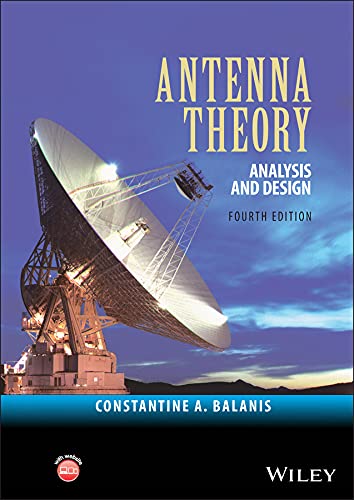
Constantine A. Balanis holds a PhD in Electrical Engineering from The Ohio State University and has extensive experience at NASA and academia. As Regents' Professor at Arizona State University and a life fellow of IEEE, his teaching expertise shines through this book, which is carefully crafted to ease beginners into antenna theory and design. His background clearly informs the text's clarity and depth, making it a trusted resource for newcomers aiming to grasp antenna concepts and practical applications.
Constantine A. Balanis received his BSEE degree from the Virginia Tech in 1964, his MEE degree from the University of Virginia in 1966, his PhD in Electrical Engineering from The Ohio State University in 1969, and an Honorary Doctorate from the Aristotle University of Thessaloniki in 2004. From 1964 to 1970, he was with the NASA Langley Research Center in Hampton, VA, and from 1970 to 1983, he was with the Department of Electrical Engineering of West Virginia University. In 1983 he joined Arizona State University and is now Regents' Professor of Electrical Engineering. Dr. Balanis is also a life fellow of the IEEE.
What started as a challenge to clarify complex antenna concepts became Constantine A. Balanis's definitive guide for beginners and engineers alike. This book walks you through fundamental antenna principles and applies them to a range of practical designs—from linear dipoles and arrays to microstrip and reflector antennas. You'll find detailed mathematical treatments balanced with intuitive explanations, supported by new sections on modern developments like antenna miniaturization and mobile communications. If you have a foundation in electromagnetic theory and calculus, this text equips you with skills to analyze, design, and measure antennas effectively, making it ideal for electrical engineering students and practicing engineers stepping into antenna design.
ARRL The National Association for Amateur Radio, the largest US membership group supporting amateur radio, brings over 100 years of expertise to this four-volume antenna reference. Their extensive work publishing, educating, and advancing radio technology informs this set, designed to help you grasp antenna theory and practical construction. Driven by a mission to promote amateur radio enjoyment and experimentation, ARRL delivers a resource that balances technical depth with accessibility for newcomers and active hobbyists alike.
ARRL The National Association for Amateur Radio is the largest membership association for the amateur radio hobby and service in the US. For over 100 years, we have been the primary source of information about amateur radio, offering a variety of benefits and services to our members, as well as the larger amateur radio community. We publish books on amateur radio, as well as four magazines covering a variety of radio communication interests. In addition, we provide technical advice and assistance to amateur radio enthusiasts, support several education programs, and sponsor a variety of operating events. ARRL’s Mission Statement: To advance the art, science, and enjoyment of amateur radio. ARRL’s Vision Statement: ARRL: Supports the awareness and growth of Amateur Radio worldwide; Advocates for meaningful access to radio spectrum; Strives for every member to get involved, get active, and get on the air; Encourages radio experimentation and, through its members, advances radio technology and education; and Organizes and trains volunteers to serve their communities by providing public service and emergency communications.
2023·1104 pages·Antennas, Transmission Lines, Radio Propagation, Antenna Design, HF Antennas
What happens when decades of amateur radio expertise meets antenna design? ARRL Inc., with its century-long dedication to advancing amateur radio, delivers a detailed exploration of antenna fundamentals, types, and the latest construction techniques. You’ll gain skills in building and testing antennas—from simple dipoles to advanced satellite and microwave arrays—supported by projects and updated guidelines like shunt-feeding towers and transmitting chokes. This four-volume set breaks down complex antenna theory into manageable parts, making it approachable for you if you’re starting out or looking to deepen practical knowledge in radio communications. However, those seeking a brief overview may find the depth more suited to committed hobbyists or technicians.
This AI-created book on antenna design is tailored specifically to your background and goals in this field. As you share your current skill level and the antenna topics you want to focus on, the book is crafted to provide a comfortable, step-by-step learning experience. This personalized approach helps reduce overwhelm while building your understanding progressively, making antenna fundamentals accessible and enjoyable at your own pace.
TailoredRead AI creates personalized nonfiction books that adapt to your unique background, goals, and interests. Instead of reading generic content, you get a custom book written specifically for your profession, experience level, and learning objectives. Whether you're a beginner looking for fundamentals or an expert seeking advanced insights, TailoredRead crafts a book that speaks directly to you. Learn more.
This tailored book offers a step-by-step introduction to antenna fundamentals and design, crafted to match your unique background and learning pace. It explores essential concepts from basic electromagnetic principles to practical design considerations, gradually building your confidence without overwhelming technical jargon. The personalized approach ensures that each chapter focuses on areas most relevant to your interests and goals, helping you understand how antennas work and how to design simple antennas effectively. By addressing your skill level and preferred learning speed, this book transforms antenna fundamentals into an accessible and rewarding experience, making complex topics approachable and engaging.
Eric P. Nichols is a recognized authority in amateur radio and antenna design, contributing extensively through his clear and approachable writing. His years of hands-on experience shape this book, making complex antenna topics accessible, especially the critical distinction between transmitting and receiving antennas. Nichols' focus on practical receiving antenna solutions reflects his dedication to helping amateur radio enthusiasts improve their station performance.
Eric P. Nichols is a recognized authority in amateur radio and antenna design, contributing significantly to the field through his extensive experience and publications. He has been involved in amateur radio for many years, providing insights and practical knowledge that help enthusiasts improve their skills and understanding of radio communications. His work emphasizes the importance of effective receiving antennas, particularly for amateur radio operators, and he is known for his approachable writing style that makes complex topics accessible to readers.
2018·256 pages·Antennas, Radio Reception, Active Antennas, Passive Antennas, Signal Amplification
The methods Eric P. Nichols developed while deeply involved in amateur radio bring a focused lens on receiving antennas, emphasizing their distinct roles compared to transmitting ones. You get a detailed walk-through of active and passive receiving antennas, including the practical advantages of low-noise RF operational amplifiers that simplify building active antennas. For instance, the book explores the unique challenges and benefits of small loop antennas and the Beverage antenna, offering tangible insights for improving your station's reception. It's ideal if you want to enhance your receiving capabilities without being overwhelmed by unrelated transmitting antenna details.
Peter Parker is a seasoned amateur radio operator with extensive experience designing antennas since the 1980s. His passion for electronics and portable QRP operations led him to write this book as a follow-up to his bestseller Minimum QRP, sharing practical, beginner-friendly insights that demystify building and using portable antennas for effective radio communication.
Peter Parker is a seasoned amateur radio operator with extensive experience in building and designing antennas. He has been active in the field since the 1980s, developing practical solutions for portable QRP operations. His passion for electronics began in his youth, leading to a career focused on innovative antenna designs. Parker's previous work includes the bestselling book 'Minimum QRP', and he continues to share his knowledge through various platforms, including his website and social media.
Peter Parker is a seasoned amateur radio operator whose decades of hands-on experience shape this guide to portable QRP antennas. You’ll learn how to evaluate your specific needs and navigate the trade-offs among popular antenna types without getting lost in complex math. The book offers practical suggestions for affordable materials and detailed construction techniques for lightweight, effective antennas and accessories that Parker has tested over 30 years. It’s especially suited for newcomers and those returning to radio, providing clear, straightforward advice to get you operating from almost anywhere with confidence.
Peter Parker is an experienced amateur radio operator whose journey began in 1980 with building a crystal set and earned him a novice license by 1986. With decades of practical antenna experimentation and numerous projects under his belt, including transceivers and antennas, he brings a hands-on approach that benefits both beginners and seasoned operators. His clear, accessible writing reflects this expertise, making his antenna designs approachable for anyone interested in portable radio operation.
Peter Parker is an experienced amateur radio operator who has spent decades building and experimenting with antennas. His journey began in 1980 with the construction of a crystal set, leading to a novice license in 1986. Over the years, he has developed numerous projects, including transceivers and antennas, and has authored several books aimed at helping both beginners and experienced operators. His practical knowledge and hands-on approach make his works valuable resources for anyone interested in amateur radio.
What happens when decades of hands-on amateur radio experience meets the challenge of building portable antennas? Peter Parker draws on nearly 30 years of QRP activity to present over thirty tested antenna projects, focusing on upper HF, VHF, and UHF bands while still covering lower frequencies. You’ll find detailed descriptions of simple antennas and accessories designed for operation almost anywhere, with insights drawn from the author’s practical experimentation. This book suits anyone eager to deepen their antenna-building skills beyond basics, especially those who want reliable, field-ready setups without getting bogged down in theory.
This personalized AI book about portable antenna construction is created after you share your background, skill level, and specific interests in antenna projects. Because portable antennas can be complex, having a book tailored to your pace and goals helps you avoid overwhelm while building your confidence step by step. This custom AI book focuses on what you want to learn, making antenna setups practical and enjoyable from the start.
TailoredRead AI creates personalized nonfiction books that adapt to your unique background, goals, and interests. Instead of reading generic content, you get a custom book written specifically for your profession, experience level, and learning objectives. Whether you're a beginner looking for fundamentals or an expert seeking advanced insights, TailoredRead crafts a book that speaks directly to you. Learn more.
2026·50-300 pages·Antennas, Antenna Basics, Portable Design, Construction Tips, Material Selection
This tailored book explores practical projects and tips for constructing portable antennas, designed specifically to match your background and goals. It reveals essential techniques and guidance that help you build confidence through a progressive, personalized introduction, removing overwhelm with clear foundational content. The tailored approach focuses on your interests and skill level, making complex concepts accessible and enjoyable.
Readers will dive into hands-on antenna setups, learning step-by-step methods that suit their individual pace. This personalized guide makes mastering portable antenna construction both approachable and rewarding, guiding you from basic principles to effective implementation with enthusiasm and clarity.
ARRL Inc., the largest US amateur radio association with over 100 years of expertise, authored this book to support enthusiasts in mastering antenna design. Their deep involvement in the amateur radio community and commitment to education shines through, providing you with clear instruction and a wide spectrum of antenna systems to explore and build.
ARRL Inc. is the largest membership association for the amateur radio hobby and service in the US. For over 100 years, they have been the primary source of information about amateur radio, offering a variety of benefits and services to members and the larger amateur radio community. They publish books on amateur radio and provide technical advice, education programs, and advocacy for amateur radio interests.
What happens when a century-old amateur radio authority turns its focus to antennas? ARRL Inc., with over 100 years of experience as the backbone of the US amateur radio community, developed this book as a practical guide to designing and building antenna systems. You’ll explore hundreds of designs, from wire and vertical antennas to advanced VHF/UHF Yagi arrays, alongside updated grounding techniques and propagation insights. The inclusion of antenna modeling software and detailed projects means you gain both theoretical understanding and hands-on skills. If you’re starting in radio communications and want a resource that grows with your expertise, this book suits you well.
John W Hill is a recognized authority in amateur radio and antenna design, with deep experience bridging practical applications and theory. He wrote this book to make complex antenna concepts accessible to newcomers, helping you implement effective antenna solutions tailored to portable and emergency communications needs.
John W Hill is a recognized authority in the field of amateur radio and antenna design, with extensive experience in practical applications and theoretical concepts. His work focuses on making complex topics accessible to newcomers, ensuring that readers can effectively implement antenna solutions for various communication needs.
Unlike most antennas books that focus heavily on theory, John Hill's Portable Wire Antennas breaks down key concepts like transmission lines, impedance matching, and antenna configurations with clear, straightforward explanations that avoid complex math. You’ll gain practical knowledge about assembling and deploying portable HF wire antennas optimized for various uses—from emergency communications to recreational expeditions. Special chapters cover NVIS propagation and low-height deployment strategies, making it ideal for operators on the move. This book suits newcomers wanting hands-on, accessible insight into effective antenna setups without the intimidation of dense theory.
ARRL Inc., the largest US amateur radio association with over a century of expertise, leads this work. They’ve been the primary source for ham radio knowledge, advocacy, and education, serving nearly 150,000 members worldwide. Their deep understanding of amateur radio challenges, especially for those with limited space, drives this book’s accessible guidance and innovative antenna projects that get you on the air regardless of your living situation.
ARRL Inc. is the largest membership association for the amateur radio hobby and service in the US. For over 100 years, ARRL has been the primary source of information about amateur radio, offering a variety of benefits and services to members and the larger amateur radio community. They publish books and magazines covering various radio communication interests, provide technical advice, support education programs, and advocate for amateur radio operators before regulatory bodies. ARRL serves nearly 150,000 members in the US and internationally, promoting and protecting the art and science of amateur radio.
2015·128 pages·Antennas, Radio Communication, Station Setup, Antenna Design, VHF Antennas
This book removes barriers for newcomers by addressing a common problem: limited space for amateur radio antennas. Authored by ARRL Inc., the leading US association for amateur radio, alongside Steve Ford WB8IMY, it offers practical antenna designs tailored for apartments and small lots. You’ll learn how to optimize your limited-space station with projects ranging from indoor VHF antennas to outdoor stealth dipoles, plus advice on feed lines, SWR, and RF safety. If you want to enjoy ham radio without sprawling property, this book helps you make smart antenna choices that fit your environment.
The best Antennas books and more, in your inbox each week. No account needed.
Conclusion
These 8 books collectively emphasize clear explanations and hands-on projects, making antenna theory approachable and practical for newcomers. They cover a range of topics from fundamental electromagnetic principles to portable antenna construction and solutions for limited-space setups.
If you are completely new, starting with "Antenna Theory" by Constantine A. Balanis or the ARRL's antenna guides will ground you in essential concepts. For those interested in practical, portable antennas, Peter Parker's QRP books offer step-by-step instructions. Beginners with limited space will find the ARRL's Small Antennas for Small Spaces invaluable.
Alternatively, you can create a personalized Antennas book that fits your exact needs, interests, and goals to create your own personalized learning journey. Building a strong foundation early sets you up for success in antennas and beyond.
Frequently Asked Questions
I'm overwhelmed by choice – which book should I start with?
Start with "Antenna Theory" by Constantine A. Balanis for a solid foundation or the ARRL Antenna Book for practical insights. Both ease beginners into core concepts without overwhelming detail.
Are these books too advanced for someone new to antennas?
No, these books are written to introduce antenna basics clearly and progressively. For example, Peter Parker's portable antenna books are especially beginner-friendly with practical advice.
What's the best order to read these books?
Begin with foundational texts like "Antenna Theory" or the ARRL Antenna Book, then explore specialized topics such as portable antennas or small-space solutions as your confidence grows.
Do I really need any background knowledge before starting?
While some familiarity with basic electronics or math helps, many of these books, like "Portable Wire Antennas," explain concepts from the ground up, making them accessible to newcomers.
Which books focus more on theory vs. practical application?
"Antenna Theory" leans toward theory with detailed analysis, while Peter Parker's QRP books and "Portable Wire Antennas" emphasize hands-on building and real-world setups.
Can I get a book tailored to my specific antenna learning goals?
Yes! While these expert books provide excellent foundations, you can create a personalized Antennas book that matches your pace and focuses on the antenna topics you care about most for a customized learning experience.
📚 Love this book list?
Help fellow book lovers discover great books, share this curated list with others!