7 Beginner-Friendly Boat Building Books You Can Trust
Expert recommendations from Hen Mazzig, offering clear, accessible guides to start your Boat Building journey with confidence
Updated on June 24, 2025·We may earn commissions for purchases made via this page
2 of 7 books have Kindle versions
We're launchingLaunching on Product Hunt today 🎉We just launchedJust launched on Product Hunt 🎉
Modelpeers, from the BookAuthority teamFrom the BookAuthority team: Modelpeers, a free way to follow AI models and agents like you follow people. We'd love your support.
Every expert in Boat Building started exactly where you are now: eager but uncertain about the best way to learn. The beautiful thing about Boat Building is that anyone can begin with the right guidance, and these books provide just that—accessible, clear, and practical instruction to turn curiosity into skill.
Take Stephen F. Pollard, who shares decades of hands-on experience in aluminum boatbuilding, helping amateurs navigate complex metalwork. Or consider Sam Devlin, whose lifetime of crafting over 400 custom boats informs his approachable stitch-and-glue manual. And then there’s Hen Mazzig, an activist and commentator, who found Pollard’s guide invaluable in appreciating the craft’s nuances. Their insights show that solid foundations, built one step at a time, unlock lasting success.
While these beginner-friendly books provide excellent foundations, readers seeking content tailored to their specific learning pace and goals might consider creating a personalized Boat Building book that meets them exactly where they are. This way, your learning journey can be as unique as the boat you dream of building.
Hen Mazzig, an activist and media commentator with a keen interest in craftsmanship, praises Stephen F. Pollard's guide as a remarkable resource for newcomers to aluminum boatbuilding. Mazzig highlights the approachable style and practical insights that make complex metalwork accessible to amateurs. His endorsement reflects how the book helped him appreciate the nuances of boat construction during his own explorations, noting, "You’ve done amazing work, Stephen. Best of luck with the book and everything in your future!" This recommendation underscores the book’s appeal to those starting their journey in boatbuilding.
Stephen F. Pollard has constructed 12 large sailing yachts, some well-known ocean racers, large powerboats, and hundreds of small, welded-aluminum workboats and pleasure boats.
Drawing from decades of hands-on experience crafting a wide range of aluminum vessels, Stephen F. Pollard demystifies boatbuilding for amateurs and small shops alike. You learn precise techniques for welding, fitting out, and painting aluminum boats, with detailed guidance that balances technical accuracy and practical accessibility. For example, the chapters on welding basics and hull assembly break down complex procedures into manageable steps, making it easier to grasp even without prior metalwork experience. This book suits those ready to dive into aluminum boatbuilding without feeling overwhelmed, whether you’re building your first workboat or customizing a pleasure craft.
Renn Tolman (1934-2014) was a skilled boatbuilder and designer whose experience as a carpenter and ski patrolman shaped his approach to creating practical and accessible skiff plans. His deep understanding of Alaska's rugged waters inspired the designs in this book, which offers clear, detailed guidance for amateur builders. Tolman’s hands-on expertise and emphasis on simple materials and tools make this a valuable resource for anyone eager to take on their first boat building project with confidence.
Renn Tolman (1934-2014) was a renowned boatbuilder and designer known for his innovative skiff designs. After serving in the Army, he graduated from the University of New Hampshire and spent a decade as a ski patrolman before moving to Homer, Alaska, where he became a carpenter and boatbuilder. He designed the famous Tolman Skiffs and authored two books on their construction, sharing his expertise with amateur builders. In retirement, he enjoyed hunting, fishing, and music, leaving a legacy in the boatbuilding community.
When Renn Tolman first set out to build the perfect plywood skiff, he combined practical woodworking skills with innovative boat design, creating accessible plans that suit amateurs well. This book guides you through building three different skiff models using epoxy and stitch-and-glue methods, emphasizing simplicity without sacrificing seaworthiness. You’ll find detailed instructions, over 175 drawings, and 100 photos that demystify complex shapes like the modified vee bottom, helping you understand not just how but why these construction techniques work. If you want a hands-on project that balances craftsmanship with straightforward methods, this book offers a clear path from raw materials to a seaworthy vessel.
This AI-created book on boat building matches your skill level and interests, providing a learning path that fits you personally. By sharing your background and goals, you receive a guide that introduces boat building basics in a way that feels manageable and encouraging. This custom approach helps you build skills at your own pace and removes the guesswork, so you can focus on gaining confidence and enjoying the craft from the start.
TailoredRead AI creates personalized nonfiction books that adapt to your unique background, goals, and interests. Instead of reading generic content, you get a custom book written specifically for your profession, experience level, and learning objectives. Whether you're a beginner looking for fundamentals or an expert seeking advanced insights, TailoredRead crafts a book that speaks directly to you. Learn more.
2026·50-300 pages·Boat Building, Woodworking Basics, Material Selection, Construction Techniques, Tool Usage
This tailored book explores the foundational skills essential for beginner boat builders, offering a stepwise, personalized guide that matches your background and learning pace. It focuses on easing newcomers into the craft by breaking down boat building basics into manageable, clear segments, designed to build confidence without overwhelming details. The book covers essential topics like material selection, basic woodworking techniques, and simple construction methods, all tailored to your specific goals and interests. By addressing your individual needs, it ensures a focused learning experience that nurtures your skills progressively, making the complex art of boat building accessible and enjoyable from the very first step.
Nick Schade runs Guillemot Kayaks, a leading provider of plans and kits for strip-built kayaks and has authored several authoritative books on boat building. His experience designing and building kayaks, combined with his skill in teaching through articles and videos, makes this book a practical guide for anyone eager to learn strip-plank construction. Schade’s approachable style and comprehensive coverage of tools, materials, and safety create a solid foundation for newcomers embarking on boat building projects.
Nick Schade runs Guillemot Kayaks, a leading provider of plans and kits for strip-built kayaks. He has authored several books on boat building, including 'The Strip-Built Sea Kayak', which has become a definitive guide in the field. With years of experience, he continues to design and build kayaks, sharing his expertise through articles and videos.
2009·288 pages·Boat Building, Boats, Strip Planking, Kayak Construction, Canoe Building
Drawing from his extensive experience running Guillemot Kayaks and authoring definitive guides like 'The Strip-Built Sea Kayak,' Nick Schade presents a hands-on manual for building small boats using strip-planking. You’ll learn detailed techniques for constructing three types of boats—a canoe, a kayak, and a dinghy—complete with plans and practical advice on materials, tools, and safety. This book suits anyone curious about amateur boat building, especially those who want a clear, approachable method that covers multiple boat styles. Whether you’re new to woodworking or a hobbyist ready to expand your skills, Schade’s straightforward approach makes the craft accessible without oversimplifying the challenges.
Sam Devlin has been captivated by boats since childhood and turned that passion into a lifelong career building over 400 custom vessels. With a background in biology and geology, he combines analytical thinking with hands-on expertise to guide amateur builders through the stitch-and-glue method. His manual reflects this deep knowledge and personal involvement, including teaching courses at the WoodenBoat School and personally supporting builders to avoid common pitfalls. This book distills his 45 years of experience into a resource that welcomes beginners into the craft with confidence and clarity.
Sam Devlin has been in love with boats since childhood. The boat building operation he started with his wife on a shoestring in 1977 has flourished, and Devlin Designing Boat Builders each year rolls out between 20 and 40 stitch-and-glue boats of various sizes from its shop on the shores of Puget Sound. He earned his degree in biology and geology from the University of Oregon, but the ink had barely dried on his diploma when he got himself deeply and permanently bewitched by boats. Over the next 45 years, his shop in Olympia, Washington produced more than 400 custom boats. Devlin is both an incurable romantic and an analytic thinker, and a designer who takes as much interest in his customers as in his boats. He’s been known to check in on blogs by amateurs building his boats and make calls to warn them off the shoals of an impending mistake. He’s a teacher, offering a course each summer at the WoodenBoat School in Brooklin, Maine. Devlin’s Boat Building, the first edition of his manual on the Stitch-and-Glue method of construction, has sold 70,000 copies. He has received the Lifetime Achievement Award from WoodenBoat magazine and the Northwest Maritime Center. He is an avid boater with a U.S. Coast Guard 100-ton Master’s License.
Sam Devlin’s decades of experience as a master boat builder shine through in this detailed manual, offering a clear path to building your own vessel using the stitch-and-glue technique. You’ll gain practical insights into creating everything from small dinghies to large cruisers, including construction tips, maintenance advice, and cabin building ideas. His approach demystifies the process, making it accessible without sacrificing quality, and chapters like the expanded appendix provide a range of boat plans suited for various skill levels. This book is ideal for those ready to start hands-on boat construction with a method that balances simplicity and seaworthiness.
Lifetime Achievement Award from WoodenBoat Magazine
Lifetime Achievement Award from Northwest Maritime Center
Howard I. Chapelle was a highly respected American naval architect whose extensive work in wooden boat construction has guided countless builders. His expertise and practical experience are evident throughout the book, making complex boatbuilding techniques accessible for amateurs. Chapelle’s methodical approach and inclusion of 19 boat plans provide you with a comprehensive resource that demystifies the craft and supports your journey from novice to confident builder.
Howard I. Chapelle was a prominent American naval architect and author, known for his extensive work in wooden boat construction. His expertise in the field has made him a respected figure among boat builders and enthusiasts. Chapelle's contributions to boatbuilding literature have been invaluable, providing practical guidance and insights based on his own experiences in the craft.
Howard I. Chapelle's decades of experience as a naval architect shine through in this thorough guide to wooden boat construction. You learn precise methods for building a wide range of boats, from flat-bottom rowboats to ocean cruisers, with detailed instructions on lofting, framing, hull types, and joinery. The book’s clear organization means you can easily find chapters on specific techniques like plywood construction or spar making, supported by numerous illustrations and 19 included boat plans. If you want a solid foundation in traditional boatbuilding without feeling overwhelmed, this book lays out each step with practical clarity.
This custom AI book on strip-planked boat construction is created based on your experience level and specific interests. It’s designed to take the overwhelm out of learning by focusing on the techniques and steps that match your pace and skills. Instead of a one-size-fits-all guide, this book helps you build confidence progressively, ensuring you grasp each part of the process comfortably. With your goals in mind, it offers targeted content tailored just for you, making the art of strip-planking accessible and enjoyable.
TailoredRead AI creates personalized nonfiction books that adapt to your unique background, goals, and interests. Instead of reading generic content, you get a custom book written specifically for your profession, experience level, and learning objectives. Whether you're a beginner looking for fundamentals or an expert seeking advanced insights, TailoredRead crafts a book that speaks directly to you. Learn more.
This tailored book explores the craft of strip-planked boat construction with a focus that matches your background and goals. It introduces hands-on techniques progressively, easing the learning curve by focusing on foundational skills essential to strip-planking. The content is designed to build your confidence through a personalized pace that suits your comfort level, making complex steps approachable. By addressing your specific interests and skill set, it reveals practical ways to work with materials, shape hulls, and finish boats, turning intricate concepts into manageable projects. This personalized approach ensures your learning journey is both engaging and effective, inspiring you to progress steadily without overwhelm.
Robert M. Steward brought over 55 years of boatbuilding expertise to this manual, drawing on his time as a designer and president at Huckins Yacht Corporation. Alongside Carl Cramer, a seasoned publisher and boat designer, they created a resource that stays true to traditional craftsmanship while embracing new construction methods. Their combined background ensures the book is accessible for beginners while detailed enough for professionals, making it a trusted guide in the boatbuilding community.
Robert M. Steward spent more than 55 years in the boatbuilding business, working for various design offices and builders on both coasts. He was a designer and engineer at Huckins Yacht Corporation for 24 years and served as its president before retiring in 1981. He remained active as a designer and marine consultant until his death in 1996. Carl Cramer has been the publisher of WoodenBoat magazine for over 20 years and has launched Professional Boatbuilder magazine and the IBEX trade show. He graduated from the Yacht Design Institute and apprenticed as a boat designer and builder in the early 1970s.
Drawing from decades of hands-on experience, Robert M. Steward and Carl Cramer crafted this manual to bridge the gap between traditional craftsmanship and modern techniques. You learn precise methods for wood-epoxy construction, framing, planking, and interior joinery, with detailed chapters on tools, materials, and finishing touches that demystify the process. This book suits both hobbyists eager to build their first boat and professionals seeking a reliable reference, offering clear guidance without overwhelming jargon. For example, the sections on setting up molds and deck framing provide stepwise insights that make complex tasks approachable. If you want a solid foundation in practical boatbuilding skills, this manual delivers exactly that.
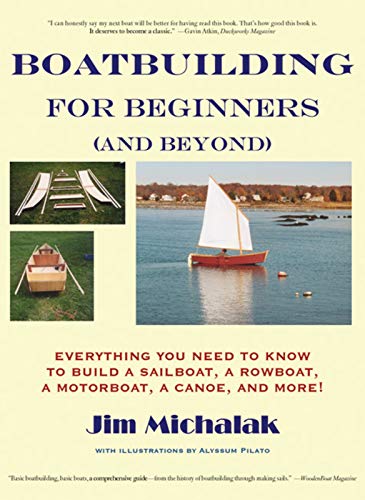
Jim Michalak, a former aerospace engineer turned leading designer of homebuilt boats, brings his technical background to this accessible guide. Known for teaching beginners effectively, Michalak wrote this book to simplify boatbuilding using common materials and clear instructions. His expertise shines through as he guides you from simple tools to launching your own sailing or rowing craft, making the craft approachable for anyone willing to try.
Jim Michalak is a former aerospace engineer who has become one of the foremost designers of homebuilt boats in America. He lives in Lebanon, Illinois.
2002·175 pages·Boat Building, Woodworking, Small Craft, Sailboats, Rowboats
Jim Michalak's decades of aerospace engineering experience inform his practical approach to boatbuilding, making complex projects accessible to novices. You learn how to construct a variety of small boats, starting with detailed plans for a 14-foot sailing and rowing skiff called "Mayfly," progressing to other vessels like canoes and motorboats. The book covers not just hull construction but also crafting sails, rudders, and flotation compartments, equipping you with a comprehensive skill set. If you're eager to build your own boat using simple materials and clear instructions, this book is a steady guide throughout your journey.
The best Boat Building books and more, in your inbox each week. No account needed.
Conclusion
These seven books offer a rich blend of traditional techniques and modern methods, all designed with beginners in mind. From Pollard’s aluminum expertise to Michalak’s diverse small craft instructions, each guide builds your confidence progressively.
If you’re completely new, starting with "Boatbuilding for Beginners" by Jim Michalak can ground you in fundamental concepts before moving to specialized methods like Devlin’s stitch-and-glue or Schade’s strip-planking. For step-by-step progression, transitioning through these books will steadily expand your skills and understanding.
Alternatively, you can create a personalized Boat Building book that fits your exact needs, interests, and goals to create your own personalized learning journey. Building a strong foundation early sets you up for success in this rewarding craft.
Frequently Asked Questions
I'm overwhelmed by choice – which book should I start with?
Start with "Boatbuilding for Beginners" by Jim Michalak. It offers clear, simple steps covering various small boats and sets a solid foundation before diving into specialized methods.
Are these books too advanced for someone new to Boat Building?
No, each book is designed to be approachable. For example, Pollard’s aluminum guide breaks down welding basics, making complex skills manageable for newcomers.
What's the best order to read these books?
Begin with general guides like Michalak’s, then explore specific methods such as Devlin’s stitch-and-glue or Schade’s strip-planked techniques to build skills progressively.
Should I start with the newest book or a classic?
Focus on books that match your learning style. Newer editions like Devlin’s 2nd Edition offer updated techniques, but classics like Chapelle’s wooden boat guide remain valuable for fundamentals.
Do I really need any background knowledge before starting?
Not at all. These books assume no prior experience and guide you through basics, ensuring you gain skills step-by-step without feeling overwhelmed.
Can I get a book tailored to my specific interests and skill level?
Yes! While these expert books provide solid foundations, you can also create a personalized Boat Building book that matches your unique goals, pace, and focus areas for a customized learning experience.
📚 Love this book list?
Help fellow book lovers discover great books, share this curated list with others!