"A Manual for Writers of Research Papers, Theses, and Dissertations, Ninth Edition" by Kate L. Turabian, Wayne C. Booth, Gregory G. Colomb made it to BookAuthority's Best Academic Paper Writing Audiobooks of All Time!
8 Academic Paper Writing Books That Sharpen Research Skills
Discover 8 Academic Paper Writing Books authored by leading experts like Dietmar Sternad and Anneliese Singh offering proven frameworks and publishing insights
Updated on June 28, 2025·We may earn commissions for purchases made via this page
0 of 8 books have Audiobook versions
We're launchingLaunching on Product Hunt today 🎉We just launchedJust launched on Product Hunt 🎉
Modelpeers, from the BookAuthority teamFrom the BookAuthority team: Modelpeers, a free way to follow AI models and agents like you follow people. We'd love your support.
What if the key to unlocking your academic writing potential lies in the pages of a few well-chosen books? Academic paper writing isn’t just about putting words on a page—it's a rigorous process that demands clarity, structure, and persuasive argumentation. Whether you're tackling a thesis, dissertation, or journal article, mastering these skills can feel daunting in the face of complex research and high expectations.
The books presented here are authored by seasoned scholars and educators who have guided countless students and researchers through the writing maze. From Dr. Dietmar Sternad’s practical survival strategies to Anneliese A. Singh’s insights tailored for social and behavioral sciences, these works offer grounded advice shaped by real academic challenges.
While these expert-curated books provide proven frameworks, readers seeking content tailored to their specific experience level, discipline focus, or writing goals might consider creating a personalized Academic Paper Writing book that builds on these insights.
Dr. Dietmar Sternad, an award-winning professor of international management and experienced CEO, draws on his teaching and leadership background to support students tackling their theses. His blend of academic and practical insights shapes this guide, designed to help you navigate research and writing challenges with confidence and clarity.
Dr Dietmar Sternad is a passionate management educator and Professor of International Management at CUAS/FH Kärnten (Austria). He has extensive experience as a CEO of publishing companies and in teaching, consulting, and coaching top managers. He holds degrees from universities in Austria, Slovenia, and the UK, and has received several national and international awards, including from the Academy of Management and the Austrian State Prize for Teaching Excellence. He is also the founder and CEO of econcise, an internationally active publisher of concise management and leadership textbooks.
Dr. Dietmar Sternad brings his extensive experience as a management educator and CEO into this guide, crafted to ease the often overwhelming thesis writing process. You’ll learn how to select a focused topic, develop a persuasive research proposal, and navigate both qualitative and quantitative methods with clarity. The book also emphasizes building a productive mindset and mastering academic writing style, with chapters dedicated to literature reviews and argument development. If you’re aiming to complete a social sciences thesis or dissertation — or even an undergraduate project — this guide offers concrete strategies to help you progress with less stress and more confidence.
Anneliese A. Singh, PhD, LPC, brings a rich blend of social justice scholarship and practical teaching experience to this guide. As Tulane University's inaugural Chief Diversity Officer and a seasoned professor, she channels decades of academic and community work into helping social and behavioral scientists write effectively. Her deep engagement with qualitative methods and publication processes ensures the book addresses real challenges you face in graduate school and beyond.
Anneliese A. Singh, PhD, LPC, is an award-winning social justice scholar, author, speaker, and community organizer who speaks on a wide variety of racial healing; racial justice; diversity, equity and inclusion; and LGBTQ+ topics. She is the inaugural Chief Diversity Officer at Tulane University, where she is Professor in the School of Social Work and has a joint appointment in the Department of Psychology. Dr. Singh has taught widely on qualitative research methods and academic writing in the behavioral and social sciences. Her research, practice, advocacy, and more than 100 publications explore the resilience and liberation experiences of trans people, people of color, survivors of trauma, and South Asian immigrants, as well as social justice and empowerment training. Dr. Singh founded the Georgia Safe Schools Coalition and the Trans Resilience Project to translate her LGBTQ+ research findings into school and community-based change efforts. She has given TEDx talks on gender liberation and is a frequent workshop presenter. Dr. Singh’s pronouns are she/her/hers and they/them/theirs.
Drawing from their extensive backgrounds in social justice and behavioral sciences, Anneliese A. Singh and Lauren Lukkarila crafted this guide to tackle the specific challenges of academic writing in social and behavioral research. The book breaks down how to tailor your voice for discipline-specific audiences, construct qualitative and quantitative research articles, and navigate peer-reviewed journal submissions. It provides hands-on exercises and annotated excerpts to sharpen your skills, alongside strategies for maintaining motivation and managing common writing obstacles. If you're engaged in graduate-level research and want a practical framework for writing and publishing, this book offers clear insights without unnecessary jargon.
This AI-created book on academic writing blueprint is crafted specifically for your research background and writing goals. By sharing your experience level and topics of interest, you receive a tailored guide that focuses on exactly the techniques you need. It breaks down academic writing into manageable parts while addressing your specific challenges. This personalized approach helps you navigate complex writing demands efficiently and with confidence.
TailoredRead AI creates personalized nonfiction books that adapt to your unique background, goals, and interests. Instead of reading generic content, you get a custom book written specifically for your profession, experience level, and learning objectives. Whether you're a beginner looking for fundamentals or an expert seeking advanced insights, TailoredRead crafts a book that speaks directly to you. Learn more.
2026·50-300 pages·Academic Paper Writing, Academic Writing, Research Communication, Paper Structuring, Argument Development
This personalized book on academic writing blueprint explores tailored techniques that align with your unique background and research goals. It covers essential elements of academic paper writing, including structuring arguments, refining clarity, and communicating complex ideas effectively. The approach focuses on your interests and experience level, making challenging concepts accessible and relevant. By integrating a wide range of writing practices, it reveals how to craft compelling academic narratives that resonate within your discipline. This tailored guide examines the nuances of research communication and helps you develop a personalized pathway through the intricate process of academic publishing.
Dr. Katarzyna Peoples studied existential psychology and counseling at Duquesne University, earning her doctorate and bringing decades of experience in addictions and marriage counseling to her academic work. As a core faculty member at Walden University’s doctoral program, she draws on supervising numerous phenomenological dissertations to provide clear guidance that demystifies qualitative research writing. Her expertise shapes this book into a practical guide grounded in real academic challenges and philosophical insight, making it a valuable companion for your dissertation journey.
Dr. Katarzyna Peoples studied Existential Psychology at Duquesne University and earned her Bachelor’s, Master’s, and Doctorate in Counseling Psychology there. She has worked in the addictions field since 1999 and has experience in relationship and marriage counseling. Currently, she is a core faculty member in the Counselor Education and Supervision Doctoral program at Walden University. Dr. Peoples has authored books, chapters, and journal articles on various topics related to counseling, teaching, and philosophy, and runs an online marriage counseling practice.
Dr. Katarzyna Peoples brings her extensive background in counseling psychology and years of supervising phenomenological dissertations to guide you through the complex process of writing your dissertation. This book breaks down each chapter’s purpose and offers clear, structured advice tailored for phenomenological research, addressing the confusion that arises from its personal experience focus. You learn how to align your research method with your questions, craft a coherent literature review, and develop your own phenomenological approach, supported by practical tools like checklists and resource lists. It's particularly useful if you're navigating qualitative research in social, behavioral, or health sciences and want a reliable framework without losing methodological flexibility.
Martins Zaumanis earned a Ph.D. in the USA and currently works as a scientist at a prestigious research institute in Switzerland. Despite studying at a lesser-known university, he has successfully navigated the academic publishing landscape and shares his insights in this book. His approach, called 'LEAP', is designed to help others understand and communicate their research effectively.
Martins Zaumanis earned a Ph.D. in the USA and currently works as a scientist at a prestigious research institute in Switzerland. Despite studying at a lesser-known university, he has successfully navigated the academic publishing landscape and shares his insights in this book. His approach, called 'LEAP', is designed to help others understand and communicate their research effectively.
The breakthrough moment came when Dr. Martins Zaumanis, having earned a Ph.D. in the USA and now working at a renowned Swiss research institute, developed the 'LEAP' method to demystify academic writing. This book teaches you to become a prolific writer by mastering four clear steps that help you understand your research deeply and present it convincingly. You’ll learn how to frame a compelling core message, handle critical peer reviews, and navigate the often opaque rules of academic publishing to gain citations and advance your career. It’s particularly useful if you feel daunted by writing or worry that you lack natural talent, offering a structured path to clearer, more confident scientific papers.
Kate L. Turabian was a prominent figure in academic writing, known for her influential work on research papers and citation styles. Her guidelines have shaped the writing practices of countless students and researchers. The ninth edition of her manual continues to provide essential advice for academic writing, ensuring clarity and proper citation in various disciplines.
Kate L. Turabian, Wayne C. Booth, Gregory G. Colomb, Joseph M. Williams, Joseph Bizup, William T. FitzGerald, The University of Chicago Press Editorial Staff(you?)·
Kate L. Turabian, Wayne C. Booth, Gregory G. Colomb, Joseph M. Williams, Joseph Bizup, William T. FitzGerald, The University of Chicago Press Editorial Staff(you?)·
About the Author
Kate L. Turabian was a prominent figure in academic writing, known for her influential work on research papers and citation styles. Her guidelines have shaped the writing practices of countless students and researchers. The ninth edition of her manual continues to provide essential advice for academic writing, ensuring clarity and proper citation in various disciplines.
Kate L. Turabian's extensive experience in academic writing led to this definitive guide tailored for students and researchers navigating the complexities of scholarly papers. You’ll learn how to formulate a strong research question, build evidence-based arguments, and master Chicago-style citation with clear examples and updated guidance for digital sources and citation software. The book’s three-part structure walks you through research, citation methods, and editorial style, including tips on overcoming the intimidation of major writing projects. This manual is especially useful if you’re tackling theses, dissertations, or research papers across disciplines and want authoritative clarity on formatting and style.
This personalized AI book about academic writing is created after you share your current writing experience, skill level, and the specific aspects of academic writing you want to improve. It also considers your goals for faster progress and clearer communication. The book is then crafted to match exactly what you need to build confidence and skill in academic writing efficiently. Tailoring the content in this way helps you focus on what matters most for your development and avoids unnecessary reading.
TailoredRead AI creates personalized nonfiction books that adapt to your unique background, goals, and interests. Instead of reading generic content, you get a custom book written specifically for your profession, experience level, and learning objectives. Whether you're a beginner looking for fundamentals or an expert seeking advanced insights, TailoredRead crafts a book that speaks directly to you. Learn more.
This tailored book explores a step-by-step, personalized plan designed to enhance your academic writing skills efficiently. It focuses on your unique background, current abilities, and specific writing goals to deliver a customized pathway through the complexities of academic composition. The content covers essential elements such as structuring arguments, refining clarity, and developing discipline-specific voice, all adapted to your interests and pace.
By matching expert knowledge with your individual needs, this book examines the writing process in a way that makes skill acquisition accessible and engaging. It reveals focused techniques and practices that help you progress confidently toward producing polished academic papers within a month.
Jari Saramäki, a professor of computational science with over 100 published papers, draws from his interdisciplinary research experience to provide practical guidance on scientific writing. His deep involvement in fields ranging from molecular biology to social networks gives him unique insight into the challenges researchers face when preparing manuscripts. Motivated by a passion to help others master this craft, he distills the writing process into manageable steps that empower PhD students to communicate their findings clearly and confidently.
Jari Saramäki is a professor of computational science with over 100 published papers. His interdisciplinary research spans various fields, including the social fabric of smartphone users, the genetic structure of ant supercolonies, and the molecular biology of the human immune system. He is passionate about scientific writing and aims to help others improve their writing skills.
What started as Jari Saramäki's personal passion for scientific writing evolved into a clear roadmap for PhD students struggling to turn complex research into publishable papers. You learn how to pick the key message, build a logical outline, and craft each section—from the abstract to the discussion—with specific templates and writing tips. Chapters like "How to Write the Introduction" dissect structure and style in a way that demystifies academic writing. This book suits doctoral candidates and early-career researchers aiming to sharpen their manuscript preparation skills without getting lost in jargon or overwhelming detail.
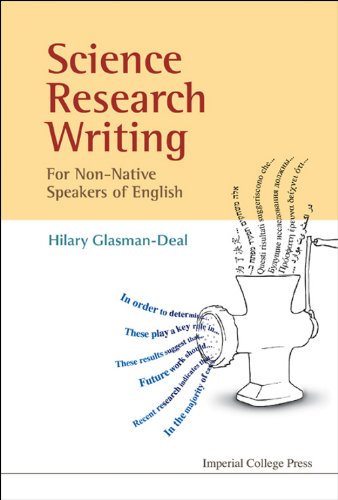
Hilary Glasman-Deal is a renowned author and educator specializing in science research writing, particularly for non-native English speakers. With extensive experience teaching graduate students at Imperial College London, she has developed practical resources that help students navigate the complexities of writing scientific papers. Her work is recognized for its clarity and effectiveness in improving writing skills among diverse learners.
Hilary Glasman-Deal is a renowned author and educator specializing in science research writing, particularly for non-native English speakers. With extensive experience teaching graduate students at Imperial College London, she has developed practical resources that help students navigate the complexities of writing scientific papers. Her work is recognized for its clarity and effectiveness in improving writing skills among diverse learners.
Hilary Glasman-Deal’s extensive experience teaching graduate students at Imperial College London shapes this book into a practical guide for non-native English speakers tackling scientific research writing. You’ll learn how to structure each section of a research article—from introduction to abstract—with clear templates and targeted grammar and vocabulary exercises. The book breaks down complex writing tasks into manageable parts, helping you grasp the conventional formats and language needed for publication. If you aim to polish your scientific papers or thesis in English, this book offers a straightforward path without overwhelming jargon or unnecessary complexity.
Wendy Laura Belcher is professor of African literature at Princeton University with a joint appointment in Comparative Literature and African American Studies. Drawing on her extensive experience as an author, managing editor of a peer-reviewed journal, and workshop leader for academic writers worldwide, she wrote this book to demystify the journal article writing process. Her expertise shapes a practical, step-by-step guide that has helped hundreds of scholars transform overwhelming tasks into achievable weekly goals.
Wendy Laura Belcher is professor of African literature at Princeton University with a joint appointment in the Department of Comparative Literature and the Department for African American Studies. She wrote this book based on her experiences as an author, a managing editor of a peer-reviewed journal, and the designer of academic writing workshops that have helped hundreds around the world to publish their work.
After analyzing the common struggles academics face when publishing, Wendy Laura Belcher crafted a methodical approach that breaks down writing a journal article into manageable weekly tasks. You learn how to develop each component of a strong article, from structuring arguments to revising drafts with targeted exercises and checklists. The book guides you through twelve weeks of focused work, making the publishing process less daunting and more systematic. It’s particularly suited for graduate students, early-career scholars, and international faculty aiming to navigate peer-reviewed journal publishing with confidence.
The best Academic Paper Writing books and more, in your inbox each week. No account needed.
Conclusion
A few clear themes emerge from this collection: the importance of structured approaches, the value of discipline-specific guidance, and the necessity of understanding publication processes. If you’re just starting your academic journey, books like "The Thesis Writing Survival Guide" can help you build foundational strategies, while more advanced writers may benefit from "Writing Your Journal Article in Twelve Weeks" for navigating publishing.
For rapid skill-building, pairing "Write an impactful research paper" with "How to Write a Scientific Paper" offers practical techniques to sharpen your writing and increase your confidence. Alternatively, you can create a personalized Academic Paper Writing book to bridge the gap between general principles and your specific situation.
These books can help you accelerate your learning journey, transforming the daunting task of academic writing into a manageable and even rewarding endeavor. With the right guidance, your research can find the clear, compelling expression it deserves.
Frequently Asked Questions
I'm overwhelmed by choice – which book should I start with?
Start with "The Thesis Writing Survival Guide" if you're working on a thesis or dissertation. It offers practical steps for managing stress and structuring your work. For social science researchers, "Successful Academic Writing" provides targeted guidance.
Are these books too advanced for someone new to Academic Paper Writing?
Not at all. Many of these books, like "The Thesis Writing Survival Guide" and "Science Research Writing for Non-Native Speakers of English," are designed to support beginners with clear, accessible advice.
Should I start with the newest book or a classic?
Both have value. Newer books often include current publishing trends, while classics like Turabian's manual offer timeless citation and formatting standards essential for academic work.
Do I really need to read all of these, or can I just pick one?
You can pick one that fits your immediate needs. For example, choose "Write an impactful research paper" for mastering scientific writing techniques or "Writing Your Journal Article in Twelve Weeks" to plan your publishing process.
Which books focus more on theory vs. practical application?
"How to Write a Phenomenological Dissertation" leans more into methodological theory for qualitative research, while "Write an impactful research paper" and "Writing Your Journal Article in Twelve Weeks" offer hands-on, practical strategies.
Can I get writing advice tailored to my specific academic field or goals?
Absolutely. While these books offer expert insights, you can also create a personalized Academic Paper Writing book that matches your discipline, experience level, and goals for more targeted guidance.
📚 Love this book list?
Help fellow book lovers discover great books, share this curated list with others!