"FAR/AIM 2024" by Federal Aviation Administration (FAA)/Aviation Supplies & Academics (ASA) made it to BookAuthority's Best Aerospace Books of All Time!
10 Aerospace Books That Separate Experts from Amateurs
Explore expert-recommended Aerospace Books by Chris Anderson, Jason Debolt, and Tom Clancy for deep industry insights.
Updated on June 23, 2025·We may earn commissions for purchases made via this page
We're launchingLaunching on Product Hunt today 🎉We just launchedJust launched on Product Hunt 🎉
Modelpeers, from the BookAuthority teamFrom the BookAuthority team: Modelpeers, a free way to follow AI models and agents like you follow people. We'd love your support.
What if the key to understanding aerospace lay not just in textbooks but in the stories and insights of those who shaped the field? Aerospace continues to push boundaries—from stealth aircraft to space exploration—and understanding its complexities has never been more relevant. The delicate dance between innovation, regulation, and engineering challenges affects everything from military aviation to commercial spaceflight.
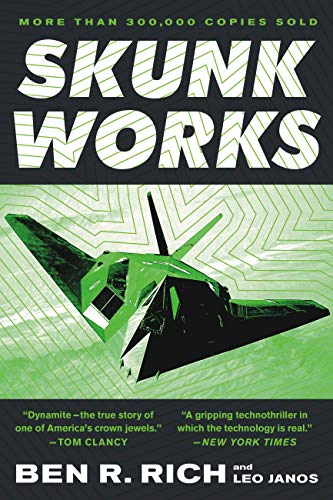
Take Chris Anderson, CEO of 3DRobotics, who points to how risk tolerance shaped aerospace innovation, calling the memoir Skunk Works a revealing insider story. Meanwhile, Jason Debolt, a Tesla investor with a software engineering background, praises the same book for its fascinating perspective on aerospace breakthroughs. And Tom Clancy, famed for his military novels, highlights the dramatic stories behind aircraft development as both riveting and instructive.
These expert-curated books cover a spectrum from foundational engineering principles to the nitty-gritty of aerospace regulation and the gripping human stories behind technological leaps. While these selections offer proven frameworks and deep dives, readers seeking content tailored to their specific aerospace interests and experience might consider creating a personalized Aerospace book that builds on these insights and fits their unique goals.
Chris Anderson, CEO of 3DRobotics and author known for his deep insights into technology and innovation, pointedly critiques the decline of risk tolerance in aerospace development, highlighting that "the day that the financial auditors outnumbered the engineers was the day the innovation died." His perspective stems from firsthand experience with drone technology and robotics, making his endorsement of this insider look at Lockheed's Skunk Works particularly compelling. This book reshaped how he views the delicate balance between engineering creativity and corporate oversight. Also notable is Jason Debolt, a seasoned Tesla investor and software engineer, who succinctly calls it "fantastic," underscoring its appeal to those fascinated by aerospace breakthroughs.
“@elidourado @pmarcas_likes What broke was our risk tolerance. The "Skunkworks" book is a great insider story of that. The day that the financial auditors outnumbered the engineers was the day the innovation died:” (from X)
Ben R. Rich headed the Skunk Works from 1975 until he retired in 1991. He was instrumental in the development of several groundbreaking aircraft, including the U-2 and the F-117 Nighthawk. Rich's leadership and innovative approach to aerospace engineering have made him a prominent figure in the field. He passed away in 1995. Leo Janos, co-author, is known for his work on the acclaimed autobiography of test pilot Chuck Yeager.
What if everything you knew about aerospace innovation was wrong? Ben R. Rich, who led Lockheed's Skunk Works during pivotal years, challenges conventional views on engineering breakthroughs by revealing the delicate balance between risk and creativity in aerospace projects. You get a firsthand account of how secrecy, teamwork, and rapid prototyping drove the development of iconic aircraft like the U-2 and F-117 stealth fighter. The narrative dives into the tension between engineers and management, especially the moment financial oversight eclipsed technical freedom, offering a nuanced view of innovation's fragility. If you're interested in aerospace engineering or innovation management, this memoir gives you a rare insider perspective on the costs and triumphs behind top-secret aviation projects.
William Pearce brings decades of hands-on experience as a third-generation pilot and mechanical enthusiast to this detailed look at piston radial engines. His early years living in a fly-in community and his work as a crew member for a record-setting air racer uniquely qualify him to tell this story. This book arose from Pearce’s passion for vintage aircraft and his dedication to documenting their engineering, making it a rich resource for anyone curious about the golden age of aviation and the powerful engines that made it possible.
William Pearce's interest in aviation began at a very young age when he lived at a fly-in community with his parents. He is a mechanically minded individual whose primary interests are aircraft piston engines, vintage World War II aircraft, and air racing. William wrote and published Duesenberg Aircraft Engines and has published more than 150 articles on his website at www.oldmachinepress.com. He is a graduate of Cal Poly San Luis Obispo, a member of the Aircraft Engine Historical Society, a third-generation pilot, and a former crew member for a record-setting air racer. William lives on California's central coast with his wife and regularly publishes articles on the Old Machine Press website.
When William Pearce first discovered the intricacies of piston radial engines, he combined his lifelong passion for aviation and mechanical engineering to explore their pivotal role in shaping American airliners. This book delves deeply into the technical development of radial engines from the 1920s through the 1950s, tracing their evolution alongside iconic aircraft like the Douglas DC-3 and Lockheed Constellation. You’ll gain detailed insights into how these powerplants powered the expansion of air travel, supported by clear illustrations and engaging sidebars on passenger experiences. If you’re fascinated by the engineering breakthroughs behind vintage aircraft or want a thorough understanding of piston-powered airliners, this book offers a focused and accessible narrative.
This AI-created book on aerospace engineering is tailored to your background, skill level, and specific interests within the field. By sharing what aspects you want to focus on—whether it's flight mechanics, propulsion, or spaceflight operations—you receive a book crafted precisely for your goals. This personalization makes complex aerospace topics more accessible and relevant, saving you time and guiding your learning journey in a way that fits your unique context.
TailoredRead AI creates personalized nonfiction books that adapt to your unique background, goals, and interests. Instead of reading generic content, you get a custom book written specifically for your profession, experience level, and learning objectives. Whether you're a beginner looking for fundamentals or an expert seeking advanced insights, TailoredRead crafts a book that speaks directly to you. Learn more.
This personalized aerospace book provides an in-depth exploration of aerospace engineering principles, aviation technology, and spaceflight tailored to your unique interests and objectives. It offers a focused approach that cuts through irrelevant advice by delivering content specifically relevant to your professional background and goals. The book encompasses foundational topics such as flight mechanics and aerospace materials, alongside specialized subjects like propulsion systems, aerospace regulations, and structural analysis. Through this tailored framework, it addresses both theoretical concepts and practical implementation strategies, enabling a comprehensive understanding grounded in your specific context. Its tailored approach ensures efficient learning by aligning with your personal aerospace journey without extraneous information.
Steve Pace, a veteran aviation history writer with over thirty books and a lifelong connection to aircraft through his Boeing-employed father, brings unmatched expertise to this work. His deep-rooted passion for aviation, sparked in childhood by building model planes, informs his detailed account of USAF jet-powered experimental aircraft. This background lends authenticity and depth, making the book a valuable resource for understanding the evolution of these groundbreaking planes.
Steve Pace is a freelance aviation history writer, a contributing editor to Flight Journal, and the author of numerous articles and short features on a variety of aircraft and related subjects, as well as thirty aviation history books, including The Big Book of X-Bombers and X-Fighters (2016). He was raised in Seattle, Washington, where his father worked at the Boeing Airplane Company for more than thirty years. As the son of an aircraft builder, he became interested in aviation at an early age - instead of buying candy and marbles, he bought model airplane kits. Pace now resides in Tacoma, Washington.
2016·360 pages·Aerospace, Jet Aircraft, Experimental Aircraft, Military Aviation, Aircraft Design
When Steve Pace first realized how deeply his personal history intertwined with aviation, his perspective on experimental aircraft took on new depth. Instead of a mere catalog, this book serves as a detailed chronicle of USAF jet-powered experimental bombers and fighters, covering more than 90 aircraft since 1942. You gain insights into their design evolution, performance specs, and the strategic roles these planes played, from the Bell XP-59 Airacomet to the F-35 Joint Strike Fighter. If you’re fascinated by military aviation history or aerospace engineering, this book offers a rich exploration of aircraft that pushed technological boundaries, though casual readers may find the technical details dense.
Ali Baghchehsara, Francisco Gallardo Lopez, Jens Strahmann, Danielle Nuetzel, Carol C. Haynes, Barret Schlegelmilch, Dr. Edward G. Gibson(you?)·
About the Author
Ali Baghchehsara is an entrepreneur and corporate leader who has a deep understanding in Artificial Intelligence and autonomous systems. His efforts have been recognized by the Royal Aeronautical Society (Achievement Award, London, 2014) and the American Society of Mechanical Engineers (Outstanding Service Award, Montreal, 2015). He has started three companies utilizing AI for the aerospace industry and has designed the first Autonomous System for Distress Tracking in Airbus and commercial aircraft. With a bachelor's in aerospace engineering and a master's in Aeronautics and Management, he has also authored a best-selling book on aerospace engineering for beginners.
Unlike most aerospace books that dive straight into complex math, this guide takes a refreshing approach by emphasizing passion and foundational science over formulas. Drawing from a broad background in mathematics, physics, chemistry, and electronics, the authors break down how powered flight and space exploration work, making these concepts accessible to both enthusiasts and aspiring engineers. The book covers everything from how birds fly to the engineering behind spacecraft signals, giving you a clear sense of aerospace’s evolution and its future challenges. It’s especially useful if you want a solid grasp of the core principles without getting lost in technical jargon, though those seeking advanced math-heavy content might look elsewhere.
The Federal Aviation Administration (FAA), as the national authority overseeing U.S. civil aviation, brings unmatched expertise to this publication. Dedicated to promoting safety and efficiency, the FAA authored this edition of FAR/AIM to provide pilots, instructors, and aviation enthusiasts with the most current regulatory information and guidance. Their longstanding role in aviation regulation makes this book a trusted foundation for understanding complex aviation rules and procedures.
Federal Aviation Administration (FAA)/Aviation Supplies & Academics (ASA)(you?)·
About the Author
Federal Aviation Administration (FAA) is the national authority responsible for the regulation and oversight of civil aviation in the United States. With a commitment to ensuring safety and efficiency in the aviation sector, the FAA provides comprehensive guidelines and resources for pilots, flight instructors, and aviation enthusiasts. Their publications, including the FAR/AIM series, are recognized as essential tools for understanding aviation regulations and procedures.
When the Federal Aviation Administration (FAA) set out to compile the FAR/AIM 2024, their decades of experience regulating U.S. civil aviation shaped this authoritative guide. You gain direct access to the latest federal regulations (14 and 49 CFR) essential for pilots, flight instructors, and unmanned aircraft operators, along with the Aeronautical Information Manual's full-color graphics and glossary. The book’s structured layout—with tabs, study lists, and indexes—makes navigating complex rules manageable, so whether you’re prepping for certification or updating your knowledge, you can find precise regulatory details quickly. If you engage seriously with aviation compliance or training, this book is a practical reference tailored to your needs, though casual enthusiasts might find it dense.
This AI-created book on flight mastery is crafted based on your aerospace background, skill level, and the specific sub-topics you want to tackle. You share your goals and experience, and the book is created to deliver personalized daily steps that align with your pace and interests. Personalization makes sense here because aerospace learning spans diverse fields and skill sets—so a one-size-fits-all approach often overwhelms or misses what matters most to you. With this tailored guide, you get a clear, efficient path to sharpen your aerospace skills fast.
TailoredRead AI creates personalized nonfiction books that adapt to your unique background, goals, and interests. Instead of reading generic content, you get a custom book written specifically for your profession, experience level, and learning objectives. Whether you're a beginner looking for fundamentals or an expert seeking advanced insights, TailoredRead crafts a book that speaks directly to you. Learn more.
2026·50-300 pages·Aerospace, Aerospace Fundamentals, Flight Mechanics, Aerodynamics, Propulsion Systems
This personalized aerospace learning guide provides a step-by-step, tailored approach to rapidly advancing your flight skills within 30 days. It offers a structured daily action plan that fits your existing knowledge level and specific aerospace interests, cutting through generic advice to focus on what you need. The book includes targeted strategies for mastering fundamental concepts such as flight mechanics, aerodynamics, and propulsion, alongside practical skill-building exercises and progress assessments. By integrating personalized learning pathways with focused daily goals, it ensures efficient skill acquisition and practical application. This tailored framework addresses both foundational theory and hands-on aerospace techniques, making complex subjects accessible and actionable within your unique context.
Dr. Todd Dale Coburn is an experienced structural analyst and FAA Structures DER with three decades of expertise in aircraft and rocket structural analysis, complemented by eight years of university-level teaching. His extensive practical background drives this book, which distills complex aerospace structural mechanics into techniques accessible for students and practicing engineers alike. The knowledge he shares is sharpened by real-world application and academic rigor, making this handbook a valuable resource for those building foundational skills in aerospace structures.
Dr Todd Dale Coburn is an experienced structural analyst and FAA Structures DER with three decades of experience in aircraft and rocket structural analysis, enhanced by eight years of teaching at the university level. His expertise in aerospace structures has been honed through practical application and academic instruction, making him a valuable resource for students and professionals alike.
What if everything you knew about aerospace structural analysis was challenged? Dr. Todd Dale Coburn, drawing from three decades as a structural analyst and FAA Structures DER, offers a focused dive into the practical mechanics of aerospace materials. You’ll learn hands-on techniques for analyzing lightweight aerospace vehicles, making this a grounded resource rather than theoretical fluff. The book’s use as a primary text at California State Polytechnic University Pomona speaks to its clarity and relevance, especially for those new to aerospace structures. If you’re aiming to build solid foundational skills in structural mechanics with real-world applications, this book fits the bill, though advanced engineers might look to its Volume II companion for deeper methods.
Dr Todd Coburn is a recognized authority in aerospace engineering, specializing in structural analysis. With extensive experience in both academia and industry, he has authored multiple texts that serve as essential resources for students and professionals alike. His work emphasizes practical applications and methodologies that are crucial for understanding complex aerospace structures.
Dr Todd Coburn is a recognized authority in aerospace engineering, specializing in structural analysis. With extensive experience in both academia and industry, he has authored multiple texts that serve as essential resources for students and professionals alike. His work emphasizes practical applications and methodologies that are crucial for understanding complex aerospace structures.
When Dr. Todd Coburn first realized the limitations of basic structural analysis for aircraft, he developed this Volume II to extend the toolkit with advanced analytical methods. You’ll explore topics like plastic bending, fatigue and damage tolerance, fastener and weld fatigue analysis, and stability considerations for panels and cylinders, enabling deeper understanding of complex aerospace structures. This book is tailored for engineers and students who need to master these critical techniques to succeed in aircraft structural analysis careers. While Volume I builds the foundation, this volume dives into practical, specialized methods that are indispensable for tackling real-world aerospace engineering challenges.
Rowland White is a seasoned aviation historian known for Sunday Times top ten bestsellers like Vulcan 607 and Phoenix Squadron. His expertise in aviation history underpins this compelling recount of the Space Shuttle Columbia's first flight. By weaving together interviews, NASA records, and classified documents, White reveals the intricate technical and human drama behind one of aerospace's pivotal moments, offering a vivid perspective on space exploration during the Cold War era.
Rowland White is the author of three critically acclaimed works of aviation history: Vulcan 607, Phoenix Squadron, and Storm Front. All three have been Sunday Times top ten bestsellers. His most recent novel is Into the Black.
When Rowland White first realized the sheer complexity behind the Space Shuttle Columbia's maiden voyage, he set out to unravel the layers of technology, human courage, and Cold War tension that defined this landmark event. Drawing from NASA oral histories and declassified materials, the book provides an intricate look at the engineering marvel of Columbia and the high-stakes challenges faced by astronauts John Young and Bob Crippen, including the perilous heat shield damage that threatened their return. You gain insight into the collaboration between NASA and secretive government agencies like the National Reconnaissance Office, highlighting the behind-the-scenes problem-solving under pressure. This work suits anyone fascinated by aerospace history, space exploration, or the human stories powering technological breakthroughs.
John D. Anderson Jr., a distinguished aerospace engineer and professor with decades of experience including roles at Wright-Patterson Air Force Base and the Smithsonian’s National Air and Space Museum, brings unparalleled expertise to this book. His academic and research background in aerodynamics and hypersonics informs a text that combines technical depth with historical narrative, making complex aerospace concepts accessible. Anderson’s tenure as a curator and educator shaped this volume into a resource that bridges classroom theory with real-world aerospace evolution.
John D. Anderson, Jr., was born in Lancaster, Pennsylvania, on October 1, 1937. He attended the University of Florida, graduating in 1959 with high honors and a Bachelor of Aeronautical Engineering Degree. From 1959 to 1962, he was a Lieutenant and Task Scientist at the Aerospace Research Laboratory at Wright-Patterson Air Force Base. From 1962 to 1966, he attended the Ohio State University under the National Science Foundation and NASA Fellowships, graduating with a PhD in Aeronautical and Astronautical Engineering. In 1966, he joined the U.S. Naval Ordnance Laboratory as Chief of the Hypersonics Group. In 1973, he became Chairman of the Department of Aerospace Engineering at the University of Maryland, and since 1980 has been Professor of Aerospace Engineering at the University of Maryland. In 1982, he was designated a Distinguished Scholar/Teacher by the University. During 1986–1987, while on sabbatical from the University, Dr. Anderson occupied the Charles Lindbergh Chair at the National Air and Space Museum of the Smithsonian Institution. He continued with the Air and Space Museum one day each week as their Special Assistant for Aerodynamics, doing research and writing on the History of Aerodynamics. In addition to his position as Professor of Aerospace Engineering, in 1993, he was made a full faculty member of the Committee for the History and Philosophy of Science and in 1996 an affiliate member of the History Department at the University of Maryland. In 1996, he became the Glenn L. Martin Distinguished Professor for Education in Aerospace Engineering. In 1999, he retired from the University of Maryland and was appointed Professor Emeritus. He is currently the Curator for Aerodynamics at the National Air and Space Museum, Smithsonian Institution.
John D. Anderson Jr.'s extensive career in aerospace engineering profoundly reshaped his perspective on flight, leading him to craft this detailed exploration of aeronautical principles and history. You’ll gain insights into both foundational and contemporary aerospace topics, including unmanned aerial systems and computational fluid dynamics, through clear explanations and real-world applications. The book’s blend of historical context and technical detail equips students and professionals alike to understand aircraft design evolution and engineering challenges. If you’re seeking a thorough grounding in flight mechanics and aerospace development, this volume offers a solid, well-structured path without overwhelming jargon.
Jeff Montgomery is a prominent figure in aerospace education, known for making complex aerospace concepts accessible to students and enthusiasts alike. His dedication to enhancing understanding in aviation and aerospace shines through in this extensive work, which serves as a comprehensive guide for anyone eager to deepen their grasp of flight's journey from the earliest aircraft to modern space exploration.
Jeff Montgomery is a prominent figure in aerospace education, known for his contributions to various educational texts in the field. His work focuses on making complex aerospace concepts accessible to students and enthusiasts alike. Alongside his co-author Barb Privulick, Montgomery has dedicated his career to enhancing the understanding of aviation and aerospace topics through engaging and informative literature.
Aerospace: The Journey of Flight offers a detailed exploration into the development and science behind aviation and space travel. Jeff Montgomery, a respected educator in aerospace, brings clarity to complex topics by breaking down the principles of flight, spacecraft design, and aerodynamics across its extensive 676 pages. You’ll gain insight into both historical milestones and modern technological advances, with chapters that guide you from basic aircraft mechanics to the intricacies of space missions. This book suits aviation students, aerospace enthusiasts, and professionals seeking a thorough reference that balances technical detail with accessible explanations.
The best Aerospace books and more, in your inbox each week. No account needed.
Conclusion
These ten books collectively reveal aerospace as a field defined by innovation, technical mastery, and human courage. From the practical mechanics explored in the Aerospace Strength Handbook volumes to the regulatory rigor of FAR/AIM 2024, the collection spans the essentials and the extraordinary.
If you’re grappling with the fundamentals of flight, Fundamentals of Aerospace Engineering and Introduction to Flight offer clear, accessible pathways. For rapid immersion into aerospace engineering challenges, combining Skunk Works with The Big Book of X-Bombers & X-Fighters provides insight into both innovation culture and military aviation history.
Once you’ve absorbed these expert insights, create a personalized Aerospace book to bridge the gap between general principles and your specific situation—whether it’s focusing on stealth technology, vintage aircraft engines, or astronautics. The sky is no limit when you tailor your learning journey.
Frequently Asked Questions
I'm overwhelmed by choice – which book should I start with?
Start with Fundamentals of Aerospace Engineering for a clear, beginner-friendly overview. It lays the groundwork before you dive into specialized topics like Skunk Works or The Big Book of X-Bombers & X-Fighters.
Are these books too advanced for someone new to Aerospace?
Not at all. Titles like Fundamentals of Aerospace Engineering and Introduction to Flight are designed to be accessible for beginners, while others offer deeper dives suited for experienced readers.
What's the best order to read these books?
Begin with foundational texts such as Fundamentals of Aerospace Engineering and Introduction to Flight, then explore historical and technical specialties like Skunk Works and Aerospace Strength Handbook.
Should I start with the newest book or a classic?
Both offer value. Newer books like FAR/AIM 2024 provide current regulations, while classics like Skunk Works offer timeless insights into innovation culture and aerospace history.
Do these books assume I already have experience in Aerospace?
Some do, especially technical handbooks like Aerospace Strength Handbook. But several, including Fundamentals of Aerospace Engineering, are tailored for newcomers seeking a solid introduction.
How can I get aerospace knowledge tailored to my specific interests and goals?
While these expert books cover broad and deep topics, personalized Aerospace books can complement them by focusing on your unique background and learning objectives. Explore your options here.
📚 Love this book list?
Help fellow book lovers discover great books, share this curated list with others!