"Wadsworth-Ktl Anaerobic Bacteriology Manual" by Hannele Jouseimies-Somer, Paula Summanen, Diane Citron made it to BookAuthority's Best Bacteriology Books of All Time!
8 Bacteriology Books That Separate Experts from Amateurs
Recommended by Stephen Harrod Buhner, Michael Osterholm, and Pascale Cossart, these Bacteriology books offer expert insights for scientists, clinicians, and public health professionals.
What if I told you that the world of bacteria is far more complex and vital than most imagine? Bacteriology isn’t just a branch of science; it’s a battleground where modern medicine, public health, and even natural remedies converge. With antibiotic resistance threatening global health, understanding bacteria is more urgent than ever.
Experts like Stephen Harrod Buhner, who explored natural herbal antibiotics amidst rising resistance, and Dr. Michael Osterholm, a leading epidemiologist warning of infectious disease threats, have shaped how we approach bacteriology today. Their work illustrates the field's blend of deep science and real-world impact.
These carefully selected books provide proven frameworks and detailed knowledge, from microscopic bacterial identification to epidemic preparedness. For those seeking insights tailored to your education, profession, or goals, consider creating a personalized Bacteriology book that builds on these expert foundations.
R. E. Buchanan is a prominent microbiologist and editor known for his contributions to bacteriology. Alongside N. E. Gibbons, he has edited this comprehensive manual, which serves as a crucial resource for microbiologists and students alike. Their combined expertise ensures the book provides well-structured, authoritative guidance on bacterial identification that supports both academic study and practical laboratory application.
R. E. Buchanan is a prominent microbiologist and editor known for his contributions to bacteriology. Alongside N. E. Gibbons, he has edited this comprehensive manual, which serves as a crucial resource for microbiologists and students alike.
Bergey's Manual of Determinative Bacteriology, now in its eighth edition, draws on the extensive expertise of R. E. Buchanan and N. E. Gibbons, both highly respected microbiologists. This manual offers detailed identification techniques for bacteria, including classification frameworks and morphological characteristics essential for laboratory work. You’ll find in-depth descriptions of bacterial genera with practical keys to species differentiation, making it especially useful for microbiologists and students involved in microbial diagnostics. While it demands a serious commitment, the book’s thorough approach equips you with the skills to accurately identify bacteria in various clinical and research contexts.
Luis M. de la Maza, medical director at the University of California, Irvine, brings decades of expertise in microbiology and vaccine research to this atlas. Alongside Marie T. Pezzlo and Cassiana E. Bittencourt, who specialize in microbial detection and infectious disease histology, they offer a visually rich resource born from their deep academic and clinical backgrounds. Their combined experience shapes a reference focused on practical identification techniques and recent advances in laboratory methods, making it valuable for professionals and students alike.
Luis M. de la Maza, Marie T. Pezzlo, Cassiana E. Bittencourt, Ellena M. Peterson(you?)·
About the Author
Luis M. de la Maza became the Medical Director of the Division of Medical Microbiology at the University of California, Irvine School of Medicine in 1979, where he is also the Medical Director of the Clinical Laboratory Scientist training program. His research is focused on the formulation of a Chlamydia trachomatis vaccine. Marie T. Pezzlo is the Senior Supervisor of the Medical Microbiology Division at the University of California, Irvine Medical Center. Throughout her career she has been an active member and supporter of the American Society for Microbiology. Her research interest has been focused on rapid detection of microorganisms, especially in urinary tract infections. Cassiana E. Bittencourt joined the Department of Pathology at the University of California, Irvine School of Medicine in 2016 as Medical Director of the Division of Medical Microbiology. Her current interests include infectious disease histology, application of non-culture-based methods, and resident education. Ellena M. Peterson joined the Department of Pathology at the University of California, Irvine School of Medicine in 1978. She has served as Associate Dean of Admissions for the School of Medicine and as Associate Director of the Clinical Microbiology Laboratory and presently is Program Director of the Clinical Laboratory Scientist Program. Her research has been focused on the pathogenicity of Chlamydia.
2020·464 pages·Bacteriology, Microbiology, Medical Diagnostics, Laboratory Techniques, Pathogen Identification
When Luis M. de la Maza and his colleagues developed this atlas, they tackled the challenge of visually representing the complexity of bacterial pathogens encountered in medical diagnostics. You gain access to over 750 vivid color images illustrating bacterial isolates, coupled with detailed descriptions of microscopic features, colony morphology, and biochemical reactions. The book also covers taxonomy updates, epidemiology, and molecular biology methods, with new chapters on laboratory automation and histopathology. This resource suits clinicians, laboratorians, and students who need a clear, image-focused guide to identify and understand medically important bacteria.
This AI-powered book on bacterial identification develops a systematic approach with frameworks that adapt to your specific laboratory context. The content adjusts based on your interests, background, and goals to address the nuanced challenges of accurately identifying bacterial species. Created after you specify your areas of interest, it bridges foundational bacteriology principles with modern diagnostic techniques, offering a tailored pathway from morphology to molecular analysis. This approach ensures targeted, relevant strategies that fit your unique clinical or research environment.
TailoredRead AI creates personalized nonfiction books that adapt to your unique background, goals, and interests. Instead of reading generic content, you get a custom book written specifically for your profession, experience level, and learning objectives. Whether you're a beginner looking for fundamentals or an expert seeking advanced insights, TailoredRead crafts a book that speaks directly to you. Learn more.
This personalized book provides a nuanced framework for identifying bacteria in both clinical and research contexts, bridging foundational principles with advanced diagnostic strategies. It examines morphological, biochemical, and molecular techniques, tailoring explanations to your specific industry and experience level. The tailored approach cuts through generic bacteriology advice, focusing on practical identification workflows that fit your particular lab environment and objectives. Readers gain step-by-step methodologies for culturing, staining, and genetic analysis, alongside decision trees for pathogen differentiation. This book integrates classic taxonomy with current molecular tools, offering adaptive content that aligns with your background and goals, ensuring efficient interpretation of bacterial characteristics within your unique setting.
Margaret A. Bartelt is a distinguished author and expert in bacteriology, holding a PhD and being a Diplomate of the American Board of Medical Microbiology. With extensive experience in clinical microbiology, she has contributed significantly to the field through her writings and research. Her expertise underpins this study guide, which organizes complex diagnostic bacteriology topics into an accessible outline format, making it especially useful for those seeking to understand the lab's role in diagnosing bacterial diseases.
Margaret A. Bartelt PhD Diplomate ABMM MLS(ASCP)SM(you?)·
About the Author
Margaret A. Bartelt is a distinguished author and expert in bacteriology, holding a PhD and being a Diplomate of the American Board of Medical Microbiology. With extensive experience in clinical microbiology, she has contributed significantly to the field through her writings and research.
The breakthrough moment came when Margaret A. Bartelt, drawing on her extensive clinical microbiology experience and credentials as a Diplomate of the American Board of Medical Microbiology, organized bacteriology in a clear, outline-driven format. You learn to navigate the complexities of diagnosing bacterial infections with an emphasis on laboratory roles, from identifying gram-positive and anaerobic bacteria to understanding antimicrobial susceptibility tests. The inclusion of chapter study questions and a comprehensive 100-question exam helps reinforce your grasp of diagnostic procedures. This book serves those directly involved with clinical microbiology labs or students preparing for certification who need a focused, practical guide to bacterial diagnostics.
Hannele Jouseimies-Somer is a renowned expert in anaerobic bacteriology and clinical microbiology, contributing significantly to the field through her research and publications. She has co-authored several editions of the Wadsworth-Ktl Anaerobic Bacteriology Manual, which is a critical resource for clinical laboratories. Her work emphasizes practical approaches to the identification and study of anaerobic bacteria, ensuring that clinicians and laboratory personnel are equipped with the latest techniques and information.
Hannele Jouseimies-Somer, Paula Summanen, Diane Citron, Ellen Baron, Hannah Wexler, Sydney Finegold(you?)·
About the Author
Hannele Jouseimies-Somer is a renowned expert in anaerobic bacteriology and clinical microbiology, contributing significantly to the field through her research and publications. She has co-authored several editions of the Wadsworth-Ktl Anaerobic Bacteriology Manual, which is a critical resource for clinical laboratories. Her work emphasizes practical approaches to the identification and study of anaerobic bacteria, ensuring that clinicians and laboratory personnel are equipped with the latest techniques and information.
Hannele Jouseimies-Somer, a leading figure in anaerobic bacteriology and clinical microbiology, brings decades of focused expertise to this manual, shaping it as an indispensable tool for clinical labs. You'll gain precise methods for identifying anaerobic bacteria, including updated color-coded flow charts and collection techniques that clarify complex procedures. The book also unpacks recent taxonomic changes and susceptibility data critical to both clinicians and lab personnel. If your work involves diagnosing infections where anaerobes play a role, this manual equips you with practical knowledge to improve accuracy and efficiency, though it’s best suited for those with some microbiology background rather than casual learners.
Stanley T. Williams is a renowned expert in bacteriology and microbiology, contributing significantly to the field through his extensive research and publications. His collaboration with M. Elisabeth Sharpe and John G. Holt brought together decades of experience to produce this volume. Their combined expertise ensures the book serves as a reliable guide for professionals needing detailed and systematic bacterial classification. This volume reflects Williams' dedication to advancing microbiology through precise and comprehensive resources.
Stanley T. Williams, M. Elisabeth Sharpe, John G. Holt(you?)·
About the Author
Stanley T. Williams is a renowned expert in bacteriology and microbiology, contributing significantly to the field through his extensive research and publications. He has collaborated with other experts, including M. Elisabeth Sharpe and John G. Holt, to produce comprehensive resources for microbiologists and researchers.
Bergey's Manual of Systematic Bacteriology, Vol. 4 offers a detailed, technical exploration of bacterial classification and terminology, reflecting decades of expertise from Stanley T. Williams and his coauthors. Drawing from Williams' extensive background in microbiology, this volume provides precise descriptions and systematic frameworks essential for identifying and categorizing bacteria. You’ll find it particularly useful if you're involved in microbiology research or clinical bacteriology, as it dives into specifics like nomenclature and taxonomic structures. The book’s thorough approach makes it less suitable for casual readers but invaluable for professionals seeking authoritative reference material.
This AI-powered book on anaerobic bacteriology develops a systematic approach with frameworks that adapt to your specific clinical or research context. The content adjusts based on your interests and professional background to address the nuanced challenges of diagnosing and understanding anaerobic bacterial pathogens. Created after you specify your areas of focus, it balances detailed methodologies with practical applications, bridging the gap between theoretical knowledge and implementation in diagnostics. The personalized framework enhances comprehension of infection dynamics and laboratory processes specific to anaerobes, making it a valuable resource tailored to your needs.
TailoredRead AI creates personalized nonfiction books that adapt to your unique background, goals, and interests. Instead of reading generic content, you get a custom book written specifically for your profession, experience level, and learning objectives. Whether you're a beginner looking for fundamentals or an expert seeking advanced insights, TailoredRead crafts a book that speaks directly to you. Learn more.
This tailored book on anaerobic bacterial pathogens provides a personalized framework centered on the identification, classification, and clinical impact of anaerobic bacteria. It explores methodologies for accurate diagnostics, including culture techniques and molecular assays, adjusted to your specific clinical or research context. The content addresses roles of anaerobes in human health and disease, emphasizing infection mechanisms and treatment considerations. By cutting through broad bacteriology advice, this tailored approach fits your unique focus—whether clinical microbiology, infectious disease research, or diagnostic laboratory practice. It integrates practical strategies for interpreting anaerobic cultures and susceptibility profiles, offering an adaptive methodology that enhances your understanding of these complex organisms within your professional setting.
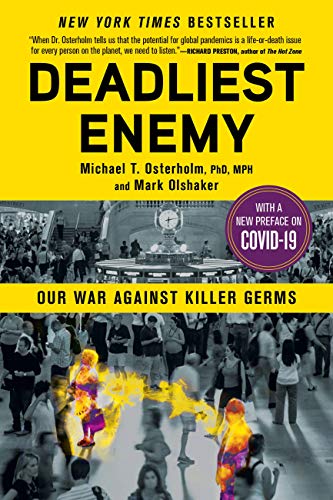
Dr. Michael Osterholm, a Regents Professor and founding director of the Center for Infectious Disease Research and Policy at the University of Minnesota, brings unparalleled expertise to this study of infectious diseases. His decades leading outbreak investigations and advising world leaders shape the book's insights into microbial threats. Alongside Mark Olshaker, an Emmy-winning filmmaker and bestselling author, Osterholm crafts a narrative that bridges scientific rigor with accessible storytelling, highlighting how vulnerable modern society is to epidemics and what it takes to defend against them.
Michael T. Osterholm PhD MPH, Mark Olshaker(you?)·
About the Author
Dr. Michael Osterholm is Regents Professor, McKnight Presidential Endowed Chair in Public Health, and the founding director of the Center for Infectious Disease Research and Policy (CIDRAP) at the University of Minnesota. An internationally renowned epidemiologist, he has been at the forefront of public health preparedness, has led many outbreak investigations of international importance, and advises world leaders on the ever-growing list of microbial threats. Mark Olshaker is an Emmy Award-winning documentary filmmaker and a New York Times #1 bestselling author of five novels and ten books of nonfiction. His books with FBI profiling pioneer John Douglas have sold millions of copies and offer a unique and intriguing perspective into behavioral science and criminal investigative analysis.
Unlike most bacteriology books that focus narrowly on microbial science, this work by Dr. Michael Osterholm, a leading epidemiologist, and Mark Olshaker, an accomplished author, offers a gripping exploration of infectious diseases' global impact. You learn not just about pathogens but about the vulnerabilities of modern public health systems, the danger of antibiotic resistance, and the looming threat of pandemics. Chapters detail real-world outbreaks and the policy measures needed to prevent future crises, making it particularly useful for public health professionals, policymakers, and anyone concerned with epidemic preparedness. This book lays out a sobering picture without sensationalism, emphasizing the urgent need for coordinated global responses.
Stephen Harrod Buhner, author of The Lost Language of Plants, was a leading voice in herbal medicine and ecosystem science. His deep commitment to community herbalists shines through in this book, written amid rising antibiotic resistance concerns. "In this timely book, Buhner reveals that plants are the people’s medicine, possessing attributes that pharmaceuticals never will," he writes, emphasizing the unique power of herbal treatments. This perspective challenged conventional ideas and inspired many to reconsider natural alternatives in bacteriology.
Stephen Harrod Buhner (1952-2022), the author of Herbal Antivirals, Herbal Antibiotics, and 17 other works, spoke internationally on herbal medicine, emerging diseases, complex interrelationships in ecosystems, Gaian dynamics, and musical/sound patterns in plant and ecosystem functioning. He was a tireless advocate for citizen scientists, amateur naturalists, and community herbalists everywhere. He lived in New Mexico.
When Stephen Harrod Buhner first uncovered the escalating crisis of antibiotic resistance, he crafted this detailed guide to herbal alternatives that challenge conventional medicine. You gain clear insights into 30 plants, including dosage, side effects, and contraindications, giving you a grounded understanding of natural treatments that many overlook. The book doesn’t just list remedies; it explains the science behind resistance and how plants operate differently from pharmaceuticals. If you want to explore herbal medicine as a credible option or supplement to standard antibiotics, this book offers a thoughtful, well-researched perspective without overselling its case.
Pascale Cossart is an esteemed microbiologist known for groundbreaking research at Institut Pasteur in Paris. With a doctorate from this prestigious institution, she has advanced infection biology and epigenetics significantly. Her expertise drives this book, offering you a unique window into the revolution in bacteriology—from microbial social behaviors to CRISPR technologies—connecting her scientific journey to the book’s rich insights for those curious about bacteria’s impact on health and science.
Pascale Cossart is an esteemed microbiologist known for her groundbreaking research at Institut Pasteur in Paris. With a doctorate from the same institution, she has made significant contributions to infection biology, microbiology, cell biology, and epigenetics. Her work has been pivotal in advancing our understanding of bacterial behavior and the implications for human health.
When Pascale Cossart first discovered the social complexity of bacteria, she reshaped how we understand these microorganisms beyond simple pathogens. Drawing from decades at Institut Pasteur, she guides you through the latest shifts in bacteriology, from CRISPR gene-editing mechanisms to the intricate communication within microbiomes. You’ll gain insight into bacterial roles in infection, antibiotic resistance, and their surprising applications in biotechnology, highlighted in chapters like "Sociomicrobiology" and "Bacteria as Tools." This book is ideal if you want a science-driven yet accessible exploration of the bacterial world that impacts medicine, environment, and technology.
The best Bacteriology books and more, in your inbox each week. No account needed.
Conclusion
These eight books together reveal bacteriology’s many faces: the clinical precision needed to identify bacteria, the public health urgency to confront epidemics, and alternative approaches to antibiotic resistance. If you’re training in microbiology, start with Bergey’s manuals and the Diagnostic Bacteriology guide to build a strong foundation.
For those focused on clinical applications and pathogen identification, pair the Color Atlas of Medical Bacteriology with the Wadsworth-Ktl Anaerobic Bacteriology Manual for a visual and practical approach. Public health specialists will find Deadliest Enemy essential for understanding microbial threats on a global scale.
Once you’ve absorbed these expert insights, create a personalized Bacteriology book to bridge the gap between general principles and your specific situation. This way, you get targeted knowledge that fits your career path and learning style, accelerating your mastery of bacteriology.
Frequently Asked Questions
I'm overwhelmed by choice – which book should I start with?
Start with Bergey's Manual of Determinative Bacteriology for foundational bacterial identification skills. It sets the stage for understanding more specialized texts and practical guides.
Are these books too advanced for someone new to Bacteriology?
Some books like Diagnostic Bacteriology offer clear outlines suited for students, while others are more technical. Choose based on your background and gradually build up your expertise.
Should I start with the newest book or a classic?
Balancing classics like Bergey's Manuals with newer works like The New Microbiology offers both foundational knowledge and current scientific advances.
Do I really need to read all of these, or can I just pick one?
You can focus on books aligned with your goals—clinical, research, or public health—but combining perspectives enriches your understanding and practical skills.
Which books focus more on theory vs. practical application?
Bergey's Manuals and The New Microbiology explore theory and classification, while Color Atlas and Diagnostic Bacteriology emphasize practical identification and lab techniques.
Can personalized bacteriology books complement these expert recommendations?
Yes! While these expert books cover broad and deep knowledge, personalized bacteriology books tailor insights to your interests and skill level. Discover your custom book here for targeted learning in less time.
📚 Love this book list?
Help fellow book lovers discover great books, share this curated list with others!