10 Behavioral Economics Books That Shape Expert Thinking
Curated by Nir Eyal, Daniel Kahneman, and Cass Sunstein to enhance your understanding of behavioral economics
Updated on June 28, 2025·We may earn commissions for purchases made via this page
We're launchingLaunching on Product Hunt today 🎉We just launchedJust launched on Product Hunt 🎉
Modelpeers, from the BookAuthority teamFrom the BookAuthority team: Modelpeers, a free way to follow AI models and agents like you follow people. We'd love your support.
What if the decisions you make every day are shaped by invisible forces you barely notice? Behavioral economics reveals how subtle cognitive biases and emotions influence choices — from spending money to making big life decisions. This field matters now more than ever, as experts use these insights to improve marketing, investing, and public policy.
Leading figures like Nir Eyal, author of "Hooked" and product behavior expert, found What Your Customer Wants and Can’t Tell You invaluable for decoding consumer psychology. Nobel laureate Daniel Kahneman's Thinking, Fast and Slow remains foundational, dissecting the mental systems behind our judgments. Harvard professor Cass Sunstein champions Behavioral Insights for its practical application in shaping better policies.
While these expert-curated books provide proven frameworks, readers seeking content tailored to their unique background, skill level, and learning goals might consider creating a personalized Behavioral Economics book that builds on these insights for maximum impact.
Nir Eyal, author of "Hooked" and expert in product behavior, discovered this book as a key resource for understanding consumer psychology in business. He describes it as "a great guide to the customer's mind," praising its accessible entry-level take on behavioral economics that enlightens without overwhelming. Eyal’s endorsement highlights how the book balances scientific insight with practical business application, making it invaluable for marketers and leaders alike. Alongside him, Katelyn Bourgoin, known as "The Customer Whisperer," also champions this work for its brain-friendly approach to marketing, reinforcing why you should consider it essential reading for decoding customer behavior.
“What Your Customer Wants and Can’t Tell You is a great guide to the customer's mind. Written for the savvy businessperson, the book delves into behavioral economics with an entry-level, yet accessible approach, that will not only enlighten, but also entertain.” (from Amazon)
Melina Palmer is founder and CEO of The Brainy Business, which provides behavioral economics consulting to businesses of all sizes from around the world. Her podcast, The Brainy Business: Understanding the Psychology of Why People Buy, has downloads in over 160 countries and is used as a resource for teaching applied behavioral economics for many universities and businesses. Melina obtained her bachelor’s degree in business administration: marketing and worked in corporate marketing and brand strategy for over a decade before earning her master’s in behavioral economics. She has contributed research to the Association for Consumer Research, Filene Research Institute, and runs the Behavioral Economics & Business column for Inc Magazine. She will begin teaching applied behavioral economics through the Texas A&M Human Behavior Lab in fall 2020 and her first book on the subject is scheduled for publication in April 2021.
Melina Palmer’s decade-long immersion in marketing and brand strategy, combined with her master’s in behavioral economics, drives this book’s insightful approach. You’ll learn how neuroscience reveals why people buy, with concrete tools to enhance pricing, messaging, and leadership effectiveness. For example, the book explains "brain-friendly" brand communication and offers frameworks to innovate marketing campaigns based on consumer psychology. If you lead a business or work in marketing, this book gives you practical insights grounded in behavioral science, though it’s less suited for readers seeking purely academic theory.
Satya Nadella, CEO of Microsoft, brings a unique perspective to behavioral economics with his leadership at one of the world's most influential tech companies. His endorsement of this book signals its profound relevance for understanding decisions that shape complex organizations and markets. As someone who navigates high-stakes choices daily, Nadella’s recognition underlines the book’s insight into the mental systems behind quick judgments and deliberate thinking. This lends considerable weight to Daniel Kahneman's work, which delves into how cognitive biases affect economic and personal decision-making. Alongside Nadella, Daniel Kahneman himself, a Nobel Prize-winning psychologist, authored this exploration, further cementing the book’s authority in behavioral economics.
“Love this book Thinking Fast and Slow, which feels of real use to fiction writers, too. Especially if like me you're looking for opportunities to create unexpected places for tension, psychological misdirection living in the words or spaces btwn words, etc.” (from X)
Daniel Kahneman was the Eugene Higgins Professor of Psychology Emeritus at Princeton University and a former professor of public affairs at the Woodrow Wilson School of Public and International Affairs. He received the 2002 Nobel Prize in Economic Sciences for his pioneering work with Amos Tversky on decision-making. He is the author of the international bestseller Thinking, Fast and Slow. He died in 2024.
Daniel Kahneman, a Nobel laureate in Economic Sciences, challenges the common belief that human thinking is primarily logical by dissecting two contrasting mental systems: the fast, intuitive System 1 and the slow, deliberate System 2. His insights reveal how cognitive biases and overconfidence shape decisions in business and everyday life, such as misjudging risks or predicting happiness inaccurately. You’ll find chapters that explore how these systems influence everything from stock market moves to personal choices, helping you recognize when intuition might mislead you. This book suits anyone interested in understanding the quirks behind human judgment, though those seeking straightforward decision rules might find its depth demanding.
This AI-created book on behavioral economics is designed based on your background, skill level, and the specific areas you wish to explore. By sharing your interests and goals, you receive a tailored book that covers exactly the concepts and applications you want. Personalizing this complex field helps you focus on the most relevant ideas and deepen your understanding without sifting through unrelated material.
TailoredRead AI creates personalized nonfiction books that adapt to your unique background, goals, and interests. Instead of reading generic content, you get a custom book written specifically for your profession, experience level, and learning objectives. Whether you're a beginner looking for fundamentals or an expert seeking advanced insights, TailoredRead crafts a book that speaks directly to you. Learn more.
This tailored book delves deeply into behavioral economics, exploring its core principles with a focus designed to match your unique interests and goals. It examines how human decision-making processes deviate from classical economic theories by incorporating psychological insights and cognitive biases. By tailoring content specifically to your background, this book provides a clear pathway through complex topics such as choice architecture, risk perception, and incentive structures. It reveals how these elements shape real-world behaviors in markets, finance, and policy-making, offering a personalized journey through the fascinating interplay between economics and psychology.
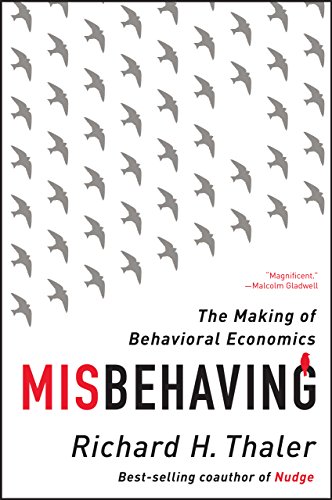
Daniel Kahneman, Nobel laureate and professor at Princeton, carries immense authority in behavioral economics, making his association with this book a strong endorsement of its significance. His expertise in cognitive biases and decision-making under uncertainty aligns perfectly with Thaler’s approach in illuminating how real human behavior diverges from classical economics. Adding to this, Malcolm Gladwell, an accomplished author known for exploring human behavior, praises the book as a revealing story behind modern economics’ key insights. Together, their perspectives highlight the book's role in reshaping economic thought by grounding it in how people actually think and act.
“The story behind some of the most important insights in modern economics. If I had to be trapped in an elevator with any contemporary intellectual, I’d pick Richard Thaler.” (from Amazon)
Richard H. Thaler is the Charles R. Walgreen Distinguished Service Professor of Economics and Behavioral Science at the University of Chicago's Graduate School of Business. He is a pioneer in the fields of behavioral economics and finance, known for his research on human irrationality and decision-making.
2015·432 pages·Behavioral Economics, Economics, Decision Making, Human Psychology, Market Behavior
Richard H. Thaler challenges the traditional economic view that people always act rationally by showing how human quirks and predictable mistakes shape real-world decisions. Drawing from decades of research and personal experiences, he reveals how individuals consistently "misbehave" in economic settings—from everyday purchases to complex market behaviors. You’ll learn why incorporating psychology into economics leads to more accurate predictions and better policies, with examples ranging from faculty office assignments to NFL drafts. This book suits anyone curious about how human nature disrupts classical theories and offers fresh perspectives on decision-making processes.
Shortlisted for Financial Times & McKinsey Business Book of the Year Award
Ryan Holiday, a media strategist and former marketing director, recognizes the profound impact of behavioral economics in shaping human decisions and society. His endorsement signals the book’s relevance for those aiming to understand and improve decision-making processes in both personal and professional spheres. Complementing this, Daniel Kahneman, Nobel laureate and psychology professor, praises the book as essential for enhancing individual and societal functioning, underscoring its authority in behavioral economics. Together, their perspectives highlight why this book remains a cornerstone for anyone seeking to grasp how subtle influences shape choices and outcomes.
“This gem of a book is a must-read for anyone who wants to see both our minds and our society working better. It will improve your decisions and it will make the world a better place.” (from Amazon)
Richard H. Thaler was awarded the 2017 Nobel Prize in Economics. He is the Charles R. Walgreen Distinguished Service Professor of Behavioral Science and Economics at the University of Chicago’s Booth School of Business, where he is the director of the Center for Decision Research. He is also the co-director of the Behavioral Economics Project at the National Bureau of Economic Research and has been published in several prominent journals. Thaler is the author of numerous books, including Misbehaving: The Making of Behavioral Economics.
Richard H. Thaler, a Nobel laureate in economics, teams up with Harvard Law professor Cass R. Sunstein to explore how subtle shifts in the presentation of choices can influence behavior without limiting freedom. You’ll learn how biases and heuristics shape decisions on health, finance, and social issues, and how “choice architecture” can gently steer you toward better outcomes. The book details practical examples—from organ donation defaults to retirement savings plans—that clarify these concepts. If you're interested in how small tweaks can improve your daily decisions or public policies, this book offers a nuanced understanding applicable across many domains.
Aaron Klein, CEO of Riskalyze and an advocate for behavioral finance, highlights Dr. Daniel Crosby's deep expertise in this field. After immersing himself in the book, Klein noted, "Dr. Daniel Crosby is one of the preeminent behavioral psychologists in investing today, and it shows with this tour de force of how an investor can manage their wealth." This endorsement reflects how the book reshaped his understanding of managing wealth by focusing on the psychological nuances every investor faces. If you want to navigate the markets with a clearer mind, Klein’s experience suggests this book is a strong guide.
“Dr. Daniel Crosby is one of the preeminent behavioral psychologists in investing today, and it shows with this tour de force of how an investor can manage their wealth.” (from Amazon)
Dr. Daniel Crosby is a psychologist and behavioral finance expert who helps organizations understand the intersection of mind and markets. Dr. Crosby’s first book, Personal Benchmark: Integrating Behavioral Finance and Investment Management, was a New York Times bestseller. His second book, The Laws of Wealth, was named the best investment book of 2017 by the Axiom Business Book Awards and has been translated into 12 languages. His third book, The Behavioral Investor, was Axiom’s best investment book of 2019 and is a comprehensive look at the neurology, physiology and psychology of sound financial decision-making. When he’s not decoding market psychology, Daniel is a husband and father of 3, a fanatical follower of the St. Louis Cardinals, an explorer of the American South, and an amateur hot sauce chef.
The methods Dr. Daniel Crosby developed while combining clinical psychology with asset management provide a fresh lens on investing behavior. You’ll encounter ten distinct rules that challenge common investing myths, like the notion that forecasting market moves is reliable. The book breaks down behavioral risks into a new taxonomy, helping you grasp why you fall prey to certain biases and how to manage them. Chapters include vivid anecdotes and clear summaries that guide your thinking and decision-making process, making complex behavioral finance concepts accessible. This book suits anyone serious about improving their investing mindset, though it leans more toward those willing to engage deeply rather than casual investors.
Gold Medallist in the Axiom Business Book Awards 2017
This AI-created book on decision making is crafted specifically for you, based on your background and goals. It takes the complex ideas of behavioral economics and turns them into a tailored 30-day plan that fits your interests and skill level. You’ll focus on the decision challenges that matter most to you, making the learning experience both relevant and practical. This approach helps you avoid generic advice and instead gives you a clear path designed just for your personal growth.
TailoredRead AI creates personalized nonfiction books that adapt to your unique background, goals, and interests. Instead of reading generic content, you get a custom book written specifically for your profession, experience level, and learning objectives. Whether you're a beginner looking for fundamentals or an expert seeking advanced insights, TailoredRead crafts a book that speaks directly to you. Learn more.
This tailored book explores the practical application of behavioral economics to enhance your decision-making over a focused 30-day period. It reveals how everyday choices are shaped by cognitive biases and emotional influences, guiding you through a personalized step-by-step plan that matches your background and goals. The content navigates key concepts like choice architecture, heuristics, and decision biases, providing a clear pathway to improve judgment and outcomes.
By concentrating on your specific interests and learning objectives, this book offers a tailored experience that bridges foundational theory with actionable daily exercises. It empowers you to recognize hidden influences and transform your decisions through a custom-crafted approach designed to fit your unique context.
Steven Goldstein, a trader performance coach with 25 years of experience in investment banking, praises this book for its deep dive into how brain function shapes investment behavior. He discovered it while seeking ways to help traders improve performance beyond market analysis. 'The Behavioral Investor' is Daniel Crosby's brilliant new book which looks at how professional investors can improve and enhance their performance by better understanding the way their brains influence their behaviours and affects their investment practice. This insight transformed his approach to coaching, highlighting the critical role of psychology in investment success and why you should consider this book to sharpen your own decision-making skills.
Trader performance coach, 25 years investment banking
“'The Behavioral Investor' is Daniel Crosby's brilliant new book which looks at how professional investors can improve and enhance their performance by better understanding the way their brains influence their behaviours and affects their investment practice.” (from Amazon)
Dr. Daniel Crosby is a psychologist and behavioral finance expert who helps organizations understand the intersection of mind and markets. Dr. Crosby’s first book, Personal Benchmark: Integrating Behavioral Finance and Investment Management, was a New York Times bestseller. His second book, The Laws of Wealth, was named the best investment book of 2017 by the Axiom Business Book Awards and has been translated into 12 languages. His third book, The Behavioral Investor, was Axiom’s best investment book of 2019 and is a comprehensive look at the neurology, physiology and psychology of sound financial decision-making. When he’s not decoding market psychology, Daniel is a husband and father of 3, a fanatical follower of the St. Louis Cardinals, an explorer of the American South, and an amateur hot sauce chef.
The Behavioral Investor by Dr. Daniel Crosby explores how psychological and neurological factors shape investment decisions. Drawing from his expertise as a psychologist and asset manager, Crosby breaks down complex behavioral tendencies into four primary drivers that influence how you invest. The book guides you through understanding subtle social and physiological pressures that affect your choices, then offers a framework to manage wealth aligned with these behavioral realities. Chapters on portfolio construction and popular investment strategies like value and momentum reveal why psychology is central to success in finance. This book suits anyone aiming to improve self-awareness and refine investment behavior beyond traditional financial analysis.
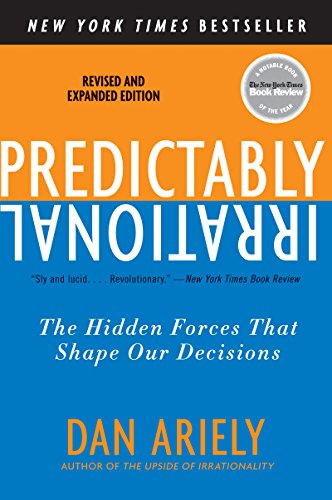
Max Levchin, co-founder of PayPal and CEO of Affirm, brings a deep understanding of economic decision-making and fintech innovation to his endorsement of this book. His experience scaling companies that rely heavily on consumer behavior insights highlights why Dan Ariely’s exploration of irrational choices offers critical perspectives for anyone looking to grasp why people often stray from logical decisions. Alongside Rand Fishkin, founder of Moz, whose expertise in marketing and user behavior complements Ariely's insights, their endorsements underscore the book’s relevance for professionals seeking to decode the hidden forces behind everyday choices. Their combined authority lends substantial weight to this book's practical value in behavioral economics.
“A marvelous book that is both thought provoking and highly entertaining, ranging from the power of placebos to the pleasures of Pepsi. Ariely unmasks the subtle but powerful tricks that our minds play on us, and shows us how we can prevent being fooled.” (from Amazon)
Dan Ariely is the James B. Duke Professor of Psychology and Behavioral Economics at Duke University. He is a founding member of the Center for Advanced Hindsight; a cocreator of the film documentary (Dis)Honesty: The Truth About Lies; and a three-time New York Times bestselling author. His books include Predictably Irrational, The Upside of Irrationality, The (Honest) Truth About Dishonesty, Irrationally Yours, Payoff, Dollars and Sense, and Amazing Decisions. His TED Talks have been viewed more than 27 million times. His work has been featured in the New York Times, the Wall Street Journal, the Washington Post, the Boston Globe, and elsewhere. He lives in North Carolina with his family.
What if everything you thought about rational decision-making was off? Dan Ariely, a behavioral economics professor at Duke University, challenges the idea that people act logically. In this revised edition, he explores why you might pay more for a product not because it’s better, but because of hidden psychological triggers—like the placebo effect of a pricier aspirin. You'll learn to identify predictable biases in everyday choices, from shopping to weight loss. This book suits anyone curious about why your decisions often defy logic and how understanding these patterns can reshape your approach to personal and professional life.
Rand Fishkin, founder and former CEO of Moz, brings a wealth of experience in data-driven decision making and marketing technology. His endorsement carries weight for anyone interested in behavioral economics, as he understands how human behavior impacts business outcomes. Fishkin's background suggests a keen appreciation for Ariely's exploration of irrational choices that shape both professional and personal arenas. His recommendation highlights the book’s credibility and relevance for those wanting to grasp the subtle forces behind everyday decisions.
Dan Ariely is the James B. Duke Professor of Psychology & Behavioral Economics at Duke University. He founded the Center for Advanced Hindsight and has authored several bestsellers, including Predictably Irrational and The Honest Truth About Dishonesty. His work often explores the irrational behaviors that influence our decisions in various aspects of life, including work and relationships. Ariely has also been involved in media projects and startups, and he is currently working on an NBC TV series based on his life and work.
2010·334 pages·Behavioral Economics, Decision Making, Cognitive Biases, Motivation, Social Psychology
What happens when behavioral economics meets everyday decision-making? Dan Ariely, a professor at Duke University and a pioneer in behavioral economics, explores in this book how irrational choices can unexpectedly benefit us at work and home. You’ll uncover why emotions, social norms, and cognitive biases lead us to decisions that defy pure logic, like how we find motivation or justify cheating. Chapters dive into real experiments demonstrating quirks in our behavior, such as the influence of meaning on motivation or the surprising upsides of irrationality in relationships. If you want to understand why you sometimes act against your best interest and how that can actually work in your favor, this book sheds light on those paradoxes.
Cass Sunstein, Harvard University professor known for his work on behavioral law and economics, praises this book as a comprehensive resource that balances insight with enjoyment. His endorsement highlights the book's utility for anyone eager to explore behavioral science's practical potential. Sunstein's experience with regulatory policy reveals why he values this guide's clear explanation of the evidence behind behaviorally informed approaches and its relevance to improving societal outcomes. He calls it "a brilliant book, packed with wisdom and insights, and a ton of fun to boot," underscoring its appeal beyond academia to practitioners and curious minds alike.
Robert Walmsley University Professor, Harvard University
“A brilliant book, packed with wisdom and insights, and a ton of fun to boot. The best one-stop shop, if you're interested in behavioral science, and in how to improve the world.” (from Amazon)
Michael Hallsworth, PhD, is Managing Director of the Behavioral Insights Team (BIT) North America. He has held positions at Columbia University and Imperial College London. Elspeth Kirkman founded BIT's North American office before returning to the UK to run the organization's social policy portfolio out of London. She has taught behavioral insights courses at Harvard and Warwick Universities and is a Visiting Senior Research Fellow at King's College London.
Michael Hallsworth and Elspeth Kirkman draw from their leadership roles at the Behavioral Insights Team to map out how subtle, often unconscious forces shape decisions and behavior. You learn to recognize why traditional policies and business strategies often fail by ignoring this automatic side of human behavior, and how applying behavioral evidence can lead to more effective solutions. The book offers practical examples from government and industry, explaining how experimental methods test and refine interventions. If you want to understand how behavioral science translates into real-world impact and improve decision-making frameworks, this book gives you a grounded, accessible guide without oversimplifying the challenges involved.
David Heinemeier Hansson, creator of Ruby on Rails and founder of Basecamp, brings a unique perspective to behavioral economics through his technical and entrepreneurial expertise. His endorsement signals the book's relevance for those seeking to understand how human decision-making diverges from rational models, especially in complex, data-driven environments. This connection is strengthened by the recommendation from Daniel Kahneman, a Nobel Prize-winning psychologist whose research forms the foundation of the book’s subject. Together, their recognition anchors the book as a significant work for anyone interested in the science behind choices and economic behavior.
Michael Lewis is the best-selling author of Liar’s Poker, Moneyball, The Blind Side, The Big Short, The Undoing Project, and The Fifth Risk. He lives in Berkeley, California, with his family.
Drawing from the extraordinary partnership of psychologists Daniel Kahneman and Amos Tversky, Michael Lewis unpacks how their groundbreaking research reshaped our understanding of human decision-making. You’ll explore the cognitive biases and systematic errors that challenge rational judgment, illustrated through vivid personal and professional stories of these two men. Chapters detail their influence on fields from behavioral economics to medicine and government policy, making complex psychology accessible and relevant. This book suits those curious about the intersection of mind, data, and decision, offering insights into why intuition often misleads and how their friendship fueled a scientific revolution.
The best Behavioral Economics books and more, in your inbox each week. No account needed.
Conclusion
These ten books collectively illuminate the complex dance between reason and emotion that drives human behavior. They show how our economic decisions are predictably irrational, how small nudges can steer better choices, and how understanding investor psychology can lead to wiser wealth management.
If you're grappling with making smarter financial decisions, start with The Laws of Wealth and The Behavioral Investor to grasp investor psychology. For practical influence in marketing or policy, combine What Your Customer Wants and Can’t Tell You with Nudge for actionable strategies. And for deep cognitive insights, Thinking, Fast and Slow offers unmatched foundational knowledge.
Alternatively, you can create a personalized Behavioral Economics book to bridge the gap between general principles and your specific situation. These books can help you accelerate your learning journey and better navigate the decisions shaping your world.
Frequently Asked Questions
I'm overwhelmed by choice – which book should I start with?
Start with Thinking, Fast and Slow by Daniel Kahneman. It lays the groundwork by explaining how we think and decide, which helps you appreciate the insights in other books. It’s a solid base before diving into more specialized topics like investing or marketing.
Are these books too advanced for someone new to Behavioral Economics?
Not at all. Several, like What Your Customer Wants and Can’t Tell You, are written for beginners with accessible language and practical examples. You can build your understanding progressively with this curated list.
What’s the best order to read these books?
Begin with Thinking, Fast and Slow for foundational concepts. Then explore Misbehaving or Predictably Irrational to see behavioral economics in action. Follow up with applied books like Nudge and Behavioral Insights to learn implementation.
Can I skip around or do I need to read them cover to cover?
You can skip around based on your interests. For example, if investing fascinates you, start with The Laws of Wealth or The Behavioral Investor. For policy or marketing, choose Behavioral Insights or What Your Customer Wants and Can’t Tell You.
Which book gives the most actionable advice I can use right away?
Nudge offers practical techniques on shaping decisions through choice architecture. It’s filled with real-world examples that can inspire immediate application in business, policy, or personal decisions.
How can I get tailored Behavioral Economics insights for my unique goals and background?
While these expert books provide valuable frameworks, personalized books can bridge theory with your specific needs. You can create a custom Behavioral Economics book tailored to your experience level and objectives right here. It complements expert knowledge with practical, targeted guidance.
📚 Love this book list?
Help fellow book lovers discover great books, share this curated list with others!