The 19 Biology Books That Separate Experts from Amateurs
Recommended by Bill Gates, Scott Gottlieb, Jared Diamond, and other leading voices in biology
Updated on June 27, 2025·We may earn commissions for purchases made via this page
17 of 19 books have Kindle versions
We're launchingLaunching on Product Hunt today 🎉We just launchedJust launched on Product Hunt 🎉
Modelpeers, from the BookAuthority teamFrom the BookAuthority team: Modelpeers, a free way to follow AI models and agents like you follow people. We'd love your support.
What if the tiniest building blocks of life could unlock the mysteries of health, evolution, and behavior? Biology isn't just about memorizing facts; it's a lens through which you can explore the very essence of living things, from the cells in your body to the vast ecosystems around us. Today, with technologies advancing rapidly, understanding biology is more crucial than ever, whether you're a student, a professional, or simply curious.
Consider Siddhartha Mukherjee, a cancer physician and Pulitzer Prize winner, who illuminates the cellular world in "The Song of the Cell," blending medical history with cutting-edge science. Or Scott Gottlieb, former FDA Commissioner, who praises Mukherjee's ability to connect microscopic discoveries with modern medicine. Meanwhile, Richard Wrangham, a Harvard biological anthropologist, highlights "Behave" by Robert Sapolsky for its deep dive into biology's role in shaping human actions. These experts discovered that these books not only expand knowledge but also reshape how they think about biology’s impact on our lives.
While these expert-curated books provide proven frameworks, readers seeking content tailored to their specific background, goals, or areas of interest might consider creating a personalized Biology book that builds on these insights. Tailored reading can help bridge the gap between broad expertise and your unique learning journey.
Scott Gottlieb, former FDA Commissioner and senior fellow at AEI, brings a critical eye to this exploration of cellular biology, recommending it as an insightful journey through the microscopic world that shapes human health. He highlights the book's ability to connect historical milestones with modern medical advances, noting its impact on his understanding of disease. "An excellent review by @DShaywitz of @DrSidMukherjee’s outstanding new book ‘Song of the Cell’ in @WSJ ‘Song of the Cell Review: Fantastic Voyage Within’" captures his enthusiasm. Alongside him, Joshua Scotch Mcclure, CEO of Maxwell Biosciences, appreciates Mukherjee's poetic framing of the cell as the “musician” and DNA as the “score,” underscoring the book’s blend of science and narrative artistry.
23rd FDA Commissioner, Senior Fellow @AEI, Pfizer Board
“An excellent review by @DShaywitz of @DrSidMukherjee’s outstanding new book “Song of the Cell” in @WSJ “Song of the Cell Review: Fantastic Voyage Within.” (from X)
Siddhartha Mukherjee is the author of The Song of the Cell, The Gene: An Intimate History, a #1 New York Times bestseller; The Emperor of All Maladies: A Biography of Cancer, winner of the 2011 Pulitzer Prize in general nonfiction; and The Laws of Medicine. He is the editor of Best Science Writing 2013. Mukherjee is an associate professor of medicine at Columbia University and a cancer physician and researcher. A Rhodes scholar, he graduated from Stanford University, University of Oxford, and Harvard Medical School. In 2023, he was elected as a new member of the National Academy of Medicine. He has published articles in many journals, including Nature, The New England Journal of Medicine, Cell, The New York Times Magazine, and The New Yorker. He lives in New York with his wife and daughters.
2022·496 pages·Biology, Science, Medicine, Cell Biology, Human Physiology
Drawing from his extensive medical and research background, Siddhartha Mukherjee explores how the discovery of cells revolutionized biology and medicine, tracing the journey from 17th-century microscopes to today's cellular therapies. You learn to view diseases like cancer, Alzheimer's, and COVID-19 through the lens of cellular dysfunction, gaining insight into emerging treatments that manipulate cells directly. The book unfolds in six parts, blending historical anecdotes with modern science, including Mukherjee's personal experiences as a cancer physician. If you seek a deep understanding of the cellular foundation of life and medicine's future, this offers a richly detailed yet accessible narrative.
Doody's Reviews, a recognized authority in scientific literature, highlights the exceptional integration of detailed diagrams and clear prose in this edition, stating, "The book is extremely well written... The hundreds of schematic/explanatory diagrams and light and electron micrographs and the way they are integrated into the text are superb..." Their endorsement reflects the book's value for college instructors and researchers alike. Similarly, Life Science Book Review praises its comprehensive coverage from basic cell chemistry to advanced genomics, emphasizing its role as a landmark work that keeps pace with rapid biotechnological advances. This book has helped shape how experts and students alike approach molecular and cell biology, offering clarity amid complexity.
“The book is extremely well written... The hundreds of schematic/explanatory diagrams and light and electron micrographs and the way they are integrated into the text are superb... This 4th edition will be warmly welcomed by college and university teachers, researchers and students alike. It maintains and improves upon the quality and excellence of previous editions.”
Bruce Alberts, Alexander Johnson, Julian Lewis, Martin Raff, Keith Roberts, Peter Walter(you?)·
About the Author
Bruce Alberts is a renowned biochemist and educator, known for his work in molecular biology. He served as the president of the National Academy of Sciences and has authored several influential textbooks, including 'Molecular Biology of the Cell'. His contributions to science education and research have been widely recognized.
Bruce Alberts and his co-authors, all respected figures in molecular biology, crafted this edition to distill a vast and complex field into an accessible, coherent narrative. You’ll find detailed exploration of cellular mechanisms, genome organization, and biochemical pathways, supported by over 1,600 illustrations that clarify intricate concepts. The book’s structure, with clear section headings and integrated diagrams, makes it easier to grasp topics like cell signaling and immunity. Whether you're a student aiming to master cell biology fundamentals or a researcher seeking a reliable reference, this text offers a thorough framework grounded in current scientific understanding.
This AI-created book on biology mastery is designed around your specific background and learning goals. You share which biological topics interest you most and your current experience level, and the book focuses on delivering exactly the concepts you want to explore. By tailoring content to your needs, it helps you navigate biology’s complexity more efficiently and with greater engagement.
TailoredRead AI creates personalized nonfiction books that adapt to your unique background, goals, and interests. Instead of reading generic content, you get a custom book written specifically for your profession, experience level, and learning objectives. Whether you're a beginner looking for fundamentals or an expert seeking advanced insights, TailoredRead crafts a book that speaks directly to you. Learn more.
2026·50-300 pages·Biology, Biology Fundamentals, Cell Biology, Genetics Basics, Evolution Theory
This tailored biology book offers a personalized journey through essential biological concepts that match your unique background and learning goals. It explores foundational topics such as cellular structures, genetics, evolution, and physiology, while delving into specialized areas you find most relevant. By synthesizing vast biological knowledge into a focused narrative, it helps you build deep understanding without the overwhelm of broad surveys. This book’s tailored approach ensures that your interests guide the exploration, making complex topics approachable and engaging. Whether you aim to master molecular biology or ecological principles, this book adapts expert knowledge into a learning path designed specifically for you.
Zaid Jilani, an influential writer and newsletter author focusing on politics and current affairs, points to this book as the definitive work on the biology behind human behavior. He highlights how Sapolsky's exploration reshaped his understanding during his deep dives into social dynamics, stating, "The best book about this is this one. The good news is, he's writing a follow up:" This recommendation carries weight given Jilani's engagement with complex societal issues. Alongside him, Richard Wrangham, a Harvard professor of biological anthropology, praises the book as a comprehensive and accessible synthesis of psychology and neurobiology, which opens a window into the evolutionary roots of our actions.
Robert M. Sapolsky is the author of several works of nonfiction, including A Primate's Memoir, The Trouble with Testosterone, and Why Zebras Don't Get Ulcers. He is a professor of biology and neurology at Stanford University and the recipient of a MacArthur Foundation genius grant. He lives in San Francisco.
The counterintuitive approach that changed Robert M. Sapolsky's perspective reveals how deeply biology shapes human behavior, beyond simple good or evil judgments. You learn how the brain, hormones, evolution, and social contexts weave together to influence actions, from moments before they happen to decades earlier in development. Chapters dissect topics like tribalism, aggression, and empathy with detailed scientific evidence, offering you a nuanced lens on why people behave as they do. If you're curious about the biological underpinnings of morality, conflict, and cooperation, this book gives you a richly layered understanding rather than easy answers.
New York Times Bestseller
Winner of Los Angeles Times Book Prize
One of Washington Post's 10 Best Books of the Year
Jared Diamond, professor of geography at UCLA and a respected expert on biogeography, praises this handbook as his go-to reference, highlighting its clear and thorough introduction to bird biology that suits everyone from casual observers to professionals. His endorsement reflects how the book deepened his appreciation for avian diversity and complexities. Similarly, Scott Edwards, Harvard professor and curator of ornithology, admires the book's balance of technical detail and accessibility, especially its vivid color photography and up-to-date scientific insights, underscoring its value to both novices and seasoned ornithologists.
“This wonderful handbook provides a crystal-clear introduction to every fascinating aspect of bird biology. It will now be my own first reference source about birds, and it should be yours, too - regardless of whether you are a backyard bird watcher, a hard-core birder, or a professional ornithologist.”
Irby Lovette is the Fuller Professor of Ornithology at Cornell University, Associate Director for Academic Affairs at the Cornell Lab of Ornithology, Director of the Lab's Fuller Evolutionary Biology Program, and Curator of Genomics at the Cornell Museum of Vertebrates. He has authored more than 130 scientific publications on topics related to avian evolution, ecology, behavior, and conservation, along with numerous articles for the general public.
When Irby J. Lovette and John W. Fitzpatrick developed this edition, their extensive backgrounds in ornithology and evolutionary biology shaped a resource that goes beyond basic bird watching. You’ll explore avian diversity, behavior, physiology, and conservation through detailed chapters enriched with over 800 full-color images, making complex scientific discoveries accessible. The book serves both casual bird enthusiasts and professionals like ecologists or conservationists, offering insights into global bird species and their ecological roles. For instance, chapters on avian evolution and habitat conservation provide depth that aids understanding of birds’ place within broader biological systems.
Selected by Forbes.com as one of 12 best books about birds and birding in 2016
Amit Paranjape, with diverse expertise spanning healthcare and emerging tech, highlights this book during his wide-ranging explorations of science. His simple yet firm endorsement, "Great book," reflects how the narrative's blend of history and science resonates beyond specialists. Nobel laureate Paul Berg adds weight, describing it as a profound synthesis of life's science that challenges our understanding of humanity. Together, their perspectives underscore this book’s unique ability to combine rigorous genetics with thoughtful reflection on its ethical consequences.
Siddhartha Mukherjee is a cancer physician and researcher. He is an assistant professor of medicine at Columbia University and a staff cancer physician at the CU/NYU Presbyterian Hospital. A former Rhodes scholar, he graduated from Stanford University, University of Oxford (where he received a PhD studying cancer-causing viruses) and from Harvard Medical School. His laboratory focuses on discovering new cancer drugs using innovative biological methods. Mukherjee trained in cancer medicine at the Dana Farber Cancer Institute of Harvard Medical School and was on the staff at the Massachusetts General Hospital. He has published articles and commentary in such journals as Nature, New England Journal of Medicine, Neuron and the Journal of Clinical Investigation and in publications such as the New York Times and the New Republic. His work was nominated for Best American Science Writing, 2000 (edited by James Gleick). He lives in Boston and New York with his wife, Sarah Sze, an artist, and with his daughter, Leela.
Drawing from Siddhartha Mukherjee's extensive background as a cancer physician and researcher, this book takes you on a detailed journey through the history and science of genetics. You’ll explore how genes influence identity, health, and human destiny, with chapters tracing discoveries from Mendel’s pea plants to modern genome mapping. Mukherjee weaves in personal family history to ground complex science in human experience, making abstract concepts tangible. If you want a deep understanding of genetics’ role in biology and medicine, this book offers rich insights, though it demands thoughtful engagement rather than quick answers.
This AI-created book on evolution insight is crafted specifically based on your background and learning goals. By sharing your interests in evolutionary topics and your current understanding, you receive a tailored book that focuses on the evolution concepts you want to explore most. This approach helps you digest complex scientific content through a personalized, day-by-day journey, making evolution easier to grasp and more relevant to your curiosity.
TailoredRead AI creates personalized nonfiction books that adapt to your unique background, goals, and interests. Instead of reading generic content, you get a custom book written specifically for your profession, experience level, and learning objectives. Whether you're a beginner looking for fundamentals or an expert seeking advanced insights, TailoredRead crafts a book that speaks directly to you. Learn more.
2026·50-300 pages·Biology, Evolution Basics, Natural Selection, Genetic Variation, Species Adaptation
This tailored book explores evolution through a step-by-step, day-by-day journey designed around your interests and background. It reveals key principles of evolutionary biology, tracing how species change and adapt over time while connecting foundational concepts to the latest scientific understanding. With focused daily lessons, it matches your specific goals, helping you build a clear, progressive grasp of complex evolutionary mechanisms without overwhelming you. The personalized approach allows the content to emphasize areas you find most engaging, whether that’s natural selection, genetic variation, or speciation. This tailored guide invites you to immerse yourself in evolution’s unfolding story at a pace and depth that suits your curiosity and prior knowledge.
The New York Times, known for its rigorous book reviews, highlights this work as one of the most significant contributions to scientific philosophy, urging scientists to rethink their understanding of species origin based on Darwin's amassed evidence. Their recognition underscores the book's profound impact on biology and the broader scientific community. Following this, Library Journal affirms that even 150 years later, Darwin's treatise stands as the definitive authority on evolution, reflecting its enduring influence and foundational role in the field.
“It is clear that here is one of the most important contributions ever made to philosophic science; and it is at least behooving on scientists, in the light of the accumulation of evidence which the author has summoned in support of his theory, to reconsider the grounds on which their present doctrine of the origin of species is based.”
Charles Darwin (1809-1882) was the first evolutionary biologist, best known for his controversial and groundbreaking The Origin of Species. He introduced the concept of natural selection, marking a new epoch in the scientific world.
2017·396 pages·Biology, Evolution, Natural Selection, Species Adaptation, Scientific Method
The breakthrough moment came when Charles Darwin challenged the prevailing views of species origin with his theory of natural selection. This book lays out an extensive body of evidence showing how species evolve over time through survival and adaptation, providing readers with a deep understanding of evolutionary biology and the scientific method behind it. You will explore detailed observations from nature, including examples from various species and environments, that illuminate the mechanisms driving biodiversity. It's a crucial read if you're intrigued by the foundations of modern biology or the historical shifts in scientific thought. However, if you're looking for recent genetic insights or molecular biology, this classic won't cover those advances.
Chris Anderson, CEO of 3DRobotics and former Wired editor, brings a unique perspective to biology through his extensive experience in technology and science publishing. He points to "The Vital Question" as his go-to book for understanding biology and chemistry, highlighting its importance alongside seminal physics works. His enthusiasm reflects how Lane’s insights into energy and evolution challenged and enriched his thinking about life’s complexity, making this a standout choice for those eager to grasp biology’s foundational mysteries.
“@alexiskold Agreed -- that's my favorite recent physics book by far. For biology/chemistry/life, an equally good book is Nick Lane's Vital Question” (from X)
Nick Lane is an award-winning biochemist and author known for his work on the origins of life and evolution. He has contributed significantly to the understanding of energy and its role in biological processes. Lane's research focuses on the link between energy and cell biology, and he has published several influential books that explore complex scientific concepts in an accessible manner.
Drawing from his expertise as an award-winning biochemist, Nick Lane explores one of biology's deepest puzzles: why complex life emerged only once in Earth's history. He argues convincingly that energy, specifically the electrical voltage across cell membranes, is the key driver behind this leap from simple to complex organisms. You’ll uncover how features like sex and multicellularity tie back to bioenergetic constraints, with detailed chapters unpacking evolutionary milestones and cellular mechanisms. This book suits anyone curious about evolution’s underlying forces, particularly those interested in how energy shapes life’s diversity and complexity.
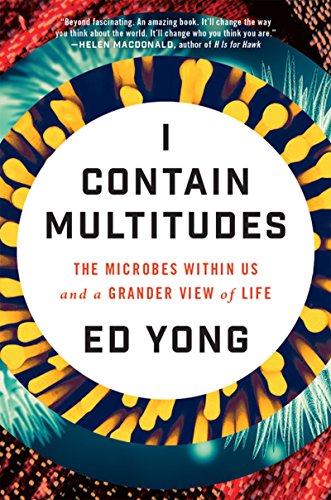
Ed Yong is a Pulitzer Prize-winning science writer for The Atlantic, acclaimed for his explanatory reporting during the COVID-19 pandemic. His first book, a New York Times bestseller, explores the vital roles microbes play in life on Earth, from protecting health to shaping ecosystems. Yong’s authoritative background and engaging style invite you to reconsider your place within the vast microbial multitudes that influence every living being.
Ed Yong is a science writer who reports for The Atlantic. For his coverage of the COVID-19 pandemic, he won the Pulitzer Prize in explanatory reporting, the George Polk Award for science reporting, and other honors. His first book, I Contain Multitudes, was a New York Times bestseller. He is based in Washington, DC.
When Ed Yong explores the unseen world of microbes, he rewrites the story of life itself. Drawing on extensive scientific research and vivid examples—like how bacteria grant squid invisibility or aid worms in causing disease—he reveals how these tiny organisms are integral to the health, identity, and survival of countless species, including humans. You’ll gain a nuanced understanding of the microbiome’s role in immunity and ecology, challenging common misconceptions about germs. This book suits anyone curious about biology’s frontiers or how interconnected life truly is, offering fresh perspectives rather than mere facts.
Nature, a renowned science publication, highlights this book’s blend of vivid photography and insightful science. Their recommendation captures the mesmerizing visuals and depth of Lisa-ann Gershwin's expertise, noting how the book presents jellyfish as both beautiful and scientifically intriguing. The juxtaposition of scientific detail with stunning images, such as the bioluminescent necklaces of Physalia, offers a fresh perspective that enriches understanding of these marine creatures and their evolutionary lineages.
“One resembles an exquisitely ruffled and pleated confection of pale silk chiffon; another, a tangle of bioluminescent necklaces cascading from a bauble. Both marine drifters (Desmonema glaciale and Physalia) feature in jellyfish expert Gershwin’s absorbing coffee-table book on this transparent group with three evolutionary lineages. Succinct science is intercut with surreal portraiture — from the twinkling Santa's hat jellyfish (Periphylla periphylla) to the delicate blue by-the-wind sailor (Velella velella).”
Lisa-Ann Gershwin is director of the Australian Marine Stinger Advisory Services. She was awarded a Fulbright in 1998 for her studies on jellyfish blooms and evolution, and she has discovered over two hundred new species—including at least sixteen types of jellyfish that are highly dangerous, as well as a new species of dolphin.
Lisa-ann Gershwin brings her extensive marine biology expertise, including a Fulbright award and discovery of over 200 new species, to illuminate the fascinating world of jellyfish. You’ll gain detailed understanding of fifty diverse species, exploring their anatomy, evolutionary history, and ecological roles, all illustrated with vivid color photographs. The book also delves into pressing environmental issues like jellyfish population blooms as indicators of oceanic changes, offering insights valuable for marine scientists, ecologists, and anyone curious about marine life. It’s a focused, approachable guide shedding light on creatures often overlooked or misunderstood, with chapters that highlight unique traits such as the immortal jellyfish’s life cycle and remarkable camouflage strategies.
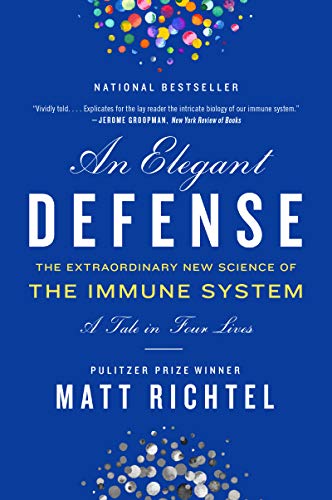
Bill Gates, co-founder of Microsoft and a prominent voice in global health, highlighted this book during his annual Summer Reading List, drawing attention with the quirky question, "Should you pick your nose?" His engagement stems from a deep interest in immunology and public health, finding Richtel’s narrative both accessible and illuminating. This book helped Gates appreciate the immune system's complexity and fragility in new ways. Similarly, Douglas Preston, a #1 New York Times bestselling author, praises the book as a fascinating journey through recent discoveries in immunology, calling it an inspiring read that bridges science and storytelling.
“Should you pick your nose? You can read an excerpt from Matt Richtel’s fascinating book about the immune system on my blog to find the answer:” (from X)
Matt Richtel is a Pulitzer Prize-winning New York Times journalist and bestselling writer of mysteries and thrillers. His books are fast-paced, character-centered stories in which things are not always as they seem. The backdrop for the books is the modern world. Technology is everywhere. Everything moves at lightning speed, from conspiracy, to love, business, and violence. Technology is our slave. Or has it become our dark master? Richtel won the Pulitzer Prize in 2010 for a series of stories on distracted driving. His second nonfiction book, An Elegant Defense, on the human immune system, was a national bestseller and chosen by Bill Gates for his annual Summer Reading List. He lives in San Francisco, California.
Matt Richtel’s years as a Pulitzer Prize-winning journalist shine through in this insightful exploration of the immune system, blending scientific rigor with human stories. You’ll discover how the immune system operates not just as a defense mechanism but as a complex, delicate balance affected by stress, nutrition, and modern life. The book guides you through historical breakthroughs and current research, illustrated by four patients whose experiences reveal the system’s vulnerabilities and strengths. If you want to understand immunity beyond textbook definitions and appreciate its role in health and disease, this book offers a thoughtful narrative grounded in both biology and lived experience.
Chris Oliver, a retired surgeon with deep experience in physical activity and diabetes care, found this book invaluable during his years practicing medicine. He remarked, "What a great read! You could almost pass your surgical exams after reading this book!" His background gives weight to this endorsement, showing how Bryson’s approachable explanations can support even medical professionals. The Boston Globe echoes this sentiment, calling it "a witty, informative immersion" that captivates with anecdotes while delivering solid biology content. Together, these perspectives underline the book’s unique ability to educate and entertain anyone curious about their own biology.
Bill Bryson was born in Des Moines, Iowa, in 1951. Settled in England for many years, he moved to America with his wife and four children for a few years, but has since returned to live in the UK. His bestselling travel books include A Walk in the Woods, The Life and Times of the Thunderbolt Kid, and A Short History of Nearly Everything (which won the Aventis Prize in Britain and the Descartes Prize, the European Union's highest literary award). He was chancellor of Durham University, England's third oldest university, from 2005 to 2011, and is an honorary fellow of Britain's Royal Society.
2019·464 pages·Science, Biology, Human Anatomy, Physiology, Cell Biology
When Bill Bryson explores the human body, he blends curiosity with wit, transforming complex biology into stories you can actually enjoy. You’ll learn how your body functions from the cellular level to whole systems, sprinkled with quirky facts like how you produce millions of red blood cells while reading. Chapters cover everything from anatomy and physiology to the body’s remarkable healing ability and its vulnerabilities. If you’re fascinated by how your own body works or want a readable, engaging tour that skips heavy jargon, this book is for you. However, if you seek a detailed medical textbook, Bryson’s narrative style might feel too light.
New York Times Bestseller
Longlisted for PEN E.O. Wilson Literary Science Writing Award
Philip Nelson is Professor of Physics and director of the Biophysics major at the University of Pennsylvania. His extensive teaching experience and multiple awards reflect his deep expertise, which directly informs this book. Nelson crafted the text from the course he developed, aiming to connect first-year physics and chemistry concepts to the forefront of single-molecule biophysics. This background makes the book a rich resource for anyone seeking to understand the physical principles underlying biological phenomena.
Philip Nelson is Professor of Physics and director of the Biophysics major at the University of Pennsylvania. He has received multiple teaching awards from the University of Pennsylvania and from the Biophysical Society, in part, for creating the course that formed the basis for this book.
Philip Nelson's decades of experience as a physics professor and biophysics program director shine through in this textbook, which bridges foundational physics with cutting-edge biophysical research. You explore how molecular motors work, the principles behind self-assembly, and the mechanics of single-molecule manipulation, all framed within statistical physics and biophysical chemistry. For example, the updated chapter on molecular motors breaks down the complex mechanisms powering cellular motion, while exercises challenge you to think critically about biological processes. This book is especially beneficial if you're diving into biophysics or preparing for advanced studies in nanotechnology and mechanobiology, offering a solid grasp of concepts rather than just facts.
Christopher McDougall, bestselling author of Born to Run, knows the human body intimately and praises Lieberman's work as "riveting, enlightening, and more than a little frightening." McDougall’s respect stems from Lieberman’s unmatched ability to tell the human body’s story, revealing the deep evolutionary roots behind modern health struggles. This book reshaped McDougall’s view on endurance and human anatomy, highlighting the mismatch between our ancient biology and today’s environment. Similarly, Neil Shubin, a noted paleontologist, calls it a "monumental" journey through six million years of evolution, emphasizing how understanding this history can influence our future health decisions.
“Riveting, enlightening, and more than a little frightening.... No one understands the human body like Daniel Lieberman or tells its story more eloquently.”
Daniel E. Lieberman is professor of human evolutionary biology and the Edwin M. Lerner II Professor of Biological Sciences at Harvard. He has written more than one hundred articles, many appearing in the journals Nature and Science. Lieberman is especially well known for his research on the evolution of the human head and the evolution of running, including barefoot running (earning him the nickname the Barefoot Professor). His research and discoveries have been highlighted widely in newspapers, magazines, books, news programs, and documentaries.
Daniel Lieberman, chair of human evolutionary biology at Harvard, wrote this after years studying how our bodies evolved to meet ancient challenges yet now face modern health crises. You’ll learn about key evolutionary shifts, like bipedalism and diet changes, alongside how cultural revolutions have shaped disease patterns today. Chapters detail why chronic illnesses like diabetes rise from a mismatch between Stone Age bodies and contemporary lifestyles. If you’re interested in biology’s impact on health and want to understand why our bodies struggle in today’s world, this book offers clear insights without oversimplifying the science.
Thomas Keller, an authority in biology education, highlights how this resource excels at detailing experimental techniques critical to cell biology. He points out, "This is an excellent chapter, which provides a concise and informative exposition of techniques referenced in other sections of the text that provide the evidence for our understanding of cell structures and functions." Keller appreciates how the book’s comprehensive coverage of microscopy, cell fractionation, and immunological methods deepened his grasp of cellular mechanisms and their biomedical implications.
“This is an excellent chapter, which provides a concise and informative exposition of techniques referenced in other sections of the text that provide the evidence for our understanding of cell structures and functions. I believe that all the relevant microscopy techniques and major advances are well covered in this chapter. Other topics such as cell fractionation and analysis and immunological techniques complement material found in other text chapters.”
Harvey Lodish, Arnold Berk, Chris Kaiser, Monty Krieger, Anthony Bretscher, Hidde Ploegh, Kelsey Martin, Michael Yaffe, Angelika Amon(you?)·
About the Author
Harvey Lodish is a prominent cell biologist and professor, known for his significant contributions to the field of molecular biology. He has authored numerous influential textbooks and research papers, shaping the education of countless students in the biological sciences.
This isn't another biology textbook promising superficial coverage; instead, Molecular Cell Biology delivers an authoritative exploration crafted by leading researchers like Harvey Lodish. You gain detailed insights into experimental techniques that underpin biomedical advances, such as microscopy methods and cell fractionation, explained with clarity to connect cell biology to health and disease. Chapters on immunological methods complement these core topics, equipping you with practical understanding essential for careers in biomedical sciences. If you're seeking an in-depth, research-driven guide to cellular mechanisms and laboratory approaches, this book is tailored for you, though casual readers might find its depth demanding.
Angelika Hofmann is an Instructor for Scientific Writing and Communication at Yale University. She provides clear and easy-to-read guidelines for students, covering various genres and helping guide students to create improved scientific writings and presentations. Her expertise shapes this book into a practical manual for anyone looking to excel in communicating biological science effectively.
Angelika Hofmann is an Instructor for Scientific Writing and Communication at Yale University. She provides clear and easy-to-read guidelines for students, covering various genres and helping guide students to create improved scientific writings and presentations.
Unlike most biology books that focus on experimental data or theory, Angie Hofmann’s Writing in the Biological Sciences zeroes in on the craft of scientific communication itself. As an instructor at Yale University, she draws on extensive teaching experience to guide you through the essentials of writing lab reports, research articles, and grant proposals, making complex concepts accessible and manageable. You’ll find specific chapters addressing how to organize academic presentations and posters, as well as practical tips for job applications, which sets this book apart for anyone preparing to enter or advance in the life sciences. If you’re aiming to sharpen your ability to convey scientific ideas clearly and professionally, this book offers a focused, structured approach that delivers exactly that.
Robert Macfarlane, acclaimed author and Cambridge Fellow known for his profound engagement with nature and place, highlights this book’s significance in biology. He notes, "Quammen’s is a great book," reflecting how its detailed account of molecular biology reshaped his understanding of life’s history. His endorsement speaks to the book’s ability to challenge established views and deepen your insight into evolutionary science.
2018·480 pages·Biology, Evolution, Molecular Biology, Genetics, Horizontal Gene Transfer
David Quammen's decades as a science journalist shape this exploration of molecular biology's impact on evolutionary theory. You learn how horizontal gene transfer reshapes our understanding of life's history and human genetics, revealing unexpected gene exchanges across species. The book introduces you to key figures like Carl Woese and Lynn Margulis, whose discoveries challenge traditional views and illuminate issues like antibiotic resistance. If you want to grasp how evolving molecular insights change biology and influence health, this book offers detailed stories and scientific revelations that deepen your grasp of life’s complex web.
Barbara Herlihy is a professor in the School of Nursing and Health Professions at the University of the Incarnate Word in San Antonio, TX. With a PhD in Physiology and extensive experience in nursing education, she has authored several textbooks that simplify complex concepts in anatomy and physiology for students, making this book a reliable resource for anyone looking to grasp the essentials of human biology and health.
Barbara Herlihy is a professor in the School of Nursing and Health Professions at the University of the Incarnate Word in San Antonio, TX. With a PhD in Physiology and extensive experience in nursing education, she has authored several textbooks that simplify complex concepts in anatomy and physiology for students.
Barbara Herlihy, a professor and physiologist with a rich background in nursing education, crafted this book to demystify anatomy and physiology for students with limited science experience. You’ll find it breaks down complex body systems using vivid cartoons, clinical examples, and supportive online animations, making the material approachable and memorable. Chapters are organized by organ systems, with engaging features like "What If?" questions and "Work It" boxes that connect theory to practical health insights, especially around exercise and immune system function. If you want a clear, well-illustrated guide that bridges biology and healthcare fundamentals, this book offers a straightforward path without overwhelming jargon.
Charles Brenner, a distinguished department chair at City of Hope and chief scientific advisor at ChromaDex, praises this work as "the very best of scicomms." His expertise in biochemistry lends weight to this endorsement, highlighting how the book illuminates animal sensory systems with clarity and depth. Brenner looks forward to engaging deeply with the insights Ed Yong offers, underscoring the book's impact on even seasoned scientists in biology and related fields.
Ed Yong is a Pulitzer Prize–winning science writer on the staff of The Atlantic, where he also won the George Polk Award for science reporting, among other honors. He has also been named a Guggenheim Fellow for science writing. His first book, I Contain Multitudes, was a New York Times bestseller and won numerous awards. His work has appeared in The New Yorker, National Geographic, Wired, The New York Times, Scientific American, and more. He lives in Washington, D.C., with his wife, Liz Neeley, and their corgi, Typo.
What if everything you knew about animal perception was limited by your human senses? Pulitzer Prize-winning journalist Ed Yong challenges that narrow view, inviting you to explore the astonishing sensory worlds of diverse creatures. Through vivid examples—like turtles navigating Earth's magnetic fields or scallops possessing complex vision—you gain a deeper understanding of how animals experience their environment in ways utterly foreign to us. This book suits anyone curious about animal behavior, sensory biology, or the hidden dimensions of nature, providing not just facts but a shift in how you perceive the living world.
Julia L. Rogers is an Associate Professor and DNP Program Coordinator at Purdue University Northwest, with practical expertise as a Nurse Practitioner in Pulmonary and Critical Care Medicine. Her professional background grounds this extensive pathophysiology text, which aims to clarify complex disease processes with clear explanations and rich visual aids. Rogers's clinical and teaching experience shapes the book’s thorough approach, making it a go-to resource for those seeking a solid foundation in the biologic basis of disease.
Julia L. Rogers is an Associate Professor and DNP Program Coordinator at Purdue University Northwest. She is also a Nurse Practitioner in Pulmonary and Critical Care Medicine and a Hospitalist Nurse Practitioner with TeamHealth.
Julia L. Rogers's extensive career as a nurse practitioner and educator in pulmonary and critical care medicine lends a strong clinical perspective to this text. The book offers detailed explanations of disease mechanisms, covering pathophysiology from molecular changes to clinical manifestations, supported by over 1,300 vivid illustrations and 3D animations. You'll find clear chapters on pediatric and aging populations, genetic factors, and emerging research, which help deepen understanding beyond the basics. This resource suits health professionals and students who need an authoritative reference to grasp complex biological processes behind disease, rather than casual readers seeking general health advice.
The best Biology books and more, in your inbox each week. No account needed.
Conclusion
The 19 biology books featured here weave together themes of life’s complexity, evolutionary wonder, and the intimate connections between organisms and their environments. Whether you’re fascinated by the microscopic world inside cells or the sweeping narratives of human evolution, these works offer rich perspectives grounded in expert knowledge.
If you’re grappling with the fundamentals of cell biology, starting with "Molecular Biology of the Cell, Fourth Edition" can lay a solid foundation. For understanding human behavior through a biological lens, "Behave" offers a compelling exploration. Combining "The Gene" with "The Tangled Tree" will deepen your grasp of genetics and evolutionary biology. For rapid, practical insights into immunity, "Elegant Defense" pairs well with "The Body" to illuminate systems critical to health.
Alternatively, you can create a personalized Biology book to bridge the gap between general principles and your specific situation. These books can help you accelerate your learning journey and confidently navigate the vast and fascinating world of biology.
Frequently Asked Questions
I'm overwhelmed by choice – which book should I start with?
Start with "Molecular Biology of the Cell, Fourth Edition" if you want a comprehensive foundation. For a more narrative approach, "The Body" by Bill Bryson offers an engaging introduction to human biology.
Are these books too advanced for someone new to Biology?
Not at all. Many, like "The Body" and "I Contain Multitudes," are written for curious readers without technical backgrounds, while others such as "Molecular Cell Biology" suit more advanced learners.
What’s the best order to read these books?
Begin with broad overviews like "The Body" or "The Origin of Species," then explore specialized topics like genetics in "The Gene" or immunology in "Elegant Defense."
Should I start with the newest book or a classic?
Both have value. Classics like Darwin's "The Origin of Species" provide foundational insights, while newer works like "The Song of the Cell" bring current research to life.
Do these books assume I already have experience in Biology?
They vary. Some books offer accessible introductions, while others delve into technical detail. Check the recommended audience for each to find your best fit.
Can I get a Biology book tailored just for me?
Yes! While these titles provide expert knowledge, a personalized Biology book can align content with your interests, skill level, and goals. Explore customized options here.
📚 Love this book list?
Help fellow book lovers discover great books, share this curated list with others!