10 Business Metrics Books That Separate Experts from Amateurs
Recommended by Jeff Bezos, Patrick Betdavid, and Ash Maurya, these Business Metrics books offer proven strategies and actionable insights.
Updated on June 24, 2025·We may earn commissions for purchases made via this page
8 of 10 books have Kindle versions
We're launchingLaunching on Product Hunt today 🎉We just launchedJust launched on Product Hunt 🎉
Modelpeers, from the BookAuthority teamFrom the BookAuthority team: Modelpeers, a free way to follow AI models and agents like you follow people. We'd love your support.
What if the key to unlocking business success isn't just hard work, but knowing exactly what to measure? In today's competitive landscape, understanding which metrics truly drive growth can make or break your strategy. Business Metrics aren't just numbers—they're the pulse of your organization, revealing hidden opportunities and risks. Leaders like Jeff Bezos and Patrick Betdavid have long emphasized how mastering these metrics accelerates decision-making and sharpens focus.
Take John Doerr, a venture capitalist who introduced OKRs to Google, turning abstract goals into measurable results that fueled innovation. Or consider Ash Maurya, who transformed startup growth by identifying the metrics that matter most beyond revenue. Meanwhile, Mark Jeffery from Kellogg School of Management highlights marketing metrics that optimize spend and impact. Their experiences underscore the value of distilling complex data into actionable business insights.
While these expert-curated books provide proven frameworks, readers seeking content tailored to their specific industry background, experience level, and growth goals might consider creating a personalized Business Metrics book that builds on these insights. Tailored content bridges the gap between general principles and your unique business challenges, accelerating your learning journey.
Patrick Betdavid, an entrepreneur and CEO with over a million YouTube subscribers, praises this book for its impact on his approach to leadership and goal-setting, saying, "A must read book by John Doerr. It was so impactful, I had to read it twice!" His endorsement highlights how the book’s clear framework for Objectives and Key Results reshaped his business focus. Alongside him, Gary King, a Harvard professor, offers a thoughtful critique, prompting readers to consider the evidence behind OKRs’ effectiveness, adding depth to the conversation around this influential work.
John Doerr is an engineer, acclaimed venture capitalist, and the chairman of Kleiner Perkins. He was an original investor and board member at Google and Amazon, helping to create more than half a million jobs and the world’s second and third most valuable companies. He's passionate about encouraging leaders to reimagine the future, from transforming healthcare to advancing applications of machine learning. Outside of Kleiner Perkins, John works with social entrepreneurs for change in public education, the climate crisis, and global poverty. John serves on the board of the Obama Foundation and ONE.org.
What if everything you knew about goal-setting was wrong? John Doerr, a seasoned venture capitalist and engineer, shares the transformative power of Objectives and Key Results (OKRs), a system he first encountered at Intel and later introduced to Google. You’ll learn how to define clear objectives and measure progress through key results, creating transparency and alignment across teams. The book provides detailed case studies from companies like Google and the Gates Foundation, showing how OKRs drive focus, agility, and growth. If you lead any organization aiming to sharpen priorities and boost execution, this book offers a straightforward framework to help you achieve that.
Bob Sutton, a Stanford professor known for his extensive work on organizational behavior and leadership, endorses this book for its fresh take on innovation metrics. During his rigorous research into what drives successful teams, he found that "Ideaflow" offers a crucial lens to understand creative output. He shared, "@rgmcgrath I love those guys and its a good book. It draws on some of my writings too. But there are other metrics that matter!" This perspective helped him reconsider the complexity of measuring innovation beyond traditional metrics, highlighting the book's practical value in shaping how you evaluate your team's creative potential.
Jeremy Utley is one of the world's leading experts in innovation. Formerly the Director of Executive Education at Stanford's renowned Hasso Plattner Institute of Design (aka 'the d.school'), and now as an Adjunct Professor at Stanford University, his courses have been experienced by nearly a million students of innovation worldwide. He advises corporate leaders on how to imbed the methods and mindsets of design thinking into their organizations, and works with professionals to cultivate a robust personal creative practice. As co-founder and host of 'Stanford's Masters of Creativity,' Jeremy shone the spotlight on exemplars of creative practice across disciplinary boundaries, from entrepreneurs like Randy Hetrick (TRX) to authors like Kim Scott (Radical Candor) and Daniel Pink (Drive, To Sell Is Human). He now hosts the 'Paint & Pipette Podcast,' which celebrates female founders (season 1), black creators (season 2). Season three -- currently in production -- features corporate innovation leaders like Astro Teller (Google X), Kevin Kelly (WIRED), and Ed Catmull (Pixar), authors like Seth Godin (Purple Cow, Linchpin), Liz Wiseman (Multipliers) and Rita McGrath (Seeing Around Corners), and entrepreneurs like Liz Tran, Marcus Whitney, and Jason Mayden. A self-proclaimed 'recovering MBA, spreadsheet junkie, and management consultant,' he now studies innovation in large enterprises and startups. He advises CEOs and senior leadership teams in the United States, Europe, and Asia on growth and innovation strategy, and has led scores of capacity-building initiatives worldwide. His current research explores the intersection of generative AI, enterprise innovation, collaboration, and creativity. He's a prolific blogger and co-author (alongside Perry Klebahn) of 'Ideaflow: The Only Business Metric That Matters,' published by Penguin Portfolio Oct 25th, 2022.
What if everything you thought about innovation metrics was wrong? Jeremy Utley and Perry Klebahn, drawing on decades leading Stanford's d.school, argue that the single metric that truly predicts team success is "ideaflow"—the rate at which ideas are generated and refined over time. This book teaches you how to recognize and overcome mental blocks, spark creativity in yourself and others, and develop a steady pipeline of breakthrough ideas through affordable experiments. Chapters like "Dangerous Thinking Traps" and "Designing Experiments" offer concrete methods to cultivate creativity systematically. Whether you're an entrepreneur, manager, or innovation leader, you'll discover how to harness ideaflow to drive consistent, meaningful innovation.
This AI-created book on business metrics mastery is crafted based on your industry background, experience level, and specific goals. You share which metrics and business areas interest you most, and the book focuses on explaining those in ways that fit your context. By tailoring the content, it helps you cut through the noise and zero in on what truly matters for your decision-making and growth. This personalized approach makes mastering complex metrics approachable and relevant to your unique situation.
TailoredRead AI creates personalized nonfiction books that adapt to your unique background, goals, and interests. Instead of reading generic content, you get a custom book written specifically for your profession, experience level, and learning objectives. Whether you're a beginner looking for fundamentals or an expert seeking advanced insights, TailoredRead crafts a book that speaks directly to you. Learn more.
This tailored book explores essential business metrics with a clear focus on your unique background and goals, making complex concepts accessible and relevant. It examines key performance indicators, financial ratios, and operational measures, guiding you through how these metrics inform better decision-making. By addressing your specific interests, this book offers a personalized pathway to understanding how to track and interpret data that truly drives your business forward. Through customized explanations and examples, it reveals how to connect metrics to real-world outcomes, empowering you to confidently evaluate and improve your organization’s performance.
Ash Maurya, creator of the Lean Canvas and author of Running Lean, brings deep expertise in startup modeling and lean methodologies. His experience mentoring accelerators worldwide and hosting sold-out workshops informs this book's practical approach to mastering startup metrics. Driven by the need to help founders evaluate their business models early and scale with precision, Maurya offers readers a tactical blueprint that connects real-world startup examples with proven measurement strategies. This background makes the book a valuable guide for anyone looking to understand the true signals of startup health and growth.
Ash Maurya is the creator of the one-page business modeling tool Lean Canvas and the author of Running Lean. He regularly hosts sold-out workshops around the world, serves as a mentor to several accelerators, and contributes to leading business publications and websites. Ash lives in Austin, Texas.
Ash Maurya challenges the conventional wisdom that startup success comes from endless product development cycles. Instead, he focuses on mastering the key metrics that truly indicate a viable business model. In this book, you’ll learn to measure traction beyond mere revenue, apply a 10X rollout strategy inspired by companies like Facebook and Tesla, and conduct rapid two-week LEAN sprints to validate ideas efficiently. The chapters provide concrete frameworks for estimating business viability in minutes and making data-driven decisions that signal when to scale or pivot. This book is ideal for startup founders and product managers ready to move beyond guesswork and track meaningful growth indicators.
Mark Jeffery is the Director of Technology Initiatives and Senior Lecturer at Kellogg School of Management, bringing over thirty publications and extensive executive teaching experience to this book. His deep involvement with companies like Microsoft and DuPont inspired this guide to the fifteen critical marketing metrics every professional should master. This book reflects Jeffery’s unique blend of academic rigor and practical insight, making it a grounded resource for those looking to sharpen their marketing strategies with data-backed decisions.
Mark Jeffery is the Director of Technology Initiatives and Senior Lecturer in the Center for Research in Technology and Innovation at the Kellogg School of Management. He has more than thirty publications in management, scientific, and technology journals, and has published twenty-four original case studies with Harvard Business School Publishing. At Kellogg, he directs multiple executive programs including Strategic Data-Driven Marketing and Driving Strategic Value from IT, and teaches in custom executive programs for many organizations including Microsoft and DuPont. He is also the Managing Partner of Agile Insights LLC, a marketing and technology consultancy.
2010·320 pages·Marketing, Business Metrics, Return On Investment, Strategic Marketing, Data Analysis
Mark Jeffery’s decades of experience as a senior lecturer at Kellogg School of Management and his leadership in executive programs for companies like Microsoft inform this book’s practical approach to marketing metrics. You’ll learn how to apply fifteen essential marketing metrics to optimize your marketing spend, improve return on marketing investment (ROMI), and make informed decisions across branding, product launches, and digital campaigns. The book draws on research from 252 Fortune 1000 firms and offers downloadable templates to put theory into practice. If you’re responsible for marketing budgets or strategic decisions, this book offers a focused framework to measure what truly matters.
Named Best Marketing Book Of 2011 By The American Marketing Association
Jim Lecinski, Clinical Associate Professor at Northwestern’s Kellogg School of Management and coauthor of The AI Marketing Canvas, recognizes this book as the most comprehensive and authoritative resource in marketing metrics. He highlights how the third edition stays current with evolving marketing channels by expanding on brand metrics, ROI, and adding dedicated coverage for social and online metrics. Lecinski points out the inclusion of neuro-marketing metrics as particularly insightful, reflecting new frontiers in measurement. His frequent referrals to this guide underscore its role in shaping his own understanding and approach to marketing performance measurement.
Clinical Associate Professor, Kellogg School of Management
“In its first two editions, I’ve found it to be the most comprehensive and authoritative guide to defining, constructing, and using the metrics every marketer needs today. It’s a book I keep handy on my shelf and refer to frequently. As marketing continues to rapidly evolve, Marketing Metrics continues to stay at the cutting edge. This third edition updates and adds more detail on a number of the key metrics, including brand metrics and ROI. Given the increasing importance of online and social metrics, this new edition now dedicates a chapter to them separate from traditional advertising metrics. Herein you will also find a section about the metrics for the emerging area of neuro-marketing.”
Paul Farris, Neil Bendle, Phillip Pfeifer, David Reibstein(you?)·
About the Author
Paul Farris is a prominent marketing researcher and educator known for his expertise in marketing metrics and performance measurement. He has co-authored several influential books in the field, contributing significantly to the understanding of how to effectively measure and analyze marketing performance. His work is widely recognized in both academic and professional circles.
Drawing from decades of marketing research expertise, the authors present a detailed framework for measuring marketing impact that goes beyond surface-level statistics. You’ll learn to differentiate and apply key metrics—like brand equity measures, digital marketing indicators, and ROI calculations—while understanding their tradeoffs and implications. The book dedicates a full chapter to digital and social metrics, reflecting marketing’s evolving landscape, and offers practical Excel guidance to model these measures effectively. If you're managing marketing performance or aiming to translate data into strategic decisions, this book delivers grounded insights without unnecessary jargon.
This AI-created book on business metrics is tailored to your experience level and growth objectives. You provide your background, the specific metrics you're interested in, and your goals, and it crafts a personalized 30-day plan to help you focus on the most impactful numbers. This focused approach makes complex metric concepts easier to understand and apply directly to your business needs, providing a clear path to measurable growth without sifting through overwhelming information.
TailoredRead AI creates personalized nonfiction books that adapt to your unique background, goals, and interests. Instead of reading generic content, you get a custom book written specifically for your profession, experience level, and learning objectives. Whether you're a beginner looking for fundamentals or an expert seeking advanced insights, TailoredRead crafts a book that speaks directly to you. Learn more.
This tailored book offers a focused 30-day plan designed to elevate your understanding and application of business metrics to accelerate growth. It explores the essential metrics that drive business performance, providing a step-by-step guide that matches your background and aligns with your specific goals. By concentrating on your interests, it reveals how to prioritize key indicators and interpret data effectively over a concise period. The book examines how to implement metric-driven adjustments to optimize outcomes, making complex concepts approachable and actionable. This personalized approach ensures you engage deeply with the most relevant content, enhancing your ability to measure and impact your business success rapidly.
Mario Faria, Managing Vice President at Gartner, values this book for its focus on business stakeholders rather than just technical data aspects. Facing the challenges of aligning data initiatives with business outcomes, he found Southekal’s framework insightful. "This book is absolutely timely and relevant in today's data-driven world," he says, highlighting how it helped him appreciate the central role of business goals in data strategy. His endorsement underscores the book’s practical relevance for bridging IT and business perspectives in data use.
“This book is absolutely timely and relevant in today's data-driven world. Most of the books on data available in the market today focus on data quality, governance, and analytics. This book from Dr. Prashanth Southekal is brilliant as it puts the business stakeholder at the center by addressing the key value propositions of the business user. This book is holistic and I strongly believe it will help to bridge the gaps we have today.”
Dr. Prashanth H Southekal brings over 20 years of digital technologies experience from companies such as SAP, Accenture, Deloitte, P&G, and General Electric. He has delivered numerous cross-functional projects across various industry sectors and helped business enterprises monetize their data. He has presented scholarly works in high quality publications and conferences, as well as published numerous books and articles on data and information management. Outside work, he enjoys juggling and music. Prashanth lives in Calgary, Canada.
2017·316 pages·Business Metrics, Data Management, Performance Measurement, Goal Question Metric, Data Monetization
Unlike most business metrics books that dwell heavily on technical data handling, Prashanth Southekal centers this work around the Goal-Question-Metric (GQM) framework to connect data directly to business value. Drawing from his two decades of experience with SAP, Accenture, and General Electric, Southekal guides you through transforming raw data into actionable enterprise assets that support decision making, compliance, and customer service. You'll find practical techniques supported by real-world examples, such as aligning KPIs with strategic goals and fostering a data-centric culture across departments. This book suits professionals aiming to bridge the gap between IT data management and business impact, rather than those seeking purely technical data science methods.
Steven Sinofsky, a board partner at a16z and adviser at BoxHQ, highlights this book as more than just a recruiting tool, emphasizing its deep exploration of measuring performance in organizations. He points out the difficulty of assessing hiring and recruiting due to incentive complexities, and how this book sheds light on those challenges. "A super interesting book on 'measuring performance in organizations' shows how in general hiring/recruiting is extremely tough to measure because of incentives. Strong recommend," he notes, reflecting the book's impact on his understanding of organizational metrics.
“21/ This is much more than something that can be done in recruiting. A super interesting book on "measuring performance in organizations" shows how in general hiring/recruiting is extremely tough to measure because of incentives. Strong recommend:” (from X)
Robert D. Austin, drawing from his award-winning doctoral research at Carnegie Mellon University, approaches organizational performance measurement with a focus on the human behaviors behind the metrics. Rather than simply detailing successful measurement practices, he delves into the pitfalls and failures managers often face, providing a model for analyzing measurement projects that cautions against common mistakes. You’ll gain insight into how incentives and organizational systems influence performance data interpretation, enriched by interviews with seasoned experts in software development measurement. This book suits managers and leaders who want to understand not just how to measure, but how measurement shapes behavior within organizations.
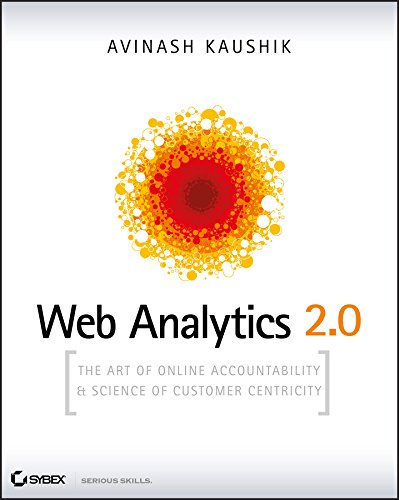
Avinash Kaushik is the author of the leading web analytics and research blog Occam's Razor and serves as Google's Digital Marketing Evangelist as well as Chief Education Officer at Market Motive Inc. His extensive experience and recognition, including awards from the American Statistical Association and Digital Analytics Association, uniquely position him to guide you through the complexities of online accountability and customer-centric analytics. This book reflects his commitment to making web analytics accessible and actionable for professionals aiming to harness data effectively.
Avinash Kaushik is the author of the leading web analytics and research blog Occam's Razor. He is also the Digital Marketing Evangelist for Google and the Chief Education Officer at Market Motive Inc. He has received numerous awards, including Statistical Advocate of the Year from the American Statistical Association and Most Influential Industry Contributor from the Digital Analytics Association.
Drawing from his role as Google's Digital Marketing Evangelist and Chief Education Officer at Market Motive Inc., Avinash Kaushik offers a deep dive into web analytics that goes beyond mere data collection. You learn how to interpret customer behavior and measure online accountability with clarity, including frameworks that focus on customer centricity and actionable insights. The book breaks down complex metrics into understandable concepts, such as segmentation techniques and testing strategies, that help you refine marketing efforts effectively. If you're involved in digital marketing or product management, this book equips you with the analytical mindset necessary to make data-driven decisions without getting lost in numbers.
What happens when experienced software practitioners focus on business metrics? This guide delivers pocket-sized insights tailored for software teams eager to connect their daily work with measurable business results. It helps you understand metrics like throughput, lead time, and flow, showing how they impact quality and value from a team-first perspective. Whether you want to answer "How fast are we going?" or "What should we do next?", this book equips your team to make informed decisions with less guesswork and more collaboration. Its approach centers teams to build and operate software systems that truly serve business goals.
Drawing from their deep experience in software development, Mattia Battiston and Chris Young developed this guide to help software teams harness business metrics for better decision-making. You’ll learn how to evaluate throughput, lead time, forecasting, flow, quality, and value in ways that directly link technical efforts to business outcomes. The book breaks down how your team can identify bottlenecks, prioritize work effectively, and reduce waste without getting lost in complex data. If you’re involved in software delivery and want to make your team’s output more aligned with business goals, this book gives you practical insights without overwhelming jargon.
Robert S. Kaplan, a professor at Harvard Business School and a leading authority on management accounting, co-created the Balanced Scorecard framework that revolutionized how organizations measure and manage performance. His deep expertise in performance measurement and strategy underpins this book, which offers you a clear pathway to translate abstract strategy into actionable performance measures. Kaplan's work bridges academic research and practical business application, making this a valuable guide for anyone involved in strategic management.
Robert S. Kaplan is a renowned professor at Harvard Business School and a leading authority on management accounting and performance measurement. He co-created the Balanced Scorecard framework with David P. Norton, which has transformed how organizations measure and manage their performance. Kaplan's work has influenced both academic research and practical applications in business strategy, making him a pivotal figure in the field of management.
Drawing from his extensive experience as a Harvard Business School professor and management accounting expert, Robert S. Kaplan co-developed the Balanced Scorecard alongside David P. Norton to address a critical gap in organizational performance measurement. This book walks you through translating your company’s vision and strategy into a practical set of metrics across four perspectives: financial, customer, internal processes, and learning and growth. You'll gain insight into balancing short-term results with long-term drivers, and how to use these measures not just for tracking but to actively drive strategic change. If you’re involved in strategy execution or performance management, this book offers a structured way to link what you measure with what you actually want to achieve.
The best Business Metrics books and more, in your inbox each week. No account needed.
Conclusion
This collection of 10 books reveals several clear themes: the power of focus through measurable objectives, the importance of linking data directly to business outcomes, and the need for metrics that drive behavior and decision-making. If you're grappling with aligning your team or clarifying your growth strategy, start with Measure What Matters and The Balanced Scorecard for foundational frameworks. For marketing professionals aiming to quantify impact, Marketing Metrics and Data-Driven Marketing offer practical guidance.
For startups and software teams, Scaling Lean and Team Guide to Metrics for Business Decisions provide tactical advice to track meaningful progress without overwhelm. Alternatively, you can create a personalized Business Metrics book to bridge the gap between general principles and your specific situation. These books can help you accelerate your learning journey and sharpen your ability to measure what truly matters in business.
Frequently Asked Questions
I'm overwhelmed by choice – which book should I start with?
Start with Measure What Matters by John Doerr. Its clear framework on OKRs offers a solid foundation to understand how to set and track impactful business goals effectively.
Are these books too advanced for someone new to Business Metrics?
Not at all. Books like Ideaflow and Team Guide to Metrics for Business Decisions break down concepts into practical steps, making metrics accessible even if you’re just beginning.
Which books focus more on theory vs. practical application?
Measuring and Managing Performance in Organizations leans into theory about how metrics shape behavior, while Scaling Lean and Data-Driven Marketing offer hands-on frameworks and templates for immediate use.
Do these books assume I already have experience in Business Metrics?
They vary. Some, like The Balanced Scorecard, assume familiarity with strategic concepts, whereas Web Analytics 2.0 and Marketing Metrics guide you from basics to advanced analysis.
Which book gives the most actionable advice I can use right away?
Scaling Lean and Data for Business Performance provide concrete steps and real-world examples that you can apply directly to improve measurement and decision-making.
Can personalized books complement these expert recommendations?
Yes! While these books offer valuable frameworks, personalized Business Metrics books tailor insights to your specific context, making it easier to apply concepts effectively. Learn more here.
📚 Love this book list?
Help fellow book lovers discover great books, share this curated list with others!