10 Car Industry Books That Drive Expertise and Insight
Recommended by Michael Batnick, Jay Leno, Nir Eyal — top voices in Car Industry Books
Updated on June 28, 2025·We may earn commissions for purchases made via this page
2 of 10 books have Audiobook versions
We're launchingLaunching on Product Hunt today 🎉We just launchedJust launched on Product Hunt 🎉
Modelpeers, from the BookAuthority teamFrom the BookAuthority team: Modelpeers, a free way to follow AI models and agents like you follow people. We'd love your support.
What if the story of cars could reveal the pulse of innovation, culture, and leadership that shaped the modern world? The car industry isn't just about machines; it's a saga of rivalry, resilience, and revolution. In an era defined by rapid technological shifts and environmental urgency, understanding this industry's evolution has never been more crucial.
Authors like A.J. Baime, Jay Leno, and Hamish McKenzie have unraveled these complexities with gripping narratives and expert insights. Michael Batnick, a market analyst, discovered how Go Like Hell illuminated the fierce Ford-Ferrari rivalry, while Jay Leno's passion for automotive history shines through his praise for The Arsenal of Democracy. Meanwhile, Nir Eyal’s recommendation of Insane Mode highlights the electric revolution Tesla sparked.
These expert-curated books offer proven frameworks and deep dives into pivotal moments and figures in the car industry. Yet, if you’re seeking knowledge tailored specifically to your background, skill level, or interest—whether it's muscle cars, manufacturing, or electric vehicles—you might consider creating a personalized Car Industry book to build on these expert insights.
Michael Batnick, a long-distance reader and market analyst, found this book after being drawn to its cinematic adaptation. His reaction, "This movie looks awesome. Based on the book Go Like Hell, which was very good," highlights how Baime’s storytelling bridges history and entertainment. This book helped him appreciate the grit and strategy behind Ford’s leap into European racing, showing why it’s a must for anyone fascinated by automotive history. Also, Leigh Montville, former Sports Illustrated writer, praises it as a vivid ride through greed and glory, adding to its appeal.
A.J. Baime is the New York Times bestselling author of The Accidental President: Harry S. Truman and the Four Months that Changed the World (2017), The Arsenal of Democracy: FDR, Detroit, and an Epic Quest to Arm an America at War (2014), Go Like Hell: Ford, Ferrari, and Their Battle for Speed and Glory at Le Mans (2009), and Dewey Defeats Truman: The 1948 Election and the Battle for America's Soul (2019). Baime is a longtime regular contributor to the Wall Street Journal, and his articles have also appeared in the New York Times, the Washington Post, and numerous other publications.
The breakthrough moment came when A.J. Baime captured the fierce rivalry between Ford and Ferrari during the 1960s, revealing how business ambition and raw speed collided at Le Mans. You’ll gain an insider’s view of automotive strategy, innovation under pressure, and the personalities—like Carroll Shelby and Lee Iacocca—who reshaped American car racing. Baime’s narrative goes beyond the track, exploring how Ford revitalized its image through a daring gamble that combined engineering prowess with relentless competition. If you’re intrigued by mechanical ingenuity and the drama behind automotive legends, this book offers vivid details and sharp insights into that transformative era.
Chicago Review of Books, a respected literary authority, highlights this book as appealing beyond just car fans, noting "This is not just a book for automobile buffs; there’s enough insight and intrigue to appeal to a wider audience." Their appreciation stems from the book’s thorough research and engaging narrative that captures both innovation and conflict in the car industry. This perspective helps you see why the book remains relevant for anyone interested in the forces shaping automotive history. The Wall Street Journal echoes this sentiment, praising its well-researched and smooth writing style, reinforcing its value for those seeking a reliable, informative read on this pivotal moment in car manufacturing.
Steve Lehto is the author of Chrysler’s Turbine Car, Death’s Door, Drawn to Injustice, and The Great American Jet Pack, among others. His articles have been published by the Huffington Post, Michigan History, and other publications. Lehto is also a weekly columnist at RoadandTrack.com. Jay Leno was the long-time host of the Tonight Show. His extensive collection of classic cars is world famous.
Steve Lehto's extensive experience as an automotive historian and journalist shines through in this in-depth chronicle of Preston Tucker's ambition to reshape the American car industry after World War II. Drawing from a vast archive of documents never before fully explored, Lehto reveals how Tucker's innovative car, featuring safety glass, a rear engine, and aerodynamic design, challenged both industry norms and powerful opponents. Alongside Jay Leno's introduction, the book offers detailed insights into the engineering breakthroughs and political battles that defined Tucker's rise and fall. If you want a nuanced understanding of automotive innovation and industry dynamics, this book provides a clear, factual narrative that goes beyond mere nostalgia.
This personalized AI book about the car industry is created based on your unique background, expertise, and automotive interests. You tell us which areas—such as manufacturing, electric vehicles, or automotive history—you want to focus on, and the book is crafted to match your specific goals and skill level. This approach helps you cut through the noise and dive straight into the knowledge most relevant to you, making your learning journey efficient and deeply rewarding.
TailoredRead AI creates personalized nonfiction books that adapt to your unique background, goals, and interests. Instead of reading generic content, you get a custom book written specifically for your profession, experience level, and learning objectives. Whether you're a beginner looking for fundamentals or an expert seeking advanced insights, TailoredRead crafts a book that speaks directly to you. Learn more.
This tailored book explores the multifaceted world of the car industry, delving into its history, innovation, manufacturing processes, and cultural impact. It examines key developments from muscle cars to electric vehicles, offering a personalized pathway that matches your background and specific automotive interests. By focusing on your goals, it reveals how industry shifts have shaped today's landscape and uncovers the engineering, design, and business elements driving change. Tailored to your expertise, this book synthesizes complex knowledge to provide a clear and focused learning experience that aligns closely with what you want to understand and achieve in the automotive sector.
The San Francisco Chronicle, a respected authority on cultural and automotive reporting, highlights how this book captures a 2015 summer journey with Tom Cotter and Bill Warner through Cuba’s unique car scene. Their review praises the stunning photography and the deep dive into how Cuba’s politics and passion have intertwined to create a car culture frozen in time. This perspective offers you an insightful look at how cars become symbols of resilience and ingenuity. If you appreciate a blend of history, culture, and automotive enthusiasm, this portrayal by The San Francisco Chronicle gives a compelling reason to explore Cuba's automotive story.
“A beautifully photographed documentary of a summer 2015 visit by authors and automotive enthusiasts Tom Cotter and Bill Warner, and a history of the island’s intertwined politics and passion for cars.” (from Amazon)
Tom Cotter had long been involved in nearly every facet of the automotive and racing industries before writing his first book. From mechanic and auto salesman to heading the public relations department at Charlotte Motor Speedway, Cotter formed his own racing and automotive PR and marketing agency, Cotter Group. The agency represented some of the largest clients in NASCAR, IndyCar/CART, drag racing, and road racing. He has written biographies of the legendary Holman-Moody race team, Tommy Ivo and Dean Jeffries, but is best known for his series of barn find books, such as Cobra in the Barn, 50 Shades of Rust and Barn Find Road Trip. Cotter appears in the Barn Find Hunter video series, which is distributed by Hagerty. He teaches public relations at Belmont Abbey College, sits on the advisory board of McPherson College’s Auto Restoration program, and is a member of the Road Racing Driver’s Club (RRDC.) He lives in Davidson, North Carolina.
When Tom Cotter, a veteran deeply embedded in automotive culture, turned his attention to Cuba's unique car scene, he uncovered a story of resilience and creativity shaped by decades of embargo-induced isolation. This book takes you through how Cuban enthusiasts keep classic American cars from the 1940s and 1950s running without access to new parts, revealing inventive techniques and a passion that redefines automotive preservation. You'll explore detailed chapters on Cuba's pre-revolution car history, street racing culture, and the transformation of vintage vehicles into living artifacts. If you’re fascinated by automotive history or curious about how culture and politics shape technology use, this book offers a vivid, well-documented perspective.
2017 Silver Medal Winner International Automotive Media Competition
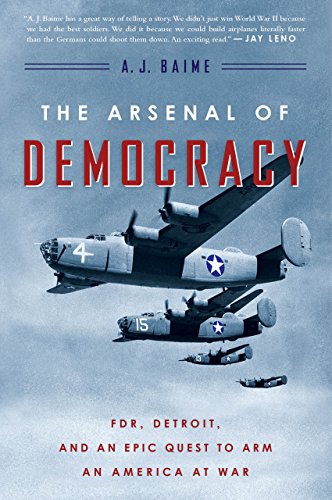
Jay Leno, well-known for his extensive car collection and deep knowledge of automotive history, recommends this compelling narrative of how Detroit’s car factories became a decisive factor in World War II. He highlights how Baime’s storytelling reveals that victory was not just about soldiers but also about building planes faster than the enemy’s ability to destroy them. This insight reshaped Leno’s understanding of industrial power in wartime. The Wall Street Journal also praises Baime for restoring Edsel Ford’s legacy, painting a vivid picture of the industry’s crucial wartime role, making this a must-read for those fascinated by automotive history and manufacturing innovation.
“A.J. Baime has a great way of telling a story. We didn't just win World War II because we had the best soldiers. We did it because we could build airplanes literally faster than the Germans could shoot them down. An exciting read.” (from Amazon)
A.J. Baime is the New York Times bestselling author of The Accidental President: Harry S. Truman and the Four Months that Changed the World, Go Like Hell: Ford, Ferrari, and Their Battle for Speed and Glory at Le Mans, and Dewey Defeats Truman: The 1948 Election and the Battle for America's Soul. Baime is a longtime regular contributor to the Wall Street Journal.
During World War II, A. J. Baime discovered how Detroit's auto industry transformed itself into a wartime production powerhouse. Drawing on detailed archival research, Baime reveals the bold efforts by Henry Ford and his son Edsel to convert car factories into bomber assembly lines, culminating in the massive Willow Run plant. You’ll gain insight into industrial innovation, wartime logistics, and leadership under pressure, with vivid examples like the claim to produce a bomber every hour. This book suits anyone interested in manufacturing history, wartime economy, or the car industry’s pivotal role in shaping America’s military might.
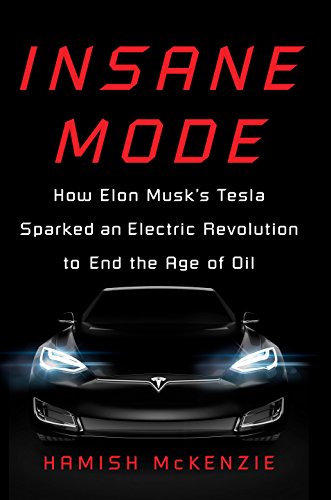
Nir Eyal, author of "Hooked: How to Build Habit-Forming Products," brings a keen understanding of innovation to his recommendation of this book. He highlights how Elon Musk’s relentless determination reshaped the automotive world, saying, "Insane Mode is a gripping account of how Elon Musk has used genius and tenacity to overcome a mind-boggling array of obstacles and transform the auto industry." This perspective reflects Eyal's expertise in behavioral design and product impact, making his endorsement particularly relevant for those interested in how bold ideas reshape industries. Alongside him, Jonah Berger, Wharton professor and author, underscores the book's significance as a marker of an historic transportation shift, emphasizing its potential environmental implications. Together, their insights invite you to reconsider the future of cars through the lens of entrepreneurship and clean energy.
Author, Hooked: How to Build Habit-Forming Products
“Insane Mode is a gripping account of how Elon Musk has used genius and tenacity to overcome a mind-boggling array of obstacles and transform the auto industry.” (from Amazon)
Hamish McKenzie is a writer from New Zealand who lives in San Francisco. He has worked in communications for Tesla and Kik and was previously a journalist whose primary interests were technology and social issues. He is the cofounder of Substack, a subscription publishing start‑up. His work has appeared in a wide range of international publications, and he has interviewed notable figures including Sting and John Cleese.
Hamish McKenzie, drawing on his background in technology communications and firsthand experience working with Tesla, offers an inside look at how Elon Musk's vision challenged the automotive status quo. You’ll explore Tesla’s battle against entrenched car manufacturers and Big Oil, grasping how innovation, infrastructure, and bold leadership converged to ignite an electric vehicle revolution. Chapters on the Model 3’s market impact and the Nevada battery factory provide concrete examples of Tesla's disruptive strategies. This book suits anyone curious about the intersection of entrepreneurship, clean energy, and automotive transformation, though it may resonate most with those interested in the business dynamics driving electric cars forward.
This AI-created book on car industry expertise is tailored to your background and goals to help you gain knowledge efficiently. You share your current skills and areas of interest, and the book focuses on your personal learning journey within automotive topics. By honing in on what matters most to you, it offers a clear pathway through complex industry content without overwhelming you. This personalized approach makes building your automotive skills faster and more relevant than generic guides.
TailoredRead AI creates personalized nonfiction books that adapt to your unique background, goals, and interests. Instead of reading generic content, you get a custom book written specifically for your profession, experience level, and learning objectives. Whether you're a beginner looking for fundamentals or an expert seeking advanced insights, TailoredRead crafts a book that speaks directly to you. Learn more.
This tailored book delves into the car industry with a focused, step-by-step plan designed to accelerate your expertise over 90 days. It explores key aspects such as automotive design, manufacturing processes, market trends, and emerging technologies, all tailored to your background and skill level. By concentrating on your specific interests and goals, this personalized guide synthesizes complex industry insights into a clear, actionable learning path. It reveals how various components of the automotive sector interconnect, helping you grasp the nuances that drive innovation and competitiveness. This targeted approach ensures a rich learning experience that matches your pace and objectives, making the car industry's vast knowledge accessible and relevant to you.
Mark Fletcher is an automotive historian and muscle car enthusiast who has owned nearly 100 performance cars from the late 1960s and early 1970s. Alongside Richard Truesdell, a contributor to Motor Trend and Automobile, he brings both deep passion and journalistic rigor to this book. Their combined expertise offers you a richly detailed account of the muscle car era’s final peak, driven by firsthand experience and decades of coverage. This background makes the book a valuable resource for anyone fascinated by the muscle car's golden year.
Mark Fletcher is an automotive historian and muscle car enthusiast who has owned almost 100 performance cars from the late 1960s and early 1970s. He lives in Southern California with his wife Cheryl and is active in several automotive clubs and organizations. Richard Truesdell has contributed to Motor Trend, Automobile, Muscle Car Review, National Geographic Traveler, and other publications. His 2005 trip from London to Maranello and back in a Ford GT and Dodge Viper was published in Octane. He is co-author, with Mark Fletcher, of Hurst Equipped (2012).
After immersing themselves in decades of muscle car culture and journalism, Mark Fletcher and Richard Truesdell crafted a detailed exploration of the muscle car's last hurrah in 1970. You’ll uncover the complex interplay of industry forces—like rising fuel prices and insurance regulations—that hastened the decline of these iconic vehicles, alongside a close look at standout models such as the Buick GSX and Plymouth ’Cuda with their powerful engines. The book offers a blend of technical insights, cultural context, and vivid descriptions of styling and performance packages that defined the era's peak. Enthusiasts wanting a nuanced understanding of muscle car engineering and history will find this a focused and richly illustrated study.
Leon Dixon grew up in Detroit during the city's automotive heyday and has held roles from technical writer to lead engineer, contributing to vehicles like the Mazda Miata. His insider perspective and hands-on experience lend authority to this thorough exploration of Creative Industries of Detroit and their influence on concept car development.
Leon Dixon grew up in Detroit, Michigan, during the glory years of the automotive industry and loves anything with wheels. Leon worked in the automotive industry in positions ranging from technical writing, product planning, project management, lead engineer, and professional consultant. Leon proudly participated in the development of several vehicles, including the original famed Mazda Miata.
Leon Dixon draws on his extensive experience in Detroit's automotive scene to reveal the hidden legacy of Creative Industries of Detroit, a secretive builder behind some of America's most iconic concept cars. You’ll gain detailed insights into how the company influenced designs from the 1950s onward, including vehicles like the Ford Atmos-FX and the 1993 Mustang Mach III, supported by interviews and rare images. This book suits anyone fascinated by automotive history or the intricate craftsmanship behind prototype vehicles, offering a deep dive into a niche rarely explored in mainstream car industry literature.
Robin Sloan, acclaimed author and innovator in creative industries, shared how revisiting this 1980s business classic reshaped his view of manufacturing’s evolution: "I got this book because I am lately into 1980s 'business book' time capsules, but in fact it is beautifully written and dizzyingly interesting, even in 2019!!" Sloan’s appreciation highlights the book’s enduring relevance beyond its era, reflecting on lean production’s ongoing influence. Alongside Business Week, which called it "the best current book on the changes reshaping manufacturing and the most readable," this endorsement signals a must-read for anyone tracking the car industry's transformation and wider manufacturing shifts.
Author of bestselling novels, California olive oil producer
“I got this book because I am lately into 1980s "business book" time capsules , but in fact it is beautifully written and dizzyingly interesting, even in 2019!!” (from X)
James P. Womack is the president and founder of the Lean Enterprise Institute, a nonprofit organization dedicated to promoting lean production principles. He has a Ph.D. from MIT and has directed significant research on manufacturing practices globally.
Drawing from his extensive research as president of the Lean Enterprise Institute and a Ph.D. from MIT, James P. Womack presents a thorough analysis of lean production’s transformative impact on the automobile industry. You’ll gain an understanding of how lean manufacturing integrates management, workers, and suppliers into a unified system that dramatically improves quality and efficiency while reducing costs. The book traces the shift away from mass production toward this Japanese-developed method, exploring its implications not only for car manufacturers but also for global industry practices. If you’re interested in the future of manufacturing or how industries adapt to disruptive operational models, this book offers concrete insights and historical context.
Shankar Sharma, an investor known for his deep business insights, found this autobiography transformational at a young age, stating it taught him more than an MBA. His experience highlights how Iacocca's firsthand account offers more than just history — it provides a blueprint for leadership and business resilience. This perspective makes the book a compelling read for those seeking to understand not just the car industry, but the strategic toughness required to succeed. Additionally, Donald Trump, former U.S. president, also acknowledges the book, underscoring its significance among influential leaders.
“Reading the Iacocca autobio at age 21, was absolutely transformational. Taught me more than an MBA degree. The second book that did something similar at that age for me, was "The Mind of The Strategist" by Kenichi Ohmae. Such great business wisdom in these books. RIP Lee” (from X)
Lee Iacocca was the president of Ford Motor Company and chairman of the Chrysler Corporation. In retirement, he devoted his time to the Iacocca Family Foundation, which raises money for diabetes research. Lee Iacocca died in 2019.
Lee Iacocca's decades of leadership in American automotive giants Ford and Chrysler shaped this autobiography into a detailed account of industry upheaval and innovation. You get a front-row seat to his pivotal role in launching the Mustang and his gritty comeback leading Chrysler from near bankruptcy to repayment of a massive government loan. The book digs into corporate power struggles and the realities of transforming a struggling company, offering you insights into strategic decision-making, resilience, and leadership under pressure. If you want an insider's perspective on the American car industry's highs and lows during a transformative era, this book speaks directly to you.
Jeffrey K. Liker is Professor Emeritus of Industrial and Operations Engineering at the University of Michigan and President of Liker Lean Advisors. He has authored the international bestseller detailing Toyota’s management philosophy, with over one million copies sold in 26 languages. His extensive research and collaboration with Toyota provide the foundation for this updated edition, which includes new frameworks for innovation and leadership. Liker’s expertise and recognition through multiple Shingo Prizes and industry hall of fame inductions underscore the book’s authority in manufacturing management.
Jeffrey K. Liker is Professor Emeritus of Industrial and Operations Engineering at the University of Michigan and President of Liker Lean Advisors. He is author of the international best-seller, The Toyota Way: 14 Management Principles from the World’s Greatest Manufacturer, 2004 (26 languages, over 1 million copies sold), and has coauthored nine other books about Toyota including The Toyota Way to Service Excellence, Designing the Future, and The Toyota Way to Lean Leadership. His articles and books have won thirteen Shingo Prizes for Research Excellence. Recently he has collaborated with Mike Rother to study and write about Toyota Kata. In 2012 he was inducted into the Association of Manufacturing Excellence Hall of Fame and in 2016 inducted into the Shingo Academy.
Jeffrey K. Liker, a professor emeritus and veteran industrial engineer, draws on decades of research and collaboration with Toyota to explore its management philosophy in depth. You learn detailed frameworks like Hoshin Kanri for strategic alignment and how Toyota’s principles foster continuous improvement and quality control. The book breaks down the 14 core principles across philosophy, processes, people, and problem solving, offering concrete examples from manufacturing and service sectors. If you're looking to understand how Toyota sustains competitive advantage through leadership and innovation, this book lays out a clear path. It’s particularly useful if you want to build a culture of operational excellence rather than just adopt isolated tools.
Author of international bestseller
Thirteen Shingo Prizes for Research Excellence
Inducted into Association of Manufacturing Excellence Hall of Fame
The best Car Industry books and more, in your inbox each week. No account needed.
Conclusion
Together, these 10 books sketch a multifaceted portrait of the car industry—from the adrenaline-fueled races of Le Mans to the quiet ingenuity preserving Cuban classics, from wartime manufacturing feats to the cutting-edge electric vehicle revolution. They reveal themes of innovation, leadership, and cultural impact that continue to drive the industry.
If you’re navigating leadership challenges, Iacocca offers a blueprint for resilience. For rapid grasp of manufacturing efficiency, combine The Toyota Way with The Machine That Changed the World. Muscle car enthusiasts will find 1970 Maximum Muscle indispensable, while those curious about automotive culture should explore Cuba’s Car Culture.
Alternatively, you can create a personalized Car Industry book to bridge the gap between general principles and your specific situation. These books can help you accelerate your learning journey and deepen your understanding of one of the world's most dynamic industries.
Frequently Asked Questions
I'm overwhelmed by choice – which book should I start with?
Start with Go Like Hell for an engaging dive into automotive rivalry and history. It offers a vivid narrative that captivates both newcomers and seasoned enthusiasts, setting a strong foundation for exploring other topics.
Are these books too advanced for someone new to Car Industry?
Not at all. Many, like Preston Tucker and His Battle to Build the Car of Tomorrow, provide clear, accessible storytelling that invites beginners while still offering depth for experts.
Do I really need to read all of these, or can I just pick one?
You can definitely pick based on your interests. For innovation, try Insane Mode. For manufacturing, The Toyota Way is ideal. Each book stands strong on its own.
Which books focus more on theory vs. practical application?
The Machine That Changed the World leans toward practical manufacturing methods, while Iacocca blends theory with real-world leadership stories, giving you both perspectives.
Are any of these books outdated given how fast Car Industry changes?
While some cover historical periods, their lessons on innovation, leadership, and industry evolution remain relevant. For the latest trends, Insane Mode and The Toyota Way, Second Edition offer up-to-date insights.
How can I get tailored insights that match my specific interests in the Car Industry?
While these expert books provide valuable knowledge, creating a personalized Car Industry book lets you focus on your goals and experience. It bridges expert insights with your unique needs. Learn more here.
📚 Love this book list?
Help fellow book lovers discover great books, share this curated list with others!