10 Coding Style Books That Separate Experts from Amateurs
Insights from David Heinemeier Hansson, Ann Handley, and other coding leaders on mastering Coding Style Books
Updated on June 22, 2025·We may earn commissions for purchases made via this page
We're launchingLaunching on Product Hunt today 🎉We just launchedJust launched on Product Hunt 🎉
Modelpeers, from the BookAuthority teamFrom the BookAuthority team: Modelpeers, a free way to follow AI models and agents like you follow people. We'd love your support.
What if the secret to writing better code isn’t just mastering languages or frameworks but refining your coding style? Coding style shapes how readable, maintainable, and scalable your projects become. In an era when collaboration and continuous integration dominate, clear, consistent code style is critical to team success and individual productivity.
Industry leaders like David Heinemeier Hansson, renowned for creating Ruby on Rails and leading Basecamp’s engineering, emphasize style as a cornerstone of software quality. Ann Handley, a pioneer in content marketing, highlights how clarity in technical writing, including code comments, bridges developer communication gaps. Their endorsements spotlight books that have guided experts through the nuanced art of coding style.
While these ten carefully curated books offer proven frameworks and principles, you might find even greater value by creating a personalized Coding Style book that adapts these insights to your experience level, preferred languages, and professional goals. Tailored reading can accelerate your growth beyond general advice.
Best for editorial standards in coding documentation
Journal of Electronic Publishing, a respected authority in academic publishing, highlights this manual as the definitive guide for Chicago formatting and citation styles. They emphasize its unique value for users seeking both a thorough reference and portable access through the online edition. "For those looking to learn or reference the Chicago formatting and citation styles, The Chicago Manual of Style will always be the go-to resource," they share, underscoring its enduring relevance despite evolving content. This perspective resonates with professionals needing reliable editorial standards in an era of rapid digital change. Additionally, The Boston Globe calls it a "guiding light for almost all published writing in America today," reinforcing its foundational role in the publishing world.
“For those looking to learn or reference the Chicago formatting and citation styles, The Chicago Manual of Style will always be the go-to resource. Despite each new edition’s growth in length and changes in content, the volume remains the same: the definitive—and only—guide to Chicago style. Given the print volume’s size and weight, the online version, with its additional features—many of which are freely available—is a good alternative for both brief and dedicated users who want portable access to the manual or want to move beyond the content to engage with The Chicago Manual of Style community.”
The University of Chicago Press Editorial Staff(you?)·
About the Author
The University of Chicago Press Editorial Staff is known for producing high-quality academic and reference works, including the Chicago Manual of Style, which has been a leading resource for writers, editors, and publishers for over a century.
Unlike most style guides that focus narrowly on grammar rules or citation formats, this edition of The Chicago Manual of Style integrates the evolving landscape of digital publishing with traditional editorial standards. Drawing from the extensive expertise of the University of Chicago Press Editorial Staff, it updates citation practices to include social media, private messages, and e-book locators while refining grammar and usage with attention to gender-neutral language and syntax. You’ll find detailed chapters on metadata, web accessibility, and bias-free language, making it relevant for modern writers, editors, and self-publishers navigating both print and digital content. This book suits anyone serious about mastering precise and contemporary writing conventions rather than casual users seeking quick tips.
Dr. Simon Harrer is a developer and teacher recognized for his enthusiasm in clean coding, often called a clean code evangelist in the best sense. Alongside Dr. Jörg Lenhard, an experienced Java instructor and researcher, and Linus Dietz, a dedicated algorithm developer and open source contributor at the Technical University of Munich, they collectively bring deep expertise to this book. Their combined backgrounds inspired a hands-on guide that compares flawed Java code with improved versions, helping you develop a practical sense of writing elegant, maintainable Java programs.
Dr. Simon Harrer is a developer and teacher who's always looking out for new technologies, frameworks, and ideas. His friends call him a clean code evangelist, but in a good way. Dr. Jörg Lenhard is a developer, teacher, and researcher. He has been teaching programming in Java for almost a decade and enjoys contributing to open source software. Jörg has a track record of computer science research and experience as a professional software developer. Linus Dietz is a researcher at the Technical University of Munich. His passion lies in developing elegant algorithms and advancing open source software.
When Simon Harrer and his co-authors realized many Java developers struggle with writing clean, maintainable code, they created a resource that uses concrete comparisons to highlight better coding practices. This book teaches you how to spot subtle flaws—like improper boolean usage or magic numbers—and replace them with cleaner alternatives, using 70 side-by-side examples that clarify the why behind each improvement. You’ll learn practical skills such as effective iteration styles, meaningful commenting, and robust exception handling, along with testing using JUnit5. If you’re aiming to move beyond writing functional Java programs to crafting elegant, readable, and reusable code, this book directly addresses those skills.
This AI-powered book on code clarity tackles the subject through a personalized lens, with content shaped by your programming languages and development goals. It develops a systematic approach with frameworks that adapt to your specific coding environment and project challenges. The book’s content adjusts based on your background and focuses on actionable strategies for writing readable, maintainable code. Created after you specify your areas of interest, it bridges the gap between general principles and your particular coding practices.
TailoredRead AI creates personalized nonfiction books that adapt to your unique background, goals, and interests. Instead of reading generic content, you get a custom book written specifically for your profession, experience level, and learning objectives. Whether you're a beginner looking for fundamentals or an expert seeking advanced insights, TailoredRead crafts a book that speaks directly to you. Learn more.
This personalized framework explores core principles and best practices for enhancing code clarity and readability across diverse programming environments. It provides tailored strategies that address common pitfalls in code structure, naming conventions, and documentation, while adapting to your specific languages, project requirements, and collaboration contexts. The book emphasizes maintainability through a systematic approach to refactoring, consistent style enforcement, and effective commenting techniques, cutting through irrelevant advice to fit your particular development scenario. By focusing on practical methodologies that align with your experience and goals, it fosters cleaner, more understandable codebases that support long-term project success and team communication.
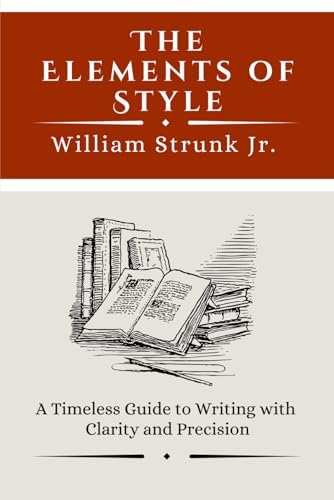
William Strunk Jr., a professor of English at Cornell University, authored this influential guide to English usage, which has shaped writing standards for decades. His academic background and dedication to clear expression laid the foundation for this concise volume, often called Strunk & White after revision by his student E. B. White. The book's focus on fundamental principles of style offers practical value for anyone seeking to improve clarity in their writing, including technical contexts like coding documentation.
William Strunk Jr. (1 July 1869 – 26 September 1946), was a professor of English at Cornell University and author of The Elements of Style (1918). After revision and enlargement by his former student E. B. White, it became a highly influential guide to English usage during the late 20th century, commonly called Strunk & White.
Unlike most coding style books that focus solely on technical syntax, William Strunk Jr.'s work draws from his extensive experience as an English professor at Cornell University to address the principles of clear and effective writing that underpin good coding style. You’ll find concise guidance on grammar, word choice, and composition that applies directly to writing readable, maintainable code comments and documentation. Chapters like "Elementary Rules of Usage" and "Principles of Composition" offer timeless advice to sharpen your communication skills, which benefits anyone aiming to improve code clarity, whether you're a developer or technical writer. This isn't about programming languages but about mastering the language around code.
Christian Mayer has a PhD in computer science and is the founder of Finxter, an educational platform teaching over a million people annually how to program. His expertise and passion for simplifying programming led him to write this book, which distills his teaching into eight principles for writing clearer, more efficient code. Mayer’s experience with thousands of developers shapes a guide that will help you cut through complexity and focus your energy where it counts most.
Christian Mayer has a PhD in computer science and is the founder of the popular Python site Finxter, an educational platform that teaches more than a million people a year how to program. He has published a number of books, including the Coffee Break Python series, and is the author of Python One-Liners (No Starch Press, 2020).
When Christian Mayer first realized how much complexity slows down programmers, he crafted this book to teach you how to cut through clutter and focus on what truly matters in your code. You’ll learn eight core principles, like applying the 80/20 rule to code and embracing the "Do One Thing Well" philosophy, which help simplify and clarify your programming work. Mayer draws from his extensive experience teaching over a million developers, offering practical insights that suit all skill levels and languages, not just Python. This book suits anyone looking to write cleaner, more maintainable code without sacrificing functionality, but it’s especially helpful if you find yourself tangled in convoluted projects or want to improve your development flow.
Best for Python programmers adopting best practices
Al Sweigart is a software developer and tech book author living in Seattle, best known for his New York Times bestselling Python books. His passion for Python and open source software inspired him to write this book as a bridge from beginner tutorials to professional programming practices. Sweigart’s hands-on experience and approachable style guide you through essential tools and concepts like code formatting, static analysis, and algorithm complexity, making your coding more effective and professional.
Al Sweigart is a software developer and tech book author living in Seattle. Python is his favorite programming language, and he is the developer of several open source modules for it. His cat Zophie weighs 11 pounds.
What if everything you knew about writing Python code was too basic? Al Sweigart, a seasoned software developer and author known for his bestseller Automate the Boring Stuff with Python, pushes you beyond elementary scripts to embrace professional practices. You’ll explore how to use tools like Python's Black auto-formatter, static analyzers to spot bugs early, and version control systems that are staples in real-world development. The chapters on Big-O algorithm analysis and object-oriented design are particularly useful for coding interviews and structuring scalable projects. This book suits programmers ready to refine their style and adopt best practices that transcend Python alone.
This AI-tailored book on Python style mastery develops a systematic approach with frameworks that adapt to your specific coding experience and project requirements. The content adjusts based on your interests, background, and objectives to address nuanced challenges in writing polished Python code. It focuses on advanced strategies for improving code clarity, structure, and maintainability. Created after you specify your areas of interest, this tailored guide bridges the gap between foundational Python knowledge and professional style practices.
TailoredRead AI creates personalized nonfiction books that adapt to your unique background, goals, and interests. Instead of reading generic content, you get a custom book written specifically for your profession, experience level, and learning objectives. Whether you're a beginner looking for fundamentals or an expert seeking advanced insights, TailoredRead crafts a book that speaks directly to you. Learn more.
This AI-tailored book on Python style mastery provides a detailed framework for elevating coding practices through advanced techniques in style and project organization. It focuses on modular design, consistent naming conventions, efficient use of Pythonic idioms, and structuring codebases to enhance maintainability and scalability. The personalized framework adjusts to your experience level, coding environment, and project goals, offering tailored strategies that cut through generic advice to fit your specific Python development context. Readers gain insight into balancing readability with performance and learn to implement best practices that align with professional standards while optimizing their workflow.
Kent Beck, founder and director of Three Rivers Institute, has shaped software development through innovations like test-first programming and Extreme Programming. With a career blending hands-on coding and thoughtful reflection, Beck wrote this book to share the distilled experience of successful Smalltalk programmers. His background uniquely positions him to guide you in adopting patterns that improve your Smalltalk code's clarity and effectiveness, making this book a valuable resource for anyone serious about coding style in Smalltalk.
Kent Beck is the founder and director of Three Rivers Institute (TRI). His career has combined the practice of software development with reflection, innovation, and communication. His contributions to software development include patterns for software, the rediscovery of test-first programming, the xUnit family of developer testing tools, and Extreme Programming. He currently divides his time between writing, programming, and coaching. Beck is the author/co-author of Implementation Patterns, Extreme Programming Explained: Embrace Change 2nd Edition, Contributing to Eclipse, Test-Driven Development: By Example, Planning Extreme Programming, Smalltalk Best Practice Patterns, and the JUnit Pocket Guide. He received his B.S. and M.S. in Computer Science from the University of Oregon.
When Kent Beck first realized the informal knowledge successful Smalltalk programmers relied on could be organized into clear patterns, he crafted this guide to make those insights accessible. You learn how to apply specific patterns to method organization, message handling, state management, collections, and class design, all aimed at improving code clarity and maintainability. For example, Beck walks through a full development scenario showing these patterns in action, which helps you internalize their practical use. This book suits programmers who want to write more effective Smalltalk code, whether you're a student, teacher, or experienced developer seeking to refine your style.
The Associated Press is a not-for-profit news cooperative that delivers fast, unbiased news from every corner of the world. Founded in 1846, AP today is the largest and most trusted source of independent news and information. Distributed by satellite and the Internet to more than 120 nations, AP services daily reach more than one billion people. With headquarters in New York City, the AP has over 3,700 employees in more than 300 locations worldwide. This authoritative background shapes the Associated Press Stylebook as an indispensable resource for anyone dedicated to accurate and professional news writing and editing.
The Associated Press is a not-for-profit news cooperative that delivers fast, unbiased news from every corner of the world. Founded in 1846, AP today is the largest and most trusted source of independent news and information. Distributed by satellite and the Internet to more than 120 nations, AP services daily reach more than one billion people. With headquarters in New York City, the AP has over 3,700 employees in more than 300 locations worldwide.
The Associated Press, a globally recognized news cooperative with decades of experience delivering unbiased information, crafted this stylebook to unify and clarify journalism standards. You’ll gain precise knowledge about grammar, punctuation, capitalization, spelling, and word usage specific to news writing, including when to prefer "more than" over "over." The book’s detailed chapters and comprehensive index make it an essential tool for mastering the AP style’s nuances, which remain influential across newsrooms worldwide. If you’re a journalist, editor, or student aiming to write with the clarity and professionalism that the AP style demands, this book provides the exact rules and guidance you need to uphold those standards.
Alan A. A. Donovan is a key member of Google’s Go team with degrees from Cambridge and MIT, bringing decades of programming and infrastructure experience, while Brian W. Kernighan is a Princeton professor and co-author of The C Programming Language. Together, they crafted this book to guide programmers from basic Go syntax to advanced concepts like concurrency and reflection, grounded in their deep knowledge of programming languages and software engineering. Their combined expertise ensures the book provides practical examples and exercises that help you master Go’s coding style and idioms, making it a reliable companion for serious Go developers.
Alan A. A. Donovan is a member of Google’s Go team in New York. He holds computer science degrees from Cambridge and MIT and has been programming in industry since 1996. Since 2005, he has worked at Google on infrastructure projects and was the co-designer of its proprietary build system, Blaze. He has built many libraries and tools for static analysis of Go programs, including oracle, godoc -analysis, eg, and gorename. Brian W. Kernighan is a professor in the Computer Science Department at Princeton University. He was a member of technical staff in the Computing Science Research Center at Bell Labs from 1969 until 2000, where he worked on languages and tools for Unix. He is the co-author of several books, including The C Programming Language, Second Edition (Prentice Hall, 1988), and The Practice of Programming (Addison-Wesley, 1999).
Alan A. A. Donovan’s extensive experience as a member of Google’s Go team, combined with Brian W. Kernighan’s foundational role in programming language design, shapes this guide for writing clear, idiomatic Go code. You’ll learn everything from basic program structure to complex concurrent programming using goroutines and channels, illustrated with practical examples like web servers and JSON handling. The book is especially useful if you want to deepen your understanding of Go beyond syntax, exploring testing, reflection, and even low-level programming techniques. If you’re looking for a resource that balances foundational principles with real-world applications, this book will serve you well, though it’s best suited for those with some programming background already.
Michael Barr is the CTO and co-founder of Barr Group, with a strong academic and practical background in electrical and computer engineering. His decades of hands-on experience across various industries, along with his role as an expert witness and prolific author, inform the Embedded C Coding Standard. This book reflects his commitment to helping firmware engineers write cleaner, more reliable embedded code through clear, practical rules that reduce defects and improve maintainability.
Michael Barr is the CTO and co-founder of Barr Group. He is a former adjunct professor of electrical and computer engineering with hands-on software design and implementation experience across a range of industries. Internationally recognized as an expert in the field of embedded software architecture and development processes, Barr has testified as an expert witness in courts in the U.S. and Canada. He is also the author of Programming Embedded Systems in C and C++ and the Embedded Systems Dictionary, as well as over seventy articles and papers about the design of embedded systems. He has served as editor-in-chief of Embedded Systems Programming magazine and has been a member of the advisory board and a track chair for the Embedded Systems Conference. Barr holds B.S. and M.S. degrees in electrical engineering from the University of Maryland.
Unlike most coding style books that focus on generic guidelines, Michael Barr's Embedded C Coding Standard zeroes in on practical rules tailored for embedded firmware engineers aiming to reduce defects. Drawing on his extensive background in electrical engineering and embedded systems, Barr lays out specific conventions for data types, functions, macros, and variables that improve maintainability and portability. For example, the standard highlights rules that target common bug sources, making it especially useful for developers working on critical systems. If you’re involved in embedded software and want a focused approach to minimize errors while aligning with standards like MISRA C, this book fits your needs.
Best for JavaScript developers writing maintainable code
James Padolsey is a passionate JavaScript and UI engineer with over 12 years' experience, having worked at Stripe, Twitter, and Facebook. His deep involvement with the evolving JavaScript ecosystem and contributions to the jQuery library inform the philosophy behind this book. Driven by his desire to clarify what clean coding truly means in JavaScript, Padolsey offers a thorough exploration that equips you to write maintainable and intuitive code amid complex real-world challenges.
James Padolsey is a passionate JavaScript and UI engineer with over 12 years' experience. James began his journey into JavaScript as a teenager, teaching himself how to build websites for school and small freelance projects. In the early years, he was a prolific blogger, sharing his unique solutions to common problems in the domains of jQuery, JavaScript, and the DOM. He later contributed to the jQuery library itself and authored a chapter within the jQuery Cookbook published by O'Reilly Media. Over subsequent years, James has been exposed to many unique software projects in his employment at Stripe, Twitter, and Facebook, informing his philosophy on what clean coding truly means in the ever-changing ecosystem of JavaScript.
What if everything you knew about writing JavaScript was wrong? James Padolsey challenges common coding habits by exposing pitfalls like cargo cult programming and over-management that clutter codebases. Drawing from his extensive experience at Stripe, Twitter, and Facebook, he guides you through mastering principles like SOLID and the Law of Demeter, alongside practical design patterns such as the Class and Revealing Module patterns. You’ll gain insights into handling real-world JavaScript challenges including DOM reconciliation, state and dependency management, and writing clean tests. This book suits anyone eager to elevate their JavaScript skills and produce maintainable, well-documented code that benefits both users and collaborators.
The best Coding Style books and more, in your inbox each week. No account needed.
Conclusion
These ten books collectively emphasize clarity, simplicity, and consistency as pillars of effective coding style. Whether you’re tackling Java intricacies in Java By Comparison or embracing minimalist, maintainable code with The Art of Clean Code, a central theme emerges: clean code fosters better collaboration and reduces technical debt.
If you’re aiming to refine your Python style, Beyond the Basic Stuff with Python offers practical tools for professional growth. For embedded developers, Embedded C Coding Standard provides targeted guidelines that address industry challenges. Pairing a language-specific guide with a style manual like The Chicago Manual of Style or The Elements of Style can sharpen both your code and documentation.
Once you've absorbed these expert insights, create a personalized Coding Style book to bridge the gap between general principles and your unique coding environment. This tailored approach ensures your style evolves with your projects and team needs—because coding style isn't one-size-fits-all.
Frequently Asked Questions
I'm overwhelmed by choice – which book should I start with?
Start with a book that aligns with your primary programming language or role. For example, Java developers can begin with Java By Comparison, while Python programmers might choose Beyond the Basic Stuff with Python. Pairing this with a general style guide like The Elements of Style can boost your communication skills around code.
Are these books too advanced for someone new to Coding Style?
Not at all. Many books, like The Art of Clean Code, introduce concepts accessible to beginners while providing depth for experienced developers. You can pace your reading and revisit chapters as your understanding grows.
What's the best order to read these books?
Consider starting with foundational style guides such as The Chicago Manual of Style and The Elements of Style to build general clarity. Then explore language-specific books like Clean Code in JavaScript or Go Programming Language, The. This approach balances universal principles with practical application.
Do I really need to read all of these, or can I just pick one?
You can definitely pick based on your immediate needs. However, reading across multiple books offers broader perspectives that enrich your coding style. Each book focuses on different aspects—from language idioms to documentation and design patterns.
Are any of these books outdated given how fast Coding Style changes?
While some books were published years ago, their core principles remain relevant. Books like Smalltalk Best Practice Patterns and The Elements of Style offer timeless insights. Combining these with newer releases ensures you stay current and grounded.
How can I apply these book principles to my specific coding challenges?
These expert books provide solid foundations, but customizing advice to your projects is key. You can create a personalized Coding Style book tailored to your languages, experience, and goals—bridging general knowledge with your unique context for maximum impact.
📚 Love this book list?
Help fellow book lovers discover great books, share this curated list with others!