Curated by Daniel Kahneman, Marshall Goldsmith, and Dan Ariely to boost your understanding of Cognitive Biases
Updated on June 27, 2025·We may earn commissions for purchases made via this page
9 of 10 books have Kindle versions
We're launchingLaunching on Product Hunt today 🎉We just launchedJust launched on Product Hunt 🎉
Modelpeers, from the BookAuthority teamFrom the BookAuthority team: Modelpeers, a free way to follow AI models and agents like you follow people. We'd love your support.
What if the decisions you trust most are subtly distorted by hidden mental forces? Cognitive biases influence every choice we make, often without our awareness, steering us away from objective truth. Understanding these biases isn't just academic—it's essential now more than ever in a world flooded with information and complex decisions.
Daniel Kahneman, Nobel laureate and psychologist, reshaped how we think about judgment errors, revealing the quirks of intuitive decision-making. Leadership guru Marshall Goldsmith highlights the practical strategies to avoid costly errors in business, while behavioral economist Dan Ariely uncovers the predictable irrationalities behind our choices. Their diverse expertise converges to illuminate a path through the maze of cognitive traps.
While these expert-curated books provide proven frameworks, readers seeking content tailored to their specific decision contexts, experience levels, or industries might consider creating a personalized Cognitive Biases book that builds on these insights, offering a focused learning journey aligned with unique goals.
Jeff Raikes, co-founder of the Raikes Foundation and former CEO of the Bill & Melinda Gates Foundation, highlights the profound impact of Dr. Eberhardt’s work, calling “Biased” an "absolute must read." His endorsement carries weight given his leadership in philanthropy focused on equity. He discovered the book through his foundation's efforts to address systemic issues, finding its insights transformational for understanding unconscious bias. This perspective is echoed by Linda Darling-Hammond, an education equity expert, who sees the book as a key resource for educators and leaders striving for fairness. Together, their recommendations underscore why this book is essential for anyone confronting racial bias in institutions.
Dr. Jennifer Eberhardt is a professor of psychology at Stanford and a recipient of a 2014 MacArthur 'genius' grant. She has been elected to the National Academy of Sciences, the American Academy of Arts and Sciences, and was named one of Foreign Policy's 100 Leading Global Thinkers. She is co-founder and co-director of SPARQ (Social Psychological Answers to Real-World Questions), a Stanford Center that brings together researchers and practitioners to address significant social problems.
What happens when a Stanford psychology professor with a MacArthur 'genius' grant tackles racial bias? Jennifer L. Eberhardt blends scientific research with real-world experience to reveal how unconscious prejudices shape perceptions and decisions in institutions like schools, workplaces, and the criminal justice system. You’ll learn how bias operates not just individually but structurally, and discover strategies for recognizing and mitigating its effects, grounded in empirical studies and compelling case examples. This book suits anyone grappling with social inequities, especially educators, leaders, and policymakers aiming to foster fairness.
Daniel Kahneman, Nobel laureate and professor of psychology at Princeton University, praised this book as "a masterful introduction to the state of the art in managerial decision making." Kahneman’s expertise in cognitive biases adds weight to his recommendation, highlighting how Olivier Sibony’s work deepened his understanding of bias in business contexts. He found it a surprisingly enjoyable read that blends rigorous research with engaging insights, making it valuable for anyone responsible for important decisions. Following him, Safi Bahcall, author of Loonshots, calls it the best and funniest guide to cognitive bias in business, underscoring its practical impact for decision-makers seeking clarity and humor in a complex topic.
Olivier Sibony is a Professor of Strategy at HEC Paris and an Associate Fellow at Saïd Business School, Oxford University. Previously, he spent 25 years in the Paris and New York offices of McKinsey & Company, where he was a senior partner. Sibony's research on improving the quality of strategic decision making has been featured in many publications, including Harvard Business Review and MIT Sloan Management Review. He is a graduate of HEC Paris and holds a PhD from Paris Sciences et Lettres University. He is a coauthor, with Daniel Kahneman and Cass R. Sunstein, of Noise.
Drawing from his extensive background as a strategy professor at HEC Paris and 25 years at McKinsey, Olivier Sibony explores how cognitive biases derail even the most seasoned decision-makers. In this book, you’ll uncover nine common traps that skew business decisions, paired with 40 practical methods to build a decision-making system that leverages collective intelligence. For example, he delves into how groupthink and confirmation bias subtly influence strategic choices, offering frameworks to counteract them. If you’re involved in leadership or strategy, this book gives you tools to recognize hidden biases and redesign your decision processes for clearer, smarter outcomes.
This AI-created book on cognitive biases is crafted based on your specific interests and experience level. By sharing which aspects of biases intrigue you most and your learning goals, you receive a tailored guide that focuses precisely on what you want to understand and master. Cognitive biases vary widely, so a custom approach helps you tackle the concepts most relevant to your life and work. This personalized book helps you cut through generalizations, providing a focused journey through the mental shortcuts that influence your thinking.
TailoredRead AI creates personalized nonfiction books that adapt to your unique background, goals, and interests. Instead of reading generic content, you get a custom book written specifically for your profession, experience level, and learning objectives. Whether you're a beginner looking for fundamentals or an expert seeking advanced insights, TailoredRead crafts a book that speaks directly to you. Learn more.
This tailored book explores cognitive biases with a personalized lens, focusing on your unique interests and background. It examines key biases that influence everyday decisions, revealing how they shape perception and judgment. By customizing the content to address your goals, it offers a clear pathway through complex concepts, making mastery accessible and relevant. The book covers foundational principles and nuanced examples, showing how biases operate across contexts ranging from personal choices to professional environments. This tailored approach ensures you engage deeply with topics that matter most, fostering a practical understanding that aligns with your learning pace and objectives. It reveals the subtle mental shortcuts that affect thinking and decision-making processes.
Steven Goldstein, a trader performance coach with 25 years of investment banking experience, highlights how "The Behavioral Investor" offers a clear view into how our brains shape financial behavior. He found that understanding these influences has helped him enhance trading performance by recognizing the mental factors at play. His insight underscores why this book is a crucial read for anyone wanting to improve investment decisions by mastering the psychological side of finance.
Trader Performance Coach, 25-year Investment Bank Trader
“'The Behavioral Investor' is Daniel Crosby's brilliant new book which looks at how professional investors can improve and enhance their performance by better understanding the way their brains influence their behaviours and affects their investment practice.”
Dr. Daniel Crosby is a psychologist and behavioral finance expert who helps organizations understand the intersection of mind and markets. Dr. Crosby’s first book, Personal Benchmark: Integrating Behavioral Finance and Investment Management, was a New York Times bestseller. His second book, The Laws of Wealth, was named the best investment book of 2017 by the Axiom Business Book Awards and has been translated into 12 languages. His third book, The Behavioral Investor, was Axiom’s best investment book of 2019 and is a comprehensive look at the neurology, physiology and psychology of sound financial decision-making. When he’s not decoding market psychology, Daniel is a husband and father of 3, a fanatical follower of the St. Louis Cardinals, an explorer of the American South, and an amateur hot sauce chef.
Unlike most cognitive biases books that focus solely on theory, Dr. Daniel Crosby grounds his insights in psychology and behavioral finance to reveal how subtle neurological and social pressures shape your investment decisions. You learn to identify the four key psychological tendencies that drive your financial behavior and gain practical frameworks for managing wealth with greater self-awareness. Chapters detail how external influences skew choices and why understanding your own biases is essential to refining investment strategies. This book suits anyone serious about improving their financial decision-making by addressing the mental obstacles that often go unnoticed.
Marshall Goldsmith, an executive coach and professor with deep expertise in management, recognized this book's critical value for leaders facing today's volatile business landscape. He praises it for combining behavioral economics and cognitive neuroscience research into decision-making strategies that are essential for success. As he explains, "This groundbreaking book is badly needed! With cutting-edge research...any business leader who hopes to succeed must adopt these strategies." His endorsement underscores the book's role in helping you outthink subconscious biases that could otherwise derail your judgment. Alongside him, Brian Tracy highlights the book's practical mindset shifts, making it clear that tapping into your best mental resources is vital for better decisions in any leadership role.
“This groundbreaking book is badly needed! With cutting-edge research in behavioral economics and cognitive neuroscience, this book provides truly effective decision-making strategies that any business leader who hopes to succeed in the increasingly disrupted world of tomorrow needs to adopt.”
Dr. Gleb Tsipursky serves as the CEO of the boutique consulting firm Disaster Avoidance Experts, whose clients range from Fortune 500 companies to mid-size businesses and nonprofits. Tsipursky’s expertise stems from 20 years of consulting, coaching, and speaking across three continents. He lives in Columbus, Ohio. Known as the Disaster Avoidance Expert, Dr. Gleb Tsipursky is on a mission to protect leaders from dangerous judgment errors known as cognitive biases, which devastate bottom lines and bring down high-flying careers. His expertise and passion is developing the most effective and profitable decision-making strategies, based on pragmatic business experience and cutting-edge behavioral economics and cognitive neuroscience, to empower leaders to avoid business disasters and maximize their bottom lines. A best-selling author, he wrote Never Go With Your Gut: How Pioneering Leaders Make the Best Decisions and Avoid Business Disasters (2019), The Truth Seeker’s Handbook: A Science-Based Guide (2017), and The Blindspots Between Us: How to Overcome Unconscious Cognitive Bias and Build Better Relationships (2020). Dr. Tsipursky’s cutting-edge thought leadership was featured in over 400 articles he published and over 350 interviews he gave to popular venues that include Fast Company, CBS News, Time, Scientific American, Psychology Today, The Conversation, Business Insider, Government Executive, The Chronicle of Philanthropy, and Inc. Magazine. Dr. Tsipursky’s expertise comes from over 20 years of consulting, coaching, speaking, and training for mid-size and large businesses and nonprofits as the CEO of Disaster Avoidance Experts. Its hundreds of clients, mid-size and large companies and nonprofits, span North America, Europe, and Australia, and include Aflac, Honda, Wells Fargo, the World Wildlife Fund, and Xerox. His expertise also stems from his research background as a behavioral economist and cognitive neuroscientist with over 15 years in academia, including 7 years as a professor at the Ohio State University. He published dozens of peer-reviewed articles in academic journals such as Behavior and Social Issues and Journal of Social and Political Psychology. Dr. Tsipursky earned his PhD in the History of Behavioral Science at the University of North Carolina at Chapel Hill in 2011, his M.A. at Harvard University in 2004, and his B.A. at New York University in 2002. He lives in and travels from Columbus, OH. In his free time, he enjoys tennis, hiking, and playing with his two cats, and most importantly, he makes sure to spend abundant quality time with his wife to avoid disasters in his personal life.
Drawing from over 20 years of expertise in behavioral economics and disaster avoidance consulting, Dr. Gleb Tsipursky challenges the common business advice to "go with your gut" by exposing the cognitive biases that distort decision-making. You’ll learn how subconscious mental patterns can sabotage both minor and major business outcomes and discover alternative strategies that pioneering leaders use to sidestep costly errors. The book offers practical case studies and detailed processes to help you and your organization recognize and mitigate these biases, improving judgment across teams. If you’re a leader aiming to protect your business from preventable disasters, this book provides concrete insights into refining your decision-making framework.
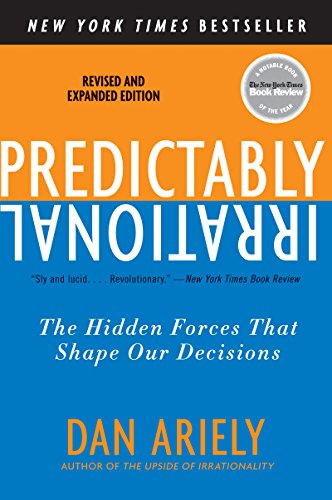
Max Levchin, co-founder of PayPal and CEO of Affirm, brings a unique perspective to behavioral economics shaped by his experience scaling tech ventures where understanding human decision-making is crucial. His endorsement of this book underscores the relevance of Ariely’s insights on irrational behaviors in high-stakes financial and consumer contexts. Levchin’s leadership in fintech highlights why this exploration of predictable irrationality offers valuable lessons for anyone navigating complex economic decisions. Alongside him, Rand Fishkin, founder of Moz, supports this choice, recognizing how Ariely’s work illuminates the quirks in user behavior vital for marketing and product success.
Professor of Risk Engineering, Author of The Black Swan
“A marvelous book that is both thought provoking and highly entertaining, ranging from the power of placebos to the pleasures of Pepsi. Ariely unmasks the subtle but powerful tricks that our minds play on us, and shows us how we can prevent being fooled.”
Dan Ariely is the James B. Duke Professor of Psychology and Behavioral Economics at Duke University. He is a founding member of the Center for Advanced Hindsight; a cocreator of the film documentary (Dis)Honesty: The Truth About Lies; and a three-time New York Times bestselling author. His books include Predictably Irrational, The Upside of Irrationality, The (Honest) Truth About Dishonesty, Irrationally Yours, Payoff, Dollars and Sense, and Amazing Decisions. His TED Talks have been viewed more than 27 million times. His work has been featured in the New York Times, the Wall Street Journal, the Washington Post, the Boston Globe, and elsewhere. He lives in North Carolina with his family.
When Dan Ariely, a behavioral economist and psychologist at Duke University, started exploring why people consistently make irrational choices, he uncovered surprising patterns that defy traditional economic theory. This book reveals how predictable these irrational behaviors are, using experiments ranging from placebo effects on pain relief to how we value everyday products. You’ll gain insight into the unconscious forces shaping your decisions, like why you might overpay or procrastinate despite knowing better. If you’re curious about human behavior and want to understand the quirks behind your choices, this book offers clear examples and thought-provoking research that challenge the notion of rational decision-making.
This AI-created book on overcoming cognitive biases is crafted based on your background and specific goals. By focusing on your interests and experience level, it offers a personalized pathway through complex expert content. This tailored guide breaks down the process of bias reduction into manageable, actionable steps designed for your particular decision-making context. It provides a focused learning journey that helps you rapidly transform how you understand and address biases.
TailoredRead AI creates personalized nonfiction books that adapt to your unique background, goals, and interests. Instead of reading generic content, you get a custom book written specifically for your profession, experience level, and learning objectives. Whether you're a beginner looking for fundamentals or an expert seeking advanced insights, TailoredRead crafts a book that speaks directly to you. Learn more.
This tailored book explores cognitive biases with a focus on rapid, practical steps to overcome them effectively. It covers foundational concepts alongside targeted techniques to help you recognize and reduce bias in your own decision-making processes. By matching your background and specific goals, this personalized guide offers a learning experience that reflects your unique interests and challenges. The content examines how biases influence judgments and reveals pathways to clearer, more rational thinking. Drawing on a synthesis of expert knowledge, it delivers a custom roadmap for transforming your decisions over 30 days, focusing on actionable awareness and mental habits that foster improved objectivity.
Scott Barry Kaufman, a humanistic psychologist and host known for exploring human potential, highlights how this book exposed the subtle mental blindspots that undermine even the smartest people's relationships. He notes, "Even the most intelligent people struggle with relationships. This groundbreaking book reveals that the way our brain is wired causes us to make many bad decisions in our relationships." His endorsement stems from the book's blend of cutting-edge research and practical case studies, which reshaped his understanding of social ties. This perspective makes it a valuable read for anyone wanting to navigate relationships with greater insight and care. Alongside him, communication expert Rick Kirschner praises its coherent system and practical exercises that help readers address their biases.
“Even the most intelligent people struggle with relationships. This groundbreaking book reveals that the way our brain is wired causes us to make many bad decisions in our relationships. All of us are susceptible to subtle decision-making errors called cognitive biases, which can devastate our social ties with our loved ones, our friends, our coworkers, our local community, and our society as a whole. Gleb Tsipursky combines cutting-edge research and pragmatic case studies to show the kind of problems that result from falling into these mental blindspots. More importantly, The Blindspots Between Us offers science-based strategies that anyone can adopt immediately to address the problems caused by our relationships because of cognitive biases, helping their relationships not only survive, but thrive.”
Gleb Tsipursky, PhD, is a cognitive neuroscientist and behavioral economist on a mission to protect people from relationship disasters caused by the mental blindspots known as cognitive biases through the use of cognitive behavioral therapy (CBT)-informed strategies. His expertise comes from over fifteen years in academia researching cognitive neuroscience and behavioral economics, including seven as a professor at Ohio State University, where he published dozens of peer-reviewed articles in academic journals such as Behavior and Social Issues and Journal of Social and Political Psychology. It also stems from his background of over twenty years of consulting, coaching, speaking, and training on improving relationships in business settings as CEO of Disaster Avoidance Experts. A civic activist, Tsipursky leads Intentional Insights, a nonprofit organization popularizing the research on solving cognitive biases, and has extensive expertise on translating the research to a broad audience. His cutting-edge thought leadership was featured in over 400 articles and 350 interviews in Time, Scientific American, Psychology Today, Newsweek, The Conversation, CNBC, CBS News, NPR, and more. A best-selling author, he wrote Never Go With Your Gut, The Truth Seeker’s Handbook, and Pro Truth. He lives in Columbus, OH; and to avoid disaster in his personal life, makes sure to spend ample time with his wife.
Gleb Tsipursky, a cognitive neuroscientist and behavioral economist, draws on over fifteen years of academic research and two decades of practical consulting to dissect how unconscious cognitive biases sabotage relationships. This book reveals common mental blindspots that distort your perceptions of others' motives, rooted in cognitive behavioral therapy principles, and equips you with techniques to pause, reassess, and consider alternative perspectives before jumping to conclusions. You'll find detailed explanations of biases like confirmation bias and fundamental attribution error, plus exercises for improving empathy and communication. If you're looking to understand why misunderstandings happen and want tools to build more genuine connections, this book offers a focused, evidence-based approach.
Cass Sunstein, Harvard professor and former White House Office of Information and Regulatory Affairs administrator, highlights the significance of this book in understanding cognitive biases. He regards it as a "massive, state-of-the-art treatment of the literature," emphasizing its deep implications for law and policy. His expertise in behavioral science lends weight to his recommendation, signaling the book's value for anyone seeking a thorough grasp of intuitive judgment and its pitfalls.
“Heuristics and Biases: The Psychology of Intuitive Judgment; offers a massive, state-of-the-art treatment of the literature, supplementing a similar book published two decades ago...This is an impressive book, full of implications for law and policy.”
Thomas Gilovich, Dale Griffin, Daniel Kahneman(you?)·
About the Author
Daniel Kahneman is co-winner of the 2002 Nobel Memorial Prize in Economic Sciences. He is the Eugene Higgins Professor of Psychology and Professor of Public Affairs at Princeton University. His work on the psychology of judgment and decision-making has profoundly influenced various fields, including economics and public policy. Kahneman's research, particularly in collaboration with Amos Tversky, established foundational insights into human rationality and cognitive biases.
Daniel Kahneman, a Nobel laureate in Economic Sciences, along with Thomas Gilovich and Dale Griffin, delves into the mechanisms behind human judgment, revealing how intuitive decisions often deviate due to cognitive shortcuts and biases. You'll explore detailed analyses of when and why your judgments falter, supported by decades of psychological research, including insights into economic decisions and social perceptions. The book offers you frameworks to recognize common errors in reasoning, such as overconfidence and availability heuristics, illustrated through extensive studies and examples. Scholars, policymakers, and anyone intrigued by the forces shaping everyday decisions will find this a rigorous and enlightening examination.
Nana Visitor, known for her storytelling and deep cultural projects, encountered this book while researching her project A WOMAN’S TREK. She found it not only explained why unconscious bias persists but also offered practical ideas for change, calling it required reading for anyone. Her experience highlights how Jessica Nordell’s work combines scientific rigor with human stories, shifting perspectives on bias from frustration to actionable understanding. This makes the book a compelling choice if you want to grasp both the problem and the pathways toward a fairer society.
“Doing research for A WOMAN’S TREK, I found THE END OF BIAS, a book by this wonderful woman, Jessica Nordell. Not only the why of it, but doable ideas for change. I think it should be required reading. If you’re human. Another fascinating woman I got to talk to for my project.” (from X)
Jessica Nordell is an accomplished author and narrator known for her insightful exploration of bias and discrimination. With nearly a decade of research, she combines storytelling with scientific studies to illuminate the complexities of unconscious bias. Her work has garnered recognition for its depth and engaging narrative style, making her a prominent voice in discussions about social justice and equality.
Jessica Nordell’s decade-long immersion in researching unconscious bias brought her to challenge the notion that implicit prejudices are fixed obstacles. Through detailed stories and scientific studies, you’ll explore how biases silently shape decisions in medicine, education, policing, and workplaces. Nordell analyzes successful interventions, like Johns Hopkins Hospital’s checklist that neutralized gender disparities and a Swedish preschool’s creative approach to breaking gender stereotypes. If you want to understand not just why bias persists but how it can be actively dismantled, this book offers grounded insights that go beyond surface-level fixes, though readers seeking quick solutions might find the nuance demanding.
Andrew Wilkinson, founder of MetaLab and a seasoned entrepreneur, highlights this book as a key resource for understanding cognitive biases. He discovered it amid his ventures into internet business acquisitions, appreciating how it clarified the mental traps clouding judgment. He says, "There's a great book on it that I highly recommend called Mistakes Were Made (But Not By Me)." His endorsement signals the book’s practical relevance beyond academia, making it a compelling read for anyone wanting to sharpen their insight into human error and self-deception.
Elliot Aronson is one of the most distinguished social psychologists in the world. His books include The Social Animal and The Jigsaw Classroom. Chosen by his peers as one of the 100 most influential psychologists of the twentieth century, he was elected to the American Academy of Arts and Sciences and is the only psychologist to have won all three of the American Psychological Association’s top awards ― for writing, teaching, and research. He lives in Santa Cruz, California.
292 pages·Cognitive Biases, Psychology, Self-Justification, Decision Making, Social Psychology
Drawing from decades of social psychology research, Carol Tavris and Elliot Aronson dissect why people struggle to admit mistakes and justify questionable behaviors. The authors explain the mental gymnastics behind self-justification through cognitive dissonance, showing how this mechanism preserves self-esteem at the cost of truth. You’ll explore real-life examples ranging from public scandals to personal relationships, learning how these unconscious biases warp judgment and perpetuate conflict. This book suits anyone curious about human behavior, especially those interested in psychology, ethics, or improving interpersonal understanding. It offers a nuanced look at the tricky balance between self-perception and responsibility without preaching or oversimplifying.
Jonathan Howard MD, Assistant Professor of Neurology and Psychiatry at NYU Langone Medical Center, brings deep clinical insight to this exploration of cognitive errors in medicine. His extensive experience informs a case-based approach that dissects common diagnostic mistakes and the biases behind them, offering you a clear window into improving clinical judgment and patient outcomes.
Jonathan Howard MD is an Assistant Professor of Neurology and Psychiatry at NYU Langone Medical Center in New York, NY. He has extensive experience in the medical field, particularly in understanding cognitive errors and their implications in clinical practice.
Drawing from his dual expertise in neurology and psychiatry, Jonathan Howard explores how cognitive errors undermine clinical decision-making. Through detailed case studies, you learn to identify specific biases like confirmation bias and availability heuristic, and understand their impact on diagnostic mistakes. The book’s structure—introducing each bias with a real-world case followed by clinical reasoning and bias analysis—makes complex concepts tangible. It's especially useful for clinicians aiming to sharpen their critical thinking and anyone interested in how cognitive processes affect professional judgments in healthcare.
The best Cognitive Biases books and more, in your inbox each week. No account needed.
Conclusion
These 10 books reveal that cognitive biases permeate personal relationships, business decisions, and even medical judgments. They collectively emphasize awareness, practical strategies, and scientific understanding as key to overcoming mental pitfalls.
If you're navigating leadership challenges, start with "Never Go With Your Gut" and "You're About to Make a Terrible Mistake" for actionable business insights. For investors and consumers, "The Behavioral Investor" and "Predictably Irrational" provide nuanced perspectives. When relationships are your focus, "The Blindspots Between Us" offers invaluable guidance.
Alternatively, you can create a personalized Cognitive Biases book to bridge the gap between general principles and your specific situation. These books can help you accelerate your learning journey and sharpen your decision-making skills in profound ways.
Frequently Asked Questions
I'm overwhelmed by choice – which book should I start with?
Start with "Biased" by Jennifer Eberhardt if you're interested in implicit biases shaping societal decisions. For business decisions, "You're About to Make a Terrible Mistake" offers practical tools. Both provide accessible entry points with strong expert endorsements.
Are these books too advanced for someone new to Cognitive Biases?
Not at all. Many books like "Never Go With Your Gut" and "Predictably Irrational" explain concepts with engaging stories and clear examples suitable for beginners and seasoned readers alike.
What's the best order to read these books?
Begin with broader perspectives like "Biased" or "Heuristics and Biases" to understand foundational concepts. Then explore applied areas such as investing or leadership with "The Behavioral Investor" or "Never Go With Your Gut."
Do I really need to read all of these, or can I just pick one?
You can pick based on your interests—finance, leadership, relationships, or medicine. Each book offers unique insights. Reading more helps build a well-rounded understanding, but even one can offer valuable lessons.
Which books focus more on theory vs. practical application?
"Heuristics and Biases" is more academic and theoretical, while "Never Go With Your Gut" and "You're About to Make a Terrible Mistake" focus on practical strategies to mitigate biases in real-world decisions.
Can I get a tailored book if I want focused insights for my industry?
Yes! While these expert books offer broad insights, you can create a personalized Cognitive Biases book that hones in on your specific industry and learning goals, bridging expert knowledge with your unique context.
📚 Love this book list?
Help fellow book lovers discover great books, share this curated list with others!