"The Constitution of the United States and The Declaration of Independence" by Delegates of The Constitutional Convention made it to BookAuthority's Best Constitutional Law eBooks of All Time!
10 Constitutional Law Books That Shape Legal Understanding
Insights from Alwaleed Talal, Luis Von Ahn, and Quinn Cummings reveal foundational and modern constitutional perspectives
Updated on June 23, 2025·We may earn commissions for purchases made via this page
10 of 10 books have Kindle versions
We're launchingLaunching on Product Hunt today 🎉We just launchedJust launched on Product Hunt 🎉
Modelpeers, from the BookAuthority teamFrom the BookAuthority team: Modelpeers, a free way to follow AI models and agents like you follow people. We'd love your support.
What if understanding the Constitution wasn't reserved for lawyers or historians? Constitutional law often feels like a maze of legal jargon and historical debates, yet it governs the very framework of American life. Today, constitutional issues—from civil rights to executive power—are at the forefront of public discourse, making clarity more crucial than ever.
Experts like Alwaleed Talal, chairman of several boards including Kingdom Holding Company, and Luis Von Ahn, CEO of Duolingo and MacArthur Fellow, recognize the value of accessible constitutional knowledge. Their endorsements highlight books that translate complex legal principles into understandable narratives. Meanwhile, author and podcast host Quinn Cummings praises works that challenge readers to reconsider social justice through constitutional lenses.
While these expert-curated books provide proven frameworks, readers seeking content tailored to their specific interests, background, and goals might consider creating a personalized Constitutional Law book that builds on these insights. Tailored books can help you focus on judicial interpretation, civil rights, or executive power with precision and depth.
Quinn Cummings, an accomplished author and podcast host, highlights this book during a moment of reckoning with uncomfortable truths. She shares, "You get it; I love the book. 'But, what does this have to do with y-' I'm getting there." Her engagement reflects how the book challenges readers to confront realities they might prefer to avoid. Legal analyst Glenn Kirschner echoes this sentiment, calling Elie Mystal both funny and brilliant, praising the book as a work by a true justice warrior. Together, their perspectives underscore the book’s role in reshaping how you might think about constitutional law and social justice.
“You get it; I love the book.
"But, what does this have to do with y-"
I'm getting there.
While reading a book about not pretending otherwise anymore, even if it feels cozy, I got an email from someone I know, asking if she could pick my brain about writing.” (from X)
Elie Mystal is The Nation’s legal analyst and justice correspondent, an Alfred Knobler Fellow at the Type Media Center, and the legal editor of the More Perfect podcast on the Supreme Court for Radiolab. He is a graduate of Harvard College and Harvard Law School, the former executive editor of Above the Law, a former associate at Debevoise & Plimpton, and a frequent guest on MSNBC and Sirius XM. The author of Allow Me to Retort (The New Press), he lives in New York.
When Elie Mystal first realized how the Constitution has been wielded to uphold systemic inequality, he crafted this sharp, accessible critique to demystify legal jargon and reveal the true stakes behind key rights battles. You’ll learn how concepts like substantive due process and judicial appointments shape protections for women, people of color, and the LGBTQ community, with Mystal’s characteristic humor cutting through complex legal theory. This book arms you with the tools to question conservative interpretations that cling to outdated, exclusionary views, making it essential for anyone wanting to understand and challenge America’s legal framework beyond surface-level debates.
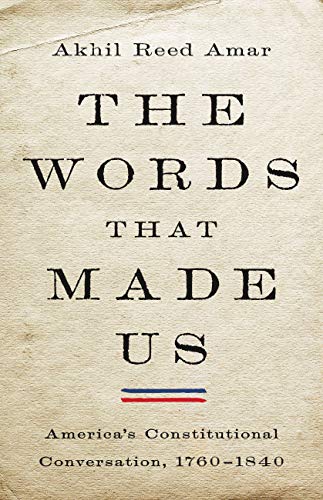
Annette Gordonreed, a distinguished professor of law and history at Harvard with Pulitzer and National Book Awards, brings a deeply informed voice to constitutional scholarship. Her simple yet pointed remark, "@CharlesPPierce No. Just a regular class. Interesting book," reflects a grounded appreciation for Amar’s work, which reframes constitutional history as a dynamic conversation rather than static law. This book helped her see the Constitution as a living dialogue shaped by countless voices, not just founding fathers. Likewise, The Roanoke Times praises Amar’s balance of expert knowledge and storytelling, making complex constitutional issues accessible and relevant to any American interested in the nation's founding.
Akhil Reed Amar is the Sterling Professor of Law and Political Science at Yale University and the author of several books on constitutional law and history, including America's Constitution: A Biography and America's Unwritten Constitution. He lives in Woodbridge, Connecticut.
When Akhil Reed Amar first discovered the ongoing debates shaping America's founding, he crafted this book to capture the lively constitutional conversations from 1760 to 1840. Drawing on his dual expertise in law and political science at Yale, Amar guides you through the heated discussions over slavery, Indian rights, and judicial power that continued well after the Constitution's ratification. You learn how early Americans wrestled with these issues in both government halls and newspapers, gaining specific insights into the document's evolving interpretation. This book suits anyone eager to understand the Constitution's origins beyond legal texts, especially history enthusiasts and law students seeking a nuanced narrative.
This AI-created book on constitutional law is tailored to your background and interests, crafted after you share your legal experience and specific areas you want to explore. You tell us which constitutional principles, cases, or powers you want to focus on, and the book is created to match exactly your goals and skill level. This personalized approach makes it easier to engage with complex legal topics by focusing precisely on what you need without extra clutter.
TailoredRead AI creates personalized nonfiction books that adapt to your unique background, goals, and interests. Instead of reading generic content, you get a custom book written specifically for your profession, experience level, and learning objectives. Whether you're a beginner looking for fundamentals or an expert seeking advanced insights, TailoredRead crafts a book that speaks directly to you. Learn more.
This personalized book offers a comprehensive exploration of constitutional law, focusing on foundational principles and their practical applications tailored to your legal experience and interests. It provides a personalized framework that clarifies complex topics such as judicial interpretation, civil rights, and executive authority, cutting through generic advice to fit your specific context. The book addresses constitutional powers, amendment processes, and landmark cases with a tailored approach that sharpens your understanding of how constitutional principles operate within modern legal and political environments. By concentrating on your unique goals, it bridges theoretical knowledge and real-world implications, enhancing your grasp of constitutional governance and legal reasoning.
George Washington, the first President of the United States and a principal figure among the Founding Fathers, emphasized the importance of protecting constitutional processes, cautioning against changes by force rather than amendment. His recommendation, "If in the opinion of the People, the distribution or modification of the Constitutional powers be in any particular wrong, let it be corrected by an amendment in the way which the Constitution designates. But let there be no change by usurpation; for though this, in one instance, may be the instrument of good, it is the customary weapon by which free governments are destroyed," highlights the enduring relevance of constitutional safeguards. This book gave Washington a clear framework to articulate why preserving the Constitution's integrity is essential to liberty. Similarly, Abraham Lincoln underscored the Constitution as the sole safeguard of American freedoms, urging all citizens to uphold its principles without interference.
“If in the opinion of the People, the distribution or modification of the Constitutional powers be in any particular wrong, let it be corrected by an amendment in the way which the Constitution designates. But let there be no change by usurpation; for though this, in one instance, may be the instrument of good, it is the customary weapon by which free governments are destroyed.”
The Delegates of the Constitutional Convention, also known as the Founding Fathers, were a collective of fifty-five appointed individuals from the original thirteen colonies who attended the Constitutional Convention sessions, although only thirty-nine actually signed the Constitution. Some of its most notable members are George Washington, John Adams, Thomas Jefferson, James Madison, James Monroe, Alexander Hamilton, and Benjamin Franklin.
What started as a foundational political experiment became a blueprint for governance that still sparks debate today. This pocket-sized edition presents the original text of the Constitution, Bill of Rights, and Declaration of Independence, letting you explore firsthand how powers are allocated among branches and how citizens’ rights are protected. You’ll gain direct insight into clauses that govern free speech, federal powers, and amendment procedures, making it essential for anyone wanting a thorough understanding of American constitutional principles. Whether you're a student, voter, or legal professional, this text invites you to engage with the very words that shape U.S. law and politics.
Donald J. Trump, the 45th President of the United States and a central figure in debates over executive power, highlighted this book during his presidency, praising its defense of presidential authority. His endorsement came amid intense scrutiny of his administration's actions, framing the book as a timely exploration of constitutional presidential powers. He described it as "A great new book, ‘Defender in Chief: Donald Trump's Fight for Presidential Power,’ written by celebrated constitutional scholar, John Yoo." This perspective invites you to reconsider common assumptions about presidential limits. Additionally, Richard W. Painter, a law professor and former chief White House ethics lawyer, offers a contrasting view, underscoring the book’s provocative nature in contemporary constitutional discussions.
“A great new book, “Defender in Chief: Donald Trump's Fight for Presidential Power”, written by celebrated constitutional scholar, John Yoo, is now available. Thanks so much John – greatly appreciate your support and words of wisdom!” (from X)
John Yoo is a conservative constitutional scholar, a visiting fellow at the Hoover Institution, Stanford University, and a visiting scholar at the American Enterprise Institute. He has served in various legal positions and has written extensively on American foreign policy and executive power.
John Yoo, a conservative constitutional scholar with affiliations at Stanford and the Hoover Institution, draws from his extensive legal background to challenge prevailing views on presidential power. In this book, you’ll explore a reinterpretation of executive authority, examining how historical figures like Washington and Jefferson might have supported modern assertions of presidential rights. Yoo delves into controversies surrounding Donald Trump’s presidency, arguing that many criticisms stem from misunderstandings of constitutional intent rather than actual overreach. If you’re interested in constitutional debates around executive power and want to understand the arguments that defend rather than condemn presidential actions, this book offers a focused perspective worth considering.
George Washington, the first President of the United States and a key figure in the nation's founding, regarded this book as an indispensable guide, stating, "The Constitution is the guide which I will never abandon." His endorsement reflects the book's deep dive into constitutional principles that shaped early American governance. This perspective resonated with Washington during a time when the nation sought clarity on the balance between government power and individual rights. Samuel Adams, another founding leader, echoes this sentiment by emphasizing the Constitution's protection of citizens' rights, particularly regarding arms. Together, their insights highlight the book’s role in connecting historical intent with ongoing constitutional understanding.
Paul B. Skousen is an author and instructor on the United States Constitution. He received his undergraduate from BYU in Journalism and his Master's degree in National Security Studies from Georgetown University. After graduate school Paul worked for President Ronald Reagan in the White House Situation Room. In addition, Paul was an intelligence officer for the CIA. He received national notoriety when he preserved a large bag of shredded top secret documents, the so-called 'smoking gun' from the Iran-Contra Affair, that he sold piecemeal as 'shredded secrets from the White House.' Paul has extensive experience interviewing political and military leaders in Egypt, Israel and Jordan, including the former prime minister of Jordan, the political advisor to Egypt's President Mubarak, and senior generals in the Israeli military. He is the author of seven books including How to Read the Constitution and the Declaration of Independence, the Bassam Adventure Series and The Naked Socialist. He has revised and edited several of his father's books including Fantastic Victory, The Cleansing of America, The Five Thousand Year Leap Glenn Beck Edition, and The Majesty of God's Law. He is currently writing the Biography of W. Cleon Skousen, among other projects, and is a frequent speaker and motivational instructor. Additionally, Paul has been a columnist for The Daily Caller, and currently teaches communications and journalism at Utah Valley University.
Drawing from his extensive background as a CIA intelligence officer and White House staffer, Paul B. Skousen offers an illuminating exploration of foundational American documents in this book. You gain direct access to the texts of the Constitution and Declaration of Independence, accompanied by Skousen's detailed analysis of the Founding Fathers' intentions and the historical context shaping these cornerstones. For example, the book unpacks government structure and individual liberties, making it useful for anyone seeking to understand constitutional law's practical and historical dimensions. This work suits scholars, legal professionals, and history enthusiasts who want a grounded perspective without getting lost in legal jargon.
This custom AI book on constitutional law is created based on your background and specific goals in mastering constitutional fundamentals. You share which areas you want to focus on—like civil rights or executive power—and your current skill level, and the book is created with a step-by-step 30-day plan tailored just for you. It’s designed to make a complex subject approachable and relevant to your interests, providing clear daily actions that help you build understanding efficiently.
TailoredRead AI creates personalized nonfiction books that adapt to your unique background, goals, and interests. Instead of reading generic content, you get a custom book written specifically for your profession, experience level, and learning objectives. Whether you're a beginner looking for fundamentals or an expert seeking advanced insights, TailoredRead crafts a book that speaks directly to you. Learn more.
This personalized book provides a focused 30-day plan designed to deepen your understanding of constitutional law fundamentals through daily, actionable insights. It offers a tailored approach that cuts through generic material, fitting your specific background and goals to enhance comprehension of key principles such as judicial interpretation, civil rights, and executive power. By concentrating on a structured progression, it bridges theoretical concepts with practical application, enabling you to grasp complex legal ideas efficiently. This tailored framework supports rapid mastery by presenting targeted content that aligns precisely with your interests, ensuring relevance and clarity in navigating the foundations of constitutional law.
Library Journal Review, an authoritative publication respected among librarians and educators, highlights this book’s thorough treatment of the Constitution’s history, from the Articles of Confederation through the Bill of Rights and beyond. Their recommendation comes from a place of guiding general readers and students alike through complex political science topics. They note, "Focusing on the Constitution’s history, including the Articles of Confederation, the Philadelphia Convention, the Bill of Rights, and selected other amendments ... will interest general readers as well as students of political science, government, and teacher education." This perspective underscores how the book clarifies foundational events that shape American governance today. Additionally, Library Journal praises Hudson’s clear explanation of key amendments and the evolving Supreme Court, which helped deepen their appreciation for constitutional interpretation complexities.
“Focusing on the Constitution’s history, including the Articles of Confederation, the Philadelphia Convention, the Bill of Rights, and selected other amendments … Most recent similar titles are limited to the full text of the founding documents … will interest general readers as well as students of political science, government, and teacher education.”
David L. Hudson, Jr., JD is an Assistant Professor of Law, teaching First Amendment Law and Bar Exam Workshop at Belmont University’s College of Law. For 17 years, he was an attorney and scholar at the First Amendment Center in Nashville, Tennessee. Hudson also has taught classes at Vanderbilt Law School and the Nashville School of Law, and he served as a senior law clerk for the Tennessee Supreme Court. In June 2018, the Nashville School of Law awarded him its Distinguished Faculty Award. He earned his undergraduate degree from Duke University and his law degree from Vanderbilt Law School. He is an author, co-author, or co-editor of more than 40 books, including Visible Ink Press’s The Handy Law Answer Book, The Handy Supreme Court Answer Book, and The Handy American History Answer Book, as well as Let The Students Speak: A History of the Fight for Free Expression in American Schools and The Encyclopedia of the First Amendment (co-editor). He writes regularly for the American Bar Association’s Preview of United States Supreme Court Cases and ABA Journal, the First Amendment Watch, and the Free Speech Center.
Unlike most constitutional law books that focus narrowly on legal doctrine, David L. Hudson Jr. draws from his extensive experience teaching First Amendment law to unpack the Constitution's history, key clauses, and evolving interpretations. You’ll gain clear insights into foundational moments like the Philadelphia Convention and the Bill of Rights, along with contentious issues such as Supreme Court appointments and the death penalty’s legal shifts. Hudson’s approachable chapters on citizen rights and governmental powers guide you through the complexities behind often-misunderstood amendments, making it particularly useful if you want to grasp how constitutional principles affect today’s political debates.
Shoshana Weissmann, Digital Media Manager and Fellow on SCOTUS reform, highlights the unique value of this book in constitutional law circles. After attending one of Gorsuch's speeches, she shared, "Cannot recommend his book and speeches enough, but really I think I got lucky with being there for the best of his speeches so far yesterday." This personal experience underscores the book’s impact on those deeply engaged with judicial philosophy. Also, Alberto Gonzales, former U.S. Attorney General, praises it as a vital legacy, emphasizing Gorsuch's call for judges to uphold justice even under pressure, shaping how you might view the judiciary’s role today.
“Cannot recommend his book and speeches enough, but really I think I got lucky with being there for the best of his speeches so far yesterday” (from X)
Neil M. Gorsuch is an associate justice of the Supreme Court of the United States. A Colorado native, he served as a judge on the U.S. Court of Appeals for the Tenth Circuit, which is based in Colorado and hears appeals from six western states, before his appointment to the Supreme Court in April 2017. He has also worked as a senior official at the U.S. Department of Justice, where he helped oversee its civil litigating divisions; as a partner at a law firm; as a law professor; and as a law clerk for Justices Byron White and Anthony Kennedy.
What started as Neil Gorsuch's personal journey through the judiciary became a reflection on the Constitution’s enduring role. Drawing from his experience as a Supreme Court justice and appellate judge, Gorsuch explores how the Constitution’s original text and principles guide judicial decisions today. You gain insights into originalism, textualism, and the judge’s role in upholding separation of powers, alongside discussions about civic education and access to justice. For anyone interested in the practical workings of constitutional interpretation and the responsibilities of the judiciary, this book offers a grounded perspective without ideological spin.
Phillip Carter, a RAND researcher and Georgetown Law adjunct professor, highlights how this book shaped his understanding of constitutional rights amid ongoing debates on citizenship and equality. After studying military and civil-military relations, Carter found Foner's history crucial for grasping how rights can be both secured and stripped away. He explains, “Rights can be gained, and rights can be taken away. A century and a half after the end of slavery, the project of equal citizenship remains unfinished.” This perspective deepened Carter's appreciation of the ongoing legal struggles around the Reconstruction amendments. Fellow legal historian John Fabian Witt also praises the book's clarity, calling it lucid and succinct.
““Rights can be gained, and rights can be taken away. A century and a half after the end of slavery, the project of equal citizenship remains unfinished.” A poignant end to Eric Foner’s brilliant new book “The Second Founding,” a short history of the 13th, 14th & 15th Amendments.” (from X)
Eric Foner is DeWitt Clinton Professor of History at Columbia University, where he earned his B.A. and Ph.D. In his teaching and scholarship, Foner focuses on the Civil War and Reconstruction, slavery, and nineteenth-century America. His 'Reconstruction: America’s Unfinished Revolution, 1863–1877,' won the Bancroft, Parkman, and Los Angeles Times Book prizes and remains the standard history of the period. In 2006 Foner received the Presidential Award for Outstanding Teaching at Columbia University. He has served as president of the Organization of American Historians, the American Historical Association, and the Society of American Historians. He is currently writing a book on Lincoln and slavery.
After decades teaching and researching 19th-century America, Eric Foner wrote this book to illuminate how the Civil War and Reconstruction fundamentally reshaped the U.S. Constitution. You’ll gain a detailed understanding of the 13th, 14th, and 15th Amendments—how they abolished slavery, established birthright citizenship, and enshrined equal protection under the law. The book walks you through pivotal moments like mass African-American political activism and landmark Supreme Court decisions that both advanced and later undermined these rights. If you’re interested in the legal roots of civil rights or want to grasp how constitutional law has evolved in response to social upheaval, this is a focused, historically rich read.
Luis Von Ahn, CEO of Duolingo and MacArthur Fellow, brings a unique perspective to constitutional law, valuing clear understanding in complex areas. After engaging with Sean Patrick’s book, he shared, "I started reading @BillGates’s new book on climate change. What an amazing individual," reflecting a broader engagement with important texts. Although his comment references Bill Gates, Von Ahn's appreciation for accessible, critical works aligns with Patrick’s mission to demystify the Bill of Rights. This book offers a clear path to grasping your constitutional rights, something Von Ahn’s background in education and technology emphasizes as crucial in today’s society.
Sean Patrick is an author dedicated to educating and inspiring individuals about their constitutional rights. He believes that everyone has the potential to achieve success and happiness, and through his writing, he aims to provide insights that empower readers to understand their rights and responsibilities. His work emphasizes the importance of the Bill of Rights and its relevance in modern society.
2022·146 pages·Constitutional Law, Civil Rights, Legal History, Bill of Rights, Second Amendment
Drawing from a deep commitment to civic education, Sean Patrick offers a straightforward guide to navigating the complexities of the United States Bill of Rights. You’ll gain clarity on often misunderstood amendments through clear definitions and historical context, such as the nuances behind the Second Amendment and the Founders' intentions. This book suits anyone looking to understand how these rights apply today without getting lost in legal jargon. For example, a chapter breaks down key terms like "due process" and "freedom of speech" with practical explanations that cut through the confusion.
Arnold Schwarzenegger, actor and former governor of California, recommends this book with heartfelt emphasis. After moving to the United States, he wished such a clear constitutional guide had existed to help him understand his new country. Schwarzenegger states, "I wish this book existed 50 years ago when I moved to the United States. Ben's constitutional breakdown is a must-read for every current and aspiring citizen." This book helped him grasp the complexities of American democracy in an accessible way, bridging the gap between legal jargon and everyday understanding. Alongside him, Jamie Raskin, a U.S. Congressman, praises it as a fresh approach for those outside the legal profession, calling it a "wonderful, breakthrough book" that makes constitutional law approachable for everyone.
“I wish this book existed 50 years ago when I moved to the United States. Ben's constitutional breakdown is a must-read for every current and aspiring citizen.”
Ben Sheehan is a former award-winning executive producer at Funny Or Die. He has been involved in digital videos that have received over a billion views. Sheehan's mission to increase voter participation began in 2016, and he founded OMG WTF to teach voters about state executive races during the midterm elections.
Ben Sheehan's journey from producing viral digital content to tackling the complexities of American democracy inspired this book. Drawing on his deep understanding of politics and media, Sheehan translates the Constitution into everyday language, clarifying presidential powers, Supreme Court nominations, and less obvious clauses. For example, he unpacks the preamble through the final amendment, even adding a section on the Declaration of Independence, making the document approachable for anyone curious about governance. If you're looking to grasp how your government is supposed to function and what your role as a voter entails, this guide offers clear explanations without jargon or condescension.
The best Constitutional Law books and more, in your inbox each week. No account needed.
Conclusion
These 10 books collectively underscore how the Constitution remains a living document—shaped by history, interpreted by courts, and debated across society. Themes of originalism versus social justice, foundational text analysis, and the balance of governmental powers emerge strongly.
If you're grappling with current constitutional debates, starting with Allow Me to Retort offers a sharp, critical perspective on civil rights. For rapid grounding in foundational texts, pairing The Constitution Explained with The Constitution of the United States and The Declaration of Independence provides both clarity and original source material.
Once you've absorbed these expert insights, create a personalized Constitutional Law book to bridge the gap between general principles and your specific situation. Whether for academic, professional, or personal interest, tailored content sharpens your understanding and application of constitutional law.
Frequently Asked Questions
I'm overwhelmed by choice – which book should I start with?
Start with 'The Constitution Explained' by David L. Hudson Jr. It offers clear, accessible insights into constitutional history and key clauses, making it a solid foundation before diving into more specialized books.
Are these books too advanced for someone new to Constitutional Law?
Not at all. Books like 'OMG WTF Does the Constitution Actually Say?' break down complex ideas in everyday language, perfect for newcomers seeking to understand government functions without legalese.
What's the best order to read these books?
Begin with accessible overviews like 'The Constitution Explained' and 'The Know Your Bill of Rights Book,' then explore historical narratives such as 'The Words That Made Us,' and finally delve into focused analyses like 'Defender in Chief' or 'Allow Me to Retort.' This progression builds context and depth.
Should I start with the newest book or a classic?
A mix works best. Newer books like 'Allow Me to Retort' address contemporary issues with fresh perspectives, while classics like 'The Constitution of the United States and The Declaration of Independence' provide original source material essential for grounding your understanding.
Do I really need to read all of these, or can I just pick one?
You can pick based on interest. For civil rights, choose 'The Second Founding'; for executive power, 'Defender in Chief' is ideal. However, reading multiple offers a richer, more nuanced grasp of constitutional law.
How can personalized Constitutional Law books complement these expert recommendations?
Personalized books tailor constitutional topics to your background and goals, deepening insights from expert-recommended reads. They focus on what matters most to you, making complex law more relevant. Explore more at create a personalized Constitutional Law book.
📚 Love this book list?
Help fellow book lovers discover great books, share this curated list with others!