"California Evidence Code Handbook with Common Objections & Evidentiary Foundations" by John Barkai made it to BookAuthority's Best Criminal Evidence Law Audiobooks of All Time!
7 Criminal Evidence Law Books That Experts Rely On
Walter M. Kimbrough, Michael Eric Dyson, and Anthony Romero recommend these authoritative Criminal Evidence Law books to sharpen your legal expertise.
Updated on June 27, 2025·We may earn commissions for purchases made via this page
0 of 7 books have Audiobook versions
We're launchingLaunching on Product Hunt today 🎉We just launchedJust launched on Product Hunt 🎉
Modelpeers, from the BookAuthority teamFrom the BookAuthority team: Modelpeers, a free way to follow AI models and agents like you follow people. We'd love your support.
What if the way evidence is presented in court could be both a weapon and a shield? Criminal Evidence Law isn’t just about rules; it’s about justice, fairness, and sometimes, the fight against systemic bias. In recent years, the legal community has grappled with how evidence, especially in sensitive areas like race and free speech, shapes outcomes in profound ways.
Walter M. Kimbrough, president of Dillard University, highlights Rap on Trial for its eye-opening look at how rap lyrics have been misused as evidence against young men of color, reshaping conversations about fairness in courtrooms. Meanwhile, Michael Eric Dyson and Anthony Romero emphasize the importance of understanding both the historical and procedural nuances that books like Criminal Evidence and the Federal Rules of Evidence editions provide.
While these expert-curated books provide proven frameworks, readers seeking content tailored to their specific experience levels, jurisdictions, or learning goals might consider creating a personalized Criminal Evidence Law book that builds on these insights.
Walter M. Kimbrough, president of Dillard University and a respected voice in higher education and cultural discourse, points out how "lyrics have been used to lock up rappers," highlighting the urgent legal and social implications explored in this book. His recommendation, "You should read the book Rap On Trial - one of the co-authors teaches at UGA," underscores the book's authoritative insight into criminal evidence law. This endorsement reflects how the book reshaped Kimbrough’s understanding of justice and artistic expression. Additionally, Michael Eric Dyson praises its thorough examination of racial bias in legal systems, further validating its importance for anyone invested in the intersection of race, law, and culture.
“I would love for Angie Taylor to sit in on my class this spring. She would learn that lyrics have been used to lock up rappers. You should read the book Rap On Trial - one of the co-authors teaches at UGA. So yeah. Twitter ban isn’t the same as jail.” (from X)
Erik Nielson is an associate professor of liberal arts at the University of Richmond, where he teaches courses on African American literature and hip-hop culture. A co-author of Rap on Trial: Race, Lyrics, and Guilt in America, he lives in Richmond, Virginia, and Brooklyn, New York. Andrea L. Dennis is a professor at the University of Georgia School of Law and was formerly an assistant federal public defender. A co-author of Rap on Trial: Race, Lyrics, and Guilt in America, she lives in Athens, Georgia.
Drawing from their deep expertise in African American literature and criminal defense, Erik Nielson and Andrea Dennis unpack how rap lyrics have been weaponized in courtrooms to convict young men of color. You’ll explore concrete examples, such as the 2001 case of rapper Mac, where prosecutors treated artistic expression as literal confessions, revealing a disturbing intersection of race, law, and music. This book challenges you to reconsider notions of evidence and free speech within the criminal justice system. If you’re invested in civil rights, legal practice, or cultural analysis, this book confronts critical questions about fairness and artistic freedom.
Marjie Britz’s Criminal Evidence stands out for its cohesive approach, combining a solid legal framework with engaging, contemporary case studies that illuminate the complexities of criminal evidence law. The book’s expanded second edition offers nearly 40% more content, including the full Federal Rules of Evidence and foundational documents like the Magna Carta and Bill of Rights, making it an invaluable resource for those seeking a thorough understanding of evidence in the criminal justice system. Its accessible presentation ensures that both students and practitioners can grasp sophisticated legal concepts while appreciating the historical and practical dimensions of the field.
2015·480 pages·Criminal Evidence Law, Legal Framework, Law Enforcement, Federal Rules, Jurisprudence
Unlike most criminal evidence books that focus narrowly on rules, Marjie Britz’s Criminal Evidence offers a broad, integrated legal framework covering both foundational principles and contemporary issues. You’ll explore the historical evolution of American jurisprudence alongside current headline-grabbing cases, which bring abstract concepts to life and deepen your understanding of law enforcement challenges. The book’s clear, accessible style breaks down complex material, reinforced by updated content including the full Federal Rules of Evidence and key historical documents. Whether you’re studying law or working in criminal justice, this text equips you with both theoretical knowledge and practical insights essential to navigating evidence law.
This custom AI book on criminal evidence law is created based on your background and goals in this complex legal field. By sharing your current knowledge and the specific topics you want to focus on, the book is tailored to cover essential principles and procedural rules that match your learning needs. This approach helps you navigate intricate evidence concepts without overwhelming you with unrelated material, making your study more efficient and directly relevant to your objectives.
TailoredRead AI creates personalized nonfiction books that adapt to your unique background, goals, and interests. Instead of reading generic content, you get a custom book written specifically for your profession, experience level, and learning objectives. Whether you're a beginner looking for fundamentals or an expert seeking advanced insights, TailoredRead crafts a book that speaks directly to you. Learn more.
This tailored book explores the foundational principles and nuanced complexities of Criminal Evidence Law, offering a personalized examination crafted to your background and learning objectives. It delves into key concepts such as admissibility, relevance, hearsay rules, and evidentiary procedures, matching content to your specific interests and skill level. By focusing on your particular goals, the book reveals how evidence shapes courtroom outcomes and legal reasoning, providing a clear pathway through intricate legal doctrines.
Designed to bridge expert knowledge with your unique learning journey, this personalized guide synthesizes core Criminal Evidence Law topics to build a solid understanding while addressing your particular challenges and areas of focus. It emphasizes clarity and practical comprehension without overwhelming legal jargon, making complex content accessible and engaging.
This edition of the Federal Rules of Evidence stands out as a practical guide for anyone deeply involved in criminal evidence law. It assembles the full Advisory Committee notes, legislative history, and key explanatory content, such as the Rule 502 waiver note, making it an indispensable resource for law students and legal practitioners alike. The inclusion of internal cross-references and a quick-reference outline helps clarify the often complex interplay of evidentiary rules, while the Federal Court Rules enabling act adds statutory context. Whether you’re preparing for court or study, this supplement aligns legal theory with practice, enhancing your grasp of federal evidence standards.
Drawing from the detailed compilations of Michigan Legal Publishing Ltd., this 2021 edition of the Federal Rules of Evidence provides an up-to-date legal framework essential for mastering evidentiary standards in criminal law. You’ll find not only the full Advisory Committee notes and legislative history but also a Rule 502 explanatory note and a quick-reference outline that clarifies complex procedural nuances. This book suits law students preparing for exams and practitioners needing a reliable reference to navigate court rules effectively. For example, the internal cross-references streamline understanding how different rules interact, a benefit for anyone engaged in case preparation or courtroom argumentation.
John Barkai brings unparalleled expertise to this handbook, drawing on a 50-year teaching career at the William S. Richardson School of Law and prior experience as a Detroit criminal trial lawyer. His role on the Hawaii Supreme Court's Standing Committee on the Rules of Evidence since 1993 and authorship of over 110 evidence handbooks worldwide underscore his authority. This book is designed with the practicing attorney in mind, offering concise but thorough coverage of Texas rules, common objections, and evidentiary foundations essential for courtroom success.
John Barkai has been a professor at the William S. Richardson School of Law since 1978 where he teaches evidence, a criminal prosecution clinic, and negotiations and ADR. Before that, he was a Detroit criminal trial lawyer and a tenured law professor at Wayne State Law School where he taught from 5 years. He has published more than 110 books on Amazon including evidence handbooks for all 50 states and 30 other U.S. territories, commonwealths, and other countries, plus two cartoon books (on trial evidence and negotiation/ADR), and a book about best phrases to use in negotiation and mediation. He has been the Director, and now Co-Director, of the law school's clinical program since 1978, and a member of the Hawaii Supreme Court's Standing Committee on the Rules of Evidence since 1993. John has BBA, MBA, and JD from the University of Michigan. He has received the University of Hawaii Regent's Medal for Excellence in Teaching and was voted the 'Professor of the Year' at the Law School twice. He has made many presentations to groups in Hawaii, nationally, and internationally (American Samoa, Australia, Canada, England, Federated States of Micronesia, Finland, Hong Kong, Hungary, Japan, Korea, Malaysia, Marshall Islands, Netherlands, and Russia). He has also run 35 Honolulu marathons.
Drawing from decades as a seasoned criminal trial lawyer and law professor, John Barkai crafted this handbook to serve as a practical courtroom companion. You gain detailed insights into Texas evidentiary rules updated through 2023, including over 15 pages dedicated to common objections and more than 70 pages on evidentiary foundations with clear examples such as authenticating digital evidence. This book suits you if you're a practicing attorney or law student focused on mastering Texas evidence procedures and courtroom advocacy nuances, offering a focused, accessible resource without unnecessary complexity.
John Barkai has taught evidence law since 1978, with experience as a Detroit criminal trial lawyer and decades as a law professor in Hawaii and Michigan. His deep engagement with evidence rules, including serving on the Hawaii Supreme Court's Standing Committee on Evidence, informs this handbook. With over 110 books published on evidence and negotiation, Barkai’s expertise ensures this guide is both authoritative and practical, designed to assist legal professionals navigating California's evolving evidentiary landscape.
John Barkai has been a professor at the William S. Richardson School of Law since 1978 where he teaches evidence, a criminal prosecution clinic, and negotiations and ADR. Before that, he was a Detroit criminal trial lawyer and a tenured law professor at Wayne State Law School where he taught from 5 years. He has published more than 110 books on Amazon including evidence handbooks for all 50 states and 30 other U.S. territories, commonwealths, and other countries, plus two cartoon books (on trial evidence and negotiation/ADR), and a book about best phrases to use in negotiation and mediation. He has been the Director, and now Co-Director, of the law school's clinical program since 1978, and a member of the Hawaii Supreme Court's Standing Committee on the Rules of Evidence since 1993. John has BBA, MBA, and JD from the University of Michigan. He has received the University of Hawaii Regent's Medal for Excellence in Teaching and was voted the 'Professor of the Year' at the Law School twice. He has made many presentations to groups in Hawaii, nationally, and internationally (American Samoa, Australia, Canada, England, Federated States of Micronesia, Finland, Hong Kong, Hungary, Japan, Korea, Malaysia, Marshall Islands, Netherlands, and Russia). He has also run 35 Honolulu marathons.
John Barkai brings a lifetime of courtroom and academic experience to this handbook, drawing from his decades as a criminal trial lawyer and law professor to create a practical guide tailored for both court and office use. You’ll find detailed explanations of California Evidence Code updates, common objections, and evidentiary foundations—complete with over 25 examples for introducing various evidence types including digital and social media. The book also addresses evolving standards for authenticating digital evidence, making it especially relevant in today's legal landscape. This is a resource best suited for practicing attorneys, law students, and anyone needing clear, concise guidance on California's evidence rules without excess legal jargon.
This AI-created book on criminal evidence law is tailored to your skill level and specific courtroom goals. By sharing your background and the topics you want to focus on, you receive a customized 30-day plan that breaks down complex evidence concepts into manageable daily steps. This personalized approach helps you build confidence and competence efficiently, making the learning both relevant and practical for your legal journey. Instead of generic content, you get a focused guide designed just for you, speeding your path to courtroom readiness.
TailoredRead AI creates personalized nonfiction books that adapt to your unique background, goals, and interests. Instead of reading generic content, you get a custom book written specifically for your profession, experience level, and learning objectives. Whether you're a beginner looking for fundamentals or an expert seeking advanced insights, TailoredRead crafts a book that speaks directly to you. Learn more.
This tailored book explores criminal evidence law through a personalized step-by-step plan that accelerates your courtroom readiness. It covers essential principles and practical applications by focusing on your interests and background, helping you grasp complex evidence rules and courtroom procedures efficiently. Each chapter reveals actionable daily tasks designed to build your skills progressively, matching your specific goals and learning pace. By synthesizing expert knowledge into a tailored pathway, this book examines how evidence is presented, challenged, and interpreted in trials, making advanced concepts accessible and relevant. The result is a focused, engaging learning journey that prepares you to navigate evidence law with confidence and clarity.
Michigan Legal Publishing offers practical legal reference materials tailored for attorneys and law students. Their expertise in creating high-quality, affordable print and digital resources underpins this pocket-sized 2024 edition of the Federal Rules of Evidence. Designed for ease of use, this edition includes helpful internal cross-references, making it a valuable tool for quick consultation and study in the demanding fields of criminal evidence law and litigation.
Michigan Legal Publishing offers practical legal reference materials for attorneys and law students. We're proud to offer high-quality print and digital publications at reasonable prices.
Michigan Legal Publishing offers a concise, pocket-sized edition of the Federal Rules of Evidence updated through January 1, 2024. This book organizes critical legal provisions with internal cross-references, enhancing quick navigation for attorneys and law students alike. You get a practical supplement that covers everything from judicial notice and relevance limits to hearsay and expert testimony, all in a compact 58-page format. It’s especially useful if you want a reliable, on-the-go reference to reinforce your understanding of evidentiary rules without wading through bulky texts. If you’re seeking deep theoretical analysis, this might not be your go-to, but for practical daily use, it’s highly effective.
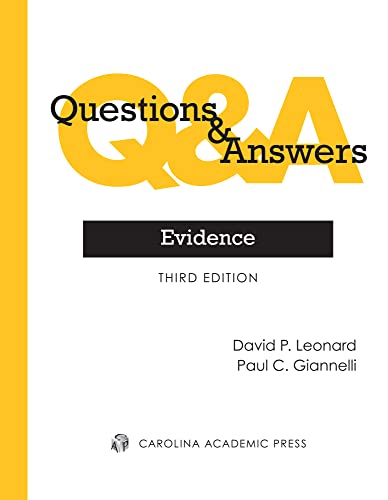
This book offers a structured way to deepen your understanding of criminal evidence law through targeted question-and-answer practice. Designed for law students and legal professionals, it breaks down complex topics into manageable multiple-choice and short-answer formats, supported by detailed explanations that clarify why certain answers are best. The approach aids retention and application of evidentiary rules, helping you prepare thoroughly for both academic assessments and practical legal challenges. Its topical arrangement and clear model answers make it a useful tool for anyone looking to strengthen their command of evidence concepts.
David P. Leonard and Paul C. Giannelli leverage their expertise in evidence law to craft a study guide that sharpens your grasp of criminal evidence through targeted practice. The book organizes over 260 multiple-choice and short-answer questions by topic, allowing you to apply legal concepts in manageable segments, with thorough explanations clarifying why one answer surpasses others. Notably, Leonard's detailed rationales demystify complex evidentiary rules, helping you not only prepare for exams but also build practical skills for legal practice. This book is ideal if you want focused reinforcement of evidentiary principles and efficient preparation for law school assessments or early career challenges in criminal law.
The best Criminal Evidence Law books and more, in your inbox each week. No account needed.
Conclusion
These seven books collectively highlight how complex and nuanced Criminal Evidence Law can be—from the practical courtroom strategies in Texas and California to the federal procedural rules and the critical examination of race and evidence. If you’re navigating state-specific practice, starting with John Barkai’s handbooks provides clarity and actionable guidance. For a broader federal framework, the Federal Rules of Evidence editions serve as essential references.
Those preparing for exams or early career challenges will find Evidence’s Q&A approach invaluable for building confidence and mastery. And if your interest lies in the social justice implications of evidence law, Rap on Trial offers a compelling, critical perspective.
Alternatively, you can create a personalized Criminal Evidence Law book to bridge the gap between general principles and your specific situation. These books can help you accelerate your learning journey and sharpen your legal acumen in crucial ways.
Frequently Asked Questions
I'm overwhelmed by choice – which book should I start with?
Start with Criminal Evidence by Marjie Britz for a solid foundation. It balances theory and practical cases, making complex concepts approachable before diving into state-specific or federal rules.
Are these books too advanced for someone new to Criminal Evidence Law?
Not at all. Books like Evidence offer structured practice questions ideal for beginners, while others gradually build from basics to detailed rules, making them accessible for early learners.
What's the best order to read these books?
Begin with foundational texts like Criminal Evidence, then explore federal rules editions for procedural depth. Follow with state handbooks if practicing locally, and consider Rap on Trial for social context.
Do I really need to read all of these, or can I just pick one?
You can pick based on your focus—state practice, federal rules, or theory. However, combining a procedural guide with a critical analysis like Rap on Trial offers a richer understanding.
Which books focus more on theory vs. practical application?
Criminal Evidence and Rap on Trial lean toward theory and critical analysis, while the Texas and California handbooks and the Federal Rules editions emphasize practical courtroom application.
How can I get content tailored to my specific Criminal Evidence Law needs?
These expert books provide invaluable insights, but if you want focused guidance tailored to your jurisdiction, experience, and goals, creating a personalized Criminal Evidence Law book can bridge that gap perfectly.
📚 Love this book list?
Help fellow book lovers discover great books, share this curated list with others!