"Building a Scalable Data Warehouse with Data Vault 2.0" by Daniel Linstedt, Michael Olschimke made it to BookAuthority's Best Data Warehousing Audiobooks of All Time!
8 Data Warehousing Books Yan Leshinsky and Experts Rely On
Curated by Yan Leshinsky, Vice President at AWS, this list showcases 8 Data Warehousing books that deliver proven insights and expert strategies.
Updated on June 24, 2025·We may earn commissions for purchases made via this page
0 of 8 books have Audiobook versions
We're launchingLaunching on Product Hunt today 🎉We just launchedJust launched on Product Hunt 🎉
Modelpeers, from the BookAuthority teamFrom the BookAuthority team: Modelpeers, a free way to follow AI models and agents like you follow people. We'd love your support.
What if you could unlock the secrets behind building scalable, agile, and cloud-ready data warehouses from those who’ve shaped the field? Data warehousing isn’t just about storing data — it’s the backbone of insightful analytics and informed decision-making. In today’s data-driven economy, mastering these systems is more critical than ever.
Take Yan Leshinsky, Vice President of Redshift at Amazon Web Services, who praises the Amazon Redshift Cookbook for its clear, step-by-step guidance on cloud data warehousing. Likewise, Ralph Kimball and Bill Inmon have defined foundational approaches that continue to influence modern designs. These thought leaders discovered through hands-on experience that success in data warehousing demands both solid architecture and adaptable methodologies.
While these expert-curated books provide proven frameworks, readers seeking content tailored to their specific industry, skill level, or project goals might consider creating a personalized Data Warehousing book that builds on these insights, ensuring you focus on what matters most to you.
Yan Leshinsky, Vice President of Redshift at AWS, brings unmatched insight into cloud data warehousing. After years leading Redshift development, he endorses this book for its clear guidance on everything from cluster setup to complex data streaming integrations. "I'm super excited to see Amazon Redshift Cookbook. It is a great introduction to Redshift, with step-by-step instructions from something as simple as setting up your cluster and loading data to more complex like setting up federation with Amazon Aurora or streaming data to Redshift from Amazon Kinesis Firehose." This hands-on manual reshaped his view on teaching Redshift best practices, making it a key resource for professionals aiming to master the platform.
“I'm super excited to see Amazon Redshift Cookbook. It is a great introduction to Redshift, with step-by-step instructions from something as simple as setting up your cluster and loading data to more complex like setting up federation with Amazon Aurora or streaming data to Redshift from Amazon Kinesis Firehose. It is also good hands on manual to help you become a Redshift professional, covering topics like performance and cost optimization, data orchestration and security. Highly recommend!”
Shruti Worlikar is a cloud professional with technical expertise in data lakes and analytics across cloud platforms. Her background has led her to become an expert in on-premises-to-cloud migrations and building cloud-based scalable analytics applications. Shruti earned her bachelor's degree in electronics and telecommunications from Mumbai University in 2009 and later earned her master's degree in telecommunications and network management from Syracuse University in 2011. Her work history includes work at J.P. Morgan Chase, MicroStrategy, and Amazon Web Services (AWS). She is currently working in the role of Manager, Analytics Specialist SA at AWS, helping customers to solve real-world analytics business challenges with cloud solutions and working with service teams to deliver real value. Shruti is the DC Chapter Director for the non-profit Women in Big Data (WiBD) and engages with chapter members to build technical and business skills to support their career advancements. Originally from Mumbai, India, Shruti currently resides in Aldie, VA, with her husband and two kids.
While working as a cloud specialist at AWS, Shruti Worlikar and her co-authors developed a guide focused on implementing Amazon Redshift for scalable data warehousing. You learn detailed techniques for building petabyte-scale warehouses, optimizing query performance, and automating ETL pipelines, all tailored to Redshift's unique architecture. The book walks you through using advanced features like concurrency scaling and federated queries, offering practical insights into security and data ingestion within cloud environments. If you’re involved in data engineering or analytics and want to migrate or build efficient cloud data warehouses, this book delivers targeted know-how without unnecessary fluff.
Ralph Kimball, PhD, has shaped data warehousing and business intelligence since 1982. His bestselling Toolkit series, coauthored with Margy Ross—president of DecisionWorks Consulting and a 30-year data warehousing veteran—reflects decades of hands-on experience and education. Their combined expertise makes this book a definitive resource, guiding you through updated dimensional modeling techniques and practical applications drawn from diverse industries.
Ralph Kimball, PhD, has been a leading visionary in the data warehouse and business intelligence industry since 1982. The Data Warehouse Toolkit book series have been bestsellers since 1996. Margy Ross is President of DecisionWorks Consulting and the coauthor of five Toolkit books with Ralph Kimball. She has focused exclusively on data warehousing and business intelligence for more than 30 years.
What happens when decades of industry-leading expertise meet the challenge of dimensional modeling? Ralph Kimball and Margy Ross, both deeply immersed in data warehousing since the early 1980s, crafted this guide to distill complex concepts into practical design strategies. You’ll explore foundational and advanced dimensional modeling techniques, including star schema patterns and ETL methodologies, supported by real-world case studies from industries like retail, finance, and healthcare. This book is tailored for data architects and BI professionals seeking to build efficient, scalable data warehouses that balance performance with usability.
This custom AI book on data warehousing is crafted based on your expertise and goals in this field. By sharing your background and focus areas, you receive content that zeroes in on the aspects most relevant to your projects and learning path. Personalization matters here because data warehousing covers diverse environments and needs, so a tailored guide helps you cut through the noise and concentrate on what truly advances your mastery. This book was created to support your unique journey from foundational concepts to advanced, scalable solutions.
TailoredRead AI creates personalized nonfiction books that adapt to your unique background, goals, and interests. Instead of reading generic content, you get a custom book written specifically for your profession, experience level, and learning objectives. Whether you're a beginner looking for fundamentals or an expert seeking advanced insights, TailoredRead crafts a book that speaks directly to you. Learn more.
This tailored book explores scalable data warehousing by integrating core principles with your unique goals and background. It examines architectural designs, cloud integration, and performance tuning with a personalized lens, ensuring the content resonates with your specific learning needs. The book reveals practical aspects of data modeling, ETL processes, and emerging technologies, all framed to match your interests and expertise. By focusing on your priorities, it delivers a clear, engaging path through complex topics, helping you grasp essential concepts and advanced techniques alike. This personalized guide unlocks insights that align closely with your objectives, making your learning journey both efficient and relevant.
Dan Linstedt brings over 25 years of expertise in data warehousing and business intelligence, known for creating the Data Vault modeling technique that reshaped scalable data warehouse design. His experience working with global business and government organizations lends this book a practical depth, guiding you through the end-to-end process of building a data warehouse using the Data Vault 2.0 methodology. With insights from his extensive presentations and training sessions worldwide, this book connects proven architectural strategies with agile implementation to help you navigate complex data environments effectively.
Dan Linstedt has more than 25 years of experience in the Data Warehousing and Business Intelligence field and is internationally known for inventing the Data Vault 1.0 model and the Data Vault 2.0 System of Business Intelligence. He helps business and government organizations around the world to achieve BI excellence by applying his proven knowledge in Big Data, unstructured information management, agile methodologies and product development. He has held training classes and presented at TDWI, Teradata Partners, DAMA, Informatica, Oracle user groups and Data Modeling Zone conference. He has a background in SEI/CMMI Level 5, and has contributed architecture efforts to petabyte scale data warehouses and offers high quality on-line training and consulting services for Data Vault.
What started as a challenge within the U.S. Department of Defense became a blueprint for scalable data warehousing through Dan Linstedt's invention of the Data Vault 1.0 and its evolution into Data Vault 2.0. This book walks you through the entire lifecycle of building a scalable data warehouse, from the foundational modeling techniques to implementing the architecture layers like staging and data marts. You'll gain insights into agile methodologies tailored for data warehousing, loading processes using SQL Server Integration Services, and integrating Data Quality and Master Data Services effectively. If you’re responsible for designing or managing data warehouses, especially in complex or large-scale environments, this book grounds you in practical frameworks that confront common pitfalls head-on.
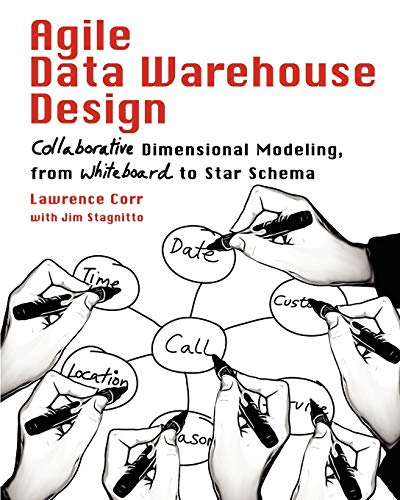
Lawrence Corr is a seasoned data warehouse designer and educator who has taught dimensional DW/BI skills to thousands of students worldwide. As Principal of DecisionOne Consulting, he guides clients in simplifying data warehouse designs and advises vendors on visual modeling techniques. His expertise and hands-on teaching experience shaped this book, which focuses on making dimensional modeling more interactive and collaborative, helping you bridge the gap between technical teams and business stakeholders effectively.
Lawrence Corr is a data warehouse designer and educator. As Principal of DecisionOne Consulting, he helps clients to review and simplify their data warehouse designs, and advises vendors on visual data modeling techniques. He regularly teaches agile dimensional modeling courses worldwide and has taught dimensional DW/BI skills to thousands of students.
This book breaks from traditional data warehousing texts by focusing on collaborative, agile dimensional modeling that involves the whole BI team. Lawrence Corr, an experienced data warehouse designer and educator, introduces BEAM — a method that encourages interactive "modelstorming" sessions with stakeholders to build star schemas efficiently. You’ll learn to tell data stories through the 7Ws framework and use visual tools like storyboarding to uncover conformed dimensions, making complex data processes easier to grasp and implement. If you’re responsible for designing or managing DW/BI projects, this approach helps align technical teams and business users early, improving both performance and usability.
Valliappa (Lak) Lakshmanan, tech lead for Big Data and Machine Learning on Google Cloud Platform, brings firsthand experience democratizing machine learning through scalable cloud infrastructure. Alongside Jordan Tigani, Director of Product Management for BigQuery with over 20 years in software development, they authored this definitive guide to help you navigate BigQuery’s powerful serverless analytics platform. Their combined expertise ensures you access insider knowledge on building efficient, collaborative data warehousing solutions at scale.
Valliappa (Lak) Lakshmanan is a Tech Lead for Big Data and Machine Learning Professional Services on Google Cloud Platform. His mission is to democratize machine learning so that it can be done by anyone anywhere using Google's amazing infrastructure (i.e., without deep knowledge of statistics or programming or ownership of lots of hardware). Jordan Tigani is currently Director of Product Management for Google BigQuery. He has more than 20 years of professional software development experience, the last 8 of which have been spent creating and developing BigQuery. Other previous jobs have ranged from working on machine learning at an advertising startup to Microsoft Research to working at a short-lived mobile location-based social network buzzword generator.
When Valliappa Lakshmanan and Jordan Tigani combined their deep Google Cloud expertise, they crafted a resource that goes beyond typical data warehousing manuals. You’ll learn how to harness BigQuery’s serverless architecture to efficiently analyze petabyte-scale datasets and integrate machine learning without complex infrastructure. The book offers practical insights into query optimization, autoscaling, and collaborative workflows, with chapters dedicated to both foundational concepts and advanced analytics. If your work involves large-scale data analysis or cloud-based warehousing, this guide provides clear pathways to leverage BigQuery’s unique capabilities effectively.
This AI-created book on cloud data warehousing is tailored to your skill level, background, and specific goals. By sharing what aspects of cloud warehousing you want to focus on and your current experience, you receive a book that concentrates on what you truly need. This personalization helps you tackle the complexities of cloud data warehouses step-by-step, making the learning process more efficient and relevant. It offers a clear path to build and optimize your cloud warehouse within 90 days, focusing on your unique challenges and interests.
TailoredRead AI creates personalized nonfiction books that adapt to your unique background, goals, and interests. Instead of reading generic content, you get a custom book written specifically for your profession, experience level, and learning objectives. Whether you're a beginner looking for fundamentals or an expert seeking advanced insights, TailoredRead crafts a book that speaks directly to you. Learn more.
2026·50-300 pages·Data Warehousing, Cloud Data Warehousing, Data Integration, Performance Tuning, Security Practices
This tailored book explores a step-by-step plan to implement and optimize cloud data warehouses efficiently over a 90-day period. It covers foundational concepts and hands-on practices, focusing on key cloud platforms and essential tools. By matching your background and interests, this book guides you through building scalable, cost-effective warehouses that support agile analytics. The personalized content ensures you concentrate on areas that matter most to your goals, such as data ingestion, transformation, security, and performance tuning. This tailored approach helps you navigate complex cloud architectures with clarity and confidence, accelerating your learning curve and practical skills development in data warehousing.
Ralph Kimball, PhD, the founder of the Kimball Group and a central figure in data warehousing, brings his decades of expertise to this final remastered collection. Alongside Margy Ross, President of the Kimball Group and a veteran in DW/BI solutions since 1982, they compile a definitive resource grounded in real-world consulting and training. Their combined experience shapes this extensive guide, making it a cornerstone for anyone involved in data warehousing and business intelligence design.
Ralph Kimball, Margy Ross, Bob Becker, Joy Mundy, Warren Thornthwaite(you?)·
About the Author
Ralph Kimball, PhD, founded the Kimball Group and is a leading visionary in the data warehousing industry. Margy Ross, President of the Kimball Group and DecisionWorks Consulting, has focused on DW/BI solutions since 1982.
What started as Ralph Kimball's pioneering work in data warehousing evolved into this extensive collection co-authored with Margy Ross and other experts, offering decades of refined methodologies. You’ll find detailed guidance on every project phase, from planning and requirements to dimensional modeling and ETL processes, enriched with over 300 topics and 65 new articles in this second edition. The book distills the Kimball Group’s proven approach to building scalable business intelligence systems, making it a valuable resource for professionals seeking to deepen their practical skills. If your work involves designing or managing data warehouses, this collection provides a thorough roadmap, though those new to the field might find its depth demanding.
Bill Inmon, often called the father of data warehousing, brings decades of experience and a prolific authorship of 57 books to this exploration of the Unified Star Schema. Known for pioneering data warehouse concepts, Inmon’s latest work—with coauthor Francesco Puppini—introduces a design that promises agility and resilience in analytics applications. Their approach tackles longstanding issues in dimensional modeling head-on, offering you a practical blueprint grounded in deep expertise and real-world examples.
Bill Inmon, the 'father of data warehouse', has written 57 books published in nine languages. Bill's latest adventure is the building of technology known as textual disambiguation - technology that reads raw text in a narrative format and allows the text to be placed in a conventional database so that it can be analyzed by standard analytical technology, thereby creating unique business value for Big Data/unstructured data. Bill was named by ComputerWorld as one of the ten most influential people in the history of the computer profession. Bill lives in Castle Rock, Colorado.
What happens when the father of data warehousing, Bill Inmon, teams up with expert Francesco Puppini to rethink analytics design? This book walks you through the Unified Star Schema (USS) approach, a more agile and resilient alternative to traditional dimensional modeling. You’ll explore concrete examples like the Northwind case study and learn how the USS handles common pitfalls such as fan traps and chasm traps without data loss. If you’re aiming to build a single, adaptable star schema that accommodates evolving business intelligence needs, this book lays out the architecture, ETL processes, and metadata management clearly and methodically.
Hamid Qureshi is a senior cloud and data warehouse professional with almost two decades of experience, having architected and led many data warehouse and BI implementations. His deep expertise in both traditional platforms like Teradata and modern cloud tools like Snowflake shines through in this book, which captures his practical knowledge of building scalable, efficient data solutions on Snowflake’s platform.
Hamid Qureshi is a senior cloud and data warehouse professional with almost two decades of total experience, having architected, designed, and led the implementation of several data warehouse and business intelligence solutions. He has extensive experience and certifications across various data analytics platforms, ranging from Teradata, Oracle, and Hadoop to modern, cloud-based tools such as Snowflake. Having worked extensively with traditional technologies, combined with his knowledge of modern platforms, he has accumulated substantial practical expertise in data warehousing and analytics in Snowflake, which he has subsequently captured in his publications.
Hamid Qureshi brings nearly twenty years of hands-on experience in cloud and traditional data warehousing to this detailed guide on Snowflake’s architecture and capabilities. You’ll learn how to optimize virtual warehouses for cost and performance, design scalable data pipelines, and leverage advanced features like data sharing and cloning. The book walks you through integrating Snowflake with other data technologies and managing secure user roles, making it a solid choice for developers and analysts looking to deepen their cloud data warehousing skills. If you’re familiar with data warehousing basics and want to translate that knowledge into Snowflake’s modern platform, this book lays out practical recipes to do just that.
The best Data Warehousing books and more, in your inbox each week. No account needed.
Conclusion
Across these 8 books, a few themes emerge: the necessity of scalable architectures like Data Vault and cloud platforms such as Redshift and Snowflake; the value of agile, collaborative design processes; and the enduring relevance of dimensional and star schema modeling pioneered by Kimball and Inmon.
If you’re navigating complex enterprise challenges, start with Building a Scalable Data Warehouse with Data Vault 2.0 and The Kimball Group Reader for robust frameworks. For rapid cloud adoption and performance tuning, combine the Amazon Redshift Cookbook and Snowflake Cookbook. And if you want to innovate with serverless analytics, Google BigQuery is indispensable.
Alternatively, you can create a personalized Data Warehousing book to bridge the gap between general principles and your specific situation. These books can help you accelerate your learning journey and gain practical mastery in data warehousing.
Frequently Asked Questions
I'm overwhelmed by choice – which book should I start with?
Start with The Data Warehouse Toolkit if you want foundational modeling skills, or Amazon Redshift Cookbook for practical cloud implementation. These provide solid ground for beginners and professionals alike.
Are these books too advanced for someone new to Data Warehousing?
While some, like The Kimball Group Reader, dive deep, others such as Agile Data Warehouse Design offer accessible, collaborative methods suitable for newcomers easing into the field.
What's the best order to read these books?
Begin with core modeling books like The Data Warehouse Toolkit, move to agile design with Agile Data Warehouse Design, and then explore cloud-specific guides like Amazon Redshift Cookbook and Snowflake Cookbook.
Do these books assume I already have experience in Data Warehousing?
Most provide value at various levels; for example, Building a Scalable Data Warehouse with Data Vault 2.0 is geared toward experienced professionals, while Google BigQuery introduces cloud concepts that are approachable for those with some background.
Which book gives the most actionable advice I can use right away?
Amazon Redshift Cookbook and Snowflake Cookbook stand out for practical, recipe-style guidance ready for immediate application in cloud data warehouse projects.
Can personalized Data Warehousing books complement these expert resources?
Yes. While these books offer expert frameworks, personalized books tailor insights to your unique background and goals, bridging theory with your specific challenges. Explore more here.
📚 Love this book list?
Help fellow book lovers discover great books, share this curated list with others!