10 Demography Books That Will Change How You See Population
Discover Demography Books endorsed by Francis Fukuyama, Paul Kedrosky, and Yascha Mounk, delivering essential insights on population dynamics
Updated on June 23, 2025·We may earn commissions for purchases made via this page
0 of 10 books have Audiobook versions
We're launchingLaunching on Product Hunt today 🎉We just launchedJust launched on Product Hunt 🎉
Modelpeers, from the BookAuthority teamFrom the BookAuthority team: Modelpeers, a free way to follow AI models and agents like you follow people. We'd love your support.
What if the future of global politics, economics, and society hinges on the silent shifts in population numbers? Demography — the study of human populations — is far more than statistics; it’s a window into how societies evolve, age, and face challenges like migration, inequality, and environmental pressures. Right now, with aging populations and shifting birth rates reshaping nations, understanding demography feels urgent and unavoidable.
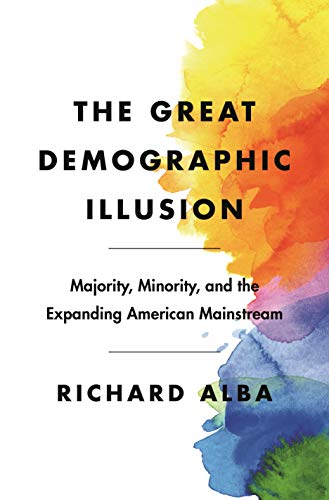
Experts like Francis Fukuyama, the author of The End of History and the Last Man, have lauded Ben Wattenberg's Fewer for illuminating the geopolitical consequences of population decline. Meanwhile, Paul Kedrosky, an investor and former academic, turns to The Great Demographic Reversal to untangle how aging societies might fuel inflation and inequality shifts. Yascha Mounk, associate professor at Johns Hopkins, highlights The Great Demographic Illusion for its fresh take on America's racial and ethnic transformations. Their endorsements reflect deep engagement with demographic realities shaping our world.
While these expert-curated books provide proven frameworks, readers seeking content tailored to their specific demographic interests, such as fertility trends, migration patterns, or economic impacts, might consider creating a personalized Demography book that builds on these insights.
Francis Fukuyama, author of The End of History and the Last Man, brings a unique lens to this book, praising Ben Wattenberg as unparalleled in analyzing the political, social, and economic consequences of demographic shifts. Fukuyama's appreciation stems from his deep engagement with global political theory, making his endorsement especially weighty. He stated, "There is no better analyst to guide us through the complex political, social, and economic implications of this development than Ben Wattenberg." This book reshaped Fukuyama’s understanding of demographic trends, highlighting how they influence power dynamics worldwide. Close behind, Joseph Lieberman adds that the book is both scholarly and accessible, reinforcing its value for those interested in population studies.
Ben J. Wattenberg is a Senior Fellow at the American Enterprise Institute in Washington, D.C. For the past eleven years he has been the moderator of the prize-winning weekly PBS television discussion program Think Tank with Ben Wattenberg. He is the author of ten books, many of which have shaped the public dialogue, including Values Matter Most, The Real Majority, The Birth Dearth, and The Good News Is the Bad News Is Wrong. Wattenberg was a member of the U.S. delegation to the 1984 UN World Population Conference and has participated in population symposia with the United Nations Population Division, the National Academy of Science, and the Population Association of America. He has been appointed to foreign policy advisory posts by Presidents Carter, Reagan, George H.W. Bush, and Speaker Thomas Foley. He lives in Washington, D.C.
2004·252 pages·Demography, Population Trends, Fertility Rates, Economic Impact, Political Science
When Ben J. Wattenberg first discovered the rapid decline in birth and fertility rates worldwide, he set out to unpack how this demographic shift could reshape global politics, economics, and society. Drawing on his extensive experience as a Senior Fellow at the American Enterprise Institute and decades moderating policy discussions, Wattenberg offers a detailed look at why developed and many developing countries face significant population drops. You’ll gain insights into the demographic trends in Europe, Japan, and beyond, plus the unique position of the U.S. as a demographic outlier. This book suits anyone looking to understand the deep implications of population changes on commerce, environment, and geopolitics.
Joel Cohen, a researcher affiliated with Rockefeller University and Columbia University, knows the demands of demography research firsthand. He points out that Wolfgang Lutz "secured his place among the handful of the world's most influential demographers by decades of pioneering empirical research, theoretical exploration, and institutional leadership." Cohen appreciates how this book caps Lutz's work by framing multi-dimensional demography as foundational to demographic theory. This perspective shifted Cohen's understanding of population studies, highlighting how education and cognitive change shape demographic transitions beyond traditional economic explanations.
“Wolfgang Lutz secured his place among the handful of the world's most influential demographers by decades of pioneering empirical research, theoretical exploration, and institutional leadership. This succinct book is a capstone to his contributions. Lutz envisions multi-dimensional demography (including age, sex and other attributes like education) as the foundation for a theory that integrates demographic metabolism (cohort replacement), the demographic transition, and the demographic dividend. Demographers, social scientists, and policy makers need to read this important book.”
Wolfgang Lutz, Professor of Demography, Department of Demography, University of Vienna; Director of the Vienna Institute of Demography, Austrian Academy of Sciences; Research Group Leader, International Institute for Applied Systems Analysis (IIASA) and Founding Director, Wittgenstein Centre for Demography and Global Human Capital (IIASA, OeAW, University of Vienna) Austria.
2021·224 pages·Demography, Social Sciences, Population Studies, Demographic Transition, Human Capital
Drawing from Wolfgang Lutz's extensive experience leading demography research institutes, this book clarifies complex demographic theories through a quantitative lens. You learn how multi-dimensional demography—considering age, sex, and education—underpins societal changes and policy development, with chapters detailing demographic metabolism, transition, and dividend theories. It suits demographers seeking a concise synthesis of current thinking, and social scientists exploring demographic impacts beyond traditional boundaries. For example, the book's argument that cognitive shifts drive demographic transition challenges common economic-centric views, offering you fresh perspectives on population dynamics.
This custom AI book on population dynamics is created based on your background, interests, and what aspects of demographics you want to focus on. By sharing your skill level and goals, you receive a book tailored to your specific questions about population trends, migration, economic effects, and social changes. This approach makes sense because demographic topics vary widely depending on your context, and a personalized book ensures you get relevant insights without wading through unrelated material.
TailoredRead AI creates personalized nonfiction books that adapt to your unique background, goals, and interests. Instead of reading generic content, you get a custom book written specifically for your profession, experience level, and learning objectives. Whether you're a beginner looking for fundamentals or an expert seeking advanced insights, TailoredRead crafts a book that speaks directly to you. Learn more.
2026·50-300 pages·Demography, Population Trends, Fertility Rates, Migration Patterns, Aging Societies
This personalized book offers a tailored approach to understanding demographic shifts with precision relevant to your particular interests and goals. It explores population trends, fertility rates, migration patterns, aging societies, and socio-economic impacts, providing a personalized framework that cuts through broad generalizations. The book emphasizes applying demographic insights to real-world scenarios, integrating quantitative analysis and thematic exploration to fit your specific context. By focusing on both foundational concepts and customized strategies, it addresses how demographic changes affect policy, economics, and social structures, enabling a nuanced grasp of population dynamics relevant to your unique focus.
Paul Kedrosky, an investor at SK Ventures with a background in academia, has been advocating this book for its unique ability to connect economic and demographic trends in aging societies. After observing global economic shifts, he found the book’s analysis compelling despite editorial quirks. He says, "I've been pushing The Great Demographic Reversal on people a lot lately. It really ties the econodemographic room together in aging societies." His endorsement highlights how this work challenges conventional thinking on inflation and inequality amid demographic changes.
“Book recommendation: While flawed, and a bit in need of a better editor—commas appear in Shatnerian locations—I've been pushing The Great Demographic Reversal on people a lot lately. It really ties the econodemographic room together in aging societies.” (from X)
Charles Goodhart was appointed to the newly established Norman Sosnow Chair of Banking and Finance at the London School of Economics (LSE) in September 1985, which he held until his retirement in 2002. He has remained at LSE at the Financial Markets Group, initially as Deputy Director, 1987-2005, and now a member in charge of the research program in financial regulation, 2005-present. He was elected a Fellow of the British Academy in 1990, and awarded the CBE in the New Years Honours List for 1997, for services to monetary economics.
Unlike most demography books that focus narrowly on population statistics, this one takes a broader economic and social lens to forecast how aging populations will reshape global trends. Drawing from Charles Goodhart's extensive background in financial regulation and Manoj Pradhan's expertise, you learn how shifts in labor supply and globalization will likely raise inflation and interest rates while reducing inequality. The book covers diverse topics like dementia, populism, and debt finance, offering insight into the interconnected forces driving these changes. If you're interested in the economic implications of demographic change and want to understand why the future economy may diverge sharply from past decades, this book offers a grounded perspective.
Dudley L. Poston Jr brings decades of sociological expertise from prestigious institutions like Texas A&M and Cornell to this textbook, reflecting his deep engagement with demographic and social issues. His extensive research background equips you with a nuanced, multidisciplinary view of population studies, linking individual choices to broader societal changes. This scholarly foundation makes the book a trustworthy guide through complex demographic topics, ideal for your academic journey in social sciences.
Dudley L. Poston, Jr, is Professor of Sociology and the George T. and Gladys H. Abell Endowed Professor of Liberal Arts at Texas A & M University. He holds adjunct professorships at Renmin University of China, Beijing; Fuzhou University, China; and Nanjing University, China. He previously served on the rural sociology and sociology faculties, respectively, of Cornell University, New York and the University of Texas, Austin. Professor Poston has coauthored or edited eighteen books and has authored or coauthored more than 300 journal articles and book chapters on various sociological and demographic topics.
2026·506 pages·Demography, Population Studies, Sociology, Fertility, Mortality
When Dudley L. Poston Jr, a seasoned sociologist with extensive academic ties across the U.S. and China, first developed this textbook, he aimed to bridge complex demographic theory with practical societal implications. You’ll gain a clear understanding of demographic processes like fertility, mortality, and migration, along with their impact on population dynamics, all without wading through heavy mathematics. The book uniquely integrates perspectives from economics, political science, and geography, enriching your grasp of how individual decisions shape demographic trends globally. Chapters on race, sexuality, and environmental challenges invite you to reflect on how population change intersects with pressing social issues, making this text especially useful for students and anyone interested in the societal dimensions of demography.
Yascha Mounk, associate professor at Johns Hopkins and contributing editor at The Atlantic, highlights Richard Alba as the leading scholar on demographic questions shaping America’s future. After examining these issues extensively, Mounk recommended "The Great Demographic Illusion" for its fresh perspective on mixed-heritage Americans and their role in society. This recommendation comes from Mounk’s deep engagement with demographic trends and his recognition of Alba’s nuanced analysis that challenges popular narratives about racial and ethnic divisions in the U.S.
“The most interesting scholar on these questions, Richard Alba, has just written a great new book called The Great Demographic Illusion. We ran an excerpt of it at JoinPersuasion.” (from X)
Richard Alba is Distinguished Professor of Sociology at the Graduate Center, City University of New York. His many books include Strangers No More, Blurring the Color Line, and Remaking the American Mainstream. Since earning his PhD at Columbia University in 1974, he has been devoted to understanding how immigrant groups are changed by the society that receives them and how they in turn change it. He has studied these processes as they occurred in the past and also in the present, for the descendants of the post-1965 immigrants. His recent book critiques the distorted and divisive demographic determinism that foresees American society as becoming a collection of numerical minorities in the near future.
2020·336 pages·Demography, Race Relations, Immigration, Social Integration, Ethnic Studies
When Richard Alba discovered the rising influence of mixed-heritage families in America, he challenged the prevailing majority-minority narrative that dominates discussions about the country's demographic future. Drawing from decades of sociological research on immigrant assimilation and social integration, Alba reveals how young Americans from ethnically mixed backgrounds are reshaping what it means to be part of the mainstream. You’ll gain insight into the complexities of racial integration, especially the nuanced experiences of black-white individuals, and the social and economic barriers that persist despite broader inclusion. This book suits anyone interested in the evolving fabric of American society and the demographic forces quietly redefining it.
This AI-created book on demography mastery is tailored to your skill level and specific goals. By sharing your background and which demographic topics you want to focus on, you receive a customized guide that breaks down complex concepts into daily actionable steps. Personalization makes sense here because demographic data and interpretations vary widely depending on your interests and prior knowledge. This tailored book helps you grasp essential population ideas quickly without sifting through unrelated content.
TailoredRead AI creates personalized nonfiction books that adapt to your unique background, goals, and interests. Instead of reading generic content, you get a custom book written specifically for your profession, experience level, and learning objectives. Whether you're a beginner looking for fundamentals or an expert seeking advanced insights, TailoredRead crafts a book that speaks directly to you. Learn more.
2026·50-300 pages·Demography, Demography Basics, Population Trends, Fertility Analysis, Mortality Rates
This personalized demography book provides a step-by-step daily plan to grasp essential population concepts quickly and effectively. It focuses on breaking down complex demographic topics into manageable, actionable tasks that align with your background and goals. The tailored approach emphasizes understanding core demographic measures, population trends, and their socioeconomic implications without being overwhelmed by irrelevant details. By following this guided 30-day system, you gain a structured pathway that cuts through generic advice and fits your specific context, accelerating your mastery of demographic analysis and interpretation. The book equips you with practical tools to interpret data and understand demographic shifts relevant to your interests.
Jennifer Hickes Lundquist is a Professor of Sociology and Senior Associate Dean at the University of Massachusetts Amherst, whose research delves into how racial, ethnic, and gender inequalities persist or change within various social institutions. With a PhD in Demography and Sociology from the University of Pennsylvania, her academic background uniquely qualifies her to address population dynamics in this text. This book reflects her expertise by blending rigorous demographic analysis with social context, making it valuable for anyone seeking to understand how population changes intersect with societal structures.
Jennifer Hickes Lundquist, Douglas L. Anderton, David Yaukey(you?)·
About the Author
Jennifer Lundquist is a Professor of Sociology and the Senior Associate Dean of Research and Faculty Development with the College of Social and Behavioral Sciences at the University of Massachusetts Amherst. She received a joint PhD in Demography and Sociology from the University of Pennsylvania in 2004 and a BA in Anthropology/Archaeology from Washington and Lee University in 1995. She has lived abroad in Costa Rica, Mexico, and Germany. Professor Lundquist examines the pathways through which racial, ethnic and gender inequalities are perpetuated and sometimes undone in various institutional settings, such as the workplace, the dating and marriage market, and in families. She has published her research in a variety of academic journals, including Social Forces, American Journal of Sociology, and American Sociological Review. Her research has been funded by the National Science Foundation, Mellon and Humboldt and covered by media ranging from Time, Newsweek, the Washington Post, the New York Times and National Public Radio. For her articles and CV, go to https://www.umass.edu/sociology/users/lundq
2026·523 pages·Demography, Population Studies, Urbanization, Fertility Decline, Aging Populations
Demography: The Study of Human Population, Fourth Edition, offers a detailed look at the forces shaping global population trends, authored by Jennifer Hickes Lundquist and colleagues. Drawing from her extensive academic and research experience, Lundquist explores critical topics like aging populations, fertility decline, and urbanization, backed by new data and real-world examples. You’ll gain skills in interpreting demographic data and understanding the socio-economic impacts of population changes, with chapters featuring exercises to apply quantitative tools demographers use. This book suits students and professionals interested in social sciences who want to grasp the complexities behind population shifts without overwhelming jargon.
Kenneth Hill, director of the Johns Hopkins Population Center, brings a vital perspective to formal demography with his endorsement of this text, emphasizing its graduate-level rigor and indispensability. His recommendation highlights how the authors maintain reader engagement through clear explanations and thorough coverage, making it a go-to resource in his academic work. Hill’s experience in population research lends weight to his view of this book as an essential foundation. Complementing this, James Vaupel, founding director at the Max Planck Institute, foresees its lasting influence, calling it a bible for demographers that will shape the field for decades.
“It is really a graduate-level textbook of formal demography. As such, it is sorely needed. I will certainly use it as my basic textbook when it comes out. The authors have done an excellent job of keeping this interesting and informative.”
Samuel Preston, Patrick Heuveline, Michel Guillot(you?)·
About the Author
Samuel H. Preston is Frederick J. Warren Professor of Demography and Dean of the School of Arts and Sciences at the University of Pennsylvania. He has written monographs on mortality patterns, world urbanization, the history of child health, and other subjects. He is a member of the National Academy of Sciences and the American Philosophical Society.
2000·320 pages·Demography, Population Studies, Statistical Models, Mortality Analysis, Fertility Trends
Drawing from their extensive academic and research backgrounds, the authors provide a rigorous exploration of methods and models fundamental to demography. You’ll gain a clear understanding of how to measure population processes, with detailed chapters that build from core principles to complex applications, such as mortality analysis and fertility trends. This book suits graduate students, demographers, and social scientists eager to deepen their quantitative skills in population studies. For example, the sections on life table construction and population projections offer practical frameworks that demographers regularly apply in research and policy analysis.
Thomas K. Burch brings over six decades of social demography expertise to this work, having shaped academic programs and research centers across multiple universities. His extensive background, including leadership roles and a Lifetime Achievement Award from the Canadian Population Society, grounds the book in authoritative insight. Burch's career-long focus on fertility, family structure, and demographic theory informs this exploration of demography as a scientific discipline, emphasizing the integration of data, techniques, and theory to enrich understanding of population dynamics.
Thomas K. Burch is an internationally known social demographer who has contributed significantly to the field over a career spanning more than sixty years. He completed his graduate work in sociology and demography at the Office of Population Research, Princeton University. Burch has taught at Marquette and Georgetown University, where he helped establish the Center for Population Research. He served as the Associated Director of the Demographic Division at The Population Council from 1970 to 1975 and later joined the University of Western Ontario to develop a Ph.D. program in social demography. Elected President of the Canadian Population Society from 1992-94, he received the organization’s Lifetime Achievement Award in 2013. Currently, he is an Adjunct Professor at the University of Victoria and a Research Affiliate at the Centre for Studies in Demography and Ecology, University of Washington. His research interests include fertility, marriage and divorce, household and family structure, and kinship, with a focus on demographic theory.
2020·204 pages·Demography, Social Sciences, Population Studies, Theoretical Models, Data Integration
Many approach demography as a purely statistical field, but Thomas K. Burch challenges this by presenting demography as a full scientific discipline with its own theories and models. Drawing from his extensive career and deep understanding of sociological and demographic research, Burch explores how demographic techniques intersect with theoretical models, such as demographic transition theory, reframing them as valuable frameworks rather than inconsistent observations. You’ll find detailed discussions on integrating data, theory, and computational modeling, especially in later chapters emphasizing the role of computer simulations. This book suits you if you're engaged in demographic research or social sciences and want a theoretical foundation that goes beyond numbers to explain population phenomena.
Sanah Real Monsters Saeed, a cultural critic at AJ+ known for blending sharp theory with humor, highlights this book after engaging directly with the author. During their exploration of demography's complex narratives, they found 'Fatal Misconception' indispensable, noting, "In this piece, we interview @mattspast, whose book 'Fatal Misconception' should be on your top-ten-must-read-this-year list." This recommendation underscores how the book reshapes understanding of population control's human and political dimensions, challenging conventional views and deepening the conversation around demographic policy.
2008·544 pages·Demography, Population Control, Social Policy, Human Rights, Global History
When Matthew Connelly first uncovered the tangled history of population control, he revealed a disturbing chapter where idealism clashed with human rights. This book traces the global efforts to limit population growth through policies ranging from immigration bans to forced sterilizations, highlighting the often overlooked human cost, especially on women. You gain detailed insights into how political, religious, and social forces shaped these initiatives, including the Catholic Church's opposition and nationalist fears. If you're interested in understanding how demographic policies impact societies and ethical boundaries, this book offers a thorough, sobering examination grounded in extensive archival research.
Brett Haase, cofounder and CTO in cutting-edge EdTech and STEM initiatives, recalls encountering this book while reflecting on historical perspectives in demography. He shares, "I recall some scientist from the 1960's (no, I am NOT that old...) who wrote a book called 'The Population Bomb' that predicted millions (~70 million?) Americans would die of starvation in the 80's or 90's because of unsustainable growth." This reflection highlights how Ehrlich's work challenged and shaped thinking on population crises, prompting reconsideration of demographic forecasts and environmental consequences.
“@Mystisith It's interesting. I recall some scientist from the 1960's (no, I am NOT that old...) who wrote a book called "The Population Bomb" that predicted millions (~70 million?) Americans would die of starvation in the 80's or 90's because of unsustainable growth. <FACEPALM>” (from X)
Paul R Ehrlich is a biologist and environmentalist known for his controversial eco-books, including 'The Population Bomb'. He has brought attention to issues such as population, pollution, and environmental destruction.
1995·201 pages·Demography, Population Growth, Environmental Impact, Resource Scarcity, Food Security
When Paul R. Ehrlich first discovered the potential consequences of unchecked population growth, he set out to sound the alarm. Drawing from his expertise as a biologist and environmentalist, Ehrlich explores how rapid population increase could strain resources and impact the planet's future. You’ll find discussions on food scarcity, environmental degradation, and demographic pressures, illustrated through case studies and projections from the mid-20th century. This book suits those interested in environmental science, policy makers, and anyone grappling with the complexities of population dynamics and sustainability.
The best Demography books and more, in your inbox each week. No account needed.
Conclusion
Across these ten books, a few themes stand out: the profound influence of age structure on economies and politics, the evolving social fabric shaped by migration and assimilation, and the ethical complexities entwined with population policy. If you're grappling with understanding population decline’s economic impact, start with The Great Demographic Reversal and Fewer for nuanced perspectives.
For rapid academic grounding, combine Advanced Introduction to Demography with Demography: Measuring and Modeling Population Processes to sharpen your quantitative and modeling skills. Meanwhile, those intrigued by societal integration should explore The Great Demographic Illusion alongside Population and Society.
Once you've absorbed these expert insights, create a personalized Demography book to bridge the gap between general principles and your specific situation. Tailored knowledge can sharpen your perspective and equip you to navigate the demographic forces shaping your world.
Frequently Asked Questions
I'm overwhelmed by choice – which book should I start with?
Start with Fewer for a clear, policy-focused overview of population decline and its global effects. It’s accessible and sets the stage for deeper dives into specific demographic topics.
Are these books too advanced for someone new to Demography?
Not at all. Books like Population and Society and Demography (4th Edition) offer approachable introductions that explain core concepts without heavy jargon.
What's the best order to read these books?
Begin with broader overviews like Fewer and Population and Society, then explore specialized texts such as Advanced Introduction to Demography and Model-Based Demography for theory and methods.
Should I start with the newest book or a classic?
Balance both. Newer books like The Great Demographic Illusion offer fresh perspectives, while classics like The Population Bomb provide historical context on demographic debates.
Which books focus more on theory vs. practical application?
Model-Based Demography and Demography: Measuring and Modeling Population Processes emphasize theory and modeling, while Population and Society and Fewer focus more on real-world implications.
How can I get demography insights tailored to my specific interests or goals?
Expert books offer strong foundations, but personalized Demography books can focus on your unique background and aims. You can create one easily here for targeted, efficient learning.
📚 Love this book list?
Help fellow book lovers discover great books, share this curated list with others!