Congratulations! 🎉
"No-Nonsense Buddhism for Beginners" by Noah Rasheta made it to BookAuthority's Best Eastern Books of All Time!
20 Eastern Books That Define Wisdom and Practice
Eastern Books that deepen your understanding of philosophy and spirituality




This list of Eastern thought spans several kinds of books. For readers who want primary texts, there are translations of the Upanishads, the Dhammapada and the Tao Te Ching. Readers new to Buddhism can turn to Heart of the Buddha's Teaching or No-Nonsense Buddhism for Beginners. Those who want a scholarly or historical approach will find The Essentials of Indian Philosophy, The Buddhist Literature of Ancient Gandhara and China Root. The list also reaches into Eastern Christian theology through Deification through the Cross and includes a spiritual autobiography in Autobiography of a Yogi. creating a personalized Eastern book
1. Tao
Recommended by The Los Angeles Times
“Perhaps the foremost interpreter of Eastern disciplines for the contemporary West, Alan Watts had the rare gift of 'writing beautifully the unwritable' ... Watts begins with scholarship and intellect and proceeds with art and eloquence to the frontiers of the spirit ... This is a profound and worthy work, left by a teacher to echo and re-echo.” (from Amazon)

Tao: The Watercourse Way examines the Chinese philosophy of Tao, drawing on both ancient and modern sources. Its approach to Tao parallels the earlier treatment of Zen Buddhism in The Way of Zen.
2. The Upanishads
Recommended by Huston Smith
Author of The World’s Religions
“No one in modern times is more qualified – no, make that ‘as qualified’ – to translate the epochal Classics of Indian Spirituality than Eknath Easwaran. And the reason is clear. It is impossible to get to the heart of those classics unless you live them, and he did live them. My admiration of the man and his works is boundless.” (from Amazon)
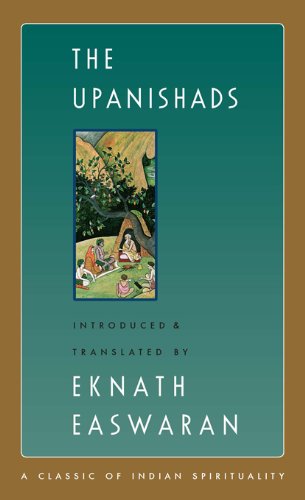
This translation presents selections from the principal Upanishads and five others. These ancient texts record sages' investigations into consciousness and a transcendent Self. The edition adds an overview of the cultural and historical setting, chapter introductions, notes and a Sanskrit glossary. Huston Smith recommends The Upanishads (Easwaran's Classics of Indian Spirituality Book 2).
Eastern Wisdom Blueprint

This tailored book explores core Eastern philosophies and practices, offering a deeply personalized journey through traditions like Taoism, Buddhism, and Indian spirituality. It covers fundamental teachings and advanced concepts, connecting timeless wisdom with your unique background and interests. The book examines philosophical foundations, spiritual insights, and practical applications, crafted to match your specific goals. By focusing on your areas of curiosity and experience level, it reveals how these ancient teachings can resonate meaningfully in your life. This personalized guide bridges expert knowledge with your individual learning path, making complex ideas accessible and relevant while respecting the richness of Eastern thought.
3. The Dhammapada
Recommended by Huston Smith
Author of The World’s Religions
“No one in modern times is more qualified – no, make that ‘as qualified’ – to translate the epochal Classics of Indian Spirituality than Eknath Easwaran. And the reason is clear. It is impossible to get to the heart of those classics unless you live them, and he did live them. My admiration of the man and his works is boundless.” (from Amazon)

This translation of the Dhammapada, a collection of verses associated with the Buddha's teaching, is based on the original Pali. An introduction gives an overview of the Buddha's teachings, and chapter introductions and notes place the verses in the context of the broader Buddhist canon.
4. Samadhi

Samadhi presents enlightenment as awareness of the unity of consciousness and existence. It also takes up the relationship among energy, matter and a single divine consciousness.
5. Deification through the Cross

Deification through the Cross argues for a unified Christian doctrine of salvation that draws on both Eastern and Western perspectives. It develops the idea of doxological contrition and places this integrated soteriology in dialogue with liberation theology, Girardian theory and penal substitution.
30-Day Eastern Mindset

This tailored book explores Eastern spiritual and ethical practices through a step-by-step 30-day plan designed to fit your background and goals. It examines core mindfulness techniques, ethical principles, and contemplative traditions from Taoism, Buddhism, and Indian spirituality, offering a focused path that matches your interests. By concentrating on your specific areas of curiosity, this personalized guide reveals how these ancient disciplines can be woven into daily life, supporting your journey toward greater presence, balance, and clarity. The careful synthesis of time-honored wisdom and your personal learning objectives creates an engaging experience that encourages deep understanding and meaningful practice.
6. The Buddhist Literature of Ancient Gandhara
Recommended by Jan Nattier
Author of A Few Good Men: The Bodhisattva Path according to “The Inquiry of Ugra”
“The author has been a pioneer in the decipherment and translation of these previously unknown scriptures. Until now the study of Gandhari texts has been a highly technical field accessible only to specialists, but here Salomon makes the fruits of more than two decades of study accessible to general readers and specialists alike. This stunning achievement belongs on the bookshelf of every reader who is interested in the history of Buddhism.” (from Amazon)

This book surveys what is known about Gandhara and its Buddhism, drawing on manuscripts unearthed in recent decades. It also offers translations of short texts that range from similes and stories to treatises on time and reality. Stephen Batchelor recommends The Buddhist Literature of Ancient Gandhara: An Introduction with Selected Translations (Classics of Indian Buddhism).
7. The World Could Be Otherwise
Recommended by Zenju Earthlyn Manuel
Author of The Way of Tenderness: Awakening Through Race, Sexuality, and Gender
“With poetic gesture and prompts from the Buddha’s teachings, beloved spiritual teacher Norman Fischer leads us on a well-seasoned path toward a kind of imagining of our world that goes far beyond our minds. In fact, we might fall into our own hearts along the way.” (from Amazon)

The World Could Be Otherwise reframes the six paramitas as imaginative spiritual practice: generosity, ethical conduct, patience, joyful effort, meditation and understanding. It ranges from relationships, ethics and consumption to artistic inspiration. Joan Halifax recommends The World Could Be Otherwise: Imagination and the Bodhisattva Path.
8. Tao Te Ching
Recommended by Huston Smith
Author of The World’s Religions
“Mitchell's rendition of the Tao Te Ching comes as close to being definitive for our time as any I can imagine. It embodies the virtues its translator credits to the Chinese original: a gemlike lucidity that is radiant with humor, grace, largeheartedness, and deep wisdom.” (from Amazon)

This English version of the Tao Te Ching presents the Book of the Way in brief chapters. The text offers guidance on balance, generosity and acting in accord with the Tao. Huston Smith recommends Tao Te Ching: A New English Version (Perennial Classics).
9. Heart of the Buddha's Teaching
Recommended by Martin Luther King
Civil Rights Leader and Nobel Peace Prize Winner
“Thich Nhat Hanh is a holy man, for he is humble and devout. He is [also] a scholar of immense intellectual capacity.” (from Amazon)
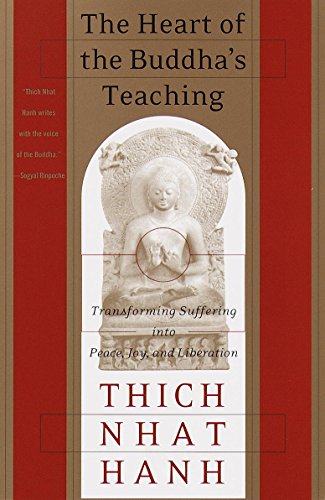
Heart of the Buddha's Teaching explains how to visualize and understand the basic tenets of Buddhism. Its scope covers core teachings and their relevance to transforming suffering.
10. China Root
Recommended by Henry Shukman
Roshi
“China Root is an utterly engrossing account of the deepest treasures the Zen/Ch’an path can open up, as it leads us into the manifest-yet-hidden wonders of who we really are. Hinton writes as very few can, not only as a scholar, practitioner, and translator but also as a poet—something the old artist-intellectuals of China would surely have appreciated. His deep understanding of the Taoist roots of Ch’an shine a light on the Zen practice of today, taking us back in a thrilling way beyond the Japanese rigor and aesthetics, beyond the mythical T’ang Dynasty flourishing of Ch’an’s great ancestors, back to its Taoist roots in the first millennium BCE—and even beyond them, into the mists of its paleolithic origins. It is here, back in its true roots—which also happen to be the deepest aspects of our life—that Hinton beautifully makes clear our participation in a generative cosmos, a constantly manifesting, burgeoning Presence, even while it never ceases to be a primordial Absence. Oddly perhaps, in spite of Hinton’s expert parsing out of missteps in the translation and transmission of this Dharma to the West, I can’t help feeling I’ve just read a staggeringly good account of the modern Zen training a contemporary Japanese-based lineage led me through. Be that as it may, this thoroughly gripping book pulls together various threads of David Hinton’s prior work into one powerful, concise masterwork. May it echo through modern zendos for decades to come.” (from Amazon)

China Root presents Ch'an as a Buddhist-influenced extension of Taoism. Each chapter explores a core concept such as meditation, mind or awakening as it was understood in ancient China. An appendix examines standard translations to show what contemporary American Zen has lost.
11. Become What You Are
Recommended by LA Times
“Perhaps the foremost interpreter of Eastern disciplines for the contemporary West, Alan Watts had the rare gift of ‘writing beautifully the un-writable.’” (from Amazon)

Become What You Are collects writings that draw on Taoism, Christianity and other traditions to explore the search for the true self. Its topics include seeing life just as it is, Taoist harmonious living, the limits of language and the psychological symbolism of Christian thought.
12. Psychotherapy East & West
Recommended by Chris Messina
Inventor of the hashtag, product designer and startup advisor

As its title indicates, Psychotherapy East & West brings together psychotherapy and Eastern and Western perspectives.
13. The Art of War & Other Classics of Eastern Philosophy
Recommended by Donald Trump
47th President of the United States

This collection gathers translations of The Art of War, the Tao Te Ching and writings from other ancient Chinese sages. Its subjects range from warfare and diplomacy to dealing with neighbors and colleagues.
14. No-Nonsense Buddhism for Beginners

No-Nonsense Buddhism for Beginners uses straightforward questions and answers to explain core Buddhist teachings. It covers the Buddha, key concepts, teachings and current practices, with sidebars that connect Buddhism to everyday life.
15. Finding Your Center

Finding Your Center compiles perspectives from philosophy, theology, new physics and Eastern mysticism. Its focus is on finding one's center amid ongoing exploration of life.
16. The Essentials of Indian Philosophy

The Essentials of Indian Philosophy gives a concise, connected account of Indian thought, from Vedic religion to the age of the systems. Each division covers theory of knowledge, ontology and practical teaching, and the book includes a Sanskrit glossary.
17. Philosophies of India
Recommended by Alan Watts
New York Times
“[A] major contribution to our understanding of Asia. It is both the most complete and most intelligent account of this extraordinarily rich and complex philosophical tradition yet written.” (from Amazon)

Philosophies of India is organized around the highest good, the philosophy of time and the philosophy of eternity.
18. The Art of Living

The Art of Living presents seven meditations on mindfulness that offer new perspectives on relationships and interconnectedness. It aims to help readers live peacefully and face aging and dying without fear.
19. Autobiography of a Yogi

This edition reprints the original 1946 text of Autobiography of a Yogi. It adds bonus material, including a later chapter and a eulogy for Gandhi. The account covers childhood revelations, visits to saints and masters in India, and teachings of yoga and Self-realization.
20. The Way of Zen

The Way of Zen, as its title indicates, is a book about Zen.
Enjoying these picks?
The best Eastern books and more, in your inbox each week. No account needed.
Conclusion
If you are just starting out, No-Nonsense Buddhism for Beginners offers a question-and-answer introduction to Buddhism, and The Essentials of Indian Philosophy gives a concise survey of Indian thought. If you would rather begin with the classics themselves, the Tao Te Ching translation and The Upanishads are natural entry points. Readers with academic interests can move on to The Buddhist Literature of Ancient Gandhara or Deification through the Cross. create a personalized Eastern book
Frequently Asked Questions
I'm overwhelmed by choice – which book should I start with?
Start with The Upanishads for a solid foundation in Indian spirituality or Tao Te Ching for Taoism's core principles. Both offer accessible entry points praised by Huston Smith and Jack Dorsey.
Are these books too advanced for someone new to Eastern?
No, several titles like No-Nonsense Buddhism for Beginners and Heart of the Buddha's Teaching are designed specifically for newcomers, providing clear, practical explanations without jargon.
What's the best order to read these books?
Begin with foundational texts like The Upanishads and The Dhammapada, then explore applied philosophy through The Art of Living and The World Could Be Otherwise. Finish with specialized works like The Buddhist Literature of Ancient Gandhara for deeper study.
Do I really need to read all of these, or can I just pick one?
You don’t need to read them all. Choose based on your interest—philosophy, spirituality, or practice. Each book stands on its own but together they form a comprehensive view.
Are there any books here that contradict each other?
Some perspectives differ, such as Taoism’s emphasis on non-action versus Buddhism’s active mindfulness. These differences highlight Eastern thought’s diversity and invite you to explore what resonates personally.
How can I get Eastern teachings tailored to my specific needs?
These expert books offer broad insight, but personalized versions can better match your background and goals. Create a personalized Eastern book to integrate expert wisdom with your unique path.
Help fellow book lovers discover great books, share this curated list with others!
Related Articles You May Like
Explore more curated book recommendations