Recommended by Huston Smith, Eknath Easwaran, and Jack Dorsey, these Eastern Books deepen your understanding of philosophy and spirituality.
Updated on June 24, 2025·We may earn commissions for purchases made via this page
17 of 20 books have Kindle versions
We're launchingLaunching on Product Hunt today 🎉We just launchedJust launched on Product Hunt 🎉
Modelpeers, from the BookAuthority teamFrom the BookAuthority team: Modelpeers, a free way to follow AI models and agents like you follow people. We'd love your support.
What if the wisdom of thousands of years across Asia could be distilled into a handful of books? Eastern philosophy, with its rich traditions of Taoism, Buddhism, and Indian spirituality, offers perspectives that challenge and expand Western ways of thinking. Today, these teachings resonate more than ever, guiding many through the complexities of modern life.
Visionaries like Huston Smith, author of The World's Religions, found their own paths transformed by these texts. Smith praised Eknath Easwaran’s translations of the Upanishads and Dhammapada for their lived authenticity and clarity. Similarly, tech pioneer Jack Dorsey draws inspiration from the Tao Te Ching’s balance and harmony principles, illustrating how these ancient ideas influence contemporary innovation.
While these expert-curated books provide proven frameworks, readers seeking content tailored to their specific backgrounds, experience levels, or spiritual interests might consider creating a personalized Eastern book that builds on these insights, blending timeless wisdom with your unique journey.
The Los Angeles Times, a major American newspaper, highlights Alan Watts as perhaps the foremost interpreter of Eastern disciplines for the contemporary West, praising his rare talent for "writing beautifully the unwritable." Their recommendation underscores Watts's blend of scholarship and eloquence that takes readers to the frontiers of spiritual thought. This book helped many appreciate the depth of Taoism beyond superficial understanding. Similarly, The Boston Globe regards this as one of Watts's finest works, noting its profound, reflective, and enlightening discussion on Taoism and Chinese language, capturing the author's spirited approach to Eastern wisdom.
“Perhaps the foremost interpreter of Eastern disciplines for the contemporary West, Alan Watts had the rare gift of 'writing beautifully the unwritable' ... Watts begins with scholarship and intellect and proceeds with art and eloquence to the frontiers of the spirit ... This is a profound and worthy work, left by a teacher to echo and re-echo.”
Alan Watts, Lee Chih-chang, Al Chung-liang Huang(you?)·
About the Author
Alan W. Watts, who held both a master’s degree in theology and a doctorate of divinity, is best remembered as an interpreter of Zen Buddhism in particular, and of Indian and Chinese philosophy in general. Standing apart, however, from sectarian membership, he has earned the reputation of being one of the most original and 'unrutted' philosophers of the twentieth century. Watts was the author of some twenty books on the philosophy and psychology of religion that have been published in many languages throughout the world, including the bestselling The Way of Zen. An avid lecturer, Watts appeared regularly on the radio and hosted the popular television series, Eastern Wisdom and Modern Life, in the 1960s. He died in 1973.
134 pages·Eastern, Philosophy, Taoism, Chinese Philosophy, Spirituality
While exploring the depths of Eastern philosophy, Alan Watts combines his extensive background in theology and divinity to illuminate the elusive principles of Taoism in this concise work. You’ll gain insights into the fluid, natural rhythms that define the Tao, with Watts bridging ancient Chinese thought and Western understanding through eloquent interpretation. The book unpacks Taoist concepts such as wu wei (non-action) and the harmony of opposites, inviting you to reconsider your relationship with life's flow. If you seek to understand Taoism beyond surface-level spirituality, especially its linguistic and philosophical nuances, this book offers a thoughtful and accessible guide.
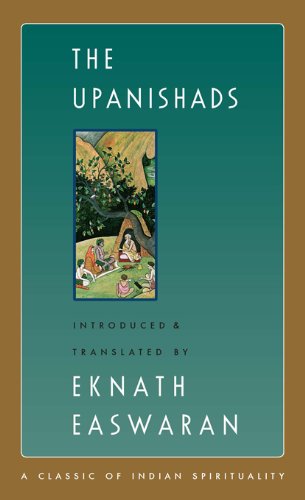
Huston Smith, author of The World's Religions and a leading voice on comparative religion, admired this translation deeply, emphasizing how Easwaran's lived experience made him uniquely qualified. Smith said, "No one in modern times is more qualified – no, make that ‘as qualified’ – to translate the epochal Classics of Indian Spirituality than Eknath Easwaran." His respect highlights how this work bridges ancient Eastern texts with modern understanding, offering profound insight into the Upanishads' spiritual core. Alongside Smith, Eknath Easwaran himself brought decades of scholarship and personal practice, blending traditional Sanskrit training with Western literary scholarship for a rare, balanced perspective.
“No one in modern times is more qualified – no, make that ‘as qualified’ – to translate the epochal Classics of Indian Spirituality than Eknath Easwaran. And the reason is clear. It is impossible to get to the heart of those classics unless you live them, and he did live them. My admiration of the man and his works is boundless.”
Eknath Easwaran (1910-1999) was a renowned spiritual teacher and translator of Indian spiritual classics. He was trained in a pure Sanskrit tradition and had a deep understanding of Hindu philosophy. Easwaran taught meditation and spirituality for nearly forty years, founding the Blue Mountain Center of Meditation in California. His translations of the Bhagavad Gita, Upanishads, and Dhammapada are best-sellers in the USA, and his works have been translated into multiple languages. He was a professor of English literature and developed a unique eight-point program for meditation, making ancient wisdom accessible to modern readers.
The breakthrough moment came when Eknath Easwaran, trained in a pure Sanskrit tradition and deeply versed in Hindu philosophy, rendered the Upanishads into accessible English. This edition unpacks the complex spiritual insights of ancient sages who explored consciousness and the eternal Self, blending historical context with clear chapter introductions and notes. As you navigate these texts, you’ll gain understanding of transcendent Reality and its relevance today, especially through Easwaran’s thoughtful commentary. If you seek a bridge between classical Indian spirituality and contemporary reflection, this translation offers clarity and depth without overwhelming you.
This AI-created book on Eastern philosophy is written based on your unique background and interests. You tell us which traditions and concepts you want to focus on, your current understanding, and your goals. The book is then created to cover exactly what you need to deepen your knowledge and practice. This personalized approach helps you navigate complex teachings in a way that fits your personal journey and learning style.
TailoredRead AI creates personalized nonfiction books that adapt to your unique background, goals, and interests. Instead of reading generic content, you get a custom book written specifically for your profession, experience level, and learning objectives. Whether you're a beginner looking for fundamentals or an expert seeking advanced insights, TailoredRead crafts a book that speaks directly to you. Learn more.
This tailored book explores core Eastern philosophies and practices, offering a deeply personalized journey through traditions like Taoism, Buddhism, and Indian spirituality. It covers fundamental teachings and advanced concepts, connecting timeless wisdom with your unique background and interests. The book examines philosophical foundations, spiritual insights, and practical applications, crafted to match your specific goals. By focusing on your areas of curiosity and experience level, it reveals how these ancient teachings can resonate meaningfully in your life. This personalized guide bridges expert knowledge with your individual learning path, making complex ideas accessible and relevant while respecting the richness of Eastern thought.
Huston Smith, author of The World’s Religions, knows better than most the depth required to translate Indian spiritual classics. He admired Eknath Easwaran for living the teachings he translated, saying, "No one in modern times is more qualified – no, make that ‘as qualified’ – to translate the epochal Classics of Indian Spirituality than Eknath Easwaran." Smith’s respect reflects how Easwaran’s work brought the Buddha’s verses to life with quiet authority. This has helped many approach Eastern philosophy with both clarity and reverence. Also notable is Eknath Easwaran himself, whose scholarly background in Sanskrit and English literature shaped this faithful and accessible rendition.
“No one in modern times is more qualified – no, make that ‘as qualified’ – to translate the epochal Classics of Indian Spirituality than Eknath Easwaran. And the reason is clear. It is impossible to get to the heart of those classics unless you live them, and he did live them. My admiration of the man and his works is boundless.”
Eknath Easwaran (1910-1999) was a renowned spiritual teacher and translator of Indian spiritual classics. He was trained in Sanskrit and English literature, serving as a professor before moving to the United States on a Fulbright fellowship. Easwaran founded the Blue Mountain Center of Meditation and taught the first accredited course on meditation at a major American university. His translations of the Bhagavad Gita, Upanishads, and Dhammapada are best-sellers in the USA, and his works have been translated into multiple languages. He dedicated his life to teaching meditation and spiritual living, leaving a lasting legacy through his writings and teachings.
When Eknath Easwaran first undertook the task of translating the Dhammapada, he brought to the project a unique blend of scholarly rigor and lived spiritual experience. His deep knowledge of Sanskrit and English literature, combined with his commitment to meditation and spiritual teaching, allows you to access the Buddha's teachings in a way that is both authentic and approachable. Through detailed chapter introductions and contextual notes, you’ll gain insight into the ethical and philosophical foundations of Buddhism, along with vivid stories about Siddhartha's journey. This book is well suited for those seeking to understand Buddhist thought beyond superficial platitudes, offering meaningful reflections for both newcomers and seasoned practitioners.
Mark Twain, an experienced Amazon.com reviewer well-versed in Eastern spirituality, highlights this book for its clarity and insight on the deep connection between energy, consciousness, and existence. He found the writings exceptionally clear and concise, offering a thoughtful perspective that goes beyond surface-level spirituality. This review points to the book's ability to clarify complex ideas, making it a valuable resource if you seek to understand the unity at the heart of Eastern philosophical thought.
Ivan Antic is the author of a dozen books on Samkhya, soul and consciousness, meditation, true history, astrology, and the law of attraction. He has developed a unique approach by combining ancient teachings and modern science. His works explore the relationship between the human soul and physical reality, emphasizing the importance of science and ethics in manifesting divine consciousness. He has been a practitioner of the 'Fourth Way' and Shikantaza Zen meditation for over 40 years.
When Ivan Antic first realized how deeply consciousness and existence intertwine, he crafted this book to unravel that unity beyond typical spiritual texts. Drawing on his 40+ years practicing Shikantaza Zen meditation and blending ancient Samkhya philosophy with modern science, Antic guides you through concepts like chakras as energy frequencies and the principle of energy preservation. You’ll explore how consciousness manifests in the physical world and its role in enlightenment, especially through chapters on parallel realities and energetic chakra activation. This book suits serious spiritual seekers who prefer a thoughtful, intellectually grounded approach rather than purely devotional or ritualistic perspectives.
Khaled Anatolios, John A. O'Brien Professor of Theology at Notre Dame and priest of the Melkite Greek Catholic Church, brings unique insight to this book. His dual roles allow him to navigate Eastern and Western Christian traditions with authority, aiming to clarify common misunderstandings about salvation. His scholarly background, combined with lived experience, makes this work a thoughtful contribution to theology and a resource for those seeking a broad, integrated perspective.
Khaled Anatolios is John A. O'Brien Professor of Theology at the University of Notre Dame. He is also a priest of the Melkite Greek Catholic Church, an Eastern Catholic church that has its roots in the Arabic-speaking Middle East and is in communion with the Roman Catholic Church. His previous publications include Retrieving Nicaea: The Development and Meaning of Trinitarian Doctrine and Deification through the Cross: An Eastern Christian Theology of Salvation.
After analyzing key theological debates between East and West, Khaled Anatolios developed a unified understanding of salvation that bridges these traditions. Drawing on his deep experience as a professor and priest within the Melkite Greek Catholic Church, he challenges the notion that Eastern Christianity focuses solely on deification while Western theology emphasizes sin's forgiveness. Instead, Anatolios presents salvation as a holistic process involving Christ’s incarnation, crucifixion, resurrection, and glorification, introducing the concept of “doxological contrition” to capture humanity’s restored participation in divine life. You’ll find detailed discussions engaging with liberation theology, penal substitution, and more, making it essential for anyone exploring Christian soteriology across traditions.
This AI-created book on Eastern mindset is crafted based on your unique background and goals. It guides you through a 30-day journey blending mindfulness and ethics drawn from Eastern traditions, focusing on exactly what you want to learn. By tailoring the content to your interests and experience, it helps you integrate these practices naturally and meaningfully into your life. This personalized approach makes exploring complex spiritual ideas more approachable and relevant.
TailoredRead AI creates personalized nonfiction books that adapt to your unique background, goals, and interests. Instead of reading generic content, you get a custom book written specifically for your profession, experience level, and learning objectives. Whether you're a beginner looking for fundamentals or an expert seeking advanced insights, TailoredRead crafts a book that speaks directly to you. Learn more.
This tailored book explores Eastern spiritual and ethical practices through a step-by-step 30-day plan designed to fit your background and goals. It examines core mindfulness techniques, ethical principles, and contemplative traditions from Taoism, Buddhism, and Indian spirituality, offering a focused path that matches your interests. By concentrating on your specific areas of curiosity, this personalized guide reveals how these ancient disciplines can be woven into daily life, supporting your journey toward greater presence, balance, and clarity. The careful synthesis of time-honored wisdom and your personal learning objectives creates an engaging experience that encourages deep understanding and meaningful practice.
Jan Nattier, author of A Few Good Men and an expert in Buddhist studies, highlights Richard Salomon's pioneering work in making the complex Gandhari manuscripts accessible beyond specialists. She emphasizes, "The author has been a pioneer in the decipherment and translation of these previously unknown scriptures. Until now the study of Gandhari texts has been a highly technical field accessible only to specialists, but here Salomon makes the fruits of more than two decades of study accessible to general readers and specialists alike." This book reshaped her understanding of early Buddhist history and its literary culture. Similarly, Stephen Batchelor appreciates the book's vivid portrayal of a Buddhist civilization thriving at the crossroads of multiple cultures, enriching perspectives on traditions spanning India to China.
“The author has been a pioneer in the decipherment and translation of these previously unknown scriptures. Until now the study of Gandhari texts has been a highly technical field accessible only to specialists, but here Salomon makes the fruits of more than two decades of study accessible to general readers and specialists alike. This stunning achievement belongs on the bookshelf of every reader who is interested in the history of Buddhism.”
Professor Richard G. Salomon of the University of Washington is a leading figure in the field of early Buddhist studies. He directs the Early Buddhist Manuscripts Project and is general editor of the Gandharan Buddhist Texts series published by the University of Washington Press. He lives in Seattle, Washington.
2018·488 pages·Eastern, Philosophy, Buddhism, Ancient Texts, Manuscript Studies
Professor Richard G. Salomon, a prominent scholar in early Buddhist studies and director of the Early Buddhist Manuscripts Project, offers in this volume a rare glimpse into the long-hidden literary heritage of ancient Gandhara. You gain direct access to translations of fragile texts that reveal how Gandhara functioned as a vital crossroads of Buddhist thought, blending Indian, Persian, and Hellenistic influences. The book breaks down complex manuscripts into approachable narratives and treatises, such as those exploring time and reality, making it ideal if you want to understand how early Buddhism evolved beyond doctrinal orthodoxies. Scholars and enthusiasts interested in the transmission of Buddhism to China and the rise of Mahayana traditions will find this work indispensable.
Zenju Earthlyn Manuel, author of The Way of Tenderness, brings deep spiritual insight as a respected Buddhist teacher. She highlights how Norman Fischer’s book leads you beyond mere intellectual understanding into a heartfelt experience of the Buddha’s teachings. "With poetic gesture and prompts from the Buddha’s teachings, beloved spiritual teacher Norman Fischer leads us on a well-seasoned path toward a kind of imagining of our world that goes far beyond our minds. In fact, we might fall into our own hearts along the way." This book helped her see imagination not as fantasy but as a path to deeper compassion and renewal. Similarly, Joan Halifax praises its powerful depiction of the Six Perfections as a source of profound goodness at the heart of spiritual life.
“With poetic gesture and prompts from the Buddha’s teachings, beloved spiritual teacher Norman Fischer leads us on a well-seasoned path toward a kind of imagining of our world that goes far beyond our minds. In fact, we might fall into our own hearts along the way.”
Norman Fischer is a Zen priest, poet, translator, and director of the Everyday Zen Foundation. His numerous books include What Is Zen? Plain Talk for a Beginner’s Mind, Training in Compassion: Zen Teachings on the Practice of Lojong, and Opening to You: Zen-Inspired Translations of the Psalms.
Norman Fischer's decades as a Zen priest and poet shine through in this thoughtful exploration of Buddhist practice amidst modern challenges. He invites you to engage with the six paramitas—generosity, ethical conduct, patience, joyful effort, meditation, and understanding—not as abstract ideals but as imaginative tools to reshape your experience of the world. You’ll find specific guidance on integrating these qualities into daily life, from ethical decisions to creative inspiration, making the book especially relevant if you seek a spiritual practice grounded in both tradition and contemporary relevance. This approach resonates particularly with those navigating ethical complexity or yearning for deeper compassion without dogma.
Huston Smith, author of The World’s Religions and a leading scholar on comparative religion, praised Stephen Mitchell’s translation as nearly definitive for modern readers. Smith highlighted its blend of humor, grace, and deep wisdom, reflecting the original's spirit while making it approachable. This perspective helped many rethink Taoism beyond abstraction, applying its lessons to everyday life and leadership. Additionally, James Frey, author of A Million Little Pieces, affirmed that among many versions, Mitchell’s stands out as the finest, underscoring its clarity and resonance for contemporary audiences.
“Mitchell's rendition of the Tao Te Ching comes as close to being definitive for our time as any I can imagine. It embodies the virtues its translator credits to the Chinese original: a gemlike lucidity that is radiant with humor, grace, largeheartedness, and deep wisdom.”
Stephen Mitchell's many books include the bestselling Tao Te Ching, Gilgamesh, and The Second Book of the Tao, as well as The Selected Poetry of Rainer Maria Rilke, The Gospel According to Jesus, Bhagavad Gita, The Book of Job, and Meetings with the Archangel.
Stephen Mitchell, renowned for his translations of classical texts, reinterprets the Tao Te Ching to reveal its core principles in accessible, poetic language. You’ll explore how the Tao—the fundamental principle underlying the universe—guides effortless action, balance, and harmony, presented through 81 concise chapters that blend humor, grace, and profound insight. This edition invites you to reconsider leadership, simplicity, and the nature of power, offering perspectives that can reshape your approach to life and work. If you seek a fresh lens on ancient Eastern philosophy that speaks directly to modern challenges, this translation provides a thoughtful gateway.
Martin Luther King, civil rights leader and Nobel Peace Prize winner, found deep resonance in Thich Nhat Hanh's teachings, describing him as "a holy man, for he is humble and devout" with "immense intellectual capacity." King's endorsement carries weight because of his lifelong commitment to peace and justice, qualities Nhat Hanh also embodies through his Buddhist teachings. The book's blend of spiritual depth and practical guidance helped King frame peace not only as an ideal but as an actionable path. Similarly, Publisher's Weekly highlights how the book systematically lays out Buddhist concepts, offering a detailed map of this spiritual tradition that goes beyond individual enlightenment to emphasize community and interconnectedness.
Thich Nhat Hanh (1926–2022) was a Vietnamese Buddhist Zen Master, poet, and peace activist and one of the most revered and influential spiritual teachers in the world. Born in 1926, he became a Zen Buddhist monk at the age of sixteen. His work for peace and reconciliation during the war in Vietnam moved Dr. Martin Luther King Jr. to nominate him for the Nobel Peace Prize in 1967. In Vietnam, Thich Nhat Hanh founded Van Hanh Buddhist University and the School of Youth for Social Service, a corps of Buddhist peace workers. Exiled as a result of his work for peace, he continued his humanitarian efforts, rescuing boat people and helping to resettle refugees. In 1982, he established Plum Village France, the largest Buddhist monastery in Europe and the hub of the international Plum Village Community of Engaged Buddhism. Over seven decades of teaching, he published a hundred books, which have been translated into more than forty languages and have sold millions of copies worldwide.
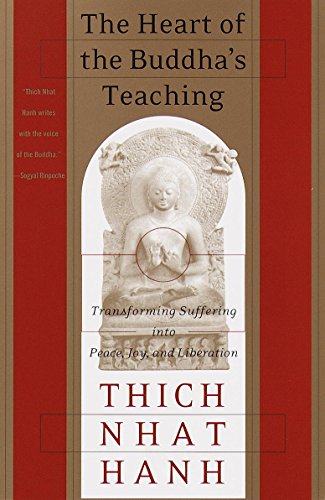
Drawing from decades as a Zen Buddhist monk and peace activist, Thich Nhat Hanh unpacks core Buddhist teachings in a way that invites you to see suffering and liberation through fresh eyes. You’ll explore foundational concepts like the Four Noble Truths and the Noble Eightfold Path, but also the communal and ethical dimensions of Buddhism that extend beyond personal enlightenment. The book’s thoughtful explanations of principles such as The Three Dharma Seals and The Twelve Links of Causation offer practical frameworks to understand and transform your experience of pain and joy. If you seek a thorough yet accessible guide to Eastern philosophy that connects spiritual insight with everyday life, this is a grounded choice.
Henry Shukman, a respected Roshi and Zen authority, endorses this book after decades immersed in Zen practice and study. He highlights how "China Root is an utterly engrossing account of the deepest treasures the Zen/Ch’an path can open up," emphasizing Hinton’s rare combination of scholar, practitioner, and poet. This endorsement comes from his experience navigating both traditional Japanese Zen and broader Eastern teachings, where this book reshaped his understanding by tracing Zen's Taoist origins and revealing its cosmic dimensions. His reflection underscores the book's power to reconnect contemporary practitioners with ancient, foundational insights.
“China Root is an utterly engrossing account of the deepest treasures the Zen/Ch’an path can open up, as it leads us into the manifest-yet-hidden wonders of who we really are. Hinton writes as very few can, not only as a scholar, practitioner, and translator but also as a poet—something the old artist-intellectuals of China would surely have appreciated. His deep understanding of the Taoist roots of Ch’an shine a light on the Zen practice of today, taking us back in a thrilling way beyond the Japanese rigor and aesthetics, beyond the mythical T’ang Dynasty flourishing of Ch’an’s great ancestors, back to its Taoist roots in the first millennium BCE—and even beyond them, into the mists of its paleolithic origins. It is here, back in its true roots—which also happen to be the deepest aspects of our life—that Hinton beautifully makes clear our participation in a generative cosmos, a constantly manifesting, burgeoning Presence, even while it never ceases to be a primordial Absence. Oddly perhaps, in spite of Hinton’s expert parsing out of missteps in the translation and transmission of this Dharma to the West, I can’t help feeling I’ve just read a staggeringly good account of the modern Zen training a contemporary Japanese-based lineage led me through. Be that as it may, this thoroughly gripping book pulls together various threads of David Hinton’s prior work into one powerful, concise masterwork. May it echo through modern zendos for decades to come.”
David Hinton's many translations of ancient Chinese poetry and philosophy have earned wide acclaim for creating compelling contemporary works that convey the actual texture and density of the originals. The author of countless books of essays and poetry, Hinton has been awarded a Guggenheim Fellowship, numerous fellowships from the N.E.A. and the N.E.H, the Landon Translation Award, the PEN American Translation Award, and a lifetime achievement award by The American Academy of Arts and Letters.
2020·176 pages·Eastern, Philosophy, Taoism, Zen Buddhism, Meditation
David Hinton, an acclaimed translator and poet awarded a Guggenheim Fellowship and multiple literary honors, explores the original nature of Zen as it emerged in ancient China. This book reveals how Ch'an, often understood as purely Buddhist, actually springs from Taoist roots, offering a perspective that contrasts with Indian Buddhism’s abstraction by emphasizing an earthy, ecological harmony between mind and cosmos. You’ll encounter detailed examinations of core concepts like meditation and awakening, along with a sharp critique of how much of this understanding was lost in Zen’s transmission to the West. If you seek to deepen your grasp of Eastern spirituality beyond surface-level Zen, this book provides a thoughtful, illuminating path.
Guggenheim Fellowship awarded to author
Recipient of PEN American Translation Award
Lifetime Achievement by American Academy of Arts and Letters
Best for exploring self-identity in Eastern thought
Kindle version available
LA Times, a prominent voice in cultural commentary, highlights Alan Watts as perhaps the foremost interpreter of Eastern disciplines for the contemporary West. Their praise centers on Watts's unique ability to write beautifully the un-writable, capturing spiritual truths that often evade expression. This recommendation underscores Watts’s role in translating complex Eastern ideas with clarity and elegance, making this book a valuable bridge for Western readers seeking deeper understanding of Eastern philosophy.
“Perhaps the foremost interpreter of Eastern disciplines for the contemporary West, Alan Watts had the rare gift of ‘writing beautifully the un-writable.’”
Alan Watts (1915–1973) was a British-born American philosopher, writer, and speaker, best known as an interpreter and populariser of Eastern philosophy for a Western audience. Born in Chislehurst, England, he moved to the United States in 1938 and began Zen training in New York. Pursuing a career, he attended Seabury-Western Theological Seminary, where he received a master's degree in theology. Watts became an Episcopal priest in 1945, then left the ministry in 1950 and moved to California, where he joined the faculty of the American Academy of Asian Studies in San Francisco. In 1953 he began his groundbreaking public radio series, first as The Great Books of Asia and later Way Beyond the West, which began airing in Los Angeles in 1959. The radio series, along with his bestselling book, The Way of Zen, launched him into a career as a talented philosophical interpreter and a prolific public speaker, and in the 1960's he was adopted by the Counterculture movement as a spiritual figurehead. He and his peers, including Aldous Huxley, Joseph Campbell, and Gregory Bateson, helped establish the Esalen Institute, which became the epicenter for the Human Potential Movement in the late sixties and seventies. Watts travelled widely between 1965 and his passing in 1973, and his works include 25 books, 250 lectures and interviews, and over 100 workshops and television appearances. His legacy continues with the Alan Watts Org directed by his son, Mark Watts.
Alan Watts, a British-born American philosopher known for bridging Eastern and Western thought, brings his extensive theological and Zen training to this expanded edition. You’ll explore how Watts weaves Taoism, Christianity, and Zen perspectives to challenge the idea of a fixed self, especially in chapters on harmonious living and the limits of language to express spiritual truths. This book is for anyone curious about Eastern philosophy’s approach to identity and meaning, offering insights into seeing life "just as it is." Watts's playful yet profound style invites you to rethink your assumptions about selfhood and spirituality without heavy jargon.
Best for integrating Eastern philosophy and psychology
Kindle version available
Alan Watts, a countercultural icon and author of more than twenty books, was a spiritual philosopher, scholar of Buddhism, Anglican minister, and chaplain at Northwestern University. His deep engagement with both Eastern traditions and Western thought informs this book, which reflects his unique qualifications to bridge these worlds. Watts wrote this work to illuminate how Eastern philosophy can enrich understanding within psychotherapy, offering a perspective shaped by his diverse experiences and intellectual curiosity.
Alan Watts, a countercultural icon and author of more than twenty books, was also a spiritual philosopher, scholar of Buddhism, Anglican minister, and chaplain at Northwestern University. He died in 1973.
Alan Watts, a spiritual philosopher and scholar of Buddhism, draws on his rich background as an Anglican minister and chaplain to explore the intersection between Western psychotherapy and Eastern philosophy. This book navigates the contrasts and overlaps between these traditions, offering insights into how Eastern thought can inform psychological healing and self-understanding. You'll find discussions on mindfulness, consciousness, and the nature of self that challenge conventional Western approaches. If you're interested in expanding your perspective on mental health beyond clinical methods, this book bridges cultural wisdom with psychological practice in a way that invites thoughtful reflection rather than quick fixes.
Sun Tzu, an ancient Chinese military general and strategist, profoundly influenced Asian culture with his seminal work, The Art of War. Alongside Lao-Tzu, the founder of philosophical Taoism, Confucius, the teacher and philosopher emphasizing morality and social order, and Mencius, a principal Confucian interpreter, this collection offers authoritative insights into Eastern philosophy. Their combined expertise provides you with foundational perspectives on strategy, ethics, and governance that continue to resonate today.
Sun Tzu (544 B.C.–496 B.C.) was an ancient Chinese military general, strategist, and philosopher from the Zhou Dynasty, who has had a significant impact on Chinese and Asian history and culture, both as an author of The Art of War as well as through legend. Lao-Tzu was a philosopher and poet of ancient China who lived in the fifth century BC. He is known as the reputed author of the Tao Te Ching and the founder of philosophical Taoism. Confucius (551-479 BC) was a Chinese teacher, editor, politician, and philosopher. His philosophy emphasized personal and governmental morality, correctness of social relationships, justice, and sincerity. Mencius (372-289 BC) was an itinerant Chinese philosopher and sage, and one of the principal interpreters of Confucianism.
Drawing from the enduring wisdom of ancient Chinese sages, this collection gathers foundational texts that have shaped Eastern thought for over two millennia. Through Sun Tzu's strategic insights in The Art of War, Lao-Tzu's Taoist reflections, Confucius's teachings on morality and social harmony, and Mencius's interpretations of Confucianism, you gain perspectives on leadership, ethics, and human nature. For example, the book explores Sun Tzu's principles of adaptability in conflict alongside Confucius's emphasis on sincerity in governance, offering you a nuanced understanding of strategy and virtue. This volume suits anyone intrigued by philosophy's practical applications in leadership, diplomacy, and personal conduct.
Noah Rasheta is a Buddhist teacher, lay minister, and author known for his Secular Buddhism podcast. His deep engagement with Buddhist philosophy and dedication to making these teachings accessible shines through in this book. Rasheta combines traditional Buddhist ideas with modern science and humor, creating a welcoming guide that helps you grasp and live Buddhist principles in today's world.
Noah Rasheta is a Buddhist teacher, lay minister, and author, as well as the host of the podcast Secular Buddhism. He teaches mindfulness and Buddhist philosophy online and in workshops all around the world. He works with others to make the world a better place as he studies, embodies, and teaches the fundamentals of Buddhist philosophy, integrating Buddhist teachings with modern science, humanism, and humor.
2018·148 pages·Eastern, Philosophy, Mindfulness, Zen, Meditation
Drawing from his extensive experience as a Buddhist teacher and podcast host, Noah Rasheta delivers a straightforward introduction to Buddhism that demystifies its core teachings. You’ll gain clear insights into concepts like mindfulness, Zen, and enlightenment, supported by accessible Q&A sections and practical examples woven throughout. The book breaks down complex ideas into digestible parts, such as explanations of the Buddha’s teachings and how Buddhism applies in daily life, making it approachable especially for newcomers. If you want a no-frills foundation in Buddhist philosophy that respects both tradition and modern perspectives, this book offers exactly that without overwhelming spiritual jargon.
Deborah Morrison is an internationally recognized author and master life coach from Hamilton, Ontario, Canada, with formal credentials in social sciences and counseling. Her diverse background equips her uniquely to weave together insights from physics, philosophy, and Eastern mysticism in this book. Morrison’s extensive writing and coaching experience inform this reflective work, inviting you to consider how finding your center can transform your understanding of life and existence.
Deborah Morrison is an internationally recognized author and master life coach from Hamilton, Ontario, Canada. She holds an Hons. B.A. in Social Sciences and an M.A. certification in Counseling Science. Deborah is an Honorary Life Member of the ALL Ladies League and has written numerous published articles on various topics.
2017·162 pages·Eastern, Philosophy, Eastern Mysticism, New Physics, Social Sciences
What started as Deborah A Morrison's blend of social sciences and counseling expertise evolved into a thoughtful exploration bridging physics, philosophy, and Eastern mysticism. This book invites you to see life as a dynamic journey where science and spirituality intersect, offering insights into how understanding your "center" enriches everyday experience. You’ll encounter perspectives ranging from Western thought to new physics and Eastern wisdom, helping you appreciate the ongoing process of creation and your holistic place within it. If you seek to deepen your awareness through a multidisciplinary lens, this book provides a reflective and contemplative companion rather than quick fixes or prescriptive answers.
M. Hiriyanna was a prominent philosopher and scholar known for his contributions to Indian philosophy. His works focus on the interpretation and analysis of Hindu philosophical traditions, making complex ideas accessible to a broader audience. Hiriyanna's expertise in the field has established him as a significant figure in the study of Indian thought.
M. Hiriyanna was a prominent philosopher and scholar known for his contributions to Indian philosophy. His works focus on the interpretation and analysis of Hindu philosophical traditions, making complex ideas accessible to a broader audience. Hiriyanna's expertise in the field has established him as a significant figure in the study of Indian thought.
Unlike many philosophy books that scatter focus, M. Hiriyanna offers a clear, connected overview of Indian philosophical traditions, tracing ideas from Vedic roots through later systematic schools. You’ll gain insights into key concepts like epistemology, ontology, and ethical teachings, supported by historical context and concise summaries, such as the introductory chapter on Vedic religion. This book suits anyone seeking a structured understanding of Indian thought without getting lost in excessive detail, especially if you want to grasp foundational ideas and terminology. Its glossary and index make navigating complex Sanskrit terms manageable, enhancing your engagement with Eastern philosophy.
Best for comprehensive Indian philosophical analysis
Kindle version available
Alan Watts, a respected philosopher and contributor to the New York Times, praised this book as a vital source for understanding Asian philosophy. His extensive engagement with Eastern traditions gives weight to his assessment that this work offers the most complete and intelligent account of India’s rich philosophical heritage. Watts found it invaluable for deepening his own grasp of these complex ideas, highlighting its clarity and thoroughness as key strengths that helped reshape his thinking on the subject.
“[A] major contribution to our understanding of Asia. It is both the most complete and most intelligent account of this extraordinarily rich and complex philosophical tradition yet written.”
Heinrich Zimmer (1890–1943) was an Indologist, linguist, and historian of South Asian art. Joseph Campbell (1904–1987) was the author of many books on comparative mythology, including The Hero with a Thousand Faces and The Masks of God.
2024·720 pages·Philosophy, Eastern, Eastern Thought, Indian Philosophy, Metaphysics
After immersing himself in decades of South Asian cultural studies, Heinrich Zimmer crafted this deep exploration of Indian philosophical thought. You gain insights into profound concepts such as the highest good, time, and eternity, carefully organized into three thematic sections. The book suits anyone curious about Eastern philosophy’s core ideas, offering a structured approach to complex traditions that often feel elusive. Zimmer’s background as an Indologist and historian of South Asian art shapes a nuanced perspective, making dense topics more accessible without diluting their depth. While its scope is broad, those seeking a detailed intellectual framework will find clear value here.
Thich Nhat Hanh is a Nobel Peace Prize nominee and internationally renowned Zen master. He has authored numerous bestselling books on mindfulness and meditation, such as "The Miracle of Mindfulness." Known as "the father of mindfulness," his teachings focus on living in the present moment and cultivating compassion. This book distills his profound insights into how to live peacefully and freely right now, offering guidance drawn from his decades of practice and spiritual leadership.
Thich Nhat Hanh is a Nobel Peace Prize nominee and internationally renowned Zen master. He is the author of numerous bestselling books on mindfulness and meditation, including 'The Miracle of Mindfulness'. His teachings emphasize the importance of living in the present moment and cultivating compassion. Hanh's work has inspired millions around the world, and he is often referred to as 'the father of mindfulness'. His insights into the art of living have made a significant impact on both spiritual and secular communities.
Thich Nhat Hanh's decades as a Zen master and peace activist culminate in this book, where he offers seven meditations that reshape your understanding of life, relationships, and interconnectedness. You’ll learn how to approach aging and mortality not with fear but curiosity and joy, grounded in mindful presence. The book’s chapters, rooted in his last teachings before hospitalization, guide you toward living fully in each moment rather than escaping reality. This approach suits anyone seeking a spiritual framework that blends Eastern philosophy with everyday challenges, especially if you want to cultivate peace amidst life’s complexities.
Best for authentic yoga and spiritual autobiography
Kindle version not available
Nle Choppa, a musician and cultural influencer known for weaving spiritual themes into his work, found profound inspiration in "Autobiography of a Yogi." Amid the pressures of fame, he embraced its teachings to center himself, urging others to "put yo phone down today... write down manifestations, affirmations, the law of attraction is powerful." This book helped him cultivate daily mindfulness and focus, reshaping how he approaches personal growth and creative expression.
“Put yo phone down today. Write down manifestations, affirmations, the law of attraction is powerful. Get a journal and keep it with you everyday. Speak on yo affirmations as if you already achieved the goal. Read a book it lowers stress. I’m reading "Autobiography Of A Yogi" now” (from X)
Paramhansa Yogananda (1893-1952) was the first yoga master of India to permanently live and teach in the West. He arrived in America in 1920 and traveled extensively, impacting audiences with his teachings. Yogananda's Autobiography of a Yogi, first published in 1946, helped launch a spiritual revolution worldwide.
What started as Paramhansa Yogananda's journey to share ancient yogic wisdom with the West became a foundational text bridging Eastern spirituality and Western seekers. In this 1946 original edition, you explore his personal encounters with saints, mystical experiences, and teachings on Self-realization that remain untouched by later edits. You'll gain insight into kriya yoga practices, spiritual philosophy, and the Indian spiritual landscape through vivid chapters like his meeting with Mahavatar Babaji. This book suits anyone drawn to profound spiritual exploration beyond surface-level philosophy, especially those curious about authentic yoga traditions and their transformative potential.
One of the Top 100 Spiritual Books of the Twentieth Century
Alan Wilson Watts, a British-born American philosopher with a master’s degree in theology and extensive Zen training, crafted this influential work after moving to California and immersing himself in Eastern studies. Watts’s unique position as an Episcopal priest turned Zen interpreter allowed him to translate complex concepts for Western audiences, making the book a pivotal cultural bridge. His background in theology and philosophy brings depth and clarity, offering readers a thoughtful introduction to Zen’s paradoxes and practices within the broader Eastern philosophical landscape.
Alan Wilson Watts (6 January 1915 – 16 November 1973) was a British-born American philosopher, writer, and speaker, best known as an interpreter and populariser of Eastern philosophy for a Western audience. Born in Chislehurst, England, he moved to the United States in 1938 and began Zen training in New York. Pursuing a career, he attended Seabury-Western Theological Seminary, where he received a master's degree in theology. Watts became an Episcopal priest in 1945, then left the ministry in 1950 and moved to California, where he joined the faculty of the American Academy of Asian Studies In San Francisco. In 1953 he began his groundbreaking public radio series, first as The Great Books of Asia and later Way Beyond the West, which began airing in Los Angeles in 1959. The radio series, along with his bestselling book, The Way of Zen, launched him into a career as a talented philosophical interpreter and a prolific public speaker, and in the 1960's he was adopted by the Counterculture movement as a spiritual figurehead. He and his peers, including Aldous Huxley, Joseph Campbell, and Gregory Bateson, helped establish the Esalen Institute, which become the epicenter for the Human Potential Movement in the late sixties and seventies. Watts travelled widely between 1965 and his passing in 1973, and his works include 25 books, 250 lectures and interviews, and over 100 workshops and television appearances. His legacy continues with the Alan Watts Org directed by his son, Mark Watts.
236 pages·Eastern, Philosophy, Zen Buddhism, Meditation, Mindfulness
Alan Watts, a British-born American philosopher and Episcopal priest turned interpreter of Eastern philosophy, wrote this book to bridge Western audiences with Zen Buddhism. You’ll explore how Zen challenges conventional thought through chapters that decode its history, practice, and paradoxes, such as the famous "finger pointing at the moon" metaphor. Watts’s background in theology and Eastern studies gives you a nuanced but accessible lens on Zen’s principles, making it ideal if you want to deepen your understanding beyond surface-level spirituality. While it isn’t a manual for meditation techniques, it offers insightful perspectives that benefit seekers curious about philosophy, mindfulness, and cultural exchange.
The best Eastern books and more, in your inbox each week. No account needed.
Conclusion
This collection of 20 books reveals three clear themes: the quest for harmonious living through Taoist and Zen teachings, the deep exploration of consciousness and self in Indian and Buddhist texts, and the bridge between spirituality and practical ethics in both Eastern and Eastern-influenced Western thought.
If you’re facing a spiritual crossroads or seeking a structured introduction, The Upanishads and The Dhammapada offer foundational insights. For those wanting practical application, The World Could Be Otherwise and No-Nonsense Buddhism for Beginners provide accessible guidance. Rapid integration can come from pairing Tao Te Ching with Psychotherapy East & West, blending philosophy with mental health.
Alternatively, you can create a personalized Eastern book to bridge the gap between general principles and your specific situation. These books can help you accelerate your learning journey and deepen your connection to Eastern wisdom.
Frequently Asked Questions
I'm overwhelmed by choice – which book should I start with?
Start with The Upanishads for a solid foundation in Indian spirituality or Tao Te Ching for Taoism's core principles. Both offer accessible entry points praised by Huston Smith and Jack Dorsey.
Are these books too advanced for someone new to Eastern?
No, several titles like No-Nonsense Buddhism for Beginners and Heart of the Buddha's Teaching are designed specifically for newcomers, providing clear, practical explanations without jargon.
What's the best order to read these books?
Begin with foundational texts like The Upanishads and The Dhammapada, then explore applied philosophy through The Art of Living and The World Could Be Otherwise. Finish with specialized works like The Buddhist Literature of Ancient Gandhara for deeper study.
Do I really need to read all of these, or can I just pick one?
You don’t need to read them all. Choose based on your interest—philosophy, spirituality, or practice. Each book stands on its own but together they form a comprehensive view.
Are there any books here that contradict each other?
Some perspectives differ, such as Taoism’s emphasis on non-action versus Buddhism’s active mindfulness. These differences highlight Eastern thought’s diversity and invite you to explore what resonates personally.
How can I get Eastern teachings tailored to my specific needs?
These expert books offer broad insight, but personalized versions can better match your background and goals. Create a personalized Eastern book to integrate expert wisdom with your unique path.
📚 Love this book list?
Help fellow book lovers discover great books, share this curated list with others!