10 Entomology Books That Separate Experts from Amateurs
Discover top Entomology books recommended by Jane Goodall, Michael Berry, and Marc Bekoff to accelerate your insect knowledge and appreciation.
Updated on June 26, 2025·We may earn commissions for purchases made via this page
1 of 10 books have Audiobook versions
We're launchingLaunching on Product Hunt today 🎉We just launchedJust launched on Product Hunt 🎉
Modelpeers, from the BookAuthority teamFrom the BookAuthority team: Modelpeers, a free way to follow AI models and agents like you follow people. We'd love your support.
What if I told you that the tiny creatures buzzing around your garden hold secrets that shape entire ecosystems and human history? Entomology, the study of insects, reveals a world more complex and vital than many imagine. With global insect populations facing unprecedented threats, understanding their roles has never been more urgent.
Leading voices like Jane Goodall, renowned for her conservation work, and Michael Berry, a popular podcast host, have spotlighted key books reshaping how we view insects. Marc Bekoff, a University of Colorado professor, discovered through these works how much insect behavior parallels broader ecological dynamics, enriching his appreciation for biodiversity.
While these expert-curated books provide proven frameworks, readers seeking content tailored to their specific interests, such as insect behavior, conservation, or garden rearing, might consider creating a personalized Entomology book that builds on these insights.
Jane Goodall, the renowned primatologist and conservationist, highlights how "Super Fly" transformed her view on a commonly dismissed insect. She describes the book as utterly fascinating, praising Jonathan Balcombe's clear prose and genuine affection for flies, which play vital roles in ecosystems worldwide. This deep appreciation resonated with Goodall, who found the book both informative and delightfully humorous. Similarly, Lulu Miller, author and Radiolab co-host, was captivated by Balcombe's poetic exploration of flies, admiring their overlooked majesty and ecological importance.
“Flies! Those irritating insects that settle on your food when you eat outside in summer, cluster round the eyes of horses, and carry diseases on their little tickling feet. How can someone write a whole book on flies! The best thing I can say is “Read Super Fly!” It is utterly fascinating, written with clear prose, a delightful sense of humour, and by a gifted naturalist and storyteller. And Jonathan Balcombe not only writes with authority about the incredible diversity of fly species, but with a real love for these fascinating winged beings that play such an important role in the tapestry of life.”
Jonathan Balcombe is a biologist with a PhD in ethology, the study of animal behavior. His books include Pleasurable Kingdom, Second Nature, The Exultant Ark, and What a Fish Knows—a New York Times best-seller now available in fifteen languages. His latest book for grown-ups, Super Fly, was published in May 2021 by Penguin Books. Jonathan has published more than 60 scholarly papers and book chapters, as well as essays, opinions, and letters in popular magazines and newspapers. He does professional editing for aspiring and established authors, and he taught a course in animal sentience for the Viridis Graduate Institute and Humane Society University. He lives in Belleville, Ontario where in his spare time he enjoys biking, baking, birding, Bach, and trying to understand the neighborhood squirrels.
What if everything you knew about flies was wrong? Jonathan Balcombe, a biologist with a PhD in ethology, challenges common perceptions by revealing the surprising complexity and ecological importance of flies. You’ll learn about their diverse roles as pollinators, waste disposers, and even forensic tools, with chapters highlighting unique species like the Petroleum Fly and Chocolate Midge. This book suits anyone curious about the natural world, from nature lovers to scientists, offering deep insights into insect behavior and evolution without glossing over their quirks and controversies.
Winner of the National Outdoor Book Award for Natural History
The Times Literary Supplement, a renowned literary publication, highlights this book as an "intense cri de coeur for saving insects," emphasizing the urgent question of whether insects can survive human impact on Earth. Their endorsement reflects deep expertise in literature and environmental discourse, underscoring the book’s critical message. Similarly, The Independent, a major UK newspaper, praises Goulson's engaging and humorous writing style, which makes complex scientific research accessible and enjoyable. These perspectives reveal how Silent Earth reshaped expert views on insect conservation and the broader environmental crisis.
Dave Goulson is Professor of Biology at University of Sussex. He has published more than 300 scientific articles on the ecology and conservation of bumblebees and other insects. His books include the Sunday Times bestsellers, The Garden Jungle and A Sting in the Tale, which was also shortlisted for the Samuel Johnson prize and has been translated into fifteen languages. He is a Fellow of the Royal Entomological Society, a trustee of Pesticide Action Network, and an Ambassador for the UK Wildlife Trusts.
Unlike most entomology books that focus narrowly on insect taxonomy, Dave Goulson explores the alarming global decline of insect populations with urgency grounded in three decades of research. You gain insight into how pesticides and climate change intertwine to threaten ecosystems and food security, illustrated by clear data and compelling cases like honeybee colony collapse. This book suits anyone concerned about biodiversity loss, environmental science students, and conservation advocates seeking a well-researched wake-up call. Goulson’s chapters on pesticide impacts and biodiversity offer concrete knowledge on the stakes and possible mitigation, making it a sobering yet enlightening read.
This AI-created book on entomology is designed specifically for you, based on your background and interests. By sharing your focus areas and goals, you get a tailored guide that dives deep into the aspects of insect science that matter most to you. Instead of wading through general texts, this custom book offers a clear, personalized path to mastering entomology’s complexities with direct relevance to your experience. It’s like having an expert mentor who speaks precisely to your learning needs.
TailoredRead AI creates personalized nonfiction books that adapt to your unique background, goals, and interests. Instead of reading generic content, you get a custom book written specifically for your profession, experience level, and learning objectives. Whether you're a beginner looking for fundamentals or an expert seeking advanced insights, TailoredRead crafts a book that speaks directly to you. Learn more.
This tailored entomology book explores the vast world of insects through a lens crafted to your unique interests and background. It covers fundamental insect biology, behavior, ecology, and conservation, while also delving into specialized areas like pollination, taxonomy, and insect-plant interactions. The personalized content focuses on your specific goals, whether that's understanding insect diversity, rearing butterflies, or examining insect roles in ecosystems. By weaving together expert knowledge with your preferences, this book reveals the complexity and wonder of insects in a way that matches your curiosity and learning pace. It offers a focused pathway through entomology’s rich topics, making complex subjects accessible and engaging.
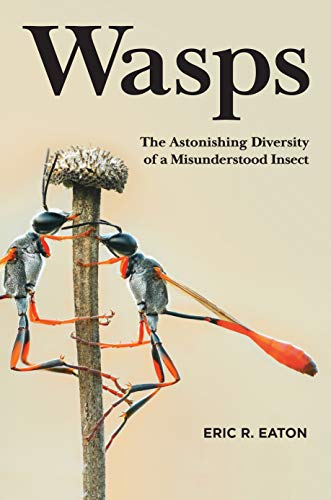
Marc Bekoff, a University of Colorado scholar and co-author of A Dog's World, praises this title as a "highly informative and beautifully illustrated book." His deep background in animal behavior and ecology lends weight to his recommendation. Bekoff highlights how the book opened his eyes to the vast diversity of wasps beyond the common yellowjackets and hornets, reshaping his understanding of their ecological significance and intricate behaviors.
Eric R. Eaton is a writer, editor, and consultant who has worked as an entomologist for several leading institutions, including the Smithsonian and the Cincinnati Zoo and Botanical Garden. He is the lead author of the Kaufman Field Guide to Insects of North America and the coauthor of Insects Did It First. He runs the blogs Bug Eric and Sense of Misplaced. Twitter @BugEric
Eric R. Eaton brings decades of entomological expertise from institutions like the Smithsonian and Cincinnati Zoo to this richly illustrated exploration of wasps. You’ll discover how these creatures, often misunderstood, play vital roles in ecosystems—from natural pest control to pollination and even inspiring engineering designs. Through over 150 vivid photos and detailed infographics, the book walks you through wasp diversity, evolution, and behavior, challenging common fears about their sting. If you’re curious about insects’ ecological importance or fascinated by nature’s architects, this book offers an eye-opening perspective that balances scientific depth with accessibility.
Michael Berry, a prominent podcast host known for engaging storytelling, praises Anne Sverdrup-Thygeson as a "lively, witty, and discerning guide" who reveals the fascinating power of some of Earth's tiniest creatures. His appreciation stems from how the book reshapes understanding of insects beyond common perceptions, highlighting their ecological and scientific significance. Additionally, Sam Kean of The New York Times Book Review finds the book "charming," noting its success in making readers appreciate insects in all their complexity and vital roles.
“Sverdrup-Thygeson is a lively, witty, and discerning guide through the scientific lore surrounding some of the tiniest—though still very powerful—organisms on Earth.”
Anne Sverdrup-Thygeson is the bestselling author of Extraordinary Insects, a non-fiction book about why we should all love insects, translated into more than 20 languages. She is also a professor in conservation biology at the Norwegian University of Life Sciences (NMBU) in Ås, Norway, where she lectures on nature management and forest biodiversity.
Drawing from her role as a conservation biology professor at the Norwegian University of Life Sciences, Anne Sverdrup-Thygeson explores the surprising and vital roles insects play in ecosystems and human life. You’ll discover how tiny creatures with ears on their knees or eyes on their penises contribute to everything from pollinating cocoa flowers to medical breakthroughs like antibiotics and wound care. The book offers engaging insights into insect diversity and ecological importance, such as how blowfly larvae clean wounds or flour beetle larvae digest plastic. If you’re curious about the hidden forces shaping our natural world, this book unpacks those connections in an accessible way, though it’s less about taxonomy and more about ecological impact and appreciation.
Publisher's Weekly, a respected voice in book reviews, highlights this book for its sharp and occasionally humorous writing that vividly illustrates the vital roles insects play in ecosystems worldwide. Their recommendation emphasizes how Eaton’s work captures the diversity and ecological significance of insects—from pollination to pest control—offering a fresh perspective that deepened their understanding of these creatures. This book’s blend of science and lore makes it an engaging companion for anyone eager to see the insect world through a new lens.
“An eclectic roundup of bug miscellany. Eaton’s writing is crisp, informative, and at times humorous, and he does a great job of demonstrating insects’ important role on the planet, as they pollinate plants, control pests, and serve as a food source for fish and wildlife.”
Eric R. Eaton is a naturalist and writer whose books include Wasps: The Astonishing Diversity of a Misunderstood Insect (Princeton) and, with Gregory S. Paulson, Insects Did It First. He runs the blogs Bug Eric and Sense of Misplaced. Amy Jean Porter is an artist, illustrator, and naturalist. She is the illustrator of Florapedia and Fungipedia (both Princeton).
2022·200 pages·Entomology, Insect, Insect Biology, Ecology, Entomological History
Eric R. Eaton’s extensive experience as a naturalist and writer shines through in this engaging compendium, co-created with illustrator Amy Jean Porter. You’ll explore a rich A–Z of insect lore that goes beyond simple facts, touching on cultural stories, entomological history, and ecological roles. The book’s chapter on pioneering entomologists offers a window into the minds shaping this field, while vivid illustrations bring to life curious creatures like African Toktokkies and beer bottle beetles. If you’re curious about the complex relationships between humans and insects or want a portable reference blending science with folklore, this book suits you well.
This AI-created book on practical entomology is tailored to your specific goals and background, making it easier to focus on the insect topics and skills that matter most to you. By sharing your current knowledge and what you want to achieve, this book is created to guide you through a personalized learning journey. It quickly builds your ability to identify, observe, and understand insects, turning complex expert content into a clear, manageable path just for you.
TailoredRead AI creates personalized nonfiction books that adapt to your unique background, goals, and interests. Instead of reading generic content, you get a custom book written specifically for your profession, experience level, and learning objectives. Whether you're a beginner looking for fundamentals or an expert seeking advanced insights, TailoredRead crafts a book that speaks directly to you. Learn more.
This tailored entomology book offers a focused, step-by-step pathway designed to rapidly build your practical insect knowledge and skills. It explores key insect biology, behavior, and identification techniques, all matched to your background and goals to make learning efficient and engaging. Through a personalized approach, you receive content that dives into insect ecology, conservation, and application methods relevant to your interests, blending foundational concepts with hands-on insights. This book reveals the fascinating complexity of insects while guiding you to apply what you learn in real-world contexts, ensuring your study is both deep and directly useful.
Brenda Dziedzic is a gardener whose life transformed when she developed a passion for butterflies, turning her expertise toward raising Lepidopteran species. Her extensive experience, recognized by awards such as Master Gardener of the Year and a Congressional Certificate of Recognition, informs this book. Dziedzic uses her knowledge and media presence to guide you through nurturing butterflies in your own garden, sharing practical advice and vibrant images that bring the subject to life.
Brenda Dziedzic is a gardener whose life changed when she became interested in butterflies. She is now an expert on the subject of raising Lepidopteran species and has won numerous awards for her work. Her memberships include the Southeast Michigan Butterfly Association, Monarch Watch and the North American Butterfly Association. Among her many awards and honors are Master Gardener of the Year and a Certificate of Special Congressional Recognition from the U.S. House of Representatives. Her Westland, Michigan, garden has also been designated a Butterfly Habitat. She lectures widely and is a media personality on TV and radio.
Brenda Dziedzic’s journey from gardener to butterfly advocate shapes this detailed guide on cultivating butterfly-friendly gardens. You learn how to nurture butterflies and moths through every life stage, with specific guidance on host and nectar plants suited for North American species. The book offers more than 500 vivid photographs and range maps for over 35 species, making it a practical manual for anyone keen to support pollinator populations. Whether you have a small yard or larger property, Dziedzic’s insights help you create habitats that sustain these insects year-round. This book is ideal if you want hands-on knowledge about Lepidoptera ecology and garden design tailored to their needs.
Library Journal, an authoritative natural history publication, praises this book for captivating both novice and expert alike. Their endorsement reflects deep respect for Ronald Orenstein’s zoological expertise and the book’s stunning imagery. "This gorgeous book reveals a wonder on nearly every page and will enthrall natural history enthusiasts both amateur and expert alike," they note, capturing the balance of beauty and science. This recommendation highlights how the book deepens appreciation for Lepidoptera by blending vivid photography with clear explanations of butterfly and moth biology.
Ronald Orenstein is a zoologist, lawyer and wildlife conservationist who has written extensively on natural history issues. His most recent books are Ivory, Horn and Blood and Hummingbirds. He lives in Toronto.
Ronald Orenstein, a zoologist and wildlife conservationist, brings his deep expertise to this richly illustrated exploration of butterflies and moths. You’ll gain detailed insights into their biology, such as how to distinguish butterflies from moths, the evolutionary purpose behind their diverse wing patterns, and their feeding and survival strategies in the wild. The book’s seven sections cover everything from courtship behaviors and migration patterns to camouflage and mimicry, making it ideal if you want to understand these insects beyond their beauty. It’s a visual and educational journey that suits both enthusiasts and those seeking a scientific yet accessible introduction to Lepidoptera.
Stephen A. Marshall, Professor Emeritus at University of Guelph and a leading expert in insect systematics, brings his extensive research background and passion for biodiversity to this volume. His discoveries of hundreds of new insect taxa and experience curating Canada’s oldest insect collection enrich the book’s authoritative coverage. Marshall’s hands-on fieldwork and deep knowledge make this an essential reference for anyone serious about Hymenoptera, connecting readers directly to the fascinating world of wasps, bees, and ants.
Stephen A. Marshall is a Professor Emeritus at University of Guelph, Ontario. He has discovered hundreds of taxa new to science and published over 200 papers on insect systematics and biodiversity. When he is not working at the University of Guelph Insect Collection (Canada's oldest insect collection), he can usually be found in his bug-rich backyard on the banks of the Grand River near his hometown of Fergus, Ontario.
Stephen A. Marshall’s decades as a Professor Emeritus and prolific entomologist shine through in this detailed exploration of wasps, bees, and ants. You gain deep insight into their identification, behaviors, and evolutionary significance, supported by thousands of vivid field photographs and clear photographic keys. Chapters guide you through the natural history of Hymenoptera, including fascinating topics like kleptoparasitism and their roles in culture and ecosystems. Whether you’re a naturalist, student, or insect enthusiast, the book offers a rich blend of scientific rigor and accessible explanations that make complex diversity manageable and engaging.
Penny Gullan and Peter Cranston, adjunct professors at The Australian National University with emeritus ties to the University of California, Davis, leverage their extensive research on insect biodiversity and systematics to craft this authoritative text. Their combined expertise in evolutionary biology and genetics informs a book that bridges classical entomology with current scientific advances, offering readers a robust foundation in insect science.
Penny Gullan and Peter Cranston are adjunct professors in Evolution, Ecology and Genetics, in the Research School of Biology, The Australian National University, Canberra, Australia, where they conduct research on the biodiversity and systematics of Coccoidea and Chironomidae, respectively. Both maintain emeritus connections with the Department of Entomology and Nematology, University of California, Davis, USA.
Penny Gullan and Peter Cranston bring decades of academic expertise to this fifth edition, which serves as a detailed introduction to insect biodiversity and entomology's role in evolutionary and ecological studies. You'll explore insect anatomy, behavior, and ecological roles through chapters organized by habitat and biological function, including a fresh focus on climate change impacts and genetic techniques like DNA barcoding. The text balances scientific rigor with accessible explanations, complemented by clear illustrations and color photos, making it a solid choice for biology students and professionals needing a thorough grounding in insect science. If you're looking for a resource that integrates classical entomology with modern molecular insights, this book delivers without unnecessary complexity.
Elizabeth Kolbert, Pulitzer Prize–winning author, highlights the pervasive presence of insects throughout human history and finds Edward Melillo's The Butterfly Effect both lively and engrossing. She notes that the book reveals how bugs influence history as profoundly as generals and emperors do. This perspective reshaped her understanding of entomology's role beyond mere biology. Similarly, Charles Mann, correspondent for The Atlantic and Science, was surprised to discover the deep economic and cultural impacts insects have had, from fueling empires to inspiring art, underscoring the book's rich blend of science and history.
“Insects turn up everywhere, including throughout human history. Lively and engrossing, Edward Melillo's The Butterfly Effect shows that bugs matter every bit as much as generals and emperors.”
Edward D. Melillo is professor of history and environmental studies at Amherst College. He is the author of Strangers on Familiar Soil: Rediscovering the Chile-California Connection (2015), which won the Western History Association's 2016 Caughey Prize for the most distinguished book on the American West. He was awarded the Mellon New Directions Fellowship in 2017. He received his PhD and his MPhil from Yale University and his BA from Swarthmore College. He grew up in Falmouth, Massachusetts, and now lives in South Hadley, Massachusetts.
Edward D. Melillo's extensive academic background in history and environmental studies shines through in this engaging exploration of the integral role insects play in shaping human civilization. You’ll gain detailed insights into how insects contribute to industries ranging from agriculture to fashion, and even medical science, illustrated with compelling examples like the use of silk and cochineal dye. The book weaves historical narratives and scientific research to reveal how dependent modern life is on these creatures, challenging you to reconsider the often overlooked influence of insects. Whether you're a history buff, scientist, or curious thinker, this book offers a fresh perspective on the entomological forces that underpin everyday life.
The best Entomology books and more, in your inbox each week. No account needed.
Conclusion
These ten books underscore three clear themes: the astounding diversity and behavior of insects, their indispensable ecological and cultural roles, and the urgent need to conserve them amid environmental change. If you're new to entomology, start with engaging titles like "Super Fly" or "Buzz, Sting, Bite" to build foundational understanding with lively storytelling.
For those ready to deepen expertise, "Hymenoptera" and "The Insects" offer detailed scientific exploration, while "Silent Earth" and "The Butterfly Effect" connect biology to broader environmental and historical contexts. Practical enthusiasts will find "Raising Butterflies in the Garden" invaluable for hands-on involvement.
Alternatively, you can create a personalized Entomology book to bridge the gap between general principles and your specific situation. These books can help you accelerate your learning journey and deepen your connection with the insect world.
Frequently Asked Questions
I'm overwhelmed by choice – which book should I start with?
Start with "Super Fly" for a captivating look at insect behavior or "Buzz, Sting, Bite" for ecological roles. Both authors present science with engaging stories that are perfect for beginners eager to learn about insects' importance.
Are these books too advanced for someone new to Entomology?
Not at all. Many, like "Raising Butterflies in the Garden" and "Insectpedia," are approachable and informative for beginners, while others offer more depth for advanced readers. Choose based on your interests and experience.
What's the best order to read these books?
Begin with engaging, broad-interest books like "Super Fly" or "Buzz, Sting, Bite," then explore specialized titles such as "Hymenoptera" or "The Insects". Finally, delve into conservation-focused works like "Silent Earth."
Do I really need to read all of these, or can I just pick one?
You can certainly pick one that suits your current curiosity. Each book offers unique perspectives, but reading multiple provides a richer, multifaceted understanding of entomology and insect roles.
Which books focus more on theory vs. practical application?
"Hymenoptera" and "The Insects" lean toward scientific theory and taxonomy, while "Raising Butterflies in the Garden" offers practical guidance. "Silent Earth" combines science with conservation action, bridging theory and practice.
How can I get entomology insights tailored to my interests and experience?
While these expert books are invaluable, creating a personalized Entomology book can tailor insights specifically to your goals and background, complementing general knowledge with practical, focused content. Check out personalized Entomology books for tailored learning.
📚 Love this book list?
Help fellow book lovers discover great books, share this curated list with others!