20 Espionage Biography Books That Separate Experts from Amateurs
Recommended by Isabel Hardman, Casey Neistat, and Patrick Radden Keefe for authoritative insights into espionage biographies
Updated on June 24, 2025·We may earn commissions for purchases made via this page
18 of 19 books have Kindle versions
We're launchingLaunching on Product Hunt today 🎉We just launchedJust launched on Product Hunt 🎉
Modelpeers, from the BookAuthority teamFrom the BookAuthority team: Modelpeers, a free way to follow AI models and agents like you follow people. We'd love your support.
What if the true world of espionage was far more complicated and human than the spy thrillers you know? Espionage biographies pull back the curtain on the real lives behind covert operations, revealing the sacrifices, betrayals, and moral twists that define intelligence work. Today, understanding these stories is crucial as global tensions and cyber threats reshape how nations operate in shadows.
Leading voices like Isabel Hardman, assistant editor at The Spectator, and Casey Neistat, renowned filmmaker, have praised titles such as The Spy and the Traitor for illuminating the Cold War’s double agents with gripping detail. Meanwhile, investigative author Patrick Radden Keefe highlights The Quiet Americans for its intimate portrayal of CIA operatives caught in the political crossfire, underscoring the blend of personal courage and institutional strain in espionage.
While these expert-curated books provide proven frameworks, readers seeking content tailored to their specific interests, background, or learning goals might consider creating a personalized Espionage Biography book that builds on these insights, ensuring your exploration of spycraft fits your unique curiosity and expertise.
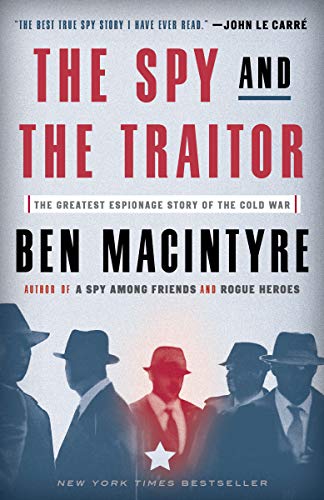
Isabel Hardman, Assistant Editor at The Spectator and Radio 4 presenter, knows her way around political intrigue and espionage narratives, which makes her praise for this book particularly notable. She remarked, "Oh it’s a brilliant book isn’t it. Another one I was sad to finish." Hardman’s appreciation comes from her deep engagement with political stories, and this book’s detailed portrayal of Oleg Gordievsky’s double life during the Cold War clearly resonated. Alongside her, filmmaker Casey Neistat also shared his enthusiasm, calling it an "absolutely fantastic book" and recommending it to anyone interested in spycraft. Their endorsements highlight the book’s ability to bring Cold War espionage vividly to life, blending thrilling storytelling with historical insight.
Ben Macintyre is a writer-at-large for The Times of London and the bestselling author of A Spy Among Friends, Double Cross, Operation Mincemeat, Agent Zigzag, and Rogue Heroes, among other books. Macintyre has also written and presented BBC documentaries of his work.
Drawing from years of meticulous research and a deep understanding of Cold War espionage, Ben Macintyre chronicles the extraordinary life of Oleg Gordievsky, a high-ranking Soviet spy who became a double agent for Britain. You’ll gain insight into the complex interplay of loyalty, ideology, and danger that defined Gordievsky’s secret life, alongside gripping accounts of intelligence tactics and geopolitical tension. The book delves into Gordievsky’s personal struggles and the high stakes of espionage during the Cold War’s most perilous moments, especially in chapters detailing his escape from Moscow. If you’re intrigued by spycraft’s human dimension and the real-world impact of intelligence work, this book offers a richly detailed narrative worth your time.
New York Times Bestseller
Named Best Book of the Year by The Economist
Shortlisted for Bailie Giffords Prize in Nonfiction
Patrick Radden Keefe, a New York Times bestselling author renowned for his investigative storytelling, highlights how this book vividly unveils the hidden struggles of America's early Cold War spies. He points out that "Scott Anderson unearths the devastating secret history of how the United States lost the plot during the Cold War," emphasizing the intimate portrayal of flawed yet talented men caught in the moral complexities of imperial power. This narrative reshaped Keefe's understanding of espionage's unintended consequences, a perspective that continues to resonate today. Alongside him, Evan Thomas praises it as a highly entertaining history, reinforcing its appeal to those fascinated by Cold War intrigue.
“In this sweeping, vivid, beautifully observed book, Scott Anderson unearths the devastating secret history of how the United States lost the plot during the Cold War. By focusing on the twisty, colorful lives of four legendary spies, Anderson distills the larger geopolitical saga into an intimate story of flawed but talented men, of the 'disease of empires,' and of the inescapable moral hazard of American idealism and power. It's a hell of a book, with themes about the unintended consequences of espionage and interventionism that still resonate, powerfully, today.”
Scott Anderson is the author of two novels and four works of nonfiction, including Lawrence in Arabia, an international bestseller which was a finalist for the National Book Critics Circle Award and a New York Times Notable Book. A veteran war correspondent, he is a contributing writer for The New York Times Magazine.
What started as Scott Anderson's deep interest in Cold War dynamics evolved into a detailed chronicle of four CIA agents shaping early American espionage efforts. You gain insights into the complex personalities behind covert operations, such as Michael Burke's parachute commando missions and Edward Lansdale's psychological warfare tactics. The book offers a nuanced look at how political missteps and rigid ideology undermined these agents' ambitions, revealing the moral ambiguities of U.S. foreign policy. If you want to understand the intersection of personal courage and institutional failure during this critical period, this book delivers a richly textured narrative.
This AI-created book on espionage biography is tailored to your background and specific interests in the world of spies and covert operations. You share which aspects fascinate you most—whether historical figures, spycraft techniques, or agency dynamics—and the book focuses on those areas to match your expertise and goals. By narrowing in on what matters most to you, this personalized approach cuts through vast content to provide a targeted and enriching learning journey.
TailoredRead AI creates personalized nonfiction books that adapt to your unique background, goals, and interests. Instead of reading generic content, you get a custom book written specifically for your profession, experience level, and learning objectives. Whether you're a beginner looking for fundamentals or an expert seeking advanced insights, TailoredRead crafts a book that speaks directly to you. Learn more.
This tailored book explores the intricate world of espionage biographies, focusing on your unique interests and background to deliver a deeply engaging learning experience. It examines the lives and operations of spies from various eras, blending historical accounts with personal stories to reveal the complex dynamics of intelligence work. Through a personalized lens, it covers key themes such as covert operations, spycraft techniques, and the psychological challenges faced by operatives, ensuring the content resonates with your specific goals and knowledge level.
By tailoring the content, this book offers a focused pathway through the multifaceted realm of espionage, enabling you to grasp nuanced insights without wading through unrelated material. It matches expert knowledge with your personal learning needs, making the study of espionage biographies both accessible and compelling.
John Banville, a respected journalist at The Wall Street Journal, highlights how Ben Macintyre "writes with the diligence and insight of a journalist, and the panache of a born storyteller." Banville appreciates the depth and narrative skill Macintyre brings to espionage biography, which helped him see Cold War spy stories with renewed clarity. Following Banville, Alan Furst, author of Mission to Paris, calls Macintyre "a scrupulous and insightful writer—a master historian," underscoring the book's historical accuracy and compelling storytelling. Together, their endorsements emphasize the book's blend of rigorous research and engaging narrative.
Ben Macintyre is a writer-at-large for The Times (U.K.) and the bestselling author of The Spy and the Traitor, A Spy Among Friends, Double Cross, Operation Mincemeat, Agent Zigzag, and Rogue Heroes, among other books. Macintyre has also written and presented BBC documentaries of his work.
Ben Macintyre’s decades of experience as a writer-at-large for The Times (U.K.) paved the way for this meticulous exploration of Ursula Burton’s double life as Soviet spy Agent Sonya. You’ll gain insight into Cold War espionage tactics, the intricate web of ideological conflict, and the personal risks behind covert operations, supported by access to Sonya’s diaries and secret correspondence. Macintyre delves into how Sonya navigated multiple intelligence agencies and political enemies, offering you a fresh perspective on espionage beyond glamorized myths. This book suits anyone drawn to spy history, political intrigue, and the human stories beneath global conflict.
New York Times Bestseller
Named One of the Best Books of the Year by Foreign Affairs
Nicholas Reynolds, author of "Writer, Sailor, Soldier, Spy," offers a unique perspective grounded in his extensive exploration of espionage history. He points to this book as an "amazing story of the secret pigeon service and how it helped to win the war," highlighting its meticulous research and human elements amid the spy drama. His admiration stems from the detailed portrayal of eccentric agents and the courage of those involved, which reshaped his understanding of intelligence work during conflict. Also, The Daily Telegraph (London) praises the book's lively narrative and humor in revealing lesser-known wartime espionage episodes.
“[An] amazing story of the secret pigeon service and how it helped to win the war. Well-researched and well-told, as much about humans as pigeons, it is replete with eccentric Englishmen, ruthless Nazis, and brave resisters in occupied Europe who risk their lives for the Allied cause.”
Gordon Corera has been the BBC’s security correspondent since 2004. He has reported from London, Moscow, and Washington, and is the only journalist to have interviewed serving heads of both the CIA and MI6. He has covered firsthand many of the central episodes in the spy wars between the three countries and has unparalleled insight into the working of all sides. He is the author of several books, including The Art of Betrayal: The Secret History of MI6, and has contributed to a number of important BBC documentary series about MI6, the CIA, and Russia.
2020·448 pages·Espionage Biography, Intelligence, Spycraft, Russian Espionage, Cold War
Gordon Corera, BBC's security correspondent with extensive experience interviewing intelligence leaders, presents a detailed account of Russia's espionage tactics against the West. You’ll explore the evolution of Russian spy craft from Cold War remnants to modern cyber operations, including the infamous deep cover sleeper agents and their FBI pursuers. The book offers insights into recruitment methods, espionage tradecraft, and covert operations, illustrated by the 2010 arrests that echoed Cold War spy swaps. If you want a nuanced understanding of contemporary spy networks and intelligence conflicts, this book lays out the facts without sensationalism, making it ideal for those curious about real espionage beyond fiction.
Jon Snow, anchor at Channel 4 News known for his incisive political coverage, recommends this book as a fearless exposé of Putin's deadly reach. After witnessing the slow unraveling of Western defenses against the Kremlin's assassinations, he found Heidi Blake's meticulous research illuminating, describing it as "Brilliantly and bravely researched, this book lays bare the brutal and murderous truth that lies at the core of Putin's Russia." This book reshaped his understanding of Russia's covert operations and the dangers posed to democratic nations. Similarly, Oliver Bullough, author of Moneyland, calls it a gripping narrative with characters John le Carré couldn't invent, underscoring its chilling reality.
Heidi Blake is global investigations editor at BuzzFeed News, overseeing a multi-award-winning team of reporters on both sides of the Atlantic. She has won more than twenty national and international media awards, and her team's investigation into Russian assassinations in the West was named a Pulitzer finalist in 2018. Blake was previously assistant editor of the Sunday Times, where her work on corruption at FIFA helped bring down Sepp Blatter, and she is the coauthor of The Ugly Game: The Qatari Plot to Buy the World Cup.
During her tenure as global investigations editor at BuzzFeed News, Heidi Blake uncovered the chilling reality behind Russia's targeted assassinations abroad. You learn how the Kremlin's assassination program evolved into a ruthless global campaign, supported by extensive unpublished documents and insider interviews. The book dives into specific incidents like the Skripal poisoning in Britain, exposing Western intelligence failures and geopolitical consequences. If you want to understand the dark intersection of espionage, politics, and international law enforcement, this book offers a detailed narrative that challenges assumptions about state-sponsored violence and Western complacency.
This AI-created book on spycraft skills is tailored to your background and specific goals. By focusing on your level of experience and the espionage techniques you want to master, it crafts a personalized learning path. This custom book helps you navigate complex spycraft concepts step by step, making skill development both practical and efficient. It’s designed to give you exactly what you need to rapidly build your espionage capabilities.
TailoredRead AI creates personalized nonfiction books that adapt to your unique background, goals, and interests. Instead of reading generic content, you get a custom book written specifically for your profession, experience level, and learning objectives. Whether you're a beginner looking for fundamentals or an expert seeking advanced insights, TailoredRead crafts a book that speaks directly to you. Learn more.
This tailored book explores the essential espionage techniques necessary to master spycraft within a focused 30-day period. It covers step-by-step actions, blending foundational theories with practical application, to help you build your skills efficiently. The personalized content matches your background and interests, ensuring you engage deeply with each aspect of covert operations, from surveillance and disguise to communication and counterintelligence. Through a carefully crafted sequence, the book reveals how these skills interconnect, emphasizing your unique learning goals and desired outcomes. This tailored approach enriches your understanding and hones your capabilities, making complex spycraft concepts accessible and actionable.
Dame Stella Rimington, former Director of MI5, knows the pressures of frontline intelligence work and highlights this book's vivid recounting of CIA spy techniques during the Cold War. She describes it as "Intriguing true stories of the techniques of CIA spying on the dangerous front line of the Cold War." Rimington’s endorsement reflects her deep understanding of espionage challenges and appreciation for the Mendezes’ authentic portrayal. Fellow espionage author Jason Matthews also praises the insider perspective on CIA operations in Moscow, underscoring the book’s value for those wanting a detailed look at the tradecraft that shaped Cold War intelligence.
Antonio (Tony) Mendez (1940–2019) was a highly decorated CIA officer and recipient of the Intelligence Star for Valor for the ARGO operation. He was the author of Master of Disguise. Jonna Mendez is a former Chief of Disguise with over twenty-five years of experience as a CIA officer. She is the author of the In True Face. Together, Antonio and Jonna Mendez are New York Times–bestselling coauthors of Spy Dust and Argo.
When Antonio and Jonna Mendez, seasoned CIA operatives with decades of undercover experience, penned this book, they offered a rare glimpse into the high-stakes world of Cold War espionage in Moscow. You learn precise spycraft techniques—from Hollywood-style disguises to clever evasion tactics—that allowed agents to outwit intense Soviet surveillance. The book details the ingenuity behind these methods, such as identity swaps and covert gadgets, giving you insight into the real challenges faced during one of history's tensest periods. If you seek a firsthand account of espionage tradecraft grounded in lived experience, this deep dive into CIA operations will enrich your understanding of intelligence work’s complexity and risks.
Yashar Ali, a respected contributor to New York Magazine and HuffPost, highlights this book on Nada Bakos' 50th birthday as a perfect occasion to dive into her revealing memoir. His appreciation stems from understanding the intricacies of intelligence work and the personal sacrifices involved. He calls it an "amazing, juicy book," capturing how Bakos' narrative reshaped his view on counterterrorism efforts. Following him, Ryan Goodman, former Special Counsel at the Department of Defense, underscores the book's relevance by discussing its insights on intelligence operations concerning Iran, Russia, and the role of women in espionage, showing how the book expanded his understanding of complex geopolitical dynamics.
Nada Bakos is a former Central Intelligence Agency (CIA) analyst on the team charged with analyzing the relationship between Iraq, al Qaida, and 9/11, and was the Chief Targeting officer following Abu Musab al-Zarqawi. Bakos writes, speaks and appears on broadcast media to discuss national security and foreign policy.
The breakthrough moment came when Nada Bakos, a former CIA analyst and targeting officer, reveals the intense inner workings of intelligence after 9/11, focusing on her pivotal role tracking terrorists like Abu Musab al-Zarqawi. You gain a front-row view of analytical methods, decision-making under pressure, and the clash between intelligence findings and political agendas, especially in chapters detailing Iraq and al-Qaida links. This book offers insights into the sacrifices and complexities of covert operations, making it particularly meaningful for those interested in national security, intelligence analysis, or counterterrorism. It doesn't romanticize espionage but offers a grounded perspective on the challenges faced by operatives in the field.
Ashwini Bhide, an IAS officer with extensive experience in urban infrastructure, highlights the profound impact of this biography on understanding India's covert history. She shares how discovering this detailed account of R.N. Kao, the architect of R&AW, reshaped her view of India's intelligence community, calling the book simply unputdownable. Her endorsement lends weight to the book's portrayal of a complex, principled spymaster who operated behind the scenes but influenced major national events. Fellow enthusiast Amit Paranjape echoes this enthusiasm, looking forward to the insights it offers.
“Started reading this amazing book by Nitin Gokhale about RN Kao, the supreme spymaster of India who founded and shaped R&AW. Simply unputdownable. What a towering, inspiring and multifaceted personality which is brilliantly captured by the author.” (from X)
Nitin A. Gokhale is a prominent defense analyst and journalist, known for his extensive work in the field of Indian defense and security. He has authored several books and articles on military history and intelligence, contributing significantly to the understanding of India's defense strategies and operations.
2019·248 pages·Espionage Biography, Strategy, Intelligence Agencies, Indian History, Covert Operations
Nitin A. Gokhale, a seasoned defense analyst and journalist, draws on his deep knowledge of Indian security to illuminate the life of Rameshwar Nath Kao, the elusive founder of India's Research and Analysis Wing. You gain insight into Kao's strategic mind and the covert operations that shaped modern India, such as the 1971 war and the creation of Bangladesh, alongside the origins of the country’s premier intelligence agencies. The book reveals not just historical events but the ethos of a spymaster who placed national interest above all, offering a nuanced portrait of intelligence work rarely seen. This book suits those curious about espionage's real-world impact and the personalities behind headline-making covert affairs.
Kirk Borne, Principal Data Scientist at Booz Allen and a PhD astrophysicist, highlights this book as a standout in espionage biographies, reflecting on his own experience knowing Clifford Stoll at NASA. His appreciation comes from the authentic and detailed portrayal of early computer espionage, which reshaped how he views cybersecurity threats. As he puts it, this is his favorite work by Stoll, underscoring its impact beyond just a technical audience. Alongside him, Rick Klau, a partner at GV Team, recalls reading the book during college and how it sparked his fascination with technology through Stoll’s clear explanations. Together, their endorsements underscore the book’s blend of technical depth and engaging storytelling in the world of espionage.
“@Miguel_Thorpe @Conste11ation @quant_network My fav “Internet brush-off” was Cliff Stoll’s 1995 book “Silicon Snake Oil” — he felt the promise of the internet was over-hyped. He later acknowledged the book was a mistake. I knew him at NASA! — He also wrote this *AWESOME* book:” (from X)
Cliff Stoll is an astronomer and computer security expert who gained fame for tracking a hacker and exposing an international spy ring. His work has made him a recognized authority on computer security, and he has spoken for the FBI, CIA, and NSA. Stoll's unique background combines his training in astronomy with his accidental expertise in computer systems, making him a compelling figure in the field of cybersecurity.
During the late 1980s, Clifford Stoll stumbled onto a shadowy world of computer espionage while tracking an elusive hacker who compromised U.S. military data. His recounting in this book takes you through a meticulous year-long detective story, showing how he combined technical savvy with old-fashioned sleuthing to expose a Soviet spy ring. You gain a rare insider's view of early cybersecurity challenges, the delicate balance of technology and human judgment, and the stakes of information warfare. This narrative suits anyone curious about espionage, hacking history, or how digital defenses evolved from fragile to formidable.
Shashank Joshi, Defence Editor at The Economist and a respected voice on international security, points to this memoir as a vital read for anyone interested in espionage. His comment, "Spy v spy. 'Perhaps the book would be more appropriately titled, The Recruiter: Spying and the Lost Art of Case Officers Remembering they were in the Silent Service... there is still far too much operational tradecraft...revealed in this book,'" highlights the book’s raw, insider perspective. Joshi’s expertise in defense and intelligence lends weight to his appreciation of the book’s candid portrayal, shedding light on the complexities and often overlooked nuances of spycraft that shaped his understanding of modern intelligence challenges.
“Spy v spy. "Perhaps the book would be more appropriately titled, The Recruiter: Spying and the Lost Art of Case Officers Remembering they were in the Silent Service... there is still far too much operational tradecraft...revealed in this book"” (from X)
Douglas London is a former CIA operations officer with over 34 years of experience in intelligence and espionage. He has worked extensively in recruiting foreign agents and has provided insights into the evolution of the CIA's practices post-9/11. His unique perspective combines personal anecdotes with critical analysis of the agency's operations and leadership, making his memoir a significant contribution to the understanding of modern intelligence work.
2021·432 pages·Espionage Biography, Intelligence Operations, Recruitment Techniques, CIA History, Tradecraft
What started as Douglas London's personal journey through decades in the CIA evolved into a revealing examination of modern espionage and intelligence failures. You get a firsthand look at the delicate art of recruiting foreign agents, balancing covert identities with family life, and the evolving challenges the agency faces post-9/11. Chapters detail the painstaking relationship-building and the operational tradecraft that few insiders openly discuss, offering you an unvarnished perspective on what American intelligence has lost and how it might recover. If you want more than spy clichés and seek nuanced, critical insights into intelligence work, this memoir lays it bare.
John Sipher, a former CIA Clandestine Service officer with deep expertise in espionage, offers a concise yet powerful endorsement: "Great story and book!" His background in intelligence lends weight to this recommendation, reflecting how the detailed account of the Berlin Tunnel operation reshaped his understanding of Cold War spycraft. This book’s vivid portrayal of betrayal and covert work in a tense era provides fresh insights even for seasoned intelligence professionals like him.
Steve Vogel is a talented and gifted writer who brings the personalities and idiosyncrasies of every participant in this operation to life. He covered the fall of the Berlin Wall and the first Gulf War, as well as military operations in Somalia, Rwanda, the Balkans, and Iraq. Vogel also covered the 9/11 attack on the Pentagon. He lives near Washington, D.C.
When Steve Vogel uncovered the intricate details of Operation Gold, his years covering pivotal historical conflicts fueled a richly detailed narrative. You learn not only about the audacity of the Berlin Tunnel—its construction beneath the noses of the Soviets and the British CIA collaboration—but also the devastating impact of betrayal from within, focusing on George Blake, the mole who compromised the mission. Vogel’s vivid storytelling immerses you in post-war Berlin’s shadowy espionage world, revealing the complex interplay of trust and deception. If your interest lies in Cold War spycraft or understanding how intelligence operations unfold under immense pressure, this book offers a deep, nuanced perspective.
John Scottrailton, a senior researcher at Citizen Lab with deep expertise in political influence, discovered this book while exploring covert efforts to shape history. He highlights how "Agents of Influence" reveals the secret British campaign to bring America into World War II, including the intriguing horse-drawn bomber episode. Scottrailton’s engagement with the book shows how it sheds light on the complexity of propaganda and espionage, reshaping his understanding of influence operations during a critical moment in history.
Senior researcher at Citizen Lab, University of Toronto
“3/ I first learned about the horse-drawn bomber episode from "Agents of Influence" a super-interesting recent book by Henry Hemming that covers the mostly-covert effort by the UK to draw the US into WWII as an ally. Highly recommended read.” (from X)
Henry Hemming is the author of five works of non-fiction including most recently Agent M, and The Ingenious Mr Pyke. He has written for major publications and has given interviews on reputable platforms. Henry lives in London with his family.
What happens when historical research meets espionage storytelling? Henry Hemming, with a track record of detailed non-fiction works, unpacks the intricate British intelligence campaign aimed at swaying American public opinion during World War II. You gain insight into covert operations led by William Stephenson, exploring propaganda tactics and the fierce opposition from figures like Charles Lindbergh. This book is a solid choice if you want to understand the subtle political maneuvers behind wartime alliances, especially through real historical episodes such as the strategic use of media and public influence in 1940s America.
John Sipher, a former CIA clandestine service officer with deep experience in intelligence, recommends this book for its revealing perspective on espionage. His comment, "Great book. It shows how little Russian espionage has changed," highlights how the story of the Portland Spy Ring remains relevant for understanding modern spycraft. This perspective underscores the book’s value in connecting Cold War espionage history with ongoing intelligence dynamics.
Trevor Barnes studied espionage and the early history of the CIA as a student at the University of Cambridge and was a Kennedy Scholar at Harvard University. He has worked as a radio and television journalist for the BBC and as a legal consultant and is the author of three crime novels. He also researched and wrote Trial at Torun, a radio play about the trial in Poland of a secret-service murder case.
Trevor Barnes, combining his Cambridge and Harvard espionage studies with a career spanning journalism and legal consultancy, brings a meticulous eye to Cold War spycraft in this narrative. You navigate the intense global pursuit of the Portland Spy Ring, learning how deep-cover KGB operatives embedded themselves in UK society and how intelligence agencies from multiple countries coordinated to expose them. The book offers a detailed look at the complexities of espionage—like the layered identities of Gordon Lonsdale and the Krogers—and the political chess games behind spy swaps. If you’re intrigued by intricate spy networks and Cold War intelligence operations, this book uncovers the human and strategic dimensions often lost in sensational headlines.
Linz Defranco, a media literacy campaign co-founder known for her insightful takes, highlights this memoir as a gripping and deeply personal espionage biography. She shares how the book's compelling narrative kept her up late and woke her early, underscoring the powerful storytelling behind Fox's decade-long CIA career. Linz's endorsement spotlights the book's blend of thrilling fieldwork and intimate moments, making it clear this memoir reshaped her understanding of undercover operations in the intelligence world.
“This book is really really good. Had to force myself to go to sleep last night. Woke up early to finish. Amaryllis Fox is a great writer with an even better story.” (from X)
Amaryllis Fox is a former CIA officer who spent a decade in the agency's elite clandestine operations unit. She studied theology and international law at Oxford and later pursued a master's in conflict and terrorism at Georgetown. Her experiences in the CIA, including her work in counterterrorism and undercover operations, inform her writing, making her insights into espionage both personal and profound.
2019·240 pages·Espionage Biography, Espionage, Counterterrorism, Clandestine Operations, Undercover Work
The methods Amaryllis Fox developed during a decade in the CIA's clandestine ops unit reveal a rarely seen side of espionage. You dive into her immersive training at "the Farm," where Fox learned everything from survival tactics to non-official cover operations, such as posing as an art dealer to infiltrate terrorist networks. The book offers sharp insights into the psychological and operational demands of covert work across sixteen countries, blending personal moments—like falling in love and motherhood—with high-stakes counterterrorism. If you're curious about what it really takes to serve undercover and the human side of intelligence work, this memoir provides an unvarnished look that balances thrilling episodes with thoughtful reflection.
Anthony Furey, Vice President of Editorial & Content at True North Centre, brings a sharp eye to espionage biographies like this one. After immersing himself in Cold War history, he found Macintyre’s portrayal of Kim Philby particularly revealing. "What was wrong with the Kim Philby show? I read the book and thought it was great," he remarked, highlighting how this book challenged his previous understanding of Cold War intelligence. Furey's endorsement speaks to the book’s ability to deepen your grasp of spycraft and personal betrayal during a pivotal era.
Ben Macintyre's deep dive into Kim Philby's life reveals the chilling complexity of betrayal at the highest levels of espionage. You gain insight into how Philby, a charismatic insider, deceived his closest friends and compromised Western intelligence for decades. The narrative goes beyond spycraft to explore the personal relationships and psychological tensions that defined Cold War espionage, particularly through the lens of Philby's friendship with Nicholas Elliott and connections with CIA's James Jesus Angleton. If you're interested in the intersection of loyalty and deception or want to understand the human costs behind intelligence failures, this book offers a gripping, nuanced perspective.
India Knight, a respected columnist and author with deep knowledge of British culture, praises this book as an "⬇️ utterly brilliant book," highlighting how it reshaped her understanding of one of Britain's most enigmatic spies. Her appreciation stems from the book’s detailed portrayal of Anthony Blunt’s contradictory life, blending his public role as an art historian with his secret espionage activities. Alongside her, Matthew D'ancona, editor and partner at Tortoise, also endorses it as a "Brilliant book," underscoring its significance in espionage biography circles.
Unlike most espionage biographies that focus solely on the spy's covert activities, Miranda Carter delves into the complex contradictions of Anthony Blunt’s life, exploring his dual identity as a celebrated art historian and a covert Soviet agent. You’ll gain insight into how Blunt navigated the British establishment, embracing its culture even as he betrayed it, illuminated by his secret autobiography and testimonies from close associates. The book unpacks chapters on his art expertise alongside his role in Cold War espionage, making it a revealing study of personal and political duplicity. If you’re drawn to layered historical portraits that challenge straightforward narratives, this book offers a nuanced perspective on loyalty and identity.
Liza Mundy is an award-winning journalist and New York Times bestselling author known for uncovering overlooked histories. With experience at The Washington Post and contributions to The Atlantic and Smithsonian Magazine, Mundy brings deep expertise to this exploration of women's secret roles at the CIA. Her background drives a nuanced look at how female operatives quietly transformed intelligence work, making this book a revealing addition to espionage biography literature.
Liza Mundy is an award-winning journalist and the New York Times bestselling author of four books, including Code Girls. A former staff writer for The Washington Post, Mundy writes for The Atlantic, Politico, and Smithsonian Magazine, among other publications.
Liza Mundy, an award-winning journalist with a keen eye for overlooked narratives, unpacks the hidden contributions of women at the CIA across three generations. You’ll gain insight into how these women, initially relegated to clerical roles, quietly reshaped espionage—from secret communications to pioneering data analysis that tracked down Osama bin Laden. Chapters detail their covert operations in Cold War hotspots and their role in modern intelligence shifts, revealing a blend of resilience and ingenuity that challenges traditional spy stories. This book suits anyone intrigued by intelligence history, gender dynamics, or the subtle forces behind major geopolitical events.
John O. Brennan brings unparalleled expertise from over three decades in the CIA and as President Obama's national security advisor, offering a rare window into the world of intelligence and espionage. His background as a Middle East specialist and daily intelligence briefer for President Clinton grounds this memoir in firsthand experience of the highest stakes in U.S. security. Brennan’s reflections reveal not only the operational details behind major national security events but also the personal values that guided his service. This book is a compelling study for anyone interested in how intelligence leadership shapes global and domestic policy.
John O. Brennan was one of President Obama's most trusted national security advisors during all eight years of the Obama Administration, first as assistant to the president for homeland security and counterterrorism and then as director of the Central Intelligence Agency. Mr. Brennan had previously worked in the CIA from 1980 to 2005, where he specialized in Middle Eastern affairs and counterterrorism and served as President Clinton's daily intelligence briefer. Mr. Brennan received a bachelor's degree in political science from Fordham University in 1977 and a master's degree in government from the University of Texas at Austin in 1980.
John O. Brennan's decades-long career at the CIA and as a national security advisor to President Obama shapes this memoir into a detailed study of intelligence work and leadership under pressure. You learn about pivotal moments in U.S. security policy, from the raid that killed Bin Laden to the complexities of election interference, along with insights into the agency's culture and internal challenges. Brennan balances personal reflection with candid assessments of controversial decisions, making it a revealing resource for understanding intelligence operations and the ethical dilemmas they entail. This book suits those curious about the interplay of espionage, policy, and personal integrity in national security.
Michael G. Vickers, with decades of experience as a CIA operations officer, Special Forces Green Beret, and undersecretary of defense for intelligence, offers a rare insider's perspective in this memoir. His authoritative background, spanning pivotal roles under multiple U.S. presidents, informs a vivid recounting of covert campaigns and strategic decisions that shaped modern warfare and intelligence operations.
Michael G. Vickers has served multiple roles in the Department of Defense and the intelligence community, most recently as undersecretary of defense for intelligence under President Barack Obama. He also served under Presidents George W. Bush and Barack Obama as the assistant secretary of defense for special operations, low-intensity conflict, and interdependent capabilities, where he had policy oversight of all U.S. military capabilities, from nuclear weapons to special operations forces. During the Cold War, he served as an operations officer in the CIA, and as both a commissioned and a noncommissioned officer in the Army’s Special Forces. He lives near Washington, D.C.
2023·576 pages·Espionage Biography, Strategy, Espionage, Intelligence, Special Operations
Michael G. Vickers brings unparalleled firsthand experience to this memoir, tracing a journey from Green Beret training to critical roles in intelligence and special operations shaping U.S. strategy during the Cold War and beyond. You’ll gain insight into covert campaigns, including his transformation of the CIA’s Afghan resistance strategy in 1984, and understand how battlefield experiences influenced national policy decisions. Chapters detailing his parachute training with nuclear weapons and his leadership in the war against al-Qa’ida reveal the complex interplay between military tactics and intelligence. This book suits anyone wanting a deep dive into the realities behind high-stakes espionage and military strategy from one of its principal architects.
The best Espionage Biography books and more, in your inbox each week. No account needed.
Conclusion
Across these 20 titles, three themes emerge: the human complexities of loyalty and betrayal, the evolution of spycraft from Cold War tradecraft to cyber espionage, and the behind-the-scenes influence of intelligence on global politics. If you’re grappling with understanding espionage’s nuances, start with The Spy and the Traitor for a compelling double agent story or The Moscow Rules for authentic CIA tactics.
For rapid contextual grasp, combine Russians Among Us with From Russia with Blood to bridge historical and modern Russian espionage. Alternatively, you can create a personalized Espionage Biography book to bridge the gap between general principles and your specific situation.
These books can help you accelerate your learning journey, deepening your understanding of espionage’s ever-shifting landscape and the remarkable individuals who navigate it.
Frequently Asked Questions
I'm overwhelmed by choice – which book should I start with?
Start with The Spy and the Traitor for a gripping Cold War double agent story that captures the essence of espionage biography. It sets a strong foundation before exploring more specialized topics like cyber espionage or CIA recruitment.
Are these books too advanced for someone new to Espionage Biography?
Not at all. Many books like The Moscow Rules and Life Undercover offer accessible narratives that balance technical tradecraft with personal stories, making them great for newcomers.
Should I start with the newest book or a classic?
Beginning with recent works like From Russia with Blood offers current perspectives, while classics such as A Spy Among Friends provide valuable historical context. Mixing both enriches your understanding.
Do I really need to read all of these, or can I just pick one?
You can pick based on your interest—whether Cold War, modern Russian espionage, or CIA operations. Each book stands alone, but together they offer a fuller picture of espionage history.
Which books focus more on theory vs. practical application?
The Moscow Rules and The Targeter dive into practical spycraft and operational insights, while Agents of Influence and Betrayal in Berlin explore the strategic and political theories behind espionage campaigns.
How can I tailor espionage insights to my specific interests or background?
Expert books provide broad knowledge, but personalized books can focus on your goals and experience. You can create a custom Espionage Biography book that bridges expert insights with your unique context for faster, targeted learning.
📚 Love this book list?
Help fellow book lovers discover great books, share this curated list with others!