10 Forensic Science Books That Separate Experts from Amateurs
Recommended by Maureen Johnson, James Aquilina, and Cameron Malin, these Forensic Science Books offer expert insights for aspiring and seasoned investigators alike.
Updated on June 23, 2025·We may earn commissions for purchases made via this page
0 of 10 books have Audiobook versions
We're launchingLaunching on Product Hunt today 🎉We just launchedJust launched on Product Hunt 🎉
Modelpeers, from the BookAuthority teamFrom the BookAuthority team: Modelpeers, a free way to follow AI models and agents like you follow people. We'd love your support.
What if many of your assumptions about forensic science turned out to be incomplete or misleading? Forensic science is a field where precision and skepticism coexist, and every clue can be a game-changer. Understanding the science behind crime scenes, autopsies, digital evidence, and toxicology is crucial now more than ever, as forensic techniques evolve rapidly alongside technology and legal challenges.
Experts like Maureen Johnson, a storyteller with a keen eye for forensic history, James Aquilina, a managing director and legal expert deeply involved in cybercrime investigations, and Cameron Malin, a behavioral profiler, have shaped their fields by engaging with forensic science literature that bridges theory with practice. Their recommendations highlight books that offer not just facts, but also context, critical thinking, and real-world applications.
While these expertly curated books provide proven frameworks and deep knowledge, you might find that your unique background or forensic focus calls for something more tailored. Consider creating a personalized Forensic Science book that fits your experience level, areas of interest, and career goals. This approach helps bridge the gap between general principles and your specific investigative challenges.
Library Journal, an authoritative voice in book reviews, highlights this guide as a treasure trove of forensic knowledge that captivates both students and curious readers alike. Their endorsement, "Full of fun facts ... will enthrall high school and college students investigating potential career paths as well as inquisitive general readers," reflects how this book bridges academic rigor with accessible storytelling. This recommendation comes from their deep experience evaluating educational resources in science, making their praise especially relevant for those exploring forensic science careers or interests.
Patricia Barnes-Svarney is an award-winning science and science fiction writer with more than three dozen published books for general audiences. A native of upstate New York, she did field work in geology but soon found her passion in explaining and writing about various scientific topics. Her works cover geology, mathematics, astronomy, forensic science, women's health, and more.
What if everything you knew about forensic science was wrong? Patricia Barnes-Svarney and Thomas E. Svarney challenge common misconceptions by unpacking the real science behind criminal investigations. You’ll find detailed answers to over 950 questions—from how fingerprints are analyzed to the role of toxicology and DNA typing in court. The authors draw from history and current research, giving you concrete insights like how chemical ink analysis contributed to a famous conviction or why eyewitness testimony can be unreliable. This book suits anyone curious about the nitty-gritty of crime scenes and forensic labs, whether you’re a student, an aspiring professional, or simply intrigued by law enforcement's science.
Mary Ann Sens, MD, PhD, a professor and chair of pathology with over 20 years of medical practice, brings her extensive experience as a coroner and medical examiner to this volume. Her dual roles in academic medicine and forensic investigation provide a rare depth of insight, making this book a practical yet authoritative resource for those involved in forensic autopsy.
Mary Ann Sens, MD, PhD is Professor and Chair of Pathology, University of North Dakota School of Medicine and Health Sciences in Grand Forks, North Dakota, and has been in medical practice for more than 20 years. She is Coroner of Grand Forks County, North Dakota, as well as Medical Examiner for Clearwater, Kittson, Lake of the Woods, Mahnomen, Marshall, Norman, Polk, Red Lake, and Roseau counties, Minnesota.
What if everything you thought you knew about forensic autopsy procedures needed a fresh, authoritative update? Mary Ann Sens, MD, PhD, draws on over two decades of medical practice and her unique experience as a county coroner and medical examiner to provide detailed insights into forensic autopsy. This book equips you with the skills to accurately diagnose causes of death, including complex cases like opioid fatalities, infant deaths, and trauma investigations. With richly annotated images and a structured, accessible format, it’s tailored to support hospital pathologists, forensic fellows, and medical examiners in both routine and challenging autopsy cases.
This custom AI book on forensic science fundamentals is created based on your background, investigative experience, and specific interests. By sharing which forensic topics and techniques you want to focus on, the book is crafted to fit your skill level and professional goals. This approach makes sense because forensic science is broad and complex—personalizing the content helps you focus efficiently on what matters most for your investigations. Instead of a generic overview, you get a book that speaks directly to your unique forensic challenges and aspirations.
TailoredRead AI creates personalized nonfiction books that adapt to your unique background, goals, and interests. Instead of reading generic content, you get a custom book written specifically for your profession, experience level, and learning objectives. Whether you're a beginner looking for fundamentals or an expert seeking advanced insights, TailoredRead crafts a book that speaks directly to you. Learn more.
This personalized forensic science book provides a tailored approach to foundational principles and investigative techniques essential for modern forensic practitioners. It offers a personalized framework that aligns with your specific background and goals, cutting through irrelevant advice to focus on evidence collection, analysis methods, and case evaluation processes. The book examines core forensic disciplines such as crime scene investigation, fingerprint analysis, forensic biology, and digital evidence handling, integrating practical strategies relevant to your investigative context. By addressing both theory and application, this tailored resource equips you with targeted knowledge to enhance your forensic inquiry skills efficiently and effectively.
Bruce Nikkel, director of Cyber-Crime / IT Investigation & Forensics at a global financial institution since 2005, brings deep expertise to this work. Holding a PhD in network forensics and serving as editor for Digital Investigation, he wrote this book to share his practical knowledge of securing digital evidence with Linux tools. His research and leadership uniquely position him to guide you through the complexities of forensic imaging in modern cybercrime cases.
Bruce Nikkel is the director of Cyber-Crime / IT Investigation & Forensics at a global financial institution where he has managed the IT forensics unit since 2005. He is an editor for Digital Investigation and has published research on various digital forensic topics. Bruce holds a PhD in network forensics.
When Bruce Nikkel first realized the complexity involved in digital evidence acquisition, he crafted this guide to demystify forensic imaging using Linux tools. Drawing from his extensive experience managing a global financial institution's IT forensics unit, he walks you through securing and verifying digital evidence with practical command-line techniques. You’ll gain detailed knowledge on imaging diverse storage media, handling encryption, and managing complex scenarios like RAID and damaged drives. This book suits seasoned digital forensic investigators eager to deepen Linux skills and Linux administrators exploring forensic science.
Maureen Johnson, an acclaimed author known for her storytelling craft, shared her enthusiasm for this fascinating forensic biography with a curious question about one of its complex crime scene puzzles. Her engagement reflects the book’s ability to captivate even those outside the forensic field, offering a unique blend of historical depth and investigative intrigue. Johnson’s appreciation underscores how the book challenges readers to think critically about forensic methods and the lasting impact of Frances Glessner Lee's pioneering work.
“@bruce_goldfarb I love this book! Also, what are the chances you could explain the solution to the three room dwelling to someone who needs to know? I mean, I think I know, but I am confused on a few points.” (from X)
Bruce Goldfarb was the executive assistant to the Chief Medical Examiner for the state of Maryland, where the 'Nutshell Studies of Unexplained Death' are housed. He was the public information officer for the Office of the Chief Medical Examiner and trained as a forensic investigator. Bruce began his career as a paramedic before becoming an award-winning journalist reporting on medicine, science, and health. Through his work with the Nutshell Studies, Bruce earned the trust of Frances Glessner Lee's family and caretakers of her estate, and was designated Lee's official biographer.
Unlike most forensic science books that focus heavily on technical procedures, this one delves into the life and legacy of Frances Glessner Lee, a woman whose passion and creativity laid the foundation for modern forensic investigation. Bruce Goldfarb, with his background as a forensic investigator and journalist, brings a wealth of firsthand experience to the narrative, revealing how Lee’s intricate dioramas—the Nutshell Studies—served as innovative training tools that transformed crime scene analysis. You’ll gain insight into early forensic challenges and the cultural barriers Lee overcame, making this particularly valuable if you’re interested in forensic history or the development of investigative techniques. The book balances historical context with scientific evolution, appealing to true crime enthusiasts and professionals alike.
John Bair brings over three decades of law enforcement experience, specializing in cell phone forensics within homicide investigations. His deep involvement in creating forensic labs and training programs, including work with the Department of Justice Amber Alert Program, informs this book’s practical guidance. This background ensures you’re learning from someone who has directly shaped mobile forensic procedures and understands the nuances of digital evidence in criminal cases.
John Bair is currently employed as a detective with the Tacoma Police Department. He has been commissioned as a law enforcement officer since May 1989. During his assignment in the homicide unit, he began specializing in Cell Phone Forensics. In 2006, John created the current forensic lab that focuses on mobile evidence related to violent crimes. His case experience shortly thereafter gained the attention of Mobile Forensics Incorporated (MFI) where he was hired and spent several years serving as a contract instructor. MFI soon merged with AccessData to become the only training vendor for their mobile forensics core. This relationship fostered direct contact with engineers who assist in criminal cases which need anomalies and exploits addressed within their forensics products. July 2013 he was hired as a contract instructor by Fox Valley Technical College to assist in training for the Department Of Justice - Amber Alert Program. His expertise with mobile forensics is being utilized to structure a digital evidence module for investigators responding to scenes where children had been abducted. The program promotes how to prevent mobile evidence contamination and how to triage live devices under exigent circumstances. Within Pierce County, he began a mobile forensics training program for Superior Court Prosecutors and Judicial Officers which is currently in its fourth year. The program stresses the technical origins of the warrant language, what to check for, validation of evidence and how to present this dynamic content in court. John has over 42 certifications related to digital evidence training, including Mobile Forensics Certified Examiner (MFCE) and Cellebrite Certified Mobile Examiner (CCME).
John Bair's extensive career as a detective specializing in cell phone forensics uniquely positions him to guide you through the complexities of mobile digital evidence. Drawing from decades of hands-on experience and training expertise, Bair breaks down mobile forensic investigations from basic concepts to advanced techniques like JTAG chip removal and decoding unsupported app data. You’ll gain a clear understanding of how to handle evidence contamination, troubleshoot devices, and write effective reports. If you work in law enforcement, corporate security, or private investigations and want a practical manual that bridges theory with real investigative challenges, this book offers a detailed, methodical approach without unnecessary jargon.
This personalized AI book about forensic mastery is created after you share your current forensic knowledge, skill level, and specific areas you want to develop. You also tell us your daily practice goals and preferred focus areas. The book then delivers daily, targeted exercises designed to help you quickly improve your forensic skills, making your learning experience truly tailored and efficient.
TailoredRead AI creates personalized nonfiction books that adapt to your unique background, goals, and interests. Instead of reading generic content, you get a custom book written specifically for your profession, experience level, and learning objectives. Whether you're a beginner looking for fundamentals or an expert seeking advanced insights, TailoredRead crafts a book that speaks directly to you. Learn more.
This personalized book provides a step-by-step daily exercise plan designed to accelerate your mastery of forensic science techniques. It focuses on practical, hands-on approaches tailored to your background and learning pace, cutting through generic advice to fit your specific forensic interests. The book emphasizes rapid skill development through focused activities that cover crime scene analysis, evidence collection, forensic imaging, toxicology basics, and digital forensics fundamentals. By following this tailored framework, you engage deeply with core forensic practices that build confidence and competence efficiently. The content is crafted to suit your skill level and goals, ensuring each exercise contributes meaningfully to your forensic expertise.
Bruce Nikkel is a professor at the Bern University of Applied Sciences specializing in digital forensics and cybercrime, with decades of experience including leading cybercrime investigations at a global financial institution. His expertise in network forensics and passion for Unix and Linux since the 1990s underpin this guide, which offers a deep dive into analyzing Linux systems after security incidents. This background makes the book a valuable resource for investigators needing to navigate complex Linux environments confidently.
Bruce Nikkel is a professor at the Bern University of Applied Sciences in Switzerland, specializing in digital forensics and cybercrime. He is co-head of the university’s research institute for cybersecurity and engineering, and director of the Masters program in Digital Forensics and Cyber Investigation. In addition to his academic work, he has worked in risk and security departments at a global financial institution since 1997. He headed the bank's Cybercrime Intelligence & Forensic Investigation team for more than 15 years and currently works as an advisor. Bruce holds a PhD in network forensics, is the author of Practical Forensic Imaging (No Starch Press, 2016), and is an editor with Forensic Science International’s Digital Investigation journal. He has been a Unix and Linux enthusiast since the 1990s.
What started as Bruce Nikkel's extensive career in digital forensics and cybersecurity became a detailed manual for investigating Linux systems post-incident. Drawing from decades of experience in both academia and the financial sector, he meticulously explains how to extract and analyze evidence from Linux filesystems, logs, and network configurations. You'll gain practical skills in interpreting Linux startup processes, user sessions, and peripheral device traces, empowering you to reconstruct digital events with precision. This book suits forensic investigators working with Linux environments, cybersecurity professionals, and anyone seeking a deeper understanding of Linux forensic methodologies.
Nihad A. Hassan is an independent information security consultant, digital forensics and cybersecurity expert, online blogger, and book author. He has been actively conducting research on different areas of information security for more than a decade and has developed numerous cybersecurity education courses and technical guides. He has completed several technical security consulting engagements involving security architectures, penetration testing, computer crime investigation, and cyber open source intelligence (OSINT). Nihad has authored five books and scores of information security articles for various global publications. He also enjoys being involved in security training, education, and motivation. His current work focuses on digital forensics, anti-forensics techniques, digital privacy, and cyber OSINT. He covers different information security topics and related matters on his security blog (DarknessGate) and recently launched a dedicated site for open source intelligence resources at (OSINT.link). Nihad has a bachelor of science honors degree in computer science from the University of Greenwich in the United Kingdom.
When Nihad A. Hassan set out to write this book, his decade-long experience in cybersecurity and digital forensics shaped a practical, accessible guide tailored for beginners navigating Windows OS investigations. You’ll learn how to assemble a forensics lab, document digital crime scenes properly, and use various tools to uncover and analyze digital evidence, including Windows 10-specific features. The book also covers countermeasures like anti-forensic techniques, steganography, and encryption, giving you a realistic view of challenges in the field. If you work in law enforcement, IT security, or corporate investigations and need a hands-on introduction grounded in real-world practices, this book offers a structured way to build your foundational skills.
James Aquilina, Managing Director and Deputy General Counsel at Stroz Friedberg, LLC, brings a legal and investigative perspective that makes his endorsement especially valuable for anyone tackling forensic challenges. After years working in cybercrime litigation, he highlights this book as the "first book to detail how to perform 'live forensic' techniques on malicious code," a method crucial for capturing volatile data before it disappears. This practical approach reshaped Aquilina's understanding of malware investigations, helping him advise clients more effectively. Complementing this, Cameron Malin, a behavioral profiler, praises the authors' federal case experience, noting the unmatched insights that come from real-world prosecution.
Eoghan Casey BS MA, Cameron H. Malin JD CISSP, James M. Aquilina(you?)·
About the Author
Eoghan Casey is an internationally recognized expert in data breach investigations and information security forensics. He is founding partner of CASEITE.com, and co-manages the Risk Prevention and Response business unit at DFLabs. Over the past decade, he has consulted with many attorneys, agencies, and police departments in the United States, South America, and Europe on a wide range of digital investigations, including fraud, violent crimes, identity theft, and on-line criminal activity. Eoghan has helped organizations investigate and manage security breaches, including network intrusions with international scope. He has delivered expert testimony in civil and criminal cases, and has submitted expert reports and prepared trial exhibits for computer forensic and cyber-crime cases. In addition to his casework and writing the foundational book Digital Evidence and Computer Crime, Eoghan has worked as R&D Team Lead in the Defense Cyber Crime Institute (DCCI) at the Department of Defense Cyber Crime Center (DC3) helping enhance their operational capabilities and develop new techniques and tools. He also teaches graduate students at Johns Hopkins University Information Security Institute and created the Mobile Device Forensics course taught worldwide through the SANS Institute. He has delivered keynotes and taught workshops around the globe on various topics related to data breach investigation, digital forensics and cyber security. Eoghan has performed thousands of forensic acquisitions and examinations, including Windows and UNIX systems, Enterprise servers, smart phones, cell phones, network logs, backup tapes, and database systems. He also has information security experience, as an Information Security Officer at Yale University and in subsequent consulting work. He has performed vulnerability assessments, deployed and maintained intrusion detection systems, firewalls and public key infrastructures, and developed policies, procedures, and educational programs for a variety of organizations. Eoghan has authored advanced technical books in his areas of expertise that are used by practitioners and universities around the world, and he is Editor-in-Chief of Elsevier's International Journal of Digital Investigation.
When Eoghan Casey first recognized the growing challenge of live malware incidents, he teamed up with Cameron Malin and James Aquilina—experts who have prosecuted federal malware cases—to create this focused guide. You learn how to conduct live forensic investigations on both Windows and Linux systems, capturing volatile data crucial to understanding malicious code behavior. The book meticulously covers runtime malware analysis techniques such as file and network monitoring and static methods like disassembling and debugging, supported by over 150 tools. Legal considerations are integrated throughout, making it useful not only for technical experts but also for attorneys and law enforcement dealing with cybercrime evidence.
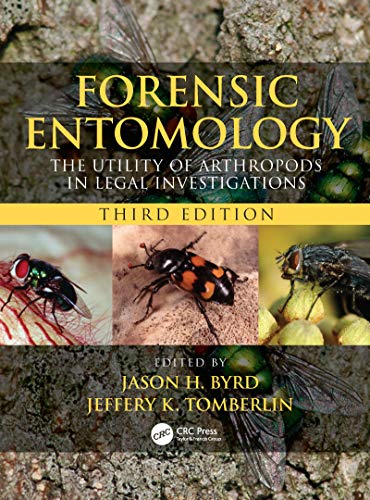
Dr. Jason H. Byrd, PhD, D-ABFE, stands out with his dual leadership roles as vice president of the American Board of Forensic Entomology and president of the North American Forensic Entomology Association. His combined academic and practical expertise shaped this book, which reflects his dedication to educating law enforcement, legal professionals, and forensic scientists about arthropods' vital role in investigations. His extensive research and more than 15 years of field experience bring a critical depth to the discussion, making the book a valuable asset for anyone serious about forensic entomology.
Dr. Jason H. Byrd, PhD, D-ABFE, is a board-certified forensic entomologist and diplomate of the American Board of Forensic Entomology. He is the current vice president of the American Board of Forensic Entomology, and the current president of the North American Forensic Entomology Association. He is the first person to be elected president of both professional North American forensic entomology associations. Dr. Byrd is a bureau chief with the Florida Division of Agriculture and Consumer Services, and he serves as the associate director of the William R. Maples Center for Forensic Medicine, University of Florida College of Medicine. At the University of Florida, he instructs courses in forensic science at the University of Florida’s nationally recognized Hume Honors College. He is also a faculty member of the Virginia Institute of Forensic Science and Medicine. Outside of academics Dr. Byrd serves as an administrative officer within the National Disaster Medical System, Disaster Mortuary Operational Response Team, Region IV. He also serves as the logistics chief for the Florida Emergency Mortuary Operations Response System. Currently he serves as a subject editor for the Journal of Medical Entomology. He has published numerous scientific articles on the use and application of entomological evidence in legal investigations. Dr. Byrd has combined his formal academic training in entomology and forensic science to serve as a consultant and educator in both criminal and civil legal investigations throughout the United States and internationally. Dr. Byrd specializes in the education of law enforcement officials, medical examiners, coroners, attorneys, and other death investigators on the use and applicability of arthropods in legal investigations. His research efforts have focused on the development and behavior of insects that have forensic importance, and he has over 15 years experience in the collection and analysis of entomological evidence. Dr. Byrd is a fellow of the American Academy of Forensic Sciences.
When Dr. Jason H. Byrd, a board-certified forensic entomologist, developed this book, he drew heavily from his extensive experience in both academia and applied forensic investigations. You gain detailed insights into how arthropods contribute to legal cases, from foundational insect biology to advanced topics like urban forensic entomology and microbiome analysis. Specific chapters explore larval insect identification and wildlife forensic entomology, making the content rich for practitioners and students alike. This book suits you if you're involved in forensic science, law enforcement, or legal fields seeking a nuanced understanding of entomological evidence.
Barry S. Levine’s extensive background as Chief Toxicologist and forensic science educator shapes this authoritative volume. His leadership roles in medical examiner offices and armed forces laboratories inform an approach grounded in real-world forensic challenges. This book reflects his commitment to training future forensic toxicologists through clear explanations of complex laboratory techniques and emerging forensic issues.
Barry Levine received his B.S. in Chemistry from Loyola College and a Ph.D. in Toxicology from the Medical College of Virginia. He was Chief Toxicologist, Office of the Chief Medical Examiner, State of Maryland and currently consults with the Office. He was also the Director, Forensic Toxicology Laboratory for the Armed Forces Medical Examiner System. He is an Adjunct Professor in the Forensic Sciences Department, Stevenson University, teaching a course every year in forensic toxicology. Dr. Levine is a fellow of the American Board of Forensic Toxicology and a Diplomate of the American Board of Clinical Chemistry – Toxicological Chemistry. He edited the book widely adopted best-selling book, Principles of Forensic Toxicology, which is now in its fifth edition.
Drawing from decades as a chief toxicologist and forensic science professor, Barry S. Levine offers a detailed exploration of forensic toxicology that bridges theory and practice. You’ll gain insights into specimen preparation, instrumental analysis, and the pharmacology behind substances like opioids and cocaine, with updates on emerging topics such as drug-facilitated crimes and oral fluid testing. This book suits those aiming to deepen their technical understanding and practical skills in forensic toxicology, whether in academic or applied settings. Specific chapters, like the one on measurement uncertainty and traceability, sharpen your grasp on laboratory standards essential for credible forensic analysis.
The best Forensic Science books and more, in your inbox each week. No account needed.
Conclusion
This collection of books reveals three clear themes: the importance of combining scientific rigor with practical experience, the value of understanding forensic history to appreciate modern methods, and the necessity of staying current with digital and toxicological advancements. If you're just starting, picking up The Handy Forensic Science Answer Book provides a solid foundation. For those working with digital evidence, combining Practical Forensic Imaging with Digital Forensics Basics accelerates hands-on skills.
For rapid application of forensic toxicology or entomology, dive into Principles of Forensic Toxicology and Forensic Entomology respectively, both offering detailed but accessible insights. Once you've absorbed these expert insights, create a personalized Forensic Science book to tailor your learning path and address your unique forensic science questions.
Whatever your forensic science journey looks like, these books equip you with the knowledge to think critically and investigate thoroughly. The next step is yours—immerse yourself in these works and sharpen your expertise with resources crafted around your ambitions.
Frequently Asked Questions
I'm overwhelmed by choice – which book should I start with?
Start with "The Handy Forensic Science Answer Book" for a broad overview that's accessible and engaging. It lays the groundwork before you dive into more specialized topics like digital forensics or toxicology.
Are these books too advanced for someone new to Forensic Science?
Not at all. Several books, like "Digital Forensics Basics," are designed for beginners, while others offer deeper dives for experienced practitioners. You can choose based on your current knowledge.
What's the best order to read these books?
Begin with general introductions such as "The Handy Forensic Science Answer Book," then explore specialized areas like "Diagnostic Pathology" or "Malware Forensics" based on your interests or career needs.
Do these books assume I already have experience in Forensic Science?
Some books are beginner-friendly, while others, like "Practical Linux Forensics," cater to professionals. The collection covers a range of expertise, so you can select accordingly.
Which book gives the most actionable advice I can use right away?
"Seeking the Truth from Mobile Evidence" offers practical techniques for mobile forensics, and "Malware Forensics" provides hands-on strategies for investigating malicious code.
Can personalized Forensic Science books really complement these expert recommendations?
Yes! While these books offer foundational knowledge, personalized books tailor content to your background and goals, helping you apply principles efficiently. You can explore this option here.
📚 Love this book list?
Help fellow book lovers discover great books, share this curated list with others!