"Brazilian Modern Design" by Alberto Vicente, Marcelo Vasconcellos, Maria Cecília Loschiavo Dos Santos made it to BookAuthority's Best Furniture eBooks of All Time!
10 Furniture Books That Define Design and Craftsmanship
Expert picks from Chris Nichols, Jeff Kurtti, and Agnes Gund showcasing top Furniture Books for design and restoration excellence
Updated on June 24, 2025·We may earn commissions for purchases made via this page
4 of 10 books have Kindle versions
We're launchingLaunching on Product Hunt today 🎉We just launchedJust launched on Product Hunt 🎉
Modelpeers, from the BookAuthority teamFrom the BookAuthority team: Modelpeers, a free way to follow AI models and agents like you follow people. We'd love your support.
What if the furniture you choose to study could unlock decades, even centuries, of craftsmanship, culture, and creativity? Furniture isn't just about function—it's a living art form that reflects social shifts, technological innovation, and the personal stories of designers and artisans. Right now, as tastes evolve and restoration gains renewed interest, understanding furniture's past and techniques is more valuable than ever.
Chris Nichols, a custom Jeep builder and design enthusiast, found himself captivated by a vintage animator’s desk gifted by Disney, which led him to discover Kem Weber’s profound impact on mid-century studio furniture. Meanwhile, Jeff Kurtti, a Disney historian, praises the detailed scholarship that revives overlooked designers. Agnes Gund, former MoMA president, highlights the enchanting craftsmanship in miniature fairy furniture by the Schramers, blending art and nature. And Jeremy Allen, a New York Times design critic, sheds light on Brazilian modern design's global resonance. Their deep dives reveal how these books connect you to the heart of furniture's evolving story.
While these expert-curated books provide proven frameworks and rich insights, readers seeking content tailored to their specific interests in furniture history, restoration, or design might consider creating a personalized Furniture book that builds on these insights, crafting a learning journey suited exactly to your background, skill level, and goals.
Mateo Kries, editor of the Vitra Design Museum, brings his extensive expertise in furniture design to this monumental atlas. His role at one of the world's foremost design institutions informs the book's authoritative scope, showcasing a vast collection that reflects centuries of design innovation. Kries's deep engagement with the subject ensures this is not only a reference but a compelling narrative of furniture's cultural and artistic development.
Mateo Kries, Jochen Eisenbrand, Alberto Bassi, Fulvio Ferrari, Otakar Máčel, Jane Pavitt, Ingeborg de Roode, Catharine Rossi, Arthur Rüegg, Penny Sparke, Deyan Sudjic, Wolf Tegethoff, Carsten Thau, Kjeld Vindum, Gerald W.R. Ward(you?)·
About the Author
Mateo Kries is a prominent figure in the field of design, serving as the editor of the Vitra Design Museum. His expertise in furniture design and history is reflected in his contributions to various publications and exhibitions, making him a respected authority in the design community.
When Mateo Kries, editor of the Vitra Design Museum, curated this atlas, he aimed to capture the full sweep of furniture design history through an unparalleled collection. Spanning over 1,700 objects from 237 years, the book offers you detailed insights into iconic pieces and their cultural contexts, from early industrial bentwood to postmodern works by Starck and Grcic. You'll find not just images but essays, patents, and designer biographies that deepen your understanding of design evolution. This volume is tailored for collectors, scholars, and enthusiasts ready to explore furniture design with rich historical depth and visual rigor.
Chris Nichols, a custom Jeep builder and longtime enthusiast who appreciates craftsmanship, found a personal connection to this book after receiving his own vintage animator’s desk from Disney. "When author David A. Bossert left a long career in animation at the Walt Disney Studios, the company gave him the gift of his vintage animator’s desk to take home. The history of the dinged up, nicotine stained workhorse used by generations of artists intrigued him," Nichols shares. This sparked a deeper appreciation for how Kem Weber’s furniture shaped the creative environment at Disney. Similarly, Jeff Kurtti, Disney historian, highlights Bossert’s blend of passion and scholarship in reviving Weber’s overlooked contributions, making this a vital resource for anyone interested in design and animation history.
“When author David A. Bossert left a long career in animation at the Walt Disney Studios, the company gave him the gift of his vintage animator’s desk to take home. The history of the dinged up, nicotine stained workhorse used by generations of artists intrigued him, and now we have the definitive guide to the work of a designer who not only created the studio buildings but the gorgeous and highly specialized furniture for the directors, writers, and animators who filled them.”
David A. Bossert is an award-winning artist, filmmaker, and author. He is a 32-year veteran of The Walt Disney Company where he contributed his talents to Who Framed Roger Rabbit (1988), The Little Mermaid (1989), Beauty and the Beast (1991), Aladdin (1992), Tim Burton's The Nightmare Before Christmas (1993), The Lion King (1994), Fantasia/2000 (1999) among many others. Bossert is an independent producer, creative director, and writer and is considered an authority on Disney art and animation history. He is a member of the CalArts Board of Trustees and is a visiting scholar at Carnegie Mellon University's Entertainment Technology Center (ETC) in Pittsburgh. In 2018, he was awarded a U.S. Patent for his invention Parallax Based Monoscopic Rendering, and in 2020, he received an additional U.S. Patent for Varying Display Content Based on Viewpoint. Bossert is the author of numerous books, liner/program notes, and dozens of articles on animation. Learn more at www.davidbossert.com
David A. Bossert draws on his extensive Disney animation career to explore the unique furniture designs crafted by Kem Weber for the Walt Disney Studios. You gain insight into how Weber’s specialized pieces, such as the famed Air Line chair, were tailored to the distinct needs of animators and creative staff, blending form with function to support productivity. The book walks you through concept sketches, archival photos, and interviews with legendary artists, offering a layered understanding of mid-century California modernism in a professional studio context. It's well suited for enthusiasts of design history, animation professionals, and those curious about the intersection of creative workflow and environment.
This AI-created book on furniture craftsmanship is written based on your background, skill level, and specific interests within design and making. By sharing your goals and preferred topics, you receive a tailored guide that focuses on exactly what you need to develop your skills and knowledge. With so many directions in furniture design, having a custom path helps you navigate the craft efficiently and enjoyably.
TailoredRead AI creates personalized nonfiction books that adapt to your unique background, goals, and interests. Instead of reading generic content, you get a custom book written specifically for your profession, experience level, and learning objectives. Whether you're a beginner looking for fundamentals or an expert seeking advanced insights, TailoredRead crafts a book that speaks directly to you. Learn more.
This tailored book explores the art and science of furniture design and craftsmanship, focusing on your unique interests and background. It covers fundamental principles, materials, and construction techniques while delving into stylistic expressions and functional innovations. By aligning with your specific goals, this personalized guide reveals pathways through complex expert knowledge, making the learning process engaging and relevant. Whether you seek to master classic joinery or modern design aesthetics, the book examines each topic with enthusiasm and clarity, ensuring a rich, hands-on understanding. This tailored approach helps you synthesize collective craftsmanship knowledge into skills that resonate with your personal vision and expertise level.
Design*Sponge, a leading interior design publication known for expert DIY insights, highlights Amanda Brown’s credentials as the owner of a furniture redesign studio in Austin, Texas. They emphasize how this book makes upholstery accessible, sharing that "Amanda is an excellent teacher and everything she’s shared in this book will help you master the techniques and skills you need to reupholster any piece of furniture to suit your own taste and style." Their enthusiasm reveals the book’s ability to transform intimidation into confidence, especially for those considering giving thrift store finds a fresh look. Following suit, Library Journal praises the author’s hip, eclectic style and the book’s depth on five projects, noting how Brown's personality comes through and the practical interior design options she offers.
“Few things make me happier than watching the people we work with here at D*S do well. Amanda Brown from Spruce has been our resident upholstery expert for a while and we were thrilled when she told us she was working on a book. That gorgeous book, Spruce: A Step-by-Step Guide to Upholstery and Design, officially launched yesterday and is chock-full of beautiful (and helpful) upholstery instructions, illustrated by more than 900 step-by-step photographs. Upholstery has always been daunting to me, but Amanda is an excellent teacher and everything she’s shared in this book will help you master the techniques and skills you need to reupholster any piece of furniture to suit your own taste and style. If you have ever had an inkling to try to upholster a thrift store find, this awesome book can show you how.”
Amanda Brown is the author of Spruce: A Step-by-Step Guide to Upholstery and Design. Brown is the owner of Spruce, a furniture redesign studio in Austin, Texas. Her fresh aesthetic for interiors has garnered acclaim from publications including the New York Times, Metropolitan Home, and Southern Living. She lives in Austin, Texas.
After years running a furniture redesign studio in Austin, Amanda Brown developed a hands-on manual that demystifies upholstery through clear instruction and vivid visuals. You’ll find detailed guidance on stripping down old sofas, stuffing ottomans, and revamping chairs, all supported by more than 900 photographs that make techniques accessible even if you’re new to the craft. The book’s five carefully chosen projects offer deep dives rather than scattered tips, providing a strong foundation in upholstery skills and design sense. If you're eager to personalize your home with fabric and texture but intimidated by the tools and process, this guide breaks it down into manageable, creative steps.
The World of Interiors, a respected authority in interior design publishing, highlights this book as a visual encyclopedia celebrating the leading designers across three postwar decades. Their recommendation, "full of glorious surprises, from Europe to the Americas, Brazil and Japan," reflects the book's global scope and thematic grouping of furniture. This resource helped deepen their appreciation for the nuanced craftsmanship behind each piece. Complementing this, Shelf Awareness, known for their insight into book trends, calls it a "stately compendium" that bridges pop art influences with technological innovation, making it essential for both dedicated collectors and newcomers to mid-century design.
“Celebrating the leading designers of the three postwar decades, this visual encyclopedia is full of glorious surprises, from Europe to the Americas, Brazil and Japan. Chairs and chaises, tables and beds, cabinets and desks are grouped thematically, with lively texts explaining each entry. Every designer and collector will make at least a few discoveries.”
Dominic Bradbury is a journalist and writer specializing in architecture and design. He is the author of many books on the subject, including Off the Grid: Houses for Escape Across North America, The Iconic House: Architectural Masterworks Since 1900, The Iconic American Architectural Masterworks Since 1900, The Iconic British House: Modern Architectural Works Since 1900, and The Iconic Interior: 1900 to the Present. Bradbury has contributed to many magazines and newspapers in the UK and around the world, including The Times, The Financial Times, The Guardian, The Observer, House & Garden, World of Interiors, Architectural Digest, Wallpaper, Elle Decoration, Vogue Living, Belle, Dwell and others. His first book was published in 2000 and since then he has written a wide range of titles on architecture, interiors and design. Recent releases include The Atlas of Interior Design and The Atlas of Mid-Century Modern Houses from Phaidon, Off the Grid: Houses for Escape, New Nordic Houses and Modernist Design Complete, a survey of pioneering Modernist designers and architects from the Twenties and Thirties, published by Thames & Hudson and as Essential Modernism by Yale in the States. Other key projects include Mid-Century Modern Design: A Complete Sourcebook, a definitive study of 1950s and '60s design, furniture and interiors, published by Thames & Hudson. Bradbury is married, with three children, and lives in Norfolk, England.
When Dominic Bradbury turned his journalist's eye to mid-century modern furniture, he uncovered a treasure trove of design innovation spanning from the late 1930s to the early 1970s. This book immerses you in hundreds of pieces, from iconic armchairs to lesser-known cabinets, each examined for its formal creativity and manufacturing ingenuity. You learn to appreciate the materials, techniques, and cultural shifts that shaped this explosive era of furniture making, with detailed essays and vivid photography bringing each object to life. Whether you're a seasoned collector, design professional, or enthusiast, this volume offers a rich reference that sharpens your understanding of mid-century craftsmanship and style.
The Editors, an authoritative design publication, highlight the unique legacy of Hans J. Wegner, noting his creation of iconic pieces like the Y Chair and the Ox Chair. Their expertise in furniture design underscores the importance of Wegner’s work in shaping midcentury modern aesthetics. They emphasize how this book deepened their appreciation for the blend of comfort and craftsmanship in Wegner’s chairs, revealing the layers of design and tradition behind each piece.
Christian Holmstedt Olesen is a noted author and expert on Danish design, particularly known for his works on Hans J. Wegner. His deep understanding of furniture design and history has made him a respected voice in the field, contributing significantly to the appreciation of midcentury modernism.
What started as Christian Holmstedt Olesen's deep fascination with Danish design became a detailed exploration of Hans J. Wegner’s legendary chairs. You get a thorough look at about 500 of Wegner's creations, from the elegant Y Chair to the functional Round Chair favored by John F. Kennedy, learning how traditional joinery techniques blend with modern aesthetics. The book captures Wegner’s dedication to balancing comfort, ergonomics, and humor in design, showing you the craftsmanship behind his iconic pieces like the Peacock and Ox chairs. If you appreciate furniture that combines artistry with practicality, this book offers insights that enrich your understanding and appreciation of midcentury modernism.
This AI-created book on furniture restoration is crafted based on your background, current skills, and specific renovation goals. You share which furniture types and techniques interest you most, and the book is then tailored to provide a clear, month-long pathway suited to your needs. This personalized approach focuses on practical projects and skills that make refurbishing approachable and effective for your unique situation.
TailoredRead AI creates personalized nonfiction books that adapt to your unique background, goals, and interests. Instead of reading generic content, you get a custom book written specifically for your profession, experience level, and learning objectives. Whether you're a beginner looking for fundamentals or an expert seeking advanced insights, TailoredRead crafts a book that speaks directly to you. Learn more.
This tailored book explores a focused, month-long journey into furniture refurbishing and renewal, designed to match your specific background and goals. It covers essential restoration techniques, project planning, material selection, and finishing touches, all aligned with your unique interests. By honing in on your skill level and desired outcomes, this personalized guide reveals practical steps to breathe new life into worn or outdated pieces. Through carefully chosen projects, it offers an engaging way to develop hands-on skills and deepen your understanding of furniture craftsmanship. This tailored approach ensures you receive a learning experience that emphasizes your priorities, making furniture restoration both accessible and rewarding.
Library Journal, a recognized authority in crafts and DIY, highlights the versatility of concrete beyond construction. They emphasize how Nathan Smith and Michael Snyder's collection opens doors to colorful, creative garden projects. Their endorsement reflects how the book expands the perception of concrete use and provides accessible, detailed guidance. As they note, "Concrete is not just for building construction—there are so many more possibilities. Smith and Snyder have compiled a focused collection of DIY projects taking advantage of colored concrete, including planters, ornamental pieces, and furniture." This perspective invites you to rethink concrete's role in outdoor design.
“Concrete is not just for building construction—there are so many more possibilities. Smith and Snyder have compiled a focused collection of DIY projects taking advantage of colored concrete, including planters, ornamental pieces, and furniture. The step-by-step illustrations are fantastic and highly detailed; the projects are unique; and materials and molds are easily obtained.”
Nathan Smith, Michael Snyder, Charles Coleman(you?)·
About the Author
Nathan Smith has a BBA in business management with an emphasis in entrepreneurship. He started his journey with concrete in the form of countertops for his own home. The material was fascinating and the medium was too much to resist. Since its formation in 2007, Set in Stone has slowly assembled a team of talented and creative individuals. They all consider themselves a part of a concrete evolution, using the seemingly limitless material to enrich lives ultimately through the creative process. He resides in Chattanooga, Tennessee. He feels at home in the shop, on a bike in the woods, and especially hanging out with his family.
Nathan Smith's journey from crafting concrete countertops for his home to leading a creative team at Set in Stone shapes this book's hands-on approach to colorful concrete projects. You learn not only how to mix and dye concrete but also how to integrate various materials for textured effects, with step-by-step guides for pieces ranging from quaint planters to a fire pit perfect for gatherings. This book suits you if you're eager to add personal style to your garden furniture without the high cost, and if you appreciate detailed illustrations that make complex projects approachable. The inclusion of projects like an old-world candle holder alongside modern furniture showcases practical diversity that can fit many outdoor aesthetics.
Lars Dybdahl is a design historian specializing in Danish furniture. His expertise encompasses the evolution of mid-century modern design, particularly the iconic pieces that emerged from Denmark during the postwar period. Dybdahl's work highlights the cultural and historical contexts that shaped the furniture industry, making him a respected voice in the field. This book reflects his deep knowledge and passion, offering readers an authoritative look at an influential era in furniture design.
Lars Dybdahl is a design historian specializing in Danish furniture. His expertise encompasses the evolution of mid-century modern design, particularly the iconic pieces that emerged from Denmark during the postwar period. Dybdahl's work highlights the cultural and historical contexts that shaped the furniture industry, making him a respected voice in the field.
Drawing from his expertise as a design historian, Lars Dybdahl unpacks the Danish Mid-Century Modern furniture movement with precision and insight. You’ll gain a deep understanding of how postwar social changes shaped iconic designs like Hans J. Wegner’s Y Chair and Finn Juhl’s Chieftain Chair, exploring not just the pieces but their cultural and industrial origins. Thirteen chapters guide you through innovations in materials and styles—from laminated wood to plastic and steel—highlighting the breadth of Danish creativity for homes, offices, and institutions. If you’re passionate about design history or furniture craftsmanship, this book offers a rich, contextual perspective that goes beyond aesthetics to reveal the era’s transformative impact.
Brian D. Hingley has been a professional furniture refinisher for over 20 years and owns Hingley Furniture Restoration, Inc., serving clients including historical sites like Sherwood Forest. His deep expertise and years of hands-on experience fuel this guide, which equips you with practical skills to restore, repair, and renew wooden furniture with confidence.
Brian D. Hingley has been a professional furniture refinisher for more than 20 years. He is the owner of Hingley Furniture Restoration, Inc., formerly of Richmond, Virginia, and now located in Urbanna, Virginia, one hour east of Richmond. Among his clients are interior design firms, business and corporate customers, and historical sites such as Sherwood Forest, home of U.S. President John Tyler.
When Brian D. Hingley realized the complexities involved in restoring wooden furniture to its original charm, he set out to create a detailed, hands-on guide that demystifies the process. This book walks you through over 500 precise instructions and vivid photos, covering everything from removing old finishes and fixing broken joints to refurbishing warped wood and repairing stains or burns. You gain practical skills to handle structural repairs and refinishing techniques that help preserve the integrity and beauty of heirlooms or bargain finds. Anyone interested in DIY furniture restoration, whether a hobbyist or a professional, will find the step-by-step explanations and shop-tested methods particularly useful.
Jeremy Allen, design critic for The New York Times, highlights this book for its fresh look at Brazilian modern furniture design, a trend that has gained global attention in recent decades. His appreciation stems from the book's rich visual and textual documentation of influential designers like Lina Bo Bardi, offering a deeper understanding of the movement's roots and impact. "Delivers a new perspective on a trend that has captured worldwide interest in the 21st century," he notes, reflecting how the book reshaped his view of the modern design canon.
Drawing from extensive research into mid-20th century Brazilian creators, this book explores the innovative furniture designs that emerged between the 1940s and 1970s. It presents detailed reproductions of works by key figures like Lina Bo Bardi and Sergio Rodrigues, illustrating their unique approaches to form and function. You’ll gain insight into the cultural and aesthetic forces shaping Brazilian modern design, including architectural influences and biographical context for each designer. This volume suits anyone interested in design history or looking to understand how regional identity shapes furniture innovation, though it leans toward readers comfortable with art and design analysis.
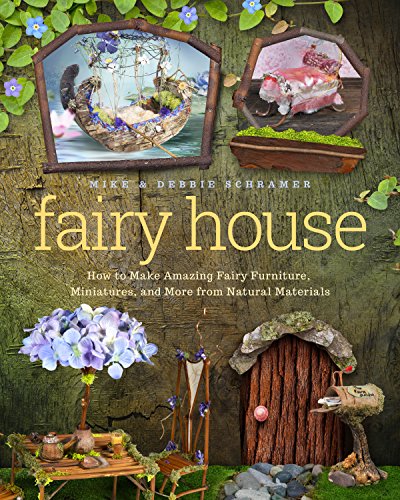
Agnes Gund, past president of the Museum of Modern Art in New York, brings a discerning eye to this work, praising the Schramers' fairy treehouses for their detailed craftsmanship and imaginative originality. She describes them as "enchanting" and unlike anything she has encountered, underscoring the unique blend of artistry and whimsy. This endorsement highlights how the book transcends typical craft guides, inviting you to explore the magic in miniature natural furniture. Similarly, the National Endowment for the Arts recognizes the couple’s ability to transform nature into a captivating artistic world, reinforcing the book’s appeal for anyone wanting to blend creativity with natural materials.
“The Schramer’s treehouses are striking for their attention to detail, for their child-like sense of whimsy and their originality. They are enchanting; I have never seen anything like them.”
Mike and Debbie Schramer’s nature art has been featured in many books including Chairmania, Morning Glories, and Forget Me. Their work has also been in Travel and Leisure, Country Folk Art, and Faerie magazines and the Seattle Times, the Los Angeles Times, and the New York Times newspapers, among others. Their work has also exhibited at the American Visionary Art Museum, Seattle Art Museum and the Rosalie Whyel Museum of Doll Art has many of their intricate fairy pieces in their permanent collection. Their art has is collected and purchased by many well-known people including film producer Gil Netter (Life of Pi, The Blind Side), actor Aidan Quinn, Jennifer Nicholson, daughter of actor Jack Nicholson, Mimi Danly, artist for Jim Henson, authors Mary Emmerling and Tricia Foley and Bob Timberlake, artist, author and designer.
Mike and Debbie Schramer, artists celebrated for their nature-inspired miniatures featured in prestigious museums and major publications, invite you into an imaginative craft journey. You learn to create intricate fairy furniture and tiny structures using natural materials, guided by more than 350 vibrant photos and whimsical instructions. From crafting acorn pod cups to delicate flower beds, the book encourages you to develop your artistic eye and patience with detailed projects like the Princess Canopy Bed and the Fairy Garden. If you enjoy hands-on creativity and fantasy miniatures, this book offers both inspiration and practical techniques, though it may not suit those seeking conventional furniture design.
The best Furniture books and more, in your inbox each week. No account needed.
Conclusion
Taken together, these 10 books offer a multifaceted view of furniture—its history, design innovations, restoration techniques, and even whimsical miniatures. If you're drawn to understanding furniture's cultural roots, start with the Atlas of Furniture Design or Furniture Boom, which ground you in historical context. For practical skills, pairing Spruce with the Ultimate Guide to Furniture Refinishing & Repair equips you for hands-on projects.
Those fascinated by iconic designers will find deep inspiration in Hans J. Wegner and Mid-Century Modern Furniture, while outdoor enthusiasts can explore creative expressions in Color Concrete Garden Projects. And for a fresh cultural perspective, Brazilian Modern Design broadens your appreciation of global styles.
Alternatively, you can create a personalized Furniture book to bridge the gap between general principles and your specific situation. These books can help you accelerate your learning journey and deepen your connection to the art and craft of furniture.
Frequently Asked Questions
I'm overwhelmed by choice – which book should I start with?
Start with the Atlas of Furniture Design for a broad view of furniture history. It lays a solid foundation before diving into specialized topics like upholstery or mid-century styles.
Are these books too advanced for someone new to Furniture?
Not at all. Books like Spruce offer step-by-step guidance perfect for beginners, while others provide rich context for deeper exploration as your knowledge grows.
Should I start with the newest book or a classic?
Balance is key. Newer titles like Mid-Century Modern Furniture capture recent scholarship, while classics such as Hans J. Wegner offer timeless insights into design principles.
Do I really need to read all of these, or can I just pick one?
You can certainly pick based on your focus—restoration, design history, or crafting—but reading multiple titles enriches your understanding of different facets of furniture.
Which books focus more on theory vs. practical application?
Atlas of Furniture Design and Furniture Boom lean toward theory and history, while Spruce and Ultimate Guide to Furniture Refinishing & Repair emphasize practical skills and hands-on techniques.
How can I get furniture knowledge tailored to my specific needs?
Yes, these expert books are invaluable. For personalized learning, consider creating a tailored Furniture book that adapts expert insights to your experience, goals, and interests for focused growth.
📚 Love this book list?
Help fellow book lovers discover great books, share this curated list with others!