Recommended by Talia Lavin, Donald Trump, and Bob Dylan, these Historical Fiction Books reveal profound stories of war, culture, and human struggle.
Updated on June 22, 2025·We may earn commissions for purchases made via this page
4 of 10 books have Audiobook versions
We're launchingLaunching on Product Hunt today 🎉We just launchedJust launched on Product Hunt 🎉
Modelpeers, from the BookAuthority teamFrom the BookAuthority team: Modelpeers, a free way to follow AI models and agents like you follow people. We'd love your support.
What if the stories from the past could speak so vividly, they reshape how you see the present? Historical fiction offers that rare chance—melding fact with narrative to bring history's complexities alive. Right now, these books hold special power as we reckon with global conflicts and cultural shifts, reminding us how personal stories intersect with grand events.
Experts like Talia Lavin, an author and journalist who found new depths in "All Quiet on the Western Front," share how these narratives illuminate the human cost behind history's headlines. Donald Trump and Bob Dylan also recommend titles that capture war, culture, and resilience, each bringing unique perspectives to this rich literary field.
While these expert-curated books provide proven frameworks, readers seeking content tailored to their specific interests—whether it's time period, region, or thematic focus—might consider creating a personalized Historical Fiction book that builds on these insights, making history resonate even more deeply.
Talia Lavin, author and journalist, brings a unique perspective to this historical fiction classic, sharing how reading it for the first time later in life gave her a fresh appreciation for its artistic depth. She notes, "I know a lot of people read this book in high school but I somehow haven't until now and I would argue it is great art or at least makes me pause inside with the intense stillness I've experienced with great art before." This pause and reflection on the human cost of war highlights the book's lasting impact. Following her, Tom Hall, Twitter consultant to CEOs and thought leaders, simply states, "All Quiet on the Western Front is the most amazing and disturbing book. I love it." Their views underscore the novel's power to resonate across different backgrounds and experiences.
“I know a lot of people read this book in high school but I somehow haven't until now and I would argue it is great art or at least makes me pause inside with the intense stillness I've experienced with great art before, cf Lermontov, Melville, MFK Fisher etc” (from X)
Erich Maria Remarque (22 June 1898 – 25 September 1970) was a German novelist known for his works about the horrors of war. His most famous novel, All Quiet on the Western Front, published in 1928, depicts the experiences of German soldiers during World War I. The book's powerful anti-war message made it a target for Nazi censorship, leading to the burning of many of his works. Remarque's firsthand experiences in the war deeply influenced his writing, making his narratives both poignant and impactful.
2024·202 pages·Historical Fiction, War, Psychological Trauma, World War I, Soldier Experience
Drawing from his harrowing experiences as a German soldier in World War I, Erich Maria Remarque crafts a narrative that strips away romantic illusions about war. You step into the trenches alongside Paul Bäumer, witnessing the brutal realities of industrialized combat and the toll it takes on the human spirit. The book offers profound insights into trauma, disillusionment, and the psychological scars of warfare, especially evident in chapters detailing frontline survival and comradeship. If you seek a sobering, unfiltered look at the costs of war beyond propaganda, this book delivers a perspective that remains urgent and relevant.
New York Herald Tribune, a respected voice in historical fiction criticism, highlights how Mika Waltari "successfully combine[s] research, imagination, and the cunning of a good tale-teller in bringing the generation of Akhnaton to life." This perspective comes from their deep engagement with historical narratives and storytelling craft. They found that the novel's blend of meticulous research and vivid imagination reshaped their appreciation for ancient history's narrative potential. Similarly, The Philadelphia Inquirer praises the book as "a grand immersion into an epic tale," emphasizing its sweeping storytelling that captivates the reader throughout.
Mika Waltari (1908–1979) is best known for his historical novels, which include The Etruscan and The Roman. He is widely considered the greatest Finnish writer of the 20th century.
503 pages·Historical Fiction, Ancient History, Character Development, Political Intrigue, Cultural History
The Egyptian: A Novel offers a rich narrative set in the time of Akhnaton, crafted by Mika Waltari, who is recognized as Finland's foremost 20th-century author of historical novels. Drawing from his deep literary background, Waltari immerses you in a world where history and storytelling intersect, revealing complex characters and political intrigue. You'll gain insights into ancient Egyptian culture and the challenges of leadership, as depicted through vivid scenes and detailed research. This book suits anyone drawn to immersive historical settings and nuanced character studies rather than just straightforward historical accounts.
This AI-curated guide to historical fiction provides actionable strategies tailored to your interests in global civilizations and storytelling traditions. Created after you specify your areas of focus and expertise, it bridges the gap between understanding historical contexts and appreciating the art of narrative. The book features frameworks that adapt to your particular cultural or era preferences, helping navigate complex historical themes with clarity and depth.
TailoredRead AI creates personalized nonfiction books that adapt to your unique background, goals, and interests. Instead of reading generic content, you get a custom book written specifically for your profession, experience level, and learning objectives. Whether you're a beginner looking for fundamentals or an expert seeking advanced insights, TailoredRead crafts a book that speaks directly to you. Learn more.
2026·50-300 pages·Historical Fiction, World Civilizations, Narrative Techniques, Cultural Contexts, Character Development
This tailored book provides a personalized framework that explores historical fiction across diverse civilizations and eras worldwide. It examines narrative structures, cultural contexts, and thematic motifs unique to each region, allowing readers to engage with the genre through a tailored approach that fits their interests and goals. The book dissects methodologies for blending historical accuracy with compelling storytelling, highlighting strategies to analyze conflicts, social dynamics, and character development within various historical settings. By cutting through irrelevant advice, it offers a focused exploration of how historical fiction reflects and reshapes understanding of empires and cultures, adapting content to your particular focus areas.
Richard Zoglin, contributing editor at Time magazine, values historical fiction that illuminates the human spirit through art. After encountering this book during his exploration of WWII narratives, he found it to be an "epic, compelling and cinematic, richly imagined" story that profoundly honors music's power amid conflict. His praise highlights how the book challenges and expands typical understandings of wartime courage. Similarly, Publisher's Weekly notes how Lande's portrayal of music woven into Nazi-era complexities adds a stark, poignant layer, making it a significant addition to WWII fiction collections.
“Nathaniel Lande has written an epic, compelling and cinematic, richly imagined, often chilling but ultimately life-affirming tribute to the power of music and art, honoring the human spirit.”
Nathaniel Lande is a journalist, filmmaker, and the author of twelve books, including Cricket and Dispatches from the Front: A History of the American War Correspondent. He was creative director for the Magazine Group at Time, Inc.; director of Time World News Service; director of Time-Life Films, where his documentaries won over ten international awards; and executive producer at CBS and NBC Television. Lande was educated at Oxford University; earned his doctorate at Trinity College Dublin, where he was a Distinguished Scholar; and held appointments as professor of journalism at the University of North Carolina at Chapel Hill. He lives in Santa Barbara, California.
2020·528 pages·Historical Fiction, WWII, Music History, Cultural Conflict, European History
Drawing from his extensive career in journalism and filmmaking, Nathaniel Lande crafts a rich narrative that intertwines music, war, and personal courage in WWII-era Europe. You encounter Max Mueller’s journey from curious youth to a man shaped by the harsh realities of Nazi-occupied Prague, with chapters that vividly depict the cultural tensions in Berlin’s opera houses and London’s music halls. This book offers you insights into how art and friendship endure amid turmoil, exploring complex historical events through intimate, multifaceted perspectives. If you seek a story that balances historical depth with emotional nuance, this narrative will resonate deeply, though it’s best suited for those ready to engage with a dense, layered exploration rather than light escapism.
The New Yorker, an American magazine noted for its cultural criticism, highlights how this novel vividly portrays Nigeria's nineteen-sixties political upheaval through the intertwined lives of two Igbo sisters amid ethnic massacres. Their detailed account of soldiers clutching carved sticks and a mother carrying her daughter's severed head left a lasting impression, illustrating the book's unflinching empathy. This narrative reshaped their understanding of the Biafran conflict's human toll beyond mere history. Similarly, Publisher's Weekly praises the novel's haunting intimacy and multifaceted characters, while Booklist commends its powerful psychological depth and parallels to wider conflicts fueled by prejudice and external interests.
“Based loosely on political events in nineteen-sixties Nigeria, this novel focusses on two wealthy Igbo sisters, Olanna and Kainene, who drift apart as the newly independent nation struggles to remain unified. Olanna falls for an imperious academic whose political convictions mask his personal weaknesses; meanwhile, Kainene becomes involved with a shy, studious British expat. After a series of massacres targeting the Igbo people, the carefully genteel world of the two couples disintegrates. Adichie indicts the outside world for its indifference and probes the arrogance and ignorance that perpetuated the conflict. Yet this is no polemic. The characters and landscape are vividly painted, and details are often used to heartbreaking effect: soldiers, waiting to be armed, clutch sticks carved into the shape of rifles; an Igbo mother, in flight from a massacre, carries her daughter's severed head, the hair lovingly braided.”
Chimamanda Ngozi Adichie was born in Nigeria. Her first novel, Purple Hibiscus, won the Commonwealth Writers’ Prize and the Hurston/Wright Legacy Award. It was also short-listed for the Orange Prize and the John Llewellyn Rhys Prize. Her short fiction has appeared in Granta and The Iowa Review among other literary journals, and she received an O. Henry Prize in 2003. She is a 2005–2006 Hodder Fellow at Princeton University and divides her time between the United States and Nigeria.
What if everything you thought you knew about colonial legacies and ethnic conflicts was reframed through intimate personal stories? Chimamanda Ngozi Adichie, drawing from her Nigerian roots and literary acclaim, recounts the Biafran War not as distant history but as lived experience through three deeply drawn characters. You’ll witness the clash of privilege and survival, political idealism and harsh realities, with detailed scenes—like a mother fleeing massacre with her child’s severed head—that linger powerfully. This book suits anyone ready to grapple with the human cost behind historical events, blending political insight with emotional depth without flinching from brutality or complexity.
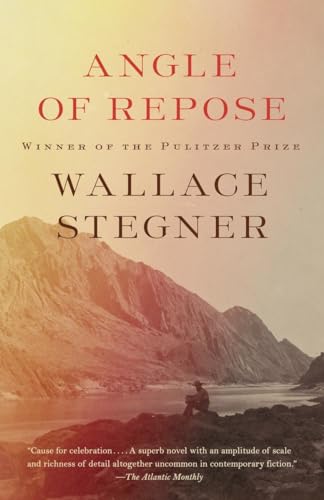
Brian Koppelman, known for co-creating the hit series "Billions" and writing films like "Rounders," shared his admiration for this novel during a discussion on historical fiction. In a brief but telling endorsement, he said, "@robwitwer I've read it! Fascinating book." This acknowledgment from a storyteller who crafts complex narratives adds weight to the book’s depth. It’s clear that Stegner’s portrayal of the American West and intricate family dynamics resonated with Koppelman, highlighting how the novel offers more than history—it invites readers into the emotional landscape behind the facts.
Wallace Stegner (1909-1993) was a renowned author of numerous novels and nonfiction works, including the Pulitzer Prize-winning 'Angle of Repose'. He was known for his deep insights into the American West and its history.
Unlike most historical novels that focus purely on sweeping events, Wallace Stegner’s "Angle of Repose" digs into the intimate struggles of one family as a lens for American history. Drawing from his deep knowledge of the American West, Stegner explores themes of resilience, legacy, and personal transformation through the story of Lyman Ward, a retired history professor confined by illness, who uncovers his grandmother's pioneering life. You gain a nuanced understanding of the cultural and physical challenges faced by settlers, enriched by vivid character studies and reflections on how personal and national histories intertwine. This book suits those interested in history’s human elements rather than just dates and facts.
This AI-tailored book on war narratives develops a systematic approach with frameworks that adapt to your specific historical interests. The content adjusts based on your chosen wars, soldier experiences, and thematic focus to address the nuanced psychological and cultural challenges war stories present. It bridges the gap between personal soldier accounts and literary representation, providing a tailored exploration of how historical fiction conveys trauma and resilience.
TailoredRead AI creates personalized nonfiction books that adapt to your unique background, goals, and interests. Instead of reading generic content, you get a custom book written specifically for your profession, experience level, and learning objectives. Whether you're a beginner looking for fundamentals or an expert seeking advanced insights, TailoredRead crafts a book that speaks directly to you. Learn more.
This AI-tailored book explores personal soldier stories and the psychological impact of war within historical fiction, providing a personalized framework that adjusts to your specific interests and historical contexts. It offers a detailed examination of narrative techniques used to convey trauma, resilience, and the human experience amidst conflict. By focusing on individual perspectives, the book cuts through irrelevant advice and fits your particular focus areas, whether centered on a specific war, era, or cultural background. It also addresses the ethical and literary challenges of representing war experiences authentically, supporting a nuanced understanding of how historical fiction shapes memory and empathy.
Mark Suster, an American entrepreneur and managing partner at Upfront Ventures, brings a sharp eye for narrative richness to his recommendation. During a reflective moment, he shared, "@jbright Did you enjoy the book? I loved it," revealing how this novel resonated beyond typical historical fiction. His appreciation highlights the book's ability to engage through compelling storytelling and emotional depth. Alongside him, Jason Goldman, a seasoned tech and culture writer with experience at Google and Twitter, praised the book's beautiful prose and wished for its inclusion in educational curricula, underscoring its literary and historical significance.
2014·531 pages·Historical Fiction, Fiction, World War II, Character Development, Narrative Structure
Drawing from a decade of meticulous research and literary craft, Anthony Doerr offers a deeply immersive experience in the shadows of World War II. You learn how sensory detail and narrative structure can illuminate human resilience, following two young characters whose lives intersect amid war's devastation. The book explores the intricacies of memory, perception, and moral complexity through vividly drawn settings like occupied Paris and Saint-Malo. If you appreciate stories that weave emotional depth with historical nuance, this novel enriches your understanding of how ordinary people navigate extraordinary times.
Josh Sternberg, tech editor at Adweek with bylines in The Atlantic and Entrepreneur, credits this novel with shaping his love for historical fiction, recalling "Amazing! Loved that book growing up." His appreciation comes from how it vividly captures the clash of worlds in feudal Japan, enriching his understanding of complex cultures. Similarly, Tradeciety Rolf, a seasoned forex trader, found it gripping, calling it "The best fiction book I've read since 'The player of games'. Can't put it down :)" Both highlight how this epic story goes beyond history, engaging readers deeply in its human and political drama.
James Clavell, the son of a Royal Navy family, was educated in Portsmouth before, as a young artillery officer, he was captured by the Japanese at the Fall of Singapore. It was on this experience that his bestselling novel KING RAT was based. He maintained this oriental interest in his other great works: TAI-PAN, SHOGUN, NOBLE HOUSE and GAI JIN. Clavell lived for many years in Vancouver and Los Angeles, before settling in Switzerland, where he died in 1994.
2019·1299 pages·Historical Fiction, Cultural Conflict, Feudal Japan, Character Development, Political Intrigue
When James Clavell first realized the depth of cultural clash in seventeenth-century Japan, he crafted a narrative that goes beyond mere historical recounting to immerse you in the complexities of loyalty, power, and identity. You explore the world through John Blackthorne’s eyes, learning not just about feudal Japan’s customs and politics but also how to navigate profound moral dilemmas and cultural displacement. Chapters detailing Blackthorne’s interactions with samurai and political factions reveal the intricate dance of honor and survival. This book is ideal for anyone fascinated by cross-cultural encounters and the human struggles behind historical events, though its length and detail demand patience and focus.
Vladimir Bartol (1903-1967), a Slovene intellect and journalist influenced by Jung and Nietzsche, wrote this novel over nearly a decade to fuse psychology with history, portraying the world’s first political terrorist against the backdrop of rising fascism. His nuanced perspective on power, fanaticism, and human cost shapes a narrative that remains relevant for understanding leadership and ideology.
Vladimir Bartol (1903-1967) was a Slovene intellect and journalist living in the Trieste region of Italy prior to World War II. An early follower of Jung and Freud, and Slovenia's first translator of Nietzsche, Bartol wanted to fuse psychology and literature with the story of the world's first terrorist to tell the story of Mussolini. Bartol's view of Mussolini was ambiguous; he originally wanted to dedicate Alamut to the dictator, but was convinced otherwise by his publisher. Bartol spent nearly a decade writing Alamut, which was the first book of a projected trilogy. He went on to write several minor works, short stories and plays, but never wrote another novel. He died in 1967.
391 pages·Historical Fiction, Political Intrigue, Psychological Fiction, Medieval History, Terrorism
Vladimir Bartol, a Slovene intellectual and journalist deeply influenced by Jung, Freud, and Nietzsche, spent nearly a decade crafting Alamut to explore the psychological and political underpinnings of power and fanaticism. You’ll uncover a nuanced portrait of Hasan ibn Sabbah, the original "assassin," whose manipulative use of faith and terror reshaped medieval Persia and echoes in modern political landscapes. Through vivid characters like Halima and Avani ibn Tahir, the book reveals how ideology can be wielded to control minds and justify violence, offering insights into the mechanics of fanaticism and authority. If you're drawn to complex historical narratives that challenge simplistic hero-villain distinctions, this novel stretches your understanding of loyalty, manipulation, and sacrifice.
Jim Oshaughnessy, founder of OSAM LLC and a specialist in custom indexing, shared his brief but enthusiastic endorsement: "@kendrictonn Love that book, cheers." His appreciation reflects the book's lasting impression beyond typical historical fiction. This came amid his exploration of narratives that blend personal depth with broad historical scope. Similarly, Jj Macnab, fellow at George Washington University's Program on Extremism, noted the challenge of moving on after reading it, saying, "It's hard to choose your next book. Realistically, you're going to be disappointed." Their endorsements highlight the book's emotional weight and narrative power that resonate deeply with discerning readers.
When Mark Helprin first discovered the emotional depth of war's impact on personal lives, he crafted a narrative that intertwines the brutality of the Great War with intimate human experiences. You follow Alessandro Giuliani from his youthful days of carefree pursuits and academic passion through the horrors of battle and the complexities of survival, love, and loss. The book offers rich insights into how history shapes identity and memory, illustrated vividly through Alessandro's reflections and encounters decades later. If you seek to understand the human side of historical conflict through an epic, character-driven story, this novel will engage your empathy and challenge your perspective on war and reconciliation.
Emily Vanderwerff, a critic at Vox known for her keen literary insights, recommended this novel during a deep dive into historical fiction. She was captivated by how the author captures the passage of time, describing it as "slipping through the characters' fingers," which highlights the novel's immersive and fluid narrative style. Emily's engagement with multiple perspectives changed her view on how time and character development intertwine, making this book a memorable experience in her reading journey.
“Holy hell, the way time passes in this book, like it's slipping through the characters' fingers! Undset darts among all of their perspectives so deftly too. I am about halfway done, and this might end up one of my favorite books.” (from X)
Sigrid Undset was a Norwegian author who won the Nobel Prize in Literature in 1928. She is best known for her historical novels, particularly the trilogy 'Kristin Lavransdatter', which explores the life of a woman in 14th-century Norway. Undset's works are celebrated for their deep psychological insight and vivid portrayal of medieval life, reflecting her own experiences and beliefs. Her writing often delves into themes of love, faith, and the struggles of women in a patriarchal society.
Historical Fiction, Medieval Life, Norwegian History, Character Development, Family Dynamics
When Sigrid Undset first discovered the raw complexities of 14th-century Norwegian life, she crafted a narrative that brings that era vividly to your fingertips. This book immerses you in the turbulent life of Kristin Lavransdatter, exploring themes of love, faith, and societal constraints through rich character perspectives and detailed settings. You gain insight into medieval social customs, family dynamics, and personal rebellion, learning how individual desires clash with rigid traditions. If you appreciate layered historical narratives that balance emotional depth with cultural context, this novel offers a profound experience. However, those seeking fast-paced plots may find its deliberate unfolding less suited to their tastes.
The best Historical Fiction books and more, in your inbox each week. No account needed.
Conclusion
This curated collection reveals how historical fiction bridges the personal and the political, from the trenches of World War I to medieval Norway’s family dramas. If you're drawn to the human stories behind historical events, starting with "All Quiet on the Western Front" offers a sobering perspective on war's toll. For those eager to explore cultural clash and resilience, "Shogun" and "Half of a Yellow Sun" provide compelling narratives.
To engage rapidly with these themes, pairing "All the Light We Cannot See" with "While the Music Played" offers a blend of sensory storytelling and cultural history. Once you've absorbed these expert insights, create a personalized Historical Fiction book to bridge the gap between general principles and your specific situation.
These books invite you into worlds where history's echoes still reverberate through human experience. Dive in, and let these stories deepen your understanding of the past and its impact on today.
Frequently Asked Questions
I'm overwhelmed by choice – which book should I start with?
Start with "All Quiet on the Western Front" for a profound, accessible entry into historical fiction focused on war’s human cost. It’s widely recommended and offers a strong foundation before exploring more specialized narratives.
Are these books too advanced for someone new to Historical Fiction?
Not at all. Many, like "The Egyptian" and "Half of a Yellow Sun," balance rich detail with engaging storytelling, making them approachable for newcomers eager to learn through story.
What’s the best order to read these books?
Consider chronological or thematic order—begin with ancient settings like "The Egyptian," then move to medieval Europe with "Kristin Lavransdatter," and finish with modern conflicts such as "While the Music Played." This builds historical perspective gradually.
Do I need to read all of these, or can I just pick one?
You can certainly pick individual books that align with your interests. Each stands alone, but reading multiple offers richer insight into diverse historical contexts and narrative styles.
Which books focus more on emotional depth versus historical events?
"Half of a Yellow Sun" and "Angle of Repose" emphasize personal and emotional struggles against historical backdrops, while "Alamut" and "Shogun" lean more into political intrigue and cultural complexity.
How can I get Historical Fiction content tailored to my specific interests?
While these expert books are excellent, personalized books can focus on your preferred era, region, or themes. You might find creating a personalized Historical Fiction book a time-efficient way to explore exactly what you want.
📚 Love this book list?
Help fellow book lovers discover great books, share this curated list with others!