10 Income Inequality Books That Shape Expert Perspectives
Explore Income Inequality Books recommended by Ibram X. Kendi, Al Franken, and Beverly Daniel Tatum, revealing key issues and solutions
Updated on June 27, 2025·We may earn commissions for purchases made via this page
5 of 10 books have Audiobook versions
We're launchingLaunching on Product Hunt today 🎉We just launchedJust launched on Product Hunt 🎉
Modelpeers, from the BookAuthority teamFrom the BookAuthority team: Modelpeers, a free way to follow AI models and agents like you follow people. We'd love your support.
What if the roots of income inequality run deeper than wages and taxes alone? This question hits home as disparities widen across societies, shaping everything from education to justice. Understanding the forces behind these gaps is crucial now more than ever, as economic pressures and social divisions intensify.
Experts like Ibram X. Kendi, director of the Antiracism Center at American University, and Al Franken, former U.S. Senator, have championed books that unravel complex ties between race, politics, and economics. Kendi’s endorsement of Dorothy Brown’s analysis of racial bias in tax law offers a fresh perspective on economic justice, while Franken praises Heather McGhee’s exploration of how racial division undermines collective prosperity.
While these expert-curated books provide proven frameworks, readers seeking content tailored to their specific background, interests, or goals might consider creating a personalized Income Inequality book that builds on these insights. This approach can bridge general understanding with your unique learning path.
Ibram X. Kendi, professor at American University and director of the Antiracism Center, brings a powerful lens to this book's exploration of racial inequities in tax policy. After years studying systemic racism, he highlights Dorothy Brown's work as an urgent and incisive unpacking of how the tax system bolsters White wealth at Black Americans’ expense. Kendi’s endorsement stems from his deep commitment to antiracism scholarship, and he notes how this book reshaped his understanding of economic disparities. Alongside him, Alan Rosenblatt Phd praises the widespread acclaim the book has received, underscoring its impact across disciplines.
Professor, American University; Antiracism Center Director
“In this urgent account, Dorothy Brown incisively unpacks how racism is embedded in our nation’s tax system, enhancing White wealth at the expense of Black Americans.”
Dorothy A. Brown is the Martin D. Ginsburg Chair in Taxation at Georgetown University Law Center. A graduate of Fordham University and Georgetown Law, she received her LLM in Taxation from New York University. A nationally recognized scholar in the areas of race, class, and tax policy, she has published dozens of articles, essays, and book chapters on the topic. She has appeared on CNN, MSNBC, PBS, and NPR, and her opinion pieces have been published in CNN Opinion, Forbes, The New York Times, and The Washington Post. Born and raised in the South Bronx in New York City, Dorothy Brown currently resides in Atlanta, Georgia.
Dorothy A. Brown’s decades of experience as a tax law professor and her personal journey from the South Bronx shape this revealing examination of racial bias embedded in America’s tax system. You’ll explore how familiar milestones—buying a home, attending college, getting married—disproportionately disadvantage Black families due to policies that favor white norms and wealth accumulation. Brown grounds her insights in both rigorous research and vivid stories from Atlanta families, making complex tax law accessible and relevant. This book is especially suited for those aiming to understand structural income disparities through the lens of taxation and for advocates seeking informed pathways toward reform.
Al Franken, a former U.S. Senator and political commentator, highlights the urgency of Heather McGhee's analysis during a time when many grapple with economic and racial divides. Reflecting on how "whites have been lured to side with their race instead of their class," he underscores the book’s challenge to entrenched beliefs. His endorsement speaks to the book’s power in unraveling complex social issues with clarity and empathy. Meanwhile, Christina Reynolds, VP of Communications at EMILY's List, celebrates its recognition by the National Book Awards, affirming its significance for understanding inequality. Together, their voices amplify the book’s call for solidarity across divides.
“This week on The Podcast. A GREAT ONE! In her brilliant new book The Sum of Us, Heather McGhee explains how whites have been lured to side with their race instead of their class.” (from X)
Heather McGhee is an expert in economic and social policy. The former president of the inequality-focused think tank Demos, McGhee has drafted legislation, testified before Congress, and contributed regularly to news shows including NBC’s Meet the Press. She now chairs the board of Color of Change, the nation’s largest online racial justice organization. McGhee holds a BA in American studies from Yale University and a JD from the University of California, Berkeley, School of Law.
Heather McGhee, a seasoned economic and social policy expert, examines how racism undermines economic and social progress for all Americans, not just people of color. Drawing on her experience leading the think tank Demos and engaging with communities nationwide, she reveals how policies shaped by racial division have led to deteriorating public goods like schools and infrastructure. You’ll gain insight into the "zero-sum" mindset and its impact on wages, unions, and healthcare access, alongside stories illustrating the benefits of multiracial solidarity. This book suits anyone seeking a deeper understanding of how racial and economic inequalities intertwine and what collective action can achieve.
This AI-created book on income inequality is crafted from your specific background and goals to bring clarity to complex economic disparities. By sharing what aspects interest you most and your current understanding, you receive a tailored guide that focuses on topics meaningful to you. This personalized approach helps you navigate dense information with a clear path, making learning more efficient and relevant to your perspective.
TailoredRead AI creates personalized nonfiction books that adapt to your unique background, goals, and interests. Instead of reading generic content, you get a custom book written specifically for your profession, experience level, and learning objectives. Whether you're a beginner looking for fundamentals or an expert seeking advanced insights, TailoredRead crafts a book that speaks directly to you. Learn more.
This tailored exploration of income inequality delves deeply into the economic forces shaping wealth distribution in society. By focusing on your unique interests and background, it examines key factors like wage disparities, policy impacts, historical trends, and social consequences with clarity and insight. The book reveals complex relationships between economic structures and individual outcomes, providing a nuanced understanding that is seldom found in one place. Its personalized nature means it addresses your specific goals, helping you grasp critical concepts and data that align with your learning needs. With a careful synthesis of established knowledge, this book offers an engaging pathway through the multifaceted world of income inequality, making challenging content accessible and relevant to you.
A Devoted Yogi, a respected expert in functional nutrition and longevity, highlights this book amidst his broader reflections on societal well-being. He urges his followers to please watch, retweet and/or favorite this worthy and worthwhile YouTube video: Thomas Sowell is Back Again to Discuss His Book Wealth, Poverty, and Politics, emphasizing how Sowell's data-driven approach reshaped his understanding of economic disparities. This recommendation carries weight given the expert’s focus on systemic health and societal factors. Similarly, Mostly Borrowed Ideas, an equity analyst, shares how the book introduced him to new perspectives that challenged his previous views, underscoring its depth and capacity to broaden economic discourse.
“Please watch, retweet and/or favorite this worthy and worthwhile YouTube video: Thomas Sowell is Back Again to Discuss His Book Wealth, Poverty, and Politics” (from X)
Thomas Sowell is a senior fellow at the Hoover Institution, Stanford University. He is the author of dozens of books including Charter Schools and Their Enemies, winner of the 2021 Hayek Book Prize. He is the recipient of numerous other awards, including the National Humanities Medal, presented by the President of the United States in 2003.
What if everything you knew about income inequality was wrong? Thomas Sowell, a senior fellow at the Hoover Institution with decades of experience in economics, challenges prevailing narratives by focusing on wealth production factors often overlooked, such as geography, demography, and culture. You’ll explore how political and ideological battles have distorted the understanding of economic disparities, backed by data that questions popular left-leaning arguments like those from Piketty or Krugman. Particularly eye-opening are chapters dissecting the empirical evidence behind wealth creation and how misinterpretations fuel welfare debates, making this a book for anyone ready to rethink entrenched economic assumptions.
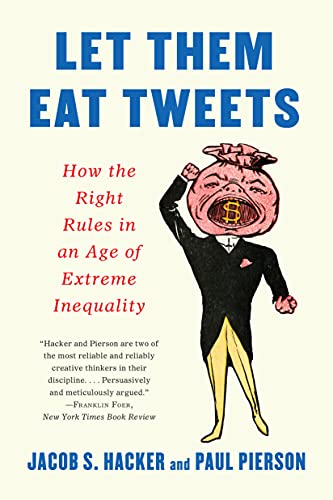
Asha Rangappa, a former FBI special agent and Yale faculty member, brings a rare blend of legal and analytical expertise to her recommendation of this book. She highlights how it illuminates complex GOP dynamics, saying, "cc: @Teri_Kanefield I think you’d like this book. It fits in with and illuminates your great explainers on the GOP tent, spectacle, hierarchy, and the rest." Rangappa’s perspective underscores the book’s value in unpacking the intertwining of political spectacle and economic inequality. Complementing her view, Norman Ornstein, a respected scholar at the American Enterprise Institute, lauds the book as "superb and a must read," reflecting its broad acclaim among political analysts.
“cc: @Teri_Kanefield I think you’d like this book. It fits in with and illuminates your great explainers on the GOP tent, spectacle, hierarchy, and the rest” (from X)
Jacob S. Hacker is a political scientist at Yale University, and the coauthor of three books, including the New York Times bestseller Winner-Take-All Politics. He lives in New Haven, Connecticut.
Unlike most books on political economy that focus narrowly on policy impacts, Jacob S. Hacker and Paul Pierson dig into the unsettling fusion of plutocratic priorities and right-wing populism reshaping America. You’ll gain a nuanced understanding of how elite economic interests and cultural appeals intertwine, with detailed accounts of tax cuts, deregulation, and racial politics fueling inequality since the 1980s. Chapters dissect key moments like the Trump administration’s tax reforms and the GOP’s strategic choices, revealing how democracy itself is at risk. This book suits anyone wanting to grasp the forces behind today’s political-economic divide, especially scholars and engaged citizens aiming to decode America’s evolving political landscape.
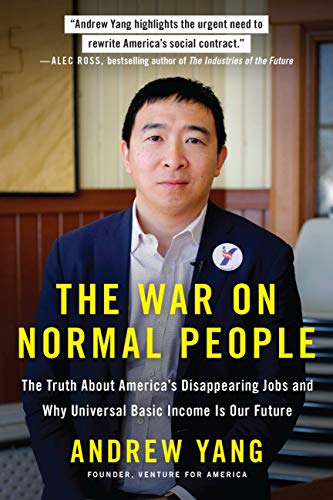
James Altucher, founder and CEO of Reset Inc, with extensive experience in entrepreneurship and investing, praises this insightful examination of America's shifting job landscape. Facing a future where automation threatens millions of livelihoods, he found the book's argument compelling, sharing that "He's appealing to you and me. In any case, I highly recommend a great book, 'The War on Normal People', by a brilliant young man named Andrew Yang." This endorsement underscores the book's relevance for anyone grappling with economic change. Marieme Jamme, a global keynote speaker for UNICEF, also acknowledges the book's impact, emphasizing its thoughtful approach to urgent social challenges.
“@hallofwonders He's appealing to you and me. In any case, I highly recommend a great book, 'The War on Normal People', by a brilliant young man named Andrew Yang” (from X)
Andrew Yang is the founder of Venture for America, a major non-profit that places top college graduates in start-ups for two years in emerging U.S. cities to generate job growth and train the next generation of entrepreneurs. Yang has been the CEO, co-founder or executive at a number of technology and education companies. Yang was named a Presidential Ambassador of Global Entrepreneurship and a Champion of Change by the White House and one of Fast Company's '100 Most Creative People in Business.' He was also named to the National Advisory Council for Innovation and Entrepreneurship of the Department of Commerce. A major documentary with an Oscar-winning director, Generation Startup, featuring Yang and Venture for America, was released in Fall 2016 and is available on Netflix and other streaming platforms. He is a graduate of Columbia Law, where he was an Editor of the Law Review, James Kent Scholar and winner of the Class of 1912 Prize, and Brown University where he graduated with degrees in Economics and Political Science.
Unlike most books on income inequality that focus solely on economic theory, this work by Andrew Yang takes a grounded approach by highlighting the urgent issue of automation-driven job loss and its social fallout. Yang, a seasoned entrepreneur and founder of Venture for America, draws from his experience in tech startups and policy to argue for Universal Basic Income as a necessary adaptation to a changing labor market. You'll find specific discussions on how AI and robotics threaten millions of jobs, alongside Yang's concept of "human capitalism" that separates livelihood from employment. It's a thoughtful read especially if you want to understand the intersection of technology, labor economics, and social policy.
This AI-created book on income inequality is crafted based on your background, interests, and goals. You share what aspects of inequality matter most to you and your current understanding, and the book focuses on those areas specifically. Personalizing this complex subject helps turn broad expert knowledge into a clear, actionable 30-day plan that fits your learning style and objectives.
TailoredRead AI creates personalized nonfiction books that adapt to your unique background, goals, and interests. Instead of reading generic content, you get a custom book written specifically for your profession, experience level, and learning objectives. Whether you're a beginner looking for fundamentals or an expert seeking advanced insights, TailoredRead crafts a book that speaks directly to you. Learn more.
2026·50-300 pages·Income Inequality, Economic Disparities, Social Justice, Policy Impact, Wealth Distribution
This tailored book explores income inequality through a focused 30-day plan designed to match your background and interests. It examines the root causes, social dynamics, and economic consequences of disparity, providing a personalized pathway that highlights the most relevant insights for you. By weaving together expert knowledge with your specific goals, this book reveals actionable steps to understand and act on inequality effectively. It covers foundational concepts before guiding you through targeted reflections and activities that build your awareness and empower informed decisions. This personalized approach ensures you engage deeply with the material, making complex topics accessible and meaningful to your unique learning journey.
Hugh Hendry Eclectica, founder of Eclectica Macro and seasoned investor, draws from his extensive experience in global markets to recommend this book, highlighting its lucid analysis. He emphasizes how Klein and Pettis reveal the domestic class struggles behind international trade conflicts, a perspective that reshaped his understanding of economic tensions. His endorsement, "a must read book," underscores how this work deepened his insight into the intersection of inequality and trade. Alongside him, Robin Sloan, acclaimed author, praises Klein’s writing and calls the book a "knockout," adding literary weight to its economic relevance.
“Before I forget, like last week, a big thanks to the wonderfully lucid analysis of M.C. Klein who partnered with the top dog of global trade Michael Pettis to produce the wonderful Trade Wars Are Class Wars…a must read book and who joins me this week” (from X)
Matthew C. Klein is the economics commentator at Barron’s. Michael Pettis is professor of finance at Peking University’s Guanghua School of Management and a senior fellow at the Carnegie Endowment for International Peace.
What happens when deep expertise in economics meets the complex realities of global trade? Matthew C. Klein and Michael Pettis, with backgrounds spanning financial commentary and academic finance, dissect how rising income inequality has reshaped trade policies over the last three decades. You’ll gain insight into why trade wars are less about national rivalry and more about domestic class struggles, exploring chapters that trace monetary and fiscal choices in China, Europe, and the U.S. This book is ideal if you want to understand the economic forces behind geopolitical tensions and their impact on workers and markets worldwide.
Winner of the 2021 Lionel Gelber Prize
Longlisted for 2020 Financial Times & McKinsey Business Book of Year
Named Best Business Book of 2020 by Strategy + Business
Brent Hatley, a radio personality known for his work on The Howard Stern Show, highlights how The Divide exposed him to the maddening reality of economic injustice in America. He pairs it with Radley Balko's work as eye-opening accounts that reshape understanding of the justice system. The emotional weight of Taibbi’s stories—from immigrant crackdowns to unchecked financial fraud—deepened Hatley’s grasp of systemic inequality. Complementing this, The Los Angeles Times praises the book’s powerful storytelling as advocacy journalism that stays with you long after reading.
“@mtaibbi That story in your book is maddening. The Divide is one of the best, most enlightening books I've ever read along with Radley Balko's Rise of the Warrior Cop.” (from X)
Matt Taibbi has been a contributing editor for Rolling Stone and the author of five previous books, including the New York Times bestsellers The Great Derangement and Griftopia. He lives in New Jersey.
What if everything you thought about justice and wealth in America was turned on its head? Matt Taibbi, with a background as a Rolling Stone contributing editor and bestselling author, dives into the paradox where poverty rises but crime falls, revealing a justice system skewed by wealth. You’ll gain insights into how mass incarceration and financial fraud intertwine, with vivid examples like the immigrant dragnet and hedge fund conspiracies. This book suits anyone seeking to understand the deep structural forces driving economic disparity and legal inequities, not just statistics but human stories that challenge prevailing narratives.
New York Times Bestseller
Named One Of The Best Books Of The Year By The Washington Post, NPR, And Kirkus Reviews
Keith Ellison, Minnesota Attorney General known for advocating economic fairness, highlights this book as a crucial read for anyone grappling with tax justice. He points to it as a "great new book by Emmanuel Saez" and notes Saez's role advising prominent political campaigns, underscoring the book's influence in shaping policy debates. Ellison’s endorsement reflects how the book clarifies complex tax issues affecting everyday Americans. Economist Dani Rodrik of Harvard Kennedy School also praises it as "fantastic," reinforcing its academic and practical significance in discussions on income inequality.
“Great new book by Emmanuel Saez The Triumph of Injustice: How the Rich Dodge Taxes and How to Make Them Pay. Saez is advising Bernie Sanders and Elizabeth Warren campaigns.” (from X)
Emmanuel Saez is professor of economics and director of the Center for Equitable Growth at the University of California, Berkeley. His research focuses on tax policy and inequality from both theoretical and empirical perspectives. With Thomas Piketty, he has constructed long-run historical series of income inequality in the United States that have been widely discussed in public debate. He received his PhD in economics from MIT in 1999. He was awarded the John Bates Clark Medal of the American Economic Association in 2009 and a MacArthur Fellowship in 2010.
What happens when leading economists Emmanuel Saez and Gabriel Zucman turn their focus to America's tax system? They reveal how policies over the last century have allowed billionaires to pay lower tax rates than their secretaries, while working-class Americans face a heavier burden. This book offers a detailed examination of tax avoidance, the rise of a tax avoidance industry, and global tax competition, backed by new comprehensive data. You’ll gain insight into the historical shifts and policy decisions that fueled inequality, plus concrete proposals for reforming taxation to restore fairness in a globalized economy. It’s a rigorous exploration for anyone keen on understanding the mechanics behind wealth disparity.
Matthew Katz, a physician dedicated to advancing health and social awareness, highlights how this book opened his eyes to the ways AI and algorithms can embed racial bias in code. Reflecting on his own experiences questioning systemic influences on health outcomes, Katz recommends "Weapons of Math Destruction" for its clear exploration of how unregulated data models can deepen inequality. His endorsement underscores the book’s relevance for anyone grappling with the social consequences of technology.
Cathy O'Neil is a data scientist and author of the blog mathbabe.org. She earned a Ph.D. in mathematics from Harvard and taught at Barnard College before moving to the private sector, where she worked for the hedge fund D. E. Shaw. She then worked as a data scientist at various start-ups, building models that predict people’s purchases and clicks. O’Neil started the Lede Program in Data Journalism at Columbia and is the author of Doing Data Science. She is currently a columnist for Bloomberg View.
2017·288 pages·Income Inequality, Data Science, Algorithmic Bias, Big Data, Social Justice
Cathy O'Neil challenges the assumption that algorithms inherently promote fairness by revealing how unregulated mathematical models often perpetuate inequality and bias in society. Drawing from her experience as a data scientist and former Wall Street quant, she exposes how these models influence critical decisions like employment, education, and insurance, frequently reinforcing existing social disparities. You’ll gain insight into the mechanisms behind these opaque 'Weapons of Math Destruction' and understand their impact on democracy and social justice. This book suits anyone interested in the intersection of data science, ethics, and economic inequality, especially those concerned with technology’s social consequences.
Kim Kelly, a labor columnist at Teen Vogue and New Republic with deep expertise in class and labor issues, highlights this book as a key resource. Her recommendation underscores the book’s relevance to understanding the struggles of tipped workers and wage inequality. Kelly’s perspective as an authority on labor rights enriches the conversation on income inequality, emphasizing how Saru Jayaraman’s work sheds light on the systemic challenges faced by vulnerable workers in America.
2021·256 pages·Income Inequality, Labor Rights, Wage Policy, Economic Justice, Service Industry
When Saru Jayaraman explores the subminimum wage system, she uncovers how it traps millions of tipped workers in economic precarity, especially women and people of color. You’ll gain a detailed understanding of how the federal tipped minimum wage policy functions and why it disproportionately harms marginalized communities. The book dives into the pandemic’s spotlight on these vulnerabilities, offering insights on labor rights and economic justice. If you’re invested in labor economics, social policy, or activism, this book lays out the systemic challenges and potential pathways to fairer wages.
The best Income Inequality books and more, in your inbox each week. No account needed.
Conclusion
These 10 books together reveal a multifaceted picture of income inequality—from the racialized mechanics of tax policies to the shifting landscapes of labor and trade. They show how systemic issues like algorithmic bias and justice disparities contribute to economic divides.
If you’re trying to grasp the historical and structural causes of inequality, start with The Whiteness of Wealth and The Sum of Us. For insights on the political economy and labor shifts, pair Let them Eat Tweets with The War on Normal People. To understand tax policies and economic behaviors, The Triumph of Injustice and Wealth, Poverty and Politics offer data-driven perspectives.
Alternatively, you can create a personalized Income Inequality book to bridge the gap between general principles and your specific situation. These books can help you accelerate your learning journey and deepen your grasp of one of today’s most pressing challenges.
Frequently Asked Questions
I'm overwhelmed by choice – which book should I start with?
Start with The Whiteness of Wealth for a focused look at racial income inequality through tax policy, or The Sum of Us for how racial and economic issues intertwine. Both offer accessible entry points backed by respected experts like Ibram X. Kendi and Al Franken.
Are these books too advanced for someone new to Income Inequality?
Not at all. Many are written to engage both newcomers and seasoned readers. For example, Heather McGhee’s The Sum of Us combines storytelling with research, making complex ideas relatable without oversimplifying.
What’s the best order to read these books?
Consider starting with books that frame the problem broadly, like Wealth, Poverty and Politics, then move to specific angles such as tax policy with The Triumph of Injustice and labor issues in One Fair Wage for a layered understanding.
Should I start with the newest book or a classic?
Balance helps. Newer books like The Whiteness of Wealth bring fresh research and perspectives, while established works like Thomas Sowell’s Wealth, Poverty and Politics challenge assumptions and deepen context.
Can I skip around or do I need to read them cover to cover?
Feel free to jump between topics based on your interests. These books stand alone well, so you can explore themes like automation, tax policy, or justice independently without losing coherence.
How can I get Income Inequality insights tailored to my specific goals?
Great question! While these expert books offer solid foundations, personalized content can connect these ideas directly to your background and interests. You might find a custom Income Inequality book a valuable complement to expert insights for focused learning.
📚 Love this book list?
Help fellow book lovers discover great books, share this curated list with others!