"The Arctic Home in the Vedas Being also a New Key to the Interpretation of Many Vedic Texts and Legends" by Lokamanya Bal Gangadhar Tilak made it to BookAuthority's Best Indian Philosophy eBooks of All Time!
10 Indian Philosophy Books That Shape Spiritual and Intellectual Journeys
Curated by Huston Smith, Eknath Easwaran, and Dilip Mandal for profound insights into Indian Philosophy
Updated on June 26, 2025·We may earn commissions for purchases made via this page
9 of 10 books have Kindle versions
We're launchingLaunching on Product Hunt today 🎉We just launchedJust launched on Product Hunt 🎉
Modelpeers, from the BookAuthority teamFrom the BookAuthority team: Modelpeers, a free way to follow AI models and agents like you follow people. We'd love your support.
What if I told you that the wisdom of Indian Philosophy has guided some of the world's most influential thinkers and spiritual seekers for millennia? Despite its ancient origins, its insights into consciousness, ethics, and the self remain startlingly relevant today. Whether wrestling with life's big questions or seeking clarity in complex spiritual traditions, these teachings offer a timeless compass.
Scholars like Huston Smith, author of The World’s Religions, found profound guidance in these texts, praising translators like Eknath Easwaran for their authentic, lived understanding of the classics. Easwaran's work made the Bhagavad Gita and Upanishads accessible to modern audiences, bridging Eastern spirituality with Western intellect. Meanwhile, historian Dilip Mandal highlights how Bal Gangadhar Tilak's deep analysis reshaped perspectives on Vedic origins, revealing the rich historical layers underpinning these philosophies.
These ten books, carefully selected for their authoritative insights and enduring value, provide a pathway into the heart of Indian Philosophy. While these expert-curated books provide proven frameworks, readers seeking content tailored to their specific background, experience, or interests might consider creating a personalized Indian Philosophy book that builds on these insights.
Huston Smith, author of The World’s Religions and a leading voice in the study of global faiths, praised Eknath Easwaran’s translation with high regard. Smith admired Easwaran’s unique qualification, noting it’s impossible to truly capture the essence of the Bhagavad Gita without living its teachings firsthand. This deep connection allowed Easwaran to reveal the Gita’s timeless lessons on life’s inner battles and spiritual growth, offering a guide that shaped Smith’s own understanding of Indian spirituality. "No one in modern times is more qualified — no, make that ‘as qualified’ — to translate the epochal Classics of Indian Spirituality than Eknath Easwaran... My admiration of the man and his works is boundless."
“No one in modern times is more qualified — no, make that ‘as qualified’ — to translate the epochal Classics of Indian Spirituality than Eknath Easwaran. And the reason is clear. It is impossible to get to the heart of those classics unless you live them, and he did live them. My admiration of the man and his works is boundless.”
Eknath Easwaran (1910-1999) is one of the twentieth century's great spiritual teachers and an authentic guide to timeless wisdom. He is a recognized authority on the Indian spiritual classics. His translations of the Bhagavad Gita, the Upanishads, and the Dhammapada are the best-selling editions in the USA. His books on meditation, spiritual living, and the classics of world mysticism have been translated into sixteen languages. His book Passage Meditation (originally titled Meditation) has sold over 200,000 copies since it was first published in 1978. Two million copies of Easwaran's books are in print. Born in Kerala, India, Easwaran was a professor of English literature at a leading Indian university when he came to the United States in 1959 on the Fulbright exchange program. A gifted teacher, he moved from education for degrees to education for living, and gave talks on meditation and spiritual living for 40 years. His meditation class at UC Berkeley in 1968 was the first accredited course on meditation at any major university. In 1961 he founded the Blue Mountain Center of Meditation, a nonprofit organization that publishes his books, videos, and audio talks, and offers retreats and online programs. Easwaran lived what he taught, giving him lasting appeal as a spiritual teacher and author of deep insight and warmth.
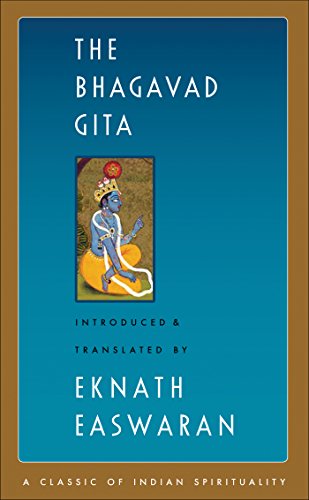
Drawing from his deep roots in Hindu tradition and decades as a professor of English literature, Eknath Easwaran offers a translation of the Bhagavad Gita that is both accessible and profound. You’ll discover how the Gita’s dramatic battlefield setting symbolizes the inner struggle for self-mastery, with Sri Krishna’s teachings addressing questions on life, duty, and the soul. Easwaran’s 55-page introduction and chapter notes clarify Sanskrit terms and key concepts, making it easier to grasp complex spiritual ideas. This book suits anyone seeking to understand Indian spiritual classics beyond surface-level reading, especially those wrestling with ethical dilemmas and personal growth.
Huston Smith, renowned author of The World’s Religions, praised Eknath Easwaran’s translation for its unmatched authenticity, noting that no one in modern times is as qualified to render these classics because Easwaran truly lived their teachings. This intimate connection allowed Smith to engage deeply with the texts’ spiritual essence, enhancing his understanding of Indian philosophy’s core. The profound respect Smith holds for Easwaran’s work highlights the book’s value for anyone serious about exploring Indian spirituality. Complementing this, Eknath Easwaran himself brings a unique blend of Sanskrit scholarship and Western literary insight, enriching the translation with cultural and historical context that invites thoughtful reflection.
“No one in modern times is more qualified – no, make that ‘as qualified’ – to translate the epochal Classics of Indian Spirituality than Eknath Easwaran. And the reason is clear. It is impossible to get to the heart of those classics unless you live them, and he did live them. My admiration of the man and his works is boundless.”
Eknath Easwaran (1910-1999) was a renowned spiritual teacher and translator of Indian spiritual classics. He was trained in a pure Sanskrit tradition and had a deep understanding of Hindu philosophy. Easwaran taught meditation and spirituality for nearly forty years, founding the Blue Mountain Center of Meditation in California. His translations of the Bhagavad Gita, Upanishads, and Dhammapada are best-sellers in the USA, and his works have been translated into multiple languages. He was a professor of English literature and developed a unique eight-point program for meditation, making ancient wisdom accessible to modern readers.
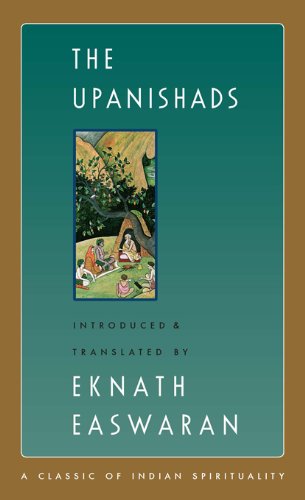
Eknath Easwaran’s translation of the Upanishads offers an accessible window into ancient Indian spiritual thought, shaped by his deep roots in Sanskrit tradition and years as a meditation teacher. You’ll explore profound insights into consciousness and the Self, where sages reveal the eternal unity behind existence. The book’s chapters come with contextual introductions and notes that help frame these timeless teachings for today’s world, making it suitable whether you’re a student of philosophy or someone seeking spiritual clarity. Easwaran’s balanced approach neither dilutes the complexity nor overwhelms, inviting you to engage intellectually and emotionally with this foundational Indian philosophy text.
This personalized AI book about Indian Philosophy is created based on your background, current understanding, and the specific concepts you want to focus on. By sharing your interests and goals, you receive a custom-crafted guide that matches your learning pace and areas of curiosity. This approach helps you bridge extensive expert knowledge with your unique perspective, making complex ideas easier to grasp and apply.
TailoredRead AI creates personalized nonfiction books that adapt to your unique background, goals, and interests. Instead of reading generic content, you get a custom book written specifically for your profession, experience level, and learning objectives. Whether you're a beginner looking for fundamentals or an expert seeking advanced insights, TailoredRead crafts a book that speaks directly to you. Learn more.
This tailored book explores the rich landscape of Indian Philosophy, focusing on core principles and practices that have shaped spiritual and intellectual traditions. It offers a personalized journey designed to match your background, interests, and goals, helping you navigate complex concepts from Vedanta to Buddhist thought. This book examines key philosophical ideas, ethical frameworks, and meditative practices, revealing their relevance to both ancient wisdom and modern life. By tailoring the content specifically for you, it creates a unique pathway that synthesizes vast expert knowledge into focused learning, making Indian Philosophy accessible and meaningful at your own pace and depth.
Huston Smith, author of The World’s Religions, brings unmatched expertise in Indian philosophy and spiritual classics. His profound respect for Easwaran’s translation comes from recognizing that "No one in modern times is more qualified – no, make that ‘as qualified’ – to translate the epochal Classics of Indian Spirituality than Eknath Easwaran." Smith's admiration stems from Easwaran’s lived experience of these teachings, which lends the translation its rare authenticity and depth. This book helped Smith deepen his understanding of the Buddha’s message, revealing nuances that often elude less grounded translations. Alongside Smith’s endorsement, Eknath Easwaran himself provides insights into his unique blend of linguistic skill and spiritual teaching that shaped this enduring work.
“No one in modern times is more qualified – no, make that ‘as qualified’ – to translate the epochal Classics of Indian Spirituality than Eknath Easwaran. And the reason is clear. It is impossible to get to the heart of those classics unless you live them, and he did live them. My admiration of the man and his works is boundless.”
Eknath Easwaran (1910-1999) was a renowned spiritual teacher and translator of Indian spiritual classics. He was trained in Sanskrit and English literature, serving as a professor before moving to the United States on a Fulbright fellowship. Easwaran founded the Blue Mountain Center of Meditation and taught the first accredited course on meditation at a major American university. His translations of the Bhagavad Gita, Upanishads, and Dhammapada are best-sellers in the USA, and his works have been translated into multiple languages. He dedicated his life to teaching meditation and spiritual living, leaving a lasting legacy through his writings and teachings.
Eknath Easwaran challenges the conventional wisdom that ancient spiritual texts must be inaccessible by offering a translation of the Dhammapada that is both faithful and approachable. Drawing from his deep mastery of Sanskrit and English literature, he not only renders the Buddha's verses with clarity but enriches them with contextual introductions and notes that illuminate their practical implications. By weaving in stories of Siddhartha’s quest, Easwaran helps you grasp the ethical and contemplative path the text advocates. This book suits anyone interested in exploring Buddhist teachings with historical depth and contemporary relevance, whether you’re new to the philosophy or seeking fresh perspectives.
M. Hiriyanna was a prominent philosopher and scholar known for his contributions to Indian philosophy. His works focus on the interpretation and analysis of Hindu philosophical traditions, making complex ideas accessible to a broader audience. Hiriyanna's expertise in the field has established him as a significant figure in the study of Indian thought.
M. Hiriyanna was a prominent philosopher and scholar known for his contributions to Indian philosophy. His works focus on the interpretation and analysis of Hindu philosophical traditions, making complex ideas accessible to a broader audience. Hiriyanna's expertise in the field has established him as a significant figure in the study of Indian thought.
M. Hiriyanna’s decades of scholarship in Indian philosophy led him to craft this concise yet interconnected overview that covers the breadth of Indian thought from the Vedic period through the classical systems. You’ll find clear exposition on theories of knowledge, ontology, and practical teachings, with contextual historical surveys that anchor each philosophical division. The glossary of Sanskrit terms and subject index make complex ideas accessible whether you’re navigating Nyaya epistemology or Vedanta metaphysics. This book suits anyone seeking a structured introduction that balances detail with readability, though those wanting exhaustive analysis might look elsewhere.
Dilip Mandal, founder of the Center For Brahmin Studies and a veteran editor with India Today, offers a compelling endorsement rooted in his deep expertise in Indian philosophy and history. During his extensive research on Vedic literature, Mandal found Tilak’s meticulous approach invaluable, particularly the detailed analysis of astronomical phenomena like the half-year day and night cycles. He emphasizes, "One must read carefully this long passage from Tilak’s book to understand the methodology he used to reach the conclusion that early Aryans lived in the Arctic", highlighting how this work reshaped his understanding of Vedic texts and their historical context.
Founder, Center For Brahmin Studies; Editor, India Today
“One must read carefully this long passage from Tilak’s book to understand the methodology he used to reach the conclusion that early Aryans lived in the Arctic – “We have seen that the half-year long day and night…” (from X)
Bal Gangadhar Tilak (1856-1920) was a prominent leader in India's struggle for independence from British rule. He was known for his advocacy of violent revolt against colonial authorities based on Vedic scripture. His imprisonment allowed him to focus on scholarly work, including this book, which presents a controversial theory about the origins of the Aryan race. Tilak's influence on leaders like Gandhi solidified his legacy as a key figure in India's history.
Bal Gangadhar Tilak, a pivotal figure in India's independence movement, authored this extensive work during his imprisonment, channeling his scholarly rigor into exploring Vedic texts. You gain a detailed examination of ancient Vedic legends through the lens of a provocative theory that early Aryans inhabited the Arctic region, using astronomical evidence like the half-year day and night cycles. The book challenges conventional interpretations by decoding symbolic references in the Rigveda and other scriptures, offering a fresh perspective on Hinduism's historical roots. If you're deeply interested in the intersection of mythology, history, and Indian philosophy, this book provides a dense, thought-provoking study, though it demands patience and a willingness to engage with complex arguments.
This AI-created book on Indian philosophy is tailored to your specific goals and background. It focuses on the exact teachings and practices you want to explore, making complex ideas approachable and relevant. By sharing your interests and skill level, you receive a book that walks you through a 30-day program designed for meaningful philosophical and spiritual growth. This personalized approach helps you engage deeply with Indian philosophy at your own pace and according to your unique journey.
TailoredRead AI creates personalized nonfiction books that adapt to your unique background, goals, and interests. Instead of reading generic content, you get a custom book written specifically for your profession, experience level, and learning objectives. Whether you're a beginner looking for fundamentals or an expert seeking advanced insights, TailoredRead crafts a book that speaks directly to you. Learn more.
This tailored book offers a focused 30-day journey through Indian philosophy, designed specifically to match your background and interests. It explores core teachings from classical texts and reveals practical ways to apply these timeless ideas to your daily life and spiritual practice. By concentrating on themes that resonate with your goals, the book creates a personalized path that bridges ancient wisdom with your unique perspective. It examines key concepts such as dharma, meditation, and ethical living, helping you to deepen your understanding and experience gradual transformation. This tailored approach accelerates learning by focusing on what truly matters to you, making complex philosophical ideas accessible and actionable.
Peter Adamson received his BA from Williams College and PhD in Philosophy from the University of Notre Dame. He served at King's College London before becoming Professor of Late Ancient and Arabic Philosophy at Ludwig-Maximilians-Universität München. His broad expertise in ancient and medieval philosophy, alongside hosting the History of Philosophy podcast, underscores his authority to guide you through the depths of classical Indian philosophy in this volume.
Peter Adamson received his BA from Williams College and PhD in Philosophy from the University of Notre Dame. He worked at King's College London from 2000 until 2012. He subsequently moved to the Ludwig-Maximilians-Universitat Munchen, where he is Professor of Late Ancient and Arabic Philosophy. He has published widely in ancient and medieval philosophy, and is the host of the History of Philosophy podcast.
Peter Adamson and Jonardon Ganeri leverage their extensive backgrounds in ancient and classical philosophy to explore the intellectual richness of classical Indian thought. You’ll encounter detailed discussions ranging from the Vedas and Upaniṣads to the Bhagavad-Gītā, alongside deep dives into Buddhist and Jain philosophies, including the Nyāya school and Advaita Vedānta. Specific chapters examine themes often overlooked, like non-violence, political authority, and the roles of women, providing a broad yet nuanced understanding. This book suits you if you want a thorough historical and philosophical context that connects classical Indian ideas to wider philosophical traditions, without skimming over less familiar schools or perspectives.
Swami Sri Yukteswar Giri, born Priya Nath Karar in 1855, was a scholar of math, science, and astrology who became a revered figure in the Kriya Yoga tradition. After personal tragedy, he devoted himself to monastic life and authored this book to demonstrate the essential unity among world religions. His unique background and disciplined spiritual practice give this text a rare blend of intellectual rigor and practical insight, making it a meaningful read for those seeking connections across religious traditions.
Swami Sri Yukteswar Giri, born Priya Nath Karar in 1855, was a prominent figure in the Kriya Yoga tradition. He was a brilliant student of math, science, and astrology, and later became a disciple of Lahiri Mahasaya. After the death of his wife, he entered the monastic order and dedicated his life to spiritual pursuits. He authored 'The Holy Science' in 1894, aiming to demonstrate the unity of all religions. His teachings continue to influence many, including his disciple, Paramahansa Yogananda.
Swami Sri Yukteswar Giri leverages his deep expertise in mathematics, science, and astrology to challenge traditional religious divisions by revealing a shared spiritual foundation. In this compact work, you explore his interpretation of the Yuga Cycle, a cosmic timeline that links planetary movements to human consciousness and societal states. The book distills complex theology into four focused chapters, guiding you from the essence of creation to the practical path toward spiritual purity and ultimate realization. If you’re curious about the intersection of Hindu and Christian scriptures or want a concise framework tying together diverse religious insights, this book offers a unique perspective grounded in rigorous scholarship and lived experience.
Thupten Jinpa, educated in the Tibetan monastic system and holding advanced degrees from the University of Cambridge, brings an unparalleled depth to this work. As principal translator to the Dalai Lama and president of the Institute of Tibetan Classics, Jinpa channels decades of scholarship and intimate knowledge of Buddhist philosophy. This book reflects his commitment to making classical Indian Buddhist ideas on mind accessible and relevant, combining traditional scriptural wisdom with contemporary scientific perspectives to deepen your understanding of consciousness and mental experience.
Thupten Jinpa, Dechen Rochard, John D. Dunne, His Holiness the Dalai Lama(you?)·
About the Author
Thupten Jinpa was educated in the Tibetan monastic system, where he received the highest degree of geshe lharam at Shartse College of Ganden Monastery. Jinpa also holds a BA in philosophy and a PhD in religious studies, both from the University of Cambridge, England. Since 1985, he has been the principal translator to His Holiness the Dalai Lama, accompanying him on tours throughout the world and translating and editing many books. Jinpa’s own works include Self, Reality and Reason in Tibetan Thought, several volumes of translations in The Library of Tibetan Classics, and the modern biography Tsongkhapa: A Buddha in the Land of Snows. He is currently the president and the editor-in-chief of the Institute of Tibetan Classics, based in Montreal, and he also chairs the Mind and Life Institute and the Compassion Institute.
Drawing from extensive expertise in Tibetan monastic scholarship and Western philosophy, Thupten Jinpa and his co-authors explore classical Buddhist perspectives on the mind with remarkable depth. You'll encounter detailed analyses of consciousness, mental factors like attention and compassion, and the intricate tantric views on subtle energies and consciousness dissolution. Chapters interweave traditional writings from masters such as Asanga and Nagarjuna with contemporary contemplative science framed by John D. Dunne's essays, bridging ancient insights with modern cognitive science. This book suits you if you're eager to understand mind and consciousness through a uniquely Indian Buddhist lens enriched by rigorous philosophical and scientific dialogue.
S. Radhakrishnan was an influential philosopher and statesman who served as India’s first Vice President and second President. His profound scholarship and commitment to Indian culture inspired this extensive work surveying Hindu thought in the Vedic and Epic periods. Combining his political stature with academic rigor, Radhakrishnan offers readers a rare authoritative perspective on foundational Indian philosophy, bridging Eastern traditions with global intellectual discourse.
S. Radhakrishnan was an influential philosopher and statesman who served as the first Vice President and the second President of India. He was a prominent scholar of Indian philosophy and played a key role in promoting Indian culture and education. His works have significantly contributed to the understanding of Eastern philosophy in the Western world.
807 pages·Indian Philosophy, Philosophy, Religion, Hindu Thought, Vedic Period
S. Radhakrishnan's decades as a philosopher and statesman culminate in this detailed exploration of Hindu thought during the Vedic and Epic periods. You’ll encounter a careful survey of foundational texts and ideas that shaped Indian intellectual history, such as the Upanishads and Mahabharata philosophies. The book offers deep insights into metaphysical concepts and ethical frameworks, making it especially useful if you're aiming to grasp traditional Indian perspectives on reality and morality. While dense, its thorough approach benefits serious students of philosophy and anyone seeking to understand the roots of Eastern thought in a historical context.
Hari Chetan brings over twenty years of expertise in religion, spirituality, and ancient philosophy to his work. With a focus on Vedic literature, he aims to illuminate the Bhagavad Gita’s profound teachings for a global audience. His mission to reveal the true nature of self and God drives this translation, crafted to help you engage deeply with one of the oldest spiritual texts. Living in Kolkata, India, Hari combines scholarly insight with a heartfelt commitment to spreading this knowledge worldwide.
Hari Chetan has more than two decades of experience in the fields of religion, spirituality, theology, and ancient philosophy, and is committed to help seekers cultivate spiritual consciousness. He has studied all the major religions and philosophies of the world. However, Vedic literature has been his primary area of interest. Having discovered the oldest and the most confidential spiritual wisdom, Hari is on a mission to spread this knowledge to all corners of the globe. His goal is to make the entire world conscious of the real identity of the self and God, and one’s true purpose in life, as this is the only lasting solution to all the problems in the world. Hari lives in Kolkata, India with his family.
Hari Chetan's decades immersed in Vedic literature shape this English translation of the Bhagavad Gita, aiming for clarity without losing the original's depth. You’ll explore timeless questions—like the nature of self, purpose, and the mechanics of karma—through 701 verses presented with added context and notes to enhance understanding. The book goes beyond religious framing, positioning the Gita as a life manual for mastering mind and emotions, with chapters outlining types of Yoga and meditation methods. If you seek a clear, unbiased gateway to ancient Indian philosophy that respects the original Sanskrit nuances, this translation offers a thoughtful path without oversimplifying the text.
The best Indian Philosophy books and more, in your inbox each week. No account needed.
Conclusion
This collection reveals three clear themes: the intertwining of ethics and spirituality, the exploration of consciousness and self-awareness, and the historical depth that shapes Indian philosophical thought. If you're navigating ethical dilemmas or seeking inner mastery, start with Easwaran’s The Bhagavad Gita and The Dhammapada. For those wanting to understand the broader philosophical landscape, Hiriyanna’s The Essentials of Indian Philosophy paired with Adamson and Ganeri’s Classical Indian Philosophy offer structured depth.
Those intrigued by the historical and mythological roots will find Tilak’s The Arctic Home in the Vedas compelling, while Swami Sri Yukteswar’s The Holy Science invites reflection on spiritual unity across traditions. For a nuanced understanding of Buddhist consciousness, Jinpa’s Science and Philosophy in the Indian Buddhist Classics stands out.
Alternatively, you can create a personalized Indian Philosophy book to bridge the gap between general principles and your specific situation. These books can help you accelerate your learning journey and deepen your engagement with one of the world’s richest philosophical traditions.
Frequently Asked Questions
I'm overwhelmed by choice – which book should I start with?
Starting with The Bhagavad Gita by Eknath Easwaran is a wise choice. It offers accessible teachings on ethics and self-mastery that resonate broadly. From there, you can explore more specialized texts depending on your interest in Hindu or Buddhist thought.
Are these books too advanced for someone new to Indian Philosophy?
Not at all. Many, like Easwaran’s translations, are designed to guide newcomers gently into complex ideas. Books like The Essentials of Indian Philosophy also provide structured introductions to help build your understanding step-by-step.
What’s the best order to read these books?
Begin with accessible classics such as The Bhagavad Gita and The Upanishads. Then, deepen your study with historical and philosophical surveys like Hiriyanna’s work and Classical Indian Philosophy. Finally, explore specialized topics like Buddhist mind or Vedic origins.
Should I start with the newest book or a classic?
Classics remain foundational because they contain the core teachings. However, newer books often provide helpful context and interpretation. Balancing both lets you appreciate original insights alongside contemporary perspectives.
Do these books assume I already have experience in Indian Philosophy?
Many are suitable for beginners while offering depth for advanced readers. Easwaran’s translations and Hiriyanna’s overview are particularly welcoming, explaining Sanskrit terms and contextualizing ideas clearly for newcomers.
How can I get personalized guidance on Indian Philosophy tailored to my interests?
While these expert books offer solid foundations, personalized books can tailor content to your background, goals, and specific interests. This approach complements expert insights and makes learning more relevant. Consider creating your personalized Indian Philosophy book to get started.
📚 Love this book list?
Help fellow book lovers discover great books, share this curated list with others!