"Law Office on a Laptop" by Catherine Hodder Esq., Kelly C. Sturmthal Esq. made it to BookAuthority's Best Law Office Technology Audiobooks of All Time!
7 Law Office Technology Books That Will Elevate Your Practice
Discover authoritative books on Law Office Technology authored by experts such as Sam Mollaei Esq., Matthew S. Cornick, and others, offering practical and strategic insights.
Updated on June 28, 2025·We may earn commissions for purchases made via this page
1 of 7 books have Audiobook versions
We're launchingLaunching on Product Hunt today 🎉We just launchedJust launched on Product Hunt 🎉
Modelpeers, from the BookAuthority teamFrom the BookAuthority team: Modelpeers, a free way to follow AI models and agents like you follow people. We'd love your support.
What if you could run your law office more efficiently without sacrificing the quality of your legal work? The rapid evolution of technology demands that legal professionals rethink how they manage their practices. Law Office Technology isn't just about gadgets; it's about reshaping workflows, enhancing client service, and adapting to new paradigms.
These seven books, written by seasoned legal practitioners and educators, provide more than just how-to guides—they offer insights into why technology matters in legal practice today. From Sam Mollaei's pioneering virtual law firm strategies to Matthew Cornick's practical software tutorials, these texts represent a blend of theory, ethics, and hands-on application.
While these expert-curated books provide proven frameworks, readers seeking content tailored to their specific practice size, tech experience, and goals might consider creating a personalized Law Office Technology book that builds on these insights for a more targeted learning journey.
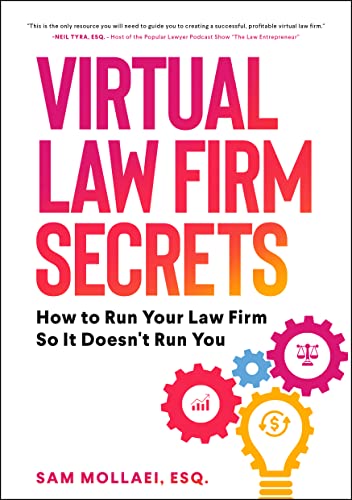
Sam Mollaei, Esq. is a legal disruptor who pioneered the Virtual Law Firm model, building three multi-million dollar virtual law firms in under five years. Having generated over 12,000 clients online and gathered more than 3,000 five-star Google reviews, Sam's expertise is unmatched in transforming traditional law practices. His mission to liberate overwhelmed lawyers and guide them to financial freedom through virtual law firms is the foundation of this book, making it a go-to manual for anyone seeking to modernize their legal practice.
Sam Mollaei, Esq. is a legal disruptor. He pioneered the Virtual Law Firm model, building 3 multi-million dollar virtual law firms in less than 5 years. As a lawyer he has generated over 12,000 clients online and gathered over 3,000 5.0 star Google reviews. Sam has also helped thousands of lawyers around the world create their own profitable virtual law firm through his multi-million dollar online academy, Legal Funnel. He's on a mission to liberate stressed and overwhelmed lawyers and lead them to wealth and freedom by building a virtual law firm.
Sam Mollaei, Esq.'s firsthand experience building multiple multi-million dollar virtual law firms drives this concise guide to transforming traditional legal practices. You learn how to escape the 9-to-5 grind, automate client acquisition, and build a virtual team that frees your time and increases profits. Specific chapters cover eliminating distractions, automating lead follow-up, and generating 5-star reviews through proven systems, making it a practical manual for lawyers seeking a flexible, profitable practice model. If you want to shift from the old law firm grind to running a law business that works for you, this book offers a clear path without unnecessary jargon or fluff.
Matthew S. Cornick, J.D., brings over twenty years of teaching experience in civil litigation and legal research to this work. His extensive background, including service on the American Bar Association's Approval Commission for paralegals, informs this authoritative guide. Cornick’s deep familiarity with paralegal education and law office technology drives the book’s clear explanations and relevant examples, making it a solid resource for legal professionals aiming to integrate computer skills into their workflow.
Matthew S. Cornick, J.D., is a graduate of the State University of New York at Buffalo and the Emory University School of Law. He has been teaching Civil Litigation, Legal Research, Family Law, and Introduction to Law and Ethics to paralegal students for over twenty years. Mr. Cornick frequently speaks to paralegal associations and law firms on the topic of technology in the law office. He has served on the Approval Commission to the American Bar Association's Standing Committee on Paralegals and is the author of A PRACTICAL GUIDE TO FAMILY LAW (West Publishing, 1995) USING COMPUTERS IN THE LAW OFFICE, 7e, as well as Advanced and Basic editions of that text.
When Matthew S. Cornick first recognized the growing role of technology in legal professions, he developed this guide to bridge traditional law office tasks with modern computer skills. You learn not only how to navigate essential software like Microsoft Word and Excel but also specialized legal tools such as CaseMap and TrialDirector, illustrated through realistic examples and exercises. This book digs into ethical considerations too, making it particularly useful if you're aiming to integrate technology responsibly in your legal work. Whether you're a paralegal or legal professional seeking to boost productivity and stay current, this text offers practical insights without overcomplication.
This AI-created book on law office technology is crafted based on your specific practice background, technology familiarity, and professional goals. By sharing what areas of law tech you want to focus on, you receive a tailored guide that concentrates on your interests and skill level. This custom approach makes mastering complex legal technology more manageable and directly relevant to your daily practice.
TailoredRead AI creates personalized nonfiction books that adapt to your unique background, goals, and interests. Instead of reading generic content, you get a custom book written specifically for your profession, experience level, and learning objectives. Whether you're a beginner looking for fundamentals or an expert seeking advanced insights, TailoredRead crafts a book that speaks directly to you. Learn more.
This tailored book explores the essential landscape of law office technology, focusing specifically on your practice’s unique needs and goals. It covers how to effectively integrate modern legal software, optimize office workflows, and enhance client communication using the latest technological tools. By tailoring content to your background and interests, it reveals practical insights into navigating common challenges and adopting solutions that truly fit your context.
With a personalized approach, this book bridges expert knowledge with your specific situation, matching your skill level and focus areas. It examines both foundational concepts and advanced applications, enabling you to master technology in ways that directly benefit your legal practice and daily operations.
Catherine Hodder, Esq., an estate planning attorney who built a successful mobile law practice featured in the Palm Beach Post, brings real-world experience to this book. Having helped families by making "house calls" in Florida, she now shares her insights for solo practitioners aiming to create flexible, client-focused practices. Her background uniquely qualifies her to guide you through setting up your own mobile law office with practical advice and resources.
Catherine Hodder Esq., Kelly C. Sturmthal Esq.(you?)·
About the Author
Catherine Hodder, Esq. is an estate planning attorney turned author. She enjoys working with families who would rather be doing anything else than estate planning. Her successful Florida mobile law practice, featured in the Palm Beach Post, made “house calls” to help families with their estate planning needs. She now resides in California, writing helpful articles for solo law practitioners and members of the “Sandwich Generation.” She is also co-author of Law Office on a Laptop: How to Set Up Your Own Successful Mobile Law Practice, an #1 Amazon Kindle bestseller in law office education.
What happens when seasoned estate planning expertise meets flexible legal practice? Catherine Hodder and Kelly Sturmthal map out how to structure a mobile law office that you can run from anywhere, giving you control over your schedule and costs. You’ll learn how to set up essential forms and procedures, evaluate technology systems, and market yourself effectively, especially via social media, with practical checklists and state-specific guidance peppered throughout. Solo practitioners looking to break away from traditional firms will find actionable frameworks here, though those seeking in-depth legal strategy won’t find that focus. This book provides a clear blueprint for launching and managing a nimble, client-centered law practice with modern tech.
#1 Amazon Kindle Bestseller in Law Office Education
Doug Lusk is the founder and CEO of the National Society for Legal Technology (NSLT) and a nationally recognized expert in legal technology education. With extensive teaching roles and keynote appearances across the U.S., his deep involvement in shaping legal tech curricula led him to write this book. His experience ensures the text balances theoretical insights with practical relevance, offering a rich resource for understanding why and when to use technology in law offices.
Doug Lusk is the founder and CEO of the National Society for Legal Technology (NSLT). He is a nationally recognized expert in the field of legal technology education and has been a keynote speaker at various bar association and technology conferences across the nation. Mr. Lusk's article, �What is missing when it comes to legal technology?� was published in USA Today in March 2018. By July of 2021, the NSLT�s Legal Technology Certificate served as classroom curriculum in more than 225 universities and colleges in the U.S. and Canada and had independent members in 11 countries around the world. After receiving his juris doctorate (J.D.) from the University of Laverne College of Law, Mr. Lusk accepted his first adjunct professor position at Fullerton College. Driven by a passion for education, he also accepted adjunct teaching positions at Mt. San Antonio College, Daemen College, Salt Lake Community College and University of California-Berkeley Extension.
Unlike most law office technology books that focus solely on software tutorials, this text by Douglas Lusk and Cynthia Traina Donnes digs into the theory behind legal technology use. You’ll understand not just how to operate tools but why and when certain technologies fit the legal workflow, supported by engaging narratives and ethical discussions. The book complements practical certificate programs by clarifying the rationale for software adoption in law offices, helping you grasp underlying principles rather than just technical steps. If you’re involved in legal technology education or looking to deepen your conceptual grasp of technology’s role in law practice, this guide fits that need well.
Thomas F. Goldman, JD, Professor Emeritus and experienced attorney, leverages his extensive background in law and technology to guide you through the evolving landscape of legal office tools. His role directing legal studies programs and active practice informs the book's clear focus on both practical skills and ethical considerations, making this a uniquely qualified resource for law students and office professionals alike.
Thomas F. Goldman, JD, is Professor Emeritus of Bucks County Community College, where he was a Professor of Law and Management and Director of the Center for Legal Studies and the Paralegal Studies Program. An accounting and economics graduate of Boston University and of Temple University School of Law, Professor Goldman has an active international law, technology law, and litigation practice. He has authored textbooks in paralegal studies and technology.
Thomas Goldman, a seasoned law professor and practicing attorney, brings decades of legal and technology expertise to this guide tailored for today's law professionals. You learn how to navigate the shift toward digital workflows, including Apple-based software adoption and paperless office management, alongside ethical considerations crucial for responsible technology use. The book offers practical insights on law-specific software, tutorials, and even virtual law office simulations that prepare you for real-world application. This resource suits law students, paralegals, and office staff aiming to master current legal technology tools and understand their proper implementation.
This AI-created book on legal automation is crafted based on your law office background and your desired automation goals. By sharing which aspects of your workflow you want to improve and your current tech experience, you receive a book that matches your unique practice needs. The tailored content focuses on your specific legal processes, ensuring the automation techniques explored feel relevant and approachable for your setting.
TailoredRead AI creates personalized nonfiction books that adapt to your unique background, goals, and interests. Instead of reading generic content, you get a custom book written specifically for your profession, experience level, and learning objectives. Whether you're a beginner looking for fundamentals or an expert seeking advanced insights, TailoredRead crafts a book that speaks directly to you. Learn more.
This tailored book explores fast-track automation techniques designed specifically for law offices, matching your unique workflow and goals. It examines practical ways to streamline daily tasks, reduce manual effort, and improve overall efficiency by focusing on technologies and processes that fit your practice size and specialization. By covering automation tools, legal software integration, and workflow customization, the book offers a focused, personalized pathway through complex automation concepts. This tailored approach helps you target your specific needs and skill level, ensuring you gain actionable knowledge that directly applies to your law office environment, making the learning experience both relevant and engaging.
Chris Fortier is an attorney-adviser with the Social Security Administration’s Office of Hearings Operations and a recognized leader in legal technology initiatives. His roles as co-chair for the Virginia State Bar TechShow and former president of the Virginia State Bar Young Lawyers Conference reflect deep engagement with innovations in law practice management. Fortier’s legal background, combined with his advocacy for smarter workflows, forms the foundation of this book, which offers thoughtful strategies to help lawyers use automation to focus more on their core legal work while improving office efficiency.
Chris Fortier is an attorney-adviser with the Social Security Administration’s Office of Hearings Operations in Falls Church, Virginia. He serves as co-chair for the Virginia State Bar TechShow and was the President of the Virginia State Bar Young Lawyers Conference (YLC). He expanded the YLC’s social media and web footprint and established a weekly video series dedicated to training new lawyers. Chris also won the Edwin Burnett Young Lawyer of the Year Award in 2013 and is currently a fellow of the American Bar Foundation and the ABA Young Lawyers Division. He has served in various roles for the American Bar Association’s Young Lawyers Division. Chris graduated from the Appalachian School of Law and James Madison University. He currently lives in Oakton, VA.
Chris Fortier brings his extensive experience as an attorney-adviser and legal technology advocate to explore how automation can reshape the day-to-day operations of law firms. You’ll discover practical ways to streamline tasks like client intake, invoicing, scheduling, and document drafting, freeing up more time for advocacy and client counsel. The book tackles common pain points such as repetitive data entry and manual calendar negotiations, while also addressing ethical and cybersecurity considerations that come with automation in legal practice. Whether you're setting up your first solo practice or managing a growing firm, this guide offers clear insights to help you redesign your workflow and reduce burnout.
Adam Newhouse brings a rare combination of global litigation and transactional experience, having practiced law extensively in the United States and Japan. His book reflects this unique perspective and addresses the challenges lawyers face as they adapt to the digital age. Newhouse’s deep understanding of cross-border legal strategies and his commitment to advancing the profession shape this guide, making it a valuable resource for those seeking to lead and innovate in legal practice today.
Adam Newhouse understands firsthand the challenge of being a global lawyer in the digital age. In his 25 years of commercial litigation and transactional experience in the United States and Japan, Newhouse has seen the good, the bad, and the wrongheaded at law firms large and small. He has served as deputy general counsel for one of Japan's largest trading houses and develops global legal strategies for multinationals operating within widely divergent regulatory environments. His rare nexus of skills and perspectives has led to some unusual missions―co-authoring a treatise on the United Nations Convention on Contracts for the International Sale of Goods (CISG), for example. Newhouse is a graduate of Cornell Law School and NYU School of Law (LL.M. in Taxation). He is licensed by the State Bar of California and is a licensed foreign member of the Dai-ni Tokyo Bar Association. Practicing what he preaches, Newhouse is committed to leading his profession forward. He can be reached at elawyerleader@gmail.com.
2017·184 pages·Law Office Technology, Legal Practice, Digital Leadership, Client Relationships, Global Law
Adam Newhouse challenges the conventional wisdom that legal practice can simply graft digital tools onto old methods. Drawing from 25 years of experience across U.S. and Japanese markets, he guides you through the mindset shift required to thrive in an internet-driven legal landscape. The book dives into how to navigate new paradigms, build digital relationships, and develop leadership skills relevant to today's technology-driven environment. For example, Newhouse explores how traditional attorney roles evolve with digital collaboration and client expectations. This book suits lawyers and legal leaders ready to rethink their approach rather than patch existing models.
The best Law Office Technology books and more, in your inbox each week. No account needed.
Conclusion
Together, these seven books paint a clear picture: technology in the law office is both a practical necessity and a strategic advantage. Whether you're a solo attorney aiming for mobility or a legal leader ready to embrace digital transformation, there's guidance here for you.
If you're facing the challenge of integrating new tools without disrupting your practice, start with 'Using Computers in the Law Office' and 'Technology in the Law Office' for foundational skills. For rapid implementation of automation, combine 'The Lawyer’s Guide to Office Automation' with 'Virtual Law Firm Secrets' to optimize workflows and client management.
Alternatively, you can create a personalized Law Office Technology book to bridge the gap between general principles and your specific situation. These books can help you accelerate your learning journey and redefine your legal practice with confidence.
Frequently Asked Questions
I'm overwhelmed by choice – which book should I start with?
Start with 'Using Computers in the Law Office' if you're new to legal tech. It covers essential software and practical skills that lay a solid foundation before diving into more specialized topics.
Are these books too advanced for someone new to Law Office Technology?
Not at all. Several books, like Matthew Cornick's guide, are designed for beginners, while others offer deeper insights for experienced users, so you can progress at your own pace.
Which books focus more on theory vs. practical application?
'Law Office Technology' by Lusk and Donnes explores the theoretical and ethical foundations, while 'Virtual Law Firm Secrets' and 'The Lawyer’s Guide to Office Automation' emphasize hands-on strategies and workflows.
Are any of these books outdated given how fast Law Office Technology changes?
While technology evolves quickly, these books balance timeless principles and current practices, ensuring you grasp core concepts that remain relevant despite rapid changes.
Can I skip around or do I need to read them cover to cover?
You can definitely skip around. Many books have sections you can focus on based on your immediate needs, such as automation, mobile practice, or digital leadership.
How can I tailor these expert insights to my specific law practice needs?
These books provide solid frameworks, but tailoring them to your unique practice is key. You might consider creating a personalized Law Office Technology book that blends expert knowledge with your goals and experience for focused, actionable guidance.
📚 Love this book list?
Help fellow book lovers discover great books, share this curated list with others!