Recommended by Tim Cowlishaw, Cecil Hurt, and Laura Fitton to help you navigate Loss with compassion and clarity
Updated on June 22, 2025·We may earn commissions for purchases made via this page
10 of 10 books have Kindle versions
We're launchingLaunching on Product Hunt today 🎉We just launchedJust launched on Product Hunt 🎉
Modelpeers, from the BookAuthority teamFrom the BookAuthority team: Modelpeers, a free way to follow AI models and agents like you follow people. We'd love your support.
What if the pain of loss could be met not with quick fixes, but with understanding that honors its depth and messiness? Loss is a universal experience, yet navigating it often feels isolating and confusing. Today, more voices are challenging the old scripts about grief, revealing its complexity and the ways it reshapes us emotionally, spiritually, and mentally.
Experts like Gary Roe, who has devoted over 30 years as a hospice chaplain and grief counselor, and Ivan Maisel, a seasoned sports journalist who wrote candidly about his son’s suicide, bring deeply personal and professional wisdom to the topic. Their insights, alongside those of thought leaders like Megan Devine and David Kessler, help us see grief as a journey rather than a problem to be solved.
While these expert-curated books provide proven frameworks and heartfelt guidance, readers seeking content tailored to their unique experiences, professions, or stages of grief might consider creating a personalized Loss book that builds on these insights for a more individual approach.
Multiple award-winning author and grief specialist Gary Roe brings more than 30 years of experience helping hurting hearts to this deeply compassionate guide. His work as a hospice chaplain and speaker informs the book’s heartfelt approach to surviving the loss of a child, offering readers a trusted voice in navigating grief’s many challenges and pathways toward healing.
Multiple award-winning author, speaker, and grief specialist Gary Roe is a compassionate and trusted voice in grief-recovery who has been bringing comfort, hope, encouragement, and healing to hurting, wounded hearts for more than 30 years. In addition to Shattered, Gary is the author of numerous books, including the award-winning bestsellers Heartbroken: Healing from the Loss of a Spouse, Please Be Patient, I'm Grieving, and Teen Grief: Caring for the Grieving Teenage Heart. Gary has been featured on Focus on the Family, Dr. Laura, Beliefnet, the Christian Broadcasting Network, Wellness.com, and other major media and has well over 500 grief-related articles in print. Recipient of the Diane Duncam Award for Excellence in Hospice Care, Gary is a popular keynote, conference, and seminar speaker at a wide variety of venues. A former college minister, missionary in Japan, entrepreneur in Hawaii, and pastor in Texas, he now serves as a writer, speaker, chaplain, and grief counselor. Gary loves being a husband and father. He has seven adopted children, including three daughters from Colombia. He enjoys hockey, corny jokes, good puns, and colorful Hawaiian shirts. Gary and his wife Jen and family live in Texas.
When Gary Roe first realized how profoundly a child's death reshapes every facet of a parent's life, he crafted this book to address the overwhelming emotional, physical, and spiritual upheaval that follows. Drawing from over 30 years as a hospice chaplain and grief specialist, Roe guides you through navigating intense emotions, disrupted relationships, and shattered dreams with practical insights such as honoring your child's memory and caring for your own wellbeing amidst grief. Chapter discussions on managing loneliness, preserving faith, and rebuilding life amid pain offer concrete perspectives. This book suits parents confronting unimaginable loss, offering compassionate companionship rather than quick fixes.
Gary Roe's story began with a childhood marked by profound loss and personal challenges, shaping his deep understanding of grief. As a former hospice chaplain, pastor, and missionary, he has spent decades walking alongside grieving hearts, which led him to write this insightful guide. His experience lends authenticity and warmth, making the book feel like a conversation with a trusted friend ready to answer your toughest questions about loss and healing.
Gary Roe's story began with a childhood of mixed messages and sexual abuse, followed by other losses and numerous grief experiences. A former college minister, missionary in Japan, pastor, and hospice chaplain, he now serves as a writer, speaker, and grief specialist. He is the author of twenty books, including the award-winning bestsellers Shattered: Surviving the Loss of a Child, Grief Walk: Experiencing God After the Loss of a Loved One, and The Grief Guidebook. Gary has won four international book awards and his books have been honored as finalists eight times. He has been featured on Dr. Laura, Choose Therapy, Belief Net, the Christian Broadcasting Network, Wellness, and other major media. Known for his authenticity and sense of humor, Gary is a popular keynote, conference, and seminar speaker at a wide variety of venues. He loves being a husband and father, has seven adopted children, and enjoys hockey, corny jokes, good puns, and colorful Hawaiian shirts. Gary and his wife Jen and family live in Texas.
When Gary Roe first realized how deeply grief questions permeate every stage of mourning, he crafted this guidebook to address those uncertainties head-on. Drawing from his varied roles as a hospice chaplain, pastor, and missionary, Roe offers readers over 70 common grief questions paired with compassionate, practical responses and thoughtful suggestions. You’ll find it both a comforting companion and a reference manual that you can turn to whenever a particular question or feeling arises. This book suits anyone navigating personal loss who needs grounded guidance without judgment or abstract theory.
This AI-powered book on child grief develops a systematic approach with frameworks that adapt to your specific familial and emotional context. The content adjusts based on your personal experiences, cultural background, and goals, addressing challenges unique to grieving parents and families. Created after you specify your areas of interest and stages of loss, it provides actionable strategies bridging emotional theory and practical support tailored to your needs.
TailoredRead AI creates personalized nonfiction books that adapt to your unique background, goals, and interests. Instead of reading generic content, you get a custom book written specifically for your profession, experience level, and learning objectives. Whether you're a beginner looking for fundamentals or an expert seeking advanced insights, TailoredRead crafts a book that speaks directly to you. Learn more.
2026·50-300 pages·Loss, Child Loss, Grief Processing, Family Dynamics, Emotional Resilience
This personalized framework offers parents and families a tailored approach to navigating the complex emotional terrain of child loss. It provides adaptive strategies for grief processing that reflect your unique familial dynamics, cultural background, and stages of mourning. The book addresses practical methods for emotional support, communication within the family, and honoring memory in ways that resonate personally. By cutting through generic advice, this resource fits your specific context, helping you build resilience and find meaning amid sorrow. It explores coping mechanisms that adjust to your particular situation, emphasizing compassionate understanding and gradual healing tailored to individual grief experiences.
Tim Cowlishaw, a veteran sports journalist with decades of experience, recommends this memoir especially for those who have faced grief, love, or parenthood. He credits Ivan Maisel's work for providing meaningful understanding during difficult times, saying, "Special one again to Ivan Maisel whose book on far left is recommended only to people who have dealt with grief. Or love. Or parenthood." This perspective reflects how the book helped Cowlishaw see grief as intertwined with love and connection. Similarly, Cecil Hurt, a longtime Alabama football reporter, encourages everyone to engage with this moving exploration of loss and mental health.
“Big thanks to authors here (plus “Bomber Mafia” and “Furious Hours” out on loan), 44 books in all, for enjoyment provided in 2021. Special one again to Ivan Maisel whose book on far left is recommended only to people who have dealt with grief. Or love. Or parenthood.” (from X)
Ivan Maisel is Vice-President, Editorial, and Senior Writer for on3.com. He has covered college football for nearly four decades, from 2002-2021 at ESPN, where he wrote for ESPN.com and appeared on television, ESPN Radio, and podcasts. Prior to ESPN, Maisel covered national college football for Sports Illustrated, Newsday and The Dallas Morning News. He has been honored eight times for Best Story by the Football Writers Association of America, and twice by The Associated Press Sports Editors, which in 2019 named him one of the ten best sports columnists.
Unlike most memoirs that skirt around difficult emotions, Ivan Maisel dives headfirst into the complex landscape of grief following his son Max's suicide. Drawing from nearly 40 years in sports journalism, Maisel explores the tangled father-son relationship, revealing how grief can be a form of love itself. You’ll encounter candid reflections on mental health stigma, particularly around men, and the nuanced struggles to connect with a loved one before loss. Chapters detailing the days surrounding Max's disappearance offer raw insight and a framework for understanding grief’s unpredictable nature. This book suits anyone grappling with profound loss or seeking empathy through a deeply personal narrative.
Laura Fitton, a marketing and climate crisis leader, discovered this book through personal experience and now frequently recommends it to loved ones struggling with grief. She says, "I can't say enough good things about Megan Devine's work. I frequently send her book 'It's OK That You're Not OK' to loved ones; it helped me so much." This book reshaped how she understands grief—not as something to fix but as a natural, ongoing process. Similarly, Natalie Weaver, a disability rights advocate, finds it a powerful reminder for those beginning their grief journey, while Jack Kornfield praises its heartfelt and straightforward approach to grief support.
“I can't say enough good things about Megan Devine's work. I frequently send her book "It's OK That You're Not OK" to loved ones; it helped me so much. She's inspiring on Twitter and offers a wonderful range of resources.” (from X)
Megan Devine is a writer, speaker, and advocate for emotional change on a cultural level. She holds a master’s in counseling psychology. Since the tragic loss of her partner in 2009, Megan has emerged as a bold new voice in the world of grief support. Her contributions via her site Refuge in Grief have helped create sanctuary for those in pain and encouragement for those who want to help. For more, visit refugeingrief.com.
What if everything you knew about grief was wrong? Megan Devine challenges the cultural insistence that grief must be fixed or overcome quickly, drawing from her dual experience as a counseling psychologist and a grieving partner. You’ll learn why standard stages and timelines for grief often do more harm than good, and how to embrace grief as a lasting companion rather than an enemy to be defeated. The book offers insights into managing anxiety and stress without trying to "move on," and provides guidance on supporting others in grief, making it a valuable resource if you’re navigating loss personally or helping someone who is.
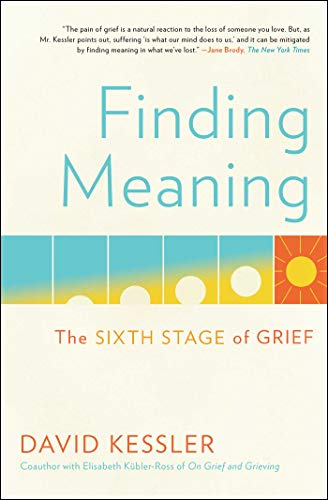
Daniel Siegel, a New York Times bestselling author and expert in brain development, recommends this book for its compassionate and practical approach to understanding grief. After encountering loss personally and professionally, Siegel found Kessler's concept of a sixth stage—finding meaning—offered a fresh perspective that deepened his understanding. He describes "Finding Meaning is a brilliant, caring, practical guide to help us understand grief and embrace this important ‘sixth stage’ … David Kessler gifts us with deep insights and life-affirming wisdom that can support our well-being." This book helped him see grief not just as suffering but a journey toward hope and peace.
“Finding Meaning is a brilliant, caring, practical guide to help us understand grief and embrace this important “sixth stage” … David Kessler gifts us with deep insights and life-affirming wisdom that can support our well-being.”
David Kessler is the world’s foremost expert on grief. His experience with thousands of people on the edge of life and death has taught him the secrets to living a fulfilled life, even after life’s tragedies. He coauthored On Grief and Grieving and Life Lessons with Elisabeth Kübler-Ross and You Can Heal Your Heart: Finding Peace After a Breakup, Divorce or Death with Louise Hay. He is the author of Finding Meaning; Visions, Trips, and Crowded Rooms; and The Needs of the Dying, praised by Mother Teresa. David’s work has been featured in the New York Times, Los Angeles Times, Business Week, and Life Magazine, and on CNN, Fox, NBC, PBS, and CBS. David has served on the Red Cross Aviation Disaster Team and has volunteered for decades as a Los Angeles Police Department Specialist Reserve Officer. He lectures for physicians, nurses, counselors, police, and first responders and leads talks and retreats for those dealing with grief.
When David Kessler first discovered the concept of a "sixth stage" beyond the traditional five stages of grief, he reshaped how we understand healing after loss. Drawing from decades of working with the grieving and personal tragedy, including the death of his son, Kessler explores how finding meaning can transform grief into a more hopeful experience. You learn to move beyond denial, anger, and acceptance to embrace a new way of honoring loved ones and living with loss. This book suits anyone navigating profound grief who seeks a path toward peace rather than closure alone.
This AI-tailored book on suicide grief develops a systematic approach with frameworks that adapt to your specific bereavement context. The content adjusts based on your particular focus areas and stages of grief to address the nuanced challenges of healing after suicide loss. Crafted to bridge the gap between general grief literature and your unique experience, it offers personalized strategies for managing complex emotions and rebuilding hope. The tailored methodology provides clear pathways toward peace, recognizing that healing journeys vary significantly.
TailoredRead AI creates personalized nonfiction books that adapt to your unique background, goals, and interests. Instead of reading generic content, you get a custom book written specifically for your profession, experience level, and learning objectives. Whether you're a beginner looking for fundamentals or an expert seeking advanced insights, TailoredRead crafts a book that speaks directly to you. Learn more.
This personalized framework provides a nuanced exploration of grief specific to suicide loss, integrating tailored strategies to address complex emotions such as guilt, anger, and confusion. It presents an adaptive approach that respects individual backgrounds and stages of bereavement, offering methods to foster healing and resilience within your particular context. The book systematically examines coping mechanisms, communication with support networks, and pathways toward peace, cutting through generic advice to focus on the unique challenges faced by those affected by suicide. By customizing content to your personal experiences and goals, it offers a tailored approach that facilitates meaningful recovery and understanding.
Amel Karboul, CEO of the Education Outcomes Fund and former minister of Tourism in Tunisia, shared how this book helped her embrace grief's full process during difficult personal times. She advises, "Maybe one advice is: drop the wish for it to end soon or to move on. I know it sounds maybe not helpful short term. But grief is a process and shortening it now may lead to it becoming a bigger problem long term. One book I found very helpful:" This perspective shifted her understanding of grief’s natural course rather than rushing closure. Also, Gabor Mate, MD and author, praises the book for transforming loss into active love, highlighting its resonance with anyone touched by bereavement.
“@louisevanrhyn Maybe one advice is: drop the wish for it to end soon or to move on. I know it sounds maybe not helpful short term. But grief is a process and shortening it now may lead to it becoming a bigger problem long term. One book I found very helpful:” (from X)
Dr. Joanne Cacciatore is a bereavement educator, researcher, and Zen priest, recognized for her work in grief counseling. She has dedicated her career to supporting individuals and families through the grieving process, drawing from her own experiences with loss. Cacciatore is also featured in the documentary series 'The Me You Can’t See' and has authored several works on grief and bereavement.
When Dr. Joanne Cacciatore first realized the depth of grief's complexity, she drew from her extensive background as a bereavement educator, Zen priest, and researcher to create a nuanced guide through loss. This book reveals how grief is not a linear journey but a series of moments that can open your heart to compassion and connection, with 52 short chapters that serve as standalone reflections on navigating sorrow. You’ll learn to honor your unique process, understanding grief’s wildness without pressure to 'move on' prematurely. It's especially suited for those enduring profound personal loss and the professionals who support them, offering frameworks that respect grief’s messiness rather than rush closure.
Kristin Chenoweth, Tony Award-winning actress and singer, highlighted this book during a time when she was drawn to its message and charitable impact. She shared, "The brilliant Jan Warner’s new book, Grief Day By Day, has an impactful message and is supporting charities through book sales." This connection shows how the book extends beyond personal healing to foster communal support. Similarly, Sarah Gristwood, a best-selling author and historian, reflected on its profound challenge to conventional views on grief, describing it as "shattering" in how it reframes grief as an enduring part of identity rather than a state to be quickly overcome.
Jan Warner created Grief Speaks Out, an online community that offers support and strength to over two million people around the world. A “Grief Warrior” herself, Jan has produced several films and theater productions, and is an avid world traveler.
Jan Warner, known for creating Grief Speaks Out, draws from her personal journey as a "Grief Warrior" and extensive community support experience to craft this daily companion for living with loss. You explore 365 reflections and 52 weekly themes covering emotions like loneliness, hope, and guilt, paired with exercises such as journaling and meditation to process grief practically. For example, one week delves into "grief attacks," offering breathing techniques to manage overwhelming moments. This book suits anyone navigating grief's unpredictable path, especially those seeking gentle, day-by-day guidance rather than a quick fix.
Oprah Daily, a leading media publication, highlights this book’s value for anyone grappling with grief’s bewildering effects. Their recommendation came from witnessing how confusing and overwhelming loss can be, especially without clear understanding. They describe it as "a fascinating and comforting read" that sheds light on why grief feels so confounding. This perspective underscores how the book offers clarity by connecting neuroscience to everyday emotional experience, helping you make sense of grief’s complexity.
Mary-Frances O’Connor, PhD, is a professor of psychology at the University of Arizona, where she directs the Grief, Loss and Social Stress (GLASS) Lab, investigating the effects of grief on the brain and the body. O’Connor earned a doctorate from the University of Arizona in 2004 and completed a fellowship at UCLA. Following a faculty appointment at UCLA Cousins Center for Psychoneuroimmunology, she returned to the University of Arizona in 2012. Her work has been published in the American Journal of Psychiatry, Biological Psychiatry, and Psychological Science, and featured in Newsweek, New York Times, and Washington Post. Having grown up in Montana, she now lives in sunny Tucson, Arizona.
When Mary-Frances O'Connor first realized how deeply grief alters brain function, she set out to explore this profound human experience through neuroscience. Drawing from decades of research and her role directing the Grief, Loss and Social Stress Lab, she unpacks how our brains encode love and process loss, explaining why grief triggers a complex mix of emotions like guilt and yearning. You’ll learn about the neural pathways involved in attachment and how the brain struggles to accept permanent absence, with chapters detailing distinctions between normal and prolonged grief. This book suits anyone seeking a scientific lens on grief’s emotional turmoil and those looking to understand how loss reshapes our inner world.
Pixie Lighthorse is an Earth Medicine Educator and enrolled member of the Choctaw Nation of Oklahoma, whose work focuses on self-healing through a profound relationship with the natural world. Her experience honoring ancestral voices informs this book, which invites you to engage with grief not as darkness to be feared but as a natural process to be acknowledged and celebrated. This background grounds the prayers and reflections, offering you a unique path to connect deeply with your feelings and find relief through intentional spiritual practice.
Pixie Lighthorse is the author of Prayers of Honoring, Prayers of Honoring Voice, Prayers of Honoring Grief, Boundaries & Protection and Goldmining the Shadows. Her books are centered on self-healing through intimate relationship with the natural world. Born Cherie Dawn Carr, she is an enrolled member of the Choctaw Nation of Oklahoma. She writes as Lighthorse to honor the unheard voices of her ancestors.
When Pixie Lighthorse first discovered how deeply grief shapes the body and spirit, she crafted this book to guide you through the often overlooked physical and emotional processes of loss. You learn to honor your feelings through 28 prayers aligned with the Four Directions, each opening space for reflection, journaling, and personal healing. This approach is particularly helpful if you find traditional grief resources too clinical or abstract, as it invites you to engage with grief as a natural, embodied experience rather than something to suppress. Whether you’re navigating personal sorrow or facilitating healing in others, this book offers a grounded companion for embracing grief’s complexities.
Jack Canfield, co-author of the Chicken Soup for the Soul series, highlights this book as a vital resource for those dealing with tragic loss. His recognition underscores the book's impact on survivors navigating the difficult aftermath of suicide. "Congrats to #JCretreat attendee Elaine Kennelly on the release of her book, Finding Peace After a Suicide Loss," he shared, signaling how this work offers hope and guidance where it’s needed most.
“Congrats to #JCretreat attendee Elaine Kennelly on the release of her book, Finding Peace After a Suicide Loss. This powerful resource for those who have suffered tragic losses is available at More information can also be found at” (from X)
Drawing from her personal journey through grief and faith, Elaine Kennelly offers a deeply empathetic perspective on healing after suicide loss. The book explores the complex emotions survivors face—guilt, shame, rejection—while addressing spiritual struggles head-on, including the difficult question, “Why God? Why?”. Chapters unfold in a then-and-now format, guiding you through the early shock toward eventual steps of love, prayer, and forgiveness. This work suits anyone grappling with the aftermath of suicide loss, especially those seeking a Christian framework to navigate sorrow and find renewed joy in family and relationships.
The best Loss books and more, in your inbox each week. No account needed.
Conclusion
These ten books reveal common threads: grief is deeply personal, rarely linear, and often entwined with love, meaning, and transformation. Whether you’re coping with the death of a child, suicide, or the more general ache of loss, these works offer perspectives that validate your feelings and illuminate paths forward.
If you’re facing the raw shock of a recent loss, starting with Gary Roe’s "Shattered" or Ivan Maisel’s memoir might provide immediate comfort and understanding. For ongoing emotional healing, Megan Devine’s and David Kessler’s books offer compassionate reframing. Combining these with practical daily guides like Jan Warner’s "Grief Day By Day" can help structure healing over time.
Once you’ve absorbed these expert insights, create a personalized Loss book to bridge the gap between general principles and your specific situation. Tailored resources can align with your unique grief journey, making the path feel a little less solitary and a bit more manageable.
Frequently Asked Questions
I'm overwhelmed by choice – which book should I start with?
Start with a book that matches your current experience. For example, "Shattered" is powerful for parents grieving a child, while "It's OK That You're Not OK" offers broad emotional support. Choose one that resonates with your situation to begin your healing journey.
Are these books too advanced for someone new to Loss?
Not at all. Many, like "The Grief Guidebook," are written to be accessible and compassionate for anyone beginning to navigate grief, regardless of prior knowledge or experience.
What's the best order to read these books?
There's no single order. You might begin with personal narratives like "I Keep Trying to Catch His Eye" for empathy, then explore practical guides such as "Finding Meaning" or scientific perspectives in "The Grieving Brain" as you seek deeper understanding.
Do I really need to read all of these, or can I just pick one?
You can absolutely pick the book that fits your needs best. Each offers a unique perspective, so choose based on what feels most relevant and helpful to you right now.
Which books focus more on theory vs. practical application?
"The Grief Guidebook" and "Grief Day By Day" provide practical strategies, while "Finding Meaning" and "The Grieving Brain" explore theoretical and scientific aspects of grief.
Can I get tailored Loss insights instead of reading multiple books?
Yes, while these expert books are invaluable, personalized Loss books can complement them by focusing specifically on your experiences and goals. You can create your own tailored Loss book here for focused guidance.
📚 Love this book list?
Help fellow book lovers discover great books, share this curated list with others!