10 Medical Procedure Books That Define Surgical Expertise
Medical Procedure Books recommended by Sherif Emil, Michael J Gleeson, and Courtney M. Townsend Jr., guiding you through surgical mastery and clinical precision
Updated on June 22, 2025·We may earn commissions for purchases made via this page
0 of 10 books have Audiobook versions
We're launchingLaunching on Product Hunt today 🎉We just launchedJust launched on Product Hunt 🎉
Modelpeers, from the BookAuthority teamFrom the BookAuthority team: Modelpeers, a free way to follow AI models and agents like you follow people. We'd love your support.
What if the difference between a good surgeon and a great one came down to the books they trust? In the ever-evolving world of medical procedures, having the right reference can transform your understanding and performance in the operating room. Surgical precision is no longer just about skill but also about deep knowledge of anatomy, decision-making algorithms, and the latest techniques — all captured in expert-recommended texts.
Among the luminaries shaping this field, Sherif Emil at McGill University redefined pediatric surgical education with immersive case studies; Michael J. Gleeson of University College London brought unparalleled depth to ENT surgery; and Courtney M. Townsend Jr. at the University of Texas Medical Branch has stewarded the authoritative voice in general surgery for decades. Their collective expertise ensures that the books they endorse are not just manuals but keys to surgical excellence.
While these expert-curated books provide proven frameworks and insights, if you're looking for content tailored specifically to your surgical specialty, experience level, or learning goals, consider creating a personalized Medical Procedure book that builds on these foundational texts, helping you apply knowledge where it matters most.
Sherif Emil is a Professor of Pediatric Surgery and holds the Mirella & Lino Saputo Foundation Chair in Pediatric Surgical Education at McGill University Health Centre in Montreal. His leadership roles in education and patient-centered care drive the innovative structure of this book, which uses interactive clinical cases to mirror real-world pediatric surgical practice. Emil’s expertise ensures that the book not only covers a comprehensive range of conditions but also serves as a dynamic learning tool for trainees and practitioners alike, connecting academic knowledge with hands-on application.
Sherif Emil is a Professor of Pediatric Surgery, Mirella & Lino Saputo Foundation Chair in Pediatric Surgical Education & Patient and Family-Centered Care, and Associate Chair for Education & Departmental Citizenship in the Department of Pediatric Surgery at McGill University Health Centre, Montreal, Canada.
What changed with Sherif Emil's approach is how pediatric surgery education can be deeply immersive rather than purely theoretical. Drawing from his extensive experience at McGill University Health Centre, Emil structures the book around real cases, inviting you to engage with clinical challenges as if you were part of the decision-making process. You’ll navigate over 300 cases covering a broad range of pediatric surgical conditions, complete with full-color illustrations and videos that clarify surgical techniques. This approach suits anyone involved in pediatric surgery — from medical students to seasoned surgeons — and even specialists like pediatricians and radiologists who collaborate closely in patient care. The case-based Q&A format tests your knowledge, making it a practical resource for refining clinical judgment.
Michael J. Gleeson, Professor of Otolaryngology and Skull Base Surgery at University College London, brings unparalleled clinical experience from major teaching hospitals to this authoritative work. His role as Honorary Consultant Skull Base Surgeon for Great Ormond Street Hospital for sick children adds a unique pediatric perspective. This extensive text reflects his commitment to providing a detailed, evidence-based resource for those involved in ear, nose, and throat surgery, making it a valuable foundation for your practice or studies in otorhinolaryngology.
Michael J. Gleeson is Professor of Otolaryngology and Skull Base Surgery at the Institute of Neurology in University College London. He practices at the major teaching hospitals of Guy's, Kings and St Thomas' and the National Hospital for Neurology and Neurosurgery. He is also Honorary Consultant Skull Base Surgeon to the Great Ormond Street Hospital for sick children.
When Michael J. Gleeson first realized the complexity of head and neck conditions, he set out to create a definitive resource for ENT surgeons and specialists. Drawing on his extensive experience at leading London hospitals, this three-volume work dives deeply into otorhinolaryngology, combining detailed anatomical illustrations with evidence-based clinical guidelines. You’ll gain insights into surgical techniques, diagnostic criteria, and treatment protocols across ear, nose, and throat diseases. This book suits trainees and seasoned practitioners aiming for a thorough and practical grasp of the field, though it’s less suited for casual readers given its technical depth.
This AI-curated guide to pediatric surgery provides actionable strategies tailored to your clinical focus, created after you specify your areas of interest and experience level. It develops a systematic approach with frameworks that adapt to your specific surgical specialty and case mix. The content adjusts based on your goals and background to address the nuanced challenges encountered in pediatric operative care, blending evidence-based practices with case-driven insights for effective decision-making.
TailoredRead AI creates personalized nonfiction books that adapt to your unique background, goals, and interests. Instead of reading generic content, you get a custom book written specifically for your profession, experience level, and learning objectives. Whether you're a beginner looking for fundamentals or an expert seeking advanced insights, TailoredRead crafts a book that speaks directly to you. Learn more.
This tailored book provides a case-driven framework for pediatric surgical procedures, emphasizing clinical decision-making adapted to your professional context. It offers a systematic approach to navigating complex pediatric surgical cases, integrating diagnostic reasoning with procedural strategies tailored to various subspecialties and patient demographics. The personalized framework cuts through generic advice to deliver content focused on practical applications, operative nuances, and perioperative management specific to pediatrics.
By aligning methodologies with your surgical experience and goals, the book addresses individualized challenges, enhancing your ability to make informed decisions in pediatric surgical care. It bridges theoretical knowledge with real-world case insights, fostering deeper understanding and improved patient outcomes through a tailored lens.
Courtney M. Townsend Jr., MD, an Elsevier author and John Woods Harris Distinguished Chairman of Surgery at the University of Texas Medical Branch, brings his extensive expertise to this 21st edition. His leadership roles on several surgical journals and as editor in chief of this textbook ensure the content is authoritative and up to date. This book reflects his commitment to guiding surgeons through the biological foundations and practical techniques essential in modern surgical practice.
Courtney M. Townsend, Jr., MD, an Elsevier Author, is the John Woods Harris Distinguished Chairman of the Department of Surgery at the University of Texas Medical Branch. He serves in editorial capacities on several scientific journals including the International Journal of Pancreatology, Surgical Oncology, and Pancreas. He is editor in chief of Sabiston Textbook of Surgery.
When Courtney M. Townsend Jr., MD, took the helm of this classic surgical text, he brought decades of leadership as the John Woods Harris Distinguished Chairman of Surgery at the University of Texas Medical Branch. This edition provides you with a structured approach to general surgery, spanning topics from fluid management to cutting-edge robotic and fetal surgery. You'll find over 2,000 detailed illustrations and videos that clarify complex procedures, along with updated chapters addressing oncology, transplantation, and minimally invasive techniques. This book suits surgical trainees and practicing surgeons who want a thorough reference grounded in biological principles and modern practice, though it may be dense for casual readers.
Dr. Andrew M. Cameron MD PhD FACS is an esteemed editor and a leading figure in surgery, recognized globally for advancing surgical education and patient care. His deep involvement in general surgery shaped this book into a resource that combines authoritative guidance with practical insights, making it valuable for both surgical residents and experienced practitioners. Cameron's background ensures that the content is not only comprehensive but directly applicable to everyday clinical decisions and board preparations.
Dr. Andrew M. Cameron MD PhD FACS is an esteemed editor and a leading figure in the field of surgery. He has contributed significantly to surgical education and practice, particularly in general surgery. His expertise is recognized globally, and he has been involved in numerous advancements in surgical techniques and patient care.
Dr. Andrew M. Cameron MD PhD FACS brings decades of surgical expertise to this detailed guide on general surgery techniques. You’ll find a structured approach that covers everything from disease presentation and diagnostic methods to surgical interventions, enriched by up-to-date chapters on topics like rectal cancer and minimally invasive procedures. This book suits surgical residents preparing for boards as well as practicing surgeons looking for a reliable reference, offering consistent formatting that makes complex procedures accessible without oversimplifying. For example, the chapter on inguinal hernia clearly explains surgical options and potential complications, helping you make informed decisions in clinical practice.
Albert L. Rhoton Jr., MD, was a pioneer in microsurgical neuroanatomy with over 40 years at Mayo Clinic and University of Florida, shaping neurosurgery's technical standards. His extensive leadership roles in multiple neurosurgical societies reflect his expertise and dedication. This book, his magnum opus, captures his life's work to make brain surgery safer and more precise, providing an authoritative resource for neurosurgeons seeking to deepen their anatomical knowledge and surgical approach.
Albert L. Rhoton Jr., Congress of Neurological Surgeons (CNS)(you?)·
About the Author
Albert L. Rhoton, Jr., MD (1932-2016), was a pioneer in the field of microsurgical neuroanatomy. Along with more than four decades of practice and research at the Mayo Clinic and the University of Florida, he served as President of the American Association of Neurological Surgeons, the Congress of Neurological Surgeons, the Society of Neurological Surgeons, the North American Skull Base Society, the International Interdisciplinary Congress on Craniofacial and Skull Base Surgery, the Florida Neurosurgical Society, and the International Society for Neurosurgical Technology and Instrument Invention. Dr. Rhoton was a graduate of the Washington University School of Medicine, graduating with the highest academic standing in the class of 1959. He completed his neurosurgical training at Washington University and joined the staff of the Mayo Clinic in Rochester, Minnesota in 1965. He became Professor and Chair of the Department of Neurological Surgery at the University of Florida in 1972. Cranial Anatomy and Surgical Approaches, considered his magnum opus, was first published in 2003.
Albert L. Rhoton Jr.'s work fundamentally reshaped the understanding of cranial anatomy in neurosurgery, challenging previous notions of surgical safety and precision. This book distills over four decades of his research and practice, offering detailed guidance on microsurgical techniques, anatomy of the supratentorial and posterior cranial fossa regions, and nuanced approaches to delicate brain structures such as the ventricles and cranial base. You gain not only technical insights but also an appreciation for instrument selection and operative strategies that prioritize patient safety. While this text demands a serious commitment, neurosurgeons and advanced medical professionals will find it an indispensable reference to elevate their surgical approach.
This AI-curated guide to image-guided procedures provides actionable strategies tailored to your interventional radiology focus, created after you specify your areas of interest and experience level. The book develops a systematic approach with frameworks that align with your clinical setting and goals. It bridges the gap between theoretical imaging principles and practical procedural applications, addressing the nuanced challenges unique to minimally invasive interventions.
TailoredRead AI creates personalized nonfiction books that adapt to your unique background, goals, and interests. Instead of reading generic content, you get a custom book written specifically for your profession, experience level, and learning objectives. Whether you're a beginner looking for fundamentals or an expert seeking advanced insights, TailoredRead crafts a book that speaks directly to you. Learn more.
This personalized book on precision interventional radiology presents a tailored framework for mastering image-guided minimally invasive procedures. It systematically explores core imaging modalities, procedural planning, and patient-specific considerations, providing adaptable methodologies that align with your clinical environment and expertise level. The text emphasizes nuanced techniques in vascular and non-vascular interventions, integrating safety protocols and real-world decision-making algorithms. By focusing on a tailored approach, it cuts through irrelevant advice and fits your specific context, helping practitioners optimize outcomes through precise imaging guidance and intervention strategies.
David Kessel is a renowned expert in interventional radiology, holding multiple medical degrees and certifications including MB BS, MA, MRCP, FRCR, and EBIR. His extensive experience and significant contributions to medical literature underpin this guide, which distills critical knowledge into accessible, practical instruction. The book emerged from his commitment to improving procedural safety and outcomes in interventional radiology, making it a valuable resource for clinicians seeking clear, authoritative guidance in this rapidly advancing field.
David Kessel MB BS MA MRCP FRCR EBIR, Iain Robertson MB ChB MRCP FRCR(you?)·
About the Author
David Kessel is a renowned expert in interventional radiology, holding multiple medical degrees and certifications, including MB BS, MA, MRCP, FRCR, and EBIR. He has extensive experience in the field and has contributed significantly to medical literature, particularly in interventional procedures.
David Kessel's extensive credentials in interventional radiology, including MB BS, MA, MRCP, FRCR, and EBIR, lend significant authority to this guide. The book offers clear, concise instructions for preparing and performing common diagnostic and therapeutic procedures, emphasizing essential equipment and core skills. You'll find detailed sections on vascular and non-vascular interventions, enriched by nearly 300 diagrams and photos that clarify anatomical and technical points. The updated focus on interventional oncology addresses managing cancer complications, making it especially useful for practitioners navigating this evolving area. This guide suits clinicians and trainees aiming to enhance procedural safety and effectiveness in interventional radiology.
Best for medical students in interventional radiology
Audiobook version not available
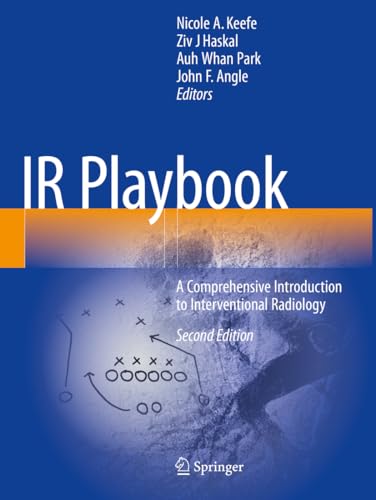
Nicole A. Keefe, MD, a resident specializing in radiology and medical imaging at the University of Virginia, co-authored this book alongside leading faculty including Dr. Ziv J Haskal, a tenured professor and fellowship director renowned in interventional radiology. Their combined expertise in clinical practice and education informs this detailed introduction to IR, crafted to meet the increasing demand for skilled practitioners. Drawing on their roles at a top academic center, they designed this text to guide students and residents through the complex landscape of image-guided procedures with clarity and precision.
Nicole A. Keefe, Ziv J Haskal, Auh Whan Park, John F. Angle(you?)·
About the Author
Nicole A. Keefe, MD is a Resident in the Department of Radiology and Medical Imaging at the University of Virginia. Ziv J Haskal, MD, FSIR, FAHA, FACR FCIRSE, FBSIR is a world renowned tenured Professor of Radiology and Interventional Radiology Fellowship Director at the University of Virginia, Department of Medical Imaging. Auh Whan Park, MD is an associate professor in the Division of Vascular and Interventional Radiology in the Department of Radiology and Medical Imaging at the University of Virginia. John F. Angle, MD is the Director of the Division of Vascular and Interventional Radiology in the Department of Radiology and Medical Imaging at the University of Virginia.
What if everything you knew about interventional radiology was wrong? This book argues that IR is far more than a technical specialty; it's a dynamic field rapidly advancing through minimally invasive, image-guided procedures. Authored by experts from the University of Virginia’s radiology department, it equips you with foundational knowledge on radiation safety, patient care, and anatomy, then dives into detailed interventions across body systems, blending pathophysiology with treatment rationale. Unlike textbooks that overwhelm with jargon, this guide balances clarity and depth, making it ideal for medical students and residents preparing to enter this evolving field.
Clauden Louis MD MS, Panos Vardas MD, Peter Chen MD, Jennifer Dixon MD, Parth B. Amin MD(you?)·
About the Author
Clauden Louis MD MS is a prominent figure in cardiothoracic surgery education, contributing significantly to the field through various publications and teaching initiatives.
Unlike most medical procedure texts that focus primarily on surgical techniques, this book zeroes in on decision-making frameworks within cardiothoracic surgery. Drawing from the expertise of residents and national faculty, it offers 100 clear, algorithm-based chapters that guide you through clinical decisions for complex cardiothoracic conditions—from coronary disease management to congenital heart surgery. You'll gain a structured approach to evaluating interventions like cardiac bypass or lung cancer resectability. This guide suits cardiothoracic surgery residents and practicing surgeons who want a practical, clinical decision-making companion rather than a purely procedural manual.
Ian A. McGregor, a renowned expert in plastic surgery, is celebrated for his contributions to surgical techniques and applications. His extensive experience fueled this book, offering you a practical guide that addresses incision choice, stitchcraft, and skin grafting methods. McGregor’s insights extend to managing complications and avoiding unsightly scars, making this a valuable companion for anyone practicing or studying reconstructive and plastic surgical procedures.
The breakthrough moment came when Ian A. McGregor, a renowned plastic surgeon, detailed the practical intricacies of surgical techniques that go beyond textbook theory. You learn precise methods for incision choice, stitchcraft, and skin grafting tailored to diverse surgical scenarios like burns, casualty care, and orthopedics. The book doesn't shy away from discussing complications, offering insights on avoidance and management, which is invaluable for surgeons refining their practice. If you're involved in plastic or reconstructive surgery, this text provides grounded, experience-backed guidance rather than abstract concepts.
Carlos Pestana, MD, PhD, emeritus professor of surgery at the University of Texas Medical School at San Antonio, brings decades of surgical teaching excellence to this guide. Ranked top of his medical school class and trained at the Mayo Clinic, Dr. Pestana designed this book to help students navigate the complexities of surgical clerkships and the USMLE Step 2 exam. His expertise and role in shaping national medical exams underscore the book's focus on high-yield, practical surgical knowledge tailored for quick assimilation.
Carlos Pestana, MD, PhD, is emeritus professor of surgery at the University of Texas Medical School at San Antonio. Ranked #1 in his medical school class, Dr. Pestana has a doctorate in surgery from the University of Minnesota and did a 5-year surgical residency at the Mayo Clinic. He has received over 40 teaching awards and prizes for teaching excellence. In the early 1990s he was a member of the Comprehensive Part II Committee of the National Board of Medical Examiners that designed what is now the clinical component of the USMLE Step 2 exam. Dr. Pestana is also the author of Fluids and Electrolytes in the Surgical Patient, which has been translated into Spanish, Italian, and Greek.
When Dr. Carlos Pestana first realized the challenge medical students faced in mastering surgery essentials, he crafted this pocket-sized review to distill critical surgical knowledge efficiently. You gain concise coverage of core surgery topics, alongside 180 clinical vignette questions that sharpen diagnostic and treatment skills, all designed to fit in your lab coat pocket for quick refreshers between cases. This book suits medical students preparing for surgical clerkships or USMLE Step 2 CK exams who need a focused companion rather than exhaustive texts. Chapters on diagnostic tools and therapeutic approaches offer practical insight, making it a reliable study aid rather than a comprehensive surgical textbook.
New York Times Bestseller
Rated Amazon Best Book of the Year
#3 Best Seller in Medical Test Preparation & Review
The best Medical Procedure books and more, in your inbox each week. No account needed.
Conclusion
This collection of 10 Medical Procedure books reveals three clear themes: the critical role of hands-on clinical cases, the importance of anatomy mastery, and the value of structured decision-making. If you’re stepping into pediatric surgery, start with Sherif Emil’s case-based guide to build clinical judgment. For those focused on neurosurgery or ENT, Rhoton’s Cranial Anatomy and Scott-Brown’s Otorhinolaryngology offer unmatched anatomical detail.
For rapid application, combine Dr. Pestana’s concise surgical notes with Current Surgical Therapy to balance review and in-depth technique. Cardiothoracic surgeons will find TSRA Decision Algorithms invaluable for complex clinical choices. Once you’ve absorbed these expert insights, create a personalized Medical Procedure book to bridge the gap between general principles and your specific clinical environment.
Surgical mastery demands both study and application. These expert-recommended texts will sharpen your skills, but tailoring your learning journey ensures you stay confident and effective in the operating room every day.
Frequently Asked Questions
I'm overwhelmed by choice – which book should I start with?
Start with a book that matches your specialty and experience. For example, pediatric surgeons benefit most from 'Clinical Pediatric Surgery,' while general surgery trainees might prefer 'Current Surgical Therapy.'
Are these books too advanced for someone new to Medical Procedure?
Some texts, like 'Dr. Pestana's Surgery Notes,' are designed for medical students and beginners, while others, such as 'Rhoton's Cranial Anatomy,' suit advanced practitioners. Choose based on your current level.
What's the best order to read these books?
Begin with foundational texts tailored to your field, then explore specialized or decision-focused books. Combining concise reviews with detailed anatomy guides enhances understanding.
Do I really need to read all of these, or can I just pick one?
You can pick based on your focus area, but combining clinical case books with anatomy and decision-making guides offers a more complete picture of surgical practice.
Are any of these books outdated given how fast Medical Procedure changes?
The selected books are updated editions reflecting current practices, authored by leading experts who integrate the latest techniques and guidelines.
How can personalized Medical Procedure books complement these expert texts?
Personalized books build on these expert recommendations by focusing on your specific specialty, goals, and experience level, delivering targeted insights. Explore creating a personalized Medical Procedure book to tailor your learning efficiently.
📚 Love this book list?
Help fellow book lovers discover great books, share this curated list with others!