10 Microbiology Books That Separate Experts from Amateurs
Recommended by Bill Gates, Shawna, and P. D. Mangan to deepen your understanding of Microbiology Books
Updated on June 23, 2025·We may earn commissions for purchases made via this page
0 of 10 books have Audiobook versions
We're launchingLaunching on Product Hunt today 🎉We just launchedJust launched on Product Hunt 🎉
Modelpeers, from the BookAuthority teamFrom the BookAuthority team: Modelpeers, a free way to follow AI models and agents like you follow people. We'd love your support.
What if the microscopic world around us held the keys to understanding life itself? Microbes, often seen only as germs, are in fact powerful agents shaping health, ecology, and evolution. Today, microbiology stands at a crossroads where breakthroughs in research and global health challenges intersect, making it more relevant than ever.
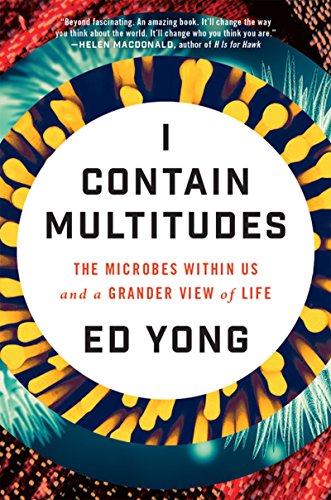
Ed Yong, Pulitzer Prize-winning science writer, reimagines microbes as invisible partners influencing immunity and survival in I Contain Multitudes. Meanwhile, Laurie Garrett’s investigative work in The Coming Plague offers a sobering look at emerging infectious diseases reshaping our world. Voices like Bill Gates and microbiologists Shawna and P. D. Mangan underscore the importance of understanding these tiny organisms, whether for global health or scientific curiosity.
While these expert-curated books provide proven frameworks, readers seeking content tailored to their specific background, skill level, and learning goals might consider creating a personalized Microbiology book that builds on these insights to match your unique journey.
Ed Yong, a Pulitzer Prize-winning science writer for The Atlantic, brings his deep expertise to this exploration of the microbial worlds living within us and all animals. His reporting on the COVID-19 pandemic honed his ability to translate complex biology into engaging narratives, which shines in this book. Yong's perspective shifts how you see microbes—not as foes, but as vital partners shaping health and life. The book draws you into discoveries that challenge assumptions, backed by his award-winning storytelling and scientific rigor.
Ed Yong is a science writer who reports for The Atlantic. For his coverage of the COVID-19 pandemic, he won the Pulitzer Prize in explanatory reporting, the George Polk Award for science reporting, and other honors. His first book, I Contain Multitudes, was a New York Times bestseller. He is based in Washington, DC.
The breakthrough moment came when Ed Yong challenged the common view of microbes as mere germs to be eliminated, revealing instead their profound role in shaping life itself. Drawing from his science writing expertise at The Atlantic and Pulitzer Prize-winning reporting, Yong takes you on a journey through the microbial world that inhabits every animal, including humans, highlighting how these invisible partners influence immunity, identity, and survival. You’ll gain insights into fascinating examples such as bacteria granting squid invisibility cloaks or microbes powering deep ocean creatures. This book suits anyone curious about biology and the hidden forces shaping life, offering a fresh perspective rather than a technical manual.
Shawna, an expert in microbiology and infectious diseases, recommends this book as part of her deep dive into viral epidemics since 2014. She highlights it as a valuable historical timeline of epidemic management, reflecting her extensive knowledge in the field. Her endorsement underscores how the book helped deepen her understanding of infectious disease progression and response, enriching her perspective on microbial threats.
“What I've been reading: This is the 6th book about viruses that I have read since 2014. Highly recommended. It's a great timeline of how epidemics have been handled in history.” (from X)
Laurie Garrett is a former senior fellow for global health at the Council on Foreign Relations. She was awarded the Pulitzer Prize for Explanatory Journalism in 1996 for a series of works published in Newsday, and has also been awarded the Polk and Peabody Prizes. She is the author of The Coming Plague, Betrayal of Trust, and Ebola: Story of an Outbreak.
Laurie Garrett, a Pulitzer Prize-winning journalist and former senior fellow for global health at the Council on Foreign Relations, brings her investigative rigor to this exploration of infectious diseases reshaping our world. Drawing from interviews with experts in virology, molecular biology, and disease ecology, you gain insight into how human actions disrupt microbial balance, fueling outbreaks like HIV, Ebola, and drug-resistant tuberculosis. The book's detailed timelines and case studies, especially in chapters on epidemic responses, equip you to understand not just the science but the socio-political forces behind emerging plagues. If you're interested in the intersection of science and global health policy, this book offers a clear-eyed look at the challenges and stakes involved.
This AI-created book on microbiology is designed around your background and specific interests. You share what you already know, what areas you want to focus on, and your goals, so it covers exactly what you need. Because microbiology spans many complex topics, a personalized approach ensures you get clear, relevant information without wading through unrelated material. The book is created for you, based on your inputs, giving you a focused learning experience tailored to your unique path.
TailoredRead AI creates personalized nonfiction books that adapt to your unique background, goals, and interests. Instead of reading generic content, you get a custom book written specifically for your profession, experience level, and learning objectives. Whether you're a beginner looking for fundamentals or an expert seeking advanced insights, TailoredRead crafts a book that speaks directly to you. Learn more.
This personalized book provides a tailored approach to mastering microbiology, focusing on core principles and specialized topics aligned with your background and goals. It covers microbial physiology, infectious diseases, immune interactions, laboratory techniques, and microbial ecology, offering a personalized framework that fits your specific context. By cutting through irrelevant material, it delivers targeted strategies for practical application in clinical, research, or educational settings. The book emphasizes how microbial systems influence health and disease, integrates lab methods for microbial identification, and addresses emerging challenges like antibiotic resistance. Its tailored content bridges expert knowledge with your unique learning objectives, ensuring efficient and relevant comprehension of microbiology.
David Garner is a UK-based consultant microbiologist with expertise in clinical and laboratory microbiology, infection prevention, and control. He has dedicated his career to making complex microbiology accessible to healthcare professionals, which inspired this book. His background equips him to bridge theory and practice, offering you a guide that focuses on the key concepts of microbiology and infection in clinical settings.
David Garner is a UK-based consultant microbiologist known for his expertise in clinical and laboratory microbiology, infection prevention, and control. He has authored several works aimed at bridging the gap between theoretical microbiology and practical clinical application, making complex concepts accessible to healthcare professionals.
When David Garner first realized how often clinicians stumble over microbiology basics that affect patient care, he crafted this book to clarify those essentials. You’ll learn practical skills like interpreting lab results, managing infection control, and safely prescribing antibiotics, all organized into clinically relevant sections such as emergencies and body-system infections. This book suits healthcare professionals who want a concise yet thorough reference to avoid common pitfalls in infection diagnosis and treatment. For example, the antibiotics section offers guidance on reviewing treatments when patients don’t respond as expected, making it a useful tool for daily clinical decisions.
6271463574126599, a recognized medical authority, highlights Superbugs as a standout resource, simply calling it a "Great book". This endorsement reflects how the book’s detailed account of battling antibiotic-resistant bacteria resonates with experts deeply involved in infectious diseases. The combination of clinical experience and scientific insight by Matt McCarthy offers a perspective that challenges and informs, especially valuable for those navigating the complexities of modern microbiology.
Matt McCarthy is the author of two national bestsellers, The Real Doctor Will See You Shortly and Odd Man Out. He is an assistant professor of medicine at Weill Cornell and a staff physician at NewYork-Presbyterian Hospital, where he serves on the Ethics Committee. His work has appeared in Sports Illustrated, Slate, The New England Journal of Medicine, and Deadspin. He reviews nonfiction for USA Today and is editor-in-chief of Current Fungal Infection Reports.
When Matt McCarthy first realized the urgent threat posed by antibiotic-resistant bacteria, he drew on his frontline experience as a physician and researcher to bring this crisis to life. You’ll follow the gripping journey of clinical trials testing new antibiotics, alongside detailed explorations of microbiology’s history—from Fleming’s penicillin discovery to CRISPR innovations. The book offers insights into both the science behind superbugs and the human stories of patients battling infections that defy treatment. If you want to understand the complex challenges in infectious disease medicine and the race to outsmart evolving bacteria, this book lays it out clearly and compellingly.
Dr. Patrick R. Murray, worldwide director of Scientific Affairs at BD Diagnostic Systems and former chief of Clinical Microbiology Service at the Clinical Center Department of Laboratory Medicine, brings his extensive expertise to Medical Microbiology. His distinguished academic and clinical career informs the book's clear explanations and practical focus, making it a valuable tool for those navigating the complexities of infectious diseases and microbial diagnostics.
Patrick R. Murray PhD, Ken Rosenthal PhD, Michael A. Pfaller MD(you?)·
About the Author
Dr. Patrick R. Murray, an Elsevier Author, is worldwide director of Scientific Affairs at BD Diagnostic Systems. He has an esteemed career in academics and clinical practice, and has served as chief of the Clinical Microbiology Service in the Clinical Center Department of Laboratory Medicine.
When Dr. Patrick R. Murray, an established leader in clinical microbiology, developed Medical Microbiology, he drew from decades of academic and clinical experience to clarify this dense field. The book unpacks complex topics like immunology, microbial diagnosis, and pathogen biology with precise tables, vivid clinical images, and case studies that bridge theory and practice. You gain not only foundational knowledge but also insight into the latest on the human microbiome and emerging pathogens. This text benefits medical students, laboratory professionals, and clinicians seeking a reliable reference that balances detail with accessibility, especially through its chapter summaries and review questions.
This AI-created book on microbiology mastery is tailored to your skill level and goals, focusing on daily lessons designed just for you. By sharing your background and specific interests, the book concentrates on the areas you want to develop, whether it's lab techniques or microbial genetics. This makes your learning efficient and directly relevant to what you need, avoiding unnecessary material. It’s a straightforward way to build your microbiology expertise in just one month, crafted around your unique journey.
TailoredRead AI creates personalized nonfiction books that adapt to your unique background, goals, and interests. Instead of reading generic content, you get a custom book written specifically for your profession, experience level, and learning objectives. Whether you're a beginner looking for fundamentals or an expert seeking advanced insights, TailoredRead crafts a book that speaks directly to you. Learn more.
This tailored book delivers a personalized framework for mastering microbiology through focused daily lessons over one month. It emphasizes building foundational knowledge while progressing into applied microbiological techniques relevant to your background and goals. The book provides a structured approach to topics such as microbial physiology, pathogen identification, and lab methods, cutting through generic advice to fit your specific learning needs. By integrating core concepts with practical skills, it addresses challenges unique to your experience level and desired applications. This personalized approach facilitates efficient knowledge acquisition and skill development in microbiology, enabling you to gain expertise in a methodical, stepwise manner.
Luke S. P. Moore is a Consultant in Infectious Diseases, Microbiology and Virology at Chelsea and Westminster NHS Foundation Trust and Imperial College Healthcare NHS Trust, London. His extensive clinical background and numerous publications in this field informed the creation of this revision guide, which targets both undergraduate and postgraduate trainees preparing for infection-related exams. His expertise ensures the content aligns with the FRCPath and Royal College of Physicians infection curricula, providing focused training to optimize your knowledge and exam readiness.
Luke S. P. Moore is a Consultant in Infectious Diseases, Microbiology and Virology at Chelsea and Westminster NHS Foundation Trust and Imperial College Healthcare NHS Trust, London. He has authored numerous publications in this area and previously published revision books for the MRCP exams (2013).
2019·264 pages·Microbiology, Infectious Diseases, Virology, Exam Preparation, Medical Education
Drawing from his extensive clinical experience at Chelsea and Westminster NHS Foundation Trust, Luke S. P. Moore crafted this guide to address the practical needs of trainees preparing for infection-related exams like the FRCPath Part 1 and Royal College of Physicians membership. You’ll find over 300 exam-style multiple choice questions aligned closely with current infection curricula, helping you sharpen decision-making skills under pressure. The book’s focus on infectious diseases, microbiology, and virology integrates undergraduate and postgraduate knowledge, making it especially useful for specialists and trainees in intensive care and related fields. If you’re preparing for infection exams or seeking to strengthen your clinical reasoning in infection management, this book offers targeted preparation without unnecessary complexity.
Richard Goering is a distinguished author with a BA, MSc, and PhD, specializing in microbiology and immunology. He has contributed significantly to the field through his research and publications, making complex topics accessible to students and professionals alike. This expertise underpins the book's design to clarify challenging concepts and provide a clinically relevant, systems-based understanding of microbiology that supports both learning and practical application.
Richard Goering BA MSc PhD, Hazel M. Dockrell BA (Mod) PhD, Mark Zuckerman BSc(Hons) MBBS MRCP MSc FRCPath, Peter L. Chiodini BSc MBBS PhD FRCP FRCPath FFTM RCPS(Glas)(you?)·
Richard Goering BA MSc PhD, Hazel M. Dockrell BA (Mod) PhD, Mark Zuckerman BSc(Hons) MBBS MRCP MSc FRCPath, Peter L. Chiodini BSc MBBS PhD FRCP FRCPath FFTM RCPS(Glas)(you?)·
About the Author
Richard Goering is a distinguished author with a BA, MSc, and PhD, specializing in microbiology and immunology. He has contributed significantly to the field through his research and publications, making complex topics accessible to students and professionals alike.
When Richard Goering first realized the challenge students face grasping microbiology's complexity, he crafted this book to clarify and contextualize. You’ll explore infections organized by body system rather than isolated pathogens, making it easier to understand how microbes interact within the human body. Key features like 'Lessons in Microbiology' highlight clinical relevance, while the electronic 'Pathogen Parade' and 'Vaccine Parade' provide quick, practical references. This book suits medical students and healthcare professionals aiming to connect microbiology theory with clinical practice, especially those preparing for exams or needing a systems-based understanding.
Best for readers fascinated by microbiology history
Audiobook version not available
P. D. Mangan, a microbiologist and science educator, highlights the captivating history behind the biology of tiny organisms like bacteria and viruses. After exploring the origins of microbiology, he recommends Microbe Hunters by Paul de Kruif, noting how the stories of early figures such as van Leeuwenhoek provide a fascinating glimpse into the field’s beginnings. His perspective brings a personal touch to the science, showing how these early discoveries continue to inform our understanding of microbes today.
“@ClemensXI Glad you asked. Literally, it's the biology of very small organisms, including bacteria, viruses, protozoa, and fungi. The story of van Leeuvenhoek, the first microbiologist, is fascinating, and you might try the book Microbe Hunters by de Kruif.” (from X)
Paul de Kruif (1890-1971), a bacteriologist and pathologist, was a prolific author on the subject of medical science. He lived in Michigan and taught for many years at the University of Michigan in Ann Arbor.
When Paul de Kruif first captured the microscopic world in Microbe Hunters, he brought to life the dramatic stories of pioneering scientists who unveiled the mysteries of microbes. As a bacteriologist and pathologist, de Kruif draws on his medical background to humanize figures like van Leeuwenhoek and Pasteur, revealing how their discoveries shaped medicine and vaccines. You'll gain insight into the origins of microbiology, understanding how fundamental breakthroughs—such as observing microbes in raindrops or developing the rabies vaccine—transformed health science. This book is particularly suited for those curious about the history and personalities behind microbiology’s early milestones rather than readers seeking current technical details or lab protocols.
Michael J. Leboffe is a recognized author in microbiology education, whose collaboration with Burton E. Pierce has produced widely used textbooks in the field. Their extensive experience in crafting educational resources led to this atlas, designed to visually support students and educators alike in microbiology laboratory courses. The book’s strength lies in its vivid imagery and clear explanations, which bridge the gap between theoretical concepts and hands-on lab work, making it a practical tool for those learning or teaching microbiology techniques.
Michael J. Leboffe is a prominent author in the field of microbiology, known for his contributions to educational resources. Along with Burton E. Pierce, he has co-authored several widely used textbooks that serve as essential references for students and educators in microbiology courses.
When Michael J. Leboffe and Burton E. Pierce developed this atlas, they challenged the usual textbook approach by placing vivid, accurate photographs front and center to enhance microbiology learning. You get over 700 full-color images tied directly to laboratory exercises, helping you visually connect theory with practice—like understanding staining techniques and microscopic structures through clear, real examples. The atlas doesn’t just show you what to do; it explains why each method works, building your foundational skills in lab proficiency. If you’re diving into microbiology labs or teaching them, this book sharpens your ability to interpret lab results with confidence, making abstract concepts tangible and accessible.
Marjorie Kelly Cowan is a renowned author and educator in microbiology, celebrated for shaping curricula that bridge complex science and student comprehension. Her passion for teaching propelled the creation of this book, designed to make microbiology accessible and relevant, particularly for those entering health and science fields. With decades of academic influence, Cowan brings clarity and practical insight, helping you navigate microbial science through a systems lens.
Marjorie Kelly Cowan is a renowned author and educator in the field of microbiology, known for her contributions to several textbooks that have shaped the curriculum for students in the biological sciences. With a strong background in microbiology and a passion for teaching, Cowan has dedicated her career to making complex scientific concepts accessible to students. Her work is widely recognized in academic circles, and she has collaborated with other experts to enhance the learning experience for students pursuing careers in health and science.
2021·864 pages·Microbiology, Health Sciences, Education, Clinical Applications, Microbial Physiology
When Marjorie Kelly Cowan revisited traditional microbiology teaching, she realized that a systems approach could better connect fundamental concepts with clinical applications. Drawing from her extensive experience in education, she offers students a framework that balances biology basics with real-world relevance, especially for allied health and nursing fields. The book dives into microbial systems in a way that clarifies complex interactions, supported by interactive questions and animations to solidify understanding. You'll find chapters that break down microbial physiology alongside sections applying that knowledge to infection control and diagnostics, making it suited for anyone preparing for practical microbiology challenges.
The best Microbiology books and more, in your inbox each week. No account needed.
Conclusion
These 10 books converge on themes that illuminate microbiology’s complexity: the essential symbiosis between microbes and hosts, the urgent battle against antibiotic resistance and emerging diseases, and the vital role of clinical understanding in healthcare. If you’re grappling with the basics, Microbiology Nuts & Bolts and Medical Microbiology offer practical grounding. For rapid immersion into infectious diseases, pair The Coming Plague with Superbugs to grasp both history and cutting-edge challenges.
For visual and applied learners, A Photographic Atlas for the Microbiology Laboratory and ISE Microbiology bridge theory with hands-on skills. History buffs will appreciate the timeless narratives in Microbe Hunters.
Once you’ve absorbed these expert insights, create a personalized Microbiology book to bridge the gap between general principles and your specific situation, accelerating your path to mastery.
Frequently Asked Questions
I'm overwhelmed by choice – which book should I start with?
Start with I Contain Multitudes for an engaging overview that reshapes how you see microbes. Its narrative style eases you into complex topics before diving into more technical works like Medical Microbiology.
Are these books too advanced for someone new to Microbiology?
Not at all. Books like Microbiology Nuts & Bolts and Mims' Medical Microbiology and Immunology are designed to clarify key concepts for beginners and healthcare professionals alike.
What’s the best order to read these books?
Begin with broad perspectives like I Contain Multitudes and Microbe Hunters, then progress to clinical-focused texts such as Medical Microbiology and Microbiology Nuts & Bolts. Finish with specialized topics like Superbugs.
Should I start with the newest book or a classic?
A mix works well. Classics like Microbe Hunters offer historical context, while recent releases like ISE Microbiology provide up-to-date systems approaches.
How do I know if a book is actually worth my time?
Look for endorsements by experts like Bill Gates or Shawna and consider the book’s relevance to your learning goals. Detailed reviews and practical content, such as in Superbugs, signal high value.
Can I get a book tailored to my specific Microbiology interests and experience?
Yes! While these expert books offer solid foundations, personalized books let you focus on your unique needs and goals. Explore custom Microbiology books here to complement your learning journey.
📚 Love this book list?
Help fellow book lovers discover great books, share this curated list with others!