10 Nigeria History Books That Unlock the Nation’s Story
Recommended by Funmi Iyanda, Catriona Laing, and Toyin Falola, these books reveal Nigeria’s rich history and enduring challenges
Updated on June 24, 2025·We may earn commissions for purchases made via this page
1 of 10 books have Audiobook versions
We're launchingLaunching on Product Hunt today 🎉We just launchedJust launched on Product Hunt 🎉
Modelpeers, from the BookAuthority teamFrom the BookAuthority team: Modelpeers, a free way to follow AI models and agents like you follow people. We'd love your support.
What if the story of Nigeria’s past was more intricate and human than you thought? Understanding Nigeria’s history is vital now as the country navigates its complex identity shaped by colonialism, civil war, and ongoing political shifts. This history isn’t just dates and facts; it’s the foundation of today’s challenges and hopes.
Experts like Funmi Iyanda, a Nigerian media visionary, found that "What Britain Did to Nigeria" reshaped her understanding of colonial impact with blunt clarity. Meanwhile, Catriona Laing, British High Commissioner to Nigeria, praises "Formation" for breathing life into the nation’s origins beyond colonial narratives. And Toyin Falola, renowned African studies professor, values narratives like "Surviving Biafra" that blend personal memory with historical complexity.
These carefully selected books offer proven insights, but if you want a journey tailored to your background and learning goals—be it political history, conflict studies, or cultural shifts—you can create a personalized Nigeria History book that builds on these expert foundations, guiding your unique exploration.
Funmi Iyanda, a respected media visionary deeply engaged with Nigerian culture, recommended this book with heartfelt enthusiasm, saying, "It’s for love. Truly important book. Well done and thanks." Her endorsement highlights the book’s relevance in understanding Nigeria's complex colonial past. This work reshaped her views on how British conquest shaped present-day Nigeria, illuminating the nuances often missed in popular accounts. Alongside her, historian Olivette Otele praises the book’s nuanced and timely insights, emphasizing its powerful portrayal of colonial consequences that still resonate today.
Max Siollun is a Nigerian author and historian known for his insightful works on Nigeria's history and politics. He has written extensively on the impact of colonialism and military rule in Nigeria, providing a critical perspective on the country's past and its implications for the present. His previous works include 'The Forgotten Era: Nigeria Before British Rule' and 'Oil, Politics and Violence: Nigeria’s Military Coup Culture (1966-1976). Siollun's research and writings have earned him recognition as a leading voice in Nigerian historical discourse.
After analyzing numerous colonial histories, Max Siollun developed a stark reinterpretation of Nigeria's past under British rule. He digs into the reality behind the so-called civilizing mission, exposing how colonial policies often fueled violence and manipulated ethnic divisions to maintain control. You’ll come away understanding how Britain’s actions reshaped Nigeria’s legal systems and social fabric, with consequences that echo today. Chapters detail the exploitation of ethnic identities and the forced remaking of local traditions, providing a foundation to grasp ongoing political and economic struggles. This book suits anyone seeking a critical, no-frills perspective on Nigeria’s colonial legacy.
Catriona Laing, British High Commissioner to Nigeria, brings a rare diplomatic perspective to Nigerian history. She was deeply moved by how this book illuminated the nation's roots, saying "A brilliantly written account that brings history to life and raises many issues still relevant today." Her endorsement highlights how the authors' exploration reshaped her understanding of Nigeria's past amid current challenges. Alongside her, Ijeoma Nwogwugwu, Managing Director of Arise News Channel, praises the book's fresh look at indigenous perspectives, urging everyone interested in Nigeria's story to engage with it.
“Delighted to hear from authors DoubleEph and FolaFagbule about their fascinating book “Formation: The Making of Nigeria from Jihad to Amalgamation”. A brilliantly written account that brings history to life and raises many issues still relevant today. Highly recommended!” (from X)
Fola Fagbule was born in Lagos, Nigeria. A banker and investment professional for the best part of the last two decades, Fola currently leads the Financial Advisory department of a leading African multilateral bank. He has previously made a living as a writer, working as a securities analyst developing and publishing research on companies listed on the Nigerian Stock Exchange.
What if everything you thought you knew about Nigeria's origins was incomplete? Fola Fagbule and Feyi Fawehinmi trace the nation's complex formation from the 1804 Jihad through to British Amalgamation in 1914, revealing the interplay of Islam, Christianity, colonial ambitions, and indigenous power struggles. You explore detailed narratives on figures like Usman Dan Fodio and Madam Tinubu, gaining insights into Nigeria's layered socio-political landscape prior to colonial rule. If you seek to understand Nigeria beyond colonial narratives, this book offers a nuanced look at the forces shaping its identity and challenges.
This personalized AI book about Nigeria's history is created based on your unique background, interests, and learning goals. By sharing what aspects of Nigeria's past intrigue you most—whether colonialism, civil war, or cultural shifts—you receive a book crafted to guide your specific journey through its complex history. This AI-created book focuses on providing relevant insights that resonate with your perspective and objectives, making your exploration both meaningful and efficient.
TailoredRead AI creates personalized nonfiction books that adapt to your unique background, goals, and interests. Instead of reading generic content, you get a custom book written specifically for your profession, experience level, and learning objectives. Whether you're a beginner looking for fundamentals or an expert seeking advanced insights, TailoredRead crafts a book that speaks directly to you. Learn more.
2026·50-300 pages·Nigeria History, Colonial Impact, Civil War, Political Evolution, Cultural Heritage
This tailored book explores Nigeria's rich and complex history with a focus on your unique interests and background. It covers the nation's formation, colonial influences, civil conflicts, and cultural evolutions, all woven into a narrative that matches your goals. By tailoring the content, this book reveals how historical events connect to present-day Nigeria, helping you grasp both broad themes and nuanced details. The personalized approach ensures that the journey through Nigeria’s past suits your learning style and priorities, making the study more engaging and insightful. It offers a custom pathway through the nation’s historical landscape, providing clarity on key moments that shaped its identity and challenges.
Toyin Falola, the Frances Higginbotham Nalle Centennial Professor in History at the University of Texas, Austin, brings decades of Africanist scholarship to this book. His deep knowledge of Nigeria’s past and co-editing work on African health and culture inform a narrative that connects historical events to present realities. This background equips you to explore Nigeria’s political and economic journey through a clear, readable history that balances detail with accessibility.
Toyin Falola, Frank W. Thackeray, John E. Findling(you?)·
About the Author
Toyin Falola is the Frances Higginbotham Nalle Centennial Professor in History at the University of Texas, Austin. His books include The Power of African Cultures (2003), Economic Reforms and Modernization in Nigeria, 1945–1965 (2004) and A Mouth Sweeter than Salt: An African Memoir (2004). Matthew M. Heaton is a Patrice Lumumba Fellow at the University of Texas, Austin. He has co-edited multiple volumes on health and illness in Africa with Toyin Falola, including HIV, Illness and African Well-Being and Health Knowledge and Belief Systems in Africa (2007).
Toyin Falola's extensive expertise as a historian specializing in African studies shapes this detailed narrative of Nigeria's evolution from ancient times to 1998. You’ll gain insights into the complex interplay of politics and economics that have influenced Nigeria’s development, including the impacts of Islam, Christianity, colonialism, and the slave trade. Chapters offer biographical sketches and maps that enrich your understanding of key figures and regions, making it accessible whether you’re a student or an interested reader. This book suits anyone seeking a coherent yet nuanced overview of Nigeria’s historical challenges and its journey toward modernity.
The Times Literary Supplement, a respected literary authority, highlights the book's unique angle by describing it as 'a striking mixture of the human interest of 'true crime', and theoretical insight into the operation of 'lawfare' in a breakaway state at war.' This perspective is invaluable if you're delving into Nigerian history, especially the complexities of the Biafran conflict. Their endorsement underscores how Daly's work reshapes understanding of power and legality during wartime, showing how these shaped Nigeria’s long-term challenges.
“'A striking mixture of the human interest of 'true crime', and theoretical insight into the operation of 'lawfare' in a breakaway state at war [...] The legal history of Biafra offers a West African parable of power and idealism.'”
Samuel Fury Childs Daly is an accomplished author and historian with a focus on African studies, particularly the Nigerian Civil War. His research delves into the complexities of law, crime, and societal dynamics during this tumultuous period. Daly's work is informed by extensive archival research and oral histories, providing a nuanced understanding of the historical context and its lasting impacts on Nigeria.
Samuel Fury Childs Daly takes you into the courtroom dramas of the Nigerian Civil War, revealing how law and survival tactics intertwined in wartime Biafra. You gain insight into how ordinary people navigated extreme hardship through fraud, extortion, and violence, with these patterns echoing long after the war ended in 1970. Daly's use of original legal archives and oral histories offers a perspective that goes beyond battlefields to explore the societal fractures and persistence of crime in Nigeria. If you want to understand the legal and social aftermath of Biafra’s brief existence, this book gives you a detailed, grounded view that challenges simplistic historical accounts.
Toyin Falola, a distinguished professor of African Studies at the University of Texas, values this book for how it balances historical events with the intimate realities of war. He highlights its unique ability to merge political complexity with personal memory, noting how it portrays both "the very essence of life and death" during Biafra’s conflict. This perspective helped Falola appreciate the nuanced human dimensions behind Nigeria's tumultuous history. Additionally, The Times Literary Supplement praises Rosina Umelo's account for spotlighting the struggles of ordinary people and women’s heavy burdens during the war, enriching the broader narrative of Nigeria’s past.
“'Here is a book on Biafra that juxtaposes the dualities: the historical and figurative narratives; history and memory; the complexity and simplicity of politics and warfare; the incredulity and reality of facts; the very essence of life and death; and the personal engagements with plenty and hunger, desire and denial.'”
S. Elizabeth Bird is Professor Emerita of Anthropology at the University of South Florida, where her research interests include media studies, memory studies, oral history, and heritage, in both the United States and Nigeria. She has published seven books and over 100 articles and book chapters, and now mostly writes articles for newspapers and magazines. Rosina Umelo lived in Nigeria for fifty years, working as a teacher, writer and editor, most recently at the International Institute of Tropical Agriculture, Ibadan. She now lives near London.
Unlike most Nigeria history books that focus on broad political narratives, this one offers a deeply personal view through Rosina Umelo's firsthand account of the Biafran War. Anthropologist S. Elizabeth Bird enriches Umelo's vivid diary with historical context, helping you grasp not just the timeline but the human realities of starvation, displacement, and resilience. You'll learn about the war's impact on everyday life, especially from a woman's perspective navigating shifting dangers and hope. This book suits anyone keen on understanding the Biafran conflict beyond statistics—to hear the voices of those who lived it and the complex interplay of memory and history.
This custom AI book on Nigeria history is created based on your background, interests, and goals. By sharing what aspects of Nigeria's past intrigue you most, your skill level, and learning objectives, you receive a book uniquely crafted to focus on your priorities. This approach makes mastering Nigeria's complex history more manageable and engaging, as it highlights the topics and events that matter most to you, saving time and deepening your understanding.
TailoredRead AI creates personalized nonfiction books that adapt to your unique background, goals, and interests. Instead of reading generic content, you get a custom book written specifically for your profession, experience level, and learning objectives. Whether you're a beginner looking for fundamentals or an expert seeking advanced insights, TailoredRead crafts a book that speaks directly to you. Learn more.
2026·50-300 pages·Nigeria History, Colonial Era, Civil War, Political Evolution, Cultural Heritage
This tailored book offers a focused journey through Nigeria's intricate history, crafted to match your background and goals. It explores major historical periods, key figures, and pivotal events, providing a step-by-step plan for rapid mastery within 90 days. By synthesizing expert knowledge with your specific interests, the book reveals the complexities of Nigeria's formation, colonial era, civil conflict, and modern evolution. Each chapter is designed to engage you deeply while aligning with your unique learning pace and focus areas. This personalized guide makes navigating Nigeria's rich and sometimes challenging past an accessible and stimulating experience, ensuring you gain meaningful insights that resonate with your perspective.
Richard Gott, author of Britain's Empire, brings his deep understanding of imperial and post-colonial histories to endorse this work, highlighting how Richard Bourne offers a fair-minded and richly detailed account of Nigeria’s complex story. Gott’s appreciation for the book’s vivid portraits and balanced narrative reflects a rare clarity in the tangled history of Nigeria. Alongside him, Emeka Anyaoku, former Commonwealth Secretary-General, praises Bourne's research and insightful treatment of the country’s governance diversity, recommending this as essential reading for anyone interested in Nigerian history. Their combined expertise underscores the book’s value for both specialists and general readers.
“Richard Bourne's brilliant new book is an admirable, fair-minded account of a complex story, embellished with excellent portraits of its extended cast.”
Richard Bourne is Senior Research Fellow at the Institute of Commonwealth Studies, London University, and a former journalist. In 1998 he founded the Commonwealth Policy Studies Unit and before that, in 1990, was the first director of the non-governmental Commonwealth Human Rights Initiative. He has written and edited ten books and numerous reports, including a biography of President Lula of Brazil (2008) and a collection of essays in honour of the 80th birthday of Shridath Ramphal (2008). As a journalist he was education correspondent of The Guardian and deputy editor of the London Evening Standard.
Richard Bourne's decades of experience as a senior research fellow and journalist shaped this detailed exploration of Nigeria's complex history. You’ll gain a clear understanding of key events from the country’s 1914 formation through civil war, economic struggles, and political upheavals up to the 2015 elections. The book digs into why Nigeria remains united despite its challenges, with chapters offering original interviews and research that illuminate the impact of colonialism, resource wealth, and insurgency. If you want to grasp Nigeria’s tangled past and ongoing hopes, this book offers a well-rounded, insightful narrative that suits anyone serious about African history and political dynamics.
Nadine Gordimer, Nobel Prize-winning author, emphasizes the unique power of Achebe’s memoir in capturing Nigeria’s painful civil war. She highlights how the book transcends standard history, blending narrative tension with profound reflections on freedom and human spirit. Gordimer notes, "Chinua Achebe’s history of Biafra is a meditation on the condition of freedom. It has the tense narrative grip of the best fiction." This book reshaped her understanding of Nigeria’s conflict and the role of storytelling in preserving history.
“Chinua Achebe’s history of Biafra is a meditation on the condition of freedom. It has the tense narrative grip of the best fiction. It is also a revelatory entry into the intimate character of the writer’s brilliant mind and bold spirit. Achebe has created here a new genre of literature in which politico-historical evidence, the power of story-telling, and revelations from the depths of the human subconscious are one. The event of a new work by Chinua Achebe is always extraordinary; this one exceeds all expectation.”
Chinua Achebe was born in Nigeria in 1930. He has published novels, short stories, essays, and children’s books. His volume of poetry Christmas in Biafra was the joint winner of the first Commonwealth Poetry Prize. Of his novels, Arrow of God won the New Statesman-Jock Campbell Award, and Anthills of the Savannah was a finalist for the 1987 Booker Prize. Things Fall Apart, Achebe’s masterpiece, has been published in fifty different languages and has sold more than ten million copies internationally since its first publication in 1958. Achebe is the recipient of the Nigerian National Merit Award, Nigeria’s highest award for intellectual achievement. In 2007, he won the Man Booker International Prize. He died in March 2013.
During the Nigerian civil war, Chinua Achebe transformed personal tragedy into a profound historical memoir that blends vivid storytelling with rigorous reflection. You gain insights into Nigeria’s tumultuous birth and the devastating Biafran War through Achebe’s dual lens as a witness and a writer, especially in chapters detailing his role as a cultural ambassador amidst conflict. The narrative explores the intertwining of personal identity with national trauma, illuminating the responsibilities of artists in times of crisis. This book suits you if you seek not just historical facts but an intimate understanding of Nigeria’s complex past through the eyes of one of its most influential literary figures.
Chinua Achebe, Nigeria's celebrated novelist and critic, praised this book as a "sweeping yet intimate portrait" that captures the nation's complexity through the lens of one family's legacy. His endorsement carries weight given his lifelong engagement with Nigeria's cultural and political landscape. Achebe highlights how Peter Cunliffe-Jones's personal ties and journalistic expertise provide a unique vantage point on Nigeria's colonial heritage and ongoing challenges. Complementing this, The Times Literary Supplement notes Cunliffe-Jones's affection for Nigeria and his focus on Nigerian voices, tackling issues like religious tensions and corruption, which deepened their appreciation of the book's balanced outlook.
“Mr. Cunliffe-Jones has produced a sweeping yet intimate portrait of his and his distinguished family's sojourn in Africa's most populous and complicated nation – Nigeria. It is a work that deserves widespread critical attention. A triumph!”
Peter Cunliffe-Jones has been a foreign correspondent for over 20 years for The Economist, The Independent and the Paris-based Agence France Presse news agency where he is now a senior editor. He is the author of My Nigeria. Since 1990 he has reported from western Europe, the Balkans, West Africa, and East Asia. He is today the agency’s head of English-language multimedia news. From 1998 to 2003 he was AFP bureau chief in Lagos, Nigeria. He lives in London.
Peter Cunliffe-Jones's two decades as a foreign correspondent, including a stint as AFP bureau chief in Lagos, bring a deeply personal and informed perspective to Nigeria's complex history. In My Nigeria, he blends family memoir with sharp analysis, revealing how colonial legacies shaped political turmoil and why British rule sowed seeds of instability at independence. You gain nuanced insights into Nigeria's economic challenges, ethnic conflicts, and social dynamics, illustrated by vivid anecdotes like his grandfather’s constitutional role and the Niger Delta's contested lands. This book suits anyone seeking a thoughtful, intimate understanding of Nigeria’s past and present, especially those interested in how personal histories intertwine with national narratives.
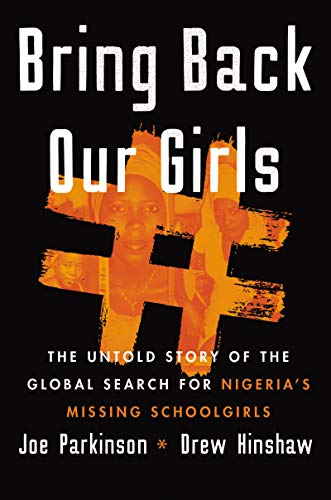
Tom Wright, co-founder of Project Brazen and an authority on Nigerian affairs, highlights this book as a crucial read. He points to its detailed account of the girls’ abduction and the international ripples it caused, reflecting on how the narrative reshaped his understanding of Nigeria's complex conflicts. "Great book if you haven’t read it!" he recommends, underscoring its value for anyone wanting a deeper grasp of recent Nigerian history and the power of global advocacy.
Joe Parkinson is the Africa Bureau Chief for the Wall Street Journal and a Pulitzer Prize finalist currently based in Johannesburg. One of the Journal’s most seasoned foreign correspondents, he has reported from more than forty countries, and his work has won numerous international awards.
When Joe Parkinson, the Wall Street Journal's Africa Bureau Chief and a Pulitzer Prize finalist, teamed up with Drew Hinshaw, they uncovered the complex layers behind the global mission to rescue Nigerian schoolgirls abducted in 2014. You’ll gain detailed insights into the interplay of social media activism, international politics, and local realities, including the girls’ resilience amid brutal captivity. The book traces events from Nigerian forests to diplomatic backrooms, exposing how a viral hashtag sparked worldwide intervention yet left many questions unanswered. If you’re seeking a nuanced understanding of Nigeria's recent history and the human stories within, this book offers a thorough exploration without oversimplification.
Max Siollun is a historian specializing in Nigeria's history, acclaimed as the Chronicler-in-Chief of the Nigerian military by President Buhari's media advisor, Tolu Ogunlesi. His deep knowledge of Nigeria's military and political landscape grounds this book, which examines a pivotal decade of near-national collapse and the transition from military to civilian rule. Siollun’s expertise offers you a well-informed perspective on the complex events and personalities that have shaped contemporary Nigeria.
Max Siollun is a historian and author who specializes in Nigeria's history. He has written some of the most acclaimed books on Nigeria's history, and has been described as standing 'unchallenged, in contemporary times, as the Chronicler-in-Chief of the Nigerian military' by the Special Assistant on New Media to Nigeria's President Buhari, Tolu Ogunlesi.
2019·320 pages·Nigeria History, Military Rule, Political Leadership, Democracy Transition, Election Annulment
Drawing from his deep expertise in Nigerian military history, Max Siollun offers a detailed look at a turbulent decade marked by political upheaval and military dominance. The book delves into the lives and influence of three central figures: Moshood Abiola, whose annulled electoral victory sparked national crisis; General Sani Abacha, whose authoritarian rule cast a shadow of fear and repression; and Olusegun Obasanjo, who transitioned from prisoner to civilian president. You will gain insight into the complex interplay of power, politics, and military influence that shaped modern Nigeria, particularly through chapters exploring the annulled 1993 election and the state's Orwellian security apparatus. This narrative suits anyone wanting to understand Nigeria's fraught journey toward democracy and the ongoing legacy of military rule.
The best Nigeria History books and more, in your inbox each week. No account needed.
Conclusion
This collection reveals three clear threads: the deep scars and legacies of colonial rule, the human stories behind Nigeria’s civil conflicts, and the ongoing political and social evolution shaping its future. If you’re grappling with Nigeria’s colonial past, start with "What Britain Did to Nigeria" and "Formation" to grasp roots and repercussions.
For understanding the Biafran War’s human and legal dimensions, combine "Surviving Biafra" with "A History of the Republic of Biafra" for a nuanced view that goes beyond battlefield tales. If current political dynamics intrigue you, "Nigeria" and "Nigeria's Soldiers of Fortune" offer expert analyses of governance and military influence.
Alternatively, you can create a personalized Nigeria History book to bridge these broad themes with your specific interests and accelerate your learning journey with targeted insights.
Frequently Asked Questions
I'm overwhelmed by choice – which book should I start with?
Start with 'What Britain Did to Nigeria' for a clear view of colonial impact. It provides a foundation to understand later developments, making other books easier to appreciate.
Are these books too advanced for someone new to Nigeria History?
No, many books like 'The History of Nigeria' and 'My Nigeria' offer accessible narratives suitable for beginners while still providing depth for keen learners.
What's the best order to read these books?
Begin with origins in 'Formation', then colonial history in 'What Britain Did to Nigeria', followed by civil war accounts like 'Surviving Biafra', and finish with modern political analyses.
Should I start with the newest book or a classic?
A mix works well. Newer books like 'Formation' bring fresh perspectives, while classics like 'There Was a Country' offer timeless personal insights.
Do I really need to read all of these, or can I just pick one?
You can pick one based on your interest—war history, colonialism, or politics. But reading several provides a richer, multi-dimensional understanding.
Can I get custom Nigeria History insights tailored to my needs?
Yes! While these expert books are invaluable, you can create a personalized Nigeria History book that adapts expert knowledge to your background and goals for focused learning.
📚 Love this book list?
Help fellow book lovers discover great books, share this curated list with others!