Congratulations! 🎉
"An Introduction to the Theory of Numbers" by G. H. Hardy, Edward M. Wright, Andrew Wiles made it to BookAuthority's Best Number Theory Audiobooks of All Time!
10 Number Theory Books That Shape Mathematical Minds
Discover why Simon Winchester, Kirk Borne, and Peter Sarnak recommend these Number Theory books for mastering primes and proofs
What if the secrets of prime numbers could unlock new ways of thinking about the very fabric of mathematics? Number Theory, a field as old as numbers themselves, continues to captivate minds eager to unravel its mysteries. Today, its relevance stretches beyond pure mathematics into cryptography, physics, and computer science, making the right resources more vital than ever.
Leading voices like Simon Winchester, acclaimed author and historian, and Peter Sarnak of Princeton University, a mathematician deeply involved in prime research, have championed certain works that illuminate this complex domain. For instance, Winchester praises The Music of the Primes for turning a daunting subject into poetic exploration, while Sarnak endorses Prime Numbers and the Riemann Hypothesis for its balance of rigor and accessibility.
While these expert-curated selections provide proven frameworks, readers seeking tailored insights—whether focused on cryptography applications or analytic methods—might consider creating a personalized Number Theory book that builds on these foundational texts and matches your unique background and goals.
1. Prime Numbers and the Riemann Hypothesis
Recommended by Will Hearst
Hearst Corporation executive
“This is an extraordinary book, really one of a kind. Written by two supreme experts, but aimed at the level of an undergraduate or curious amateur, it emphasizes the really powerful ideas, with the bare minimum of math notation and the maximum number of elegant and suggestive visuals. The authors explain why this legendary problem is so beautiful, why it is difficult, and why you should care.” (from Amazon)

Barry Mazur, a leading Harvard mathematician, teams up with William Stein, known for his contributions to computational number theory, to unravel the mysteries surrounding prime numbers and the Riemann Hypothesis. You’ll begin with an accessible introduction to prime numbers that sparks curiosity, supported by vivid computational graphics illustrating key concepts. As you progress, the book deepens into Fourier analysis and spectral theory to explain the Riemann Hypothesis, making it suitable for both enthusiasts and those with a solid mathematical background. Chapter 3’s exploration of the primes’ hidden structures offers insight into why this conjecture remains a central challenge. If you seek a balance between intuition and technical depth, this book fits well—though those without some mathematical maturity might find later sections demanding.
2. An Introduction to the Theory of Numbers
Recommended by The Mathematical Gazette
“This fascinating book... gives a full, vivid and exciting account of its subject, as far as this can be done without using too much advanced theory.” (from Amazon)

G. H. Hardy's decades of pioneering work in number theory led to this definitive text that has shaped generations of mathematicians. What you gain here is a meticulous walkthrough of elementary number theory milestones, enriched by updates from contemporary experts like Andrew Wiles and Joseph Silverman. Chapters cover everything from modular elliptic curves to Fermat's Last Theorem, offering you both foundational concepts and cutting-edge developments. If you're aiming to deepen your mathematical rigor and explore the evolving landscape of number theory, this book serves as both a rigorous course and a rich reference. It's best suited for undergraduates and anyone serious about understanding the core ideas driving modern number theory.
Number Theory Mastery Blueprint

This personalized book offers a tailored journey through the fascinating world of prime numbers and their proofs, crafted to match your background and specific goals in Number Theory. It explores fundamental concepts and advances through rigorous proofs, revealing the intricate properties of primes that have captivated mathematicians for centuries. By focusing on your interests, this book bridges complex expert knowledge with your learning needs, guiding you through patterns, conjectures, and proof techniques essential for deep comprehension. It examines prime distribution, analytic approaches, and classical theorems with clarity and enthusiasm, providing a focused exploration that cultivates both understanding and appreciation of this profound mathematical subject.
3. The Music of the Primes
Recommended by Simon Winchester
New York Times bestselling author
“This fascinating account, decoding the inscrutable language of the mathematical priesthood, is written like the purest poetry.” (from Amazon)

Marcus du Sautoy's decades of experience as a mathematics professor and public science communicator led him to explore the elusive distribution of prime numbers through the lens of Bernhard Riemann's groundbreaking work. You’ll learn about the critical Riemann Hypothesis and its implications for predicting primes, presented with clarity that balances rigor and accessibility. The book delves into historical and modern developments in number theory, making complex concepts tangible—like the analytical techniques behind prime distribution and the ongoing quest to decode this mathematical mystery. If you’re fascinated by mathematical puzzles or want to understand the heartbeat of number theory, this book offers illuminating insights without getting lost in jargon.
4. Closing the Gap
Recommended by Alex Bellos
Author of popular math books
“Closing the Gap is an excellent exposition of the study of prime numbers. Not only do we learn about the history of this area since the Greeks, but the book is the first aimed at a lay readership that provides insight into recent breakthroughs. Vicky Neale's passion in the subject is contagious and I enjoyed how she weaves together the mathematics with background on how mathematicians now work, as well as her reflections on what it is like to be a mathematician. This book would be ideal for a curious sixth former wanting to peek ahead at what might lie around the corner if they are considering studying mathematics at a higher level.” (from Amazon)
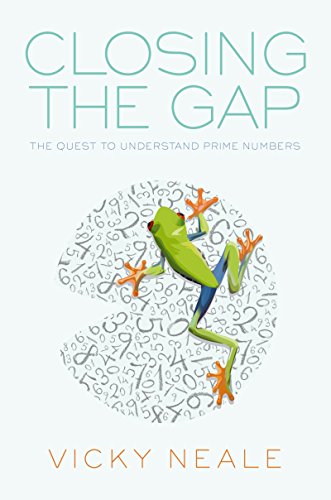
When Vicky Neale first explored the recent advances on prime numbers, she uncovered a fascinating narrative bridging centuries of mathematical inquiry with modern breakthroughs. You gain insight into the Twin Primes Conjecture and the contrasting ways discoveries emerged—from a solitary mathematician’s quiet breakthrough to a large, collaborative online effort reshaping how mathematics progresses. The book intertwines historical context, such as ancient Greek contributions, with contemporary reflections on mathematicians’ work lives, offering you a nuanced understanding of both the subject and the culture behind the math. If you’re intrigued by the depth beneath prime numbers and how new ideas surface in mathematics, this book will broaden your perspective without overwhelming jargon.
5. NUMBER THEORY

What started as Andrej Dujella's dedication to teaching undergraduate and graduate courses evolved into this detailed exploration of number theory. You’ll gain a solid understanding of positive integers, Diophantine equations, and Diophantine approximations, with chapters that bridge foundational concepts to current research interests like cryptographic applications. This book suits you if you’re an advanced student or researcher aiming to deepen your grasp of number theory’s pure and applied dimensions, especially in algebra and cryptography. For example, its sections on elliptic curves illustrate both theoretical depth and practical relevance, making it a substantial resource for mathematical competition preparation and academic study alike.
Number Theory Accelerator

This personalized AI book explores number theory through a tailored 30-day accelerated program that matches your background and interests. It focuses on core concepts like prime numbers, divisibility, and modular arithmetic, while gradually introducing more complex topics such as Diophantine equations and analytic number theory. The tailored content reveals key principles and patterns central to number theory, helping you build a deeper understanding efficiently. By aligning with your specific goals and skill level, it ensures each lesson fits precisely with what you want to learn and master. This approach transforms a vast, intricate field into a coherent and engaging journey designed just for you.
6. Fermat's Last Theorem
Recommended by Kirk Borne
Principal Data Scientist, PhD Astrophysicist
“New Perspective on Fermat's Last Theorem: by @granvilleDSC @DataScienceCtrl #abdsc #Mathematics See the best-selling book "Fermat's Enigma: The Epic Quest to Solve the World's Greatest Mathematical Problem": by @SLSingh” (from X)

Simon Singh, a British author and former BBC producer with a physics background, takes you on a captivating journey behind Fermat's Last Theorem, a problem that puzzled mathematicians for over three centuries. Through detailed storytelling, you explore the theorem's origins, the passionate mathematicians involved, and Andrew Wiles’ eventual proof, gaining insight into mathematical thinking and historical context. Singh’s narrative reveals how abstract math intersects with human ambition and perseverance, making it ideal if you want to understand not just the theorem but the culture and drama surrounding it. This book suits anyone curious about the history of mathematics or the intellectual challenges behind famous conjectures.
7. Prime Numbers

Drawing from their extensive backgrounds in cryptography and computational mathematics, Richard Crandall and Carl B. Pomerance offer a deep dive into the computational side of prime numbers. You’ll explore over 100 detailed algorithms for recognizing primes and factoring numbers, accompanied by pseudocode that bridges theory and practice. The book doesn’t just present algorithms — it contextualizes them with applications and theoretical insights, such as updates on the largest known primes. This level of detail benefits mathematicians, computer scientists, and anyone serious about understanding the mechanics behind primality testing and factorization, though it’s best suited for those comfortable with advanced math concepts.
8. Stalking the Riemann Hypothesis
Recommended by The New Scientist
“Admirably fresh [and] fully accessible. . . . Rockmore is an excellent guide to take you right to the edge of the mathematical map, and he's bang up to date.” (from Amazon)

Drawing from his expertise as a Dartmouth professor of mathematics and computer science, Dan Rockmore offers a narrative journey through the elusive Riemann hypothesis, one of math's most profound puzzles. You’ll explore the historical and modern efforts to understand the distribution of prime numbers, encountering fascinating figures like Gauss and Dyson along the way. The book balances storytelling with conceptual explanations, using analogies such as quantum billiards to make complex ideas approachable without diving into heavy equations. While it may challenge those new to advanced math, it rewards you with insight into the interplay between number theory, physics, and chaos.
9. A Primer of Analytic Number Theory

Drawing from his expertise as a mathematics professor focused on number theory, Jeffrey Stopple offers a lucid undergraduate introduction to prime numbers through the lens of calculus. You’ll explore classical topics like polygonal numbers, perfect numbers, and amicable pairs, enriched by historical context that grounds the material. The book methodically builds toward the Riemann zeta function and outlines the significance of the Riemann Hypothesis, connecting deep theory with open mathematical challenges. If you aim to grasp how analytic methods illuminate prime distribution, this book provides a thoughtful pathway, though it’s best suited for those comfortable with calculus and mathematical rigor.
10. Introduction to Analytic Number Theory

Drawing from his distinguished career as a mathematician and educator at Caltech, Tom M. Apostol offers a clear and accessible introduction to analytic number theory. You’ll explore foundational concepts supported by exercises that deepen understanding, progressing from elementary calculus prerequisites to more advanced topics like complex integration and residue calculus. This book equips undergraduates and self-learners with a solid grasp of analytic techniques in number theory, balancing rigor with clarity. If you’re looking to build a strong theoretical framework in this area, Apostol’s text provides a structured pathway, though it assumes some mathematical maturity as it advances.
Enjoying these picks?
The best Number Theory books and more, in your inbox each week. No account needed.
Conclusion
The tapestry woven by these 10 books reveals Number Theory’s multifaceted nature—from the pure abstractions of prime numbers and unsolved conjectures to practical computational techniques and historical narratives. If you're grappling with the fundamentals, starting with An Introduction to the Theory of Numbers offers a structured path. For those drawn to modern mathematical stories and breakthroughs, Closing the Gap and Fermat's Last Theorem provide rich context and inspiration.
For rapid conceptual growth, pairing computational perspectives from Prime Numbers with the analytic rigor of Introduction to Analytic Number Theory can accelerate understanding. Meanwhile, Stalking the Riemann Hypothesis connects mathematical concepts with physics, expanding your interdisciplinary grasp.
Alternatively, you can create a personalized Number Theory book to bridge the gap between general principles and your specific situation. These selections can help you accelerate your learning journey and deepen your appreciation of this timeless mathematical pursuit.
Frequently Asked Questions
I'm overwhelmed by choice – which book should I start with?
Start with An Introduction to the Theory of Numbers for a solid foundation. It balances depth with clarity, perfect for building your basics before diving into more specialized topics.
Are these books too advanced for someone new to Number Theory?
Some books assume mathematical maturity, but titles like The Music of the Primes and Closing the Gap offer accessible narratives that introduce complex ideas gently.
What's the best order to read these books?
Begin with foundational texts, then explore historical and computational perspectives. For example, read Hardy's introduction, followed by Fermat's Last Theorem and then computational or analytic-focused works.
Should I start with the newest book or a classic?
Classics like Hardy's work lay essential groundwork, while newer books provide contemporary insights and breakthroughs. A mix of both enriches understanding.
Do I really need to read all of these, or can I just pick one?
You can pick based on your interests—whether history, computation, or theory. However, combining a few offers a well-rounded picture of Number Theory.
How can I tailor these expert insights to my specific learning needs?
These expert books provide rich knowledge, but personalizing content helps you focus on your goals and background. You might consider creating a personalized Number Theory book that complements these classics with targeted material just for you.
Help fellow book lovers discover great books, share this curated list with others!
Related Articles You May Like
Explore more curated book recommendations