23 Outbreak Books That Experts Trust and Recommend
Curated by authorities including Bill Gates, Shah Rukh Khan, and Matthew Yglesias, these Outbreak books reveal vital lessons from pandemics and public health crises.
Updated on June 27, 2025·We may earn commissions for purchases made via this page
9 of 22 books have Audiobook versions
We're launchingLaunching on Product Hunt today 🎉We just launchedJust launched on Product Hunt 🎉
Modelpeers, from the BookAuthority teamFrom the BookAuthority team: Modelpeers, a free way to follow AI models and agents like you follow people. We'd love your support.
What if you could learn from the most harrowing and instructive moments in recent outbreak history? Understanding pandemics isn’t just about science—it’s about leadership, politics, and human stories that shape our response. Outbreaks have repeatedly tested the limits of societies, revealing vulnerabilities and resilience in unexpected ways.
Bill Gates, a longtime advocate for pandemic preparedness, has often stressed the importance of understanding vaccine development and global health strategy. Shah Rukh Khan, a leading philanthropist, was moved by the detailed account of Mumbai’s battle with COVID-19, emphasizing the power of rapid response in densely populated cities. Meanwhile, Matthew Yglesias, a political commentator, highlights leadership lessons from state-level crisis management that are crucial for future outbreaks.
These 23 Outbreak books, recommended by such diverse experts, offer you a rare window into the complex dynamics of pandemics. While these expert-curated books provide proven frameworks, readers seeking content tailored to their specific outbreak interests and backgrounds might consider creating a personalized Outbreak book that builds on these insights.
Angela Merkel, former Chancellor of Germany, brings a unique perspective to this book, having witnessed firsthand the urgency of the COVID-19 crisis. Reflecting on her experience, she said, "I have now read the book by Joe Miller about the development of the vaccine at BioNTech. Ugur Sahin had already understood the scale of the pandemic on 24 January. I wasn't that quick." Merkel’s endorsement highlights the book’s detailed and timely account of vaccine development amid political and scientific challenges. Complementing her view, the Financial Times People Of The Year emphasize that the authors represent "a remarkable scientific and business success story," underscoring the blend of innovation and perseverance captured in this narrative.
“I have now read the book by Joe Miller about the development of the vaccine at BioNTech. Ugur Sahin had already understood the scale of the pandemic on 24 January. I wasn't that quick.”
Joe Miller is the Frankfurt correspondent for Financial Times. He previously reported for BBC News in London, New York, Delhi, and Berlin. Dr. Ugur Sahin and Dr. Özlem Türeci are the husband-and-wife team that cofounded BioNTech, developers of the world’s first COVID-19 vaccine. The children of Turkish migrant workers in Germany, they trained as medical doctors and earned doctorates in molecular biology and immunotherapy. They have done extensive work in the field of translational oncology and written hundreds of scientific papers and patents. Sahin and Türeci received the 2022 Paul Ehrlich Prize for their contributions to research into mRNA technology.
The Vaccine unpacks the extraordinary journey of Ugur Sahin and Özlem Türeci, whose decades-long research into messenger RNA technology paved the way for the first COVID-19 vaccine. Joe Miller, drawing on his frontline reporting for the Financial Times, details how this husband-and-wife team rapidly transitioned from cancer research to tackling a global pandemic, developing twenty vaccine candidates within weeks. You’ll gain insights into the science of mRNA, the challenges of navigating political and industrial landscapes, and the logistics of delivering billions of doses worldwide. The book suits anyone keen on understanding the intersection of cutting-edge biotech innovation and global health crisis management.
Matthew Yglesias, journalist and political commentator known for his deep analysis of public policy, points out the unique aspect of this book: "It’s amazing that it’s Andrew Cuomo and not Janet Mills who has the book." His recognition of Cuomo’s leadership during the pandemic highlights the book’s value in understanding crisis governance. Similarly, Barbra Streisand praises Cuomo for communicating with calm and science-based authority, emphasizing how the book captures the reassuring leadership needed in such times. Their perspectives provide a compelling lens through which to view this firsthand account of managing a state under siege by a deadly virus.
Andrew Cuomo was the 56th Governor of New York. He is the author of All Things Possible: Setbacks and Success in Politics and Life and Crossroads: The Future of American Politics.
When Andrew Cuomo took office as New York Governor, he faced an unprecedented public health crisis with COVID-19 hitting New York first and hardest. This book chronicles how he navigated the chaos, building a response system from scratch amid political obstacles and rising death tolls. You’ll gain insight into crisis leadership strategies, including clear communication, data-driven decisions, and managing fear while unifying diverse stakeholders. Chapters detailing his daily briefings reveal the delicate balance of transparency and reassurance essential in emergencies. If you want to understand the demands of leading through a fast-moving outbreak and the tough choices involved, this book offers a firsthand account worth studying.
This AI-created book on outbreak response is designed based on your background, skill level, and specific outbreak interests. You share your goals and focus areas, and the book is crafted to cover exactly what you need to understand and apply. Customization makes sense here because outbreak science and policy involve complex, evolving information that benefits from a learning path aligned to your priorities. This tailored approach helps you navigate expert content efficiently, focusing on the aspects most relevant to your concerns.
TailoredRead AI creates personalized nonfiction books that adapt to your unique background, goals, and interests. Instead of reading generic content, you get a custom book written specifically for your profession, experience level, and learning objectives. Whether you're a beginner looking for fundamentals or an expert seeking advanced insights, TailoredRead crafts a book that speaks directly to you. Learn more.
2026·50-300 pages·Outbreak, Outbreak Science, Epidemiology Basics, Disease Transmission, Public Health Policy
This personalized book explores outbreak science, response techniques, and policy considerations tailored to your unique interests and goals. It covers the biological foundations of infectious diseases, examines outbreak detection methods, and analyzes public health interventions with a focus on your background. The book reveals how political, social, and economic factors influence epidemic control, providing a comprehensive yet accessible guide that matches your specific learning objectives. By tailoring content to your needs, it offers a customized pathway through complex expert knowledge, helping you grasp key concepts efficiently and deeply. This approach ensures you engage fully with the material most relevant to your outbreak concerns and desired outcomes.
Jason Leitch, National Clinical Director for the Scottish Government, shares his high regard for this book after interviewing experts and experiencing the pandemic’s challenges firsthand. In his words, it’s "Insightful, honest and even a little funny," capturing the complex reality behind the U.S. response. His expertise in clinical leadership underscores the book's value for understanding pandemic management. Likewise, Jon Cooper, Chairman of The Democratic Coalition, found himself unable to put the book down, praising its inside look at the tragic American experience with COVID-19. These endorsements highlight how the book illuminates the intertwining of politics and public health during a crisis.
“Great privilege to interview Devisridhar at AyeWrite tonight. Insightful, honest and even a little funny, just like the Sunday Times bestselling book Preventable.” (from X)
Andy Slavitt was President Biden’s White House Senior Advisor for the Covid response at the beginning of his term where he oversaw direct communication with the public on the pandemic. He has led many of the nation’s most important health care initiatives, serving as President Obama’s head of Medicare and Medicaid and overseeing the turnaround, implementation and defense of the Affordable Care Act. Slavitt is the “outsider’s insider”, serving in leading private and non-profit roles in addition to his government services. He is founder and Board Chair Emeritus of United States of Care, a national non-profit health advocacy organization as well as a founding partner of Town Hall Ventures, a healthcare firm that invests in underrepresented communities. He co-chaired a national initiative on the future of health care at the Bipartisan Policy Center. He chronicles what goes on inside the government and across the nation at town halls, in USA Today, and on Twitter. A graduate of the University of Pennsylvania and Harvard Business School, he and his wife have two grown sons.
Drawing from his extensive experience as President Biden’s White House Senior Advisor for the Covid response and former head of Medicare and Medicaid, Andy Slavitt offers an insider’s account of the U.S. Coronavirus crisis. You’ll gain a detailed understanding of how leadership failures, political polarization, and systemic issues contributed to the pandemic’s devastating toll. The book unpacks key moments and decisions with clarity, such as the breakdown in government coordination and the impact on frontline healthcare workers. If you want to grasp the complex interplay of politics and public health during this outbreak, this book provides a sobering yet insightful perspective.
The Wall Street Journal, a leading financial and news publication, highlights Catharine Arnold's skill in capturing the human side of the 1918 pandemic, focusing on civilians, troops, nurses, and doctors alike. Their endorsement reflects the book's power to connect readers with the personal experiences behind the statistics. The detailed narratives helped them grasp how ordinary people endured such a catastrophe. Additionally, Publisher's Weekly remarks on the book's thorough research and the sobering lessons it provides about pandemic threats, underscoring its relevance today.
“[Catharine Arnold] is good at looking at civilians as well as troops and their nurses and doctors and at teasing out the human side of the catastrophe… powerful stories of ordinary people.”
Catharine Arnold studied English at Girton College, Cambridge and holds a further degree in psychology. A journalist, academic, and popular historian, her previous books include The Sexual History of London, Necropolis, and Bedlam. Arnold's latest work, Pandemic 1918, provides a comprehensive account of the Spanish Flu, drawing on primary and archival sources to present a global perspective on the epidemic's impact.
Drawing from her background in English and psychology, Catharine Arnold provides a vivid account of the 1918 Spanish Flu pandemic through primary and archival sources. You learn not just the statistics but the human stories—how soldiers, nurses, and civilians endured the three waves of this devastating outbreak. The book explores the wartime censorship, overwhelmed medical systems, and the global spread, offering detailed chapters on specific cities and the societal impact. If you want a nuanced understanding of how a pandemic reshaped the world, especially from firsthand perspectives, this book offers insights that go beyond typical medical histories.
Jeff Dean, Senior Fellow and SVP at Google AI Research and Health, turned to this book during a period when understanding pandemics became urgent. He shared, "Thanks for the pointer, @joetimmons79! Also, looks like John Barry, the speaker in the video, is an author, and has an interesting book about the 1918 flu... I've added to my queue." His expertise in health research lends weight to this recommendation, highlighting the book's value as a detailed guide to one of history’s deadliest outbreaks. Following him, Indra Nooyi, former PepsiCo CEO, reflected on how the book gave her perspective during her work reopening Connecticut amid COVID-19, underscoring its relevance to modern outbreaks.
Senior Fellow & SVP, Google AI Research and Health
“Thanks for the pointer, @joetimmons79! Also, looks like John Barry, the speaker in the video, is an author, and has an interesting book about the 1918 flu (if flu pandemic books while social distancing is your cup of tea: I've added to my queue).” (from X)
John M. Barry is a prize-winning and New York Times best-selling author whose books have won several dozen awards. In 2005 the National Academies of Science named The Great Influenza: The story of the deadliest pandemic in history, a study of the 1918 pandemic, the year’s outstanding book on science or medicine. In 1998 Rising Tide: The Great Mississippi Flood of 1927 and How It Changed America, won the Francis Parkman Prize of the Society of American Historians for the year’s best book of American history. His latest book is Roger Williams and The Creation of the American Soul: Church, State, and the Birth of Liberty, which has been named a finalist for the Los Angeles Times Book Prize, to be awarded late spring 2013. His writing has received not only formal awards but less formal recognition as well. In 2004 GQ named Rising Tide one of nine pieces of writing essential to understanding America; that list also included Abraham Lincoln’s Second Inaugural Address and Martin Luther King’s “Letter from Birmingham Jail.” His first book, The Ambition and the Power: A true story of Washington, was cited by The New York Times as one of the eleven best books ever written about Washington and the Congress. His second book The Transformed Cell: Unlocking the Mysteries of Cancer, coauthored with Dr. Steven Rosenberg, was published in twelve languages. He has had considerable influence on both pandemic policy and flood protection. Both the Bush and Obama administrations sought his advice on influenza preparedness and response, and he was a member of the original team which developed plans for non-pharmaceutical interventions to mitigate a pandemic. The National Academies of Science asked him to give the keynote speech at its first international scientific meeting on pandemic influenza, and he was the only non-scientist on a federal government Infectious Disease Board of Experts. In the area of water resources, he has been equally active. In 2006 he became the only non-scientist ever to give the National Academies annual Abel Wolman Distinguished Lecture, a lecture which focuses on some aspect of water. After Hurricane Katrina, the Louisiana congressional delegation asked him to chair a bipartisan working group on flood protection, and he now serves on the board overseeing levee districts in metropolitan New Orleans and on the Louisiana Coastal Protection and Restoration Authority, which is responsible for the state's hurricane protection. Barry has worked with state, federal, United Nations, and World Health Organization officials on influenza, water-related disasters, and risk communication. Barry sits on advisory boards at M.I.T’s Center for Engineering Systems Fundamentals and the Johns Hopkins Bloomberg School of Public Health as well as on the board of the Society of American Historians and American Heritage Rivers. He has also been keynote speaker at such varied events as a White House Conference on the Mississippi Delta and an International Congress on Respiratory Viruses, and he has given talks in such venues as the National War College, the Council on Foreign Relations, Harvard Business School, and elsewhere. He is co-originator of Riversphere, a $100 million center being developed by Tulane University; it will be the first facility in the world dedicated to comprehensive river research. His articles have appeared in such scientific journals as Nature and Journal of Infectious Disease as well as in lay publications ranging from Sports Illustrated to The New York Times, The Washington Post, Fortune, Time, Newsweek, and Esquire. A frequent guest on every broadcast network in the US, he has appeared on such shows as NBC's Meet the Press, ABC's World News, and NPR's All Things Considered, and on such foreign media as the BBC and Al Jazeera. He has also served as a consultant for Sony Pictures and contributed to award-winning television documentaries. Before becoming a writer, Barry coached football at the high school, small college, and major college levels. Currently Distinguished Scholar at the Center for Bioenvironmental Research of Tulane and Xavier Universities, he lives in New Orleans.
John M. Barry's deep dive into the 1918 influenza pandemic offers a blend of historical narrative and scientific insight that unpacks why that outbreak remains a defining moment for outbreak response. As a historian with extensive involvement in public health policy and flood protection, Barry draws on his unique perspective to reveal how political decisions and scientific understanding collided during the crisis. You’ll gain detailed knowledge about the virus’s origins, the societal impact, and the crucial lessons about public trust and transparency in managing pandemics. Those interested in the intersection of history, medicine, and policy will find this book especially insightful, illuminating the challenges that still resonate in today's outbreak responses.
This AI-created book on outbreak management is crafted specifically for your background and goals. You share your experience level and which outbreak topics matter most to you, and it focuses on delivering exactly what you need. Personalizing this content means you get clear, practical steps tailored to how you want to respond to outbreaks—no filler or unnecessary details. It’s designed to help you act quickly and effectively in the face of an evolving health crisis.
TailoredRead AI creates personalized nonfiction books that adapt to your unique background, goals, and interests. Instead of reading generic content, you get a custom book written specifically for your profession, experience level, and learning objectives. Whether you're a beginner looking for fundamentals or an expert seeking advanced insights, TailoredRead crafts a book that speaks directly to you. Learn more.
This tailored book explores outbreak management with a focus on rapid, practical guidance designed to match your unique background and goals. It examines the essential steps for effective outbreak mitigation within a 30-day timeframe, emphasizing actionable knowledge across detection, containment, communication, and resource coordination. By concentrating on your specific interests and skill level, this personalized guide reveals targeted approaches to navigate the complexities of outbreak challenges efficiently. It bridges expert understanding with your personal learning journey, offering clarity on how to respond decisively while adapting to evolving situations. Expect a focused exploration that equips you with the critical tools and insights to manage outbreaks confidently and responsively.
William H. Foege, Emeritus Presidential Distinguished Professor of International Health at Emory University and former CDC director, brings unmatched expertise to this compelling narrative. As chief of the CDC's Smallpox Eradication Program, Foege's unique perspective informs this detailed recounting of a pivotal public health achievement. His experience working directly in impoverished regions and leading global efforts drives the book’s insights into the strategies and risks that ended smallpox forever.
William H. Foege is Emeritus Presidential Distinguished Professor of International Health at Emory University and a Gates Fellow. He served as director of the CDC and was chief of its Smallpox Eradication Program. Foege is also the author of Global Health Leadership and Management.
William H. Foege's decades at the forefront of public health culminate in a firsthand account of smallpox eradication, revealing the strategic innovations behind this global victory. You’ll gain insight into the bold vaccination tactics, particularly the targeted containment strategy employed in India, and the collaborative international effort that made eradication possible. The narrative also immerses you in the challenges faced on the ground in impoverished regions, blending personal stories with public health milestones. This book suits those interested in epidemiology, global health policy, or the human stories behind medical triumphs, offering a detailed look at what it takes to defeat a devastating infectious disease.
Jon Najarian, co-founder of Investitute and CNBC anchor, points to a chilling connection between bats and deadly viruses like Ebola and coronavirus, highlighting the significance of "The Hot Zone." He calls it a "scary, but great book," reflecting on its impact during times of viral uncertainty. This perspective is echoed by Pierre Haski, a geopolitical commentator and RSF president, who found the book a compelling companion during the SARS outbreak in Beijing. Their endorsements underscore the book's relevance to understanding viral outbreaks and their broader implications.
Richard Preston is the bestselling author of The Hot Zone, The Demon in the Freezer, and the novel The Cobra Event. A writer for The New Yorker since 1985, Preston is the only nondoctor to have received the Centers for Disease Control's Champion of Prevention Award. He also holds an award from the American Institute of Physics. Preston lives outside of New York City.
Richard Preston, a seasoned journalist for The New Yorker and recipient of the CDC's Champion of Prevention Award, offers a gripping exploration of the Ebola virus's emergence in "The Hot Zone." This book immerses you in the harrowing story of a deadly pathogen crossing into human populations, narrated through detailed accounts of outbreak containment efforts and scientific investigations. You gain insights into viral transmission, epidemiology, and the urgent responses triggered by such crises. If you seek a vivid, fact-based narrative that blends science with real-world impact, this book sharpens your understanding of infectious disease threats and the stakes involved.
New York Times Bestseller
Centers for Disease Control Champion of Prevention Award to author
Elizabeth Kolbert, Pulitzer Prize–winning author of The Sixth Extinction and an authority on environmental crises, highlights this book for its gripping and true account of the Ebola epidemic. She emphasizes how "Crisis in the Red Zone reads like a thriller. That the story it tells is all true makes it all more terrifying," underscoring Preston’s ability to convey the urgency and human drama of the outbreak. Her perspective deepened understanding of the outbreak’s scope and the real-world stakes faced by medical teams battling the virus.
“Crisis in the Red Zone reads like a thriller. That the story it tells is all true makes it all more terrifying, and there’s no one who could tell it better than Richard Preston.”
Richard Preston is the #1 New York Times bestselling author of ten books, including The Hot Zone, The Wild Trees, and The Demon in the Freezer. Preston has taught nonfiction writing at Princeton University and the University of Iowa, and he is the recipient of many prizes and honors, including the Champion of Prevention Award of the U.S. Centers for Disease Control. His books have been published in more than thirty languages.
When Richard Preston explores the 2013–2014 Ebola outbreak, he moves beyond typical epidemic narratives to expose the high-stakes race against a rapidly evolving virus. You gain detailed insights into the interplay of medical response, ethical dilemmas over experimental treatments, and the global implications of viral spread in an interconnected world. The book vividly portrays frontline healthcare workers’ sacrifices and the bureaucratic challenges in containing the outbreak, especially in chapters covering the virus’s mutation and international response. If you want a nuanced understanding of viral pandemics and the complexities of outbreak management, this book offers a sobering yet engaging perspective.
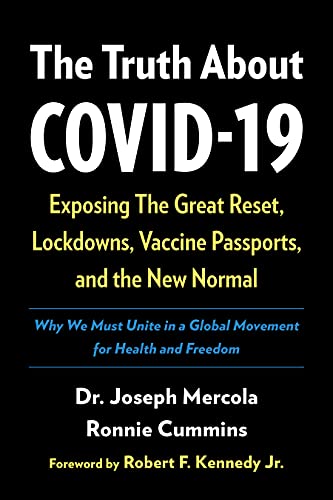
Ben Greenfield, a respected figure in health and longevity entrepreneurship, discovered this book during his extensive exploration of pandemic responses. Known for his thoughtful approach to fitness and health science, Greenfield calls it "The most mind-blowing book I've read lately." His endorsement reflects how the book challenged his understanding of COVID-19 policies, offering a fresh, rigorous perspective that reshaped his views on public health measures and personal autonomy.
Doctor Joseph Mercola, Ronnie Cummins, Robert F. Kennedy Jr.(you?)·
About the Author
Dr. Joseph Mercola is the founder of Mercola.com. A family physician, best-selling author, and recipient of multiple awards in the field of natural health, as well as primary author of the recently published peer-reviewed paper, “Evidence Regarding Vitamin D and Risk of COVID-19 and Its Severity,” Dr. Mercola’s vision is to change the modern health paradigm by providing people with a valuable resource to help them take control of their health. Ronnie Cummins was the cofounder and director of the Organic Consumers Association (OCA), a nonprofit, US-based network of more than two million consumers dedicated to safeguarding organic standards and promoting a healthy, just, and regenerative system of food, farming, and commerce. Cummins also served on the steering committee of Regeneration International and OCA’s Mexican affiliate, Vía Orgánica. He was the coauthor of The Truth About COVID-19 and author of Grassroots Rising and Genetically Engineered Food.
What sets this book apart is the depth of research behind its critique of the COVID-19 response, authored by Dr. Joseph Mercola, Ronnie Cummins, and Robert F. Kennedy Jr., each bringing a distinct perspective from medicine, organic activism, and legal advocacy. You gain detailed insights into the intersections of public health policy, government mandates, and societal impacts, supported by over 500 references to scientific studies and official data. Chapters dissect topics like lockdown efficacy, vaccine passports, and the so-called “Great Reset,” challenging mainstream narratives and encouraging independent evaluation. If you're seeking to understand the broader implications of pandemic measures beyond headlines, this book offers a provocative exploration that may shift how you view public health governance.
Shah Rukh Khan, a globally recognized actor and philanthropist, highlights how this book reveals the relentless efforts of Mumbai's municipal team in battling COVID-19. He calls it "An amazing true story of successfully chasing and nailing Covid virus by Team BMC." His endorsement underscores the book's detailed account of pandemic response that resonated deeply during a global crisis. Similarly, Anand Mahindra, chairman of Mahindra Group, praises it as "An inspiring story of the defeat of the Corona Virus pandemic in the financial capital of India," emphasizing its motivational impact. Their perspectives amplify the book’s standing as an authoritative narrative on outbreak management.
“An amazing true story of successfully chasing and nailing Covid virus by Team BMC. A must read. Pls grab ur copy on all online platforms/bookstores… sorry I couldn’t make it to the book launch @IqbalSinghChah2 . All the best and hope it generates the awareness it is meant to.” (from X)
After analyzing the coordinated response of Mumbai's municipal team, Minhaz Merchant presents a detailed chronicle of how leadership and rapid action shaped the city's fight against COVID-19. You gain insight into administrative strategies, crisis management techniques, and the challenges faced by public health officials during an unprecedented outbreak. The book dives into specific episodes, like contact tracing and treatment logistics, providing a behind-the-scenes look at effective epidemic control. If you're interested in public health policy, government response, or real-life outbreak management, this narrative offers a grounded perspective on what it takes to combat a pandemic in a dense urban environment.
Martin Kulldorff, an epidemiologist and former Harvard professor, values this book for its vivid portrayal of Sweden’s Covid response, highlighting moments like pharmacies directing mask-seekers to skincare products rather than protective masks. He appreciates Anderberg’s factual, inside look at a strategy that challenged global norms during a crisis. Alongside him, Jay Bhattacharya, Stanford professor and health policy expert, endorses the book as a compelling account of this unique approach. Their insights underline the book’s role in deepening understanding of pandemic strategies from an expert perspective.
“In Swedish pharmacies, "when people came in asking for ‘face masks’, they were shown to the skincare aisle, which displayed various facial treatments and creams for both ageing and dirty skin." - Johan Anderberg in his fantastic book on the Swedish Covid response” (from X)
Johan Anderberg is a Swedish journalist and writer who has been a regular contributor to a number of Swedish and international media outlets, including the Wall Street Journal. His book The Herd, which chronicles the Swedish strategy to battle COVID-19, was published in Sweden in the spring of 2021, and will be published in the US, the UK, and Australia and New Zealand by Scribe in 2022.
Drawing from his experience as a Swedish journalist with international media contributions, Johan Anderberg offers an insider’s perspective on Sweden’s unique approach during the Covid-19 pandemic. You learn the detailed chronology of policy decisions, including the controversial choice to avoid lockdowns and mask mandates, while gaining clarity on epidemiological concepts like R0-rates and herd immunity. The book also introduces you to the key figures behind these decisions, exploring their debates and alliances through candid meeting-room accounts and email exchanges. If you want to understand how Sweden’s pandemic response diverged from global norms and the complex rationale behind it, this book provides a nuanced, fact-driven narrative without pushing a definitive verdict.
Nicholas A. Christakis, a physician and sociologist at Yale University, brings a rare combination of medical and social science expertise to this analysis of the coronavirus pandemic. His leadership of the Human Nature Lab and extensive background in sociology and medicine uniquely position him to explore how this outbreak intersects with the fabric of human society. Christakis investigates how pandemics test social bonds and alter collective behavior, drawing on his research in genetics, network science, and epidemiology to provide a nuanced view of what living through such a crisis truly means.
Nicholas A. Christakis is a physician and sociologist who explores the ancient origins and modern implications of human nature. He directs the Human Nature Lab at Yale University, where he is the Sterling Professor of Social and Natural Science, in the Departments of Sociology, Medicine, Ecology and Evolutionary Biology, Statistics and Data Science, and Biomedical Engineering. He is the Co-Director of the Yale Institute for Network Science, the co-author of Connected, and the author of Blueprint. Previously, he conducted research and taught for many years at Harvard University and at the University of Chicago. He was on Time magazine’s list of the 100 most influential people in the world in 2009. He worked as a hospice physician in underserved communities in Chicago and Boston until 2011. Nowadays, he spends most of his time in the Human Nature Lab, where his team explores a broad set of ideas, including: understanding the evolutionary, genetic, and physiological bases of friendship; encouraging villages in the developing world to adopt new public health practices; mapping social networks in settings around the world; and developing artificial intelligence that helps humans address challenges in collective action. Christakis was elected a Fellow to the National Academy of Medicine of the National Academy of Sciences in 2006, to the American Association for the Advancement of Science in 2010, and to the American Academy of Arts and Sciences in 2017.
During the early months of the COVID-19 crisis, physician and sociologist Nicholas A. Christakis examined how this pandemic would reshape society by blending medical insight with social science. You’ll gain a clear understanding of the interplay between infectious disease dynamics and human social behavior, illustrated through historical epidemics and data-driven analysis. The book probes into how communities fracture and unite under pandemic pressures, with chapters covering epidemiology, genetics, and the social networks that influence disease spread. If you want to grasp not just the medical facts but the societal ripple effects of coronavirus, this book offers a grounded perspective rooted in Christakis’ extensive academic and clinical experience.
Alfons López Tena Fbpe, a jurist with extensive experience writing on international affairs, highlights this book's critical perspective on the non-medical forces driving outbreaks worldwide. He points out that .@PeterHotez's book: Advances in biomedicine must be accompanied by concerted action in non-medical drivers of deadly outbreaks—war, political instability, human migration, poverty, urbanization, anti-science and nationalist sentiment, climate change. This insight underscores how the book reshaped his understanding of outbreak prevention beyond vaccines alone, emphasizing the need for diplomacy and social solutions as part of a comprehensive approach.
“.@PeterHotez's book: Advances in biomedicine must be accompanied by concerted action in non-medical drivers of deadly outbreaks—war, political instability, human migration, poverty, urbanization, anti-science and nationalist sentiment, climate change” (from X)
Peter J. Hotez, MD, PhD, is the founding dean of The National School of Tropical Medicine at Baylor College of Medicine in Houston, Texas, as well as director of the Texas Children’s Hospital Center for Vaccine Development. He is an elected member of the Institute of Medicine of National Academies as well as the American Academy of Arts and Sciences. A pediatrician and an expert in vaccinology and tropical disease, Hotez has authored hundreds of peer-reviewed articles and editorials as well dozens of textbook chapters.
Peter J. Hotez's decades of expertise in tropical medicine and vaccine development inform this urgent exploration of how vaccine diplomacy can confront the rising tide of epidemic diseases fueled by war, climate change, and anti-science sentiments. You’ll gain insight into the intricate connections between global health, geopolitics, and social factors, such as how vaccine partnerships once bridged Cold War divides and how similar efforts might stem diseases like leishmaniasis and MERS today. The book benefits anyone interested in public health policy, infectious disease control, or the science behind vaccine advocacy in a fractured world.
Jeffrey A Tucker, Editorial Director at the American Institute for Economic Research and a prominent voice on health policy, highlights this book amid widespread pandemic debate. Tucker, known for his comprehensive expertise in economic and social impacts of health crises, points out frustrations with limited exposure of positive perspectives on Atlas's account. He notes, "The review of Scott Atlas's book are great, but I'm disappointed that AMZ has not published mine. I wonder how many other positive reviews are being withheld." This underscores the book's role in challenging prevailing narratives about the COVID response during a turbulent public health emergency.
“The review of Scott Atlas's book are great, but I'm disappointed that AMZ has not published mine. I wonder how many other positive reviews are being withheld.” (from X)
Scott W. Atlas, M.D. is the Robert Wesson Senior Fellow in health care policy at the Hoover Institution of Stanford University. Dr. Atlas investigates the impact of the government and the private sector on access, quality, and pricing in health care, global trends in health care innovation, and key economic issues related to the future of technology-based medical advances. He is a frequent policy advisor to policymakers and government officials in the United States and other countries. He has served as Senior Advisor for Health Care to several numerous candidates for president, as well as counseled members of the US Congress on health care, testified before Congress, and briefed directors of key federal agencies. From July to December, 2020, he served as a Special Advisor to President Trump and as a member of the White House Coronavirus Task Force. Before his appointment at the Hoover Institution, he was Professor and Chief of Neuroradiology at Stanford University Medical Center for fourteen years. He is the author of numerous books, including In Excellent Health: Setting the Record Straight On America’s Health Care, and most recently Restoring Quality Health Care: A Six-Point Plan for Comprehensive Reform at Lower Cost. He is also the editor of Magnetic Resonance Imaging of the Brain and Spine—the leading textbook in the field that has been translated into several languages, now in its 5th edition. His publications and interviews have appeared worldwide. Dr. Atlas has received many awards and accolades from leading institutions and societies all over the world in recognition of his leadership in policy and medicine. He was awarded the 2021 Freedom Leadership Award, Hillsdale College’s highest honor, “in recognition of his dedication to individual freedom and the free society.” He also received the 2011 Alumni Achievement Award, the highest career achievement honor for a distinguished alumnus from the University of Illinois in Urbana-Champaign. In the private sector, Atlas is a frequent advisor to start-up entrepreneurs and companies in life sciences and medical technology. He received his MD degree from the University of Chicago School of Medicine.
Scott W. Atlas, M.D., a Stanford-trained neuroradiologist and former White House Coronavirus Task Force advisor, delivers a firsthand account of the Trump administration's COVID-19 response. You’ll gain insight into the political and scientific conflicts behind pandemic policies, including debates over travel restrictions, lockdowns, and mask mandates. Atlas critiques key figures and media narratives, offering detailed episodes like vaccine delays and the impact of lockdowns on public health. This book is best suited for those seeking an insider perspective on pandemic decision-making rather than traditional epidemiology or public health guidance.
Arianna Huffington, co-founder of The Huffington Post, highlights this book for its intimate portrayal of healthcare workers during the pandemic’s peak. She emphasizes how Marie Brenner captures the devotion and resilience of those risking everything to save lives in New York City. Arianna describes it as a "brilliant and moving" account that brought her closer to understanding the sacrifices on the front lines, reshaping her view of the pandemic’s human toll.
“In her brilliant and moving new book “The Desperate Hours,” author and journalist Marie Brenner shares how healthcare workers came together in their devotion to duty, their families, each other, and the city they love. A real page-turner!” (from X)
Marie Brenner is the author of over half a dozen books and is a writer at large for Vanity Fair. She has been a staff writer at The New Yorker, a contributing editor at New York, and has won numerous awards for her reporting around the world. Her exposé of the tobacco industry was the basis for the 1999 movie The Insider, which was nominated for seven Academy Awards®, including Best Picture. She is also a producer of the 2019 documentary Where’s My Roy Cohn?
What started as an unprecedented opportunity granted Marie Brenner nearly two years of deep access to New York-Presbyterian hospital during the pandemic’s early surge, evolved into a vivid chronicle of frontline resilience. Through over 200 interviews, you get inside sealed ICUs and makeshift clinics, understanding the raw realities faced by doctors, nurses, and staff battling Covid-19 in America’s hardest-hit city. The book offers a detailed look at teamwork, crisis management, and compassion amid chaos, revealing how healthcare providers balanced duty with personal risks. If you want to grasp the human and medical challenges of a pandemic's fiercest hours, this narrative delivers that perspective without glossing over the stakes or emotions.
Apoorva Mandavilli, a COVID-19 specialist reporter for The New York Times, highlights this book's value through her extensive coverage of the pandemic. Her recommendation to "Tune into this conversation with Brendan Borrell about his fantastic new book on the race to develop coronavirus vaccines" reflects how the book deepened her understanding of the vaccine's development. This insider perspective helped her grasp the nuanced interplay of science and politics during a defining health crisis.
Brendan Borrell is a biologist-turned-journalist, who has written on science, health, and business for The Atlantic, Bloomberg Businessweek, National Geographic, Outside, Wired, and the New York Times. Borrell lives in Los Angeles, and The First Shots is his first book.
When Brendan Borrell, a biologist-turned-journalist, set out to chronicle the race for the coronavirus vaccine, he tapped into exclusive access and deep scientific insight to reveal the human drama behind the headlines. You’ll encounter gripping profiles of key players, from frontline scientists in Wuhan to government architects of Operation Warp Speed, unpacking the fierce rivalries and political battles that shaped the vaccine’s development. Chapters detailing Moderna’s clash with Pfizer illuminate how innovation collided with corporate power, giving you a sharper understanding of vaccine science and policy. This book suits anyone eager to grasp the complex interplay of science, politics, and business in a pandemic’s critical moments.
Devi Sridhar, professor and chair of global public health at Edinburgh University, highlights this book's importance for anyone wanting to grasp the UK's pandemic response. Citing it as a truly remarkable book to understand the past year, Sridhar's endorsement reflects her comprehensive expertise in outbreak management. Her recommendation underscores how this investigative account provided clarity amid the chaos, reshaping her perspective on the intricacies of government decision-making during COVID-19.
Jonathan Calvert is the editor of The Sunday Times’ renowned Insight investigative team. His accolades include British Journalist of the Year and the Paul Foot Award as well as Scoop of the Year on four occasions. George Arbuthnott joined The Sunday Times on the Marie Colvin Scholarship and is now deputy editor of the Insight team. He has won six British Journalism and UK Press Awards, including Investigation of the Year and Scoop of the Year, and has been shortlisted for an Amnesty International Award, the European Press Prize and the Orwell Prize.
Jonathan Calvert and George Arbuthnott bring their investigative journalism expertise to reveal the British government's critical missteps during the COVID-19 pandemic. Drawing on hundreds of sources and detailed investigations, they expose the political decisions that shaped the UK's outbreak response, offering readers a meticulous account of leadership failures and cover-ups. You gain insight into how political dynamics influenced public health outcomes, with chapters detailing key moments of crisis management and misjudgment. This book suits those seeking a deep understanding of pandemic governance and the intersection of politics and health policy.
E. Jean Carroll, an author and cultural commentator known for her sharp insights, recommends this book highly. She cites a review by David Quammen that captures the nuanced portrayal Dr. Birx offers in this account of the pandemic. Carroll's appreciation reflects the book’s ability to challenge preconceived notions and deliver a balanced view of a tumultuous period in public health history. "Only the great David Quammen could give us a tender, yet true, review of Dr. Birx's book. Read it! You'll end up NOT hating her!" This perspective underscores the book’s value in reshaping how you might think about leadership and crisis response during an outbreak.
Dr. Deborah Birx served in public health in the U.S. government for more than forty years, working for multiple presidential administrations. A former colonel in the U.S. Army, Dr. Birx spent much of her career researching HIV and working around the globe combatting pandemics. She is currently a senior fellow at the Bush Institute.
During the early days of the Covid-19 crisis, Dr. Deborah Birx, a seasoned federal health official with decades of experience at the CDC and the U.S. Army, found herself at the heart of the White House Coronavirus Task Force. This book offers a detailed, insider perspective on the Trump Administration's pandemic response, revealing the challenges she faced in raising alarms and steering policy amid political resistance. You'll gain insight into the systemic failures and occasional successes, such as vaccine development and community efforts, as well as a deeper understanding of how public health infrastructure can be reformed to better handle future outbreaks. Silent Invasion is particularly instructive for those interested in health policy, crisis management, and pandemic preparedness.
Jeffrey A Tucker, Editorial Director at the American Institute for Economic Research and founder of the Bitcoin Embassy, brings a deep understanding of economic and societal impacts of crises. After engaging with Ruechel’s work during the tumultuous COVID-19 period, he found the book eye-opening, stating "Hard to think the same way about this whole disaster after reading this." This book challenged his perspectives by exposing the layers of data manipulation and policy missteps, offering a fresh lens on the pandemic’s true story.
“Hard to think the same way about this whole disaster after reading this. The author is Julius Ruechel and he is a good follow, and his book looks wonderful. This article is genuinely powerful.” (from X)
Unlike most outbreak books that focus on the virus itself or medical responses, Julius Ruechel’s investigative approach exposes the manipulation behind pandemic data and public health policies. Drawing from official government statistics, he reveals how data was stripped of context and used to justify controversial measures like lockdowns and vaccine mandates. You’ll gain insight into the ethical and scientific breaches that shaped public perception, including a detailed risk analysis comparing COVID-19 dangers to vaccine side effects. This book suits anyone seeking to understand the broader socio-political forces at play during the COVID-19 crisis rather than just virology or epidemiology.
Stuart Stevens, a seasoned political strategist and author, brings a sharp eye to the pandemic's aftermath through his recommendation of this book. Amid his extensive experience in presidential campaigns, Stevens underscores the importance of understanding the economic forces exposed during COVID-19. He calls it an "Amazing story," noting his early support by pre-ordering it himself. This endorsement highlights how the book reshaped his perspective on the pandemic's mismanagement and the profiteering that plagued it.
What if everything you knew about the pandemic's management was wrong? J. David McSwane, an award-winning investigative reporter, spent over a year uncovering the tangled web of profiteering behind the COVID-19 crisis. You gain an unvarnished look at how billions in federal funds failed to translate into lifesaving equipment, thanks to corrupt contractors and political failures. Chapters detailing the silencing of whistleblowers and the depletion of emergency stockpiles reveal the systemic issues at play. This book suits anyone looking to understand not just the virus, but the economic and political forces that intensified the crisis.
Winner of Goldsmith Prize for Investigative Reporting
Charu Pragya, a lawyer and prominent national media panelist, highlights the value of this book through her public invitation to discuss India’s fight against COVID-19. Her involvement underscores the book’s importance in understanding policies, leadership, and technology during the outbreak. She emphasizes the candid exploration of India’s strategies, shedding light on how the nation managed to navigate the crisis effectively despite initial skepticism.
“Please join us for a candid discussion with Author Priyam Gandhi Mody on her book about India’s fight against Covid19 as we talk about policies, leadership, technology & Atmanirbhar Bharat.” (from X)
When Priyam Gandhi Mody wrote this detailed account of India's response to COVID-19, she brought to light how leadership and science combined to defy global skepticism. You learn about how the Indian government, under Prime Minister Modi, streamlined bureaucratic hurdles, leveraged scientific advice, and rapidly scaled up resources to manage multiple waves of the pandemic effectively. The book walks you through India's vaccine development, the world’s largest vaccination campaign, and its role as a global supplier of medical aid. If you want a grounded understanding of crisis management in a populous developing country, this book offers concrete insights from top leadership and government coordination.
Katrina Vandenheuvel, editor and publisher of The Nation magazine, brings a sharp perspective on political accountability during health crises. Her endorsement highlights how this book confronts the pandemic's mishandling with urgency and clarity. She points to John Nichols's work as a powerful examination of those who undermined public safety and profited amid tragedy. ".@nicholsuprising on his new, powerful book ‘Coronavirus Criminals $ Pandemic Profiteers’" encapsulates how the book reshaped her understanding of the pandemic's true costs and the need for justice.
After analyzing the political and social responses to the COVID-19 pandemic, John Nichols found a disturbing pattern of neglect and profiteering that shaped the crisis's deadly toll. He examines how key political figures and corporations prioritized personal and ideological agendas over public health, revealing the consequences of mismanagement and misinformation. You’ll gain insight into the interplay between power, policy decisions, and public safety, including detailed profiles of influential actors like Trump, Pence, and Pfizer. This book suits readers seeking a critical understanding of accountability during health emergencies and the systemic failures behind the pandemic's devastation.
The best Outbreak books and more, in your inbox each week. No account needed.
Conclusion
These 23 books collectively reveal how outbreak management intertwines science, leadership, and human resilience. Whether you're grappling with understanding vaccine science, evaluating government response, or exploring the social impact of pandemics, this collection offers valuable perspectives.
If you're navigating political complexities in public health, start with "American Crisis" and "Preventable" for insider views on leadership and policy. For rapid understanding of viral threats and containment, "The Hot Zone" and "Crisis in the Red Zone" provide gripping frontline accounts. To grasp historical context, "Pandemic 1918" and "The Great Influenza" are indispensable.
Alternatively, you can create a personalized Outbreak book to bridge the gap between general principles and your specific situation. These books can help you accelerate your learning journey and deepen your understanding of how outbreaks shape our world.
Frequently Asked Questions
I'm overwhelmed by choice – which book should I start with?
Start with "The Vaccine" for a scientific yet accessible look at COVID-19 vaccine development, or "American Crisis" if you're interested in leadership during outbreaks. Both provide foundational insights recommended by top experts like Bill Gates and Matthew Yglesias.
Are these books too advanced for someone new to Outbreak?
Not at all. Many books, such as "The Herd" and "Pandemic 1918," explain concepts in clear, engaging ways suitable for newcomers, while offering depth that appeals to seasoned readers.
What's the best order to read these books?
Begin with historical perspectives like "The Great Influenza," then move to contemporary accounts such as "Preventable" and "The Desperate Hours." Finally, explore policy and societal analyses like "Pandemic, Inc." for a well-rounded understanding.
Should I start with the newest book or a classic?
Balancing both is ideal. Classics like "The Great Influenza" provide essential context, while newer releases such as "Preventing the Next Pandemic" offer insights into evolving strategies and challenges.
Which books focus more on theory vs. practical application?
Books like "House on Fire" and "Crisis in the Red Zone" emphasize practical outbreak management, whereas "Apollo's Arrow" and "The Truth About COVID-19" explore theoretical and social dimensions of pandemics.
How can I get outbreak insights tailored to my specific interests or experience?
While these expert books offer broad insights, creating a personalized Outbreak book can tailor knowledge to your needs, bridging general expertise with your unique context. Learn more here.
📚 Love this book list?
Help fellow book lovers discover great books, share this curated list with others!