21 Political Activism Books That Shape Movements and Minds
Kerry Washington, Marc E. Elias, Nancy Pelosi, and 18 others recommend these essential Political Activism books for changemakers.
Updated on June 24, 2025·We may earn commissions for purchases made via this page
20 of 21 books have Kindle versions
We're launchingLaunching on Product Hunt today 🎉We just launchedJust launched on Product Hunt 🎉
Modelpeers, from the BookAuthority teamFrom the BookAuthority team: Modelpeers, a free way to follow AI models and agents like you follow people. We'd love your support.
What if I told you that understanding political activism today means diving into a rich tapestry of history, strategy, and personal courage? Political activism isn’t just protests and rallies; it’s a complex dance of ideas, power, and persistence that shapes societies. With democracy and justice in constant flux, knowing how change happens—and how you can be part of it—has never been more urgent.
Consider how Kerry Washington, an actress and activist, found Stacey Abrams's Our Time Is Now to be a "dynamic blueprint" for reshaping democracy, emphasizing the power of inclusive systems. Meanwhile, Marc E. Elias, a leading voting rights lawyer, calls Eric Holder's Our Unfinished March "a must read" that lays bare democracy’s fragile foundations and paths to renewal. And Nancy Pelosi, Speaker of the U.S. House, urges readers to grasp the tools for defending voting rights, underscoring the relevance of these expert voices.
While these expert-curated books provide proven frameworks and deep insights, if you’re looking for content customized to your background, experience, or specific political interests, you might consider creating a personalized Political Activism book. This tailored approach can build on these foundational works to meet your unique goals and challenges.
The Washington Post, a leading American newspaper, highlights this book as a valuable tribute to John Lewis, emphasizing his extraordinary life and enduring impact on civil rights. Their praise, "A valuable discussion of an extraordinary man who deserves our everlasting admiration and gratitude," reflects the depth of Lewis’s influence. This endorsement resonates especially in times when social justice movements seek historical grounding and inspiration. Additionally, Chapter 16 notes how the book’s combination of detailed reporting and rich visuals brings Lewis’s story to life, framing it as a beacon of hope during challenging times.
Jon Meacham is a Pulitzer Prize–winning biographer. A contributing writer for The New York Times Book Review and a contributing editor of Time magazine, he is the author of the New York Times bestsellers The Hope of Glory, Destiny and Power: The American Odyssey of George Herbert Walker Bush, Thomas Jefferson: The Art of Power, American Lion: Andrew Jackson in the White House, American Gospel, and Franklin and Winston. Meacham, who holds the Rogers Chair in the American Presidency at Vanderbilt University, lives in Nashville.
Jon Meacham's Pulitzer Prize-winning expertise and deep engagement with American history shape this revealing portrait of John Lewis, whose life intersects with the civil rights movement’s defining moments. Through detailed interviews and historical context, you explore Lewis’s steadfast commitment to nonviolence as both a philosophy and a practice, learning about the personal and political forces that shaped his activism. The book delves into Lewis’s faith-driven hope and his role in advancing justice, offering tangible insights into leadership, resilience, and social change. This narrative suits anyone seeking a grounded understanding of political activism's human dimension, particularly within the struggle for civil rights.
Marc E. Elias, a prominent lawyer fighting for Democrats and voting rights, highlights how democracy has always been contested, calling Eric Holder's Our Unfinished March "a must read for anyone who cares about how we got here and the solutions to rescue a nation in crisis." Elias, founder of Democracy Docket, found the book’s detailed history and strategic outlook deepened his understanding of current threats to voting rights. Similarly, Barb Mcquade, a University of Michigan law professor and former U.S. Attorney, appreciates the book’s candid exploration of the violent past and its clear plan to protect democracy, marking it as essential reading for those engaged in the fight against voter suppression.
“Democracy is – and always has been – on the docket. Eric Holder's new book Our Unfinished March is a must read for anyone who cares about how we got here and the solutions to rescue a nation in crisis.” (from X)
Eric Holder is a civil rights leader who is chairman of the National Democratic Redistricting Committee. He served as the eighty-second attorney general of the United States, the first African American to hold that office. Now a senior counsel at Covington & Burling, he lives in Washington, D.C., with his wife, Dr. Sharon Malone, and they have three children.
After analyzing the violent history and contemporary challenges of voting rights, Eric Holder, the first African American U.S. Attorney General and a civil rights veteran, offers a thorough exploration of America's fragile democracy. You’ll gain insight into the brutal struggles to secure the vote for white men, women, and African Americans, as well as an inside look at legal battles like Shelby County v. Holder that have rolled back protections. The book also lays out concrete strategies to counter voter suppression and strengthen democratic participation. If you’re invested in understanding the ongoing fight for voting rights and democracy’s future, this book delivers informed context and actionable perspectives.
This AI-created book on political activism is crafted based on your background and specific goals. You share your experience level, interests, and the sub-topics you want to explore, and the book is written to focus exactly on what will help you understand and engage in activism. This personalized approach makes it easier to grasp complex ideas and equips you with knowledge tailored to your path in creating change.
TailoredRead AI creates personalized nonfiction books that adapt to your unique background, goals, and interests. Instead of reading generic content, you get a custom book written specifically for your profession, experience level, and learning objectives. Whether you're a beginner looking for fundamentals or an expert seeking advanced insights, TailoredRead crafts a book that speaks directly to you. Learn more.
This tailored book explores the multifaceted world of political activism, focusing on your unique interests and background to provide a deeply engaging learning experience. It examines key concepts such as grassroots organizing, advocacy, and movement building, while also delving into practical elements like campaign design and digital activism. By tailoring content to your goals, the book reveals how activism operates across different contexts and scales, encouraging informed participation and critical reflection.
Through this personalized approach, the book unlocks pathways to understand the dynamics of power, social change, and community mobilization. It fosters a comprehensive grasp of activism's challenges and opportunities, customized to help you navigate and contribute effectively to political causes that matter to you.
Kerry Washington, acclaimed actress and activist, praises Stacey Abrams’s book as a "dynamic blueprint" for reshaping democracy, highlighting Abrams’s ability to transform political setbacks into a call for inclusion and justice. Washington emphasizes how the book inspires creating systems where everyone’s voice matters, reflecting her deep commitment to civic empowerment. Meanwhile, Wendy Clark, a veteran advertising leader, calls it an "awesome education on voter suppression," underscoring its value as a guide for understanding and fighting for democracy. This book helped them see the fight for voting rights as both urgent and deeply personal.
“Stacey Abrams’s Our Time Is Now outlines a dynamic blueprint for how each of us can reshape the future of our democracy. Her ability to rise above her own political struggles and transform her learned experience into a saving grace for marginalized communities is breathtaking. With each page, she inspires and empowers us to create systems that reflect a world in which all voices are heard and all people believe and feel that they matter.”
Stacey Abrams is an author, serial entrepreneur, nonprofit CEO and political leader. After eleven years in the Georgia House of Representatives, seven as Minority Leader, Abrams became the 2018 Democratic nominee for Governor of Georgia, where she won more votes than any other Democrat in the state’s history. She has founded multiple organizations devoted to voting rights, training and hiring young people of color, and tackling social issues at both the state and national levels; and she is a lifetime member of the Council on Foreign Relations. Abrams is the 2012 recipient of the John F. Kennedy New Frontier Award and the first black woman to become the gubernatorial nominee for a major party in the United States.
After Stacey Abrams's groundbreaking 2018 gubernatorial campaign, she developed a sharp focus on the systemic barriers undermining democracy in America. In this book, you’ll gain a deep understanding of voter suppression tactics, the significance of identity politics, and strategies for civic engagement, drawing from detailed research and her personal political journey. Chapters detail how census participation influences political power and offer concrete steps to protect voting rights. If you're passionate about political reform or want to actively contribute to fairer democratic processes, this book equips you with both the context and motivation to act.
Mike Butcher, Editor-at-Large at TechCrunch, brings a tech-savvy perspective to political activism, endorsing this book after witnessing its unique approach to holding politicians accountable through guerrilla advertising. He shares a hopeful message: "Thanks to @ByDonkeys for sending me their amazing book! Keep the faith guys! @TechForUK is with you!" This endorsement underscores how the book captures the energy and frustration behind grassroots political action. Alongside him, Shaun Keaveny, a respected radio presenter and author, praises the book for vividly showcasing the blatant contradictions of political figures, making it a compelling read for anyone interested in active citizenship and political transparency.
Led By Donkeys is a UK-based guerrilla group of four regular guys disillusioned by government lies and keen to bring about awareness to the masses through their nationwide billboard campaign.
Led By Donkeys, a UK guerrilla group driven by frustration with Brexit-era political dishonesty, documents their bold campaign exposing government hypocrisy through eye-catching billboards. This book reveals how ordinary citizens can leverage creativity and direct action to hold leaders accountable, offering insight into grassroots political engagement and media strategy. You'll explore their careful curation of politicians' contradictory statements and the impact of visual protest on public discourse, especially during divisive times. If you want to understand the mechanics of civic activism and the power of simple but strategic messaging, this illustrated account delivers a candid look at political advocacy in practice.
Amanda Terkel, Washington Bureau Chief at HuffPost with extensive political reporting experience, highlights how Ryan Grim captures the pulse of today's progressive movement. She encourages you to "Buy Ryan Grim’s new book, 'We’ve Got People'! Grim is one of the best at covering what’s going on with the progressive movement these days — buy the book!" This endorsement comes from her deep engagement with political activism, where understanding the evolution of grassroots power is essential. Additionally, Chris Hayes, host of MSNBC’s All In with Chris Hayes, calls the book a "Fascinating scoop," affirming its comprehensive insight into the forces shaping modern American politics.
“Buy Ryan Grim’s new book, “We’ve Got People”! Grim is one of the best at covering what’s going on with the progressive movement these days — buy the book!” (from X)
Ryan Grim is a well-known journalist and political analyst, with a deep understanding of American politics and history. He has written extensively on various political topics.
When Ryan Grim first noticed how the progressive movement reshaped American politics, he traced its roots back three decades in this detailed narrative. The book unpacks the evolution from Jesse Jackson’s near-breakthrough presidential runs to Alexandria Ocasio-Cortez’s rise, offering a deep dive into grassroots organizing, political fundraising shifts, and party dynamics. You gain insight into how movements build power over time, with chapters that examine key campaigns and pivotal moments. If you want to understand the forces behind recent political shifts and how movements mobilize support, this book offers a thorough historical and strategic perspective.
This AI-created book on political activism is tailored to your specific goals, background, and experience level. It focuses on creating a personalized 30-day plan that suits your interests and desired areas of impact. By concentrating on daily actions and practical steps, this custom AI book helps you translate passion into tangible results, making your activism journey more effective and rewarding.
TailoredRead AI creates personalized nonfiction books that adapt to your unique background, goals, and interests. Instead of reading generic content, you get a custom book written specifically for your profession, experience level, and learning objectives. Whether you're a beginner looking for fundamentals or an expert seeking advanced insights, TailoredRead crafts a book that speaks directly to you. Learn more.
2026·50-300 pages·Political Activism, Grassroots Organizing, Campaign Tactics, Communication Skills, Community Engagement
This tailored book explores the intricate world of political activism by focusing on a personalized, step-by-step approach designed to rapidly boost your impact. It covers essential concepts such as grassroots organizing, communication techniques, and campaign tactics, all aligned with your specific background and goals. By tailoring the content to your interests, it reveals how to navigate complexities and build momentum effectively over a 30-day period. This personalized guide bridges expert knowledge with your unique pathway, enabling you to deepen your understanding and take focused actions that resonate with your personal activism journey.
Michael Coudrey, an entrepreneur and CEO specializing in social media for political organizations, highlights this book's importance for understanding political tactics. He emphasizes its value by saying, "If you want to know the tactics of the Democrats, you must read this book. If you understand their tactics, you'll be less likely to fall into their traps & better able to defeat them in conversation, in communication, in appearance, in reputation, in policy, & frankly, in life." His experience in political communication gives weight to this recommendation, showing how Alinsky's work remains relevant. Social commentator David Silverman also praises it as "One great little book. Enjoy."
“If you want to know the tactics of the Democrats, you must read this book. If you understand their tactics, you'll be less likely to fall into their traps & better able to defeat them in conversation, in communication, in appearance, in reputation, in policy, & frankly, in life.” (from X)
Saul Alinsky was born in Chicago in 1909 and educated first in the streets of that city and then in its university. Graduate work at the University of Chicago in criminology introduced him to the Al Capone gang, and later to Joliet State Prison, where he studied prison life. He founded what is known today as the Alinsky ideology and Alinsky concepts of mass organization for power. His work in organizing the poor to fight for their rights as citizens has been internationally recognized. In the late 1930s he organized the Back of the Yards area in Chicago. Subsequently, through the Industrial Areas Foundation which he began in 1940, Mr. Alinsky and his staff helped to organize communities not only in Chicago but throughout the country. He later turned his attentions to the middle class, creating a training institute for organizers. He died in 1972.
Saul Alinsky's decades of grassroots organizing shaped this guide that teaches you the art of influencing power structures through community mobilization. You learn concrete tactics for communication and organizing, such as how to leverage existing systems to create social change, illustrated by his work in Chicago's Back of the Yards neighborhood. The book is suited for activists, community organizers, and anyone interested in understanding how to navigate political structures realistically. Its chapters break down practical strategies for rallying people and making change from within, avoiding idealistic pitfalls.
Jeff Jarvis, professor at Craig Newmark J-School and author, highlights the importance of this book in understanding the complex history of Black digital activism. He points to its deep dive into the opportunities gained and lost through technology in racial justice movements, underscoring its relevance for anyone engaging with digital activism today. Jarvis's recommendation stems from his extensive work in media and public discourse, making his endorsement a signal of the book’s authority. Similarly, Marc Owen Jones, associate professor and expert on digital authoritarianism, praises the book for sparking vital discussions in his classes, emphasizing its role in educating about race and technology.
“@BriannaWu @jack @davewiner @photomatt @samirarora I will recommend to all (as soon as i find a minute to write this post) the brilliant book @Black Software by @cmcilwain, which tells just this story of opportunity and opportunity lost. 2/” (from X)
Charlton D. McIlwain is Vice Provost of Faculty Engagement & Development at New York University, and Professor of Media, Culture, and Communication at NYU's Steinhardt School. He is also the Founder of the Center for Critical Race & Digital Studies, and the co-author of Race Appeal: How Candidates Invoke Race in U.S. Political Campaigns, winner of the 2012 APSA Ralph Bunche Award.
Charlton D. McIlwain's expertise as NYU Vice Provost and media scholar shapes this exploration of African Americans’ integral role in the internet’s history and racial justice activism. You’ll gain a detailed understanding of how digital tools have both suppressed and empowered Black communities from the 1960s to today’s movements, with chapters revealing overlooked pioneers and technologies like AfroNet. This book benefits anyone interested in the intersection of technology, race, and activism, especially those seeking nuanced context beyond mainstream narratives. Its archival approach and interviews offer you a layered view of the political activism landscape shaped by digital innovation.
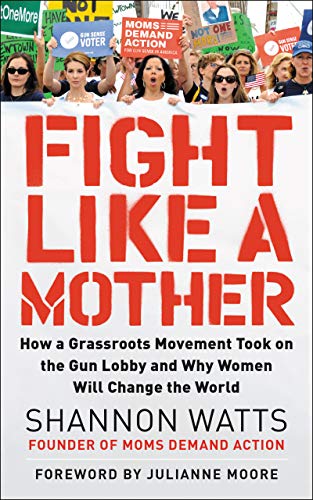
Julianne Moore, an award-winning actress and activist, shared how she was compelled to buy this book immediately after discovering it, emphasizing Shannon Watts's exploration of women's unique power to drive societal change. Moore's enthusiasm reflects the book's resonance with those engaged in political activism, particularly around gun safety. Alongside her, Chris Fralic, a venture capitalist and technology historian, acknowledges the compelling narrative and grassroots impact Watts has ignited, underscoring its value for anyone seeking to understand effective community organizing and advocacy.
“I went to Barnes & Noble today to buy my copy of Fight Like a Mother. Did you buy your copy yet? Let's make this book a bestseller! Shannon Watts explores the unique power of women to enact change.” (from X)
Shannon Watts is the founder of Moms Demand Action for Gun Sense in America—the leading force for gun violence prevention, with chapters in all 50 states and a powerful grassroots network of moms that has successfully effected change at the local, state and national level. In 2013, Moms Demand Action partnered with Mayors Against Illegal Guns to form Everytown for Gun Safety, a nationwide movement of millions of Americans working together to end the epidemic of gun violence. She is an active board member of Emerge America, one of the nation's leading organizations for recruiting and training women to run for office. Her writing has appeared in Vogue, Refinery 29, Time, The Washington Post, The Hill, and others. She is a mother of five.
What started as a simple Facebook group sparked Shannon Watts's transformation from concerned mother to the founder of Moms Demand Action, a nationwide grassroots movement challenging the gun lobby. This book dives into how everyday women leverage their unique strengths to influence legislation, organize communities, and reshape political activism around gun safety. You'll explore detailed accounts of lobbying efforts, local chapter building, and electoral involvement, gaining insight into turning personal outrage into sustained civic engagement. If you're motivated to understand how maternal leadership shapes political change, this offers both inspiration and a blueprint for action.
Emily Brandwin, a former CIA disguise and operations officer turned podcast host, highlights how this book is especially vital for young women eager to challenge political norms. She praises Lauren Duca's work as "so damn awesome" and underscores its relevance for empowering youth engagement. This perspective complements Nick Knudsen Demcast's call for heightened involvement from younger generations to address America's challenges, emphasizing the book's role as a catalyst for political awakening among millennials and Gen Z.
“@laurenduca It's so damn awesome that you wrote this book and everyone should read it, but especially young women. I'm already super pushy with them (shocking) so giving them your book is very on theme for me.” (from X)
Lauren Duca is an award-winning journalist focused on destroying the white supremacist patriarchy and building equitable public power by empowering people to pursue ethical self-determination. Duca's writing has appeared in The New York Times, The New Yorker, New York magazine, and other places without New York in the title, including The Independent and Out magazine.
After analyzing the post-Trump political awakening, Lauren Duca presents a sharp exploration of how young people are reshaping American democracy. Drawing from her experience as a Teen Vogue columnist and activist, she examines figures like Alexandria Ocasio-Cortez and the Parkland survivors to reveal new models of political engagement. You’ll gain insight into the systemic issues fueling political disillusionment and discover the practical ways youth activism can redefine power structures. This book suits anyone eager to understand contemporary political shifts and the role of millennials in fostering change, especially those interested in grassroots movements and democratic renewal.
Ida Bae Wells, a reporter at The New York Times Magazine known for her coverage of race and social justice, highlights this book's timely relevance and insightful narrative. Having engaged deeply with topics on race since the 1619 Project, she praises "Vanguard" as illuminating and beautifully written, reflecting the urgent need to revisit overlooked histories. Her endorsement signals the book's impact on understanding black women's crucial role in political activism and their fight for equality.
“So excited to talk with Martha S. Jones about her fantastic new book Vanguard Sept 8. It is timely, illuminating and beautifully written. Join us.” (from X)
Martha S. Jones is the Society of Black Alumni Presidential Professor and professor of history at Johns Hopkins University. She is president of the Berkshire Conference of Women Historians, the oldest and largest association of women historians in the United States, and she sits on the executive board of the Organization of American Historians. Author of Birthright Citizens and All Bound Up Together, she has written for The Washington Post, The Atlantic, USA Today, and more. She lives in Baltimore, MD.
Drawing from her extensive experience as a history professor at Johns Hopkins University, Martha S. Jones examines the overlooked political activism of African American women in America. You’ll learn how these women navigated both racism and sexism to claim their voting rights and reshape the nation’s democracy, with detailed profiles of figures like Maria Stewart and Fannie Lou Hamer. This book benefits anyone seeking a deeper understanding of the intersections between race, gender, and political power, offering fresh perspectives beyond the conventional suffrage narrative. Chapters tracing the journey from the early republic to the Voting Rights Act reveal nuanced strategies and enduring impacts.
David Ayer, a respected film director known for his gritty storytelling, praises this book amid his own struggles with portraying social issues authentically. He calls it an "Amazing book and very needed," highlighting how its military lens on the Civil Rights Movement reshaped his understanding of activism’s discipline and strategy, offering a fresh view on a pivotal era.
Thomas E. Ricks is the author of multiple bestselling books, including First Principles, The Generals, and Fiasco, which was a #1 New York Times bestseller and a finalist for the Pulitzer Prize. A member of two Pulitzer Prize–winning teams in his years at The Washington Post and The Wall Street Journal, he has been called “the dean of military correspondents.” He lives in Maine and Texas.
When Thomas E. Ricks, a Pulitzer Prize-winning military correspondent, turns his attention to the Civil Rights Movement, he reveals its strategic depths often overlooked. You’ll encounter how nonviolence was not passive but a disciplined, organized campaign employing military principles like recruitment and training to confront systemic oppression effectively. Chapters illuminate figures like James Lawson and Diane Nash, showcasing their roles in shaping this active resistance. If you’re interested in the mechanics behind social change and want to understand civil rights beyond speeches and marches, this book offers a detailed, nuanced perspective that challenges simpler narratives.
Saul Alinsky, born in Chicago in 1909 and trained in criminology at the University of Chicago, transformed his firsthand experience with urban challenges into a foundation for modern organizing. His work with the Industrial Areas Foundation and efforts in Chicago's Back of the Yards neighborhood showcase his commitment to empowering the poor through strategic community action. This book reflects his unique insights and decades-long dedication to creating structures for political power among marginalized populations.
Saul Alinsky was born in Chicago in 1909 and educated first in the streets of that city and then in its university. Graduate work at the University of Chicago in criminology introduced him to the Al Capone gang, and later to Joliet State Prison, where he studied prison life. He founded what is known today as the Alinsky ideology and Alinsky concepts of mass organization for power. His work in organizing the poor to fight for their rights as citizens has been internationally recognized. In the late 1930s he organized the Back of the Yards area in Chicago (the neighborhood made famous in Upton Sinclair's The Jungle). Subsequently, through the Industrial Areas Foundation which he began in 1940, Mr. Alinsky and his staff helped to organize communities not only in Chicago but throughout the country. He later turned his attentions to the middle class, creating a training institute for organizers. He died in 1972.
During his time studying criminology and working directly in Chicago's toughest neighborhoods, Saul Alinsky developed a distinctive approach to grassroots organizing that he distilled in this book. You gain insight into his methods for mobilizing marginalized communities, especially the urban poor, to claim political power, with practical examples drawn from his work in the Back of the Yards neighborhood and the Industrial Areas Foundation. The book challenges traditional activism by emphasizing the strategic use of power dynamics and community engagement. If you're involved in community organizing or want to understand the mechanics behind effective social movements, this book offers a pragmatic, if sometimes controversial, blueprint.
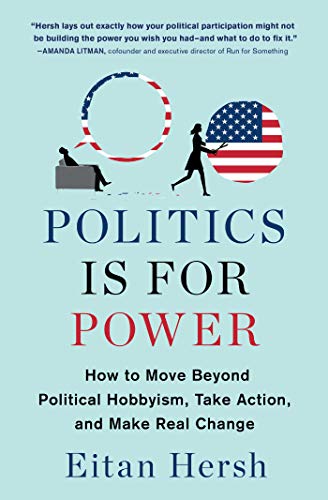
Mallory Mcmorrow, Michigan State Senator with a strong voice in political activism, highlights this book as essential for anyone ready to move beyond passive political engagement. She emphasizes how simply tweeting or joining online groups isn’t enough to drive real change. "For everyone asking ‘what can I do?’ This book is a must-read, and a sobering call to many of us that being in a Facebook group or tweeting is a great way to find each other, but it’s not action. It won’t make change. Take ACTION." Hersh’s insights helped her rethink political involvement, pushing her to focus on building genuine power and community connections.
Michigan State Senator, activist, community leader
“For everyone asking “what can I do?” This book is a must-read, and a sobering call to many of us that being in a Facebook group or tweeting is a great way to find each other, but it’s not action. It won’t make change. Take ACTION.” (from X)
Eitan Hersh received a PhD from Harvard University in 2011. He served for six years on the faculty of Yale University as assistant professor of political science and resident fellow of the Institution for Social and Policy Studies before becoming a tenured associate professor of political science at Tufts University. His peer-reviewed articles have been published in the major political science journals. Hersh is the author of Hacking the Electorate and Politics Is for Power.
Eitan Hersh, a political science professor at Tufts University, challenges the way many of us engage with politics by exposing what he calls "political hobbyism"—the tendency to treat politics like entertainment rather than meaningful action. Through a mix of political theory, history, and social science, Hersh shows how consuming endless news and outrage often replaces actual organizing and power-building, which are crucial for real change. You’ll learn to shift your time from passive consumption to active participation, such as building local political networks and preparing to influence policy. This book is especially insightful if you feel stuck in the usual political chatter but want to make tangible impact beyond social media.
Tim Modise, a respected broadcaster and media professional, highlights this book's enduring relevance in confronting racial injustice. He notes, "In his urgent and ‘prophetic’ book, ‘Why We Can’t Wait’ published in 1964, Dr Martin Luther King Jr warns and proposes ideas to deal with racial injustices in America & everywhere." Modise's perspective underlines how King's message continues to resonate and influence today's political activism landscape.
“In his urgent and ‘prophetic’ book, ‘Why We Can’t Wait’ published in 1964, Dr Martin Luther King Jr warns and proposes ideas to deal with racial injustices in America & everywhere. A great leader & teacher, his voice is very relevant today.” (from X)
Martin Luther King, Jr., was born January 15, 1929 in Atlanta, Georgia, the son and grandson of pastors. He graduated from Morehouse College and Crozer Theological Seminary, becoming at age 25 pastor of the Dexter Avenue Baptist Church in Montgomery, Alabama. He subsequently earned his Ph.D. from Boston University. In 1957 he and other civil rights leaders founded the Southern Christian Leadership Conference, an organization he led until his death. A proponent of Gandhian principles of non-violence, he led many protests and demonstrations for civil rights, including the March on Washington for Jobs and Freedom on August 29, 1963, where he delivered his famous “I Have a Dream” speech. Winner of the 1964 Nobel Peace Prize, he continued to fight for civil rights, the eradication of poverty and the end of the Vietnam War. He was assassinated on April 4, 1968 in Memphis, TN.
This book presents Martin Luther King Jr.'s firsthand account of the 1963 Birmingham civil rights campaign, capturing the urgency and frustration behind the movement. King, a theologian and Nobel laureate, writes not only about events but also the moral necessity to reject waiting for justice, highlighting his "Letter from Birmingham Jail" as a pivotal moment. You'll gain insight into nonviolent resistance strategies and the historical context that made 1963 a watershed year for civil rights activism. This work suits those seeking to understand the roots of political activism, racial justice struggles, and the power of direct action in social change.
Faiza N. Ali, a Brooklyn-born community organizer and justice activist, highlights this young readers edition as a vital celebration of Linda Sarsour's work. After years immersed in activism herself, Faiza was drawn to this book for its authentic portrayal of social justice and youth empowerment. She praises it as "all of my favorite people in one place to celebrate our dear sister Linda Sarsour," emphasizing how it captures the spirit of standing up and speaking out. This book helped her see activism through the eyes of a young person finding their voice, reinforcing the importance of community and courage in political activism.
“All of my favorite people in one place to celebrate our dear sister Linda Sarsour. If you haven’t picked up her book We Are Not Here to Be Bystanders, it’s a must read.” (from X)
Linda Sarsour is a Brooklyn-born Palestinian Muslim American community organizer and mother of three. Recognized for her award-winning intersectional work, she served as national cochair of the Women’s March, helping to organize the largest single-day protest in US history. She is the former executive director of the Arab American Association of New York and cofounder of the first Muslim online organizing platform, MPower Change, as well as Until Freedom, a national racial justice organization working with Black and Brown communities across the country.
Drawing from her extensive experience as a Brooklyn-born Palestinian Muslim American organizer and national cochair of the Women’s March, Linda Sarsour offers a young readers edition that distills her journey into accessible lessons on activism and identity. You’ll explore how pivotal moments shaped her voice and commitment, from her father’s bodega to leading historic protests, learning about grassroots organizing and standing firm in your convictions. The book’s chapters vividly detail Sarsour’s path to becoming a fearless advocate, making it suitable for young people eager to understand social justice through a personal lens. If you want practical insight into activism grounded in lived experience, this memoir-style narrative delivers without preaching.
Moira Weigel, assistant professor at Northeastern University and cofounder of Logic Magazine, brings a sharp eye to political activism informed by her deep engagement with social movements. She warmly recommends Let the Record Show, remarking, "Oh I love that book too! And Let the Record Show, in that vein." Her endorsement highlights how Schulman's work enriches understanding of activist history and offers thoughtful perspectives on coalition building and the enduring fight for LGBTQ rights.
Sarah Schulman is the author of more than twenty works of fiction, nonfiction, and theater. Her writing has appeared in The New Yorker, The New York Times, and many other outlets. She is an Endowed Chair in Creative Writing at Northwestern and a Fellow at the New York Institute of Humanities. Schulman is a cofounder of the MIX New York LGBT Experimental Film and Video Festival and the co-director of the ACT UP Oral History Project. A lifelong New Yorker, she is a longtime activist for queer rights and female empowerment.
Drawing from her extensive experience as a lifelong queer rights activist and co-director of the ACT UP Oral History Project, Sarah Schulman delivers a detailed political history of ACT UP New York from 1987 to 1993. You’ll gain insight into the coalition’s multifaceted strategies—from direct action at Grand Central Terminal to reshaping AIDS treatment policies and challenging major institutions like the FDA and The New York Times. This book reveals the complex inner workings and conflicts within ACT UP, illustrating how diverse activists transformed public health and civil rights. It’s a profound resource if you want to understand grassroots political organizing with intersectional impact and the realities behind social movements.
Winner of 2022 Lambda Literary LGBTQ Nonfiction Award
2021 New York Times Book Review Notable Book
Finalist for PEN/John Kenneth Galbraith Award for Nonfiction
Senator Bernie Sanders, serving his third term in the U.S. Senate and the longest-serving Independent member of Congress, brings firsthand experience from crafting major legislation like the American Rescue Plan to this book. His leadership on Medicare for All and climate change fights underlines the urgency behind this critique of capitalism. Co-authored with John Nichols, an award-winning journalist, the book reflects their combined commitment to exposing economic injustice and proposing paths forward for political change.
Bernie Sanders is serving his third term in the U.S. Senate and is the longest-serving Independent member of Congress in American history. He is the chairman of the Budget Committee, where he helped write the $1.9 trillion American Rescue Plan, one of the most significant pieces of legislation in our modern history. In the Senate, Sanders is leading the fight for Medicare for All, for combating climate change, and for making public colleges and universities tuition free. John Nichols is an award-winning progressive author and journalist who serves as the national affairs correspondent for The Nation.
Senator Bernie Sanders challenges the conventional wisdom that capitalism naturally benefits everyone by exposing how it prioritizes wealth accumulation for the few over the needs of the many. Drawing on his extensive legislative experience, Sanders lays out sharp critiques of income inequality, political influence by billionaires, and environmental neglect linked to the current economic system. You’ll find detailed discussions on how these issues intertwine and what systemic changes could restore democratic and economic fairness. This book suits those wanting to understand the roots of economic injustice and the political pathways toward a more equitable society, though it assumes some familiarity with U.S. politics and policy debates.
Richard W. Painter, a law professor and former chief White House ethics lawyer, highlights this book as a crucial read for anyone grappling with racial injustice. He emphasizes its call to action: "We either confront the problem of racism or we ignore it. Lebron and others are calling for us to confront it." Painter’s extensive experience in law and ethics lends weight to his endorsement, underscoring how this book reshaped his understanding of systemic racism and activism.
“More from Christopher J. Lebron here. A fascinating book. We either confront the problem of racism or we ignore it. Lebron and others are calling for us to confront it.” (from X)
Christopher J. Lebron is Associate Professor of Philosophy at Johns Hopkins University. He is the author of The Color of Our Shame: Race and Justice in Our Time, and is a frequent contributor to The New York Times and the Boston Review.
Christopher J. Lebron, a philosophy professor at Johns Hopkins University, draws from a deep intellectual tradition to unpack the roots and meanings behind the Black Lives Matter movement. You’ll explore how the phrase "Black Lives Matter" connects to a long history of black activism, from Frederick Douglass to James Baldwin, emphasizing dignity over mere rights. The book challenges you to rethink common responses to racial injustice, arguing that reforms like body cameras are insufficient without addressing deeper societal values. If you want a thoughtful foundation for understanding modern racial activism, this book offers a concise yet rich exploration that demands you confront history and ideas, not just headlines.
Carlos Martinez, co-founder of No Cold War and co-editor at Socialist China, highlights this book as a definitive account of the Black Panther Party's history. Having studied leftist movements extensively, he praises its meticulous research and thorough storytelling. "Perhaps the best book overall on the history of the Black Panther Party," he says, noting how it reshaped his understanding of one of the most ambitious movements in U.S. leftist history.
“3. Perhaps the best book overall on the history of the Black Panther Party. A comprehensive, meticulous, thoroughly-researched and brilliantly-told account of one of the most ambitious and successful projects in the history of the US left.” (from X)
Joshua Bloom is Assistant Professor of Sociology at the University of Pittsburgh. He is the coeditor of Working for Justice: The L.A. Model of Organizing and Advocacy. His articles have been published in American Sociological Review and other venues. Waldo E. Martin, Jr., is Alexander F. and May T. Morrison Professor of History and Citizenship at the University of California, Berkeley. He is the author of No Coward Soldiers: Black Cultural Politics in Postwar America, Brown v. Board of Education: A Brief History with Documents, and The Mind of Frederick Douglass.
After analyzing extensive archival research and firsthand accounts, Joshua Bloom and Waldo E. Martin Jr. present a detailed history of the Black Panther Party that goes beyond popular narratives. You gain insight into the Party's origins as a response to police brutality, its revolutionary stance against American imperialism, and the political dynamics behind its rapid growth and eventual decline. Chapters dissect why young African Americans joined the movement despite harsh repression and how the Party's global connections influenced its strategies. This book suits anyone interested in the complexities of Black political activism and the broader struggles against systemic oppression in the U.S.
Christina Reynolds, Vice President of Communications at EMILY's List and a seasoned voice in political activism, endorses this book for anyone considering a run for office. She highlights its relevance for emerging candidates, sharing, "If you're looking to run for office, Amanda Litman has a great book for you!" Reynolds points to Litman's firsthand campaign experience and how this guide offers clear, relatable advice that reshaped her view on grassroots political engagement.
Amanda Litman is the co-founder and executive director of Run for Something, a PAC that helps recruit and support young, diverse progressives running for down-ballot office. Previously, she was the email director for Hillary Clinton’s 2016 presidential campaign, digital director for Charlie Crist's 2014 Florida gubernatorial campaign, deputy email director for Organizing for Action, and an email writer for Barack Obama’s 2012 re-election campaign. She graduated from Northwestern University in 2012 with a B.A. in American Studies. She lives in Brooklyn with her rescue dog, Sadie.
When Amanda Litman realized the power of local politics to drive real change, she crafted this guide to demystify running for office at the community level. Drawing on her extensive experience with campaigns for Obama and Hillary Clinton, Litman offers you practical insights into navigating local elections—covering everything from assembling a team to voter outreach strategies. The book goes beyond theory, sharing candid advice from elected officials and operatives, including how to overcome common obstacles faced by first-time candidates. This is a resource aimed squarely at young progressives ready to step into leadership roles that truly impact their neighborhoods and states.
Ramy Raoof, a technologist focused on privacy and digital security in North Africa, highlights this book as a vital testament to Alaa Abd el-Fattah's enduring impact on political activism. During ongoing struggles for freedom in Egypt, Raoof has seen firsthand how this collection inspires people to organize and reflect on resistance strategies. He shares, "Nowadays many of Alaa's loved ones and friends from various walks of life are organizing book-reading events and discussions on his vision and legacy. This book helped deepen his understanding of activism’s personal and technological dimensions, reinforcing the importance of solidarity and hope.
“Nowadays many of Alaa's loved ones and friends from various walks of life are organizing book-reading events and discussions on his vision and legacy. We want to show love, support and remind him and ourselves: You Have Not Been Defeated. Order the book:” (from X)
Alaa Abd el-Fattah is an Egyptian writer, technologist, and political activist. He has been prosecuted or arrested by every Egyptian regime to rule in his lifetime and has been held in prison for all but a few months since the coup d’état of 2013. Collected here by his family and friends, for the first time in English, are a selection of his speeches, interviews, social media posts, and essays since the outbreak of revolution in January 2011—many written from inside prison.
Alaa Abd el-Fattah's years of activism and repeated imprisonments shaped this collection of essays and reflections, offering you a raw and intimate view into political resistance. You'll encounter incisive thoughts on technology's role in dissent, the personal cost of incarceration, and the persistent hope that fuels movements for change. This book is especially suited for those committed to understanding activism not just as protest but as a lived experience intertwined with technology and repression. Chapters reveal how digital tools shape modern uprisings and how personal narratives can illuminate broader societal struggles.
The best Political Activism books and more, in your inbox each week. No account needed.
Conclusion
These 21 Political Activism books reveal clear themes: the power of grassroots organizing, the significance of historical memory, and the necessity of strategic action. If you’re confronting voter suppression, start with Our Unfinished March and Our Time Is Now to grasp the legal battles and tactical responses. For building community power, Rules for Radicals and Reveille for Radicals offer hands-on guidance.
For rapid implementation, consider pairing Fight Like a Mother with Run for Something to combine grassroots mobilization with political candidacy insights. If digital activism fascinates you, Black Software and You Have Not Yet Been Defeated provide perspectives on technology’s role in modern movements.
Alternatively, you can create a personalized Political Activism book to bridge the gap between general principles and your specific situation. These books can help you accelerate your learning journey and deepen your impact.
Frequently Asked Questions
I'm overwhelmed by choice – which book should I start with?
Start with Our Time Is Now by Stacey Abrams for a compelling introduction to voter suppression and civic engagement strategies. Its clear roadmap makes it accessible and actionable, setting a strong foundation before exploring more specialized topics.
Are these books too advanced for someone new to Political Activism?
Not at all. Books like How to Start a Revolution and We're in This Together offer approachable narratives for beginners, while others provide depth for experienced activists. You can tailor your reading to your comfort level.
Should I read these books in a particular order?
There's no fixed order, but beginning with books on voting rights like Our Unfinished March and then exploring organizing tactics such as Rules for Radicals can build understanding progressively.
Do these books focus more on theory or practical application?
They strike a balance. For example, Rules for Radicals is practical, offering organizing tools, while The Making of Black Lives Matter provides theoretical context. Choose based on whether you want strategy or history.
Can I skip around or do I need to read them cover to cover?
You can definitely skip around. Many of these books are structured in chapters or essays, letting you focus on topics most relevant to your interests and goals without reading cover to cover.
How can I get personalized advice tailored to my activism goals?
While these expert books offer proven insights, personalized content can help apply these ideas to your unique situation. You can create a tailored Political Activism book to bridge expert knowledge and practical, customized strategies.
📚 Love this book list?
Help fellow book lovers discover great books, share this curated list with others!