"The Open Society and Its Enemies" by Karl R. Popper, Alan Ryan, E. H. Gombrich made it to BookAuthority's Best Political Philosophy eBooks of All Time!
20 Political Philosophy Books Changing How You See Power and Governance
Insights from Neil Degrasse Tyson, Steven Sinofsky, and Timothy Keller on Political Philosophy Books shaping minds and societies
Updated on June 26, 2025·We may earn commissions for purchases made via this page
18 of 20 books have Kindle versions
We're launchingLaunching on Product Hunt today 🎉We just launchedJust launched on Product Hunt 🎉
Modelpeers, from the BookAuthority teamFrom the BookAuthority team: Modelpeers, a free way to follow AI models and agents like you follow people. We'd love your support.
What if understanding political philosophy could unlock how power truly works in the world? Political philosophy isn’t just an academic exercise — it’s the foundation of the systems that shape your daily life. From the pragmatism of Machiavelli to the revolutionary ideas of Marx, these books unravel the complex forces behind governance, authority, and justice.
Experts like Neil Degrasse Tyson, renowned astrophysicist, value classics such as Machiavelli's The Prince for their blunt insights into leadership and power. Meanwhile, Steven Sinofsky, a technology strategist, finds The Machiavellians crucial for understanding modern political dynamics. On a different note, Timothy Keller emphasizes Political Visions & Illusions for its deep Christian critique of ideology, showing how faith interacts with politics in profound ways.
While these expert-curated books provide proven frameworks, readers seeking content tailored to their specific background, interests, or goals might consider creating a personalized Political Philosophy book that builds on these insights for a more focused learning journey.
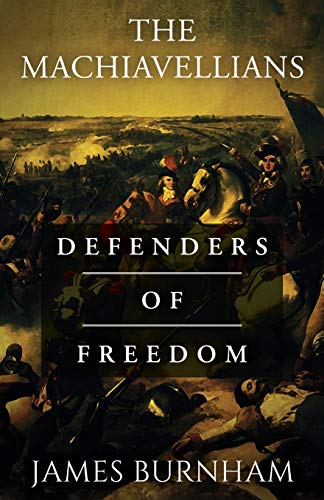
Steven Sinofsky, a board partner at a16z and adviser at BoxHQ, highlights this book’s relevance by calling it "a must read" that offers a prescient view of our political landscape and its future trajectory. His extensive experience in technology and strategy gives weight to his perspective on political philosophy, especially as he reflects on Burnham’s insight into power and freedom. This book challenged his thinking, helping him see politics through a sharper lens. Alongside him, Irving Kristol underscores the book’s importance, warning that ignoring Burnham’s approach risks being unprepared for unfolding political realities.
“20/ The Machiavellians: Defenders of Freedom by James Burnham a must read book that I feel presents the most prescient description of where we are today and why and where we are heading. Really fascinating. Also, former Trotskyite.” (from X)
James Burnham was a prominent political theorist and author known for his works on political philosophy and realpolitik. His insights into the nature of power and governance have influenced political thought significantly.
James Burnham's decades of political theory and realpolitik insight led him to craft this detailed exploration of the modern Machiavellians—figures like Mosca, Sorel, and Pareto—whose ideas quietly shape political freedom. You’ll gain a nuanced understanding of how their philosophies intersect with the preservation of liberty, moving beyond Machiavelli himself to grasp the intricate dynamics of political power. The book carefully dissects these thinkers’ contributions, challenging common perceptions and offering a lens to interpret contemporary political struggles. If you want to deepen your grasp of political science and philosophy through an analysis rooted in historical and theoretical rigor, this book serves that purpose well.
Niccolò Machiavelli was an Italian diplomat, philosopher, and writer of the Renaissance period, best known for his political treatise, The Prince. His work has had a profound influence on political theory and realpolitik, emphasizing the pragmatic aspects of governance and power dynamics. This book offers you a direct window into the tactics and considerations that shaped leadership during turbulent times, making it a foundational text for understanding political strategy even today.
Niccolò Machiavelli was an Italian diplomat, philosopher, and writer of the Renaissance period, best known for his political treatise, The Prince. His work has had a profound influence on political theory and realpolitik, emphasizing the pragmatic aspects of governance and power dynamics.
Niccolò Machiavelli's experience as a diplomat during the volatile Renaissance period drove him to write this incisive guide on power and governance. In The Prince, you explore the stark realities of political strategy, learning how rulers can maintain authority through pragmatism rather than idealism. Chapters delve into topics like the use of fear versus love, the role of fortune in politics, and the sometimes ruthless decisions leaders must make to secure their position. This book suits you if you're interested in the mechanics behind political power and the often uncomfortable truths that accompany leadership.
This AI-created book on political philosophy is tailored to your background and learning goals. You share your interests and current understanding, and the book focuses precisely on the concepts and debates most relevant to you. This personalized approach helps cut through the complexity of political thought, offering a clear path built around what you want to explore and achieve. It's designed to make your study of political philosophy both accessible and deeply rewarding.
TailoredRead AI creates personalized nonfiction books that adapt to your unique background, goals, and interests. Instead of reading generic content, you get a custom book written specifically for your profession, experience level, and learning objectives. Whether you're a beginner looking for fundamentals or an expert seeking advanced insights, TailoredRead crafts a book that speaks directly to you. Learn more.
2026·50-300 pages·Political Philosophy, Governance, Power Dynamics, Justice, Political Ideologies
This tailored book on political philosophy offers a unique learning experience by focusing on your specific interests and background. It explores foundational concepts such as justice, governance, and power dynamics, while examining key thinkers and schools of thought that have shaped political ideas across history. The content is carefully crafted to address your particular goals, whether you're seeking to understand classical theories or contemporary debates. By providing a personalized exploration, this book bridges complex expert knowledge with your own learning needs, making it easier to grasp challenging material and see its relevance to your worldview. This tailored approach ensures your journey through political philosophy is both engaging and meaningful.
Timothy Keller, founder of Redeemer Presbyterian Church, regards this book as unmatched in outlining the ideologies Christians often embrace unknowingly. His endorsement carries weight because of his extensive experience navigating faith within urban and cultural contexts. Keller remarks, "I STILL think this is the best book out there to list the range of ideologies Christians unknowingly give themselves to--none of the biblical." His reflection reveals how the book reshaped his perspective on political commitments. Alongside Keller, Bruce Ashford, Provost and Professor at SEBTS, praises the book as a modern classic for its analysis of idolatry within political thought, emphasizing its relevance for thoughtful Christian engagement.
“I STILL think this is the best book out there to list the range of ideologies Christians unknowingly give themselves to--none of the biblical.” (from X)
David T. Koyzis is affiliated with Global Scholars Canada and is engaged in an international academic ministry of writing, researching, lecturing, and conversing with readers of his books. He is the author of Political Visions and Illusions and We Answer to Another: Authority, Office, and the Image of God. He taught undergraduate political science for thirty years and lives with his family in Hamilton, Ontario, Canada.
What if everything you knew about political ideologies was wrong? David T. Koyzis, with decades as a political science professor and a global academic ministry, unpacks the religious roots shaping modern politics in this insightful survey. You’ll explore how ideologies like liberalism, nationalism, and socialism carry hidden assumptions about reality and the common good, revealing their idolatrous narratives through a Christian lens. The book challenges you to reconsider political commitments and offers alternative frameworks grounded in Christian engagement, making it especially relevant if you’re navigating faith in public life or seeking to understand complex political narratives.
Shoshana Weissmann Sloth Committee Chair, an expert in digital media and reform policy, highlights how she engaged with this book during her daily routines, underscoring its insightful critique of political figures like Woodrow Wilson. She remarks on the striking contrast between Wilson's approach and the foundational virtues of Lincoln, revealing the book’s depth in historical and philosophical analysis. This perspective complements S.e. Cupp's endorsement, who places the book firmly within the core conservative canon, urging a thorough read to grasp its intellectual weight. Their combined views spotlight the book’s role in reshaping understanding of American political conservatism.
“@GeorgeWill @TheWeek Also, I ought to have threaded my favs from @GeorgeWill's new book, which I read on the treadmill - @GorsuchBook on elliptical and at my desk. "Wilson’s brazenness was breathtaking. He was draining Lincoln’s career of what makes it intelligible and noble"” (from X)
George F. Will writes a twice-weekly syndicated column on politics and domestic and foreign affairs for the Washington Post. He began his column with The Post in 1974, and he received the Pulitzer Prize for Commentary in 1977. He is also a regular contributor to MSNBC and NBC News. His fourteen previous books include One Man's America, Men at Work, and Statecraft as Soulcraft. Will grew up in Champaign, Ill., attended Trinity College and Oxford University and received a PhD from Princeton.
George F. Will's decades-long exploration of Western political tradition culminates in a detailed examination of how America's Founders crafted a distinct government framework rooted in natural rights and limited power. You gain insight into the tensions between the Founders' vision and modern political challenges, from unchecked executive agencies to shifts in family and education. Will's analysis, rich with historical context and contemporary critique, offers a nuanced understanding of conservatism's place in current American discourse. If you're seeking a deep dive into the philosophical underpinnings and practical implications of conservative thought, this book presents a rigorous, thoughtful perspective.
Samantha Power, former US Ambassador to the UN and Harvard professor, brings authoritative weight to this recommendation, underscoring the book’s significance in political philosophy. She highlights Chomsky’s global impact, noting how his fearless interrogation of power reshaped her understanding of political activism. Her endorsement captures the book’s role in illuminating anarchism not as chaos but as a hopeful, collective force, challenging you to reconsider entrenched power in today’s political landscape.
Noam Chomsky is Institute Professor (emeritus) in the Department of Linguistics and Philosophy at the Massachusetts Institute of Technology and Laureate Professor of Linguistics and Agnese Nelms Haury Chair in the Program in Environment and Social Justice at the University of Arizona. A world-renowned linguist and political activist, he is the author of numerous books, including On Language: Chomsky's Classic Works Language and Responsibility and Reflections on Language; Understanding Power: The Indispensable Chomsky, edited by Peter R. Mitchell and John Schoeffel; American Power and the New Mandarins; For Reasons of State; Problems of Knowledge and Freedom; Objectivity and Liberal Scholarship; Towards a New Cold War: U.S. Foreign Policy from Vietnam to Reagan; The Essential Chomsky (edited by Anthony Arnove); and (with Michel Foucault) The Chomsky-Foucault Debate. He lives in Tucson, Arizona.
What if everything you knew about political power was challenged? Noam Chomsky, a formidable figure in linguistics and political activism, offers a sharp critique of entrenched authority through the lens of anarchism in this collection of essays. You’ll encounter his optimistic vision of anarchism as a collective, egalitarian tradition rather than a fringe ideology, with chapters that trace its historical roots and contemporary relevance, notably illuminated by Nathan Schneider’s introduction linking these ideas to modern movements. This book is suited for anyone wrestling with the legitimacy of power structures and seeking to understand activism beyond individualism, though it may feel dense if you’re new to political theory.
This AI-created book on political thought is crafted based on your background, skill level, and specific interests within political philosophy. You share what aspects you want to master and your learning goals, and the book is created to focus exactly on what you need to quickly understand and apply key ideas. This tailored approach helps you navigate complex theories with clarity and purpose, making your study both efficient and relevant.
TailoredRead AI creates personalized nonfiction books that adapt to your unique background, goals, and interests. Instead of reading generic content, you get a custom book written specifically for your profession, experience level, and learning objectives. Whether you're a beginner looking for fundamentals or an expert seeking advanced insights, TailoredRead crafts a book that speaks directly to you. Learn more.
2026·50-300 pages·Political Philosophy, Governance, Power Dynamics, Justice Concepts, Ideology Analysis
This tailored book explores political philosophy through a focused, step-by-step pathway designed to accelerate your grasp of key principles and their real-world application. It covers foundational ideas from classics to contemporary thought, examining concepts like governance, power, justice, and ideology with a clarity suited to your background. By aligning with your interests and goals, this personalized guide reveals how political theories shape societies, helping you connect abstract ideas to practical understanding. Whether new to political thought or seeking a sharper focus, this book tailors complex content into an engaging, manageable journey that matches your pace and priorities.
Melina Abdullah, a professor of Pan-African Studies at Cal State LA and a key figure in the #BlackLivesMatter movement, highlights how this book "brilliantly contends that meaningful Black activism is grounded in an underlying philosophy." She sees it as essential during the current renaissance of Black activism, underscoring the book's relevance to contemporary struggles. Meanwhile, philosopher Tommy Curry describes it as "epochal and paradigm-shifting," appreciating Sawyer's portrayal of Malcolm X as a thinker who physically embodies revolutionary politics. These perspectives reinforce the book's importance for anyone seeking to understand the intellectual roots of Black political movements.
“Brilliantly contends that meaningful Black activism is grounded in an underlying philosophy. Movements are driven by thought as well as action. Essential reading during the current Black activist renaissance”
Michael E. Sawyer is Associate Professor of African American Literature & Culture at the University of Pittsburgh, and the author of Black Minded: The Political Philosophy of Malcolm X and An Africana Philosophy of Temporality.
After extensive study of African American literature and culture, Michael E. Sawyer brings Malcolm X's political thought into sharper focus, moving beyond mere biography to examine his philosophy as a dynamic system rooted in Black Radical Thought. You’ll explore how Sawyer connects Malcolm X's ideas on economic justice, anti-white supremacy, and Black internationalism with thinkers like W.E.B. Du Bois and Frantz Fanon, revealing the depth of his revolutionary vision. The book’s chapters on ontology and geographic space challenge you to rethink Malcolm X's activism as a lived, embodied philosophy. This is a thought-provoking read if you want to grasp the intellectual foundations of Black political movements.
George Weigel, author of The Fragility of Order, recognizes Fr. James V. Schall S.J.'s profound impact on political philosophy through his deep engagement with classical texts. Weigel points out how Schall’s work helped students at Georgetown grasp complex ideas by connecting past wisdom with contemporary challenges. He notes, "Father Schall was a distinguished political philosopher whose immersion in the classics of the past gave him keen insights into the present and future." This book, shaped by Schall’s decades of teaching, offers a vital perspective on how Christian thought can illuminate modern political dilemmas.
“Father Schall was a distinguished political philosopher whose immersion in the classics of the past gave him keen insights into the present and future. Students at Georgetown used to say that they 'majored in Schall'. America would do well to 'major in Schall' today.”
James V. Schall, S.J., was a Professor of Political Philosophy from 1977 to 2012 at Georgetown University, where he received his Ph.D. in Political Theory in 1960. He wrote hundreds of essays and columns and more than thirty books, including On Islam, The Order of Things, and Another Sort of Learning from Ignatius Press.
Fr. James V. Schall S.J., a longtime professor of political philosophy at Georgetown University, wrote this book to clarify the tensions between Christian thought and modern political ideas. You’ll explore how Christianity historically separated salvation from political structures, contrasting it with modernity’s attempt to politicize salvation within earthly governments. The book examines classical, medieval, and modern philosophical perspectives, emphasizing the dangers of conflating divine order with political power, as explored in chapters detailing the City of God versus Leviathan. If you’re grappling with the intersection of faith and politics or seeking a nuanced understanding of political philosophy through a Christian lens, this book offers thoughtful insights without resorting to oversimplifications.
Michael McFaul, a Stanford professor and former US Ambassador, highlights the critical importance of Francis Fukuyama's work in understanding today's political fractures. McFaul’s extensive experience in diplomacy and political science lends weight to his endorsement, especially as he observed the rise of populist nationalism firsthand. He remarked, "Heard a fantastic presentation today by Francis Fukuyama on his new book, Identity. Buy this book !" This insight helped deepen McFaul's grasp of identity’s role in shaping global politics, reinforcing the book’s relevance for anyone examining democratic challenges today.
Francis Fukuyama is the Olivier Nomellini Senior Fellow at Stanford University's Freeman Spogli Institute for International Studies. He has previously taught at the Paul H. Nitze School of Advanced International Studies of Johns Hopkins University and at the George Mason University School of Public Policy. He was a researcher at the RAND Corporation and served as the deputy director in the State Department's policy planning staff. He is the author of The End of History and the Last Man, Trust, and America at the Crossroads: Democracy, Power, and the Neoconservative Legacy. He lives with his wife in California.
What if everything you knew about identity politics was wrong? Francis Fukuyama challenges conventional views by tracing how the demand for recognition fuels today’s political unrest, beyond mere economic grievances. You’ll find an analysis of how narrow identity claims—from race to religion—erode liberal democracy’s universal ideals, exemplified in chapters exploring populist nationalism and campus activism. This book suits anyone grappling with the fractures in modern states or seeking to understand the deeper forces behind political polarization. While it won’t offer simple solutions, it clarifies why identity shapes political behavior and why addressing it matters for democracy’s future.
Kaushik Basu, professor of economics at Cornell University and former World Bank Chief Economist, highlights this book as a crucial classic from the turbulent Weimar Republic era. He points out the duality of Schmitt as both a controversial figure and a formidable intellectual, emphasizing that the English translation and introduction by Holocaust survivor George Schwab add profound depth. Basu notes how this work reshaped his understanding of sovereignty and political authority, prompting a reconsideration of liberalism’s limits through Schmitt’s sharp critique. "Reading an old classic & fascinating book written during the early years of the Weimar Republic..."
“Reading an old classic & fascinating book written during the early years of the Weimar Republic by a fascist sympathizer & intellectual giant, Carl Schmitt, and translated into English & introduced by a holocaust survivor & outstanding scholar, George Schwab.” (from X)
Carl Schmitt (1888–1985) was a legal theorist, political philosopher, and the author of Legality and Legitimacy, On the Three Types of Juristic Thought, Political Romanticism, Nomos of the Earth, Roman Catholicism and Political Form, Crisis of Parliamentary Democracy, and The Concept of the Political, the last available from the University of Chicago Press.
75 pages·Political Philosophy, Sovereignty, Legal Theory, Political Theology, Decision Theory
What started as Carl Schmitt's intense engagement with the political upheaval of the Weimar Republic became a foundational text on sovereignty and political authority. In this concise work, you explore how Schmitt argues the core of sovereignty lies in the power to decide on exceptions when legal norms falter—an insight that challenges liberal legalism by emphasizing decision over rule-following. The book delves into the intertwining of political theology with modern legal concepts, revealing how secular political ideas often have theological roots. If you're seeking a sharpened understanding of political power, legal order, and the limits of liberal democracy, this book provides a focused, provocative perspective.
John Locke is a New York Times best-selling author who holds a Guinness World Record for eBook sales and has authored 38 international bestsellers across multiple genres. His expertise and prolific success lend authority to this illustrated edition of Two Treatises of Government, originally penned during England's political turmoil to defend limited government and individual rights. Locke's deep dive into natural rights, social contract, and property theories offers you a foundational understanding of political philosophy's impact on modern governance.
John Locke is a New York Times best-selling author who holds a Guinness World Record for eBook sales. He is the international best-selling author of 38 books across six genres and was the 8th author in history to sell one million eBooks on Kindle in just five months. Locke has had four books in the top ten simultaneously and eight in the top 43, including #1 and #2. His works have been translated into multiple languages, including Russian, Spanish, and Japanese.
John Locke's Two Treatises of Government emerged from the intense political upheaval of 17th-century England, reflecting his deep engagement with ideas of natural rights and government legitimacy. You will explore Locke's argument for a government based on consent, the social contract, and the justification for revolution when rulers violate rights, with detailed focus on private property theory that shaped modern legal frameworks. This illustrated edition walks you through Locke's foundational concepts, especially in the Second Treatise, offering insight into the origins of liberal democracy. If you aim to understand the philosophical roots of limited government and individual rights, this book offers a direct window into those debates, though readers looking for modern political analysis might find it historical rather than prescriptive.
Murtaza Mohammad Hussain, a political writer at The Intercept known for his deep dives into national security and intellectual history, highlights this book as Francis Fukuyama’s best work. Hussain’s recommendation underscores the book’s sharp examination of liberalism’s current fractures, reflecting the complexities he explores in his own political analyses. He points to its nuanced critique of how extremes on both right and left have challenged the core ideals of equality and democracy, reshaping the political landscape in ways that demand attention and understanding.
Francis Fukuyama is the Olivier Nomellini Senior Fellow at Stanford University's Freeman Spogli Institute for International Studies. He has previously taught at the Paul H. Nitze School of Advanced International Studies of Johns Hopkins University and at the George Mason University School of Public Policy. He was a researcher at the RAND Corporation and served as the deputy director in the State Department's policy planning staff. He is the author of The End of History and the Last Man, Trust, and America at the Crossroads: Democracy, Power, and the Neoconservative Legacy. He lives with his wife in California.
2022·192 pages·Political Philosophy, Democracy, Liberalism, Civil Rights, Political Ideology
After analyzing decades of political developments, Francis Fukuyama examines the deepening crisis within liberalism, tracing its origins from Europe’s religious and nationalist wars to its current challenges from both right and left-wing extremes. You’ll gain insights into how liberalism's foundational principles of equality and rule of law have been stretched and contested, illustrated through examples such as the expansion of civil rights and recent ideological divides. This book suits anyone seeking to understand the evolving tensions in modern democracy and the ideological battles reshaping civil society today. Fukuyama’s concise narrative confronts these discontents without idealizing liberalism, offering a clear-eyed perspective on its future.
Jack Murphy, a Lincoln Fellow and influential voice in political culture, highlights this book amid his extensive work on political philosophy and masculinity. He expressed enthusiasm about Thomas West's scholarship, stating, "Thomas West author of this amazing book, is confirmed for JML in December. I’m honored and excited!" Murphy’s endorsement reflects his respect for West’s deep dive into the moral and political foundations of American freedom, underscoring how the book reshapes understanding of the Founders’ vision beyond conventional labels.
Thomas G. West holds the Paul Ermine Potter and Dawn Tibbets Potter Endowed Professorship at Hillsdale College, Michigan. His research areas include American political thought, natural law and natural right, Aquinas, Hobbes, Locke, and Leo Strauss.
After analyzing the foundational texts of the American political tradition, Thomas G. West developed a nuanced interpretation emphasizing natural rights as the core lens through which the Founders conceived governance. His exploration challenges prevailing views that frame the Founders' thought as a blend of liberalism and republicanism, instead showing how republican policies on citizen character complement liberal economic principles. West delves into topics like natural law, social compact, and consent, tracing their policy implications with clarity. You’ll gain a deeper understanding of how common law and Protestantism influenced early American political structures, making this a thoughtful read if you're interested in the philosophical roots underpinning the U.S. Constitution and public policy.
Steven M. Cahn is Professor of Philosophy at The City University of New York Graduate Center and author or editor of fifty books, including works on ethics and philosophy published by Oxford University Press. His deep expertise and scholarly background underpin this third edition, making it a valuable collection that traces political philosophy from antiquity through the modern era. This authoritative volume reflects Cahn's commitment to presenting substantial texts alongside expert introductions, offering you a rich understanding of political ideas and their historical contexts.
Steven M. Cahn is Professor of Philosophy at The City University of New York Graduate Center. He is the author or editor of fifty books. Most recently, he wrote From Student to Scholar: A Candid Guide to Becoming a Professor (2008) and coauthored Polishing Your Prose: How to Turn First Drafts into Finished Work (2013). Dr. Cahn is the editor of Exploring Philosophy, Fifth Edition (2014) and Exploring Ethics, Third Edition (2013), and the coeditor of Ethics, Fifth Edition (2011), all published by Oxford University Press.
Steven M. Cahn's extensive academic career at The City University of New York Graduate Center informs this third edition, which offers a sweeping historical journey through political philosophy. You engage with substantial or complete texts from classical thinkers like Plato and Aristotle to modern giants such as Rawls and Sandel, each prefaced by insightful essays that provide essential context. This book equips you with a broad understanding of political thought's evolution, from foundational concepts like justice and governance to contemporary debates on liberalism and democracy. If you seek a thorough grounding in the primary sources shaping political philosophy, this volume serves as a rigorous, text-centered guide.
Karl Marx (1818-1883), a German philosopher and revolutionary whose work shaped modern communism, penned this manifesto to articulate the ongoing history of class struggles shaping society. His perspective, grounded in political economy and sociology, argues that capitalism's internal tensions will lead to its eventual replacement by socialism and communism. This edition’s faithful 1888 translation by Samuel Moore preserves Marx and Engels’s original voice, providing you with a direct experience of their influential political philosophy.
Karl Marx (1818-1883) was a German philosopher, political economist, historian, political theorist, sociologist, communist, and revolutionary, whose ideas played a significant role in the development of modern communism. He summarized his approach in the first line of chapter one of The Communist Manifesto, published in 1848: 'The history of all hitherto existing society is the history of class struggles.' Marx argued that capitalism, like previous socioeconomic systems, would inevitably produce internal tensions which would lead to its destruction. Just as capitalism replaced feudalism, he believed socialism would, in its turn, replace capitalism, and lead to a stateless, classless society called pure communism.
What started as Karl Marx's deep critique of 19th-century capitalism became a foundational text that continues to provoke and inform political thought today. Marx and Engels lay out a rigorous analysis of class struggle, detailing how societal conflicts between oppressors and oppressed drive historical change. You’ll gain insight into the dynamics of capitalism’s contradictions and the envisioned transition to socialism and eventually communism, with clear articulation of economic and political forces at play. This edition includes the 1888 authorized English translation by Samuel Moore, preserving the original tone and intent, making it particularly valuable for anyone seeking a direct connection to Marx’s ideas. If you’re exploring the roots of socialist theory or the framework of class conflict, this manifesto offers a direct window into those debates.
Leo Strauss was a prominent political philosopher recognized for his expertise in classical political theory and ancient texts interpretation. Teaching at institutions including the University of Chicago, Strauss’s work reinvigorated interest in classical philosophy during the 20th century. His deep understanding of historical contexts shapes this volume, making it a foundational resource for exploring the evolution of political philosophy through rigorous scholarship.
Leo Strauss was a prominent political philosopher known for his work on classical political theory and the interpretation of ancient texts. He taught at several universities, including the University of Chicago, and his writings have significantly influenced modern political thought. Strauss's approach emphasized the importance of understanding the historical context of philosophical works, and he is often associated with the revival of interest in classical philosophy in the 20th century.
Leo Strauss, a noted scholar in classical political theory, teamed with Joseph Cropsey to curate this extensive volume that maps the evolution of Western political philosophy from ancient Greece through the twentieth century. You’ll gain insight into key thinkers and their ideas, exploring how political concepts developed across eras and cultures, with essays that dive into individual philosophers’ contributions and contexts. The book suits those who want a deep, historically grounded understanding of political philosophy’s milestones rather than a surface overview. Chapters cover major figures and movements, offering a foundation for anyone engaged with political theory, history, or philosophy itself.
Karl Popper (1902-1994) was one of the most influential philosophers of the twentieth century, known for his work in the philosophy of science and political philosophy. As a professor at the London School of Economics, Popper wrote this book driven by his experience witnessing the rise of totalitarian regimes in Europe. His expertise uniquely positions him to dissect the intellectual roots of authoritarianism while advocating for liberal democracy. This edition also includes insights from Alan Ryan and E. H. Gombrich, providing rich historical and biographical context that enhances your understanding of Popper's arguments.
Karl Popper (1902-1994) was one of the most important philosophers of the twentieth century. His books include The Logic of Scientific Discovery, The Poverty of Historicism, Conjectures and Refutations, and an autobiography, Unended Quest. He was a professor at the London School of Economics.
2013·808 pages·Political Philosophy, Liberal Democracy, Totalitarianism, Philosophy Of Science, Historicism
Karl Popper's decades of philosophical inquiry led him to write this rigorous critique of totalitarianism, blending his expertise in the philosophy of science with political analysis. You’ll uncover how Popper connects authoritarian regimes to philosophical traditions rooted in Plato, Marx, and Hegel, applying a scientific spirit of critical inquiry to political thought. The book offers detailed examinations of the intellectual foundations that threaten liberal democracy, including chapters that dissect historicism and dogmatic ideologies. If you seek to understand the philosophical arguments behind open societies and the dangers of closed ideologies, this book sharpens your perspective with historical and logical depth, though it demands patient and engaged reading.
Plato (428-348 BCE) was a philosopher and mathematician in ancient Greece. A student of Socrates and a teacher of Aristotle, his Academy was one of the first institutions of higher learning in the Western world. He is widely regarded as the father of modern philosophy. This edition of The Republic draws on his authoritative background to present his exploration of justice, society, and governance, making it a cornerstone for anyone interested in political philosophy.
Plato (428-348 BCE) was a philosopher and mathematician in ancient Greece. A student of Socrates and a teacher of Aristotle, his Academy was one of the first institutions of higher learning in the Western world. He is widely regarded as the father of modern philosophy.
Plato’s decades of philosophical inquiry culminate in this edition of The Republic, where he wrestles with justice and the ideal society through Socratic dialogue. You’ll explore foundational concepts like the tripartite soul and philosopher-kings, gaining insight into political structures and ethical governance. The book challenges you to question assumptions about power, truth, and human nature, with chapters dedicated to education, morality, and the role of art in society. If you’re intrigued by the roots of Western political thought and want to wrestle with questions still debated today, this work offers a rigorous intellectual journey but demands patient, reflective reading.
Roger Vernon Scruton, FBA, FRSL, is an English philosopher renowned for his work in aesthetics and cultural philosophy. With over thirty books to his name and teaching positions at institutions like Birkbeck College and Boston University, Scruton brings a wealth of expertise to this exploration of conservative political philosophy. His deep conviction in defending Western traditions drives this book, offering readers a thoughtful challenge to contemporary views on human nature and society.
Roger Vernon Scruton, FBA, FRSL (born 27 February 1944) is an English philosopher who specializes in aesthetics. He has written over thirty books, including Art and Imagination (1974), The Meaning of Conservatism (1980), Sexual Desire (1986), The Philosopher on Dover Beach (1990), The Aesthetics of Music (1997), Beauty (2009), How to Think Seriously About the Planet: The Case for an Environmental Conservatism (2012), Our Church (2012), and How to be a Conservative (2014). Scruton has also written several novels and general textbooks on philosophy and culture, and he has composed two operas. He was a lecturer and professor of aesthetics at Birkbeck College, London, from 1971 to 1992. Since 1992, he has held part-time positions at Boston University, the American Enterprise Institute in Washington, D.C., and the University of St Andrews. Scruton has been called 'the man who, more than any other, has defined what conservatism is' by British MEP Daniel Hannan and 'England’s most accomplished conservative since Edmund Burke' by The Weekly Standard.
214 pages·Political Philosophy, Conservatism, Moral Philosophy, Cultural Critique, Human Nature
What started as Roger Scruton's deep engagement with aesthetics and culture became a robust defense of Western civilization through a conservative lens. In this book, he challenges Darwinian interpretations of human nature, particularly critiquing figures like Richard Dawkins for reducing human emotion to mere reproductive strategies. You’ll explore how such views threaten the foundations of freedom and moral responsibility, with Scruton making a case for renewed confidence in cultural traditions. Chapters dissect the interplay between biology, morality, and societal values, making it a thoughtful read for anyone grappling with modern critiques of human nature and social order.
Matthew D'ancona, editor and partner at Tortoise, brings his extensive political insight to his praise of this work. He highlights it as a timely resource, tweeting, "@politybooks @tortoise @CasMudde It's a great book - congratulations to @CasMudde." D'ancona’s endorsement underscores how the book deepened his understanding of the far right’s normalization in politics, offering a nuanced perspective that challenges traditional views and sheds light on one of today’s most pressing political phenomena.
Cas Mudde, a recognized expert on political extremism, developed this book to clarify the resurgence of far-right politics that have moved from the margins to the mainstream in democracies worldwide. You’ll gain a detailed understanding of the far right’s history, ideology, organizational structures, and the social and political factors fueling its rise, with specific chapters analyzing its impact in Brazil, India, and the U.S. This book benefits anyone looking to grasp the complex dynamics of modern political extremism and those engaged in politics, policy, or social activism seeking to understand and respond to these movements.
Niccolò Machiavelli, a Florentine statesman forced from public office, turned to political philosophy and history after his political career ended. His firsthand experience with the complexities of Renaissance power struggles shaped this work, offering you a direct window into practical political analysis that continues to influence thought on leadership and governance.
Niccolò Machiavelli (1469-1527) was a Florentine statesman who was later forced out of public life. He then devoted himself to studying and writing political philosophy, history, fiction, and drama.
When Niccolò Machiavelli penned this work in the 16th century, he drew on his experience as a Florentine statesman navigating the volatile politics of Renaissance Italy. You’ll encounter a candid examination of power dynamics, leadership tactics, and statecraft that challenges idealistic views of governance. The book dives into how rulers maintain authority through pragmatism rather than morality, illustrated in chapters discussing the use of cruelty, deception, and fortune. If you’re interested in political strategy, leadership psychology, or the roots of modern political thought, this treatise offers insights that remain relevant despite its age.
The best Political Philosophy books and more, in your inbox each week. No account needed.
Conclusion
These 20 books collectively reveal political philosophy’s vast landscape — from foundational texts like Two Treatises of Government to critical analyses of identity, power, and extremism. If you’re grappling with understanding authority and governance, start with classics like The Prince and The Republic to ground your knowledge in enduring ideas.
For those eager to explore how political philosophy intersects with modern challenges, combining Identity with The Far Right Today offers a sharp lens on today’s political divides. Meanwhile, readers drawn to religious and cultural critiques will find Political Visions & Illusions and The Politics of Heaven and Hell highly illuminating.
Alternatively, you can create a personalized Political Philosophy book to bridge the gap between general principles and your specific situation. These books can help you accelerate your learning journey and deepen your understanding of political ideas shaping the world.
Frequently Asked Questions
I'm overwhelmed by choice – which book should I start with?
Start with The Prince | Niccolò Machiavelli if you want a direct and pragmatic view of political power. It’s foundational and widely recommended, including by Neil Degrasse Tyson. From there, you can explore more specialized topics based on your interests.
Are these books too advanced for someone new to Political Philosophy?
Not at all. While some books like History of Political Philosophy are more academic, others such as The Prince or The Communist Manifesto are accessible entry points that introduce key ideas clearly.
What’s the best order to read these books?
Begin with classics that establish core concepts like The Republic and Two Treatises of Government. Next, move to critiques and contemporary analyses like Identity and The Far Right Today to understand modern political challenges.
Do these books assume I already have experience in Political Philosophy?
Many are written to be approachable for curious readers, though some, like Political Theology, delve into complex ideas. The collection balances foundational texts with advanced critiques, allowing you to choose your level.
Are there any books here that contradict each other?
Yes, political philosophy thrives on debate. For example, The Communist Manifesto contrasts sharply with The Conservative Sensibility. These contradictions offer a richer understanding by exposing you to multiple perspectives.
Can I get a Political Philosophy book tailored to my specific interests?
Yes! While these expert books provide valuable insights, personalizing your learning with a tailored Political Philosophy book can focus on your goals and background. Consider creating your personalized guide to bridge expert theory and your unique needs.
📚 Love this book list?
Help fellow book lovers discover great books, share this curated list with others!