Congratulations! 🎉
Your book made it to BookAuthority's Best Poverty Books of All Time!
10 Poverty Books That Reveal Hidden Truths and Solutions
Recommended by Bill Gates, Satya Nadella, and Lydia Polgreen for deep insights on Poverty Books and social inequality





Invisible Child follows a girl growing up in a Brooklyn shelter as New York City's homeless crisis deepens. Evicted follows families in Milwaukee as they struggle to keep a roof over their heads. Wealth, Poverty and Politics examines income inequality through the lens of wealth production factors such as geography, demography and culture. The Privileged Poor examines why disadvantaged students struggle at elite colleges after admission. Poorly Understood confronts widespread myths about poverty in America. The Prosperity Paradox proposes market-creating innovation as a framework for economic growth in poor countries. Poverty Safari blends memoir and polemic to explain the anger of people in deprived communities in Britain. Maid is a memoir about working as a housekeeper while raising a daughter on low pay. When Helping Hurts addresses poverty alleviation efforts that can do more harm than good. Give People Money examines universal basic income as a policy idea. creating a personalized Poverty book
1. Invisible Child
Recommended by Lydia Polgreen in
Editor in Chief of HuffPost
“I am lucky enough to be reading a galley of Andrea Elliott's remarkable new book. Read this remarkable piece to get a sense of its power and resonance.” (from X)

Invisible Child follows years in the life of Dasani, a girl living in a Brooklyn shelter as New York City's homeless crisis widens the gap between rich and poor. The narrative weaves her childhood with her ancestors' history, from slavery to the Great Migration north. It also confronts hunger, violence, racism, addiction and the threat of foster care.
2. Evicted
Recommended by Bill Gates
Co-Founder of Microsoft and Chair of the Gates Foundation
“This book gave me a better sense of what it is like to be very poor in this country than anything else I have read.... It is beautifully written, thought-provoking, and unforgettable.” (from Amazon)
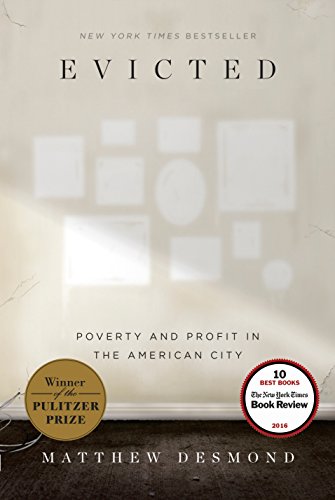
Evicted follows families in Milwaukee as each struggles to keep a roof over their heads. The book examines poverty and economic exploitation while offering ideas for addressing a devastating problem in twenty-first-century America.
Urban Poverty Uncovered

This tailored book on urban poverty provides an in-depth exploration of the complex dynamics shaping hardships in city environments. It offers a personalized framework that examines systemic challenges such as housing instability, social inequality, and community resilience, adjusting to your specific urban context or professional focus. Methodologies covered include qualitative case studies, policy analysis, and community engagement strategies, enabling you to understand nuanced social structures and intervention outcomes. The tailored approach cuts through generic advice to fit your context, emphasizing real-world applications of urban poverty research and fostering insights into grassroots solutions and institutional responses.
3. Wealth, Poverty and Politics
Recommended by The Washington Times
“A calmly phrased but damning indictment of perhaps the world's most rhetorical blunt political instrument: class hatred.” (from Amazon)

Wealth, Poverty and Politics argues that political and ideological struggles have confused public understanding of income inequality. The book emphasizes wealth production factors such as geography, demography and culture rather than only distribution.
4. The Privileged Poor
Recommended by Sydette @ Ord Camp in
Civic Media Innovation Fellow at Annenberg Lab
“This is always a great piece to read also an amazing book” (from X)

The Privileged Poor examines why disadvantaged students struggle at elite colleges and what schools can do differently. The book documents how university policies and cultures can deepen existing inequalities, especially for students from troubled public high schools.
5. Poorly Understood

Poorly Understood addresses widespread myths, stereotypes and misperceptions about poverty in America. The book questions whether hard work necessarily leads to economic well-being and whether the causes of poverty are largely beyond individual control.
Education Divide

This personalized book explores the socioeconomic barriers that influence higher education access, focusing on how poverty shapes college opportunities. It provides a tailored framework analyzing systemic inequalities, financial obstacles, and institutional policies that affect marginalized students. By integrating educational theory with socioeconomic data, it addresses the nuanced challenges specific to various demographics and regions. The book offers a methodical approach to understanding the interplay between poverty and education, presenting strategies for overcoming access gaps. This tailored approach cuts through generic advice, fitting your specific context to illuminate pathways for enhancing college access among underprivileged populations.
6. The Prosperity Paradox
Recommended by Marc Alain Boucicault in
Economist and ecosystem builder
““The Prosperity Paradox: How Innovation Can Lift Nations Out of Poverty.” What an amazing book! I am still reading through it but every page is provoking a pulse of AMEN! EVERY public/private decision maker should read this book! Especially in Haiti @claychristensen Thank u!” (from X)

The Prosperity Paradox examines why many investments in economic development fail to create sustainable prosperity. The book identifies limits of top-down development models and offers a framework based on entrepreneurship and market-creating innovation.
7. Poverty Safari
Recommended by Andrew Adonis
Labour peer and former UK Transport Secretary
“George Orwell would have loved this book. It echoes Down and Out in London and Paris and The Road to Wigan Pier. It is heartrending in its life story and its account of family breakdown and poverty. But by the end there is not a scintilla of self-pity and a huge amount of optimism. It made me see the country and its social condition in a new light.” (from Amazon)

Poverty Safari is part memoir and part polemic about extreme poverty in modern Britain and its lasting stresses. The book argues that both the political left and right misunderstand poverty as it is lived, and connects poverty to tribalism and feelings of being left behind.
8. Maid
Recommended by Barack Obama
Summer Reading List (2019)
“A single mother's personal, unflinching look at America's class divide, a description of the tightrope many families walk just to get by, and a reminder of the dignity of all work.” (from Amazon)

Maid is a memoir about working as a housekeeper to make ends meet while raising a daughter and taking classes online. It describes living on food stamps and WIC coupons and the stigma faced by the working poor. It also explores the lives of the upper-middle-class clients being served.
9. When Helping Hurts
Recommended by Ronald Sider
President, Evangelicals for Social Action
“What an opportunity evangelicals have to make a difference in our world through the church. Corbett and Fikkert build on the growing momentum of holistic witness that's sweeping our country and globe and are eminently qualified and positioned to take motivated kingdom citizens on a Christ-centered and comprehensive journey that will pay huge dividends for impoverished people and for Christians in our broken world.” (from Amazon)

When Helping Hurts shows how some poverty alleviation efforts that fail to consider poverty's complexities have done more harm than good. The book treats poverty as more than a lack of material resources and focuses on both North American and Majority World contexts.
10. Give People Money
Recommended by Albert Wenger
Managing Partner at Union Square Ventures
“A fantastic introduction to UBI that's both thorough and accessible.” (from Amazon)

Give People Money takes a global look at universal basic income, a stipend given to every citizen. The book explores the policy's potential and challenges, including contradictory aims, costs and the belief that no one should get something for nothing.
Enjoying these picks?
The best Poverty books and more, in your inbox each week. No account needed.
Conclusion
Readers who want an immersive story of one child and family should start with Invisible Child. Readers focused on housing should start with Evicted. Readers drawn to economic debate about inequality may prefer Wealth, Poverty and Politics. Readers interested in higher education should choose The Privileged Poor. Readers who want myths about American poverty tested against research can begin with Poorly Understood. Readers interested in development in poor countries can turn to The Prosperity Paradox. Readers curious about poverty in modern Britain should pick Poverty Safari. Readers who want a first-person account of low-wage work can choose Maid. Readers involved in charitable efforts may begin with When Helping Hurts. Readers weighing cash-based policy can start with Give People Money. create a personalized Poverty book
Frequently Asked Questions
I'm overwhelmed by choice – which book should I start with?
Start with Invisible Child for a powerful, human-focused story of urban poverty that sets the stage for understanding broader issues. It's vivid and deeply reported, giving you a strong emotional and factual foundation.
Are these books too advanced for someone new to poverty studies?
Not at all. Many of these books, like Maid and Poverty Safari, are accessible memoirs and narratives that introduce poverty's realities without jargon, making them great for newcomers seeking empathy and understanding.
What's the best order to read these books?
Begin with personal narratives like Invisible Child and Maid to connect emotionally. Then explore analytical works such as Wealth, Poverty and Politics and Poorly Understood. Finally, dive into policy and solutions-focused books like The Prosperity Paradox and Give People Money.
Do I really need to read all of these, or can I just pick one?
Each book offers unique insights, but reading multiple titles will give you a richer, multifaceted understanding of poverty. However, feel free to focus on the books most aligned with your interests or challenges.
Which books focus more on theory vs. practical application?
Wealth, Poverty and Politics and Poorly Understood lean toward theory and analysis, while When Helping Hurts and The Prosperity Paradox emphasize practical frameworks for poverty alleviation and innovation.
How can I apply these general poverty insights to my specific context or profession?
Great question! While these expert books provide broad knowledge, you can create a personalized Poverty book tailored to your profession, education level, and goals. This way, you get focused insights that complement the expert recommendations and help you take relevant action.
Help fellow book lovers discover great books, share this curated list with others!
Related Articles You May Like
Explore more curated book recommendations