"Predictive Analytics For Dummies" by Anasse Bari, Mohamed Chaouchi, Tommy Jung made it to BookAuthority's Best Predictive Modeling eBooks of All Time!
8 Predictive Modeling Books That Separate Experts from Amateurs
Kirk Borne, Principal Data Scientist at Booz Allen, and other thought leaders share top Predictive Modeling Books for deep expertise.
Updated on June 26, 2025·We may earn commissions for purchases made via this page
8 of 8 books have Kindle versions
We're launchingLaunching on Product Hunt today 🎉We just launchedJust launched on Product Hunt 🎉
Modelpeers, from the BookAuthority teamFrom the BookAuthority team: Modelpeers, a free way to follow AI models and agents like you follow people. We'd love your support.
What if you could unlock the secrets behind accurate predictions in business, finance, and healthcare? Predictive modeling is no longer a luxury—it's a core skill reshaping industries and powering smarter decisions. As data floods every sector, understanding how to build reliable models sets you apart in this competitive landscape.
Kirk Borne, Principal Data Scientist at Booz Allen and a noted data science influencer, has championed several of these books. His deep experience in big data and analytics underscores the practical value these works offer, blending theory with real-world applications that have shaped his own career.
While these expert-curated books provide proven frameworks, readers seeking content tailored to their specific background, skill level, and goals might consider creating a personalized Predictive Modeling book that builds on these insights to accelerate learning and application.
Kirk Borne, Principal Data Scientist at Booz Allen and a top influencer in data science, highlights this book as his top pick for predictive modeling. He points to its wealth of practical insights and examples that have deepened his understanding of model building. "This is the best book on the subject," he says, underscoring its value for anyone serious about mastering predictive analytics.
Max Kuhn, Ph.D., is a Senior Director in Research & Development at Pfizer in Groton, CT. He has been applying predictive models in the pharmaceutical and diagnostic industries for over 15 years. Dr. Kuhn has made many contributions to statistical computing. He is the author of eight R packages for techniques in machine learning (notably caret) and reproducible research and is an Associate Editor for the Journal of Statistical Software. Kjell Johnson, Ph.D, has over 15 years of predictive modeling and statistical consulting experience in pharmaceutical research and development and other industries. He is a former Director of Statistics at Pfizer R&D, and is a co-founder of Arbor Analytics, a firm that specializes in predictive modeling and statistical consulting and currently serves the pharmaceutical, medical devices, finance, and insurance industries. His scholarly work centers on the application and development of statistical methodology and learning algorithms. Drs. Kuhn and Johnson have taught numerous short-courses on predictive modeling for organizations such as useR!, Predictive Analytics World, Eastern North American Region, American Chemical Society, Society for Biomolecular Screening, Deming Conference, and individual corporations.
2018·613 pages·Predictive Modeling, Data Science, Statistics, Machine Learning, Regression
Max Kuhn and Kjell Johnson bring their extensive pharmaceutical and statistical expertise to demystify the predictive modeling process. You’ll gain practical skills ranging from data preprocessing and splitting to advanced model tuning, all illustrated with real-world examples and R code. The book tackles common challenges like class imbalance and predictor selection, making it a solid resource for both newcomers with some R experience and practitioners refining their techniques. Its chapter problem sets reinforce concepts, ensuring you don’t just read but apply the methods effectively.
Kirk Borne, Principal Data Scientist at Booz Allen and a top influencer in data science, highlights this book as a crucial pathway for mastering Python in algorithmic trading. His endorsement reflects his extensive expertise in big data and predictive analytics, underscoring how Stefan Jansen's work bridges complex machine learning techniques with practical trading strategies. This book clearly helped expand Borne's view on integrating diverse data sources and advanced models to enhance trading decisions.
“A pathway to learning Python for algorithmic trading: Big Data, Data Science, AI, Machine Learning, Coding, Time Series, Predictive Analytics, and Statistics.” (from X)
Stefan Jansen is the founder and CEO of Applied AI. He advises Fortune 500 companies, investment firms, and startups across industries on data & AI strategy, building data science teams, and developing end-to-end machine learning solutions for a broad range of business problems. Before his current venture, he was a partner and managing director at an international investment firm, where he built the predictive analytics and investment research practice. He was also a senior executive at a global fintech company with operations in 15 markets, advised Central Banks in emerging markets, and consulted for the World Bank. He holds Master's degrees in Computer Science from Georgia Tech and in Economics from Harvard and Free University Berlin, and a CFA Charter. He has worked in six languages across Europe, Asia, and the Americas and taught data science at Datacamp and General Assembly.
What happens when a seasoned investment strategist with deep machine learning expertise tackles algorithmic trading? Stefan Jansen, drawing on his diverse background from global fintech leadership to advising central banks, offers a detailed guide to designing and backtesting systematic trading strategies using Python. You'll learn to harness a variety of data sources—market, fundamental, and alternative—and apply models ranging from linear regressions to deep learning techniques to extract actionable trading signals. Chapter examples cover everything from feature engineering alpha factors to portfolio risk optimization, making it ideal if you're ready to build hands-on predictive models for real-world financial markets.
This AI-created book on predictive modeling is crafted based on your background, interests, and goals. You share your existing knowledge and specific topics you want to explore, and the book is created to cover exactly what you need. Personalizing the content helps focus on areas most relevant to your experience, making complex predictive techniques clearer and more approachable. This tailored approach saves time by highlighting what matters most to you in mastering predictive modeling.
TailoredRead AI creates personalized nonfiction books that adapt to your unique background, goals, and interests. Instead of reading generic content, you get a custom book written specifically for your profession, experience level, and learning objectives. Whether you're a beginner looking for fundamentals or an expert seeking advanced insights, TailoredRead crafts a book that speaks directly to you. Learn more.
2026·50-300 pages·Predictive Modeling, Data Preparation, Feature Engineering, Model Evaluation, Algorithm Selection
This tailored book explores predictive modeling through a lens finely tuned to your unique background and objectives. It examines core concepts, algorithm selection, feature engineering, and model evaluation, all adapted to fit your interests and skill level. By focusing on your specific goals, this personalized guide reveals the nuances of predictive techniques that matter most to you, making complex ideas accessible and immediately relevant.
The book covers a broad spectrum of predictive modeling topics, from foundational principles to advanced practices, integrating statistical understanding with practical applications. This personalized approach ensures you gain insights that resonate with your experience and aspirations, making your learning journey both efficient and deeply engaging.
Frank E. Harrell Jr., Professor of Biostatistics and Chair at Vanderbilt University School of Medicine, leverages his extensive experience developing predictive models and statistical methods in medical research to craft this in-depth guide. His role as a consultant to the FDA and pharmaceutical industry and recognition by the American Statistical Association highlight his authority on regression modeling strategies. This book reflects his commitment to teaching graduate students and researchers how to tackle complex, real-world data challenges with sophisticated statistical tools and thoughtful methodology.
Frank E. Harrell, Jr. is Professor of Biostatistics and Chair, Department of Biostatistics, Vanderbilt University School of Medicine, Nashville. He has developed numerous methods for predictive modeling, quantifying predictive accuracy and model validation and has published numerous predictive models and articles on applied statistics, medical research and clinical trials. He is on the editorial board for several biomedical and methodologic journals. He is a Fellow of the American Statistical Association (ASA) and a consultant to the U.S. Food and Drug Administration and to the pharmaceutical industry. He teaches a graduate course in regression modeling strategies and a course in biostatistics for medical researchers. In 2014 he was chosen to receive the WJ Dixon Award for Excellence in Statistical Consulting by the ASA.
Frank E. Harrell Jr. brings decades of biostatistics expertise to this book, focusing on the complexities of developing multivariable regression models with real-world data rather than simplified textbook cases. You learn how to approach predictive modeling as both an art and a science, navigating issues like model building, validation, and interpretation through detailed case studies and R software tools. The book covers a wide range of regression techniques including linear, logistic, ordinal, and survival analysis, making it especially useful if you're dealing with medical or longitudinal data. If you want to deepen your statistical modeling skills beyond basic regression, this text challenges you to think critically about strategy and robustness in applied settings.
John D. Kelleher, academic leader at Technological University Dublin and author of notable MIT Press titles, brings his expertise in machine learning and data science to this work. His role overseeing research in information and communication technologies uniquely positions him to bridge theoretical knowledge with practical business analytics. This book reflects his commitment to making machine learning accessible and relevant, guiding you through predictive data analytics with clarity and depth.
John D. Kelleher, Brian Mac Namee, Aoife D'Arcy(you?)·
About the Author
John D. Kelleher is Academic Leader of the Information, Communication, and Entertainment Research Institute at Technological University Dublin. He is the coauthor of Data Science and the author of Deep Learning, both in the MIT Press Essential Knowledge series.
When John D. Kelleher first explored the intersection of machine learning and business analytics, he recognized a gap between technical theory and practical application. This book equips you with a solid understanding of machine learning algorithms tailored for predictive data analytics, blending clear explanations with worked examples and case studies. You'll learn how predictive models can address real-world problems like risk assessment and customer behavior prediction. The inclusion of new chapters on deep learning, unsupervised, and reinforcement learning broadens your perspective beyond basics, making it especially useful if you're seeking to apply machine learning in a business context.
Brett Lantz, a sociologist turned data scientist with over ten years of experience, wrote this book to share his passion for uncovering insights through machine learning. Known for his teaching on DataCamp and speaking at global conferences, he draws from his unique background studying social networks to present a practical guide focused on R and tidyverse. His enthusiasm for diverse applications—from sports analytics to autonomous vehicles—shines through, making this book a valuable resource for those eager to build robust machine learning skills in a real-world context.
Brett Lantz (DataSpelunking) has spent more than 10 years using innovative data methods to understand human behavior. A sociologist by training, Brett was first captivated by machine learning during research on a large database of teenagers' social network profiles. Brett is a DataCamp instructor and a frequent speaker at machine learning conferences and workshops around the world. He is known to geek out about data science applications for sports, autonomous vehicles, foreign language learning, and fashion, among many other subjects, and hopes to one day blog about these subjects at Data Spelunking, a website dedicated to sharing knowledge about the search for insight in data.
Brett Lantz brings over a decade of experience blending sociology with data science to this detailed guide on machine learning using R. You’ll learn hands-on how to prepare and transform data with tidyverse tools, build models from decision trees to neural networks, and evaluate their performance beyond simple accuracy. The book includes new chapters on advanced data challenges like high-dimensionality and imbalanced datasets, plus practical insights into big data technologies such as Spark and TensorFlow. If you want to deepen your machine learning skills with clear examples and real-world tools, this book offers a thorough path — though it’s best suited for readers ready to engage deeply rather than casual learners.
This AI-created book on predictive modeling is tailored to your skill level and learning objectives. By focusing on your background and the specific areas you want to develop, it presents a clear, practical 30-day plan to build your modeling skills. Instead of a one-size-fits-all approach, this personalized book helps you navigate complex topics with exercises that match your pace and interests. It's designed to make learning predictive modeling efficient and engaging, delivering exactly what you need to progress.
TailoredRead AI creates personalized nonfiction books that adapt to your unique background, goals, and interests. Instead of reading generic content, you get a custom book written specifically for your profession, experience level, and learning objectives. Whether you're a beginner looking for fundamentals or an expert seeking advanced insights, TailoredRead crafts a book that speaks directly to you. Learn more.
2026·50-300 pages·Predictive Modeling, Data Preparation, Feature Engineering, Model Evaluation, Algorithm Selection
This tailored book offers a focused 30-day journey into predictive modeling, designed to match your background and learning goals. It explores core concepts of predictive analytics through practical exercises and incremental challenges that build your skills rapidly. By concentrating on your specific interests, the book helps you grasp essential modeling techniques and data preparation methods, bridging theoretical knowledge with hands-on application. Each chapter focuses on actionable learning activities that forge a clear path through complex topics like feature selection, model evaluation, and algorithm tuning. This personalized approach ensures you engage deeply with the material, accelerating your progress while addressing your unique needs in predictive modeling.
Anasse Bari, Ph.D., is a data science expert and university professor with years of experience in predictive modeling and data analytics. Recognized as Computer Science Professor of the Year in 2014 and an advisor to major organizations like the World Bank Group and leading Wall Street firms, Bari brings authoritative expertise to this book. His academic and practical background informs a guide designed to make predictive analytics approachable and useful for professionals eager to leverage big data effectively.
Anasse Bari, Ph.D. is a data science expert and a university professor who has many years of predictive modeling and data analytics experience. He was previously a professor of computer science at George Washington University, where he was awarded the Computer Science Professor of the Year award in 2014 and recognized by the Carnegie Foundation for his nomination for the United States Professor of the Year Award. He has worked closely with IT leadership of the World Bank Group in Washington DC, leading enterprise data analytics projects. He has advised leading Wall Street firms on their data strategy and has played the role of AI advisor for major international organizations in Switzerland. Prof. Bari is a renowned speaker, and his research has focused on predictive analytics, swarm intelligence, and information retrieval.
Drawing from his extensive background in data science and university-level teaching, Anasse Bari, alongside Mohamed Chaouchi and Tommy Jung, presents a clear, approachable guide to predictive analytics. You’ll learn how to harness big data, understand key algorithms like k-means clustering, and build predictive models tailored to real business goals. Practical chapters focus on preparing your data, defining objectives, and using available tools to translate complex analytics into actionable insights. This book suits those stepping into predictive analytics or seeking to solidify foundational skills without getting lost in overly technical jargon.
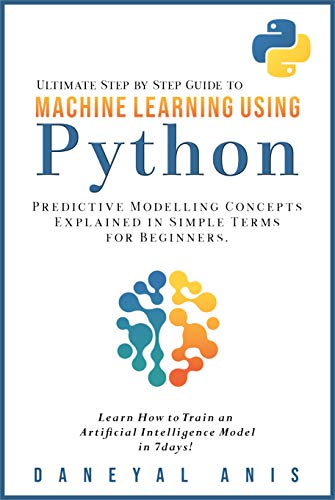
Daneyal Anis is a seasoned data scientist and project manager with over 20 years of global experience leading technology and data initiatives. His expertise in simplifying complex concepts shines through in this guide, which aims to make machine learning accessible to beginners by using clear explanations and visual examples. Daneyal’s background ensures you’ll receive practical insights grounded in real-world applications, making this book a solid starting point if you want to develop predictive modeling skills using Python.
Daneyal Anis is an experienced data scientist and project manager with 20 plus years experience in various industries. During this time he has led several business transformation, technology and data science projects from inception to completion in North America, Europe and Asia. Daneyal believes in articulating complex concepts in simple terms with visual examples - so it is easy for beginners to learn and grasp new concepts. Daneyal lives with his wife and two kids in Canada and is an avid traveler and sports enthusiast.
Daneyal Anis is an experienced data scientist whose two decades of leading data and technology projects across multiple continents inform this approachable guide to machine learning with Python. You’ll find the book breaks down complex ideas like regression, decision trees, and clustering into visual, easy-to-understand steps, making it ideal if you’re just starting out. The book also covers essential Python libraries and offers practical code samples so you can build predictive models from scratch confidently. If you want a gentle but thorough introduction that connects theory with applied data science, this book will fit your needs well.
Sebastian Raschka, PhD, brings over a decade of experience bridging academia and industry as an LLM research engineer and statistics professor. His deep focus on practical, code-driven AI implementations informs this book, making it a valuable resource for anyone eager to master machine learning techniques using Python.
Sebastian Raschka, PhD is an LLM Research Engineer with over a decade of experience in artificial intelligence. His work bridges academia and industry, including roles as senior engineering staff at an AI company and a statistics professor. Sebastian specializes in LLMs and the development of high-performance AI systems, with a deep focus on practical, code-driven implementations.
Sebastian Raschka brings his extensive expertise as an AI researcher and statistics professor to this book, which serves as a hands-on guide to applying Python for machine learning challenges. You’ll explore diverse models from neural networks to clustering, learning how to preprocess data effectively and optimize algorithms with libraries like scikit-learn and Theano. The book emphasizes framing the right questions for your data and building clean, efficient Python code to extract meaningful insights. Whether you’re starting out or expanding your data science skills, this resource delivers practical understanding of predictive analytics through clear examples and focused Python applications.
The best Predictive Modeling books and more, in your inbox each week. No account needed.
Conclusion
These 8 books reveal key themes: the balance of rigorous statistical methods with hands-on coding, the importance of domain-specific applications like finance, and the necessity of starting with solid fundamentals before tackling advanced models. If you're navigating your first predictive project, begin with approachable guides like Predictive Analytics For Dummies or Ultimate Step by Step Guide to Machine Learning Using Python. For those ready to refine expertise, pair Applied Predictive Modeling with Regression Modeling Strategies to deepen your statistical and tuning skills.
Rapid implementers keen on Python will find Python Machine Learning invaluable, while professionals targeting finance should explore Machine Learning for Algorithmic Trading.
Alternatively, you can create a personalized Predictive Modeling book to bridge the gap between general principles and your specific situation. These books can help you accelerate your learning journey and build predictive models that truly deliver.
Frequently Asked Questions
I'm overwhelmed by choice – which book should I start with?
Start with Predictive Analytics For Dummies for a solid introduction. It eases you into predictive modeling without jargon, preparing you for more advanced texts like Applied Predictive Modeling.
Are these books too advanced for someone new to Predictive Modeling?
Not at all. Books like Ultimate Step by Step Guide to Machine Learning Using Python are designed for beginners, while others build on that foundation for more experienced readers.
What's the best order to read these books?
Begin with foundational texts to grasp core concepts, then explore specialized books like Machine Learning for Algorithmic Trading or Regression Modeling Strategies as your skills mature.
Do these books assume I already have experience in Predictive Modeling?
Some do, such as Applied Predictive Modeling, which expects familiarity with R and statistical concepts. Others, like Predictive Analytics For Dummies, welcome beginners.
Which book gives the most actionable advice I can use right away?
Applied Predictive Modeling and Machine Learning with R offer practical examples and code that help you apply concepts immediately in real projects.
Can I get tailored Predictive Modeling advice without reading all these books?
Yes! While these books are valuable, you can create a personalized Predictive Modeling book that targets your specific goals and experience, blending expert insights with your unique needs.
📚 Love this book list?
Help fellow book lovers discover great books, share this curated list with others!