What if the information you trust the most is carefully crafted to shape your beliefs without your awareness? Propaganda, far from being a relic of the past, is alive and well—woven into the fabric of modern media, politics, and social discourse. Understanding these forces is more urgent than ever as digital platforms amplify messages that can divide, manipulate, and mislead.
Experts like Parker Molloy, an editor-at-large with deep media insight, Emily Bell, professor and director at Columbia Journalism, and Cass Sunstein, a Harvard professor with a keen eye on political communication, have highlighted key works that unravel the complexities behind propaganda. Their perspectives reveal how propaganda operates both overtly and subtly across different mediums and political landscapes.
While these expert-curated books provide proven frameworks, readers seeking content tailored to their specific background, interests, or goals might consider creating a personalized Propaganda book that builds on these insights, offering a tailored roadmap to decode and resist the propaganda shaping your world.
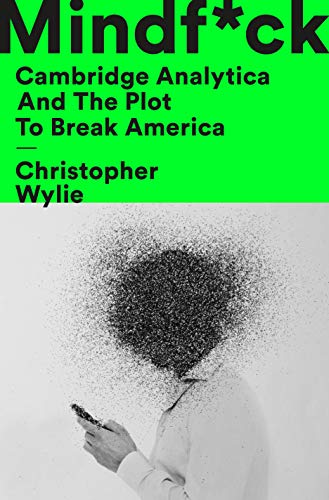
The New York Times, a leading US newspaper and book reviewer, highlights how Christopher Wylie reveals the frightening depth of Cambridge Analytica's influence by detailing the creation of divisive Facebook pages targeting vulnerable individuals. This insider perspective came after Wylie’s critical role in the data operation, offering a firsthand look that reshaped understanding of digital propaganda's power. The book challenged many assumptions about online political influence and helped readers grasp the real stakes behind data misuse. Echoing this, The Washington Post notes how the book exposes the convergence of digital tactics and political agendas that threaten democratic institutions.
“Wylie covers plenty of ground, explaining in illuminating and often scary detail how Cambridge Analytica exploited the data to create Facebook pages that would needle ‘neurotic, conspiratorial citizens,’ propagating an outraged solidarity.”
Christopher Wylie has been called 'the millennials’ first great whistleblower' and 'a pink-haired, nose-ringed oracle sent from the future.' He is known for his role in setting up—and then taking down—Cambridge Analytica. His revelations exposing the rampant misuse of data rocked Silicon Valley and led to some of the largest multinational investigations into data crime ever. Born in British Columbia, Canada, he studied law at the London School of Economics before moving into cultural data science and fashion trend forecasting. He lives in London, England.
2019·288 pages·Propaganda, Brexit, Data Manipulation, Political Campaigns, Social Media
When Christopher Wylie first discovered the extent of data manipulation behind major political campaigns, he felt compelled to reveal an unsettling truth about digital propaganda. Drawing from his unique position at Cambridge Analytica, Wylie exposes how psychological profiling and mass data harvesting were weaponized to influence elections, particularly the 2016 U.S. presidential race and Brexit referendum. You’ll gain insight into the mechanics of digital influence operations, including how targeted Facebook campaigns exploited societal divisions. This book suits anyone interested in the intersection of technology, politics, and media manipulation — especially those seeking to understand the vulnerabilities of modern democracies.
Best for exploring propaganda's psychological roots
Audiobook version available
Kirkus Reviews, an influential voice in literary criticism, highlights the unsettling depth of Jacques Ellul's investigation into propaganda. Their endorsement, "Ellul's work is brilliant, thoroughgoing, frightening," reflects the book’s impact on understanding how propaganda molds public attitudes. This perspective is invaluable if you want to grasp propaganda beyond surface politics, revealing the persistent and often hidden power shaping opinions.
Jacques Ellul (1912-1994) was a French sociologist and author known for his works on propaganda, technology, and ethics. He was a Professor Emeritus of Law and of the History and Sociology of Institutions at the University of Bordeaux.
When Jacques Ellul first realized how deeply propaganda infiltrates societal beliefs, he drew from decades as a French sociologist to dissect its mechanisms. This book unpacks how propaganda shapes attitudes through emotional appeal, repetition, and societal pressure rather than mere facts, with chapters analyzing its role in fascism and mass communication. You'll gain a nuanced understanding of propaganda's pervasive influence beyond politics, relevant to media literacy and critical thinking today. If you're interested in exploring the subtle forces behind public opinion and propaganda’s psychological grip, this book offers a thorough exploration, though it’s less suited for those seeking quick tactics or modern case studies.
This AI-created book on propaganda mastery is tailored to your background, experience, and goals. You share which propaganda techniques you want to focus on and your level of familiarity, and the book is crafted to deliver precisely the insights and strategies you need. Personalization makes sense here because propaganda methods vary widely by context and purpose, so a one-size-fits-all approach often falls short. This tailored guide gives you a focused, relevant roadmap to understand and apply propaganda techniques effectively in your specific situation.
TailoredRead AI creates personalized nonfiction books that adapt to your unique background, goals, and interests. Instead of reading generic content, you get a custom book written specifically for your profession, experience level, and learning objectives. Whether you're a beginner looking for fundamentals or an expert seeking advanced insights, TailoredRead crafts a book that speaks directly to you. Learn more.
2026·50-300 pages·Propaganda, Propaganda Fundamentals, Psychological Tactics, Media Manipulation, Political Communication
This personalized book provides a tailored framework for mastering propaganda techniques suited to your unique interests and experience. It focuses on dissecting the mechanics of persuasion, media manipulation, psychological tactics, and political communication, offering nuanced strategies that fit your specific context. By cutting through generalized advice, the book emphasizes actionable approaches to recognize, analyze, and counteract propaganda in diverse environments—from digital media to traditional platforms. It explores how propaganda shapes public opinion and decision-making, enabling you to develop custom strategies that align with your goals and background. This tailored approach ensures relevance and efficiency in mastering complex propaganda dynamics.
Bernie's Tweets, a seasoned CEO and board member with experience across multiple industries, highlights this book’s importance in understanding how fear was weaponised during the Covid-19 pandemic. He points to the controversy around the book, quoting it as “an outrageously dumb book selling conspiracy hooey,” only to acknowledge its accuracy in revealing uncomfortable truths. This perspective offers a sharp critique that challenges mainstream narratives and invites you to question official accounts. Meanwhile, Neil Oliver, broadcaster and author, reflects on the societal damage wrought by sustained fear, emphasizing the book’s role in airing the voices of those most affected and its historical examination of fear as a tool of control.
“A STATE OF FEAR - Described by @DAaronovitch as “an outrageously dumb book selling conspiracy hooey” Turns out Laura’s best seller was absolutely correct! It’s time you wrote a new article David, or does that conflict with your commitment to the State?” (from X)
Laura Dodsworth is an author, journalist, photographer, and commentator, described as a ‘latter-day punchy Cassandra’ and a ‘Slayer of Taboos’. Her previous books include 'Bare Reality: 100 women, their breasts, their stories', 'Manhood: The Bare Reality', and 'Womanhood: The Bare Reality', which have attracted worldwide media coverage and excellent reviews. Laura and the creation of 'Womanhood' were the subject of a documentary for Channel 4, '100 Vaginas', which received 5-star reviews and has been broadcast around the world.
When Laura Dodsworth first reconsidered the widespread narratives of fear during the Covid-19 pandemic, she challenged prevailing beliefs about government messaging and public psychology. Drawing from interviews with psychologists, politicians, and ordinary citizens, you’ll gain insight into how behavioural science and media tactics intertwined to amplify fear, affecting mental health and social cohesion. Chapters explore the deliberate use of fear as a controlling mechanism and its long-term societal impacts, making this book particularly relevant if you want to understand the intersection of public policy and psychological influence. It’s a thoughtful read for anyone questioning pandemic narratives or interested in political communication strategies.
Best for analyzing media-driven political disinformation
Audiobook version available
Parker Molloy, an editor-at-large with deep insights into media and politics, highlighted this book during a time of intense scrutiny of propaganda's role in shaping public opinion. She remarked, "@catthekin @elliotforhan @mmfa @nandoodles @GoAngelo Really great book, for sure," reflecting its impact on her understanding of media manipulation. This book challenged her assumptions about the mechanisms behind disinformation, especially in right-wing media ecosystems. Alongside her, Emily Bell, professor and director at Columbia Journalism, underscored the book's relevance by inviting audiences to engage with Yochai Benkler's research, emphasizing its critical place in discussions about networked propaganda.
Yochai Benkler is the Berkman Professor of Entrepreneurial Legal Studies at Harvard Law School, and faculty co-director of the Berkman Klein Center for Internet and Society at Harvard University. Robert Faris is the Research Director of the Berkman Klein Center for Internet and Society at Harvard University. Hal Roberts is a Fellow at the Berkman Klein Center for Internet & Society at Harvard University.
2018·474 pages·Propaganda, Radicalism, Media Analysis, Political Communication, Disinformation
When Yochai Benkler and his colleagues set out to understand the role of media ecosystems in American politics, they uncovered how entrenched institutional and cultural patterns have fueled a distinct propaganda feedback loop within right-wing media. You’ll learn to differentiate the media dynamics that marginalize centrist voices and amplify radicalization, supported by extensive data analysis and case studies on immigration, Clinton scandals, and the Trump-Russia investigation. This book is particularly useful if you want to grasp why certain media environments are more vulnerable to disinformation and how technological changes since the 1970s have shaped political communication. If you’re aiming to dissect the architecture of political propaganda rather than just its symptoms, this book provides a rigorous foundation.
Andrew Revkin, a seasoned environmental journalist at the Earth Institute known for advancing communication progress, highlighted the importance of this book during his #ThrivingOnline webcast, urging audiences to explore Renee Hobbs' insights on propaganda literacy. His engagement reflects the urgency of understanding digital media's influence amid today's nonstop information flow. Revkin's recommendation underscores how Hobbs' work provides essential tools to question and decode pervasive media messages. Alongside him, Howard Rheingold, author and former Stanford lecturer, emphasizes the book's role in equipping both adults and children to confront computational propaganda, framing media literacy as crucial for sustaining democratic society.
“NEW📣 Join my #ThrivingOnline @earthinstitute webcast Monday 12/7, 1pm US ET as @reneehobbs of @MedEduLab walks us through her amazing new book & free online learning hub on #Propaganda literacy! #sustcomm” (from X)
Renee Hobbs is an internationally-recognized authority on digital and media literacy education. She founded the Harrington School of Communication and Media at the University of Rhode Island and is Director of its Media Education Lab. Hobbs co-founded the NAMLE (National Association for Media Literacy Education), and is creator of the first national teacher education program in media literacy at the Harvard Graduate School of Education. She won the Media Literacy Education Meritorious Service Award from NAMLE in 2015, is the author of 10 books, and over 150 scholarly articles on digital and media literacy. Her book, Mind Over Media: Propaganda Education in a Digital Age, won the 2021 PROSE Awards of Excellence from the American Association of Publishers (AAP) in Social Sciences and Education Practice & Theory.
2020·368 pages·Propaganda, Media Literacy, Digital Media, Critical Thinking, Education
When Renee Hobbs first realized how deeply propaganda permeates digital culture, she set out to equip learners with the skills to critically navigate this complex media landscape. Drawing from her extensive background founding the Harrington School of Communication and Media and creating national media literacy programs, Hobbs blends theory with concrete classroom activities that sharpen your ability to analyze and create media messages. You’ll explore topics like computational propaganda, fake news, and content marketing through global perspectives and student work examples, which make abstract concepts tangible. This book suits educators, students, and anyone seeking to understand and resist manipulative digital messaging rather than passively consume content.
AAP 2021 PROSE Award for Excellence in Social Sciences
This AI-created book on propaganda mastery is tailored to your experience level and learning goals. You share your background and specific interests, and the book focuses on step-by-step daily actions to build your skill in decoding propaganda effectively. Since propaganda tactics vary widely, having a personalized guide helps you concentrate on the techniques most relevant to your context. This approach offers a practical way to develop critical media literacy without wading through generic advice that doesn't fit your needs.
TailoredRead AI creates personalized nonfiction books that adapt to your unique background, goals, and interests. Instead of reading generic content, you get a custom book written specifically for your profession, experience level, and learning objectives. Whether you're a beginner looking for fundamentals or an expert seeking advanced insights, TailoredRead crafts a book that speaks directly to you. Learn more.
2026·50-300 pages·Propaganda, Propaganda Analysis, Critical Thinking, Media Literacy, Psychological Influence
This personalized book provides a tailored approach to mastering propaganda analysis through a structured 30-day plan of daily actions. It focuses on practical skill-building to help you decode persuasive messaging and recognize subtle influence tactics across media sources. By emphasizing a personalized framework, the book cuts through generic advice, offering strategies that match your specific background and goals. It examines psychological principles behind propaganda, techniques for critical evaluation, and real-world applications for assessing political and social discourse. Readers gain a step-by-step roadmap designed to enhance analytical skills efficiently, making complex propaganda concepts accessible and actionable within a month.
Best for insights into propaganda's impact on democracy
Audiobook version available
Jonathan Wolff, author of An Introduction to Moral Philosophy, highlights this book amid political philosophers for its nuanced analysis of propaganda's role in democracy. After witnessing the subtle distortions in political discourse today, he praised it: "Stanley has produced a highly stimulating book that brings the issue of propaganda to the attention of political philosophers and draws on an impressive range of philosophical and social scientific sources to illustrate his analysis and provide support for his claims." This work reshaped Wolff's thinking about how language can manipulate democratic ideals. Similarly, Michiko Kakutani recognized its significance, awarding it the 2016 PROSE Award in Philosophy.
“Stanley has produced a highly stimulating book that brings the issue of propaganda to the attention of political philosophers and draws on an impressive range of philosophical and social scientific sources to illustrate his analysis and provide support for his claims. It is bound to be widely discussed and debated.”
Jason Stanley is the Jacob Urowsky Professor of Philosophy at Yale University. He is the author of Knowledge and Practical Interests, Language in Context, and Know How.
Jason Stanley, a Yale philosophy professor specializing in language and political theory, wrote this book to expose how propaganda subtly undermines democracy, particularly its ideals of equality and open deliberation. You learn to identify how democratic vocabulary can be twisted to mask undemocratic realities, with historical examples like early twentieth-century US education reforms illustrating these tactics. The book explores intersections with critical race theory and psychology to reveal how propaganda perpetuates inequalities, especially racial injustices in America. If you want to understand the mechanisms behind modern political manipulation and defend democratic values, this book offers a rigorous, thought-provoking analysis.
Trevor Ncube, a seasoned media executive and keynote speaker, found this book indispensable amid his extensive experience with media and communication. He remarked, "Having read most of Robin Sharma's books I find this to be an excellent reminder of his powerful ide... Ryan Holiday's book is a must read for anybody in media, PR and communication." The insights into how blogs and online outlets manipulate narratives helped him better understand the forces shaping public opinion in his work. Fellow commentator Dave Chappelle also noted the book's accessibility and its unflinching exposure of everyday media manipulation, emphasizing its relevance for anyone wanting to see behind the headlines.
“Having read most of Robin Sharma's books I find this to be an excellent reminder of his powerful ide. Ryan Holiday's book is a must read for anybody in media, PR and communication.” (from X)
Ryan Holiday is a media strategist for notorious clients such as Tucker Max and Dov Charney. After dropping out of college at 19 to apprentice under Robert Greene, author of The 48 Laws of Power, he went on to advise many bestselling authors and multiplatinum musicians. He is currently the director of marketing at American Apparel, where his work is internationally known. His campaigns have been used as case studies by Twitter, YouTube, and Google and written about in AdAge, the New York Times, Gawker and Fast Company. He currently lives in New Orleans and writes at RyanHoliday.net.
2012·259 pages·Propaganda, Media Manipulation, Online Media, Public Relations, Marketing Strategy
When Ryan Holiday decided to reveal the inner workings of media manipulation, he drew directly from his experience as a marketing strategist for controversial clients like Tucker Max and Dov Charney. In this book, you get a behind-the-scenes look at how blogs and online media shape narratives, often prioritizing clicks and sensationalism over truth. Holiday breaks down the mechanics of how rumors spread and political distractions derail public discourse, with concrete examples such as the influence of outlets like Gawker and Buzzfeed. If you're involved in media, PR, or simply want to understand the forces shaping what you see online, this book will give you practical insights into the dynamics of modern propaganda.
Anthony R. Pratkanis, a social psychologist and Professor Emeritus at the University of California, Santa Cruz, brings his extensive research on persuasion and propaganda to this book. Motivated by a deep interest in how these psychological techniques influence public opinion and behavior, he co-authored this work with Elliot Aronson to shed light on the everyday use and abuse of persuasion. Their combined expertise makes this book a valuable resource for understanding the subtle, often overlooked ways propaganda operates in society.
Anthony R. Pratkanis is a renowned social psychologist and Professor Emeritus at the University of California, Santa Cruz. He has extensively researched the psychology of persuasion and propaganda, contributing significantly to the understanding of how these techniques influence public opinion and behavior. Pratkanis has published numerous articles and books on the subject, collaborating with fellow psychologist Elliot Aronson. His work emphasizes the importance of critical thinking in the face of persuasive communication.
304 pages·Propaganda, Persuasion, Social Psychology, Mass Communication, Behavioral Influence
When Anthony R. Pratkanis and Elliot Aronson challenge the conventional wisdom of persuasion, they reveal how propaganda shapes everyday decisions more than you might realize. Drawing from decades of social psychology research, the book breaks down patterns and motives behind mass persuasion, from historical propaganda techniques to modern delivery methods. You’ll uncover insights into how messages are crafted to influence beliefs and behaviors, with chapters explaining specific tactics like emotional appeals and consensus manipulation. This book suits anyone curious about the subtle forces behind public opinion, especially those wanting to recognize and resist manipulative communication.
David Shaw's entire education and career prepared him to write this book. His education includes a B.A. in Political Science and a Master's Degree with a Psychotherapy Major. Writing has always been a part of his career. Shaw retired in 2021 after forty-five years working as a fundraising and program development consultant for nonprofit organizations. Shaw helped his clients prepare compelling narratives that gained high scores on technical reviews of grant proposals. During retirement, Shaw enjoyed an entire year of waking up, feeling like every day was Saturday. Retirement gave him time to read and write articles about politics, philosophy, Zen, and comparative religion, subject areas which have always stirred his passion.
David Shaw's entire education and career prepared him to write this book. His education includes a B.A. in Political Science and a Master's Degree with a Psychotherapy Major. Writing has always been a part of his career. Shaw retired in 2021 after forty-five years working as a fundraising and program development consultant for nonprofit organizations. Shaw helped his clients prepare compelling narratives that gained high scores on technical reviews of grant proposals. During retirement, Shaw enjoyed an entire year of waking up, feeling like every day was Saturday. Retirement gave him time to read and write articles about politics, philosophy, Zen, and comparative religion, subject areas which have always stirred his passion.
When David Patrick Shaw first realized the extent to which propaganda saturates modern political discourse, he drew on his background in political science and psychotherapy to dissect this phenomenon. You’ll learn how propaganda manipulates emotions and beliefs, often through polarizing slogans that distort public debate and fuel radicalization, as detailed in chapters analyzing media narratives like “stop the steal” and “cancel culture.” Shaw’s exploration spans psychological traits that make individuals vulnerable to propaganda, as well as sociological and political perspectives that explain its widespread influence. This book suits anyone seeking to understand how propaganda undermines democratic values and who wants clearer insight into the toxic political climate shaping America today.
Best for critiques of digital political propaganda
Audiobook version available
Nomiki Konst Cancelrent, host of The Nomiki Show and a recognized political commentator, recommends this book based on her close engagement with progressive media. After experiencing the challenges of countering propaganda in digital spaces, she found Brooks Michael's analysis insightful, noting, "If you can, please buy Michael's recent brilliant book." This endorsement reflects how Against the Web helped her better understand the tactics used by conservative digital influencers, deepening her perspective on media-driven political debates.
Michael Brooks was the host of The Michael Brooks Show and contributing host for the four-time award-winning independent political talk show, The Majority Report. He was also briefly the co-host, along with Anna Kasparian, on a new YouTube show for Jacobin Magazine entitled Weekends. His writing appeared in Al Monitor, Al Jazeera, The Washington Post, among other publications. Upon Brooks passing, the former president of Brazil, Luiz Inácio Lula da Silva, expressed his condolences: 'May his passion for social justice be remembered and inspire people around the world.'
When Brooks Michael first discovered the pervasive influence of the so-called "Intellectual Dark Web," he crafted Against the Web to challenge prevailing narratives around this group, particularly focusing on figures like Sam Harris and Jordan Peterson. You’ll gain insight into how digital media environments shape political discourse and how propaganda spreads through online platforms. The book digs into the contradictions within both the Right and Left, offering a nuanced critique that goes beyond simple binaries. If you're interested in understanding the mechanics behind modern political communication and media influence, this concise yet sharp 96-page read targets those seeking a critical lens on propaganda's digital evolution.
The best Propaganda books and more, in your inbox each week. No account needed.
Conclusion
Together, these 10 books offer a multifaceted examination of propaganda—from its psychological underpinnings and historical roots to its modern digital manifestations and political implications. They collectively emphasize the importance of critical thinking, media literacy, and awareness of emotional manipulation.
If you’re trying to understand digital influence campaigns, start with "Mindf*ck" and "Network Propaganda" for their in-depth analysis of data-driven and media-based tactics. For educators or learners focused on media literacy, "Mind Over Media" provides practical tools to critically engage with digital content. When seeking to grasp propaganda’s societal and psychological effects, "Propaganda;" and "Age of Propaganda" deliver foundational insights.
Once you’ve absorbed these expert insights, create a personalized Propaganda book to bridge the gap between general principles and your specific situation. Tailored knowledge can empower you to recognize and challenge propaganda in the contexts most relevant to your life and work.
Frequently Asked Questions
I'm overwhelmed by choice – which book should I start with?
Start with "Mindf*ck" to see how digital data is weaponized in propaganda. It offers a clear, insider perspective that sets a solid foundation for understanding modern tactics.
Are these books too advanced for someone new to Propaganda?
Not at all. Books like "Mind Over Media" are designed to build media literacy from the ground up, making complex ideas accessible to newcomers.
What's the best order to read these books?
Begin with books explaining core concepts like "Propaganda;" and "Age of Propaganda," then move to digital-focused works like "Network Propaganda" and "Mindf*ck," finishing with critical analyses such as "How Propaganda Works."
Do these books assume I already have experience in Propaganda?
No, many recommendations come from educators who emphasize accessibility. For example, "Mind Over Media" is tailored for learners at all levels.
Which book gives the most actionable advice I can use right away?
"Trust Me, I'm Lying" offers practical insights into media manipulation tactics, useful for anyone working with or analyzing media content.
Can I get tailored Propaganda insights without reading all these books?
Yes! While these expert books provide a strong foundation, creating a personalized Propaganda book lets you focus on topics relevant to your background and goals, making learning efficient and targeted.
📚 Love this book list?
Help fellow book lovers discover great books, share this curated list with others!