"The CBT Workbook for Mental Health" by Simon Rego PsyD, Sarah Fader, Jonathan E. Alpert MD PhD made it to BookAuthority's Best Psychology Audiobooks of All Time!
20 Psychology Books That Separate Experts from Amateurs
Recommended by Jim Oshaughnessy, Crystal Andrus Morissette, and Steven Hayes — authoritative Psychology Books to sharpen your insights
Updated on June 26, 2025·We may earn commissions for purchases made via this page
10 of 20 books have Audiobook versions
We're launchingLaunching on Product Hunt today 🎉We just launchedJust launched on Product Hunt 🎉
Modelpeers, from the BookAuthority teamFrom the BookAuthority team: Modelpeers, a free way to follow AI models and agents like you follow people. We'd love your support.
What if the way you think about your mind is about to change? Psychology, the study of behavior and mental processes, reveals not just how people tick but why we act, feel, and think the way we do. With mental health challenges rising globally and our understanding evolving rapidly, exploring psychology books recommended by practitioners and researchers offers a timely compass through complex terrain.
Experts like Jim Oshaughnessy, who applies behavioral finance insights to decision-making, and Crystal Andrus Morissette, a mental health advocate emphasizing cognitive shifts, have been shaped by these works. Their endorsements stem from real-world application—from clinical settings to personal growth—demonstrating how these books bridge theory and practice.
These 20 Psychology Books offer frameworks and tools spanning persuasion, therapy, neuroscience, and emotional regulation. While these expert-curated selections provide proven methodologies, readers wanting tailored guidance by background, goals, or learning style can explore creating a personalized Psychology book that adapts these insights to your unique journey.
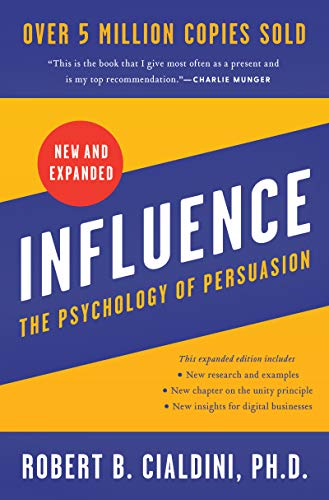
Jim Oshaughnessy, founder and chairman of OSAM LLC and a respected authority on behavioral finance, shares how this book sharpened his understanding of persuasion during his extensive career. "This is a great book that I recommend frequently. Between a yes and a no, there's always a maybe. Here are some of the tricks of the trade people use to try to persuade you." His appreciation for Cialdini’s principles stems from their practical application in complex decision-making environments. Similarly, Professor Kalkyl, co-founder of Quartr and Kalqyl, highlights how the book’s clear examples explain psychological biases that shape behavior, noting its widespread endorsement by influential figures like Charlie Munger.
“This is a great book that I recommend frequently. Between a yes and a no, there's always a maybe. Here are some of the tricks of the trade people use to try to persuade you.” (from X)
Robert B. Cialdini, PhD is an award-winning behavioral scientist and author. He is the president and CEO of Influence at Work, focusing on live and virtual keynotes, streaming and online corporate training. In acknowledgement of his outstanding research achievements and contributions in behavioral science, Dr. Cialdini was elected to the American Academy of Arts & Sciences and the National Academy of Sciences. He has over 230 professional and scientific publications. Robert Cialdini is Regents' Professor Emeritus of Psychology and Marketing at Arizona State University. Dr. Cialdini is known as the foundational expert in the science of influence and how to apply it ethically in business and elsewhere, and his Principles of Persuasion have become the cornerstone for any organization serious about increasing their effectiveness in sales, leadership, marketing, management and communication. He is a three-time New York Times bestselling author, with more than 5 million copies sold throughout the world. He is frequently referred to as the “Godfather of Influence.”
What happens when behavioral science meets everyday persuasion? Robert B. Cialdini, a Regents' Professor Emeritus of Psychology and Marketing, synthesizes over 35 years of empirical research to reveal the subtle psychological triggers that prompt people to say yes. You’ll explore his six Universal Principles of Influence—Reciprocation, Commitment and Consistency, Social Proof, Liking, Authority, Scarcity—and the newly added principle, Unity, all explained through memorable stories and detailed studies. The book equips you not only to become a more persuasive communicator but also to recognize and resist manipulative tactics, making it ideal for anyone involved in sales, marketing, leadership, or negotiation.
Irvin D. Yalom, MD, professor emeritus of psychiatry at Stanford University School of Medicine and award-winning author, brings decades of clinical expertise to this book. His extensive background, including multiple acclaimed works in psychotherapy, underpins this text as a pivotal resource that reflects the latest research and evolving practices in group therapy. This foundation ensures that you engage with a thoroughly updated and richly informed perspective on the complexities of group psychotherapy.
Irvin D. Yalom, MD, is professor emeritus of psychiatry at the Stanford University School of Medicine. He was the recipient of the 1974 Edward Strecker Award and the 1979 Foundations' Fund Prize in Psychiatry. He is the author of When Nietzsche Wept (winner of the 1993 Commonwealth Club gold medal for fiction); Love's Executioner, a memoir; Becoming Myself, a group therapy novel; The Schopenhauer Cure; and the classic textbooks Inpatient Group Psychotherapy and Existential Psychotherapy, among many other books. He lives in Palo Alto, California.
What started as the authoritative work of Irvin D. Yalom, a Stanford psychiatry professor emeritus, and Molyn Leszcz has evolved into the definitive guide on group psychotherapy. You’ll explore a wide range of clinical practices, from traditional analytic methods to modern interpersonal neurobiology, enriched with insights on culture, trauma, and online therapy adaptations. This edition updates each chapter with recent research and practical applications, offering you frameworks to understand group dynamics and therapeutic techniques for diverse clinical populations. It suits clinicians, trainees, and anyone invested in deepening their grasp of group-based psychological treatment.
This personalized AI book about psychology mastery is created after you share your background, skill level, and which psychology topics interest you most. You also tell us your specific goals, and the book is written to address exactly what you want to learn and understand. Using AI, this book synthesizes expert knowledge and adapts it to your unique journey, helping you grasp complex concepts more efficiently. Personalization makes a difference here because psychology covers so many diverse areas—this book narrows the focus to what matters most to you.
TailoredRead AI creates personalized nonfiction books that adapt to your unique background, goals, and interests. Instead of reading generic content, you get a custom book written specifically for your profession, experience level, and learning objectives. Whether you're a beginner looking for fundamentals or an expert seeking advanced insights, TailoredRead crafts a book that speaks directly to you. Learn more.
This tailored book explores foundational psychology principles and their practical applications through a personalized lens that matches your background and specific interests. It covers core psychological theories, cognitive processes, emotional regulation, and behavioral patterns, weaving them together in a way that directly addresses your goals. By focusing on your unique learning needs, the book reveals how psychological concepts connect to real-world experiences and personal growth. This personalized approach helps you navigate complex psychological topics with clarity and relevance, providing a pathway that deepens understanding and fosters meaningful insight into human behavior and mental processes.
Crystal Andrus Morissette, founder of The S.W.A.T. Institute, brings a profound understanding to mental health advocacy, emphasizing the power of shifting thought patterns. She highlights how this workbook helped her realize that "feelings are not facts; however, feelings tell us how we think about the people, problems, and situations in our lives." Her recommendation underscores the book’s ability to empower readers to challenge their mental chatter and reshape their futures. Alongside her, John Grohol, founder of Psych Central, praises the workbook as a comprehensive companion for anyone willing to engage actively in their mental health journey.
“Feelings are not facts; however, feelings tell us how we think about the people, problems, and situations in our lives. If we can step back and scrutinize our thoughts, we can see if we're being objective and accurate. The trouble is, many of us can't stop the mental chatter that leads us in the wrong direction. The CBT Workbook for Mental Health provides simple, accessible, and profoundly transformative exercises that can dramatically empower and shift the way we think and feel about ourselves and our futures. I highly recommend this book!”
Simon Rego PsyD, Sarah Fader, Jonathan E. Alpert MD PhD(you?)·
About the Author
Dr. Simon Rego is board certified in cognitive behavioral psychology and a licensed clinical psychologist with close to 25 years of experience. He is currently Chief Psychologist, Director of Psychology Training, and Director of the CBT Training Program at Montefiore Medical Center. He is also Associate Professor of Psychiatry and Behavioral Sciences at Albert Einstein College of Medicine in New York. Sarah Fader is the co-founder of Stigma Fighters, a non-profit organization that encourages individuals with mental illness to share their personal stories. She has been featured in The New York Times, The Washington Post, Psychology Today, The Huffington Post, and more.
Unlike many psychology books that dwell on theory, this workbook by Dr. Simon Rego and colleagues delivers straightforward CBT exercises to reshape negative thought patterns affecting your well-being. You’ll explore targeted chapters addressing anxiety, anger, stress, and self-esteem, with practical prompts designed to fit into a busy schedule. The authors' combined clinical and advocacy backgrounds ensure the content is both credible and empathetic, making it accessible whether you're facing minor daily struggles or deeper emotional challenges. If you're looking to actively manage your mental health with proven cognitive techniques, this book offers a focused toolkit rather than abstract concepts.
Michael D. Yapko, PhD, a clinical psychologist with extensive international teaching experience and recipient of prestigious awards including lifetime achievement honors from major hypnosis organizations, authored this book. His deep expertise and recognition in hypnosis and clinical psychology underpin the practical and conceptual insights presented here. Yapko’s work guides clinicians to adopt a broader, process-oriented approach to hypnosis, reflecting his commitment to advancing therapeutic practice through innovative perspectives.
Michael D. Yapko, PhD, is a clinical psychologist residing in southern California. The author of fifteen books, including Society for Clinical and Experimental Hypnosis (SCEH) Arthur Shapiro Award for Best Book on Hypnosis winners Process-Oriented Hypnosis and Mindfulness and Hypnosis, as well as leading hypnosis textbook Trancework (now in its 5th edition), Dr. Yapko has taught in more than thirty countries and received numerous awards for his contributions. He has also received lifetime achievement awards from the International Society of Hypnosis and The Milton H. Erickson Foundation.
Michael D. Yapko's decades as a clinical psychologist led him to rethink how hypnosis is used in therapy, focusing less on isolated symptoms and more on the underlying processes shaping emotional distress. In this book, you’ll explore how to identify and work with patterns that contribute to clients’ issues, supported by detailed hypnosis session transcripts that illustrate these approaches in action. Yapko’s method challenges you to see beyond the immediate problem, broadening your therapeutic perspective to improve outcomes. If you’re a clinician looking to deepen your hypnosis skills with a fresh framework that integrates into various treatment models, this book offers a solid foundation without unnecessary complexity.
Society for Clinical and Experimental Hypnosis Arthur Shapiro Award
Lifetime Achievement Awards International Society of Hypnosis
Lifetime Achievement Award Milton H. Erickson Foundation
Stephen Gaghan, Academy Award–winning screenwriter and director, credits this book with transforming his creative process: "Every single thing I’ve written of any power or merit came through using the tools Barry taught me. Usually counterintuitive, sometimes dangerous, they only changed my life." His endorsement highlights the book's capacity to unlock creative potential and personal strength, aspects critical to his demanding work. Similarly, Kathy Freston, a New York Times bestselling wellness author, praises these methods as emotional breakthroughs that deepen purpose and happiness, underscoring the book's practical impact on managing inner conflicts and fostering growth.
“Every single thing I’ve written of any power or merit came through using the tools Barry taught me. Usually counterintuitive, sometimes dangerous, they only changed my life.”
Phil Stutz graduated from City College in New York and received his MD from New York University. He worked as a prison psychiatrist on Rikers Island and then in private practice in New York before moving his practice to Los Angeles in 1982. He is the subject of the Netflix documentary Stutz. Together with Barry Michels, Phil Stutz is coauthor of Coming Alive: 4 Tools to Defeat Your Inner Enemy, Ignite Creative Expression, and Unleash Your Soul's Potential and The Tools: 5 Tools to Help You Find Courage, Creativity, and Willpower—and Inspire You to Live Life in Forward Motion, a New York Times bestseller.
What happens when seasoned psychiatric expertise meets a fresh approach to therapy? Phil Stutz and Barry Michels challenge the traditional focus on past traumas by equipping you with five practical tools designed to activate your unconscious mind and drive immediate change. From mastering procrastination to transforming anxiety into action, you learn to convert everyday obstacles into catalysts for courage, creativity, and willpower. This approach benefits anyone feeling stuck in repetitive patterns, offering clear methods to break free and take control of your life without waiting years for therapy to take effect.
This AI-created book on psychological growth is crafted based on your unique background, skill level, and interests. By sharing what cognitive and emotional skills you want to develop and your specific wellbeing goals, you receive a book that focuses precisely on your personal journey. This tailored approach helps you navigate complex psychological topics efficiently, making your growth both meaningful and manageable.
TailoredRead AI creates personalized nonfiction books that adapt to your unique background, goals, and interests. Instead of reading generic content, you get a custom book written specifically for your profession, experience level, and learning objectives. Whether you're a beginner looking for fundamentals or an expert seeking advanced insights, TailoredRead crafts a book that speaks directly to you. Learn more.
This tailored book explores rapid psychological skill development and emotional well-being enhancement, focusing on your unique background and goals. It examines cognitive and emotional growth techniques, revealing pathways through complex psychological concepts tailored specifically to your interests. By synthesizing key psychological principles with your personal learning preferences, the book offers a focused journey through cognitive restructuring, emotional regulation, and mental resilience. This personalized approach ensures the content directly addresses your growth objectives, enabling efficient mastery of psychological skills that support well-being. The book invites you to engage deeply with tailored exercises and insights designed to foster meaningful transformation within a 30-day framework.
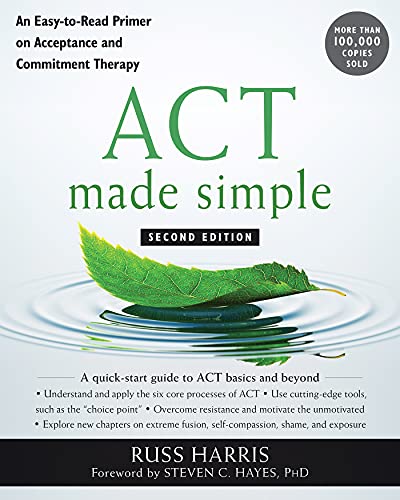
David Richo, author of The Five Things We Cannot Change, brings a seasoned perspective to psychology and emotional well-being, making his recommendation especially meaningful. He highlights this book as "an exciting alternative to the usual approach of so many self-help books," appreciating how Harris encourages working with yourself as you are instead of fighting change. This approach resonated deeply with him, shifting his view on managing internal struggles. Complementing this, Steven Hayes, who originated Acceptance and Commitment Therapy, praises the book for its creative methods to overcome avoidance and present-moment loss, affirming its place as a thoughtful guide through psychological challenges.
“An exciting alternative to the usual approach of so many self-help books. Harris explains how we can work with ourselves as we are, rather than aggressively trying to alter ourselves. I'm impressed by the simple and effective methods of ACT.”
Dr. Russ Harris is a world-renowned trainer of Acceptance and Commitment Therapy (ACT). As a physician he became increasingly interested in the psychological aspects of health and well-being, which led to a total career change. He now works in two different yet complementary roles as a therapist and a coach, and he is the author of numerous books. He lives in Melbourne, Australia.
When Dr. Russ Harris transitioned from medicine to psychology, he uncovered how many people unknowingly fall into what he calls the “happiness trap”—pursuing fleeting pleasures while avoiding discomfort, which ironically leads to more suffering. This updated edition delves into Acceptance and Commitment Therapy (ACT), teaching you to face painful thoughts without struggle and align actions with your core values. Through chapters on reducing anxiety, handling self-doubt, and improving relationships, you gain practical skills to stop fighting yourself and start living more authentically. If you're grappling with stress or seeking lasting contentment beyond quick fixes, this book offers a grounded approach rather than empty promises.
Zoltan Sarnyai, a professor and head of psychiatric neuroscience at James Cook University, highlights how Brain Energy challenges the typical explanations of mental illness. He shares, "If you have ever been dissatisfied with the rather hard-to-defend explanations of mental illness, this groundbreaking book is for you. An exhilarating intellectual journey to reveal the new beginnings of psychiatry." His endorsement reflects the book’s impact on experts who seek a deeper understanding of psychiatric disorders. Similarly, David Perlmutter, a board-certified neurologist and bestselling author, praises the book’s unifying theory and its promise to transform treatment approaches, affirming its groundbreaking contribution to mental health science.
Professor, Psychiatric Neuroscience, James Cook University
“If you have ever been dissatisfied with the rather hard-to-defend explanations of mental illness, this groundbreaking book is for you. An exhilarating intellectual journey to reveal the new beginnings of psychiatry.”
Dr. Christopher M. Palmer is a Harvard psychiatrist and researcher working at the interface of metabolism and mental health. He has developed the first comprehensive theory of what causes mental illness, integrating existing theories and research into one unifying theory—the brain energy theory of mental illness. He is the Director of the Department of Postgraduate and Continuing Education at McLean Hospital and an Assistant Professor of Psychiatry at Harvard Medical School. For over 25 years, he has conducted neuroscience research and worked with people who have treatment-resistant mental illness using standard treatments. He has been pioneering the use of the medical ketogenic diet in the treatment of psychiatric disorders—conducting research in this area, treating patients, writing, and speaking around the world on this topic.
What started as Dr. Christopher M. Palmer's quest to understand why traditional mental health treatments often fall short became a detailed exploration into brain metabolism’s role in mental illness. In Brain Energy, he argues that mental disorders like anxiety, depression, and PTSD are fundamentally metabolic disorders of the brain, reshaping how you might view their causes and treatments. The book delves into how genetics, inflammation, hormones, and lifestyle factors converge on brain cell energy, offering a framework supported by decades of research. If you're seeking to grasp mental health beyond symptoms—understanding underlying mechanisms and emerging therapies—this book provides a clear-eyed, scientifically grounded perspective.
Nautilus Book Awards Gold Winner in Psychology
Foreword INDIES Book of the Year Finalist in Health
Jack Kornfield, author of A Path with Heart, brings decades of mindfulness and psychological insight to his recommendation of this work. He praises it as "a knowledgeable and skilled exploration of emotion and the body—and how to process and heal emotional wounds efficiently through the body." His appreciation highlights the book’s practical integration of embodied emotion techniques, reflecting how it deepened his understanding of healing emotional pain through somatic practice.
Raja Selvam, PhD, is the developer of Integral Somatic Psychology (ISP), an approach based on the paradigm of embodied cognition, emotion, and behavior in cognitive and affective neuroscience. He is a licensed clinical psychologist and a senior trainer in Dr. Peter Levine's Somatic Experiencing program. Dr. Selvam has taught for twenty-five years in the Americas, Europe, Asia, the Middle East, and the Far East. His work is influenced by psychoanalytic approaches, Jungian psychology, body psychotherapy systems, bodywork and energy work schools, yoga, quantum physics, and Advaita Vedanta. Selvam's publications include the 2013 'Jung and Consciousness,' published in Spring; the 2008 study 'Somatic Therapy Treatment Effects with Tsunami Survivors,' published in Traumatology, about working with survivors of the 2004 Indian Ocean tsunami. His approach is also inspired by the work he did in Sri Lanka from 2012 to 2014 for the survivors of the thirty-five year civil war.
2022·344 pages·Psychology, Emotional Regulation, Somatic Psychology, Trauma Healing, Attachment Theory
Raja Selvam, PhD, draws on his extensive clinical experience and neuroscience expertise to present Integral Somatic Psychology™, a method that links body awareness directly to emotional regulation. You’ll uncover how emotions manifest physiologically and learn techniques to embody and manage challenging feelings, which can aid in processing trauma and attachment wounds. The book covers applications across various therapies—from psychoanalysis to CBT—demonstrating how embodied practice can shorten treatment time and enhance emotional outcomes. This is especially relevant if you work in therapy or seek to deepen your understanding of body-based emotional healing.
Doody's Reviews, a respected authority in psychotherapy literature, highlights this book as a practical and straightforward introduction to acceptance and commitment therapy. Their endorsement underlines its value for both students and seasoned clinicians seeking to refresh their knowledge. They emphasize the book's balance of simplicity with essential content, making it a useful update for anyone wanting to implement ACT effectively in therapeutic settings.
“This is a quick-start guide to ACT that is practical and simple without losing the core content needed to effectively deliver therapy. It is a recommended guide for both students learning psychotherapy and clinicians seeking a varied therapeutic toolbox. For those who have not kept current on ACT research and approaches since the first edition, this second edition is a worthwhile update.”
Russ Harris is an internationally acclaimed acceptance and commitment therapy (ACT) trainer and author of the best-selling ACT-based self-help book The Happiness Trap, which has sold over 600,000 copies and been published in thirty languages. He is widely renowned for his ability to teach ACT in a way that is simple, clear, and fun—yet extremely practical.
Russ Harris's extensive experience as an internationally recognized acceptance and commitment therapy (ACT) trainer shaped this accessible guide to ACT's core principles. You learn practical techniques including mindfulness, values clarification, and behavioral change strategies, alongside scripts and exercises to apply with clients. The book addresses challenges like therapy roadblocks and includes session transcripts that reveal how ACT unfolds in practice. If you're a therapist or coach seeking to deepen your toolkit or a student wanting a clear introduction to ACT, this book offers a grounded, straightforward approach without overwhelming jargon or theory.
Richard Schwartz, developer of the Internal Family Systems Model, brings a wealth of psychotherapy expertise to his endorsement of this work. He highlights how polyvagal theory illuminated previously baffling trauma symptoms and reactions, emphasizing the book’s rare practical application for therapists. "Polyvagal theory has been a godsend for trauma therapists and survivors alike," he says, noting how Deb Dana’s clear explanations and therapeutic steps changed his approach to client regulation. This endorsement reflects how the book bridges complex neuroscience and effective clinical practice, reshaping trauma therapy understanding.
“Polyvagal theory has been a godsend for trauma therapists and survivors alike, helping them understand symptoms and reactions that had been mysterious and uncontrollable. Until now, however, therapists lacked a method for putting PT into practice. With this well-written book, Deb Dana not only explains the theory clearly but also offers therapists practical steps for helping survivors remain regulated.”
Deb Dana, LCSW, is a clinician, consultant, and speaker specializing in complex trauma. She is the leading translator of Dr. Stephen Porges' Polyvagal Theory for both clinical and general audiences, and the best-selling author of Polyvagal Practices, Polyvagal Card Deck, The Polyvagal Flip Chart, Polyvagal Exercises for Safety and Connection, The Polyvagal Theory in Therapy, and co-editor with Dr. Stephen Porges of Clinical Applications of The Polyvagal Theory. She trains therapists around the world in how to bring a Polyvagal approach into their clinical practice, and also works with agencies and larger systems to explore how to incorporate a Polyvagal perspective.
What happens when a seasoned clinician specializing in trauma joins forces with a neuroscientist who developed the foundational polyvagal theory? Deb Dana, drawing from years of clinical practice and her collaboration with Dr. Stephen W. Porges, offers a clear translation of complex nervous system science into therapy tools you can actually use. This book walks you through autonomic mapping and exercises targeting the ventral vagal system to help clients reshape their nervous systems for better regulation and connection. If you work with trauma or want to understand how body-brain regulation impacts emotional health, this book equips you with frameworks and techniques grounded in interpersonal neurobiology.
Martin Drapeau, professor at McGill University and former editor of Canadian Psychology, highlights how this sixth edition elevates ethical reasoning by tackling emerging challenges like video conferencing and digital tool use in therapy. Facing increasing complexity in clinical work, Drapeau emphasizes the book's focus on diversity, equity, and inclusion, calling it "an absolute must-read for all clinicians." His endorsement reflects deep experience in psychology ethics, underscoring the book’s practical relevance. Alongside him, Bonnie Strickland, former APA president, praises the authors for maintaining the field’s conscience by adding vital new material, solidifying its status as an authoritative resource in ethical practice.
Professor, McGill University; former psychology editor
“This 6th edition of Ethics in Psychotherapy and Counseling takes ethical reasoning and practice to a new level by addressing the complexity of video conferencing and the use of digital tools while emphasizing issues of diversity, equity, and inclusion. An absolute must-read for all clinicians.”
Kenneth S. Pope, Melba J. T. Vasquez, Nayeli Y. Chavez-Dueñas, Hector Y. Adames(you?)·
About the Author
Kenneth S. Pope, PhD, a psychologist in independent practice, chaired the ethics committees of the American Psychological Association and the American Board of Professional Psychology. He received the 2015 Canadian Psychological Association John C. Service Member of the Year Award. Melba J.T. Vasquez, PhD, is a licensed psychologist and former President of the American Psychological Association. She is a Fellow of ten divisions of the American Psychological Association and is a recipient of the 2020 APA Award for Lifetime Achievement. Nayeli Y. Chavez-Dueñas, PhD, is a licensed psychologist and professor. She is a recipient of the 2018 American Psychological Association Distinguished Citizen Psychologist Award. Hector Y. Adames, PsyD, is a licensed psychologist and professor. He chaired the Committee on Ethnic Minority Affair (CEMA) of the American Psychologist Association (APA) and is a recipient of the 2018 Distinguished Emerging Professional Contributions to Research Award from the Society for the Psychological Study of Culture, Ethnicity, and Race of the APA.
When Kenneth S. Pope and his coauthors explored the evolving landscape of psychotherapy ethics, they recognized the urgent need to address modern challenges such as telehealth, digital communication, and cultural competence. This sixth edition offers you detailed guidance on navigating ethical dilemmas, including informed consent, confidentiality in electronic records, and managing moral distress. You'll find new chapters focused on social justice and human rights ethics, along with practical strategies for self-care as a clinician. If your work involves direct client care or teaching graduate-level psychology, this book sharpens your ethical decision-making with clear examples and thoughtful frameworks.
Caitlin Beadles, a mental health advocate, shared how this book profoundly impacted her understanding after seeing a brain spect scan revealing trauma's effects. She says, "It literally changes your brain... Good news is, we can heal our brains." This personal insight underscores the book’s practical approach to brain health. Similarly, Mark Hyman, head of strategy at Cleveland Clinic's Functional Medicine center, calls it "a radical new way to overhaul psychiatry," noting his family’s positive experiences with Dr. Amen’s work. These endorsements highlight the book's blend of neuroscience and psychiatry to reshape mental health treatment.
“It does literally change your brain. I just got a spect scan done of my brain and it’s wild how emotional trauma can cause so much damage. Good news is, we can heal our brains. “The End Of Mental Illness” by Dr. Amen is a great book to learn how.” (from X)
Dr. Daniel G. Amen is a physician, a double board-certified psychiatrist, the founder of Amen Clinics, a 10-time New York Times bestselling author, and the recipient of the John Maxwell Transformational Leadership Award for 2019. He has written, produced, and hosted 14 popular public television shows about the brain.
The research was clear: traditional psychiatric treatments often fell short of addressing the root causes of mental health challenges. Dr. Daniel Amen, a double board-certified psychiatrist and founder of Amen Clinics, challenges this paradigm by integrating neuroscience to reveal how brain health directly impacts conditions like anxiety, PTSD, and ADHD. You’ll learn to identify your unique brain type, understand how emotional trauma physically alters neural pathways, and discover over 100 practical lifestyle changes to support brain healing. This book suits anyone seeking a science-based approach to mental wellness that moves beyond symptom management to prevention and, in some cases, reversal of mental health issues.
New York Times Bestseller
Author of 10+ bestselling books
Recipient of John Maxwell Transformational Leadership Award
S. Marc Breedlove, the Barnett Rosenberg Professor of Neuroscience at Michigan State University with extensive teaching experience at UC Berkeley, authored this book drawing on over 200 scholarly articles and public outreach. His expertise in hormone effects on the nervous system shines through in this text, which connects cutting-edge research with accessible explanations. The book’s thoughtful visual aids and digital support tools reflect Breedlove’s commitment to making complex behavioral neuroscience comprehensible for students and curious minds alike.
S. Marc Breedlove is the Barnett Rosenberg Professor of Neuroscience at Michigan State University. He taught for 20 years in the Psychology department and graduate programs in Neuroscience and in Endocrinology at UC Berkeley. His research on hormone effects on the nervous system & behavior is described at: http://www.marcbreedlove.com. He has produced over 200 scholarly articles in addition to textbooks, and has been interviewed in broadcast media including '60 Minutes', 'Good Morning America' and the BBC, and the lecture series Whom You Love freely available on youtube: https://www.youtube.com/user/WhomYouLove2012.
S. Marc Breedlove, a seasoned neuroscience professor with decades teaching at Michigan State University and UC Berkeley, brings clarity to the complex field of behavioral neuroscience in this ninth edition. You’ll find richly illustrated chapters that break down intricate biological processes affecting behavior, such as hormone influences on the brain, paired with visual summaries to cement your understanding. The book’s blend of up-to-date research examples and interactive digital tools makes it ideal if you want to grasp how biology shapes behavior, especially within psychology and neurology contexts. While it’s tailored for undergraduates, anyone seeking a structured yet accessible dive into brain-behavior relationships will find value here.
David Barlow, professor emeritus and founder of the Center for Anxiety and Related Disorders, has witnessed firsthand how this book has transformed the lives of over a million people struggling with depression and other psychological challenges. He highlights that "changing the way we think about emotional situations is among the most powerful ways to change emotions themselves," underscoring the book's scientific foundation and therapeutic innovation. This perspective is echoed by Mark Williams, emeritus professor at Oxford, who praises its clinically proven strategies that help manage destructive emotions and improve life quality. Together, their insights emphasize how this book offers you a trusted, research-backed guide to mastering your moods through cognitive-behavioral therapy.
“Over a million people have used Mind Over Mood to alleviate--and in many cases eliminate--the suffering caused by depression and other psychological problems. Drs. Greenberger and Padesky are brilliant therapists whose thoroughly updated second edition is informed by the latest research and therapeutic innovations. Science has demonstrated incontrovertibly that changing the way we think about emotional situations is among the most powerful ways to change emotions themselves. Everyone struggling with challenging moods or emotions should read this book.”
Dennis Greenberger, Christine A. Padesky, Aaron T. Beck(you?)·
About the Author
Dennis Greenberger, PhD, a clinical psychologist, is founder and Director of the Anxiety and Depression Center in Newport Beach, California. He is a past president and Founding Fellow of the Academy of Cognitive Therapy (now the Academy of Cognitive and Behavior Therapies), and has practiced cognitive-behavioral therapy for more than 30 years. His website is www.anxietyanddepressioncenter.com.
Drawing from over 30 years of clinical practice and leadership in cognitive therapy, Dennis Greenberger, along with Christine A. Padesky and Aaron T. Beck, crafted this book to reshape how you understand and manage your emotions. You’ll explore proven cognitive-behavioral techniques designed to help you recognize and alter unhelpful thought patterns linked to depression, anxiety, anger, and more. The book’s revised second edition enriches your toolkit with mindfulness exercises, worksheets, and strategies for setting and maintaining personal goals, making it especially useful if you want practical methods to regain emotional balance. Whether you’re dealing with specific mood challenges or seeking better emotional regulation, this book offers a structured approach to changing how you feel by changing the way you think.
Second Place American Journal of Nursing Book Of The Year Award
Included in UK National Health Service Bibliotherapy Program
Kirk Borne, Principal Data Scientist at Booz Allen and astrophysicist, highlights the critical importance of understanding emotion science as AI advances toward artificial general intelligence. He points readers to Lisa Feldman Barrett's work, saying, "As AI moves toward AGI with Neural Networks, deeper understanding of Emotion Science is critical!" This book shifted his thinking by connecting neuroscience with emotional intelligence, emphasizing how emotions are constructed rather than fixed. Similarly, Daniel Gilbert, Harvard psychology professor, praises it as a profound original contribution that challenges long-held beliefs about emotions, deepening your grasp of human psychology.
“As AI moves toward AGI with Neural Networks, deeper understanding of Emotion Science is critical! See "How Emotions Are Made — The Secret Life of the Brain" by Lisa Feldman Barrett. Watch her amazing TED Talk.” (from X)
Lisa Feldman Barrett, PhD, is a University Distinguished Professor of Psychology at Northeastern University. She received a National Institutes of Health Director’s Pioneer Award for her groundbreaking research on emotion in the brain, and is an elected member of the Royal Society of Canada. Barrett is the author of How Emotions are Made and Seven and a Half Lessons About the Brain.
Drawing from decades as a University Distinguished Professor of Psychology and her groundbreaking NIH-funded research, Lisa Feldman Barrett challenges traditional views by revealing how emotions are constructed through complex interactions of brain, body, and culture. You’ll discover how this dynamic process reshapes understanding of emotion in contexts like neuroscience, healthcare, and even law. Specific chapters detail how cultural differences shape emotional experience and how emotions influence decision-making. If you want to rethink emotions beyond fixed biological responses and explore their fluid nature, this book offers a thought-provoking perspective, though it may feel dense for casual readers.
National Institutes of Health Director’s Pioneer Award
Michael W. Eysenck is Professor Emeritus in Psychology at Royal Holloway, University of London, and a respected author of multiple psychology textbooks. His extensive academic background and teaching experience underpin this book's authoritative coverage. Driven to provide students with a clear understanding of cognitive psychology, Eysenck combines theory with practical examples and updated neuroscience research, making this handbook a valuable tool for anyone studying or interested in the workings of the human mind.
Michael W. Eysenck is Professor Emeritus in Psychology at Royal Holloway, University of London. He is also Professorial Fellow at Roehampton University, London. He is the best-selling author of several textbooks including Fundamentals of Cognition (2018), Memory (with Alan Baddeley and Michael C. Anderson, 2014) and Fundamentals of Psychology (2009).
Michael W. Eysenck, a seasoned professor with decades of experience at Royal Holloway, University of London, teams up with Mark T. Keane to craft a thorough exploration of cognitive psychology. This book walks you through core topics like perception, attention, memory, and language, blending foundational theory with neuroscience insights and practical applications. For instance, it includes case studies that connect research to everyday experiences, and each chapter offers summaries and suggested further readings to deepen your understanding. Whether you're a student aiming to grasp the essentials or someone curious about how the mind works, this handbook provides a detailed yet accessible guide to the cognitive processes shaping human behavior.
Jon Kabat-Zinn, professor emeritus at UMass Medical School and author of Full Catastrophe Living, highlights this book as a "tour de force" that delivers an accessible yet detailed exploration of mindfulness’s origins, ethical foundations, and clinical applications. His endorsement carries weight given his pioneering role in bringing mindfulness into mainstream medicine. Kabat-Zinn points to the rich case studies illustrating mindfulness’s power to help people navigate difficult life challenges. Complementing this, Mark Williams, emeritus professor at Oxford, praises the book’s elegant bridging of Buddhist meditation traditions and psychological science, emphasizing its transformative potential for students and teachers alike.
“A tour de force. This book elaborates in exquisite detail--yet with utter accessibility and clarity--what mindfulness is and where it comes from, as well as its profound ethical foundation, clinical applications, growing evidence base, and potential for healing. The depth of the case studies alone exemplifies the elemental wisdom inherent to the practice of mindfulness, and how it can be applied in trying and challenging life situations to beneficial effect.”
Christina Feldman, Willem Kuyken, Zindel Segal(you?)·
About the Author
Christina Feldman is a leading senior teacher in the insight meditation community, offering retreats internationally. She is a contributing faculty member in several postgraduate mindfulness programs, including the University of Exeter in the United Kingdom and Radboud University in The Netherlands. She is a cofounder of Gaia House in the United Kingdom and a guiding teacher of the Insight Meditation Society in Barre, Massachusetts. The author of numerous books, Ms. Feldman is a core teacher at Bodhi College in the United Kingdom and is deeply engaged in the dialogue between Buddhist psychology and contemporary mindfulness.
What happens when a seasoned meditation teacher teams up with distinguished psychologists? Christina Feldman and Willem Kuyken illuminate mindfulness by tracing its roots in Buddhist psychology and showing how it integrates with modern psychological science. You’ll explore detailed case studies that reveal mindfulness’s role in reducing distress and fostering resilience, learning not just conceptually but experientially through guided practice. This book suits anyone interested in the intersection of contemplative traditions and clinical psychology, offering nuanced insights rather than quick fixes. While it demands thoughtful engagement, it rewards with a deeper understanding of mindfulness’s transformative potential.
Kathleen M. Galotti holds a B.A. in psychology and economics from Wellesley College, along with advanced degrees in psychology and computer sciences from the University of Pennsylvania. As Professor and Director of Cognitive Science at Carleton College, she brings extensive expertise and decades of research on reasoning and decision-making development. Her interdisciplinary background and commitment to bridging lab research with practical understanding shape this book's accessible style and updated content, making it a valuable guide for anyone seeking to understand how cognitive psychology impacts real-world thinking and learning.
Kathleen M. Galotti holds a B.A. in psychology and economics from Wellesley College, as well as an M.A. and a Ph.D. in psychology and an M.S.E. in computer and information sciences from the University of Pennsylvania. At Carleton College she holds the title Professor and Director of Cognitive Science, an interdisciplinary program, which she helped establish in 1989. She also is a former department chair of Psychology. She teaches courses in cognitive and developmental psychology and cognitive science, and has also taught courses in statistics and introductory psychology. Dr. Galotti is the author or coauthor of dozens of peer-reviewed studies in cognitive and developmental psychology. Her research centers on the development of reasoning and decision-making skills from the preschool period through adulthood and on the styles with which adolescents and adults plan for the future, make important life commitments, and learn new information. Her research has been funded through the National Science Foundation, the Spencer Foundation, and the National Institutes of Health. She is the author of Making Decisions That Matter: How People Face Important Life Choices (Erlbaum, 2002), as well as a textbook, Cognitive Development: Infancy Through Adolescence (SAGE, 2011).
Kathleen M. Galotti approaches cognitive psychology with a keen eye on connecting laboratory research to everyday life, making this book an insightful resource for understanding how mental processes influence daily decisions and learning. You’ll gain a deeper grasp of memory, reasoning, and decision-making through clear examples and updated research that reflect current advances in the field. The book’s focus on how people acquire and use information equips you with a nuanced perspective on cognition from childhood through adulthood. If you want to bridge the gap between experimental studies and real-world applications in psychology, this text provides a solid foundation without overwhelming jargon.
The New York Times, a respected authority in book reviews, highlights Lawrence Wallace's blend of personal insight and CBT expertise in this book. They call it "An essential guide to overcoming anxiety and depression: Lawrence Wallace's book on Cognitive Behavioral Therapy is a must-read for anyone struggling with mental health issues." This endorsement reflects how Wallace’s compassionate yet practical approach has resonated deeply, offering readers tools that are both accessible and effective. Similarly, Psychology Today praises the book as "A game-changer for mental wellness," emphasizing its potential to transform how you manage your thoughts and emotions.
“An essential guide to overcoming anxiety and depression: Lawrence Wallace's book on Cognitive Behavioral Therapy is a must-read for anyone struggling with mental health issues. The author's personal experience and expertise make for a relatable and informative read, and the practical techniques outlined in the book are easy to implement in daily life. Highly recommended for anyone looking for lasting change and inner peace.”
Lawrence Wallace was once just like you—struggling with anxiety, depression, and intrusive thoughts. But through years of research and personal experience, he discovered the power of Cognitive Behavioral Therapy (CBT) in overcoming these challenges. Determined to share this knowledge with others, Lawrence became a CBT expert and bestselling author. In his books, Lawrence combines the latest scientific research with wisdom from ancient philosophy to provide readers with a comprehensive guide to achieving lasting happiness and inner peace. Drawing on his own experiences, Lawrence writes with empathy and understanding, making his books both relatable and actionable. When he's not writing, Lawrence can be found leading workshops and giving talks on CBT and mental health. He is also the founder of the Intrusive Thoughts Organization, which provides free support and guidance to those struggling with obsessive thoughts. Lawrence's mission is to help as many people as possible lead happier, more fulfilled lives. With his books and other resources, he is well on his way to achieving this goal.
Lawrence Wallace draws on his personal struggles and extensive research to craft a guide that teaches you how to reshape your mind through Cognitive Behavioral Therapy. You’ll explore seven specific strategies that tackle anxiety, depression, and intrusive thoughts, including building self-compassion, challenging negative thinking, and managing stress with mindfulness. For example, the book covers practical ways to replace harmful habits with healthier ones and integrates insights from Buddhist and Stoic traditions to deepen your understanding. This is a straightforward manual for anyone ready to take control of their mental health, especially those seeking structured yet compassionate approaches to psychological challenges.
Philip Zimbardo, author of Shyness and respected psychologist, highlights this book's importance in understanding personality health. He emphasizes that "Positive self-esteem is the centerpiece of a healthy personality. McKay and Fanning’s book offers us a valuable storehouse of tactics and strategies for constructing—or renovating—the foundation of our self-esteem." This endorsement reflects how the book's cognitive and behavioral techniques have influenced psychological thinking about self-worth and personal growth.
“Positive self-esteem is the centerpiece of a healthy personality. McKay and Fanning’s book offers us a valuable storehouse of tactics and strategies for constructing—or renovating—the foundation of our self-esteem.”
Matthew McKay, PhD, is a professor at the Wright Institute in Berkeley, CA. He has authored and coauthored numerous books, including The Relaxation and Stress Reduction Workbook, Self-Esteem, Thoughts and Feelings, When Anger Hurts, and ACT on Life Not on Anger. His books combined have sold more than 2.5 million copies. McKay received his PhD in clinical psychology from the California School of Professional Psychology. In private practice, he specializes in the cognitive behavioral treatment of anxiety and depression.
While working as a clinical psychologist, Matthew McKay PhD developed this book to address the pervasive issue of low self-esteem by focusing on the cognitive processes underlying self-worth. You’ll explore how your interpretations of events shape your self-esteem, learning to identify and challenge negative self-talk through updated cognitive behavioral therapy techniques combined with acceptance and commitment therapy principles. Specific chapters guide you through differentiating healthy from unhealthy self-esteem and introduce exercises on defusion and values to help you act according to what truly matters. This book suits anyone looking to reshape their inner dialogue and build resilience against self-critical thoughts.
The best Psychology books and more, in your inbox each week. No account needed.
Conclusion
This collection reveals three themes: the power of understanding mental mechanisms, the centrality of emotional regulation, and the importance of ethical, evidence-based practice. If you're navigating therapy or clinical work, starting with The Theory and Practice of Group Psychotherapy and Ethics in Psychotherapy and Counseling grounds you in foundational skills and principles.
For personal growth or mental health challenges, pairing Mind Over Mood with The CBT Workbook for Mental Health offers actionable cognitive techniques. Those fascinated by brain science will find Brain Energy and Behavioral Neuroscience rich sources of biological insight.
Alternatively, you can create a personalized Psychology book to bridge the gap between broad principles and your specific circumstances. These books can help you accelerate your learning journey and deepen your understanding of human behavior and mind.
Frequently Asked Questions
I'm overwhelmed by choice – which book should I start with?
Start with a book that matches your current interest. If you want practical skills, try 'The CBT Workbook for Mental Health.' For understanding influence, 'Influence, New and Expanded' offers timeless insights. Choosing a focus helps you engage deeply without feeling lost.
Are these books too advanced for someone new to Psychology?
Many of these books cater to both beginners and professionals. For example, 'ACT Made Simple' and 'Mindfulness' provide clear, accessible introductions. You can build foundational knowledge before tackling more specialized texts.
What's the best order to read these books?
Consider starting with broad overviews like 'Cognitive Psychology' or 'Behavioral Neuroscience,' then move to applied guides like 'Mind Over Mood' or 'The Tools.' Clinical readers might prioritize therapy-focused books early on.
Should I start with the newest book or a classic?
Both have value. Classics like 'Influence' provide foundational concepts, while newer books like 'Brain Energy' introduce cutting-edge science. A mix ensures historical context and current understanding.
Do I really need to read all of these, or can I just pick one?
You can pick based on your goals. Each book stands alone with unique insights. However, combining perspectives enriches your grasp of psychology’s diverse facets.
How can I tailor these expert insights to my specific learning needs?
While these books offer proven frameworks, personalizing content can help bridge theory and your context. You might explore creating a personalized Psychology book that adapts expert knowledge to your background, goals, and subtopics of interest for focused learning.
📚 Love this book list?
Help fellow book lovers discover great books, share this curated list with others!