Congratulations! 🎉
"The Practice of Embodying Emotions" by Raja Selvam PhD made it to BookAuthority's Best Psychology Books of All Time!
20 Psychology Books That Separate Experts from Amateurs
Recommended by Jim Oshaughnessy, Crystal Andrus Morissette, and Steven Hayes — authoritative Psychology Books to sharpen your insights





Psychology reading spans many purposes, and this list sorts them by subject and audience. Everyday readers can start with self-help guides on cognitive behavioral therapy, acceptance and commitment therapy, self-esteem and persuasion. Clinicians will find practice texts on group psychotherapy, hypnosis, polyvagal-informed therapy, somatic work and professional ethics. Students have textbooks in cognitive psychology and behavioral neuroscience. Readers curious about theory can explore books on how emotions are constructed and on metabolic and neuroscience-based views of mental illness. creating a personalized Psychology book
1. Influence, New and Expanded
Recommended by Jim O'Shaughnessy in
Investor and Founder of O'Shaughnessy Ventures
“This is a great book that I recommend frequently. Between a yes and a no, there's always a maybe. Here are some of the tricks of the trade people use to try to persuade you.” (from X)
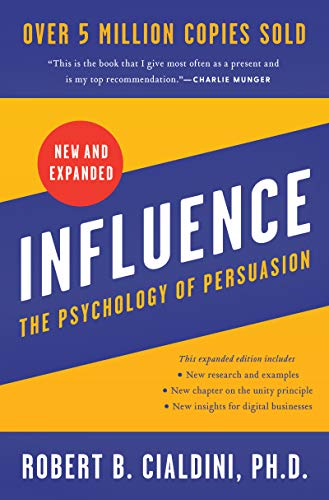
This guide explains the psychology of why people say yes. It covers principles of influence including reciprocation, social proof, authority, scarcity and unity. It also shows readers how to apply these ideas ethically and how to defend themselves against unethical influence attempts.
2. The Theory and Practice of Group Psychotherapy

This updated edition of a classic text on group psychotherapy draws on recent research and clinical practice. New sections cover online group therapy, interpersonal neurobiology, measurement-based care, culture and diversity, and psychological trauma.
Psychology Mastery Blueprint

This tailored book explores foundational psychology principles and their practical applications through a personalized lens that matches your background and specific interests. It covers core psychological theories, cognitive processes, emotional regulation, and behavioral patterns, weaving them together in a way that directly addresses your goals. By focusing on your unique learning needs, the book reveals how psychological concepts connect to real-world experiences and personal growth. This personalized approach helps you navigate complex psychological topics with clarity and relevance, providing a pathway that deepens understanding and fosters meaningful insight into human behavior and mental processes.
3. The CBT Workbook for Mental Health
Recommended by Crystal Andrus Morissette
Founder of The S.W.A.T. Institute
“Feelings are not facts; however, feelings tell us how we think about the people, problems, and situations in our lives. If we can step back and scrutinize our thoughts, we can see if we're being objective and accurate. The trouble is, many of us can't stop the mental chatter that leads us in the wrong direction. The CBT Workbook for Mental Health provides simple, accessible, and profoundly transformative exercises that can dramatically empower and shift the way we think and feel about ourselves and our futures. I highly recommend this book!” (from Amazon)

This workbook offers short cognitive behavioral therapy exercises for building coping skills. Chapters address relationships and communication, anxiety, anger, stress, guilt, shame and self-esteem.
4. Process-Oriented Hypnosis

This clinical book presents a framework for using hypnosis that focuses on patterns of symptom formation rather than the details of individual problems. The first section explains key patterns of human experience. The second section provides session transcripts that clinicians can adapt.
5. The Tools
Recommended by Stephen Gaghan
Academy Award–winning writer of Traffic and writer-director of Syriana
“Every single thing I’ve written of any power or merit came through using the tools Barry taught me. Usually counterintuitive, sometimes dangerous, they only changed my life.” (from Amazon)

This self-help book presents a set of techniques for turning problems into prompts for action. It addresses getting unstuck, controlling anger, finding self-expression and combating anxiety.
30-Day Psychology Transformation

This tailored book explores rapid psychological skill development and emotional well-being enhancement, focusing on your unique background and goals. It examines cognitive and emotional growth techniques, revealing pathways through complex psychological concepts tailored specifically to your interests. By synthesizing key psychological principles with your personal learning preferences, the book offers a focused journey through cognitive restructuring, emotional regulation, and mental resilience. This personalized approach ensures the content directly addresses your growth objectives, enabling efficient mastery of psychological skills that support well-being. The book invites you to engage deeply with tailored exercises and insights designed to foster meaningful transformation within a 30-day framework.
6. The Happiness Trap
Recommended by David Richo
Author of The Five Things We Cannot Change
“An exciting alternative to the usual approach of so many self-help books. Harris explains how we can work with ourselves as we are, rather than aggressively trying to alter ourselves. I'm impressed by the simple and effective methods of ACT.” (from Amazon)

This updated and expanded edition introduces Acceptance and Commitment Therapy for general readers. It covers clarifying values, developing self-compassion, handling painful thoughts and feelings, and breaking self-defeating habits.
7. Brain Energy
Recommended by Zoltan Sarnyai
Professor and Head of the Laboratory of Psychiatric Neuroscience at James Cook University, Australia
“If you have ever been dissatisfied with the rather hard-to-defend explanations of mental illness, this groundbreaking book is for you... An exhilarating intellectual journey to reveal the new beginnings of psychiatry.” (from Amazon)

This book proposes a framework in which mental disorders are understood as metabolic disorders of the brain. It discusses connections between mental illness and metabolism-linked conditions and outlines possible treatment pathways and practical strategies.
8. The Practice of Embodying Emotions
Recommended by Jack Kornfield
Author of A Path with Heart and After the Ecstasy, the Laundry
“A knowledgeable and skilled exploration of emotion and the body—and how to process and heal emotional wounds efficiently through the body.” (from Amazon)

This book presents Integral Somatic Psychology, a body-based approach to building capacity to tolerate difficult emotions. It covers the physiology of emotions and the processing of trauma and attachment wounds. Jack Kornfield recommends The Practice of Embodying Emotions: A Guide for Improving Cognitive, Emotional, and Behavioral Outcomes.
9. ACT Made Simple
Recommended by Doody's Reviews
“This is a quick-start guide to ACT that is practical and simple without losing the core content needed to effectively deliver therapy. It is a recommended guide for both students learning psychotherapy and clinicians seeking a varied therapeutic toolbox. For those who have not kept current on ACT research and approaches since the first edition, this second edition is a worthwhile update.” (from Amazon)
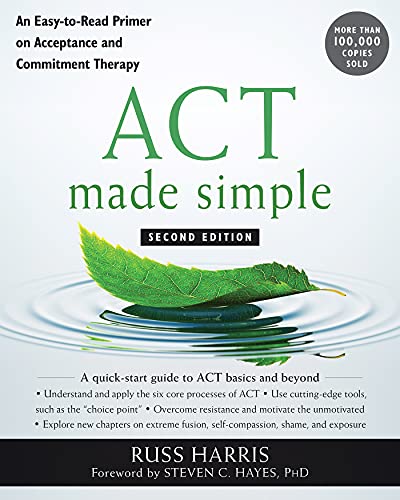
This revised primer explains the six processes of acceptance and commitment therapy for mental health professionals. It offers practical tips for applying them in sessions and includes material on self-compassion, perspective taking and trauma.
10. The Polyvagal Theory in Therapy
Recommended by Richard Schwartz
Developer of the Internal Family Systems Model of psychotherapy
“Polyvagal theory has been a godsend for trauma therapists and survivors alike, helping them understand symptoms and reactions that had been mysterious and uncontrollable. Until now, however, therapists lacked a method for putting PT into practice. With this well-written book, Deb Dana not only explains the theory clearly but also offers therapists practical steps for helping survivors remain regulated.” (from Amazon)

This book translates Polyvagal Theory into clinician- and client-friendly language. It provides autonomic mapping worksheets, tracking practices and meditations for helping clients build capacities for regulation.
11. Ethics in Psychotherapy and Counseling
Recommended by Martin Drapeau
Professor, McGill University; former editor of Canadian Psychology
“This 6th edition of Ethics in Psychotherapy and Counseling takes ethical reasoning and practice to a new level by addressing the complexity of video conferencing and the use of digital tools while emphasizing issues of diversity, equity, and inclusion. An absolute must-read for all clinicians.” (from Amazon)

This practical guide addresses ethical responsibilities and challenges for therapists and counselors. Topics include electronic health records, videoconferencing, cultural ethics, social justice, self-care and moral courage.
12. The End of Mental Illness
Recommended by Caitlin Beadles in
Mental health advocate and author
“It does it literally changes your brain. I just got a spect scan done of my brain and it’s wild how emotional trauma can cause so much damage to your brain. Good news is, we can heal our brains. “ The End Of Mental Illness “ by dr Amen is a great book to learn how” (from X)

This book draws on neuroscience to challenge a symptom-based psychiatric paradigm. It offers self-directed steps for improving brain health, along with guidance on identifying brain types and finding suitable providers.
13. Behavioral Neuroscience

This undergraduate textbook introduces behavioral neuroscience. It uses research examples, detailed art, visual summaries and digital tools such as animations with assessments.
14. Mind Over Mood
Recommended by David Barlow
Founder, Center for Anxiety and Related Disorders
“Over a million people have used Mind Over Mood to alleviate--and in many cases eliminate--the suffering caused by depression and other psychological problems. Drs. Greenberger and Padesky are brilliant therapists whose thoroughly updated second edition is informed by the latest research and therapeutic innovations. Science has demonstrated incontrovertibly that changing the way we think about emotional situations is among the most powerful ways to change emotions themselves. Everyone struggling with challenging moods or emotions should read this book.” (from Amazon)

This workbook teaches cognitive behavioral therapy skills for overcoming depression, anxiety, anger, guilt and shame. It includes step-by-step plans, worksheets, goal setting and exercises on mindfulness, acceptance and forgiveness.
15. How Emotions Are Made
Recommended by Daniel Gilbert
Professor of Psychology, Harvard University, author of Stumbling on Happiness
“A brilliant and original book on the science of emotion, by the deepest thinker about this topic since Darwin.” (from Amazon)

This book explains a theory that emotions are constructed through an interplay of brain, body and culture rather than being hardwired. It explores implications for neuroscience, medicine and the legal system. Daniel Gilbert recommends How Emotions Are Made: The Secret Life of the Brain: How We Create Emotions Through Brain, Body, and Culture.
16. Cognitive Psychology

This student handbook covers the key areas of cognitive psychology, from visual perception and attention to memory and language. Chapters include definitions, real-world applications, summaries and further reading, with an increased emphasis on neuroscience.
17. Mindfulness
Recommended by Jon Kabat-Zinn
Professor of Medicine Emeritus, UMass Medical School; Author of Full Catastrophe Living
“A tour de force. This book elaborates in exquisite detail--yet with utter accessibility and clarity--what mindfulness is and where it comes from, as well as its profound ethical foundation, clinical applications, growing evidence base, and potential for healing. The depth of the case studies alone exemplifies the elemental wisdom inherent to the practice of mindfulness, and how it can be applied in trying and challenging life situations to beneficial effect.” (from Amazon)

This book traces mindfulness from its roots in Buddhist psychology to contemporary psychological science. Case examples show how mindfulness training can support resilience. Jon Kabat-Zinn recommends Mindfulness: Ancient Wisdom Meets Modern Psychology.
18. Cognitive Psychology In and Out of the Laboratory

This textbook covers cognitive psychology and connects laboratory research to everyday life. It gives particular attention to memory and to how people acquire and use information.
19. Cognitive Behavioural Therapy
Recommended by The New York Times
“An essential guide to overcoming anxiety and depression: Lawrence Wallace's book on Cognitive Behavioral Therapy is a must-read for anyone struggling with mental health issues. The author's personal experience and expertise make for a relatable and informative read, and the practical techniques outlined in the book are easy to implement in daily life. Highly recommended for anyone looking for lasting change and inner peace.” (from Amazon)

This short self-help guide presents strategies based on cognitive behavioral therapy for managing anxiety, depression and intrusive thoughts. It covers self-compassion, challenging unhelpful thoughts, mindfulness, and practical tips on sleep and problem-solving.
20. Self-Esteem
Recommended by Philip Zimbardo
Author of Shyness
“Positive self-esteem is the centerpiece of a healthy personality. McKay and Fanning’s book offers us a valuable storehouse of tactics and strategies for constructing—or renovating—the foundation of our self-esteem.” (from Amazon)

This revised program uses cognitive behavioral therapy and elements of acceptance and commitment therapy to address low self-esteem. Readers learn to analyze negative self-statements, create more objective ones and act on their values.
Prefer German-language editions? Unsere Auswahl auf Deutsch
Enjoying these picks?
The best Psychology books and more, in your inbox each week. No account needed.
Conclusion
If you want hands-on help with difficult moods, begin with Mind Over Mood or The CBT Workbook for Mental Health. If you prefer an acceptance-based approach, The Happiness Trap is the place to start. Therapists may start with The Theory and Practice of Group Psychotherapy or ACT Made Simple, and students can turn to Cognitive Psychology: A Student's Handbook. For big-picture ideas, How Emotions Are Made is a strong first pick. create a personalized Psychology book
Frequently Asked Questions
I'm overwhelmed by choice – which book should I start with?
Start with a book that matches your current interest. If you want practical skills, try 'The CBT Workbook for Mental Health.' For understanding influence, 'Influence, New and Expanded' offers timeless insights. Choosing a focus helps you engage deeply without feeling lost.
Are these books too advanced for someone new to Psychology?
Many of these books cater to both beginners and professionals. For example, 'ACT Made Simple' and 'Mindfulness' provide clear, accessible introductions. You can build foundational knowledge before tackling more specialized texts.
What's the best order to read these books?
Consider starting with broad overviews like 'Cognitive Psychology' or 'Behavioral Neuroscience,' then move to applied guides like 'Mind Over Mood' or 'The Tools.' Clinical readers might prioritize therapy-focused books early on.
Should I start with the newest book or a classic?
Both have value. Classics like 'Influence' provide foundational concepts, while newer books like 'Brain Energy' introduce cutting-edge science. A mix ensures historical context and current understanding.
Do I really need to read all of these, or can I just pick one?
You can pick based on your goals. Each book stands alone with unique insights. However, combining perspectives enriches your grasp of psychology’s diverse facets.
How can I tailor these expert insights to my specific learning needs?
While these books offer proven frameworks, personalizing content can help bridge theory and your context. You might explore creating a personalized Psychology book that adapts expert knowledge to your background, goals, and subtopics of interest for focused learning.
Help fellow book lovers discover great books, share this curated list with others!
Related Articles You May Like
Explore more curated book recommendations