"Getting Unstuck from PTSD" by Patricia A. Resick, Shannon Wiltsey Stirman, Stefanie T. LoSavio made it to BookAuthority's Best PTSD eBooks of All Time!
10 PTSD Books That Experts Trust for Healing and Understanding
Recommended by John Heilemann, Amy Mcgrath, and Doc Shauna Springer, these PTSD books deliver expert-backed insights and practical guidance
Updated on June 28, 2025·We may earn commissions for purchases made via this page
10 of 10 books have Kindle versions
We're launchingLaunching on Product Hunt today 🎉We just launchedJust launched on Product Hunt 🎉
Modelpeers, from the BookAuthority teamFrom the BookAuthority team: Modelpeers, a free way to follow AI models and agents like you follow people. We'd love your support.
What if the path to understanding PTSD was illuminated through the voices of those who've faced it head-on and those who've dedicated their lives to healing it? PTSD remains a challenge that touches millions, yet the stories and strategies within certain books reveal layers often overlooked. Experts like John Heilemann, who found Invisible Storm deeply engrossing and humane, shed light on the personal costs and resilience behind this condition.
Amy Mcgrath, a former Marine pilot, brings military and personal insight, praising Invisible Storm and emphasizing the importance of support systems. Meanwhile, Doc Shauna Springer highlights Arsenal of Hope as a moving testament to the power of connection in trauma recovery. Their endorsements stem from direct experience and deep understanding, offering you guidance rooted in real-world impact.
While these expert-curated books provide proven frameworks to deepen your knowledge and coping strategies, readers seeking content tailored to their specific experiences, trauma types, or healing goals might consider creating a personalized PTSD book that builds on these insights for a more focused journey.
John Heilemann, Executive Editor at The Recount and MSNBC analyst, found Jason Kander's memoir illuminating, praising it as smart, engrossing, human, & humane in its exploration of PTSD. His endorsement carries weight given his deep engagement with political and social issues, highlighting how Kander's candid narrative reshaped his understanding of the veteran experience. Alongside him, Amy Mcgrath, a former Marine pilot, underscores the book’s impact and its support for veterans, calling it a quick and meaningful read. Their perspectives invite you to consider this memoir not just as a personal story, but as a vital window into the complexities of mental health in public service.
“.@JasonKander is smart, engrossing, human, & humane, and his new book on his battle with PTSD is wise and inspiring. But how he can worship at the altar of the man we see at 2:40 in this video -- -- is still beyond the comprehension of mere mortals.” (from X)
Jason Kander is a former army captain who served in Afghanistan. He was elected to the Missouri state legislature in 2008 and as Missouri secretary of state in 2012, making him the first millennial ever elected to statewide office. In 2016, while Donald Trump was winning Missouri by nineteen points, Jason nearly unseated a Republican US Senator. In 2017, he founded Let America Vote, a national campaign against voter suppression. His memoir, Outside the Wire, became a New York Times bestseller the following year. Jason is the president of the Veterans Community Project, a national nonprofit organization, and the host of Majority 54, one of the nation’s most popular political podcasts. He lives in Kansas City with his wife Diana, their son True, and their daughter Bella.
Jason Kander's experience as an army intelligence officer and political leader shapes this memoir, which offers an unflinching look at living with PTSD. You gain insight into the complex interplay between mental health struggles and public life, especially through chapters detailing his mayoral campaign and the toll of undiagnosed illness. The narrative doesn’t shy away from the raw challenges of depression and suicidal thoughts, providing a candid perspective on healing supported by family and professional care. If you want to understand the personal costs of PTSD beyond clinical descriptions, this memoir delivers a grounded, human account that resonates beyond military or political circles.
Doc Shauna Springer, a bestselling author, brings deep expertise on PTSD and highlights how Arsenal of Hope "is above all, a love story" that captures the complex relationship between a warrior and his 'warrior wife' confronting trauma together. Her review underscores the book's focus on resilience through interdependence rather than isolation, a perspective that reshaped her understanding of supporting those with PTSD. This emotional and practical narrative aligns well with anyone facing the mental warfare of trauma in military families. Also, Tony La Russa, a Hall of Fame Manager, praises the authors' firsthand Special Forces insight and their dedication to raising awareness and solutions for PTSD that benefit entire families.
“Arsenal of Hope by Jen Satterly and Holly Lorincz is above all, a love story. It's a love story that unfolds on two levels. On one level, it's the story of two people who love each other—a warrior and his 'warrior wife' who confront his demons together. Jen and Tom Satterly give readers a realistic and compelling narrative of a couple who learns to walk through the valleys together—when rage is the third party in the relationship. On another level, it is about the love that Tom and Jen Satterly feel for those in their tribe. This love is given voice in the beautiful vulnerability they display is sharing their story. Arsenal of Hope echoes with the universal truth that resilience is not about being an 'Army of One.' True resilience is about how we create interdependence and draw from the strength of those in our tribe. Arsenal of Hope is about how grit shows up when you commit yourself to the soul of another person, the ability to see through the fog of mental warfare into the heart of a warrior, and how those of us who support warriors can hold our center while fighting for those we love.” (from Amazon)
Jen Satterly is a certified coach and respected authority on PTSD, having been embedded with Special Operations during large scale military training missions and married to a Delta Force Command Sgt. Major. As a cofounder of a nonprofit for warriors and their families to heal after the trauma of war, her stories, research, realistic advice, and sometimes humor, are told through a military lens. Written with award-winning collaborative writer Holly Lorincz, Satterly uses her firsthand knowledge and medical expertise to deal with each issue. Most importantly, she illustrates how to change and create habits to circumvent the symptoms of post-traumatic stress.
2021·224 pages·PTSD, Trauma Recovery, Family Support, Military Life, Habit Formation
Jen Satterly’s years embedded with Special Operations and her close marriage to a Delta Force Command Sgt. Major bring a unique authenticity to this guide on post-traumatic stress. You’ll learn how complex PTSD and secondary trauma affect not just soldiers but their families too, with clear examples and practical habit changes woven through a military perspective. The book digs into symptoms, real-life challenges, and coping strategies, especially for those supporting loved ones through trauma. If you’re part of a military family or a caregiver navigating PTSD’s ripple effects, this book offers grounded insights without sugarcoating the tough realities.
This AI-created book on PTSD recovery is crafted based on your personal background, experience level, and specific healing goals. You share what aspects of PTSD and trauma you want to focus on, and the book is tailored to provide a clear, compassionate path designed just for you. It helps make sense of complex expert knowledge by matching it to your unique situation, making your recovery journey more focused and effective.
TailoredRead AI creates personalized nonfiction books that adapt to your unique background, goals, and interests. Instead of reading generic content, you get a custom book written specifically for your profession, experience level, and learning objectives. Whether you're a beginner looking for fundamentals or an expert seeking advanced insights, TailoredRead crafts a book that speaks directly to you. Learn more.
This personalized book explores holistic approaches to PTSD recovery, combining expert knowledge with your unique experiences and goals. It examines emotional, cognitive, and behavioral aspects of trauma healing, crafting a tailored pathway that fits your background and priorities. By focusing on your specific challenges and aspirations, it reveals coping techniques, mindfulness practices, and resilience-building exercises designed to support lasting healing. The book provides a careful balance of science and empathy, encouraging self-awareness and gradual progress. Through this tailored journey, readers gain a deeper understanding of PTSD’s complexities and discover personalized methods that resonate with their individual recovery process.
Louann Brizendine, author of The Female Brain, brings a unique perspective to PTSD literature through her endorsement of this workbook. She highlights how Tamara McClintock Greenberg’s approach offers an "extraordinarily powerful road map for treating complex trauma," emphasizing the author’s respectful tone that invites both patients and therapists into the healing process. This endorsement underscores why the book is essential for anyone impacted by C-PTSD, promising guidance that respects the complexity of trauma without oversimplification. Julian Ford, a past president of the International Society for Traumatic Stress Studies, echoes this sentiment by praising the nuanced framework built around acceptance and action, reinforcing the workbook’s practical value in recovery.
“The Complex PTSD Coping Skills Workbook provides an extraordinarily powerful road map for treating complex trauma. Tamara Greenberg’s respectful and inviting tone is sure to make this a classic workbook. All C-PTSD patients, families, and therapists need to get this book.” (from Amazon)
Tamara McClintock Greenberg, PsyD, is a clinical psychologist and renowned expert in the treatment of depression, anxiety, trauma, and more. Her work has been published in HuffPost, Psych Central, Psychology Today, the San Francisco Chronicle, and she has been featured in Forbes, USA Today, Newsweek, Next Avenue (PBS), and The Washington Post. She has also been interviewed by major radio stations, including KQED’s Forum. Tamara has been working to help people impacted by trauma since the late 1980's, when she worked for Child Protective Services. Her writing has focused on care taking, health psychology, psychodynamic psychology, women’s issues and trauma, with the aim of helping people navigate complex physical and/or psychological issues. Tamara is the author of six books and numerous contributed chapters. She is a champion of combining multiple approaches to treating the nuances and intricacies of psychological problems and has advocated for integration of psychotherapy methods, as dogmatic adherence to just 1-2 approaches can limit the help we can provide to clients.
Tamara McClintock Greenberg draws from decades of clinical experience and her commitment to integrative therapy approaches to challenge the notion that healing from complex PTSD can be achieved through a single method. You learn to navigate and manage fear, anger, and emotional dysregulation by applying cognitive behavioral therapy alongside mindfulness, acceptance, and relational techniques. The workbook breaks down how to identify trauma roots and rebuild self-confidence while maintaining healthy relationships, particularly in chapters addressing emotional balance and relational skills. If you’re coping with long-term trauma or supporting someone who is, this book offers structured guidance without oversimplifying the profound challenges involved.
Judith Beck, PhD and President of the Beck Institute for Cognitive Behavior Therapy, highlights this book as a vital resource for anyone impacted by trauma. She emphasizes its accessibility whether you’re working solo or with a therapist, praising the clear structure and hopeful tone: "This wonderful book is an important resource for individuals who have experienced trauma, who can work through the workbook alone or with a therapist... it will bring hope to those who suffer from PTSD." Her endorsement carries weight given her expertise in cognitive behavior therapy, making this guide a compelling choice if you’re ready to confront and reframe your trauma. Alongside her, the American Journal of Nursing applauds its practical approach for those committed to recovery despite emotional challenges, reinforcing the book’s role as a supportive companion in the healing journey.
PhD, President, Beck Institute for Cognitive Behavior Therapy
“This wonderful book is an important resource for individuals who have experienced trauma, who can work through the workbook alone or with a therapist. This evidence-based treatment becomes readily accessible to the reader, with its clear outline, concrete steps, and examples. It will bring hope to those who suffer from PTSD, helping them change their beliefs and coping strategies, so they can live the life they want.” (from Amazon)
Patricia A. Resick, Shannon Wiltsey Stirman, Stefanie T. LoSavio(you?)·
About the Author
Patricia A. Resick, PhD, ABPP, is Professor Emeritus of Psychiatry and Behavioral Sciences at Duke University School of Medicine. She developed cognitive processing therapy (CPT) in 1988 at the University of Missouri–St. Louis, where she founded the Center for Trauma Recovery and was an Endowed Professor. For a decade, she was Director of the Women’s Health Sciences Division of the National Center for PTSD. She has conducted numerous randomized controlled trials of CPT with civilians and active-duty military. Dr. Resick has served as president of the International Society for Traumatic Stress Studies (ISTSS) and the Association for Behavioral and Cognitive Therapies (ABCT). She is the recipient of numerous research and mentoring awards, including Lifetime Achievement Awards from Division 56 (Trauma Psychology) of the American Psychological Association, ISTSS, and ABCT.
2023·305 pages·PTSD, Psychotherapy, Cognitive Processing, Trauma Recovery, Mental Health
After decades of pioneering work in trauma therapy, Patricia A. Resick and her coauthors present a focused guide to cognitive processing therapy (CPT) tailored for individuals navigating PTSD recovery. This workbook breaks down CPT’s core techniques into accessible exercises, helping you systematically challenge and reshape unhelpful beliefs tied to trauma memories. You’ll find practical tools, downloadable worksheets, and real-life stories illustrating progress, especially in chapters addressing avoidance and rebuilding trust. The book suits those ready to engage deeply with their recovery process, whether alone or alongside a therapist. It offers a structured yet empathetic approach that can feel both demanding and empowering, depending on your readiness and support system.
Winner Second Place American Journal of Nursing Book of the Year Award Consumer Health Category
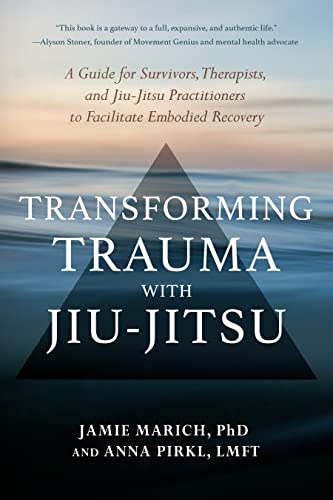
Alyson Stoner, founder of Movement Genius and a mental health advocate, brings a unique perspective shaped by firsthand experience with trauma recovery. After exploring Dr. Jamie Marich's work, she praises this book for its clear, accessible approach to reconnecting with the body through movement and martial arts. "This book is a gateway to a full, expansive, and authentic life," she says, highlighting its blend of immediate relief and long-term nervous system shifts. Rener Gracie, fourth-degree black belt and cofounder of Gracie University, also endorses the book, emphasizing its alignment with the original mission of Brazilian Jiu-Jitsu to empower the vulnerable. Their insights underscore why this guide is essential for anyone looking to deepen trauma healing through embodied practices.
Founder of Movement Genius, Mental Health Advocate
“I’ve closely followed Dr. Jamie’s collection of movement work because of her unique ability to simplify critical concepts while providing clear and practical tools to reconnect with your body and heal. Jamie and collaborator Anna help trauma survivors like myself see new possibilities and options for managing daily life, which builds a sense of resilience and feeling empowered in our decisions. Together they give ideas for how people can sensitively and effectively access movement and the martial arts, which provide immediate short-term benefits as well as long-term shifts in our nervous system, overall posture, and self-expression. This book is a gateway to a full, expansive, and authentic life and I’m so thankful they’ve made this kind of deep transformation available for everyone.” (from Amazon)
Jamie Marich, Ph.D. (she/they) speaks internationally on topics related to EMDR therapy, trauma, addiction, dissociation, expressive arts, yoga, and mindfulness, and maintains a private practice in her home base of Warren, OH. She founded and directs The Institute for Creative Mindfulness and developed the Dancing Mindfulness approach to expressive arts therapy as well as Yoga for Clinicians. Marich has written numerous books, notably Trauma and the 12 Steps: An Inclusive Guide to Recovery (recent edition with North Atlantic Books, 2020). She has won numerous awards for LGBT+ and mental health advocacy. In 2017, she earned her Women Empowered Pink Belt through Gracie University of Jiu-Jitsu. Learn more about Marich’s work at http://www.jamiemarich.com.
Jamie Marich, with her extensive background in trauma therapy and expressive arts, teams up with therapist Anna Pirkl to explore how Brazilian jiu-jitsu can aid trauma recovery. This book offers you tangible grounding practices and self-defense techniques designed to help survivors reconnect with their bodies and regain a sense of safety. It goes beyond traditional talk therapy by addressing trauma's physical imprint, providing clear methods for therapists and martial arts instructors to integrate embodied healing into their work. Particularly, chapters on creating trauma-sensitive practice spaces and accessible recovery protocols stand out, making it a practical guide for survivors and professionals alike.
This AI-created book on PTSD recovery is crafted based on your unique experience and goals. You share your background, symptom severity, and areas you want to focus on, and the book is created to match your specific needs. This personalized approach makes it easier to follow a clear, manageable 30-day plan that fits your life and helps you steadily reduce symptoms. It offers a focused, compassionate guide tailored just for you, rather than generic advice.
TailoredRead AI creates personalized nonfiction books that adapt to your unique background, goals, and interests. Instead of reading generic content, you get a custom book written specifically for your profession, experience level, and learning objectives. Whether you're a beginner looking for fundamentals or an expert seeking advanced insights, TailoredRead crafts a book that speaks directly to you. Learn more.
This tailored book takes a personalized 30-day journey to ease PTSD symptoms by focusing on practical, day-by-day steps that align with your unique background and healing goals. It explores evidence-based approaches to symptom reduction, emotional regulation, and self-care techniques designed specifically for your experience. The book reveals how to integrate these practices into your daily routine, offering a tailored path that matches your interests and pace. By concentrating on rapid, focused actions, it helps you navigate the complexities of PTSD with clarity and compassion, making each day a meaningful step toward resilience. This personalized approach bridges expert insights with your individual needs for effective healing.
Edward Hallowell, co-author of the New York Times bestseller Driven to Distraction, praises this book for its unique blend of trauma handbook, research, memoir, and cultural reflection. He highlights Shaili Jain’s ability to present difficult subjects with insight and warmth, making it a compelling guide through trauma’s toughest moments. His endorsement signals the book’s value for anyone navigating PTSD, whether personally or professionally. Complementing this, Irvin Yalom, emeritus professor of psychiatry at Stanford, calls it an "atlas" of PTSD, appreciating Jain’s skillful weaving of patient stories and scientific insights that reveal trauma’s deep imprint on mind, body, and society. Their combined perspectives underscore why this book is a go-to resource for understanding and healing from trauma.
“Shaili Jain has written a wonderfully creative mixture of handbook on trauma, research report, personal memoir, and cultural commentary. The result is a thoroughly engaging book about the hardest parts of life presented gently, beautifully, insightfully, and with wisdom.” (from Amazon)
Shaili Jain, M.D. is a British born American Physician of Indian ancestry. She is a psychiatrist and Post-Traumatic Stress Disorder specialist and currently serves as the Medical Director for Integrated Care at the VA Palo Alto Healthcare System. She is a trauma scientist affiliated with the National Center for PTSD, a consortium which is widely regarded as the world's leading center of excellence on PTSD, and a Clinical Associate Professor affiliated with the Department of Psychiatry and Behavioral Sciences at the Stanford University School of Medicine. Dr. Jain’s work is widely accredited for elucidating the role of paraprofessionals and peers in the treatment of American veterans with PTSD. Her research has been published in some of the most prestigious medical journals, such as the Journal of the American Medical Association, Psychiatric Services and the Journal of Traumatic Stress, in addition to being featured in national publications such as The New York Times. Her medical essays and commentary have appeared in the New England Journal of Medicine, Psychology Today, Kevin MD, STAT, public radio and elsewhere.
When a practicing psychiatrist and PTSD specialist like Shaili Jain steps into the writing arena, you get an insightful view that goes beyond standard clinical texts. Jain draws from her years at a top VA hospital and her role at the National Center for PTSD to map the complex biology, genetics, and cultural impacts of trauma. You’ll find detailed explorations of how PTSD disrupts relationships, creativity, and work, alongside evolving treatments like peer support and technology-driven care models. This book suits anyone wanting a thorough understanding of trauma’s reach—from survivors and family members to healthcare providers seeking nuanced perspectives.
Arielle Schwartz, PhD, is a licensed clinical psychologist, EMDR therapy consultant, and certified Clinical Trauma Professional who runs a private practice in Boulder, Colorado. With her advanced training in somatic psychology and clinical trauma, she brings a nuanced understanding to complex PTSD and childhood trauma. Driven by both academic expertise and hands-on clinical work, Schwartz offers readers compassionate, research-informed strategies to begin healing deep-rooted wounds, connecting therapeutic science with real-world recovery.
Arielle Schwartz, PhD, is a licensed clinical psychologist, EMDR therapy consultant, certified Clinical Trauma Professional, and author. She earned her doctorate in Clinical Psychology at Fielding Graduate University and her master’s degree in Somatic Psychology from Naropa University. She lives and runs a private practice in Boulder, Colorado.
Arielle Schwartz, PhD, a licensed clinical psychologist with specialized training in EMDR and somatic psychology, draws on her deep clinical experience to tackle the complex challenges of healing from childhood trauma. You’ll find detailed explanations of complex PTSD symptoms and practical strategies drawn from cognitive behavioral therapy, dialectical behavioral therapy, and somatic approaches that you can apply to manage emotional dysregulation, avoidance, and depression. Each chapter includes real-life examples that illuminate the healing journey, helping you understand how trauma shapes your emotional world and offering ways to reclaim control. This book is best suited for those ready to engage with a thoughtful, compassionate guide to begin their recovery from the long-term effects of developmental trauma.
Jeff Tiedrich, a noted political commentator, highlights the fresh perspective Mary L. Trump brings with her new book. He shares his enthusiasm with "yo Mary Trump has a new book coming out and it's f'n awesome #ad", reflecting how the book resonated with him amid ongoing national challenges. His endorsement underscores the book's relevance for anyone trying to make sense of America's recent traumas and the path toward healing.
Mary L. Trump is the author of the international #1 bestseller, Too Much and Never Enough: How My Family Created the World’s Most Dangerous Man. She holds a Ph.D from the Derner Institute of Advanced Psychological Studies at Adelphi University, and has taught graduate courses in trauma, psychopathology, and developmental psychology.
2021·208 pages·PTSD, Donald Trump, Trauma, Psychology, Political Psychology
Mary L. Trump draws on her clinical psychology expertise and personal experience with PTSD to explore America's collective trauma stemming from recent political turmoil and long-standing societal wounds. She dissects how systemic failures and leadership crises have compounded national stress, offering insight into the psychological impact on individuals and institutions alike. Through chapters examining historical roots and the dynamics of trauma, you gain a nuanced understanding of how societal trauma manifests and what healing might require. This book suits anyone seeking to grasp the deeper psychological fractures affecting the nation beyond headline politics.
Pete Walker, M.A., LMFT, brings 40 years of clinical experience to this guide, specializing in adult survivors of childhood trauma. His practice in Berkeley, California, and extensive work as a therapist and trainer inform a deeply informed resource designed to help you understand and recover from Complex PTSD. Walker’s book distills decades of work into accessible language, offering you a map for healing and tools drawn from both his clients’ and his own journey.
Pete Walker, M.A., LMFT has a private practice in Berkeley, California. He has been working as a counselor, lecturer, group leader, trainer, supervisor and consultant of other therapists for 40 years. Pete specializes in helping adults who were traumatized in childhood, especially those whose repeated exposure to abuse and/or neglect left them with the symptoms of Complex Post Traumatic Stress Disorder [CPTSD]. His best-selling book, 'Complex PTSD: From Surviving To Thriving' is a comprehensive, user-friendly, self-help guide to recovering from the lingering effects of childhood trauma. This newest edition contains a new index of key words, and a 38-page excerpt from his memoir: 'Homesteading In The Calm Eye Of The Storm'.
Pete Walker, a seasoned therapist with four decades of experience, writes from both professional expertise and personal insight into Complex PTSD. His book offers a detailed roadmap for those struggling with childhood trauma, explaining concepts like emotional flashbacks, self-reparenting, and the different trauma survivor types. You’ll find practical tools to identify your recovery stage, manage inner critics, and navigate abandonment depression, all illustrated with real-life journeys. This guide suits anyone grappling with complex trauma effects or supporting a loved one through recovery, providing clear, accessible explanations without overwhelming psychological jargon.
Edna B. Foa, PhD, is a professor of psychiatry at the University of Pennsylvania and directs the Center for the Treatment and Study of Anxiety. She has dedicated her career to researching anxiety disorders, especially PTSD, and developed a treatment program recognized for its efficacy worldwide. This therapist guide distills her extensive clinical and research experience, offering mental health professionals a structured approach to Prolonged Exposure Therapy tailored to diverse trauma survivors.
Edna Foa, Elizabeth A. Hembree, Barbara Olasov Rothbaum, Sheila Rauch(you?)·
About the Author
Edna B. Foa, PhD, is a Professor of Psychiatry at the University of Pennsylvania and Director of the Center for the Treatment and Study of Anxiety in the Perelman School of Medicine, at the University of Pennsylvania. Dr. Foa has devoted her academic career to studying the psychopathology and treatment of anxiety and related disorders, primarily Posttraumatic Stress Disorder (PTSD) and obsessive-compulsive disorder (OCD). The treatment program she developed for PTSD has received the highest evidence for its efficacy and has been widely disseminated in the US and around the world.
2019·200 pages·PTSD, Therapy, Trauma, Emotional Processing, Clinical Practice
Edna B. Foa, a leading psychiatrist at the University of Pennsylvania, developed this guide to enhance therapists' ability to treat PTSD through Prolonged Exposure Therapy. You gain a clear framework to help patients process traumatic memories by carefully confronting avoided situations and emotions, supported by updated research and adaptations for complex cases including military populations. The book lays out how to implement each therapy component effectively, with insights into when and how to tailor approaches to individual needs. If you're a mental health professional seeking a research-backed, flexible treatment method for PTSD, this guide offers practical depth without unnecessary jargon.
The best PTSD books and more, in your inbox each week. No account needed.
Conclusion
This collection of 10 PTSD books reveals a spectrum of approaches—from the intimate memoirs that humanize trauma to the clinical guides empowering therapists and survivors alike. If you're grappling with personal PTSD, memoirs like Invisible Storm offer relatable narratives and hope. For those supporting loved ones or seeking practical strategies, Arsenal of Hope and The Complex PTSD Coping Skills Workbook provide actionable tools.
Therapists and advanced practitioners may find Prolonged Exposure Therapy for PTSD an indispensable resource for treatment, while The Unspeakable Mind bridges science with compassionate care for a broader perspective. Combine these readings strategically—for example, pairing cognitive therapy insights from Getting Unstuck from PTSD with embodied healing in Transforming Trauma with Jiu-Jitsu can offer a holistic approach.
Alternatively, you can create a personalized PTSD book to bridge the gap between general principles and your specific situation. These books can help you accelerate your learning journey, equipping you with knowledge and strategies shaped by experts who understand the complex realities of PTSD.
Frequently Asked Questions
I'm overwhelmed by choice – which book should I start with?
Start with Invisible Storm for a compelling personal perspective or The Complex PTSD Coping Skills Workbook if you're seeking practical tools. These books offer relatable entry points into PTSD's impact and coping strategies.
Are these books too advanced for someone new to PTSD?
Not at all. Many, like Getting Unstuck from PTSD, break down complex therapies into accessible exercises, making them suitable whether you're new or have some prior knowledge.
What's the best order to read these books?
Begin with memoirs to understand lived experiences, then explore practical workbooks like The Complex PTSD Coping Skills Workbook, and finally dive into clinical guides for deeper therapeutic insights.
Do I really need to read all of these, or can I just pick one?
You can pick based on your needs. For example, Arsenal of Hope is excellent for family support, while Prolonged Exposure Therapy for PTSD suits clinicians. Choose what aligns best with your goals.
Which books focus more on theory vs. practical application?
The Unspeakable Mind offers deep theoretical insights, while Getting Unstuck from PTSD and The Complex PTSD Coping Skills Workbook emphasize practical exercises and coping skills.
Can personalized PTSD books complement these expert recommendations?
Yes! Personalized books build on expert insights by tailoring strategies to your unique experiences and goals, making recovery more relevant and effective. Learn more here.
📚 Love this book list?
Help fellow book lovers discover great books, share this curated list with others!