8 Quality Control and Management Books That Define Excellence
Nigel Mk Chanakira, Kingdom Private Equity Chairman, and other experts recommend these essential Quality Control and Management books to elevate your skills and results.
Updated on June 28, 2025·We may earn commissions for purchases made via this page
0 of 8 books have Audiobook versions
We're launchingLaunching on Product Hunt today 🎉We just launchedJust launched on Product Hunt 🎉
Modelpeers, from the BookAuthority teamFrom the BookAuthority team: Modelpeers, a free way to follow AI models and agents like you follow people. We'd love your support.
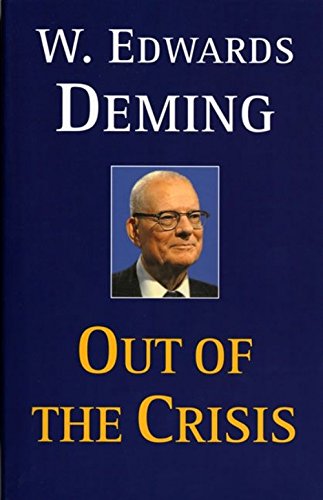
What if the way you think about quality control and management is missing a crucial piece? Nigel Mk Chanakira, chairman of Kingdom Private Equity, once realized that 94% of problems in business stem from systemic flaws—not isolated issues. This insight, sparked by W. Edwards Deming's classic Out of the Crisis, challenges conventional wisdom and pushes leaders to rethink how they approach quality.
Nigel’s journey through complex organizational challenges revealed the power of systemic thinking and rigorous quality frameworks. His recommendation of Deming’s work underscores the importance of foundational texts that have shaped modern quality management. Alongside other authoritative voices, these books offer practical strategies grounded in decades of real-world application.
While these expert-curated books provide proven frameworks, you might want content tailored to your background, industry, or skill level. Consider creating a personalized Quality Control and Management book that builds on these insights to accelerate your learning and impact.
Nigel Mk Chanakira, chairman of a private equity firm focused on pro-poor investments, highlights the systemic nature of quality issues that Deming addresses. After years leading organizations through complex challenges, he found Deming's insight that "94% of all problems and solutions for improvement are systemic" deeply influential. Nigel’s reflection that fixing the system is essential resonates for anyone looking to enhance management effectiveness. His experience underscores why this book remains a vital guide for leaders aiming to transform their management approach.
“#LeadershipThought
W. Edwards Deming, who was a legendary figure in business quality, wrote in his book Out Of The Crisis, that “94% of all problems and solutions for improvement are systemic.” In other words, you must fix the system.” (from X)
W. Edwards Deming was a renowned statistician and management consultant, best known for his work in quality management and his 14 Points for Management, which transformed American industry and contributed to Japan's post-war economic recovery.
W. Edwards Deming, a renowned statistician and consultant, crafted this book to challenge and overhaul traditional American management approaches that prioritize short-term profits over sustainability. You’ll explore his 14 Points for Management, which emphasize systemic thinking to prevent losses in market share and jobs. The book teaches you how to realign management goals with innovation, long-term planning, and quality improvement, illustrated through clear language and practical examples. If you’re involved in leadership, operations, or organizational change, this book offers a foundational perspective on transforming management to sustain business success.
John S. Oakland, chairman of The Oakland Group and Emeritus Professor at Leeds University Business School, brings over 40 years of expertise to this book. His extensive research and consulting experience in quality management and operational excellence underpin a text designed to clarify and unify multiple performance improvement frameworks. This background ensures you’re learning from someone deeply embedded in the evolution of quality management practices, offering insights grounded in both theory and widespread real-world application.
John S. Oakland, Robert J. Oakland, Michael A. Turner(you?)·
About the Author
John S. Oakland is Chairman of The Oakland Group and Head of its Research and Education Division. John is also Emeritus Professor of Business Excellence and Quality Management at Leeds University Business School, UK. Over the past 40 years he has researched, taught and consulted in all aspects of quality management, operational excellence, strategic process management and business improvement in thousands of organizations.
After decades of researching and consulting on quality management, John S. Oakland developed a model that blends traditional Total Quality Management with modern performance frameworks like lean Six Sigma and ISO 9001. This book guides you through the evolving language of quality and operational excellence, offering practical insights on accelerating change, cutting costs, and safeguarding reputation. Ten case studies demonstrate how to apply these strategies to actual business challenges, making complex concepts accessible without jargon. If you’re aiming to understand quality management’s strategic role in business improvement, this book provides a grounded, methodical approach rather than abstract theory.
This AI-created book on quality mastery is crafted based on your background, skill level, and specific interests in quality control. By sharing your goals and focus areas, you receive a tailored resource that dives into the exact topics you want to explore. This personalized approach makes navigating complex quality management concepts clearer and more relevant to your work or study.
TailoredRead AI creates personalized nonfiction books that adapt to your unique background, goals, and interests. Instead of reading generic content, you get a custom book written specifically for your profession, experience level, and learning objectives. Whether you're a beginner looking for fundamentals or an expert seeking advanced insights, TailoredRead crafts a book that speaks directly to you. Learn more.
2026·50-300 pages·Quality Control and Management, Quality Control, Process Improvement, System Analysis, Quality Assurance
This tailored book explores quality control and management with a focus on your unique background and goals. It examines foundational principles alongside advanced concepts, revealing how to bridge expert knowledge with your specific needs. By drawing from the collective human understanding of quality mastery, it offers a custom pathway through complex ideas, ensuring you engage deeply with topics most relevant to you. The book covers essential techniques in quality assurance, process improvement, and system analysis, all while matching your interests and skill level. This personalized approach fosters a richer learning experience that aligns with your professional context and ambitions.
Quentin Brook is a trainer, consultant, and bestselling author specializing in Lean and Six Sigma techniques. With a first-class degree from the University of Bath and experience in Detroit's automotive and UK aerospace industries, he brings authoritative expertise to this guide. As Managing Director of OPEX Resources, Brook has crafted a resource that combines practical Lean Six Sigma tools with detailed Minitab guidance, making it a trusted companion for process improvement professionals worldwide.
Quentin Brook is a trainer, consultant and bestselling author in the field of process improvement techniques, specifically Lean and Six Sigma. In 2004, he wrote the first edition of 'Lean Six Sigma and Minitab'. Now in its fifth edition (Sept 2017), this publication has become a bestseller for process improvement professionals, with over 150,000 copies sold worldwide. Quentin Brook is the Managing Director of OPEX Resources, the publisher of 'Lean Six Sigma and Minitab', and a provider of process improvement support tools, training and consultancy. Having graduated from the University of Bath (UK) in 1994 with a 1st Class Engineering and Management degree, Quentin developed his experience of statistical quality tools in the automotive industry of Detroit and aerospace industry of the UK. Quentin lives in Winchester, United Kingdom.
Quentin Brook draws on years of hands-on experience in automotive and aerospace industries to offer a down-to-earth guide to Lean Six Sigma paired with Minitab software. You’ll find over 140 tools and techniques clearly mapped out through the DMAIC process, complete with detailed instructions and visuals that demystify statistical analysis. This book suits practitioners running Six Sigma projects, trainees preparing for certification, and managers who need a solid grounding in process improvement. Chapters walk you through practical applications, like using Minitab for data-driven decision-making, making it a resource you can return to throughout your improvement journey.
J.M. Juran, a pioneer in quality management, has significantly influenced the field with his extensive work and publications. Known for emphasizing the importance of quality in business processes, Juran's expertise has shaped practices worldwide. His deep understanding of quality control challenges led him to create this handbook, offering guidance to maintain and grow quality without increasing costs, making it a trusted resource for organizations navigating competitive and regulatory pressures.
J.M. (editor-in-chief); Frank M. Gryna (associate editor) Juran(you?)·
About the Author
J.M. Juran, a pioneer in quality management, has significantly influenced the field with his extensive work and publications. He is known for his contributions to quality control and management, emphasizing the importance of quality in business processes. His expertise has shaped the practices of many organizations worldwide.
Drawing from decades of pioneering work in quality management, J.M. Juran crafted this handbook to address the evolving challenges in quality control amid rising competition and regulatory demands. You’ll explore practical frameworks for reducing costs while improving quality across an entire organization, from executive strategies to shop floor applications. Specific chapters delve into quality program design, cost analysis, and the integration of computerization in quality processes. This book suits professionals aiming to embed quality deeply into their business operations rather than just applying surface-level fixes.
James R. Evans brings over 43 years of expertise as professor emeritus at the University of Cincinnati, blending academic rigor with practical insight in quality management. His leadership roles, including president of the Decision Sciences Institute and service on the Malcolm Baldrige National Quality Award Board, lend unmatched authority to this work. Together with coauthor William Lindsay, Evans offers a detailed examination of total quality management principles and performance excellence, making this a definitive guide for anyone seeking to elevate organizational quality standards.
James R. Evans is professor emeritus of operations, business analytics and information systems in the Lindner College of Business at the University of Cincinnati, having retired after over 43 years on the faculty. He holds BSIE and MSIE degrees from Purdue University and a doctoral degree in industrial and systems engineering from Georgia Tech. He has been involved in numerous professional societies throughout his career and he served as president of the Decision Sciences Institute from 1997-1998. He also served 11 years on the Board of Examiners and Panel of Judges for the Malcolm Baldrige National Quality Award, and was active in the Partnership for Excellence, the Ohio-based Baldrige initiative. He has been the editor of the Quality Management Journal, published by the American Society for Quality, and served on editorial boards of numerous other journals. Dr. Evans has published 100 refereed papers in major academic journals and more than 50 editions of 20 textbooks in diverse areas of business including quality management, Six Sigma, simulation and risk analysis and business analytics. During the annual Quality Congress in May 2004, the American Society for Quality presented Dr. Evans and coauthor Dr. William Lindsay with the Philip B. Crosby Medal for writing The Management and Control of Quality, 5th Edition. The Crosby medal was presented “for authoring a distinguished book contributing significantly to the extension of the philosophy and application of the principles, methods, and techniques of quality management.” He also received the 2018 Lindner Research Excellence Award from the College of Business at the University of Cincinnati and the 2019 Baldrige Foundation Leadership Award for Excellence in Education.
Drawing from decades of academic and practical experience, James Evans and William Lindsay dissect the evolution and core principles of quality management with a level of depth few texts achieve. You’ll explore foundational concepts of total quality management alongside the latest methodologies for enterprise-wide performance excellence, including technical tools and measurement criteria. The book’s extensive chapters guide you through both theory and application, offering a clear view of how organizations can embed quality into their culture and operations. This is a resource tailored for those serious about mastering quality systems, whether in manufacturing or service industries, providing a solid framework that supports continuous improvement efforts.
This custom AI book on quality improvement is created based on your background, skill level, and specific goals to improve quality fast. You share what areas of quality control matter most to you and your desired pace, and the book focuses on delivering a clear, actionable path for rapid progress. By tailoring the content specifically for your needs, it helps you cut through generic advice and concentrates on what will make the biggest difference in your quality efforts within 90 days.
TailoredRead AI creates personalized nonfiction books that adapt to your unique background, goals, and interests. Instead of reading generic content, you get a custom book written specifically for your profession, experience level, and learning objectives. Whether you're a beginner looking for fundamentals or an expert seeking advanced insights, TailoredRead crafts a book that speaks directly to you. Learn more.
2026·50-300 pages·Quality Control and Management, Quality Control, Process Improvement, Performance Metrics, Systemic Analysis
This tailored book explores a focused journey through rapid quality improvement, designed to match your unique background and goals. It examines practical ways to accelerate measurable enhancements within a 90-day timeframe, emphasizing actions that matter most to your specific situation. Covering essential principles of quality control and management, it reveals pathways to quickly identify, address, and monitor key quality factors that impact your outcomes. This personalized approach ensures the content aligns directly with your interests and skill level, providing an efficient learning experience that bridges expert knowledge with your real-world challenges. By concentrating on fast, effective quality transformations, it supports you in making tangible progress without wading through unnecessary information.
Pankaj Lochan brings extensive expertise from leading Indian manufacturing giants like Tata Steel and JSPL, combined with advanced training in Six Sigma and Lean methodologies. His deep background as a mechanical engineer and management professional informs this book’s practical approach to Total Quality Management, focusing on real-world deployment and simplification of core concepts. This book reflects his commitment to making quality management accessible and effective for practitioners in complex industrial environments.
Pankaj Lochan has more than 2 decades of experience with Indian organizations like Tata Steel, Dr Reddy's, JSW Group and Ambuja Cements. He joined his current role at Mafatlal Group from JSPL where he was working at Group CHRO. He has worked as a P&L head and headed various roles in Manufacturing, Projects, Human Resource, R&D, TQM, and Business Transformation. Pankaj holds a degree in Mechanical Engineering from IIT-BHU, India and has also done his management education program from IIM Ahmedabad, India. Pankaj has authored 10 books in wide genres of TQM, HR, General Management and Fiction. He holds several patents and copyrights, is a Master-black-belt in Six Sigma and is also trained in improvement methodologies like Lean, TOC and TPM. Pankaj has also been trained on Open Innovations from the Haas School, Berkley and on TQM from Japanese Union of Scientists & Engineers (JUSE), Tokyo.
2020·210 pages·Quality Control and Management, Quality Control, Manufacturing, Process Industry, Total Quality Management
Drawing from over two decades of hands-on experience in manufacturing and process industries, Pankaj Lochan offers a clear-eyed exploration of Total Quality Management (TQM) principles tailored for practical deployment. You’ll find detailed discussions on policy management, daily work management, and continuous improvement, supported by straightforward examples that demystify complex quality tools without diluting their essence. The book pays special attention to minimizing waste and variation, making it particularly relevant if you’re navigating quality challenges in manufacturing or process settings. It suits professionals looking for a grounded, deployment-focused guide rather than abstract theory.
Kaoru Ishikawa was a prominent figure in the field of quality management, known for developing the fishbone diagram and advancing Total Quality Management (TQM). His work focused on elevating quality control across manufacturing and service industries, and he played a central role in promoting quality circles in Japan. This book captures his authoritative insights and practical experience, providing a window into Japan's unique approach to quality that has influenced organizations worldwide.
Kaoru Ishikawa was a prominent figure in the field of quality management, known for his development of the fishbone diagram and his contributions to Total Quality Management (TQM). His work emphasized the importance of quality control in manufacturing and service industries, and he played a crucial role in promoting quality circles in Japan. Ishikawa's insights have influenced countless organizations worldwide, making him a key figure in the evolution of modern quality practices.
Kaoru Ishikawa, a pioneering quality management expert best known for creating the fishbone diagram, crafted this book to share Japan's distinctive approach to quality control. You'll explore how quality circles function and why they're integral to continuous improvement, with detailed discussions on applications in subcontracting and marketing. The book teaches you how to implement Total Quality Control principles that foster collaboration and systematic problem-solving in manufacturing and service settings. This is ideal if you want to understand the mechanics behind Japan's industrial success and apply these methods to enhance your organization's quality management.
John S. Oakland is a leading figure in quality management, founder and Executive Chairman of OAKLAND Consulting Plc., and Head of the European Centre for TQM at the University of Bradford Management Centre. His extensive background in production management and research led him to develop a pragmatic approach to Total Quality Management, which has been successfully applied in thousands of organizations. This pictorial guide reflects his commitment to making TQM concepts clear and accessible through engaging illustrations by Peter Morris, offering a fresh way to grasp quality management essentials.
John S. Oakland is a leading expert in quality management, founder and Executive Chairman of OAKLAND Consulting Plc., and Head of the European Centre for TQM at the University of Bradford Management Centre. He has a successful industrial career in research and production management and has developed a pragmatic approach to TQM, used in thousands of organizations. His bestselling works include Total Quality Management and Cases in Total Quality Management.
John S. Oakland's decades of industrial and academic experience shape this straightforward visual guide to Total Quality Management. Rather than drown you in jargon, Oakland teams up with Peter Morris to present complex TQM concepts through clear, memorable illustrations, making it accessible for managers and students alike. You’ll find chapters that break down quality tools and implementation strategies into digestible, image-driven explanations, perfect if you prefer learning by seeing. This book suits those responsible for quality initiatives who want practical insights without wading through dense theory or technical manuals.
The best Quality Control and Management books and more, in your inbox each week. No account needed.
Conclusion
These eight books collectively emphasize that quality control and management is as much about mindset and culture as it is about tools and metrics. From Deming’s systemic overhaul to Ishikawa’s Japanese quality circles, the theme is clear: sustainable excellence requires integrated approaches.
If you're navigating organizational change, start with Out of the Crisis for systemic perspectives. For data-driven improvements, combine Lean Six Sigma and Minitab with Total Quality Management and Operational Excellence for tactical and strategic balance. Visual learners will benefit from Total Quality Management’s pictorial approach, while manufacturing professionals should explore ORGANIZATIONAL QUALITY MANAGEMENT for deployment insights.
Alternatively, you can create a personalized Quality Control and Management book to bridge the gap between general principles and your specific situation. These books can help you accelerate your learning journey and sharpen your edge in quality leadership.
Frequently Asked Questions
I'm overwhelmed by choice – which book should I start with?
Start with Out of the Crisis by W. Edwards Deming. It lays the foundation by explaining systemic issues in quality management, offering a mindset shift essential before diving into specific tools or frameworks.
Are these books too advanced for someone new to Quality Control and Management?
Not at all. For beginners, Total Quality Management by John S. Oakland offers a visual and accessible introduction, while What Is Total Quality Control? explains Japanese methods in straightforward language.
What's the best order to read these books?
Begin with Out of the Crisis for core principles, then explore Total Quality Management and Operational Excellence for strategic application. Follow with Lean Six Sigma and Minitab to master data-driven tools, and finally, deepen understanding with specialized texts like Juran's Quality Control Handbook.
Do these books assume I already have experience in Quality Control and Management?
Some do, like Lean Six Sigma and Minitab, which suits practitioners familiar with process improvement. Others, such as Total Quality Management, are designed to guide newcomers through core concepts effectively.
Which book gives the most actionable advice I can use right away?
Lean Six Sigma and Minitab stands out for practical tools and step-by-step guidance on improving processes with data analysis, making it ideal for immediate application in projects.
How can I tailor these expert books to my specific industry or role?
While these books offer solid frameworks, personalized content bridges theory and your unique needs. You can create a personalized Quality Control and Management book that adapts expert insights specifically for your background, goals, and industry challenges.
📚 Love this book list?
Help fellow book lovers discover great books, share this curated list with others!