"Reactive Programming with Kotlin" by raywenderlich Tutorial Team, Alex Sullivan made it to BookAuthority's Best Reactive Programming eBooks of All Time!
8 Reactive Programming Books That Separate Experts from Amateurs
Discover these 8 Reactive Programming Books authored by industry leaders like Julien Ponge and Josh Long, trusted for their practical insights and authoritative guidance.
Updated on June 28, 2025·We may earn commissions for purchases made via this page
7 of 8 books have Kindle versions
We're launchingLaunching on Product Hunt today 🎉We just launchedJust launched on Product Hunt 🎉
Modelpeers, from the BookAuthority teamFrom the BookAuthority team: Modelpeers, a free way to follow AI models and agents like you follow people. We'd love your support.
What if the way you handle asynchronous data streams could transform your entire development approach? Reactive programming is reshaping how software engineers build responsive, scalable applications, especially in today's cloud-native, microservices-driven environments. Its ability to manage data flow and system resiliency makes it a crucial skill for modern developers.
These eight books offer deep dives into reactive programming concepts, authored by practitioners who have shaped the landscape. From Julien Ponge's work with Vert.x to Josh Long’s expertise in Spring's reactive streams, each title provides practical knowledge grounded in real-world experience. Their insights help you grasp event-driven design, reactive streams, and asynchronous programming with clarity.
While these expert-curated books provide proven frameworks, readers seeking content tailored to their specific background, skill level, or focus areas in reactive programming might consider creating a personalized Reactive Programming book that builds on these insights to accelerate learning and practical application.
Dr Julien Ponge is a Principal Software Engineer at Red Hat and a key contributor to the Eclipse Vert.x project. With two decades of experience in open source ecosystems, including creating IzPack and Eclipse Golo, his expertise in reactive programming is deeply rooted. His work as an associate professor and his leadership roles in computer science underscore the authority behind this book. Driven by the need to simplify building reactive applications in Java, he offers readers a clear path to mastering Vert.x and asynchronous programming concepts.
Dr Julien Ponge is a Principal Software Engineer at Red Hat, working on reactive and the Eclipse Vert.x project. He is on leave from INSA Lyon and the CITI Laboratory where he was an Associate Professor in computer science and engineering. He held various teaching, research, management, and executive positions there. He has 20 years of experience in open source ecosystems, having participated in many projects and created the likes of IzPack and the Eclipse Golo programming language. He is also a regular speaker at user groups and conferences. He is an alumni from Université Clermont Auvergne (France) and the University of New South Wales (Australia) where he obtained his PhD degrees.
While working as a principal software engineer at Red Hat, Julien Ponge noticed the growing need for reliable reactive applications in Java ecosystems. This book teaches you the core Vert.x concepts alongside asynchronous and reactive programming fundamentals, guiding you through building reactive microservices with tools for database communication, messaging, and app resiliency. Chapters like "Event bus" and "Persistent state management" provide actionable insights into event-driven design and maintaining data integrity. It's designed primarily for intermediate Java developers aiming to master reactive frameworks and enhance application responsiveness and scalability.
Josh Long has been the first Spring Developer Advocate since 2010 and is a Java Champion known for authoring six books including O'Reilly's Cloud Native Java. His extensive background in Java and open-source contributions uniquely positions him to write authoritatively on reactive programming. This book reflects his expertise and commitment to helping developers harness Spring's reactive capabilities to build scalable, responsive applications.
Josh Long has been the first Spring Developer Advocate since 2010. He is a Java Champion, author of 6 books including O'Reilly's Cloud Native Java, and numerous best-selling video trainings. He is an open-source contributor and a podcaster.
Josh Long challenges the conventional wisdom that traditional input/output can effectively handle modern microservices and big-data demands. Drawing from his deep experience as the first Spring Developer Advocate and a Java Champion, he guides you through the reactive programming landscape within the Spring ecosystem, emphasizing practical use of Reactor, Spring Boot, and Spring Cloud. You'll explore how reactive streams improve system resilience by managing IO-bound workloads more efficiently, and learn about data access, web programming, and integration techniques including RSocket. This book suits developers aiming to master reactive patterns for scalable, fault-tolerant applications, though those seeking lighter introductions might find its depth demanding.
This AI-created book on reactive programming is tailored to your experience level and specific goals. By sharing your background and the topics you want to focus on, you receive a tailored guide that covers just what you need to deepen your understanding and skills. This personalized approach makes mastering complex reactive concepts more manageable and directly relevant to your projects.
TailoredRead AI creates personalized nonfiction books that adapt to your unique background, goals, and interests. Instead of reading generic content, you get a custom book written specifically for your profession, experience level, and learning objectives. Whether you're a beginner looking for fundamentals or an expert seeking advanced insights, TailoredRead crafts a book that speaks directly to you. Learn more.
This tailored book explores reactive programming by matching its depth and breadth to your unique experience and learning goals. It covers foundational concepts like event-driven design and asynchronous data streams, then dives into advanced techniques such as backpressure handling and reactive system resilience. By focusing on your interests, the content simplifies complex topics and connects theory to practical application, making the learning journey efficient and engaging. This personalized approach ensures you receive exactly the knowledge you need to master reactive programming, bridging expert insights with your specific background and ambitions.
Tomasz Nurkiewicz, a Senior Software Engineer with over a decade of Java and back-end expertise, teamed with Ben Christensen, known for creating RxJava, to deliver this guide. Their combined experience in JVM languages and distributed systems shapes a book that teaches you how to build asynchronous, event-driven applications using RxJava. Their practical insights stem from real-world development challenges, making this a valuable resource for Java developers eager to adopt reactive programming.
Tomasz Nurkiewicz, Erik Meijer, Ben Christensen(you?)·
About the Author
Tomasz Nurkiewicz is a Senior Software Engineer with over a decade of experience in Java and back-end development. He is passionate about JVM languages and open source technologies, frequently blogging for DZone and speaking at leading Java conferences worldwide. Ben Christensen, co-author, is a software engineer focused on resilience, scale, and distributed systems, known for creating open source projects like Hystrix and RxJava.
Unlike most reactive programming books that dive straight into theory, this one springs from authors Tomasz Nurkiewicz and Ben Christensen's deep hands-on experience with JVM languages and distributed systems. You learn to think reactively, mastering RxJava to handle asynchronous data flows without falling into callback traps, illustrated by examples from Android and server-side applications. The book guides you through managing concurrency, debugging reactive code, and even previews upcoming RxJava features, making it a practical manual for crafting scalable, responsive software. If you're keen on applying reactive principles to real-world Java projects, this book offers a solid, expertise-driven foundation.
Thomas Nield is a business consultant for Southwest Airlines and a maintainer of RxJavaFX and RxKotlin. His early passion for technology and business analytics paved the way for expertise in Java, Kotlin, and reactive programming. As an author and speaker with O'Reilly Media, he aims to make reactive programming accessible and relevant to developers intimidated by complexity. His experience combining practical programming with real-world applications informs this book's clear, example-driven approach.
Thomas Nield is a business consultant for Southwest Airlines in Schedule Initiatives, and a maintainer for RxJavaFX and RxKotlin. Early in his career, he became fascinated with technology and its role in business analytics. After becoming proficient in Java, Kotlin, Python, SQL, and reactive programming, he became an open source contributor as well as an author/speaker at O'Reilly Media. He is passionate about sharing what he learns and enabling others with new skill sets. He enjoys making technical content relatable and relevant to those unfamiliar with or intimidated by it. Currently, Thomas is interested in data science, reactive programming, and the Kotlin language. You may find him speaking on these three subjects and how they can interconnect. He has also authored the book Getting Started with SQL, by O'Reilly Media.
2017·400 pages·Reactive Programming, Concurrency, Android Development, Kotlin Integration, Data Streams
Drawing from his deep experience as a business consultant and open source maintainer, Thomas Nield offers a practical dive into RxJava's core concepts and tools. You’ll get hands-on with Observables, Subscribers, and the operators that transform data streams, learning how to handle concurrency and backpressure without the usual complexity. The book’s later chapters show how these principles apply specifically to Android and Kotlin, providing concrete examples that bring reactive programming to life. This is a solid choice if you want to grasp reactive design patterns and build responsive, scalable Java applications but don’t need a purely theoretical text.
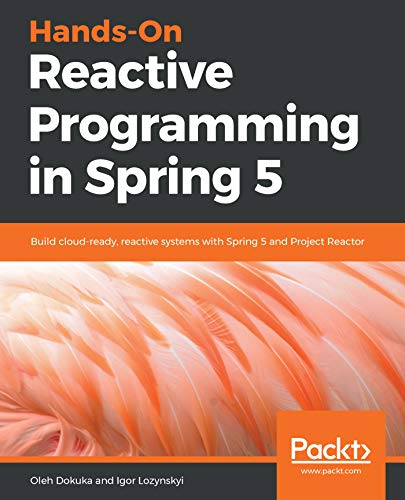
Oleh Dokuka is an experienced software engineer and Pivotal Champion known for his significant contributions to Project Reactor and the Spring Framework. His intimate knowledge of these technologies and daily advocacy for reactive programming underpin this book, making it a practical guide for developers aiming to build reactive systems using Spring 5 and Project Reactor.
Oleh Dokuka is an experienced software engineer, Pivotal Champion, and one of the top contributors to Project Reactor and Spring Framework. He knows the internals of both frameworks very well and advocates reactive programming with Project Reactor on a daily basis. Along with that, the author applies Spring Framework and Project Reactor in software development, so he knows how to build reactive systems using these technologies.
2018·556 pages·Reactive Programming, Software Architecture, Microservices, Spring Framework, Project Reactor
Oleh Dokuka and Igor Lozynskyi leverage their deep expertise in the Spring Framework and Project Reactor to guide you through building modern reactive systems. This book teaches you to create efficient microservices using Spring 5, WebFlux, and Spring Cloud, focusing on asynchronous, nonblocking communication and scaling reactive applications. You’ll gain practical knowledge on reactive streams, integrating databases reactively, and deploying high-performance services. Ideal if you’re a Java developer looking to master reactive programming concepts and apply them within the Spring ecosystem, this book offers clear pathways to build scalable, responsive applications.
This custom AI book on reactive programming is created based on your current skill level and specific goals. By focusing on your background and the reactive topics you want to master, it crafts a daily learning plan that helps you build practical skills efficiently. Unlike one-size-fits-all guides, this tailored approach ensures your study time directly addresses the reactive concepts most relevant to you, making complex topics accessible and actionable from day one.
TailoredRead AI creates personalized nonfiction books that adapt to your unique background, goals, and interests. Instead of reading generic content, you get a custom book written specifically for your profession, experience level, and learning objectives. Whether you're a beginner looking for fundamentals or an expert seeking advanced insights, TailoredRead crafts a book that speaks directly to you. Learn more.
This tailored book offers a focused 30-day journey designed to rapidly build your practical reactive programming skills. It explores core concepts such as asynchronous data streams, event-driven design, and reactive streams with clear, step-by-step daily lessons. The content matches your existing background and interests, ensuring each day’s material aligns with your learning pace and goals. By bridging expert knowledge with your specific needs, this book reveals how to tackle complex reactive patterns and apply them effectively in real-world applications. The personalized approach accelerates your mastery, providing a practical path through reactive programming that’s customized just for you.
Clement Escoffier is a Senior Principal Software Engineer and Reactive Architect at Red Hat with a rich background spanning academia, management, and open-source contributions including Eclipse Vert.x and Quarkus. His deep experience in software engineering methods and tools informs this book, which aims to make developing reactive, event-driven Java applications more efficient and effective. His hands-on work with Kubernetes-native Java frameworks drives the practical insights you’ll find here, connecting complex architectural concepts to real-world implementation.
Clement Escoffier is a Senior Principal Software Engineer and Reactive Architect at Red Hat. He had several professional lives, from academic positions to management. Currently, he is mainly working as a Quarkus and Vert.x developer. He has been involved in projects and products touching many domains and technologies such as OSGi, mobile app development, continuous delivery, DevOps. His main area of interest is software engineering - processes, methods, tools that make the development of software more efficient and also more fun. Clement is an active contributor to many open-source projects such as Apache Felix, iPOJO, Wisdom Framework, and Eclipse Vert.x, SmallRye, Eclipse MicroProfile, and Quarkus.
When Clement Escoffier and Ken Finnigan explore reactive systems in this book, they focus on blending event-driven architecture with Java's Quarkus framework to tackle real challenges in distributed application design. You learn how to build applications that remain responsive and resilient under stress, especially in microservices and serverless environments, by integrating messaging systems like Apache Kafka. The book delves into practical approaches, from understanding reactive principles to implementing Kubernetes-native applications, making it ideal for developers aiming to reduce latency and boost throughput in cloud-native solutions. If you're looking to deepen your grasp of reactive programming tied specifically to Java and Quarkus, this book provides targeted insights, though it’s less suited for beginners without Java experience.
Lamis Chebbi, a Google Developer Expert for Angular, channels her extensive expertise and passion for the modern web into this book. As the founder of Angular Tunisia and an active community leader, she wrote this guide to help developers navigate the complexities of reactive programming in Angular, especially with the latest Angular 18 features. Her hands-on approach reflects her commitment to empowering developers, especially women and students, to build performant and maintainable reactive applications.
Lamis Chebbi is a Google Developer Expert for Angular. She is the author of “Reactive Patterns with RxJS for Angular”. She is an enthusiastic software engineer with a strong passion for the modern web. She's the founder of Angular Tunisia, a member of the WWCode community, a speaker, a content creator, and a trainer. She has been into Angular for the past few years and loves to share her knowledge about Angular through participating in workshops and organizing training sessions. Empowering women and students is one of her highest priorities. Besides Angular and the web, Lamis loves music, traveling, chromotherapy, and volunteering. Last but not least, she's a forever student.
Lamis Chebbi brings her deep experience as a Google Developer Expert to this focused guide on integrating RxJS with Angular 18, addressing the challenge many developers face in managing asynchronous data streams effectively. You’ll learn how to implement reactive patterns using Observables, subjects, and operators, alongside the novel Angular Signals feature that enhances fine-grained reactivity and UI rendering. The book walks you through building a full Angular app with real-world examples, covering performance optimizations, memory management, and testing strategies tailored to reactive streams. If you’re working with Angular and want to harness RxJS beyond basics, this book gives you the tools and insights to elevate your applications.
The raywenderlich Tutorial Team, known for their expertise in mobile development education, teamed up with Alex Sullivan to craft this detailed guide. Their combined experience in Android and Kotlin development fuels this resource, making it ideal for developers eager to deepen their understanding of reactive programming. Their approach demystifies complex RxJava concepts and equips you with practical skills to elevate your Android apps.
raywenderlich Tutorial Team is a group of experienced developers and educators specializing in mobile development, particularly in Android and iOS. They are known for their high-quality tutorials and books that help developers enhance their skills. Alex Sullivan is a prominent member of this team, contributing to various educational resources in programming and software development.
What if everything you knew about Android development changed by embracing reactive programming? The raywenderlich Tutorial Team, with Alex Sullivan's expertise, offers a deep dive into RxJava, RxKotlin, and RxAndroid, showing you how to handle asynchronous event streams with clarity. You’ll learn to apply operators for filtering and combining events, manage UI interactions reactively, and tackle advanced topics like reactive networking and app architecture. This book benefits Kotlin developers familiar with Android SDK who want to master reactive paradigms and improve app responsiveness without sacrificing code readability.
The best Reactive Programming books and more, in your inbox each week. No account needed.
Conclusion
Across these eight books, several themes emerge: the importance of mastering reactive streams, integrating reactive principles within popular Java and Kotlin frameworks, and applying reactive patterns effectively in web and mobile applications. Whether you aim to build resilient microservices or enhance UI responsiveness, these books offer pathways to deepen your expertise.
If you’re just starting with reactive programming, beginning with foundational texts like "Learning RxJava" and "Reactive Programming with RxJava" can build a solid base. For those focused on Spring or Java microservices, "Reactive Spring" and "Hands-On Reactive Programming in Spring 5" provide advanced strategies. Meanwhile, Angular developers will find specialized guidance in "Reactive Patterns with RxJS and Angular Signals."
Alternatively, you can create a personalized Reactive Programming book to bridge the gap between general principles and your specific situation. These books can help you accelerate your learning journey and develop reactive solutions that stand out in today’s software landscape.
Frequently Asked Questions
I'm overwhelmed by choice – which book should I start with?
Start with "Learning RxJava" if you're new to reactive principles; it's approachable and practical. Then, move to more specialized books like "Reactive Spring" or "Vert.x in Action" as your skills grow.
Are these books too advanced for someone new to Reactive Programming?
Most books, like "Learning RxJava" and "Reactive Programming with RxJava," cater to beginners and intermediate developers, offering clear explanations before diving into advanced topics.
What's the best order to read these books?
Begin with foundational texts that explain core concepts, then explore framework-specific books like "Reactive Spring" or "Hands-On Reactive Programming in Spring 5" to apply knowledge practically.
Do these books assume prior experience in Reactive Programming?
Many provide a gradual introduction; for example, "Learning RxJava" is designed for newcomers, while others like "Reactive Systems in Java" expect some background in Java and reactive concepts.
Which book gives the most actionable advice I can use right away?
"Reactive Programming with RxJava" offers practical examples and debugging tips, making it valuable for developers ready to implement reactive code immediately.
Can I get a Reactive Programming book tailored to my specific goals and experience?
Yes! While these books offer solid foundations, you can create a personalized Reactive Programming book tailored to your background and objectives, bridging expert knowledge with your unique needs.
📚 Love this book list?
Help fellow book lovers discover great books, share this curated list with others!