10 Russian History Books That Illuminate Power and Change
Insights from Stephen Fry, Tom Hanks, Elon Musk and 40 experts on Russian History Books that decode Russia’s past and present
Updated on June 23, 2025·We may earn commissions for purchases made via this page
5 of 10 books have Audiobook versions
We're launchingLaunching on Product Hunt today 🎉We just launchedJust launched on Product Hunt 🎉
Modelpeers, from the BookAuthority teamFrom the BookAuthority team: Modelpeers, a free way to follow AI models and agents like you follow people. We'd love your support.
What if the story of Russia’s past could be told not just through dates and battles, but through the complex interplay of power, ideology, and human resilience? Russian history is full of contradictions—heroic and horrific moments tangled together in ways that still shape the world today. Understanding that tangled legacy is more urgent than ever as global tensions rise and narratives clash.
Take, for example, Stephen Fry, who found Bill Browder’s Freezing Order a gripping, real-life thriller revealing the dark heart of corruption under Putin’s Russia. Or Tom Hanks, captivated by Masha Gessen’s The Future Is History, which unpacks Russia's political transformations through intimate human stories. Meanwhile, Elon Musk has highlighted Robert K. Massie’s vivid portrait of Catherine the Great, connecting the dots between personal ambition and political power.
These experts bring diverse perspectives, yet all point to the same truth: Russian history is essential to grasp if you want to understand today’s geopolitical landscape. While these expert-curated books provide proven frameworks, readers seeking content tailored to their specific interests in Russian history might consider creating a personalized Russian History book that builds on these insights.
Balaji S. Srinivasan, CEO and co-founder of 21 and board partner at Andreessen Horowitz, highlights how this book reshaped his understanding of World War II by unifying its European and Asian theaters from the Soviet perspective. He points out that in the Asian theater, the war arguably started in 1937 with Japan's attack on China, a viewpoint often overlooked. His insight reveals how McMeekin’s narrative challenges conventional Eurocentric views and broadens the war's scope. Complementing this, Peter Hitchens underscores the astonishing extent of US support for Stalin's empire, noting McMeekin’s compelling argument about the strategic generosity under Lend-Lease that surpassed Britain's treatment. Their perspectives show how this book offers a fresh lens on Stalin’s pivotal role in shaping World War II’s global dimension.
“@ScottFlear In the Asian theater, World War 2 arguably began in 1937 with the Japanese attack on China. One of the interesting things about McMeekin's book is that it unifies the European and Asian theaters from the Soviet perspective.” (from X)
Sean McMeekin is a professor of history at Bard College. The award-winning author of several books, including Stalin’s War, The Russian Revolution, and July 1914, McMeekin lives in Clermont, New York.
Unlike most World War II histories that focus heavily on Hitler’s role, Sean McMeekin shifts the spotlight to Joseph Stalin, arguing that Stalin was the true driving force behind the conflict. Drawing from extensive research in Soviet, European, and American archives, you gain a nuanced understanding of how Stalin’s geopolitical ambitions shaped the war’s course, especially in the Asian theater and through the impact of Lend-Lease aid. Chapters reveal how Stalin’s strategic calculations orchestrated a devastating war of attrition that extended beyond Europe’s borders, offering you insights into the often-overlooked Soviet perspective. This book suits you if you want to deepen your grasp of global war dynamics beyond conventional narratives, though it challenges traditional heroic frameworks.
Toomas Hendrik Ilves, former President of Estonia and a respected voice on Eastern European affairs, shared his interest in the deep dive this book takes into NATO's expansion. He calls it "a fascinating discussion of a new book on how NATO expanded, ‘Not One Inch: America, Russia, and the Making of Post-Cold War Stalemate.’" His perspective, rooted in firsthand experience with post-Soviet transitions, highlights how this work reshapes understanding of the decade after the Berlin Wall fell. Similarly, Kevin Rothrock, editor at Meduza, praises the book as "a fascinating page in a fascinating book," underscoring its value for those following U.S.-Russia dynamics today.
“A fascinating discussion of a new book on how NATO expanded, ‘Not One Inch: America, Russia, and the Making of Post-Cold War Stalemate’. If the issue interests you, do listen:” (from X)
M. E. Sarotte is the Kravis Professor of Historical Studies at Johns Hopkins School of Advanced International Studies, a member of the Council on Foreign Relations, and the author of The Collapse: The Accidental Opening of the Berlin Wall.
When M. E. Sarotte first realized how misunderstood the post-Cold War relationship between America and Russia was, she dove into thousands of once-classified documents to trace the origins of NATO's eastward expansion. You gain a detailed understanding of diplomatic exchanges from 1990 onward, including Secretary of State James Baker's pivotal "not one inch" offer and how shifting U.S. ambitions reshaped Eastern Europe. This book is especially insightful if you want to grasp the nuanced political decisions that led to today's tensions with Russia. Its dense archival evidence and narrative focus make it best suited for readers interested in foreign policy and historic diplomacy rather than casual history buffs.
This AI-created book on Russian history is tailored to your specific interests and background. You share your knowledge level, topics you want to explore, and your learning goals, and the book is created to focus on those areas with precision. Personalization matters here because Russian history is vast and complex — this book cuts through the noise to cover what matters most to you. It’s like having a guide that matches your pace and priorities from start to finish.
TailoredRead AI creates personalized nonfiction books that adapt to your unique background, goals, and interests. Instead of reading generic content, you get a custom book written specifically for your profession, experience level, and learning objectives. Whether you're a beginner looking for fundamentals or an expert seeking advanced insights, TailoredRead crafts a book that speaks directly to you. Learn more.
This personalized book offers a tailored framework for exploring Russian history, focusing on key themes such as imperial dynamics, revolutionary movements, and Soviet-era transformations. It provides a structured approach that fits your specific interests, whether political intrigue, cultural evolution, or geopolitical shifts. By cutting through generic narratives, it delivers targeted analyses that align with your historical background and learning goals. The content covers influential figures, ideological shifts, and pivotal events, delivering a customized roadmap to Russia’s complex past that reflects your desired depth and focus.
Stephen Fry, a celebrated actor and writer, brought a unique perspective to "Freezing Order" during a time when understanding Russia's hidden power struggles felt urgent. He described it as "more explosive, compulsive and gasp-inducingly thrilling than any fiction I have read for years," emphasizing Browder’s courage in taking on Putin’s network despite great personal risk. Fry’s endorsement highlights not just the book’s gripping narrative but its real-world stakes. Similarly, John Sipher, former CIA officer, praised the book’s vivid portrayal of Russia’s dark realities, underscoring its importance for anyone seeking the truth behind current geopolitical tensions.
“More explosive, compulsive and gasp-inducingly, spine-tinglingly, mouth-dryingly, heart-poundingly thrilling than any fiction I have read for years. FREEZING ORDER has a stunning plot — international conspiracy, hidden rings of power and corruption, a dark threat to any hope of world order – but with this stunning twist: it is all true. Browder – with incredible courage, resilience and grace, and always at great risk to his personal safety and freedom – continues to chase after Putin and his henchmen. This is real heroism, and what a cracking good read it makes for.”
Bill Browder is the founder and CEO of Hermitage Capital Management and was the largest foreign investor in Russia until 2005. Since 2009, when his lawyer, Sergei Magnitsky, was murdered in prison after uncovering a $230 million fraud committed by Russian government officials, Browder has been leading a campaign to expose Russia’s endemic corruption and human rights abuses. Before founding Hermitage, Browder was vice president at Salomon Brothers. He holds a BA in economics from the University of Chicago and an MBA from Stanford Business School.
2022·336 pages·Russian History, Putin, Corruption, Money Laundering, Political Intrigue
Freezing Order chronicles Bill Browder’s relentless fight against the sprawling corruption entrenched in Vladimir Putin’s Russia. Drawing from his deep experience as the founder of Hermitage Capital Management and the tragic murder of his lawyer Sergei Magnitsky, Browder takes you through the labyrinth of money laundering, political intimidation, and deadly reprisals. You’ll gain a sharp understanding of how illicit funds are traced and frozen across borders, and the complex interplay between finance and authoritarian power. This book suits anyone interested in Russian politics, international law enforcement, or the personal costs of standing up to tyranny.
Simon Sebag-Montefiore, British historian and television presenter known for his deep knowledge of Russian history, highlighted this book during his study of Stalin-era policies. After exploring the brutal realities of Soviet rule, he described it as "A magisterial and heartbreaking history of Stalin’s Ukrainian famine." His recommendation underscores how the book reshaped his understanding of the famine's political motives. Alongside him, Daniel Finkelstein praised its relentless and powerful narrative, reinforcing Anne Applebaum’s position as a leading historian on Soviet crimes.
Anne Applebaum is a historian and journalist. She is a staff writer for The Atlantic as well as a Senior Fellow at the Agora Institute, Johns Hopkins University. She is the author of several history books, including Gulag: A History which won the 2004 Pulitzer Prize for non-fiction; Iron Curtain, which won the 2013 Cundill Prize for Historical Literature; and Red Famine, which provides the background to today's Russian-Ukrainian conflict. Anne has been writing about Eastern Europe and Russia since 1989, when she covered the collapse of communism in Poland for the Economist magazine. She is married to Radoslaw Sikorski, a Polish politician and writer, and lives in Poland and the U.S.
2017·496 pages·Russian History, European History, Soviet Politics, Agricultural Collectivization, Political Repression
When Anne Applebaum first uncovered the staggering scope of Stalin's famine in Ukraine, she transformed a grim historical episode into a deeply researched narrative that goes beyond statistics to reveal the human devastation. You learn how Soviet policies deliberately weaponized food shortages to suppress Ukrainian peasants, supported by detailed archival evidence and harrowing personal accounts. This book is particularly insightful if you're interested in the intersection of political strategy and human rights abuses, offering a clear view of how state power can inflict mass suffering. Chapters dissect the collectivization policies and their brutal consequences, making the book a poignant study of political oppression in Soviet-era Eastern Europe.
Emily Petroff, an astronomer and project manager involved in advanced scientific collaborations, found this book strikingly relevant amidst today's political climate. She remarked, "Just finished Masha Gessen’s incredible book The Future Is History. As relevant now as when it was written and incredibly enlightening as to what is happening in the news. I highly recommend!!" This reflection underscores how Gessen’s detailed portraits of individuals navigating Russia’s shifting political landscape can profoundly reshape your understanding of modern Russian history.
“Just finished Masha Gessen’s incredible book The Future Is History. As relevant now as when it was written and incredibly enlightening as to what is happening in the news. I highly recommend!! Delta also seems to enjoy it.” (from X)
Masha Gessen is an award-winning journalist and bestselling biographer of Vladimir Putin. Their understanding of the events and forces that have wracked Russia in recent times is unparalleled.
2017·528 pages·Russian History, Autocracy, Political Science, Sociology, Biography
When Masha Gessen first realized how swiftly Russia was slipping back into autocracy, they crafted this narrative through the lives of four individuals who came of age during the brief hope of democracy’s dawn. You’ll gain a nuanced grasp of the political, social, and personal upheavals that shaped modern Russia, illustrated by intimate portraits that reveal how authoritarianism reasserted itself. The book particularly benefits anyone seeking to understand the complexities behind Russia's recent history and the human costs of political transformation. Chapters detailing the interplay between personal freedoms and systemic repression stand out, offering insight beyond typical political histories.
National Book Award Winner
New York Public Library Helen Bernstein Book Award
This AI-created book on Russian history is tailored to your specific goals and background, crafting a custom learning plan that fits your pace and interests. By sharing your current understanding and what aspects of Russian history you want to explore, the book focuses precisely on those areas. It’s designed to help you tackle this complex history efficiently, without wading through unrelated material. This personalized approach ensures you get the most relevant content to deepen your knowledge within a month.
TailoredRead AI creates personalized nonfiction books that adapt to your unique background, goals, and interests. Instead of reading generic content, you get a custom book written specifically for your profession, experience level, and learning objectives. Whether you're a beginner looking for fundamentals or an expert seeking advanced insights, TailoredRead crafts a book that speaks directly to you. Learn more.
2026·50-300 pages·Russian History, Political History, Cultural Context, Historical Timeline, Key Figures
This personalized book presents a focused and intensive 30-day plan designed to deepen your understanding of Russian history according to your unique interests and goals. It provides a tailored framework that prioritizes critical themes such as political shifts, cultural developments, and key historical events, cutting through irrelevant information. The content emphasizes strategic engagement with Russian historical periods, ideologies, and influential figures, offering a structured pathway to assimilate complex narratives effectively. By addressing your specific objectives, the book delivers a streamlined methodology that fits your background and learning pace, enabling efficient mastery of Russian history within a defined timeframe.
Toomas Hendrik Ilves, former President of Estonia and a keen observer of Russian affairs, highlights the extraordinary resistance this book faced from Putin’s circle, describing it as "the best possible advertisement" for its revealing content. His endorsement reflects the book's powerful exposé of the Kremlin's inner workings and the KGB’s resurgence in modern Russia. The detailed narrative reshaped his understanding of Russia’s grip on Western institutions. Alongside him, John Sipher, a former CIA officer, simply calls it a "great book," affirming its credibility from intelligence perspectives.
“If you haven't ordered it yet, this is the best possible advertisement for a book: Putin and his thug cronies trying to stop its publication. Barbra Streisand tried this. And instead gave it a name, the "Streisand effect". Now go buy the book while it's still available.” (from X)
Catherine Belton reports on Russia for The Washington Post. She worked from 2007 to 2013 as the Moscow correspondent for the Financial Times, and in 2016 as the newspaper’s legal correspondent. She has previously reported on Russia for The Moscow Times and BusinessWeek and served as an investigative correspondent for Reuters. In 2009, she was short-listed for the British Press Awards’ Business and Finance Journalist of the Year prize. She lives in London.
Unlike most political exposés, Catherine Belton’s insider experience as a Moscow correspondent for the Financial Times brings rare depth to this examination of Putin’s rise. You’ll gain a detailed understanding of how the KGB’s networks reclaimed power post-Soviet Union and reshaped Russia’s economy and global influence. The book digs into complex financial schemes and covert operations, revealing the transformation of oligarchs into Kremlin loyalists and their impact on Western institutions. If you want to grasp the mechanisms behind Russia’s modern political landscape and its global ramifications, this book offers a richly detailed, investigative narrative grounded in extensive interviews and document analysis.
Ryan Graves, SVP of Global Operations at Uber, shares how "Red Notice" reshaped his understanding of Russia's complex corruption landscape. After reading it, he found the book evolved from a business tale into a profound lesson on justice and activism, saying it became "a legendary international crime saga." This perspective came during a period of intense global scrutiny of Russian political dynamics, making the book's insights particularly striking. His reflection highlights how Browder's personal crusade against Kremlin corruption offers both caution and inspiration. Additionally, Jon Najarian, co-founder of Investitute and CNBC anchor, succinctly endorses the book, underscoring its broad appeal in financial and political spheres.
“Just finished Red Notice by Bill Browder... what starts as an epic business/investing book becomes a legendary international crime saga, then turns into a lesson in justice, activism & purpose. Highly recommended reading! Thanks for sharing your story, would love to meet sometime.” (from X)
Bill Browder, founder and CEO of Hermitage Capital Management, was the largest foreign investor in Russia until 2005. Since 2009, when his lawyer, Sergei Magnitsky, was murdered in prison after uncovering a $230 million fraud committed by Russian government officials, Browder has been leading a campaign to expose Russia’s endemic corruption and human rights abuses. Before founding Hermitage, Browder was vice president at Salomon Brothers. He holds a BA in economics from the University of Chicago and an MBA from Stanford Business School.
What if everything you knew about Russian corruption was wrong? Bill Browder, drawing from his deep experience as the largest foreign investor in Russia, chronicles a gripping tale of high finance intertwined with brutal political repression. You learn how systemic corruption operated in post-Soviet Russia, the personal risks of exposing it, and the legal-political struggle that followed the murder of his lawyer Sergei Magnitsky. Chapters detail both the anatomy of Russian oligarchic power and the international repercussions of Browder's campaign for justice. This book is essential for anyone wanting an insider’s view of Russia’s political economy and the human cost behind the headlines.
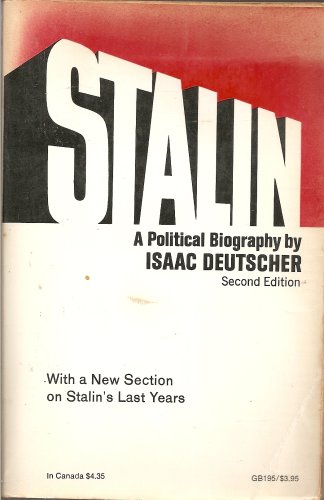
John Dewey, philosopher and educational reformer, valued this biography for its historical clarity during his reflections on political leadership and education. He praised it as "A marvelous accomplishment....Hardly a page in which his treatment does not have the clarity, force, and fairness that comes from the fact that he places events in the enduring context of historical perspective." This perspective reshaped his understanding of Stalin's complex political maneuvers. Similarly, The New York Times Book Review noted how Deutscher's work "Brings a whole period alive," establishing the biography as a lasting reference in Russian history studies.
“A marvelous accomplishment....Hardly a page in which his treatment does not have the clarity, force, and fairness that comes from the fact that he places events in the enduring context of historical perspective.”
Isaac Deutscher was a prominent historian and biographer known for his works on Soviet history, particularly his major three-volume biography of Leon Trotsky. His insights into the political landscape of the Soviet Union and his ability to contextualize historical events have made his writings essential for understanding the complexities of this era.
What started as Isaac Deutscher's deep engagement with Soviet political dynamics resulted in a detailed exploration of Joseph Stalin's rise and governance. Deutscher, renowned for his extensive work on Soviet figures like Trotsky, unpacks the political forces and personal ambitions shaping Stalin's leadership. You gain a nuanced understanding of Stalin’s strategic maneuvers within the broader Soviet context, including insights into his ideological stance and power consolidation tactics. This book suits anyone intrigued by political biography or the intricacies of 20th-century Russian power struggles, offering clarity on a figure often shrouded in myth and propaganda.
Robert K. Massie, a distinguished historian with a Pulitzer Prize and a Rhodes Scholar background, crafted this biography of Catherine the Great drawing on his extensive expertise in American and European history. His deep knowledge and narrative skill bring to life a compelling portrait of an extraordinary woman who shaped Russian history through intelligence and determination. Massie's decades of literary and historical experience make this work a significant contribution to understanding Russia's past, particularly its complex leadership and cultural shifts during Catherine's reign.
Robert K. Massie was born in Lexington, Kentucky, and studied American history at Yale and European history at Oxford, which he attended as a Rhodes Scholar. He was president of the Authors Guild from 1987 to 1991. His books include Nicholas and Alexandra, Peter the Great: His Life and World (for which he won a Pulitzer Prize for biography), The Romanovs: The Final Chapter, Dreadnought: Britain, Germany, and the Coming of the Great War, Castles of Steel: Britain, Germany, and the Winning of the Great War at Sea, and Catherine the Great: Portrait of a Woman. Robert K. Massie died in 2019.
What if everything you knew about Catherine the Great was filtered through myths? Robert K. Massie, a Pulitzer Prize-winning historian, digs beneath the legend to reveal a fiercely intelligent and politically savvy woman shaped by Enlightenment ideals and relentless determination. You’ll gain insight into her complex relationships, from her cold marriage to Peter to her strategic partnership with Potemkin, plus how she grappled with serfdom and revolutionary tides sweeping Europe. This book suits anyone curious about the intersection of personal ambition and broader historical forces in 18th-century Russia, offering more than a biography—it’s a vivid portrait of power’s human drama.
Sam Freedman, CEO at EPG Education and former executive at Teach First, came across this book while reflecting on Russia's complex history. He calls it "the best book of the century so far for me," praising its deep, human portrayal of Soviet collapse. Freedman's endorsement highlights how the book reshaped his understanding by revealing the emotional truths behind political upheaval, making it essential reading for anyone looking to grasp modern Russia's roots.
Svetlana Alexievich was born in Ivano-Frankivsk, Ukraine, in 1948 and has spent most of her life in the Soviet Union and present-day Belarus, with prolonged periods of exile in Western Europe. Starting out as a journalist, she developed her own nonfiction genre, which gathers a chorus of voices to describe a specific historical moment. Her works include War’s Unwomanly Face (1985), Last Witnesses (1985), Zinky Boys (1990), Voices from Chernobyl (1997), and Secondhand Time (2013). She has won many international awards, including the 2015 Nobel Prize in Literature 'for her polyphonic writings, a monument to suffering and courage in our time.'
2016·496 pages·Russian History, European History, Oral History, Soviet Union, Post-Soviet Era
Svetlana Alexievich, a Nobel Prize-winning author known for pioneering a unique oral history genre, draws from decades of journalistic experience to chronicle the Soviet Union's collapse through firsthand accounts. This book immerses you in the voices of everyday Russians, revealing their memories of oppression, hope, and the complex aftermath of a vanished era. You gain insight into the emotional landscape behind political events, understanding how history feels on the ground. Its layered storytelling suits anyone seeking a nuanced grasp of post-Soviet Russia beyond textbooks or political analysis.
The best Russian History books and more, in your inbox each week. No account needed.
Conclusion
This collection of 10 books reveals recurring themes: the enduring impact of authoritarian rule, the human cost of political upheaval, and the complex dance between Russia and the wider world. Whether you’re grappling with understanding the Soviet legacy or the intricacies of Putin’s regime, these narratives cover the spectrum.
If you’re facing the challenge of making sense of Russia’s modern political landscape, start with Putin's People and Freezing Order to uncover the power networks and corruption that define today’s Russia. For rapid immersion into Russia’s turbulent 20th century, combine Red Famine and Stalin's War for a sobering look at Stalin’s impact.
Once you’ve absorbed these essential perspectives, create a personalized Russian History book to bridge the gap between general principles and your specific interests or learning goals. Deepen your understanding with a guide tailored just for you.
Frequently Asked Questions
I'm overwhelmed by choice – which book should I start with?
Start with The Future Is History by Masha Gessen for a compelling look at Russia’s recent political shifts through personal stories. It offers a clear foundation before diving into more specialized topics like Stalin’s era or Putin’s regime.
Are these books too advanced for someone new to Russian History?
Not at all. While some books like Not One Inch delve into detailed diplomacy, others such as Secondhand Time use personal narratives to make complex history accessible for newcomers.
What's the best order to read these books?
Begin with broader narratives like Catherine the Great and Stalin's War to understand foundational history. Then move to modern analyses like Putin’s People and Freezing Order for contemporary context.
Do I really need to read all of these, or can I just pick one?
You can pick based on your interests. For political intrigue, choose Putin’s People; for understanding Soviet repression, Red Famine is key. Each book offers distinct insights into Russian history.
Are there any books here that contradict each other?
Some perspectives differ, especially regarding Stalin’s legacy or post-Cold War diplomacy. This diversity reflects the complexity of Russian history and invites you to form your own informed views.
How can I get tailored insights that match my specific interests in Russian History?
While these expert books provide broad understanding, personalized books can focus on your unique interests and goals. Consider creating a personalized Russian History book to get targeted content that complements these expert insights.
📚 Love this book list?
Help fellow book lovers discover great books, share this curated list with others!