7 Best-Selling Academic Research Books Millions Love
Discover authoritative Academic Research books by Paul J. Silvia, Wayne C. Booth, and other experts shaping best-selling approaches.
Updated on June 27, 2025·We may earn commissions for purchases made via this page
1 of 7 books have Audiobook versions
We're launchingLaunching on Product Hunt today 🎉We just launchedJust launched on Product Hunt 🎉
Modelpeers, from the BookAuthority teamFrom the BookAuthority team: Modelpeers, a free way to follow AI models and agents like you follow people. We'd love your support.
When millions of readers and leading scholars converge on a select few Academic Research books, it signals something special. Academic research remains a cornerstone of knowledge creation, yet navigating its demands requires guidance rooted in proven methods. These 7 best-selling books have earned their place by helping countless students, educators, and researchers improve their skills and results.
Authored by respected authorities such as Paul J. Silvia, known for his practical writing strategies, and Wayne C. Booth, whose research communication insights have influenced generations, these works present reliable, time-tested frameworks. From mastering research design to overcoming writing obstacles, their expertise shines through clear explanations and practical advice.
While these popular titles offer validated approaches, readers seeking tailored guidance might consider creating a personalized Academic Research book that blends these trusted methods with your unique background, goals, and research focus.
Wayne C. Booth is a renowned author and educator in the field of research and writing. His extensive background and decades of teaching have shaped this book into a trusted guide for generations of researchers. Along with coauthors Joseph Bizup and William T. FitzGerald, Booth updated the work to reflect modern research practices, emphasizing accessible language and practical tools that prepare you for today's academic challenges.
Wayne C. Booth and his coauthors bring decades of experience in research and writing education to this guide, which has influenced over 700,000 readers. The book walks you through every stage of academic research—from crafting questions and building strong arguments to evaluating sources critically in the digital age. For example, chapters updated by Joseph Bizup and William T. FitzGerald introduce fresh terminology and modern research tools, making it easier to navigate online databases and assess credibility. Whether you're a first-year student or a seasoned researcher, this book helps sharpen your ability to communicate research clearly and persuasively.
John W. Creswell, PhD, a professor and senior research scientist with decades of experience in mixed methods research, authored this book to provide clear guidance on designing research projects. His extensive academic background and leadership roles in research associations give this text authority and depth. This book reflects Creswell's commitment to helping you navigate the complexities of qualitative, quantitative, and mixed methods research with clarity and precision.
John W. Creswell, PhD, is a Professor of Family Medicine and Senior Research Scientist of the Michigan Mixed Methods Program. He has authored numerous articles and 34 books on mixed methods research, qualitative research, and research design. While at the University of Nebraska–Lincoln, he held the Clifton Endowed Professor Chair, served as Director of the Mixed Methods Research Office, co-founded SAGE’s Journal of Mixed Methods Research, and was an Adjunct Professor of Family Medicine at the University of Michigan and a consultant to the Veterans Administration Health Services Research Center in Ann Arbor, Michigan. He was a Senior Fulbright Scholar to South Africa in 2008 and to Thailand in 2012. In 2011, he co-led a National Institutes of Health working group on the “best practices of mixed methods research in the health sciences,” served as a Visiting Professor at Harvard’s School of Public Health and received an honorary doctorate from the University of Pretoria, South Africa. In 2014, he was the founding President of the Mixed Methods International Research Association. In 2015, he joined the staff of Family Medicine at the University of Michigan to Co-Direct the Michigan Mixed Methods Program. In 2017, he coauthored the American Psychological Association “standards” on qualitative and mixed methods research. The fourth edition of this book on Qualitative Inquiry & Research Design won the 2018 McGuffey Longevity Award from the U.S. Textbook & Academic Authors Association. During the COVID-19 pandemic, he gave virtual keynote presentations to many countries from his office in Osaka, Japan. Updates on his work can be found on his website at johnwcreswell.com.
John W. Creswell's extensive background in family medicine and mixed methods research shapes this guidebook into a practical manual for designing research projects. You’ll gain concrete skills in formulating research questions, developing hypotheses, and navigating qualitative, quantitative, and mixed methods approaches side by side. The book’s structure—with learning objectives, annotated examples, and parallel chapters on different methodologies—helps you critically compare research strategies and select the most fitting one. Whether you're a student or academic venturing into research design, this text offers clear walkthroughs and updated practices aligned with the APA manual, making it a solid choice for mastering research fundamentals.
This AI-created book on academic research methods is tailored to your specific interests and background. You share your experience level, which research topics intrigue you most, and your goals. The book is then created to focus exactly on the methods and knowledge you need, making learning both efficient and relevant. Personalizing research guidance like this helps you cut through generic advice to address your unique challenges and strengths.
TailoredRead AI creates personalized nonfiction books that adapt to your unique background, goals, and interests. Instead of reading generic content, you get a custom book written specifically for your profession, experience level, and learning objectives. Whether you're a beginner looking for fundamentals or an expert seeking advanced insights, TailoredRead crafts a book that speaks directly to you. Learn more.
2026·50-300 pages·Academic Research, Research Design, Methodology Selection, Data Analysis, Research Ethics
This tailored book explores academic research methods with a keen focus on aligning content to your unique background and goals. It reveals key elements of research design, data analysis, and scholarly writing that match your interests and challenges. By blending widely respected academic principles with your specified needs, it offers a learning experience that is both relevant and engaging.
The book examines essential research skills such as question formulation, methodology selection, and evidence evaluation in a way that resonates personally. This personalized approach helps you navigate complex research tasks more efficiently, fostering deeper understanding and practical application.
Paul J. Silvia, PhD, is the Lucy Spinks Keker Excellence Professor at the University of North Carolina at Greensboro, with a rich background in psychology focused on creativity and aesthetics. His expertise led him to write this guide addressing the challenges academics face in finishing writing projects amid busy schedules. Silvia's insights draw from his research and teaching experience, offering readers practical strategies to become more productive writers without sacrificing personal time.
Paul J. Silvia, PhD, is the Lucy Spinks Keker Excellence Professor at the University of North Carolina at Greensboro. He received his doctorate in psychology from the University of Kansas in 2001. Among many other things, he studies the psychology of creativity and the arts, particularly how people come up with good ideas and why they find art interesting, appealing, and awe-inspiring. He received the Berlyne Award, an early-career award given by the Society for the Psychology of Aesthetics, Creativity, and the Arts, for his research on aesthetic emotions, and he later served as president of the Society. His other books include Exploring the Psychology of Interest (2006); Public Speaking for Psychologists: A Lighthearted Guide to Research Presentations, Job Talks, and Other Opportunities to Embarrass Yourself (2010, with David B. Feldman); and Write It Up: Practical Strategies for Writing and Publishing Journal Articles (2015).
Paul J. Silvia's decades as a psychology professor and researcher shaped this guide to help academics finish writing projects without sacrificing personal time. You learn how to overcome common writing obstacles and integrate productive habits into busy schedules, with chapters covering everything from journal articles to grant proposals. For example, the new edition adds focused advice on writing successful grant and fellowship proposals. This book suits graduate students, faculty, and researchers seeking practical techniques to increase writing output while maintaining work-life balance. It doesn’t promise quick fixes but offers realistic, experience-based strategies grounded in academic realities.
A Short Guide to Academic Writing offers a focused and accessible approach to mastering the art of academic and professional writing. This book breaks down the often-daunting writing process into manageable steps, emphasizing clarity and adherence to A.P.A. style guidelines, which is essential for students navigating academic research tasks. Its concise format and approachable tone make it a valuable companion for undergraduates and graduates alike, helping them produce polished papers and documents. By demystifying academic writing conventions, it contributes significantly to education and test preparation contexts where clear communication is critical.
Drawing from years of guiding students through academic writing challenges, Andrew P. Johnson presents a clear, no-frills manual that breaks down the essentials of crafting scholarly papers. You’ll find precise guidance on structuring arguments, adhering to A.P.A. style, and refining your prose to meet professional standards without getting bogged down in jargon. The book’s focus on accessibility makes it a practical tool whether you’re tackling your first research paper or polishing a graduate thesis. For those aiming to sharpen their academic communication, Johnson’s text offers straightforward techniques rather than lofty theory.
Educational Research: A Guide to the Process offers a clear and methodical pathway into the fundamentals of academic research within education. This book has resonated widely with students and educators because it breaks down the research design process into manageable steps, supported by exercises and direct feedback from the authors. Its focus on practical application makes it a valuable companion for anyone beginning to navigate educational research. The book addresses the challenge of moving from theory to practice, providing a framework that helps you confidently plan and execute a research study.
When Norman E. Wallen and Jack R. Fraenkel wrote this book, they focused on guiding newcomers through every stage of crafting an educational research study. You’ll learn how to design your own research project, complete with exercises that sharpen your critical reading and analysis skills, plus author feedback that clarifies common pitfalls. The book’s structured approach helps you understand research concepts in context, from formulating questions to interpreting data. This makes it particularly useful if you’re a student or educator seeking a clear, hands-on introduction to educational research methods without being overwhelmed by jargon or abstract theory.
This AI-created book on academic writing is crafted based on your unique background, skill level, and specific research interests. You tell us which aspects of writing you want to improve and your personal goals, and this book is written to fit those needs exactly. By focusing on daily, targeted practices, it helps you build momentum and overcome typical hurdles in academic writing. Customization matters here because every researcher’s challenges and schedules differ, so this book matches your pace and priorities to make steady progress achievable.
TailoredRead AI creates personalized nonfiction books that adapt to your unique background, goals, and interests. Instead of reading generic content, you get a custom book written specifically for your profession, experience level, and learning objectives. Whether you're a beginner looking for fundamentals or an expert seeking advanced insights, TailoredRead crafts a book that speaks directly to you. Learn more.
This tailored book explores rapid, personalized writing improvement plans designed specifically for academic researchers. It focuses on daily, manageable steps to enhance your writing productivity and clarity, matching your current experience and research goals. The content reveals techniques to overcome common writing challenges, optimize your workflow, and build sustained writing habits. By combining widely recognized writing practices with insights that align with your unique interests, it offers a focused journey to boost your academic output efficiently. This personalized approach ensures that the book addresses your specific goals, helping you progress through a structured yet flexible daily regimen. Engage deeply with academic writing through tailored guidance that respects your pace and priorities.
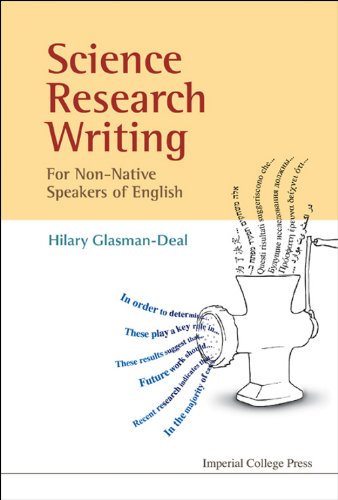
Hilary Glasman-Deal is a renowned author and educator specializing in science research writing, particularly for non-native English speakers. With extensive experience teaching graduate students at Imperial College London, she has developed practical resources that help students navigate the complexities of writing scientific papers. Her work is recognized for its clarity and effectiveness in improving writing skills among diverse learners.
Hilary Glasman-Deal is a renowned author and educator specializing in science research writing, particularly for non-native English speakers. With extensive experience teaching graduate students at Imperial College London, she has developed practical resources that help students navigate the complexities of writing scientific papers. Her work is recognized for its clarity and effectiveness in improving writing skills among diverse learners.
What started as Hilary Glasman-Deal's firsthand experience teaching graduate students at Imperial College London became a practical guide tailored for non-native English speakers striving to write science research papers. You learn to navigate the specific structures of scientific writing—Introduction, Methodology, Results, Discussion, and Abstract—while gaining targeted grammar and vocabulary to express complex ideas clearly. The book walks you through sample texts and exercises that demystify academic writing conventions, helping you build confidence in crafting theses or journal articles. If you are a graduate student or researcher with intermediate English skills aiming to publish in English, this book offers a straightforward pathway to mastering scientific communication without fluff or jargon.
Rose Utley is an experienced nurse educator with a background in academic research and nursing practice. Her expertise shapes this book, which serves as a practical guide for educators aiming to connect theory and research with everyday teaching. Utley’s work is grounded in recognized core competencies and offers clear pathways for professional development, making it a valuable resource for nurses preparing for certification and those invested in nursing education.
What happens when nursing expertise meets academic research? Rose Utley, drawing from her rich background as a nurse educator, offers a focused exploration of nursing education theory and its classroom application. This book unpacks the National League for Nursing's eight core competencies and guides you through translating research-based knowledge into your teaching practice. For instance, it details strategies for professional development and preparation for the Certified Nurse Educator Exam, making it a solid companion for both educators and students aiming to deepen their grasp on nursing education. If you're involved in nursing education, this book delivers targeted insights without unnecessary complexity.
The best Academic Research books and more, in your inbox each week. No account needed.
Conclusion
Together, these 7 books emphasize tested frameworks and broad acceptance in the Academic Research community. If you prefer proven methods for shaping research questions and arguments, start with "The Craft of Research, Fourth Edition" and "Research Design." For boosting your writing productivity and clarity, "How to Write a Lot" and "Short Guide to Academic Writing" are ideal companions.
Those exploring educational research will find Norman Wallen and Jack Fraenkel’s work approachable and practical. Meanwhile, non-native English speakers benefit from Hilary Glasman-Deal’s focused guidance on scientific writing. Nurse educators have targeted support through Rose Utley’s application of theory to practice.
Alternatively, you can create a personalized Academic Research book to combine proven methods with your unique needs. These widely-adopted approaches have helped many readers succeed in their academic research journeys.
Frequently Asked Questions
I'm overwhelmed by choice – which book should I start with?
Start with "The Craft of Research, Fourth Edition" for foundational skills in formulating questions and building arguments. It's widely used and accessible for all levels.
Are these books too advanced for someone new to Academic Research?
No, several books like "Educational Research" and "Short Guide to Academic Writing" are tailored to beginners, breaking down concepts clearly without jargon.
What's the best order to read these books?
Begin with research fundamentals in "The Craft of Research" and "Research Design," then advance to writing-focused titles like "How to Write a Lot." Specialized readers can consult nursing or science writing books as needed.
Do these books assume I already have experience in Academic Research?
Not necessarily. While some titles suit experienced researchers, many are designed to support novices building skills step-by-step.
Which book gives the most actionable advice I can use right away?
"How to Write a Lot" offers practical strategies to boost daily writing productivity, making it immediately useful for researchers facing writing challenges.
Can personalized books complement these expert recommendations?
Yes! While these expert books provide solid frameworks, personalized Academic Research books tailor strategies to your background and goals. Explore this option here.
📚 Love this book list?
Help fellow book lovers discover great books, share this curated list with others!