Top picks by Ali S. Raja, Steven Sinofsky, Jim Bridenstine reveal best-selling Astronautics books that deliver real insights
Updated on June 25, 2025·We may earn commissions for purchases made via this page
4 of 9 books have Audiobook versions
We're launchingLaunching on Product Hunt today 🎉We just launchedJust launched on Product Hunt 🎉
Modelpeers, from the BookAuthority teamFrom the BookAuthority team: Modelpeers, a free way to follow AI models and agents like you follow people. We'd love your support.
There's something special about books that both critics and crowds love, especially in a field as complex and inspiring as astronautics. With space exploration capturing imaginations worldwide, these best-selling books offer proven value, blending technical depth with human stories that resonate across generations. The enduring popularity of these works shows how astronautics continues to inspire curiosity and innovation.
Experts like Ali S. Raja, an emergency physician and Harvard professor, praise An Astronaut's Guide to Life on Earth for its unique leadership insights drawn from space missions. Steven Sinofsky, board partner at a16z, highlights Rocket Men for its compelling recount of Apollo 8’s historic journey, while Jim Bridenstine, former NASA Administrator, underscores the significance of these narratives in understanding space exploration’s milestones.
While these popular books provide proven frameworks, readers seeking content tailored to their specific astronautics needs might consider creating a personalized Astronautics book that combines these validated approaches with your unique goals and background.
Ali S. Raja, an emergency physician and Harvard professor with military experience, highlights how this book sheds light on the crucial role of CapCom in space missions. His recommendation resonates with many who appreciate the deep insights Chris Hadfield shares about preparation and teamwork. Raja’s praise stems from witnessing the book’s value during high-pressure moments, reflecting its practical influence beyond astronautics. Similarly, Simon Carley, a professor of emergency medicine, relates to Hadfield's concept of "being a zero," underscoring the book's relevance to professionals who thrive in critical, life-saving environments.
“Awesome! Cmdr Hadfield described the importance of the CapCom role so well in his book - I’m so glad you’re filling it for this mission! Congrats to you and the rest of the team, and Godspeed to the astronauts!” (from X)
Chris Hadfield, one of the world's most seasoned and accomplished astronauts, is the author of the #1 international bestseller An Astronaut's Guide to Life on Earth. The top graduate of the U.S. Air Force Test Pilot School in 1988 and the U.S. Navy Test Pilot of the Year in 1991, Hadfield was selected to be an astronaut in 1992. He was Chief CAPCOM at NASA for twenty-five shuttle missions and served as Director of Operations for NASA in Star City, Russia, from 2001 to 2003; Chief of Robotics for the NASA Astronaut Office in Houston from 2003 to 2006; and Chief of International Space Station Operations for the NASA Astronaut Office from 2006 to 2008. Hadfield most recently served as Commander of the International Space Station, where, while conducting a record-setting number of scientific experiments and overseeing an emergency spacewalk, he gained worldwide acclaim for his breathtaking photographs and educational videos about life in space. His online videos, including a zero-gravity version of David Bowie's 'Space Oddity,' have collectively received more than fifty million views.
Chris Hadfield's decades of experience as an astronaut culminate in a unique guide that flips traditional success advice on its head. Drawing from his time commanding the International Space Station and navigating life-threatening situations, Hadfield emphasizes preparation for the worst and savoring the moment. You'll learn how his unconventional insights—like why obsessing over small details matters and the surprising value of caring about others' opinions—can reshape your approach to challenges. Chapters filled with vivid stories of spacewalks, emergency responses, and even breaking into a Space Station with a Swiss army knife offer lessons that reach far beyond astronautics. This book suits anyone eager to adopt a mindset of resilience and ingenuity, whether or not you dream of space travel.
Steven Sinofsky, a board partner at a16z and adviser at BoxHQ, highlights "Rocket Men" as a standout in space literature, appreciating how it aligns with popular reader enthusiasm. He notes, "I'm partial to 'Rocket Men' in this great book list," reflecting the book’s impact during his exploration of astronautics history. This recommendation gains weight given Sinofsky’s deep engagement with technology and innovation. Additionally, Jim Bridenstine, former NASA Administrator, underscores the mission's milestone, remarking, "In 1968 we sent men to the Moon. They didn’t leave boot prints, but it was the first time humans ever left Earth for another destination," emphasizing the book's vivid recounting of humanity’s bold leap into space.
Robert Kurson earned a bachelor’s degree in philosophy from the University of Wisconsin and a law degree from Harvard Law School. His award-winning stories have appeared in The New York Times Magazine, Rolling Stone, and Esquire, where he was a contributing editor. He is the New York Times bestselling author of Shadow Divers, the 2005 American Booksellers Association’s nonfiction Book Sense Book of the Year; Crashing Through, based on Kurson’s 2006 National Magazine Award–winning profile in Esquire of the blind speed skier, CIA analyst, and entrepreneur Mike May; and Pirate Hunters. He lives in Chicago.
Robert Kurson challenges the conventional wisdom that heroic space missions are all about technology and engineering by focusing deeply on the human stories behind Apollo 8. Drawing on extensive interviews with astronauts and NASA personnel, you gain intimate insight into the personal courage and family dynamics that shaped this daring mission. The book vividly reconstructs moments like the tense lunar orbit and the astronauts’ reflections, particularly in chapters detailing Frank Borman's conflicted leadership and Jim Lovell’s lifelong dream. If you’re fascinated by space history or want to understand how high-stakes decisions are made under pressure, this narrative offers a gripping and nuanced perspective beyond technical details.
This AI-created book on astronautics mastery is crafted based on your background, current knowledge, and the specific areas you want to explore. By sharing your interests and goals, you receive a tailored guide that focuses on the astronautics concepts and methods most relevant to you. This personalized approach helps you engage with proven astronautical knowledge efficiently, avoiding unnecessary material and highlighting what truly matters for your learning journey.
TailoredRead AI creates personalized nonfiction books that adapt to your unique background, goals, and interests. Instead of reading generic content, you get a custom book written specifically for your profession, experience level, and learning objectives. Whether you're a beginner looking for fundamentals or an expert seeking advanced insights, TailoredRead crafts a book that speaks directly to you. Learn more.
2026·50-300 pages·Astronautics, Astronautics Basics, Spacecraft Design, Mission Planning, Orbital Mechanics
This personalized book explores the core principles and battle-tested methods of astronautics, tailored to your unique background and goals. It covers key concepts in spacecraft design, mission planning, propulsion, and orbital mechanics while focusing on applying these time-proven techniques to contemporary challenges. The tailored content helps you navigate complex astronautical topics with clarity, connecting foundational knowledge with practical applications that match your interests. By zeroing in on areas most relevant to you, this book offers an engaging path to mastering astronautics that aligns with your skill level and ambitions. It reveals how established knowledge continues to drive innovation in modern space endeavors.
The Practical Values of Space Exploration offers a unique window into how space initiatives have been evaluated by one of the highest legislative bodies in the United States. This report presents the practical considerations that drive astronautics beyond scientific curiosity, highlighting economic, defense, and policy dimensions crucial for understanding the broader implications of space exploration. Its concise and authoritative approach makes it essential reading for anyone looking to grasp the tangible stakes and strategic thinking behind space programs, especially from a governmental and policymaking viewpoint.
United States. Council of National Defense. Highway Transport Committee
2010·58 pages·Astronautics, Strategy, Technology, Policy, Space Exploration
Drawing from its foundation in the U.S. House of Representatives' Committee on Science and Astronautics, this report offers a focused examination of the tangible benefits derived from space exploration efforts. You’ll find insights into how space programs contribute not just to scientific knowledge but also to technological advances and national interests, with specific sections detailing economic and defense implications. This book suits you if you want a concise yet authoritative overview of space exploration’s practical impacts, especially from a policy and governmental perspective. The 58-page format keeps it accessible without overwhelming detail, making it a solid choice for those interested in the intersection of astronautics and public policy.
Roger R. Bate, a professor at the U.S. Air Force Academy, played a pivotal role in reshaping astrodynamics education by integrating modern computational methods with classical theory. His expertise in aerospace engineering and curriculum development led to the creation of this textbook, which bridges traditional techniques and current industry practice, serving as a vital resource for aspiring engineers in astronautics and aerospace disciplines.
Roger R. Bate is a professor at the U.S. Air Force Academy, where he has contributed significantly to the field of astrodynamics. His expertise in aerospace engineering has shaped the curriculum for aspiring engineers, ensuring they receive a comprehensive education in the principles of motion and orbital mechanics. Alongside co-authors Donald D. Mueller and Jerry E. White, Bate has developed this essential text to bridge the gap between traditional methods and modern computational techniques in astrodynamics.
When the United States Air Force Academy recognized that traditional astrodynamics texts were outdated by over a century, Roger R. Bate and his co-authors developed a new approach tailored to the era of high-speed digital computing. This book teaches you the universal variable formulation alongside classical methods, offering detailed treatments of orbit determination, transfer maneuvers, and perturbations. Its structured exercises and example problems equip you with a solid grasp of two-body and n-body mechanics, critical for aerospace engineering and astronautics students. If you want a deep dive into the mathematical foundations and practical computations behind spacecraft trajectories, this text offers a rigorous, well-tested route.
Marcel J. Sidi is a recognized authority in spacecraft dynamics and control, bringing extensive aerospace engineering experience to this work. His focus on practical engineering applications addresses real-world challenges in satellite technology, making this book a respected reference among students and professionals alike. Sidi’s expertise underpins a clear presentation of complex topics like orbital and attitude dynamics, providing valuable insights for those involved in astronautics and satellite control.
Marcel J. Sidi is a recognized authority in the field of spacecraft dynamics and control, with extensive experience in aerospace engineering. His work focuses on the practical applications of engineering principles to solve real-world problems in satellite technology. Sidi's contributions to the field have made him a respected figure among both students and professionals in aerospace engineering.
Marcel J. Sidi's extensive background in aerospace engineering drives this detailed exploration of spacecraft dynamics and control, focusing on the engineering challenges behind satellite operation. You’ll gain insight into orbital mechanics, attitude stabilization, and structural dynamics, with chapters dedicated to gravity gradient and spin stabilization. The book’s practical engineering approach suits those aiming to understand how theoretical concepts translate into real satellite control systems. If you’re involved in aerospace design or satellite technology, this offers a solid technical foundation but may be dense for casual enthusiasts.
This AI-created book on orbital mechanics is tailored to your background and goals, designed to make complex concepts approachable and clear. You share your current knowledge and the specific orbital topics you want to focus on, and the book matches your interests with reader-validated insights. This personalized approach helps you avoid generic explanations and concentrate on the steps that will accelerate your understanding efficiently.
TailoredRead AI creates personalized nonfiction books that adapt to your unique background, goals, and interests. Instead of reading generic content, you get a custom book written specifically for your profession, experience level, and learning objectives. Whether you're a beginner looking for fundamentals or an expert seeking advanced insights, TailoredRead crafts a book that speaks directly to you. Learn more.
2026·50-300 pages·Astronautics, Orbital Mechanics, Spacecraft Trajectories, Coordinate Systems, Keplerian Orbits
This tailored book explores the fundamentals of orbital mechanics, guiding you through clear, step-by-step explanations designed to accelerate your understanding. It covers core principles such as orbital dynamics, spacecraft trajectories, and coordinate transformations, all matched to your background and specific learning goals. By focusing on your interests, this personalized guide helps you quickly master complex concepts without wading through dense technical texts.
Combining proven knowledge validated by millions with insights tailored to your needs, the book reveals how orbital systems operate and interact, making the subject accessible and engaging. It provides a focused journey through key topics, ensuring a deep grasp of orbital mechanics fundamentals within a practical, approachable format.
Brian Greene, a professor of physics and mathematics at Columbia University, commends this book for its vivid portrayal of astronaut life, saying, "Massimino's incredible journeys, filled with grit, courage, suspense and thrills, are told with such candor and delight, that for a brief moment I felt I’d finally made it to space too. Read this book and be inspired to reach for the impossible." Greene’s admiration highlights how Massimino’s narrative resonates beyond expert circles, capturing the imagination of anyone intrigued by space exploration. Similarly, John Glenn appreciates the blend of technical insight and personal journey, emphasizing how the author’s perspective shapes understanding of future space programs. This collection of endorsements underscores the book’s ability to inspire and inform both specialists and enthusiasts alike.
Professor of Physics and Mathematics, Columbia University
“Massimino's incredible journeys, filled with grit, courage, suspense and thrills, are told with such candor and delight, that for a brief moment I felt I’d finally made it to space too. Read this book and be inspired to reach for the impossible.”
Mike Massimino served as a NASA Astronaut from 1996 until 2014 and flew in space twice: STS-109 on space shuttle Columbia in March 2002 and STS-125 on space shuttle Atlantis in May 2009 – the final two Hubble Space Telescope servicing missions. Mike became the first human to tweet from space, was the last human to work inside of Hubble, and set a team record with his crewmates for the most cumulative spacewalking time in a single space shuttle mission. He has a recurring role as himself on The Big Bang Theory; appears regularly on late night talk shows, news programs, and documentaries; and is a much sought after inspirational speaker. He received his BS from the Columbia University School of Engineering, and his two MS’s and Ph.D. from the Massachusetts Institute of Technology (MIT). He currently lives in New York City where he is an engineering professor at Columbia and an advisor at the Intrepid Sea, Air, and Space Museum.
After years of navigating NASA's rigorous astronaut training and two space shuttle missions, Mike Massimino developed a rare insider's perspective on space exploration that he shares vividly in this book. You get a front-row seat to the technical challenges and emotional highs of repairing the Hubble Space Telescope, along with insights into perseverance against early career setbacks like failing a doctoral exam and NASA rejections. The chapters detailing his spacewalks paint a tangible picture of life in microgravity, blending engineering precision with human grit. If you’re fascinated by the astronaut experience or want to understand the realities behind space missions, this book offers a grounded yet thrilling account.
Rowland White, the author behind multiple Sunday Times top ten bestsellers in aviation history, brings his expertise to the story of the Space Shuttle Columbia's first flight. His background in chronicling pivotal moments in aviation uniquely positions him to capture the technical intricacies and human stories of this groundbreaking mission. White's proven track record lends credibility and depth, making this book a valuable read for anyone intrigued by the intersection of aerospace engineering and Cold War-era space exploration.
Rowland White is the author of three critically acclaimed works of aviation history: Vulcan 607, Phoenix Squadron, and Storm Front. All three have been Sunday Times top ten bestsellers. His most recent novel is Into the Black.
Rowland White's decades of aviation history writing led to this gripping account of the Space Shuttle Columbia's inaugural flight. Drawing on NASA interviews and declassified documents, you gain a detailed view of the technical challenges and human drama behind this Cold War-era mission. The book reveals the tense moments when damage to the shuttle's heat shield threatened the astronauts' safe return, and the unprecedented collaboration with a secretive Pentagon agency to save the day. If you're fascinated by spaceflight's engineering feats and the courageous people who make it possible, this narrative offers a vivid, chapter-by-chapter glimpse into the early days of shuttle exploration.
Advanced Space Propulsion Systems offers a unique perspective on the technologies that shape our ability to explore space, combining historical context with insights into future breakthroughs. The book’s appeal comes from its clear presentation of propulsion technologies ranging from traditional rockets to experimental concepts under NASA's development. Readers interested in how space travel might evolve will find this book invaluable, as it addresses the challenges of reaching distant planets and stars with practical and visionary approaches. It's a concise yet rich resource for anyone captivated by astronautics and the quest to expand humanity's presence in space.
What happens when an active researcher in advanced propulsion technology takes you through the evolution and future of space travel? Martin Tajmar, deeply engaged in propulsion research, lays out a detailed panorama of propulsion methods, from classic rockets to NASA's cutting-edge breakthrough propulsion programs. You gain insight into the limitations of current technologies and a glimpse of revolutionary concepts that might enable interstellar travel within a human lifetime. Chapters walk you through historical milestones and emerging innovations, making it accessible whether you're a technical enthusiast or simply curious about space exploration's next frontiers. This book suits anyone fascinated by the mechanics behind reaching other planets and the potential for radically changing how we explore the cosmos.
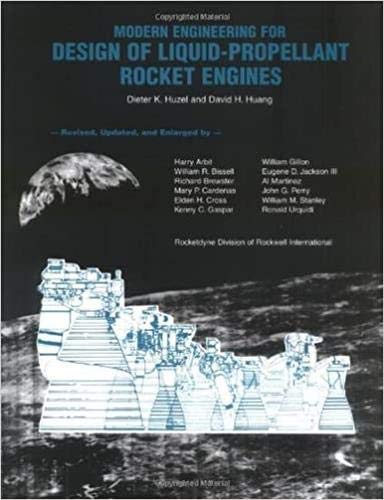
Dieter K. Huzel is a prominent figure in aerospace engineering, known for his work with Rocketdyne Division of Rockwell International. His extensive expertise in liquid propellant rocket engines shines through in this book, which bridges theoretical principles with practical design applications. Huzel's background equips him uniquely to guide you through the complexities of rocket engine design, making this text a valuable tool for engineers and professionals in astronautics.
Dieter K Huzel, David H Huang, Rocketdyne Division of Rockwell International D Huzel and D Huang, Harry Arbit, American Institute of Aeronautics and Astronautics, D K Huzel, D H Huang·
Dieter K Huzel, David H Huang, Rocketdyne Division of Rockwell International D Huzel and D Huang, Harry Arbit, American Institute of Aeronautics and Astronautics, D K Huzel, D H Huang·
About the Author
Dieter K. Huzel is a prominent figure in aerospace engineering, known for his work with Rocketdyne Division of Rockwell International. He has contributed significantly to the field of liquid propellant rocket engines, providing insights that bridge theoretical principles and practical applications in rocket design.
Dieter K. Huzel's decades of aerospace engineering experience culminate in this detailed guide to liquid propellant rocket engines. The book takes you from component design through subsystem integration to complete engine systems and flight-vehicle applications, focusing on how industry professionals translate theory into practice. You’ll find specific design principles paired with real-world engineering challenges, making it suitable for those involved in rocket propulsion and spacecraft development. Chapters cover everything from physical fundamentals to engine development, offering actionable insights for engineers looking to deepen their understanding of rocket engine design.
The best Astronautics books and more, in your inbox each week. No account needed.
Conclusion
This curated collection of nine books offers a diverse yet focused look at astronautics—from technical foundations in astrodynamics and propulsion to gripping personal accounts from astronauts and detailed mission histories. If you prefer proven methods, start with Fundamentals of Astrodynamics and Spacecraft Dynamics and Control for solid engineering principles. For validated approaches blending experience and leadership, combine An Astronaut's Guide to Life on Earth with Rocket Men.
These books reflect widespread validation from both experts and readers, providing trusted knowledge for anyone fascinated by space. Alternatively, you can create a personalized Astronautics book to combine proven methods with your unique needs.
These widely-adopted approaches have helped many readers succeed in understanding and appreciating astronautics, whether you’re an aspiring engineer, space enthusiast, or professional in the field.
Frequently Asked Questions
I'm overwhelmed by choice – which book should I start with?
Start with An Astronaut's Guide to Life on Earth for an engaging introduction to astronaut resilience and leadership, then explore Fundamentals of Astrodynamics for technical depth.
Are these books too advanced for someone new to Astronautics?
Not at all. Many, like The Practical Values of Space Exploration, offer accessible insights, while others like Fundamentals of Astrodynamics provide deeper dives for when you're ready.
What's the best order to read these books?
Begin with narrative-driven books for context—Spaceman or Rocket Men—then move into technical titles like Spacecraft Dynamics and Control for engineering details.
Do I really need to read all of these, or can I just pick one?
You can definitely pick based on your interest—choose personal stories for inspiration or technical texts for engineering knowledge; each offers distinct value.
Are these books outdated given how fast Astronautics changes?
While technology evolves, foundational principles and historical perspectives remain relevant. Books like Modern Engineering for Design of Liquid Propellant Rocket Engines still offer valuable insights.
How can personalized Astronautics books complement these expert recommendations?
Personalized books blend these proven expert approaches with your specific goals and background, making the learning process efficient and tailored. Learn more here.
📚 Love this book list?
Help fellow book lovers discover great books, share this curated list with others!