13 Best-Selling Climate Change Books Millions Love
Explore Climate Change Books recommended by Alwaleed Talal, David Roberts, and Jacquelyn Gill—experts who highlight best-selling books with proven impact
When millions of readers and top experts agree on a book's value, it becomes clear those works hold enduring wisdom. Climate Change remains one of the most urgent challenges of our time, and the 13 best-selling books featured here have resonated widely by delivering grounded insights and actionable strategies. These books are not just popular—they've shaped conversations and informed decisions worldwide.
Among the voices amplifying these works are Alwaleed Talal, chairman of Kingdom Holding Company, whose endorsement of Bill Gates's How to Avoid a Climate Disaster underscores the book’s blend of innovation and practicality. Energy politics blogger David Roberts highlights Drawdown for filling a critical gap with accessible, science-backed solutions. Meanwhile, Jacquelyn Gill, Associate Professor at UMaine’s Climate Institute, praises the same book for empowering real climate action through evidence-based approaches.
While these popular books provide proven frameworks, readers seeking content tailored to their specific Climate Change needs might consider creating a personalized Climate Change book that combines these validated approaches. Such customization can help you focus on the most relevant strategies and deepen your understanding based on your unique background and goals.
David Roberts, a prominent energy politics blogger at Vox, highlights how this book uniquely fills a gap for ordinary people seeking clear, reliable guidance on climate action. His review captures the essence: "There’s been no real way for ordinary people to get an understanding of what they can do and what impact it can have... The public is hungry for this kind of practical wisdom." This book helped reshape his view by showing practical, scientifically grounded paths to carbon reduction. Alongside him, Jacquelyn Gill, Associate Professor at UMaine’s Climate Change Institute, also points to the book’s role in empowering climate action. Their combined perspectives underscore why this book resonates widely with those determined to move from concern to concrete solutions.
“There’s been no real way for ordinary people to get an understanding of what they can do and what impact it can have. There remains no single, comprehensive, reliable compendium of carbon-reduction solutions across sectors. At least until now. . . . The public is hungry for this kind of practical wisdom.” (from Amazon)
Paul Hawken is an environmentalist, entrepreneur, author, and activist known for his work in sustainability and social justice. He has written several influential books on environmental issues and founded multiple organizations focused on ecological restoration and climate change solutions.
Paul Hawken, an environmentalist and entrepreneur deeply involved with sustainability, crafted this book to address the urgent challenge of global warming with a well-researched, solution-driven approach. You’ll explore 100 techniques ranging from clean energy adoption to land-use practices that actively reduce atmospheric carbon, each backed by scientific research and real-world application. The book offers detailed insights into how communities can collectively enact these solutions to not only curb warming but also improve human health and economic prosperity. This makes it especially useful if you want to understand practical climate strategies beyond theory, whether you’re a policymaker, educator, or engaged citizen.
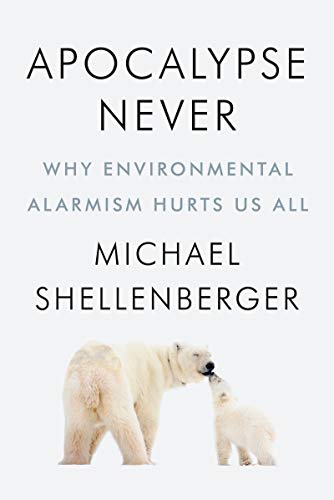
Maxime Bernier, leader of the People's Party of Canada, endorses this book as a must-read, especially because it challenges the mainstream media's narrative on climate alarmism. He highlights the author's veteran environmentalist perspective and the courage to apologize for previous unfounded alarmism. Bernier's recommendation resonates with many readers seeking a clearer-eyed view of climate issues. Alongside him, Joseph Kahn supports the book's message, noting that while climate change is real, exaggerated doomsday claims lack factual basis. Their insights invite you to reconsider what you think you know about environmental crises and solutions.
“MUST READ - because the lying mainstream media won’t mention it. Veteran environmentalist apologizes in new book for unfounded climate change alarmism.” (from X)
Michael Shellenberger is the nationally bestselling author of Apocalypse Never and San Fransicko, a Time Magazine “Hero of the Environment,” the winner of the 2008 Green Book Award from the Stevens Institute of Technology’s Center for Science Writings, and an invited expert reviewer of the next Assessment Report for the Intergovernmental Panel on Climate Change (IPCC). He has written on energy and the environment for the New York Times, the Washington Post, the Wall Street Journal, Nature Energy, and other publications for two decades. Michael has broken major stories, including on the Twitter Files, for which he won the 2023 Dao Award for Journalism. He is the founder and president of Environmental Progress, an independent, nonpartisan research organization based in Berkeley, California.
Michael Shellenberger's decades as an environmental activist and energy expert culminate in a book that challenges common assumptions about climate change. You explore how carbon emissions have actually declined in developed countries, and why apocalyptic alarmism can be counterproductive. The book details the complex interplay of politics, psychology, and economics behind environmental narratives, with chapters addressing nuclear energy’s role and the decline in extreme weather deaths. If you’re seeking a nuanced perspective that pushes beyond typical environmental rhetoric, this book offers insights to rethink your understanding of the planet's challenges and solutions.
This AI-created book on climate solutions is tailored to your specific challenges and interests. By sharing your background, skill level, and goals, you receive a book that focuses exactly on the proven methods relevant to your situation. Personalizing these battle-tested approaches makes it easier to understand and apply the most effective emission reduction strategies. This custom AI book helps you navigate the complex climate landscape with guidance that truly fits your needs.
TailoredRead AI creates personalized nonfiction books that adapt to your unique background, goals, and interests. Instead of reading generic content, you get a custom book written specifically for your profession, experience level, and learning objectives. Whether you're a beginner looking for fundamentals or an expert seeking advanced insights, TailoredRead crafts a book that speaks directly to you. Learn more.
This tailored book explores proven climate change mitigation strategies customized to your unique challenges and interests. It covers an array of approaches to reducing emissions, incorporating insights validated by millions of readers. By focusing on your specific background and goals, this book reveals how to apply battle-tested methods in ways that resonate personally and practically. The tailored content matches your priorities, offering a deep dive into effective climate solutions that matter most to you. This personalized guide makes complex climate strategies accessible and relevant, enabling you to engage confidently with the science and actions that drive meaningful environmental impact.
Catherine Mckenna, Canadian Minister of Environment and Climate Change, highlights this book's unique power in climate conversations. She appreciates how Katharine Hayhoe, one of the world's most influential climate scientists, uses clear, relatable language to connect with diverse audiences. Mckenna’s enthusiasm, "Super psyched to be given a copy... Pretty awesome that one of the world's most influential climate scientists - and the best plain talker - is from Canada!" reflects how this book helped her approach climate advocacy with renewed clarity and hope. This endorsement shows why Saving Us is a compelling choice for anyone wanting to bridge divides on climate issues.
“Super psyched to be given a copy of @KHayhoe's new book, Saving Us, from @naturecon's Jennifer Morris. Pretty awesome that one of the world's most influential climate scientists - and the best plain talker - is from 🇨🇦!” (from X)
Katharine Hayhoe is a climate scientist and chief scientist for The Nature Conservancy. She is also the Endowed Professor in Public Policy and Public Law and Paul W. Horn Distinguished Professor at Texas Tech University. She has been named a United Nations Champion of the Earth and one of Time’s 100 Most Influential People, and serves as the climate ambassador for the World Evangelical Alliance. Katharine was a lead author for the US Second, Third, and Fourth National Climate Assessments, hosts the PBS digital series Global Weirding, and has written for The New York Times. Her TED Talk “The Most Important Thing You Can Do to Fight Climate Change: Talk About It” has been viewed over 5 million times. She has a BSc in physics and astronomy from the University of Toronto and an MS and a PhD in atmospheric science from the University of Illinois at Urbana-Champaign.
2021·320 pages·Climate Change, Environmental Science, Communication, Psychology, Public Policy
When Katharine Hayhoe, a distinguished climate scientist and chief scientist at The Nature Conservancy, wrote Saving Us, she aimed to shift how climate change conversations happen across divided communities. You learn how facts alone don’t move people; instead, connecting through shared values and personal stories can open hearts and drive collective action. The book teaches you to engage with family, friends, and skeptics by blending science with empathy, as seen in chapters that explore psychology and faith alongside environmental data. If you want to communicate climate challenges without alienating others, this book offers a thoughtful approach that goes beyond doom and gloom.
Luis Von Ahn, CEO and co-founder of Duolingo and MacArthur Fellow, found Bill Gates’s book a compelling read amid his own climate concerns. He said, "I started reading @BillGates’s new book on climate change. What an amazing individual." This endorsement from a tech innovator underscores how the book resonates with leaders who value practical solutions grounded in expert research. Their experience reflects why this book appeals to you if you're seeking well-informed, actionable insights on climate change. Alongside Luis, Charles Mok, former Hong Kong IT legislator, highlights Gates’s engineer’s precision in addressing the global climate challenge, reinforcing the book’s blend of rigor and accessibility.
Bill Gates is cochair of the Bill & Melinda Gates Foundation and founder of Breakthrough Energy. He founded Microsoft in 1975 with Paul Allen and led the company to become the worldwide leader in business and personal software and services. In 2008, Bill transitioned to focus full-time on his foundation’s work to expand opportunity to the world’s most disadvantaged people. As cochair, he leads the foundation’s development of strategies and sets the overall direction of the organization. Through his private office, Gates Ventures, he pursues his work on innovation in clean energy, Alzheimer’s disease and other healthcare issues, interdisciplinary education, and technology. At Breakthrough Energy, he’s putting his experience as an innovator and problem-solver to work to address climate change by supporting the next generation of entrepreneurs, big thinkers, and clean technologies. In 2010, Bill, Melinda French Gates, and Warren Buffett founded the Giving Pledge, an effort to encourage the wealthiest families and individuals to publicly commit more than half of their wealth to philanthropic causes and charitable organizations during their lifetime or in their will.
Bill Gates's decade-long investigation into climate change shapes this book’s pragmatic approach to halting greenhouse gas emissions. You’ll get a detailed look at existing technologies that cut emissions, where innovations fall short, and which breakthroughs are critical. The book spells out practical steps governments, industries, and individuals can take, backed by Gates’s understanding of innovation and market dynamics. Whether you're an environmental policy maker, entrepreneur, or concerned citizen, this book offers a grounded pathway toward achieving net-zero emissions.
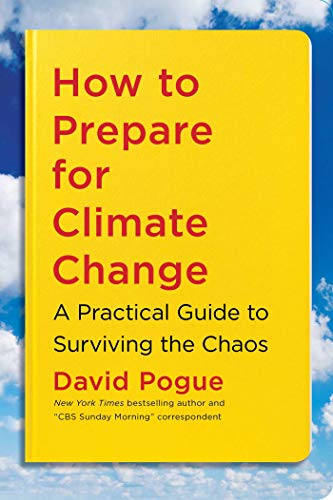
David Pogue was the New York Times weekly tech columnist for over a decade and has earned five Emmy awards for his CBS News Sunday Morning stories. As a bestselling author and host of numerous PBS science specials, he brings a wealth of experience communicating complex topics clearly. His extensive writing portfolio includes over 120 books, highlighting his ability to translate technical subjects for everyday readers. In his 2021 guide on climate preparation, Pogue leverages this expertise to help you navigate the practical realities of living through climate change.
David Pogue was the New York Times weekly tech columnist from 2000 to 2013. He’s a five-time Emmy winner for his stories on CBS News Sunday Morning, a New York Times bestselling author, a five-time TED speaker, and host of 20 NOVA science specials on PBS. He’s written or cowritten more than 120 books, including dozens in the 'Missing Manual' tech series, which he created in 1999; six books in the 'For Dummies' line; two novels; his three bestselling 'Pogue’s Basics' books of tips and shortcuts; his new how-to guides, 'iPhone Unlocked' and 'Mac Unlocked'; and his 2021 magnum opus, 'How to Prepare for Climate Change.'
David Pogue challenges the common notion that climate change preparation is only for experts or the ultra-wealthy by offering practical guidance everyone can use. Drawing from his extensive background in technology communication and journalism, he details specific steps like what crops suit future climates, how to retrofit homes against extreme weather, and even where in the U.S. people might find climate havens with stable infrastructure. The book also addresses less obvious concerns, such as preparing pets and managing anxiety tied to climate uncertainty. If you're seeking grounded, actionable insights on adapting your daily life to a changing planet, this book is tailored for you—not just policymakers or scientists.
This AI-created book on climate adaptation is tailored to your specific goals and background. You share what aspects of resilience and preparedness interest you most, along with your experience level, and the book is written to focus on what matters to you. This personalized approach helps you concentrate on fast, practical steps to build climate resilience that fit your life and environment, making preparation both effective and achievable.
TailoredRead AI creates personalized nonfiction books that adapt to your unique background, goals, and interests. Instead of reading generic content, you get a custom book written specifically for your profession, experience level, and learning objectives. Whether you're a beginner looking for fundamentals or an expert seeking advanced insights, TailoredRead crafts a book that speaks directly to you. Learn more.
This tailored book explores fast-track climate resilience plans designed to match your background and specific goals. It focuses on practical, actionable steps you can take within 90 days to prepare for climate impacts relevant to your location and lifestyle. By combining widely validated knowledge with your personal interests, the book examines key adaptation measures such as risk assessment, resource management, and community engagement. The personalized approach ensures the content directly addresses your priorities, helping you build confidence and readiness in the face of evolving environmental challenges. Readers gain a focused understanding of climate adaptation strategies that resonate with their unique circumstances, making resilience accessible and achievable.
Peter Egan, an actor and UK Ambassador for AnimalsAsia, praises this book as a vital vision for the future we must all embrace. His endorsement highlights how the book’s hopeful narrative resonated deeply, encouraging collective action on climate issues. "If you haven’t already..get a copy of David Attenborough’s remarkable book ‘A Life on Our Planet’ a vision for the future we must all share. It’s a path we must all follow." This aligns with the widespread admiration from readers and critics alike, including Kirkus Reviews, who regard it as an essential read for anyone invested in the planet’s ecological fate.
“Hi another quickie as they say in the trade. If you haven’t already..get a copy of David Attenborough’s remarkable book ‘A Life on Our Planet’ a vision for the future we must all share. It’s a path we must all follow.” (from X)
Sir David Attenborough is a BAFTA and Emmy-Award winning broadcaster and natural historian. He is the internationally bestselling author of over 25 books, including Life on Earth. He also served as controller of BBC Two and director of programming for BBC Television in the 1960s and 1970s, and as the President of the Royal Society for Nature Conservation in the 90s.
Unlike most climate change books that focus solely on data and forecasts, Sir David Attenborough combines personal narrative and scientific insight to chart the dramatic loss of biodiversity over the past century. Drawing on his decades as a broadcaster and natural historian, he reveals how human activity has reshaped the planet and offers a cautiously hopeful vision for restoring ecosystems. You’ll gain not just an understanding of ecological decline but also specific ideas about the urgent actions needed to protect natural habitats. This book suits anyone seeking a grounded yet inspiring perspective on humanity’s environmental impact and future possibilities.
Goodreads Choice Award Winner for Best Science & Technology Book of the Year
Tim Flannery's The Weather Makers stands out as a pivotal work that brought global warming to the forefront of public discourse. This bestselling book combines scientific history with an accessible narrative to explore how human activity is reshaping the planet's climate system. With a focus on the interconnectedness of Earth's environments, it offers a sobering forecast alongside a call for awareness and action. Whether you're a student, policymaker, or concerned citizen, this book provides a foundational understanding of climate change's urgency and scope.
1723·Climate Change, Environmental Science, Global Warming, Ecology, Species Extinction
Tim Flannery challenges the conventional wisdom that climate change is a distant threat by tracing its history and projecting its near-future impacts with scientific rigor and clarity. Drawing on years of research, he connects the dots between rising greenhouse gases and the alarming rate of species extinction, making complex data accessible without oversimplifying. You’ll gain insights into the delicate balance of Earth’s systems and the global tipping points that demand urgent attention, particularly in chapters detailing past climate shifts and future scenarios. This book suits anyone looking to understand not just the science but the broader ecological consequences of climate disruption.
Raffi Cavoukian, a dedicated ecology advocate and children’s champion, highlights this book’s value after witnessing the urgency of climate issues firsthand. She calls it "an engaging read" with clear explanations of climate tipping points that deepened her understanding of abrupt environmental changes. Her recommendation reflects why so many are drawn to Pearce’s work—it offers a lucid window into complex climate science, helping you grasp what’s at stake and what the scientific community now fears most.
Fred Pearce's decades of environmental reporting led to a revealing examination of abrupt climate shifts that many scientists now fear. You’ll explore the hidden tipping points in the climate system—like melting permafrost in Siberia and the destabilizing meltwaters beneath polar icecaps—that could trigger rapid and violent changes. Pearce shares firsthand accounts from leading researchers, including insights into the ocean conveyor and atmospheric molecules essential to Earth’s balance, grounding complex science in vivid examples such as Greenland’s ice dynamics. This book suits those who want a clear understanding of why gradual models may underestimate climate risks and who are ready to confront unsettling scientific realities.
Britt Griffith, a science communicator known for thoughtful analysis, discovered this book while seeking clearer, data-driven perspectives on climate change. After digging into its detailed charts and grounded scientific discussion, Britt called it "a great book with lots of science stuff and charts on all this Co2 stuff. Well worth the 20 bucks and time spent reading..." This approach helped Britt cut through the noise, offering a fact-based lens that challenges common climate narratives, making it a worthy read for anyone wanting to deepen their understanding beyond popular media claims.
“@kylenabecker this is a great book with lots of science stuff and charts on all this Co2 stuff. Well worth the 20 bucks and time spent reading...” (from X)
Gregory Wrightstone is a geologist with more than 35 years of experience researching and studying various aspects of the Earth's processes. He earned a bachelor's degree from Waynesburg University and a master's from West Virginia University, both in the field of geology. He has written and presented extensively on many aspects of geology including how paleogeography and paleoclimate control geologic processes. His findings have allowed him to speak at many venues around the world including Ireland, England, China and most recently India. Gregory is a strong proponent of the scientific process and believes that policy decisions should be driven by science, facts and data, not a political agenda.
What if everything you thought you knew about climate change was incomplete? Gregory Wrightstone, a geologist with over 35 years of experience, challenges mainstream narratives by presenting sixty "inconvenient facts" drawn from government data and peer-reviewed studies. In clear language and with accessible charts, you’ll explore how rising CO2 and temperatures may actually benefit the planet rather than doom it. Chapters like those on drought trends and plant growth offer specific insights that invite you to question prevailing assumptions. This book suits anyone who wants to critically assess climate science beyond headlines, but if you seek affirmation of alarmist views, it may not resonate.
Tim Soulo, CMO at Ahrefs and marketing expert known for his ethical approach, highlights how False Alarm offers a fresh perspective on climate change's economic impact. He found its analysis of policy costs and environmental effects eye-opening, sharing on Twitter, "Super interesting book about climate change and it's impact on the economy and the Earth." His endorsement underlines why many turn to this book for a grounded understanding of climate economics and policy trade-offs.
Bjorn Lomborg is the bestselling author of The Skeptical Environmentalist and Cool It. He is president of the Copenhagen Consensus Center and a visiting fellow at Stanford University’s Hoover Institution. Time magazine named him one of the world’s one hundred most influential people, and his work appears regularly in top media across the world. He lives in Sweden.
Bjorn Lomborg, known for his work as president of the Copenhagen Consensus Center and his role at Stanford’s Hoover Institution, challenges prevailing climate change narratives by focusing on economic and social impacts rather than apocalyptic predictions. In False Alarm, you’ll explore how current climate panic leads to costly policies that often neglect urgent human needs like education and healthcare. Specific chapters dissect the economic trade-offs of various climate actions, making it clear who benefits and who suffers from these decisions. This book suits readers interested in environmental policy and economics who seek a nuanced view beyond alarmist headlines.
Communicating Climate Change offers a unique resource for educators navigating the challenges of conveying complex climate science amid varied political and cultural views. Drawing on research from environmental psychology and communication, the book provides tested tools and illustrative examples that help translate awareness into meaningful educational programs. Its open-access availability further underscores its commitment to broad dissemination, making it a practical guide for anyone seeking to foster informed climate discussions and action in educational settings.
Anne K. Armstrong, Marianne E. Krasny, Jonathon P. Schuldt
2018·144 pages·Climate Change, Environmental Education, Communication, Public Opinion, Environmental Psychology
Unlike many climate change books that focus solely on the science or activism, this guide by Anne K. Armstrong and her co-authors takes a distinct approach centered on education and communication. You’ll gain insights into how people process climate information within their cultural and political contexts, learning specific communication techniques like framing and metaphor use to make complex climate science more accessible. The book also offers practical examples from real educators, helping you craft messages that resonate and inspire dialogue. If you’re involved in teaching or public outreach, this book equips you with tools to bridge the gap between climate awareness and meaningful action.
Colin Wright, an evolutionary biologist and Managing Editor at Quillette, highlights this book's value in cutting through the noise around climate science. His engagement with discussions sparked by this book shows how it challenges popular assumptions and deepens understanding beyond media soundbites. "@xavierbonilla87 Interesting piece in @Quillette by @LKrauss1 about this book," he notes, reflecting on how its thoughtful analysis reshaped his view on climate narratives. This endorsement aligns with the book's appeal to those wanting clear, evidence-based insights into a complex topic.
Dr. Steven E. Koonin is a leader in science policy in the United States. He served as Undersecretary for Science in the US Department of Energy under President Obama, where he was the lead author of the Department's Strategic Plan and the inaugural Quadrennial Technology Review (2011). With more than 200 peer-reviewed papers in the fields of physics and astrophysics, scientific computation, energy technology and policy, and climate science, Dr. Koonin was a professor of theoretical physics at Caltech, also serving as Caltech's Vice President and Provost for almost a decade. He is currently a University Professor at New York University, with appointments in the Stern School of Business, the Tandon School of Engineering, and the Department of Physics. Dr. Koonin's memberships include US National Academy of Sciences, the American Academy of Arts and Sciences, and the JASON group of scientists who solve technical problems for the US government. Since 2014, he has been a trustee of the Institute for Defense Analyses and chaired the National Academies' Divisional Committee for Engineering and Physical Sciences from 2014-2019. He is currently an independent governor of the Lawrence Livermore National Laboratory and has served in similar roles for the Los Alamos, Sandia, Brookhaven, and Argonne National Laboratories.
What happens when a physicist with deep government policy experience takes on climate science? Steven E. Koonin challenges prevailing narratives by dissecting the data behind climate change claims, revealing where the science is solid and where uncertainties remain. You gain a clearer view of temperature trends, model limitations, and the complexities behind extreme weather predictions, along with a critical look at proposed solutions like geoengineering and adaptation strategies. If you're seeking a nuanced understanding that goes beyond headlines and political spin, this book offers a grounded perspective to sharpen your climate literacy and critical thinking.
Wall Street Journal Bestseller
2022 IPPY Awards Gold Medalist in Science
2021 World Magazine Accessible Science Book of the Year Honorable Mention
Global Physical Climatology stands as a focused introduction to the fundamental physics governing climate sensitivity and change. Its detailed treatment of orbital parameter theory and distinction between anthropogenic and natural influences offers readers a strong framework for understanding climate dynamics. This text’s inclusion of exercises and appendices makes it particularly useful for those pursuing climate science rigorously. It addresses critical issues that continue to shape discussions about Earth's climate future, offering a valuable resource for students and professionals seeking a deeper grasp of climatology principles.
1994·424 pages·Climatology, Climate Change, Orbital Theory, Climate Sensitivity, Anthropogenic Effects
Drawing from his extensive expertise in atmospheric sciences, Dennis L. Hartmann offers a detailed exploration of the physical principles underlying climate sensitivity and change. This book delves into orbital parameter theory and examines both natural and human-induced factors shaping our climate's future. You'll find clear explanations of complex mechanisms, supported by end-of-chapter exercises that deepen understanding. If you seek a solid grounding in the physics behind climate science, this book is a suitable companion, though it may be dense for casual readers.
The best Climate Change books and more, in your inbox each week. No account needed.
Conclusion
This collection of 13 best-selling Climate Change books reveals clear themes: the importance of practical solutions, the value of critical perspectives, and the power of communication grounded in empathy. If you prefer proven methods, start with Drawdown or How to Avoid a Climate Disaster for actionable climate strategies. For validated approaches that challenge conventional narratives, Apocalypse Never and Inconvenient Facts offer thoughtful critique.
For those aiming to enhance communication skills around climate issues, Saving Us provides an empathetic framework that bridges divides. Alternatively, you can create a personalized Climate Change book to combine proven methods with your unique needs.
These widely-adopted approaches have helped many readers succeed in understanding and acting on Climate Change. Whether you seek scientific foundations, economic nuance, or communication strategies, these books collectively offer a rich toolkit to inform your journey.
Frequently Asked Questions
I'm overwhelmed by choice – which book should I start with?
Start with Drawdown for practical climate solutions that many experts recommend. It offers clear, science-backed strategies to reduce emissions and make an impact, providing a solid foundation before exploring more specialized books.
Are these books too advanced for someone new to Climate Change?
Not at all. Titles like How to Prepare for Climate Change and Saving Us are accessible and designed for readers new to the topic, offering practical guidance without requiring prior expertise.
Do I really need to read all of these, or can I just pick one?
You can certainly pick one based on your interests. For example, choose Apocalypse Never if you want a critical perspective, or Communicating Climate Change if you're focused on education and outreach.
Are any of these books outdated given how fast Climate Change changes?
These books reflect a range of publication dates but are chosen for enduring relevance. For the latest science and innovation, How to Avoid a Climate Disaster and Unsettled provide up-to-date insights.
Which book gives the most actionable advice I can use right away?
How to Prepare for Climate Change offers practical, everyday steps to adapt to changing conditions, making it ideal if you're looking for immediate actions.
Can personalized Climate Change books complement these expert picks?
Yes! While these best-sellers provide expert insights, personalized books can tailor content to your specific goals and background, combining proven methods with your unique needs. Explore creating a personalized Climate Change book for a customized learning experience.
📚 Love this book list?
Help fellow book lovers discover great books, share this curated list with others!