Top Mythology Books endorsed by Emma Watson, Tony Robbins, and Ruben Harris showcase classic and modern storytelling treasures.
Updated on June 28, 2025·We may earn commissions for purchases made via this page
7 of 10 books have Audiobook versions
We're launchingLaunching on Product Hunt today 🎉We just launchedJust launched on Product Hunt 🎉
Modelpeers, from the BookAuthority teamFrom the BookAuthority team: Modelpeers, a free way to follow AI models and agents like you follow people. We'd love your support.
There's something special about books that both critics and crowds love—especially when it comes to mythology, where stories shape cultures and imaginations alike. Millions have turned to timeless myths, finding meaning in tales that span continents and centuries. Mythology remains relevant as it reveals universal human themes, connecting you with ancient wisdom and modern creativity.
Experts like Emma Watson, who champions empowering narratives, Tony Robbins, whose insights into human motivation align with mythic patterns, and Ruben Harris, a leader in cultural storytelling, have highlighted these books for their lasting impact. Their endorsements reflect a blend of cultural, psychological, and artistic appreciation that resonates widely.
While these popular books provide proven frameworks and rich perspectives, you might consider creating a personalized Mythology book tailored to your interest areas and goals—combining these validated approaches with your unique journey.
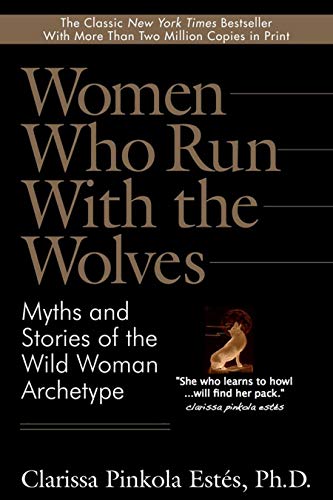
Emma Watson, a prominent activist and UN Women Goodwill Ambassador, brings a unique perspective to the mythology genre by championing stories that amplify women's voices. Her endorsement of this title aligns with its widespread acclaim and its focus on empowering the female psyche through mythic narratives. This connection adds significant weight to the book's relevance for those seeking profound cultural and psychological insights. Additionally, Ruben Harris, CEO of Career Karma, highlights its value, reinforcing its appeal beyond traditional mythology readers into broader personal development circles.
Clarissa Pinkola Estés, Ph.D. is an award-winning poet, diplomate senior jungian psychoanalyst, and a cantadora (keeper of the old stories) in the Hispanic tradition. She has been in private practice for twenty-five years and is former executive director of the C. G. Jung Center for Research and Education in the United States. The author of The Gift of Story and an eleven-volume series of bestselling audio works published by Sounds True in Boulder, Colorado, Dr. Estés heads the C. P Estés Guadalupe Foundation, a human rights organization that has as one of its nascent missions the broadcasting of strengthening stories via shortwave radio to trouble spots throughout the world.
Unlike most mythology books that focus on broad narratives, Clarissa Pinkola Estés brings a deeply psychological and cultural perspective by weaving together myths, fairy tales, and folk stories to reveal the Wild Woman archetype. Drawing on her background as a Jungian psychoanalyst and storyteller, she explores how instinctual creativity and intuition in women have been suppressed by society, inviting you to reconnect with these vital aspects of the psyche. Chapters delve into rich intercultural legends that act as mirrors to your own inner life, offering insights into resilience and self-discovery. This book suits those interested in female psychology, mythic symbolism, and personal transformation through storytelling.
Tony Robbins, a well-known motivational speaker and business coach, endorses this book, bringing significant authority to its exploration of mythology. His expertise in human motivation aligns perfectly with Joseph Campbell’s insights into the universal patterns of struggle and transformation found in myths. This endorsement underscores why the book resonates with so many: it bridges psychological understanding with storytelling traditions that inspire resilience and meaning. Alongside him, Kyle Russell, a technology and history enthusiast, highlights the book’s deep connection to human psychology and the desire for meaningful struggle, showing its broad appeal across disciplines.
“Book 28
Lesson:
Embedded in human psychology (and the resulting symbolism we find compelling) is a wish for our struggles to be meaningful, for our suffering to have value, for our effort to pay off for ourselves and those we love - and to then be recognized for it.” (from X)
Joseph Campbell (1904–1987) was an American author and teacher best known for his work in the field of comparative mythology. He was born in New York City in 1904, and from early childhood he became interested in mythology. He loved to read books about American Indian cultures, and frequently visited the American Museum of Natural History in New York, where he was fascinated by the museum's collection of totem poles. Campbell was educated at Columbia University, where he specialized in medieval literature, and continued his studies at universities in Paris and Munich. While abroad he was influenced by the art of Pablo Picasso and Henri Matisse, the novels of James Joyce and Thomas Mann, and the psychological studies of Sigmund Freud and Carl Jung. These encounters led to Campbell's theory that all myths and epics are linked in the human psyche, and that they are cultural manifestations of the universal need to explain social, cosmological, and spiritual realities. After a period in California, where he encountered John Steinbeck and the biologist Ed Ricketts, he taught at the Canterbury School, and then, in 1934, joined the literature department at Sarah Lawrence College, a post he retained for many years. During the 40s and '50s, he helped Swami Nikhilananda to translate the Upanishads and The Gospel of Sri Ramakrishna. He also edited works by the German scholar Heinrich Zimmer on Indian art, myths, and philosophy. In 1944, with Henry Morton Robinson, Campbell published A Skeleton Key to Finnegans Wake. His first original work, The Hero with a Thousand Faces, came out in 1949 and was immediately well received; in time, it became acclaimed as a classic. In this study of the 'myth of the hero,' Campbell asserted that there is a single pattern of heroic journey and that all cultures share this essential pattern in their various heroic myths. Throughout his life, he traveled extensively and wrote prolifically, authoring many books, including the four-volume series The Masks of God, Myths to Live By, The Inner Reaches of Outer Space and The Historical Atlas of World Mythology. Joseph Campbell died in 1987. In 1988, a series of television interviews with Bill Moyers, The Power of Myth, introduced Campbell's views to millions of people.
The breakthrough moment came when Joseph Campbell articulated the Hero’s Journey as a universal narrative thread linking myths across cultures, blending psychology with ancient storytelling. You learn to recognize the stages of transformation that underpin countless legends and contemporary tales alike, from the call to adventure through trials to eventual renewal. Chapters detail the Cosmogonic Cycle, revealing patterns of creation and destruction that echo in human psyche and society. This book suits anyone fascinated by storytelling’s roots, whether you’re a writer, filmmaker, or curious about cultural narratives shaping human experience. Its insights invite you to see myths not just as old stories but as living frameworks influencing modern creativity and identity.
This AI-created book on mythology mastery is crafted based on your background, interest areas, and goals. By sharing your preferred mythological cultures, focus topics, and learning objectives, you receive a book that addresses exactly what you want to explore. This personalized approach makes sense here because mythology is vast and rich, and focusing on what truly resonates with you deepens understanding and enjoyment.
TailoredRead AI creates personalized nonfiction books that adapt to your unique background, goals, and interests. Instead of reading generic content, you get a custom book written specifically for your profession, experience level, and learning objectives. Whether you're a beginner looking for fundamentals or an expert seeking advanced insights, TailoredRead crafts a book that speaks directly to you. Learn more.
2026·50-300 pages·Mythology, Cultural Myths, Heroic Archetypes, Symbolism, Mythical Narratives
This tailored book explores mythology through a deeply personalized lens, focusing on your unique interests and background. It examines timeless myths from diverse cultures, weaving together proven, widely admired knowledge with insights tailored to your specific goals. By blending popular understanding with your curiosity, it reveals the enduring themes and symbols that have captivated millions. This approach allows you to engage with mythology not as a static subject but as a dynamic and relevant field of study, offering a meaningful way to connect ancient stories to your own experiences and intellectual pursuits.
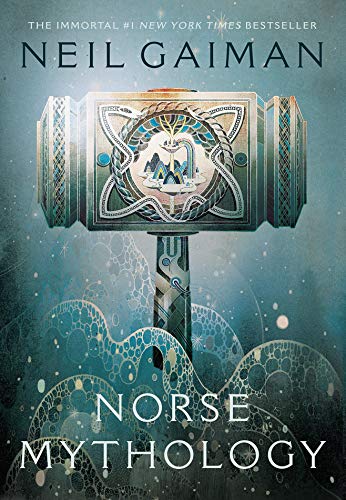
Neil Gaiman, a New York Times best-selling author with a remarkable portfolio including award-winning fiction and acclaimed TV adaptations, brings his storytelling expertise to Norse mythology. His experience as a professor and celebrated author uniquely positions him to breathe life into ancient tales, making this collection accessible and compelling for anyone intrigued by legendary narratives and mythic worlds.
Neil Gaiman is the New York Times best-selling author of more than twenty books, including The Ocean at the End of the Lane, The Graveyard Book, Coraline, and Neverwhere. His fiction has received Newbery, Carnegie, Hugo, Nebula, and Eisner awards. American Gods and Sandman and Good Omens, written with Terry Pratchett, have aired as TV series. He is a Professor in the arts at Bard College.
Neil Gaiman draws on his deep love of ancient stories to retell the Norse myths with fresh energy and sharp insight. You’ll explore vivid portraits of Odin, Thor, and Loki, discovering their flaws and passions in tales ranging from Thor’s comical hammer heist to the somber prophecy of Ragnarok. The chapters unfold like a novel, blending mythic grandeur with human emotion, making these old stories feel immediate and alive. If you’re drawn to mythology that reveals gods as complex characters rather than distant legends, this book will expand your appreciation and understanding.
Edith Hamilton, an educator and historian with classical training from Bryn Mawr and German universities, authored this enduring work. Her decades-long career in education and scholarship culminated in this definitive guide to ancient myths, crafted to bring the timeless stories of gods and heroes to a broad audience. Hamilton's deep understanding of classical languages and cultures shapes the accessible narratives in this illustrated edition, making it a trusted companion for anyone curious about mythology's enduring influence.
Edith Hamilton, an educator, writer and a historian, was born August 12, 1867 in Dresden, Germany, of American parents and grew up in Fort Wayne, Indiana. Her father began teaching her Latin when she was seven years old and soon added Greek, French, and German to her curriculum. Hamilton's education continued at Miss Porter's School in Farmington, Connecticut, and at Bryn Mawr College near Philadelphia, Pennsylvania, from which she graduated in 1894 with an M.A. degree. The following year, she and her sister Alice went to Germany and were the first women students at the universities of Munich and Leipzich. Hamilton returned to the United States in 1896 and accepted the position of headmistress of the Bryn Mawr Preparatory School in Baltimore, Maryland. For the next twenty-six years, she directed the education of about four hundred girls per year. After her retirement in 1922, she started writing and publishing scholarly articles on Greek drama. In 1930, when she was sixty-three years old, she published The Greek Way, in which she presented parallels between life in ancient Greece and in modern times. The book was a critical and popular success. In 1932, she published The Roman Way, which was also very successful. These were followed by The Prophets of Israel (1936), Witness to the Truth: Christ and His Interpreters (1949), Three Greek Plays, translations of Aeschylus and Euripides (1937), Mythology (1942), The Great Age of Greek Literature (1943), Spokesmen for God (1949) and Echo of Greece (1957). Hamilton traveled to Greece in 1957 to be made an honorary citizen of Athens and to see a performance in front of the Acropolis of one of her translations of Greek plays. She was ninety years old at the time. At home, Hamilton was a recipient of many honorary degrees and awards, including election to the American Academy of Arts and Letters. Edith Hamilton died on May 31, 1963 in Washington, D.C.
What keeps readers returning to Edith Hamilton's Mythology is its timeless clarity and approachable retelling of ancient stories. Hamilton, an educator and historian with deep classical training, crafted this book to make Greek, Roman, and Norse myths accessible without watering down their complexity. You’ll explore tales like Odysseus’s cunning journey and Odin’s struggle against fate, gaining insight into how these myths shaped Western culture. The book includes detailed family trees and vivid illustrations that help ground these stories in context. Whether you’re a mythology enthusiast or new to the subject, this edition offers a richly layered perspective that both informs and entertains.
John Gwynne is a seasoned author renowned for his epic fantasy series including The Faithful and the Fallen and Of Blood and Bone. A Viking re-enactor himself, Gwynne brings authentic passion and deep knowledge of Norse culture to The Shadow of the Gods, inspired by Norse mythology. His award-winning storytelling, recognized by the David Gemmell Morningstar Award for Best Fantasy Debut, offers you a richly imagined world where myth and brutal reality collide, inviting you to explore a saga shaped by gods, warriors, and vengeance.
John Gwynne is the author of epic fantasy series The Faithful and the Fallen, Of Blood and Bone, and The Bloodsworn Saga. A Viking re-enactor, he enjoys standing in the shield wall with his three sons. He lives on the south coast of the UK with his wife, children, and various animals. His debut novel, Malice, won the David Gemmell Morningstar Award for Best Fantasy Debut of 2012, and subsequent books in the series were shortlisted for the David Gemmell Legend Award. His latest work, The Shadow of the Gods, is inspired by Norse mythology.
2021·480 pages·Fantasy, Mythology, Epic Fantasy, Norse Mythology, World Building
John Gwynne's decades of fantasy writing expertise led to The Shadow of the Gods, a Norse-inspired saga that transports you into a brutal world where gods have vanished but their bones hold deadly power. You follow three distinct warriors—a huntress, a noblewoman, and a vengeful thrall—each navigating a land on the brink of war. The book offers rich character-driven storytelling alongside vivid depictions of myth, magic, and conflict, especially in chapters detailing the Bloodsworn mercenaries. If you crave immersive epic fantasy with a raw, visceral edge, this novel delivers, though it may not suit those seeking lighthearted or straightforward narratives.
This AI-created book on mythology learning is tailored to your skill level and interests, focusing on the myths and themes you want to explore most. You share your background and specific goals, and the book is crafted to guide you through core stories efficiently. This personalized approach helps you grasp complex mythologies without getting overwhelmed by irrelevant details, making your study both focused and rewarding.
TailoredRead AI creates personalized nonfiction books that adapt to your unique background, goals, and interests. Instead of reading generic content, you get a custom book written specifically for your profession, experience level, and learning objectives. Whether you're a beginner looking for fundamentals or an expert seeking advanced insights, TailoredRead crafts a book that speaks directly to you. Learn more.
2026·50-300 pages·Mythology, Mythology Overview, Cultural Myths, Heroic Tales, Creation Stories
This tailored mythology book offers a step-by-step plan designed to rapidly expand your knowledge of core myths and themes from diverse cultures. By focusing on your unique interests and background, it explores timeless stories and symbols that have shaped human imagination and culture throughout history. The book examines major mythological traditions, highlighting their common motifs and distinctive characters, while connecting these narratives to broader human experiences. This personalized approach ensures the content resonates with your specific goals, making your learning journey both engaging and efficient. Dive into a rich exploration of mythic tales, gaining insights that millions have valued, now curated just for you.
Natalie Haynes offers a distinctive take on the Trojan War by presenting the saga entirely through the eyes of the women involved, a perspective often overlooked in mythology. Her book has resonated widely, drawing attention for its sharp feminist lens and storytelling approach that breathes new life into classical tales. This work invites you to reconsider familiar stories by illuminating the voices and experiences of goddesses, wives, and daughters caught in the war’s aftermath, making it a meaningful contribution to mythology literature and a compelling choice for those seeking a nuanced narrative.
2019·368 pages·Mythology, Ancient History, Feminism, War Stories, Greek Mythology
Drawing from her expertise as a broadcaster and classicist, Natalie Haynes reimagines the Trojan War by centering the experiences of women whose stories have long been sidelined. Through vivid narratives like Creusa’s awakening to Troy’s destruction, you gain insight into the emotional and political fallout from the war, exploring perspectives from goddesses to mortal women across the ancient world. You’ll learn to recognize how mythology often filters heroism through a male lens and how this retelling reclaims female voices with nuance and depth. This book suits anyone intrigued by mythology, feminist reinterpretations, or historical storytelling that challenges traditional narratives.
Daniel McCoy is the creator of Norse Mythology for Smart People, the most-visited website dedicated to Norse and ancient Germanic mythology. His role as a featured Norse mythology expert in the MLB documentary 'Iron Knight: Lou Gehrig' highlights his recognized authority. Living in Nashville, Tennessee, McCoy brings his writer's craft and deep knowledge to this book, offering you a clear and engaging introduction to Viking myths and religion grounded in the latest research.
Daniel McCoy is the creator of Norse Mythology for Smart People (Norse-Mythology.org), the most-visited website on the mythology and religion of the Norse and other ancient Germanic peoples for several years running. He was recently featured as a Norse mythology expert in Major League Baseball's documentary 'Iron Knight: Lou Gehrig,' which was released by A&E and aired on the Smithsonian Channel. A writer by profession, he lives in Nashville, Tennessee.
The Viking Spirit offers a deep dive into Norse mythology, crafted by Daniel McCoy, whose expertise stems from creating the widely respected Norse Mythology for Smart People website. You’ll gain a thorough understanding of 34 detailed Norse myths alongside an exploration of the Viking religion that underpins them, including insights into their gods, fate, moral codes, and cosmology. McCoy balances scholarly detail with accessible storytelling, making complex myths approachable without oversimplifying. This book suits anyone curious about ancient Norse culture or mythology, especially those who appreciate a blend of historical context and engaging narrative.
Olivier Knox, a Washington Post reporter well-versed in cultural commentary, shared his nuanced take on this foundational mythic work. He found the book engaging, especially as a fan of The Lord of the Rings, though he mentioned the songs with some reservation. His perspective highlights how the book enriches your understanding of Middle-earth's deep past, offering layers that even dedicated fans appreciate and sometimes debate. This blend of admiration and critique invites you to explore the complex origins Tolkien crafted, making it a compelling read for anyone invested in fantasy mythology.
What started as a lifelong fascination with language and legend became J.R.R. Tolkien's intricate tapestry of Middle-earth's earliest history. You gain insight into the foundational myths that underpin his more famous works, exploring the creation of the world, the origins of the Silmarils, and the epic struggles of the First Age. The detailed accounts of divine beings, rebellious elves, and ancient wars offer a depth that rewards those curious about the roots of Tolkien's universe. This book suits you if you're drawn to mythic storytelling with a rich, poetic style and want to understand the full scope behind The Lord of the Rings.
World Mythology: An Anthology of the Great Myths and Epics offers a sweeping collection that captures the breadth of human storytelling across civilizations. This anthology appeals to those looking to grasp the foundational myths that have influenced literature, religion, and culture worldwide. Its methodical presentation of epics and myths from multiple traditions highlights mythology's enduring power to explain the human condition. Whether you're a student, educator, or curious reader, this book provides a valuable gateway into the rich tapestry of global mythological heritage.
1766·613 pages·Mythology, Cultural History, Ancient Texts, Epic Narratives, Mythic Themes
What started as an effort to gather diverse cultural narratives became a rich anthology that invites you to explore myths and epics from around the world. Donna Rosenberg, drawing from extensive research, compiles stories that illuminate universal themes and ancient wisdom, offering you insights into how different societies understand creation, heroism, and morality. You’ll gain a broad perspective on mythology’s role in shaping human experience, with chapters showcasing everything from Greek legends to Asian folklore. This book suits anyone keen on cultural history or the origins of storytelling, though its academic tone may feel dense for casual readers.
Bob Dylan, an iconic American singer-songwriter whose lyrics often draw on mythic and poetic traditions, endorses this edition of Metamorphoses. His appreciation for storytelling that weaves timeless themes aligns with the book's rich compilation of ancient transformation myths. Dylan's connection to the cultural and artistic legacy of these stories highlights the enduring resonance of Ovid's work. This endorsement underscores the book's significance not only as a classic text but as a source inspiring creative expression across generations.
Ovid (43 BC-AD 17) was born in central Italy. He was sent to Rome where he realised that his talent lay with poetry rather than with politics. His first published work was 'Amores', a collection of short love poems. He was expelled in A.D. 8 by Emperor Augustus for an unknown reason and went to Tomis on the Black Sea, where he died. Ovid is best known for the Metamorphoses, a 15-book continuous mythological narrative written in the meter of epic, and for collections of love poetry in elegiac couplets. His poetry was much imitated during Late Antiquity and the Middle Ages, and greatly influenced Western art and literature.
Drawing from Ovid's poetic mastery and David Raeburn's accessible translation, this edition of Metamorphoses presents a vivid tapestry of transformation myths from ancient Greece and Rome. You explore stories where love and desire trigger magical changes, such as the flight of Daedalus and Icarus or the tragic romance of Pyramus and Thisbe, each revealing timeless human emotions through mythic narratives. The book offers insight into classical mythology's influence on Western art and literature, tracing how these tales shaped creative works from Shakespeare to Picasso. If you're fascinated by mythological storytelling that blends drama with wit, this is a rich source to deepen your appreciation of classical themes and their enduring cultural impact.
The best Mythology books and more, in your inbox each week. No account needed.
Conclusion
These 10 mythology books collectively illuminate enduring themes—from heroic quests to divine conflicts, from cultural foundations to personal transformation. They offer frameworks that have guided readers for decades and continue to inspire new generations.
If you prefer proven methods, start with Edith Hamilton’s Mythology for a broad classical foundation. For validated approaches blending narrative and psychology, Joseph Campbell’s The Hero with a Thousand Faces is indispensable. Combining Women Who Run with the Wolves and A Thousand Ships gives you feminist perspectives that deepen your understanding of mythic storytelling.
Alternatively, you can create a personalized Mythology book to integrate these proven methods with your specific interests and experience level. These widely-adopted approaches have helped many readers succeed in exploring mythology on their own terms.
Frequently Asked Questions
I'm overwhelmed by choice – which Mythology book should I start with?
Starting with Edith Hamilton’s Mythology offers a clear and accessible overview of classical myths, making it ideal if you want a broad foundation before diving deeper into specific traditions.
Are these books suitable for someone new to Mythology?
Yes. Books like Norse Mythology and Mythology are approachable for newcomers, while others like The Hero with a Thousand Faces offer insight for readers ready to explore deeper psychological themes.
Do I need to read all of these books to understand mythology well?
No, you can focus on the books that match your interests. For example, if you prefer Norse myths, The Viking Spirit and Norse Mythology are great choices without needing to read everything.
Which books focus more on storytelling theory versus narrative retellings?
The Hero with a Thousand Faces explores storytelling theory and mythic patterns, while The Shadow of the Gods and A Thousand Ships provide narrative retellings with rich character-driven stories.
Are there contradictions between these books?
Some differences reflect diverse cultural perspectives and interpretations, which is a strength—offering you a fuller picture rather than a single viewpoint on mythology.
Can I get customized Mythology insights tailored to my interests?
Absolutely. While these expert books offer proven methods and timeless stories, you can also create a personalized Mythology book that blends these approaches with your unique learning goals and preferred topics.
📚 Love this book list?
Help fellow book lovers discover great books, share this curated list with others!