Matt Gray, Brian Cain, and Ryan Holiday recommend these best-selling Philosophy Books for enduring wisdom and practical insights.
Updated on June 26, 2025·We may earn commissions for purchases made via this page
6 of 7 books have Audiobook versions
We're launchingLaunching on Product Hunt today 🎉We just launchedJust launched on Product Hunt 🎉
Modelpeers, from the BookAuthority teamFrom the BookAuthority team: Modelpeers, a free way to follow AI models and agents like you follow people. We'd love your support.
There's something special about books that both critics and crowds love, especially in Philosophy. Millions have turned to these texts to navigate life's big questions and cultivate a thoughtful mindset. Philosophy remains vital today, offering timeless wisdom that helps you understand ethics, reason, and the human experience—tools that remain relevant in a complex world.
Experts like Matt Gray, founder at Herbworthy, and Brian Cain, a mental performance coach, champion works such as "The Daily Stoic" for its practical application of ancient wisdom in modern life. Meanwhile, Ryan Holiday has propelled Stoic philosophy into mainstream awareness, making these texts more accessible and actionable than ever.
While these popular books provide proven frameworks, readers seeking content tailored to their specific Philosophy needs might consider creating a personalized Philosophy book that combines these validated approaches for a more customized journey.
Matt Gray, founder at Herbworthy and a recognized authority on scaling systems, highlights how "The Daily Stoic" complements his approach to personal and professional growth. He points out "@SahilBloom @RyanHoliday love that book", showing how its daily meditations have influenced his mindset during challenging times. This endorsement aligns with widespread appreciation for the book's ability to translate ancient philosophy into practical daily habits. Additionally, Brian Cain, a mental performance coach, praises the book for elevating awareness and improving team dynamics, reinforcing its value beyond personal use.
Ryan Holiday is one of the world’s bestselling living philosophers. His books, including The Obstacle Is the Way, Ego Is the Enemy, The Daily Stoic, and the #1 New York Times bestseller Stillness Is the Key, appear in more than forty languages and have sold over 10 million copies. He lives outside Austin with his wife and two boys ... and a small herd of cows and donkeys and goats. His bookstore, The Painted Porch, sits on historic Main Street in Bastrop, Texas.
What started as Ryan Holiday's deep dive into ancient wisdom became a daily guide that distills Stoic philosophy into manageable reflections you can use every day. You get 366 meditations drawn from figures like Marcus Aurelius and Seneca, each paired with historical context and practical commentary that challenge you to cultivate resilience, self-knowledge, and calm. This book suits anyone eager to translate philosophy into personal growth, especially if you're looking to build mental toughness and clarity through daily practice. For example, the meditation on controlling your perceptions encourages you to separate facts from emotional reactions, a skill valuable in both personal and professional life.
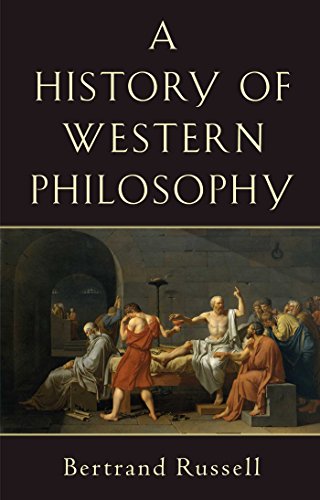
Bertrand Russell (1872 - 1970) was a philosopher, mathematician, and Nobel Prize in Literature laureate renowned for his intellectual breadth and advocacy of free thought. His extensive contributions to world literature and philosophy make him uniquely qualified to chart the vast terrain of Western philosophical tradition. This book reflects his lifelong engagement with philosophy, offering readers a masterful account of the evolution of ideas that shaped Western civilization.
Bertrand Russell (1872 - 1970). Philosopher, mathematician, educational and sexual reformer, pacifist, prolific letter writer, author and columnist, Bertrand Russell was one of the most influential and widely known intellectual figures of the twentieth century. In 1950 he was awarded the Noble Prize for Literature for his extensive contributions to world literature and for his 'rationality and humanity, as a fearless champion of free speech and free thought in the West.'
Bertrand Russell's decades of philosophical insight culminate in this sweeping chronicle of Western thought, tracing ideas from ancient Greece to the twentieth century. You will explore the intellectual journeys of figures like Plato, Kant, Nietzsche, and even Russell's own contemporaries, gaining clarity on complex ideologies through lucid prose and sharp wit. The book offers a structured pathway through 76 chapters, each unpacking a distinct philosophical movement or thinker, making intricate concepts accessible without watering them down. If you want to deepen your grasp of philosophy’s evolution and its key contributors, this work provides a solid foundation and a nuanced perspective that rewards both newcomers and seasoned enthusiasts alike.
This AI-created book on philosophy mastery is crafted based on your background, interests, and goals. It combines well-known philosophical insights with your personal challenges to create a tailored learning experience. You share what aspects of philosophy resonate most with you, and the book focuses precisely on those areas, guiding you through ideas that matter most to your growth.
TailoredRead AI creates personalized nonfiction books that adapt to your unique background, goals, and interests. Instead of reading generic content, you get a custom book written specifically for your profession, experience level, and learning objectives. Whether you're a beginner looking for fundamentals or an expert seeking advanced insights, TailoredRead crafts a book that speaks directly to you. Learn more.
This tailored philosophy book explores proven methods adapted to your unique challenges and growth goals, combining timeless wisdom with personalized insights. It covers core philosophical concepts, ethical reasoning, and critical thinking approaches, focusing on your interests and background to deepen your understanding. By integrating knowledge valued by millions with your specific learning objectives, the book guides you through a custom exploration of philosophy’s most enduring ideas. Its tailored content reveals how classical and modern philosophies apply directly to your life and aspirations, fostering a thoughtful mindset and practical reflection that matches your individual journey.
Marcus Aurelius Antoninus, born into Roman nobility and influenced early by Stoic philosopher Epictetus, wrote these Meditations during his reign as emperor. Though never intended for publication, his reflections reveal a leader striving for wisdom and virtue amid immense pressures, offering you timeless guidance on controlling your mind and living with integrity.
Marcus Aurelius Antoninus was born to an upper-class Roman family in A.D. 121 and was later adopted by the future emperor Antoninus Pius. A student of philosophy from his earliest youth, he was especially influenced by the first-century Stoic thinker Epictetus. His later reputation rests on his 'Meditations,' written during his later years and never meant for formal publication.
Marcus Aurelius, an emperor deeply shaped by Stoic philosophy and a student of Epictetus, penned these reflections not for public acclaim but as personal guidance during turbulent times. In this translation by Gregory Hays, you gain access to a direct and potent voice offering insights on self-discipline, humility, and resilience, with chapters that encourage mastering your thoughts and accepting fate. You’ll find practical wisdom for navigating adversity and cultivating inner strength, making it a thoughtful companion for anyone interested in ethical living or leadership. This book suits those who seek to deepen their understanding of personal ethics and mental clarity through a timeless philosophical lens.
The Irrational Investor, a PhD and CFA Level III candidate with a deep passion for thoughtful reading, shares how "Letters from a Stoic" has profoundly shaped his perspective, revisiting it annually to draw fresh lessons. His recommendation highlights the book’s lasting literary strength and philosophical depth, reflecting why it remains a favorite among both experts and a wide readership. This enduring influence underlines the book’s role in guiding readers toward composed, virtuous living amid modern uncertainties.
“A thread on my notes and highlights from the book "Letters from a Stoic" by Seneca. Written in around 65 AD, the book is a literary masterpiece, and has had a great influence on me. I try to re-read it at least once a year.” (from X)
Lucius Annaeus Seneca, statesman, philosopher, advocate and man of letters, was born at Cordoba in Spain around 4 BCE. He rose to prominence in Rome, pursuing a career in the courts and political life, for which he had been trained, while also acquiring celebrity as an author of tragedies and essays. Falling foul of successive emperors (Caligula in 39 CE and Claudius in 41 CE), he spent eight years in exile, allegedly for an affair with Caligula’s sister. Recalled in 49 CE, he was made praetor and was appointed tutor to the boy who was to become, in 54 CE, the emperor Nero. On Nero’s succession, Seneca acted for some eight years as an unofficial chief minister. The early part of this reign was remembered as a period of sound government, for which the main credit seems due to Seneca. His control over Nero declined as enemies turned the emperor against him with representations that his popularity made him a danger, or with accusations of immorality or excessive wealth. Retiring from public life he devoted his last three years to philosophy and writing, particularly the Letters to Lucilius. In 65 CE following the discovery of a plot against the emperor, in which he was thought to be implicated, he and many others were compelled by Nero to commit suicide. His fame as an essayist and dramatist lasted until two or three centuries ago, when he passed into literary oblivion, from which the twentieth century has seen a considerable and immensely valuable recovery. Robin Campbell is a well-known translator.
Seneca’s Letters from a Stoic springs from his turbulent career as a statesman and advisor under Emperor Nero, where he wrestled with power and ethics. Through these letters, you gain insights into Stoic philosophy focused on self-control, virtue, and resilience, learning how to separate emotion from reason in daily challenges. The book's chapters offer memorable aphorisms and a candid look at living "in accordance with nature," useful for anyone seeking clarity amid life’s chaos. If you’re drawn to ancient wisdom that still resonates with modern dilemmas, this book provides a thoughtful guide without preaching.
Eugen Herrigel was a German professor who taught philosophy at the University of Tokyo between the wars. In endeavoring to become a Zen mystic, he penetrated deeply and personally into the theory and practice of Zen Buddhism and subjected himself to the rigorous discipline of training with a Zen Master for six years. Zen in the Art of Archery is the account of this experience and his The Method of Zen is also available from Vintage Books. Professor Herrigel died in 1955.
Eugen Herrigel was a German professor who taught philosophy at the University of Tokyo between the wars. In endeavoring to become a Zen mystic, he penetrated deeply and personally into the theory and practice of Zen Buddhism and subjected himself to the rigorous discipline of training with a Zen Master for six years. Zen in the Art of Archery is the account of this experience and his The Method of Zen is also available from Vintage Books. Professor Herrigel died in 1955.
1999·81 pages·Philosophy, Eastern, Zen Buddhism, Mindfulness, Meditation
While teaching philosophy at the University of Tokyo, Eugen Herrigel embarked on a six-year journey to grasp Zen Buddhism through the disciplined practice of archery. This book offers you a firsthand narrative of his gradual shift from technical skill to embracing Zen's subtle insights, revealing how art and spirituality intertwine. You'll learn how focus, surrender, and mindfulness transform a physical act into a path of self-discovery. If you're drawn to Eastern philosophy or curious about how practice can reshape perception, this book provides a quietly profound perspective worth exploring.
This personalized AI book about rapid stoic practices is created after you share your background, skill level, and which aspects of Stoicism you want to focus on. You also tell us your specific goals for mental toughness and calm. The book is then created to match exactly what you want to learn and achieve in 30 days, connecting proven Stoic knowledge with your personal interests.
TailoredRead AI creates personalized nonfiction books that adapt to your unique background, goals, and interests. Instead of reading generic content, you get a custom book written specifically for your profession, experience level, and learning objectives. Whether you're a beginner looking for fundamentals or an expert seeking advanced insights, TailoredRead crafts a book that speaks directly to you. Learn more.
2026·50-300 pages·Philosophy, Stoicism, Mental Toughness, Emotional Control, Resilience Building
This tailored book explores rapid, personalized stoic practices designed to build mental toughness and calm within 30 days. It covers foundational Stoic principles and reveals how to integrate them into daily life according to your background and goals. The content examines resilience-building exercises, clarity-enhancing reflections, and stress management techniques, all matched to your specific interests. By focusing on your unique learning needs, this personalized guide offers a focused journey through Stoic philosophy that aligns with what millions have found valuable. It encourages practical mental training to cultivate steady clarity and emotional control in just one month.
Georg Wilhelm Hegel (1770-1831) was a German philosopher and a central figure in German idealism. His profound work in metaphysics, epistemology, ethics, and aesthetics forms the foundation for this book. William Wallace carefully curates Hegel's complex thoughts on mind and spirit, making this text a key resource for anyone diving into Hegelian philosophy. The book offers a significant exploration of how consciousness and reality intertwine, reflecting Hegel's enduring impact on philosophical inquiry.
Georg Wilhelm Hegel (1770-1831) was a German philosopher and one of the most important figures in German idealism. He is known for his work in metaphysics, epistemology, ethics, and aesthetics.
Georg Wilhelm Hegel's influence on philosophy is immense, and William Wallace's detailed examination of Hegel's Philosophy of Mind unpacks this complex legacy with care. The book guides you through Hegel's exploration of consciousness, self-awareness, and the development of spirit, touching on metaphysics and epistemology. You gain insight into how Hegel links mind and reality, navigating concepts like self-consciousness and the dialectical process. If you seek a deeper understanding of German idealism or want to grapple with foundational ideas about how we think and experience, this work offers a thorough intellectual challenge without oversimplifying.
What happens when an experienced philosopher like Simon Blackburn meets the challenge of making philosophy approachable? Think: A Compelling Introduction to Philosophy offers a clear and inviting path into the core questions that have shaped Western thought. Published by Oxford University Press, this book is designed for anyone curious about life’s big questions but unsure where to start. Blackburn’s chapters guide you through topics like knowledge, ethics, and identity in a way that respects both the complexity and the accessibility of philosophy. If you want to engage with philosophy on your own terms, this introduction provides a sturdy springboard into deeper exploration.
Unlike most philosophy books that dive straight into complex jargon, Simon Blackburn's approach in this introduction is refreshingly accessible and inviting. He frames philosophy as a vibrant conversation about big questions — covering knowledge, ethics, identity, and truth — and walks you through how thinkers like Plato and Kant have wrestled with these issues. Chapters are self-contained, making it easy to explore topics step-by-step, such as how we understand fate or reason. If you want to develop your own philosophical thinking without getting lost in academic language, this book offers a solid and engaging foundation.
The best Philosophy books and more, in your inbox each week. No account needed.
Conclusion
These seven books showcase proven philosophical frameworks that have stood the test of time and wide readership. Whether you lean toward Stoic resilience in "Meditations" and "Letters from a Stoic," historical depth with Bertrand Russell's "The History of Western Philosophy," or an accessible introduction via Simon Blackburn's "Think," there’s a proven path to deepen your understanding.
If you prefer methods with practical daily application, start with "The Daily Stoic". For those drawn to Eastern perspectives, "Zen in the Art of Archery" presents a unique blend of mindfulness and philosophy. Combining these with advanced studies like "Hegel's Philosophy of Mind" can enrich your grasp of complex ideas.
Alternatively, you can create a personalized Philosophy book to combine proven methods with your unique needs. These widely-adopted approaches have helped many readers succeed in exploring and applying philosophy in meaningful ways.
Frequently Asked Questions
I'm overwhelmed by choice – which book should I start with?
Start with "Think" by Simon Blackburn if you're new to philosophy. Its accessible style introduces core concepts without jargon, making it ideal for beginners eager to explore philosophical thinking at a comfortable pace.
Are these books too advanced for someone new to Philosophy?
Not at all. While books like "Hegel's Philosophy of Mind" delve deep, others like "The Daily Stoic" and "Think" offer practical and approachable insights suitable for newcomers seeking daily wisdom or foundational knowledge.
Do I really need to read all of these, or can I just pick one?
You can definitely pick one that fits your interests. For practical daily philosophy, "The Daily Stoic" works well; for historical context, try "The History of Western Philosophy." Each stands strong on its own.
Which books focus more on theory vs. practical application?
"Hegel's Philosophy of Mind" leans into theoretical exploration, while "The Daily Stoic" and "Meditations" emphasize practical application of philosophy in everyday life and personal growth.
What makes these books different from others on Philosophy?
These selections combine expert endorsements and proven reader popularity, offering a balance of historical significance, practical wisdom, and accessible introductions that have resonated widely across audiences.
Can personalized Philosophy books complement these expert recommendations?
Yes! While these classics offer solid foundations, personalized Philosophy books can tailor insights to your specific goals and interests, blending proven methods with your unique learning path. Explore options here.
📚 Love this book list?
Help fellow book lovers discover great books, share this curated list with others!