10 Best-Selling Political Science Books Millions Trust
Discover top Political Science Books endorsed by Erik Solheim, Chris Hayes, and Francis Fukuyama, offering best-selling insights.
Updated on June 28, 2025·We may earn commissions for purchases made via this page
We're launchingLaunching on Product Hunt today 🎉We just launchedJust launched on Product Hunt 🎉
Modelpeers, from the BookAuthority teamFrom the BookAuthority team: Modelpeers, a free way to follow AI models and agents like you follow people. We'd love your support.
When millions of readers and top experts agree on the value of a book, it’s worth your attention. Political Science books have surged in popularity as more people seek to understand the complex forces shaping governance, democracy, and political behavior today. These books offer proven insights that have helped many make sense of our shifting political world.
Experts like Erik Solheim, a policy advocate who highlights the urgent need to grasp political divides; Chris Hayes, an MSNBC host who praises nuanced political analysis; and Francis Fukuyama, author of influential works on political order, have guided many toward these impactful titles. Their endorsements reflect deep engagement with the ideas that shape contemporary politics.
While these popular books provide proven frameworks, readers seeking content tailored to their specific Political Science needs might consider creating a personalized Political Science book that combines these validated approaches with your unique interests and goals.
Erik Solheim, a notable environmental leader and policy advocate, highlights how this book reveals the destructive hatred between Democrats and Republicans undermining American democracy. His endorsement resonates with many who seek to grasp the complexities behind current political divides. Solheim’s reflection that we must learn from America’s experience to prevent similar polarization in Europe underscores the book’s global relevance. Alongside him, Chris Hayes, MSNBC host, praises the book’s breadth and the way it provokes intense engagement, making it indispensable for understanding today’s political landscape.
“This is best book i have read about politics this year. How the hatred between Democrats and Republicans undermines American democracy. We need to think hard on how to avoid a similar scourge in Europe. @ezraklein” (from X)
Ezra Klein is a prominent journalist and political analyst known for his insightful commentary on American politics. He is the co-founder of Vox and has written extensively on the dynamics of political polarization in the United States. Klein's work often explores the intersection of identity, media, and political behavior, making him a leading voice in contemporary political discourse.
Ezra Klein, co-founder of Vox and seasoned political analyst, explores the forces driving American political polarization in this deeply researched book. You’ll gain insight into how identities—racial, ideological, cultural—have merged with party affiliations to create entrenched divides, reinforced by institutional and psychological feedback loops. Chapters dissect phenomena like the media’s role in amplifying division and explain why political actors act rationally within a system that nonetheless produces dysfunction. This book suits anyone seeking to understand America’s current political fractures from multiple angles rather than a simple partisan critique.
New York Times Bestseller
Wall Street Journal Bestseller
Named one of Barack Obama’s favorite books of 2022
Edward S. Herman and Noam Chomsky, renowned for their collaborative work on media and political economy, provide a critical lens on how mass media operates within political science. Their recommendation highlights the book’s challenge to the conventional view of media as a purely truth-seeking institution, revealing instead its role in reinforcing elite interests. Their insights, drawn from years of research and analysis, reveal how media messaging aligns with dominant power structures, encouraging you to reconsider the information you consume. This perspective is essential for anyone aiming to grasp the complex relationship between media and politics.
“In this pathbreaking work, Edward S. Herman and Noam Chomsky show that, contrary to the usual image of the news media as cantankerous, obstinate, and ubiquitous in their search for truth and defense of justice, in their actual practice they defend the economic, social, and political agendas of the privileged groups that dominate domestic society, the state, and the global order.” (from Amazon)
Edward S. S. Herman was a prominent media analyst and professor, known for his critical work on media and propaganda. Along with Noam Chomsky, he co-authored several influential books, including 'Manufacturing Consent,' which critiques the media's role in shaping public perception and policy. Herman's research has significantly impacted the fields of communication and political economy.
Drawing from his extensive background as a media analyst and professor, Edward S. Herman explores the subtle yet powerful ways media shapes political realities rather than merely reporting them. You’ll uncover the mechanisms by which news outlets serve the interests of dominant social and economic groups, a perspective that challenges common assumptions about media impartiality. The book dives into the distinctions between news and propaganda, providing frameworks like the propaganda model to explain media behavior. If you’re seeking to understand how political narratives are constructed and disseminated in democratic societies, this book offers critical insights. However, those looking for straightforward media literacy tips might find its dense analysis demanding.
This AI-created book on political power is designed based on your background and specific goals. It matches your interests by focusing on the aspects of leadership and political influence you want to explore most. By tailoring the content to your skill level and curiosities, it offers a unique way to deepen your understanding without wading through broad, generic texts. This personalized approach ensures your learning is efficient and relevant, helping you grasp the forces behind political leadership clearly and confidently.
TailoredRead AI creates personalized nonfiction books that adapt to your unique background, goals, and interests. Instead of reading generic content, you get a custom book written specifically for your profession, experience level, and learning objectives. Whether you're a beginner looking for fundamentals or an expert seeking advanced insights, TailoredRead crafts a book that speaks directly to you. Learn more.
2026·50-300 pages·Political Science, Political Power, Leadership Theory, Governance Models, Political Influence
This personalized book explores the foundations and dynamics of political power and leadership tailored to your interests and background. It examines core principles that shape political influence, decision-making processes, and leadership effectiveness across diverse contexts. By focusing on your specific goals, this book reveals how power operates in institutions, campaigns, and governance, offering a clear exploration of political science concepts relevant to your unique perspective. With a tailored approach, it connects widely validated knowledge with your personal areas of curiosity, enabling a learning experience that is both engaging and deeply relevant to your political studies.
James Woolsey, former Director of Central Intelligence and a key voice in defense and governance, praises this book for its insightful take on political survival. He reflects on how the authors' historical examples—from Caesar to modern politics—reframe governance as a pursuit of power above public interest. "In this fascinating book Bueno de Mesquita and Smith spin out their view of governance: that all successful leaders, dictators and democrats, can best be understood as almost entirely driven by their own political survival—a view they characterize as 'cynical, but we fear accurate.'" This perspective reshaped Woolsey's understanding of leadership and underscores why this book resonates with so many readers seeking to grasp political realities. The endorsement from The Wall Street Journal further confirms its sharp, multidisciplinary analysis of political authority and survival.
“In this fascinating book Bueno de Mesquita and Smith spin out their view of governance: that all successful leaders, dictators and democrats, can best be understood as almost entirely driven by their own political survival-a view they characterize as 'cynical, but we fear accurate.' Yet as we follow the authors through their brilliant historical assessments of leaders' choices-from Caesar to Tammany Hall and the Green Bay Packers-we gradually realize that their brand of cynicism yields extremely realistic guidance about spreading the rule of law, decent government, and democracy. James Madison would have loved this book.” (from Amazon)
Bruce Bueno de Mesquita is the Julius Silver Professor of Politics and director of the Alexander Hamilton Center for Political Economy at New York University. He is the author of 16 books, including The Predictioneer’s Game. Alastair Smith is professor of politics at New York University. The recipient of three grants from the National Science Foundation and author of three books, he was chosen as the 2005 Karl Deutsch Award winner, given biennially to the best international relations scholar under the age of 40.
Bruce Bueno de Mesquita, a seasoned political economist at NYU, teamed with Alastair Smith to challenge traditional political ideas. They argue that leaders—whether dictators or democrats—are primarily focused on staying in power, not on national interests or their citizens' welfare. The book explains how the size of a leader's essential support base shapes political behavior and governance quality. Through historical examples ranging from Caesar to modern democracies, you gain insights into how political survival drives decisions and why the line between tyranny and democracy is thinner than it appears. This book suits anyone curious about the underlying mechanics of political power and governance.
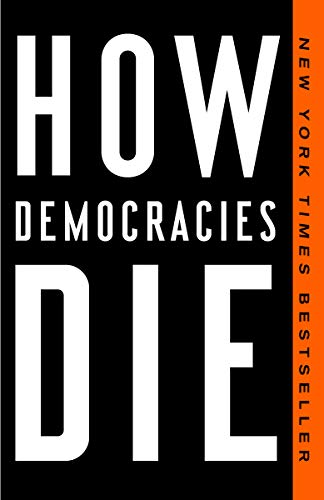
Michael Mcfaul, a professor of political science with deep expertise in international relations, highlights the book's significance by noting, "Nothing more I’d rather have than a book endorsement from Steve Kerr! And it is a great book." Mcfaul’s endorsement carries weight given his experience in diplomacy and democracy promotion, and his praise signals how this book resonates beyond academic circles. His perspective aligns with widespread acclaim, including from Steve Kerr, who recommends it as a summer read, underscoring its accessibility and relevance. Their endorsements reflect why this analysis of democratic decline has captured attention from both scholars and the public alike.
Steven Levitsky and Daniel Ziblatt are Professors of Government at Harvard University. Levitsky’s research focuses on Latin America and the developing world. He is the author of Competitive Authoritarianism and is the recipient of numerous teaching awards. Ziblatt studies Europe from the nineteenth century to the present. He is the author, most recently, of Conservative Parties and the Birth of Democracy. Both Levitsky and Ziblatt have written for Vox and The New York Times, among other publications.
Steven Levitsky and Daniel Ziblatt leverage over two decades of research on democratic erosion to explore how democracies falter through gradual weakening rather than abrupt collapse. You’ll gain insight into the subtle decay of political norms and institutions, illustrated by historical and contemporary examples from Europe, Latin America, and the United States. Key chapters dissect the role of political actors and institutions in either safeguarding or undermining democracy, helping you understand the mechanics behind democratic backsliding. This book suits anyone seeking a nuanced understanding of political stability and the threats democracies face today, especially in the context of American politics.
Chris Hayes, host of MSNBC's All In With Chris Hayes, offers a clear window into why this book resonates so deeply with those following American politics closely. After observing the GOP's political shifts for years, Hayes found that "Steve's book is great and has really framed the way I think about all this." His endorsement reflects how the book helped him grasp the party's retreat from governance toward power politics. This perspective aligns with widespread reader interest, making it an insightful choice for anyone trying to understand today's political landscape. The Washington Post also highlights the book's vivid examples showing how the party dynamics have become unrecognizable, reinforcing its relevance for politically curious minds.
Steve Benen is an award-winning producer of The Rachel Maddow Show on MSNBC, known for his insightful analysis of American politics. With a background in journalism and political commentary, he has established himself as a critical voice in understanding the dynamics of the Republican Party and its impact on governance.
Steve Benen, with his extensive experience as a producer for The Rachel Maddow Show, wrote this book to examine a troubling shift within the Republican Party. You’ll gain insight into how the GOP evolved into what Benen calls a "post-policy party," focusing more on power than governance. The book meticulously details examples of this transformation, such as the party’s resistance to expertise and policymaking during recent administrations. If you want to understand the current dysfunction in American politics and the implications for democracy, this book provides a thorough and clear-eyed exploration.
This AI-created book on democracy studies is written based on your background, interests, and specific goals within the field. By sharing what aspects of democracy you want to explore, your current understanding, and what challenges you wish to grasp, you receive a book tailored precisely to your needs. This focused approach makes it easier to navigate complex democratic systems and their vulnerabilities, providing a learning experience that speaks directly to your curiosity and priorities.
TailoredRead AI creates personalized nonfiction books that adapt to your unique background, goals, and interests. Instead of reading generic content, you get a custom book written specifically for your profession, experience level, and learning objectives. Whether you're a beginner looking for fundamentals or an expert seeking advanced insights, TailoredRead crafts a book that speaks directly to you. Learn more.
This tailored book explores the fundamentals and challenges of modern democracies through a personalized lens that matches your background and specific goals. It examines core democratic principles, key institutions, and pressing threats such as democratic erosion and polarization. By focusing on your interests, this book navigates complex political systems and societal dynamics that influence democratic health. It reveals how democratic governance operates in diverse contexts and what risks it faces today, providing a nuanced understanding built just for you. This personalized approach helps you grasp the evolving nature of democracy efficiently, connecting widely validated knowledge with your unique perspective and priorities.
Uncivil Agreement offers a distinctive lens on American political polarization by tracing its roots to social identity rather than just policy differences. This approach highlights how racial, religious, and cultural affiliations have reshaped political alliances and animosities, deepening divisions beyond traditional partisan lines. The book’s integration of political science and social psychology provides a framework to understand why Democrats and Republicans often prioritize party victory over shared policy goals. Anyone looking to grasp the social dynamics behind current political conflicts will find this work insightful and timely.
2018·192 pages·Political Science, Social Identity, Polarization, Electoral Behavior, Social Psychology
What if everything you knew about political polarization was wrong? Lilliana Mason argues that the divide in America goes beyond policy disagreements, rooted instead in social identities tied to race, religion, and culture. You learn how these group affiliations reshape political behavior, making party loyalty a matter of identity rather than ideology. Mason’s exploration includes how even shared policy goals can’t overcome deep-seated distrust between Democrats and Republicans. This book suits anyone looking to understand the emotional and social currents fueling today’s political conflicts.
"Politics and the English Language" by George Orwell remains a seminal essay that challenges how language can be distorted to serve political ends. Published in 1946, Orwell exposes the deliberate vagueness and euphemisms common in political writing that obscure reality and mislead citizens. This essay’s enduring appeal lies in its incisive analysis of language as a political tool and its call for clarity and honesty in communication. Scholars, students, and anyone interested in the intersection of language and politics will find this work essential for understanding how political science grapples with the power of words.
George Orwell wrote "Politics and the English Language" as a sharp critique of the way political language had become a tool for obfuscation and manipulation. You’ll gain insight into how vague, inflated writing serves to mask truth and mislead public opinion. Orwell dissects common writing habits that dull clarity and encourages you to recognize and resist these patterns. If you are interested in improving your political literacy or writing with precision, this essay offers a foundational perspective on the link between language and power.
Milton Friedman, recipient of the 1976 Nobel Memorial Prize for economic science and longtime University of Chicago professor, brings unparalleled expertise to this exploration of government’s role in social problems. Drawing on decades at the Hoover Institution and his extensive research career, Friedman dissects why government actions often produce unintended negative effects. His insights offer a clear-eyed look at the tension between individual self-interest and bureaucratic power, making this a valuable resource for anyone engaged in political science or public policy analysis.
Milton Friedman, recipient of the 1976 Nobel Memorial Prize for economic science, was a senior research fellow at the Hoover Institution from 1977 to 2006. He passed away on Nov. 16, 2006. He was also the Paul Snowden Russell Distinguished Service Professor Emeritus of Economics at the University of Chicago, where he taught from 1946 to 1976, and a member of the research staff of the National Bureau of Economic Research from 1937 to 1981.
Milton Friedman's decades of economic research and teaching provide the foundation for this incisive examination of government’s unintended consequences. You’ll uncover why well-meaning policies in education, crime, health care, and family welfare often backfire due to the conflicting incentives within government institutions versus private individuals. The book challenges you to rethink the role of bureaucracy and special interests shaping policy outcomes, highlighting term limits as a potential reform to restore accountability. This is essential reading if you want to grasp the structural reasons behind persistent social issues and explore pragmatic ideas for limiting government overreach.
American Government 2e by OpenStax offers a uniquely accessible approach to understanding the complexities of U.S. government within the field of political science. Its full-color hardcover format supports students who prefer tangible study materials alongside the free digital version, blending affordability with comprehensive content. The textbook thoroughly covers core topics like constitutional foundations, federalism, and civil rights, making it a practical tool for college students and educators alike. By presenting political science concepts through clear explanations and contemporary examples, it addresses the need for an engaging, foundational resource in American government studies.
Drawing from the ethos of accessible education, OpenStax delivers a comprehensive exploration of American government that goes beyond mere definitions and timelines. You’ll encounter detailed discussions about the Constitution, federalism, civil rights, and the branches of government, neatly structured to support both newcomers and those deepening their understanding. The textbook balances theory with contemporary examples, helping you grasp how political institutions and processes shape real-world outcomes. If you seek a solid foundation in U.S. political structures and civic engagement, this is a resource that caters well to students, educators, and anyone curious about American governance.
Thomas Paine’s "Common Sense" remains a pivotal work in political science, widely recognized for its role in shaping public opinion during the American Revolution. This pamphlet’s direct critique of monarchy and colonial oppression offers readers a vivid perspective on the political and economic arguments that propelled the colonies toward independence. Its clear, passionate language and influential ideas continue to resonate, making it a valuable read for anyone exploring the foundations of democratic thought and revolutionary movements. By addressing the urgent need for self-governance and liberty, this work contributes significantly to political science discourse and history.
Thomas Paine challenges the conventional wisdom that political change requires complex frameworks by presenting a straightforward and passionate argument for American independence in "Common Sense." Drawing from his experiences as an editor and reformer involved in revolutionary movements, Paine exposes the flaws of monarchy and colonial rule with sharp clarity. You gain insight into the economic and social grievances that fueled the American Revolution, illustrated by his critique of Britain's control over the colonies and his vision for self-governance. This pamphlet suits anyone interested in the roots of democracy, political philosophy, or the history of revolutionary ideas, offering a concise yet powerful case that shaped early American political thought.
The best Political Science books and more, in your inbox each week. No account needed.
Conclusion
This collection of 10 books reveals key themes: the mechanics of political polarization, the influence of power and survival in governance, and the vital role of language and identity in shaping political realities. Each book offers a distinct lens validated by both expert recommendation and widespread readership.
If you prefer proven methods to understand political divides, start with "Why We're Polarized" and "Uncivil Agreement." For validated approaches to power and governance, "The Dictator's Handbook" and "How Democracies Die" complement each other well. For foundational knowledge, "American Government 2e by OpenStax" provides a solid base.
Alternatively, you can create a personalized Political Science book to combine proven methods with your unique needs. These widely-adopted approaches have helped many readers succeed in navigating the complexities of political science.
Frequently Asked Questions
I'm overwhelmed by choice – which book should I start with?
Start with "Why We're Polarized" to grasp current political divisions clearly. It’s widely recommended and offers accessible insights into today’s political landscape.
Are these books too advanced for someone new to Political Science?
Not at all. Books like "American Government 2e by OpenStax" and "Common Sense" provide approachable introductions, while others deepen your understanding gradually.
What's the best order to read these books?
Begin with foundational texts like "American Government 2e by OpenStax," then explore thematic books such as "The Dictator's Handbook" and "How Democracies Die" for broader perspectives.
Should I start with the newest book or a classic?
Balancing both works well. Classics like "Common Sense" offer historical context, while newer books like "Why We're Polarized" address pressing modern issues.
Do I really need to read all of these, or can I just pick one?
You can pick one based on your interests, but combining a few offers a richer understanding. Each book covers different but complementary aspects of political science.
How can I get Political Science insights tailored to my needs?
While these expert books are invaluable, personalized Political Science books blend popular methods with your specific goals and background. Check out this option to create your own guide.
📚 Love this book list?
Help fellow book lovers discover great books, share this curated list with others!